
军事装备制造

Search documents
欧盟援乌:增加无人机供应 炮弹未如数交付
Xin Hua She· 2025-12-03 01:04
新华社北京12月2日电 乌克兰近来与荷兰、挪威签署了联合生产无人机的协议,但欧盟外交与安全政 策高级代表卡娅·卡拉斯承认欧盟目前还未能实现2025年向乌提供200万发炮弹的计划。 荷兰政府1日发表声明说,荷兰当天与乌克兰签署联合生产无人机的协议。路透社援引荷兰国防大臣吕 本·布雷克尔曼斯的话报道,这项合作不仅将增强两国的生产能力,还将加强双方"共同安全、韧性与创 新能力"。 眼下,乌克兰在政治和军事层面均面临不利局面。11月20日,美媒披露白宫起草的28点俄乌"和平计 划",乌克兰和欧洲指认该计划偏袒俄罗斯。美乌代表随后在瑞士日内瓦会谈,大幅修改该方案。双方 11月30日又在美国佛罗里达州举行会谈。白宫12月1日宣布,美国中东问题特使威特科夫将前往俄罗斯 商谈。 军事方面,俄罗斯12月1日晚宣布,俄军已经控制顿涅茨克地区重镇红军城(乌克兰称波克罗夫斯 克)。乌克兰武装部队当天早些时候说,尽管当地及周围地区"情况艰难",乌军仍"继续抵御"俄军攻 势。(王逸君) 11月20日,乌克兰首都基辅主要街道的照明设施出现大面积停电,车辆在夜色中行驶。新华社记者李东 旭摄 另据RBC-乌克兰通讯社援引乌国防部长杰尼斯·什梅 ...


日本防卫开支突破11万亿日元
Di Yi Cai Jing· 2025-11-29 11:09
据参考消息援引《日本经济新闻》11月29日报道,日本政府28日在内阁会议上批准了2025年度补充预 算。这将使防卫开支增加超过1万亿日元(约合65亿美元),从而提前实现占国内生产总值(GDP)比 重2%的目标。报道称,防卫省在此次补充预算案中拨款8472亿日元,其中1222亿日元用于购置护卫 舰、潜艇等。另有566亿日元将用于采购导弹,例如改进型的03式中程地对空导弹,该导弹能够拦截飞 机和导弹。加上其他省厅可用于安全保障的公共事业费、科研费等相关经费,本次补充预算的防卫相关 费用合计超过1万亿日元。连同9.9252万亿日元的初始预算,2025年度整体防卫相关费用将达到约11万 亿日元。日本防卫大臣小泉进次郎在28日的记者会上明确表示:"(防卫费)将达到GDP的2%。" (文章来源:第一财经) ...
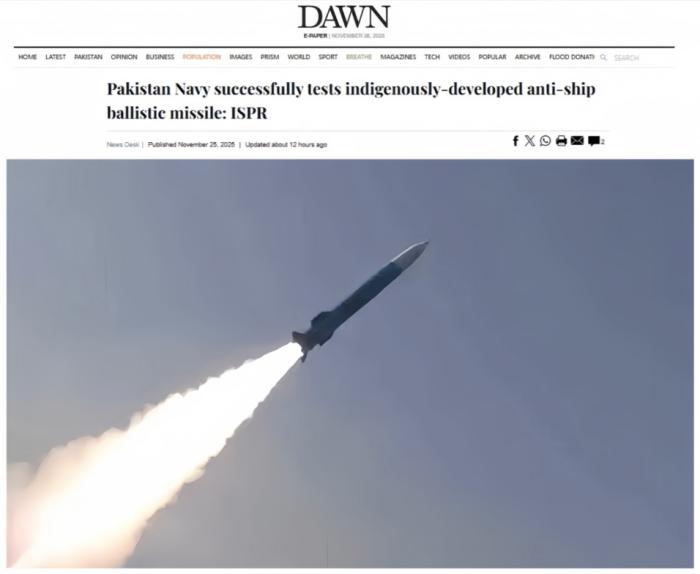
巴基斯坦试射8马赫反舰导弹,外媒称印度航母“压力山大”
Zhong Guo Xin Wen Wang· 2025-11-28 10:02
巴基斯坦试射8马赫反舰导弹,外媒称印度航母"压力山大" 中新网11月28日电(钟新军)巴基斯坦《黎明报》称,巴海军近日成功试射国产新型反舰导弹。巴军方声 明称,该导弹搭载先进的航电和制导设备,具备强大机动性,可有效规避反导系统的拦截,能够高精度 打击海上和陆地目标。 马来西亚"亚洲防务安全"网站分析认为,此番试射有三大看点: 第一,新型导弹长约11米,属于体量较大的弹道导弹,不仅射程超700公里,还能以8马赫超高音速突 防,精准打击航母等大型水面舰艇及陆上目标。 第二,巴军方验证了舰载垂发系统、中段飞行制导、自主末段机动等先进技术的有效性,其海军战斗力 与导弹研发水平跃上新台阶。 第三,担负发射任务的海上平台为巴海军图赫里勒级护卫舰,这是一款性能出众的多用途战舰,搭载新 型反舰导弹将使其如虎添翼。 据印军消息人士透露,印度海军高层闻讯召开紧急会议,商讨评估其航母编队面对巴新型导弹攻击时的 生存能力。 有分析指出,为抗衡强大对手,多年来,巴基斯坦优先发展能够四两拨千斤的"不对称"威慑力。 以规模精悍的巴空军为例,飞机总量虽不及对手,却拥有超240架四代机和多款预警机、加油机组成的 现代化作战体系,历次空中交锋的 ...
在琉球部署中程导弹计划,日本这招阴险在哪儿?
Xin Jing Bao· 2025-11-25 06:19
Core Viewpoint - Japan's Defense Minister, Koizumi Shinjiro, announced the planned deployment of medium-range missiles at a Self-Defense Force base on Yonaguni Island, which is strategically located 110 kilometers from Taiwan, amidst rising regional tensions [1][2][4]. Military Deployment - The Yonaguni Island base is part of Japan's broader multi-layered defense network extending from the mainland to Okinawa, Miyako Island, Ishigaki Island, and the Yaeyama Islands [5]. - Japan plans to deploy the Type 03 medium-range surface-to-air missile system, which is a mobile platform capable of intercepting threats with advanced radar systems [4][5]. - The deployment is part of Japan's 2026 budget and defense enhancement plan, which includes increasing naval and coast guard presence in the region [5]. Regional Tensions - China's Foreign Ministry responded strongly, labeling Japan's actions as dangerous and a provocation that could escalate military tensions in the region [3][7]. - The deployment is seen as a test of China's red lines and a potential shift away from Japan's post-war pacifism, raising concerns among local residents in Okinawa about increased militarization [9][10]. Economic Impact - The diplomatic tensions have already affected Japan's tourism sector, with China issuing travel warnings that could impact the influx of Chinese tourists, who accounted for nearly 30% of foreign visitors to Japan in the first nine months of 2025 [8].
泽连斯基访欧洲三国 敲定新一批能源及军援等协议
Sou Hu Cai Jing· 2025-11-19 12:34
Group 1 - Ukraine signed a natural gas supply agreement with Greece to help during the winter heating season [1] - France will deliver a new batch of military aid to Ukraine by the end of this year and provide 100 Rafale F4 fighter jets by 2035 [1] - Spain will provide Ukraine with €515 million in aid, covering air defense missile procurement and energy support, and is preparing to assist with defense equipment including the IRIS-T air defense missile system [1]

德国将解除对以色列军备出口限制
Zhong Guo Xin Wen Wang· 2025-11-17 16:49
Core Points - The German federal government announced the lifting of military equipment export restrictions to Israel starting November 24 [1] - The decision is influenced by the recent ceasefire agreement between Israel and Hamas, which has led to a stabilization of the situation in the region [1] - Germany will resume a case-by-case review mechanism for military exports to Israel, responding to further developments in the situation [1] Export Policy - The German government emphasizes that the resumption of case-by-case reviews does not guarantee approval for all export applications [1] - Germany remains committed to promoting lasting peace in the region and will continue to invest in humanitarian aid and reconstruction efforts in Gaza [1] - Historically, Germany prohibits arms exports to war and crisis regions, but exceptions exist for specific cases, including support for Ukraine and Israel [1]
德国将恢复向以色列出口军备
Xin Hua She· 2025-11-17 13:59
Core Points - The German government announced the lifting of military equipment export restrictions to Israel starting November 24 [1] - The decision is influenced by the recent ceasefire agreement between Israel and Hamas, which has led to a stabilization of the situation in the region [1] - Germany had suspended military exports to Israel since early August, particularly those that could be used in the Gaza Strip [1] - Israeli Foreign Minister Eli Cohen welcomed the German government's decision on social media [1]
12 Must-Buy Dividend Stocks to Invest in
Insider Monkey· 2025-10-16 03:33
Core Insights - The article discusses the importance of investing in dividend stocks, particularly those with a history of consistent dividend growth, which can provide stability during economic downturns [2][3] Dividend Stocks Overview - Companies that consistently raise dividends are often strong, profitable, and financially stable, making them valuable during economic slowdowns [2] - Dividend-growth stocks tend to have durable competitive advantages, allowing them to maintain profit margins even during high inflation [2] - Historically, dividends have grown at an average annual rate of 5.7% since 1957, outpacing the average inflation rate by over 2% [3] - Stock prices are noted to be more than twice as volatile as their dividend cash flows, indicating that dividend stocks may offer a more stable investment [4] Methodology for Stock Selection - The article outlines a methodology for selecting dividend stocks based on year-to-date highest-returning stocks as of October 9, 2025 [6] Featured Dividend Stocks - **Fastenal Company (NASDAQ:FAST)** - YTD Return as of October 9: 31.55% - Fastenal is linked to the health of the US and global economies and has a strong dividend history with 26 consecutive years of increases [8][10] - Current quarterly dividend: $0.22 per share, with a dividend yield of 1.88% [10] - **General Dynamics Corporation (NYSE:GD)** - YTD Return as of October 9: 31.7% - The company is a major player in military shipbuilding and has raised its dividend for 28 consecutive years [11][12] - Current quarterly dividend: $1.50 per share, with a dividend yield of 1.75% [12] - **Cardinal Health, Inc. (NYSE:CAH)** - YTD Return as of October 9: 33.7% - Cardinal Health is a major distributor of healthcare products and has increased its dividends for 39 consecutive years [13][15] - Current quarterly dividend: $0.5107 per share, with a dividend yield of 1.30% [15]



俄国防部:俄军集中攻击并摧毁乌军工企业和能源设施
Xin Hua She· 2025-10-05 15:31
Core Viewpoint - The Russian Ministry of Defense reported a concentrated attack on Ukrainian military industrial enterprises and their energy facilities using drones and hypersonic missiles, indicating a significant escalation in military operations [1] Military Operations Summary - Russian armed forces utilized attack drones and "Dagger" hypersonic missiles to target and destroy multiple Ukrainian military industrial facilities and their gas energy supply systems [1] - On May 5, Russian aviation, missile, and artillery units reportedly destroyed Ukrainian military forces and foreign mercenary deployment sites in 137 regions, along with various military assets [1] - The operations included the destruction of Ukrainian long-range drones, U.S.-made HIMARS rocket storage and launch sites, and a fuel supply center supporting Ukrainian military operations [1]
塞尔维亚举办“伙伴2025”国际防务展
Xin Hua Wang· 2025-09-28 00:50
Core Insights - The 12th Serbia International Defense Exhibition "Partner 2025" was held from September 23 to 26 in Belgrade, showcasing over 200 exhibitors from more than 30 countries and regions [1] Group 1: Event Overview - The defense exhibition featured prominent companies such as Safran Group and Thales from France, as well as aircraft manufacturers from the Czech Republic [1] - The event highlighted various military equipment, information systems, and electronic devices [1] Group 2: Exhibitor Contributions - The Military Technical Institute of Serbia presented unmanned vehicles, tanks, reconnaissance drones, and defense achievements developed in collaboration with other countries [1] - The exhibition served as a platform to demonstrate the advancements and latest achievements of Serbia's military industry [1] Group 3: Visitor Insights - A seasoned military enthusiast expressed particular interest in domestic Serbian weapons, indicating a focus on national defense capabilities [1]