
医药健康

Search documents
总规模超3500亿,成都最大产业基金集群来了
FOFWEEKLY· 2026-01-15 10:01
Core Viewpoint - Sichuan is accelerating its venture capital landscape with a total fund size of 355.3 billion yuan, driven by policy innovation and capital aggregation [2][3]. Group 1: Fund Size and Investment Focus - As of January 14, 2026, Sichuan has signed 174 funds with a total scale of 355.3 billion yuan, focusing on key industries such as electronic information, healthcare, and artificial intelligence [5]. - The "Chengdu High-tech Zone Industry Fund Investment List" has been released, detailing the 355.3 billion yuan fund cluster and facilitating capital and project information disclosure [6]. Group 2: Policy Framework and Goals - In May 2025, Sichuan announced measures to promote high-quality development in venture capital, aiming for 500 private equity and venture capital management institutions and a fund management scale exceeding 400 billion yuan by 2030 [8]. - The measures include innovative mechanisms such as breaking the restrictions on fund registration and return ratios, and a loss tolerance mechanism for state-owned funds, allowing up to 60% loss tolerance [8]. Group 3: Ecosystem Development - The venture capital ecosystem in Sichuan is being activated, with a rapid increase in the number and scale of funds, including 50 provincial government-guided funds approved by the end of 2025, targeting a total scale of 99.26 billion yuan [9]. - Sichuan is building a comprehensive capital ecosystem covering various sectors, including hard technology and advanced manufacturing, supported by large-scale mother funds and targeted industry funds [11]. Group 4: Capital Deployment and Collaboration - The Sichuan Social Security Science and Technology Innovation Fund, with a total scale of 50 billion yuan, focuses on strategic emerging industries such as artificial intelligence and biomedicine [11]. - Various local funds have been established, such as a 20 billion yuan gas industry fund focusing on hydrogen energy and LNG, and funds for low-altitude economy, enhancing capital support for technology development [13]. Group 5: National Context and Future Outlook - The national venture capital guidance fund has completed strategic layouts in key regions, with a focus on early-stage investments, indicating a broader trend of capital gathering towards technology innovation and advanced manufacturing [14]. - The capital landscape in Sichuan reflects a national trend of recovery in the primary market, with a growing emphasis on patient capital supporting technological innovation [16].


“双清单”牵线搭桥 耐心资本赋能新质生产力2026成都高新区产业·资本对接会举行
Sou Hu Wang· 2026-01-15 02:34
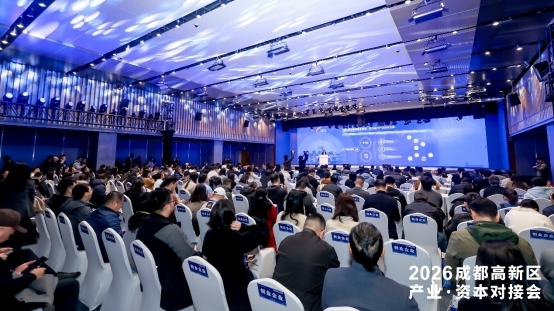
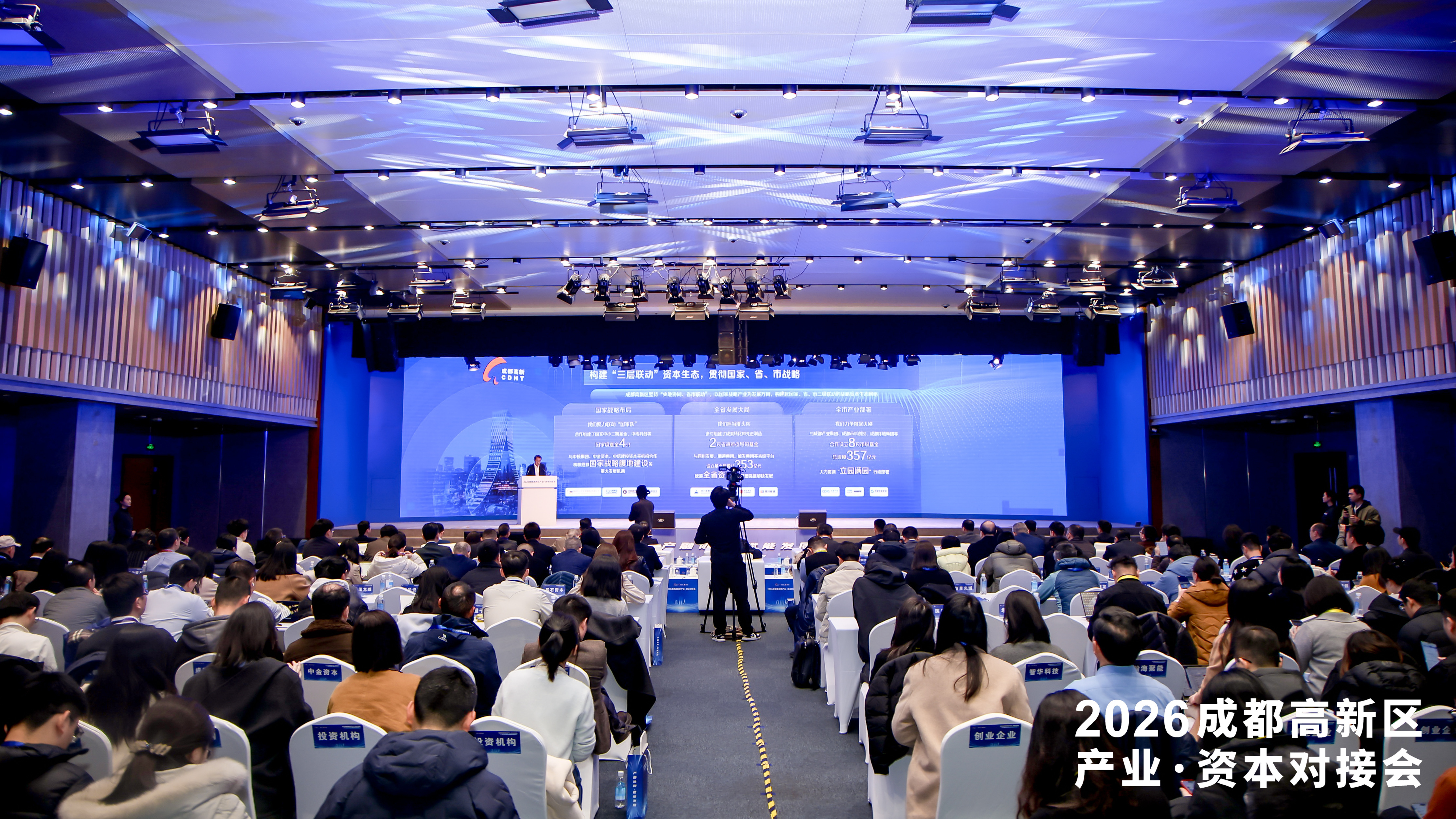
Group 1 - The "2026 Chengdu High-tech Zone Industry and Capital Docking Conference" was held with the theme "Industry-Finance Coordination, Empowering Development," focusing on the region's "3+6+6" modern industrial system [1] - The conference gathered over 300 representatives from various levels of government, investment institutions, and high-quality new productivity enterprises [1] - The event aimed to create an efficient platform for precise matching between capital and industry, injecting strong capital momentum into the development of new productivity in Chengdu High-tech Zone [1] Group 2 - The "Chengdu High-tech Zone Industry Financing Demand List" and "Chengdu High-tech Zone Industry Fund Investment Direction List" were released, serving as important tools for the mechanization of industry-finance coordination [3] - The financing demand list includes 100 high-quality projects in key areas such as electronic information, healthcare, and artificial intelligence, highlighting projects with high growth potential and technical barriers [3] - The investment direction list is supported by a 355.3 billion yuan industrial fund cluster, establishing a three-tiered capital ecosystem and aligning with the financing demand list [3][4] Group 3 - The dual lists utilize the "Capital Connect" online platform for digital matching, creating a regular mechanism that bridges information barriers between capital and projects [4] - The conference provided a platform for industry exchange, with investment institutions sharing valuable insights and project pitches from six high-quality companies showcasing advanced technologies [6] - Initial cooperation agreements were reached between multiple institutions and enterprises during the investment intention voting at the event [6] Group 4 - Chengdu High-tech Zone has developed a comprehensive capital support service system covering the entire lifecycle of investment, with a total of 174 funds signed and a total scale of 355.3 billion yuan [8] - The region has established a multi-level, regular interaction mechanism to efficiently communicate financing project needs and cooperation intentions [8] - The zone aims to optimize industrial policies and financial environments, guiding capital towards key industries and future tracks to enhance the capital ecosystem [9]
耐心资本赋能新质生产力 成都高新区发布“双清单”促产融合作
Mei Ri Jing Ji Xin Wen· 2026-01-14 15:11
Core Insights - The Chengdu High-tech Zone held an industry-capital matching conference, gathering over 300 representatives from various levels of government, investment institutions, and high-quality enterprises [1][2] - Two key lists were released: the "Chengdu High-tech Zone Industry Financing Demand List" and the "Chengdu High-tech Zone Industry Fund Investment Direction List," aimed at enhancing the synergy between industry and finance [1][2] Group 1: Financing Demand and Investment Direction - The "Industry Financing Demand List" includes 100 high-quality projects, focusing on key sectors such as electronic information, healthcare, and artificial intelligence, highlighting companies like Star Semiconductor and Haofu Technology [1][2] - The "Industry Fund Investment Direction List" is supported by a 355.3 billion yuan industry fund cluster, establishing a three-tiered capital ecosystem that aligns with the financing demand list [2] Group 2: Project Promotion and Investment Opportunities - The conference featured project roadshows from six high-quality companies showcasing advanced technologies in fields like 5G/6G communication chips and gene therapy, demonstrating the innovation and development vitality of the Chengdu High-tech Zone [3] - Investment institutions shared valuable insights and practices, leading to preliminary cooperation agreements between multiple organizations and enterprises during the event [3] Group 3: Future Development and Policy Optimization - The Chengdu High-tech Zone plans to continue optimizing industrial policies and financial environments, enhancing the "dual list" matching mechanism to guide capital towards key industries and future sectors [4] - The goal is to create a collaborative capital ecosystem that supports the development of a world-leading technology park and fosters new productive forces [4]
中西部规模最大产业基金集群来了,总规模超3500亿
Di Yi Cai Jing· 2026-01-14 11:20
Core Insights - The Chengdu High-tech Zone has established a substantial industrial fund cluster exceeding 355.3 billion yuan, with 120 funds currently in the investment phase, accelerating project investments [1][4]. Group 1: Industrial Fund Development - The industrial fund has become a crucial tool for local governments to promote industrial upgrades and cultivate new growth drivers [1]. - Chengdu High-tech Zone has signed agreements to establish 174 various funds, with a total scale of 355.3 billion yuan [1][4]. - The region has built the largest and most dynamic industrial fund cluster in Central and Western China, covering the entire lifecycle of capital support services [4]. Group 2: Project Financing and Investment Opportunities - The "Chengdu High-tech Zone Industrial Fund Investment Direction List" was released, detailing the 355.3 billion yuan fund cluster and facilitating information disclosure between capital and projects [4]. - A "Chengdu High-tech Zone Industrial Financing Demand List" was also published, featuring 100 selected financing projects in key sectors such as electronic information, healthcare, and artificial intelligence [4]. - Projects listed are characterized by high growth potential and technological barriers, aligning with new productive forces, including integrated circuits and healthcare [4]. Group 3: Future Development Plans - Chengdu High-tech Zone aims to continuously optimize industrial policies and financial environments, enhancing the "dual list" docking mechanism to guide capital towards key industries and future tracks [5]. - The goal is to create a capital ecosystem that is open, inclusive, and mutually beneficial, fostering a development community where capital, projects, and industries enhance each other [5].
中国医药健康产业股份有限公司关于向专业投资者公开发行公司债券获得注册批复的公告
Shang Hai Zheng Quan Bao· 2026-01-12 18:09
Core Viewpoint - China National Pharmaceutical Group Co., Ltd. has received approval from the China Securities Regulatory Commission to publicly issue corporate bonds to professional investors, with a total face value not exceeding 2 billion yuan [1]. Group 1 - The company held its annual general meeting on May 16, 2025, where it approved the proposal for the registration of corporate bonds and short-term financing bills [1]. - The approval from the regulatory authority allows the company to issue bonds within 24 months from the date of approval [1]. - The company plans to implement the bond issuance based on the authorization from the annual general meeting and will fulfill its information disclosure obligations in a timely manner [1].

从实验室到生产线!这场博士后盛会助力科创成果“落地生金”
Xin Lang Cai Jing· 2026-01-08 11:47
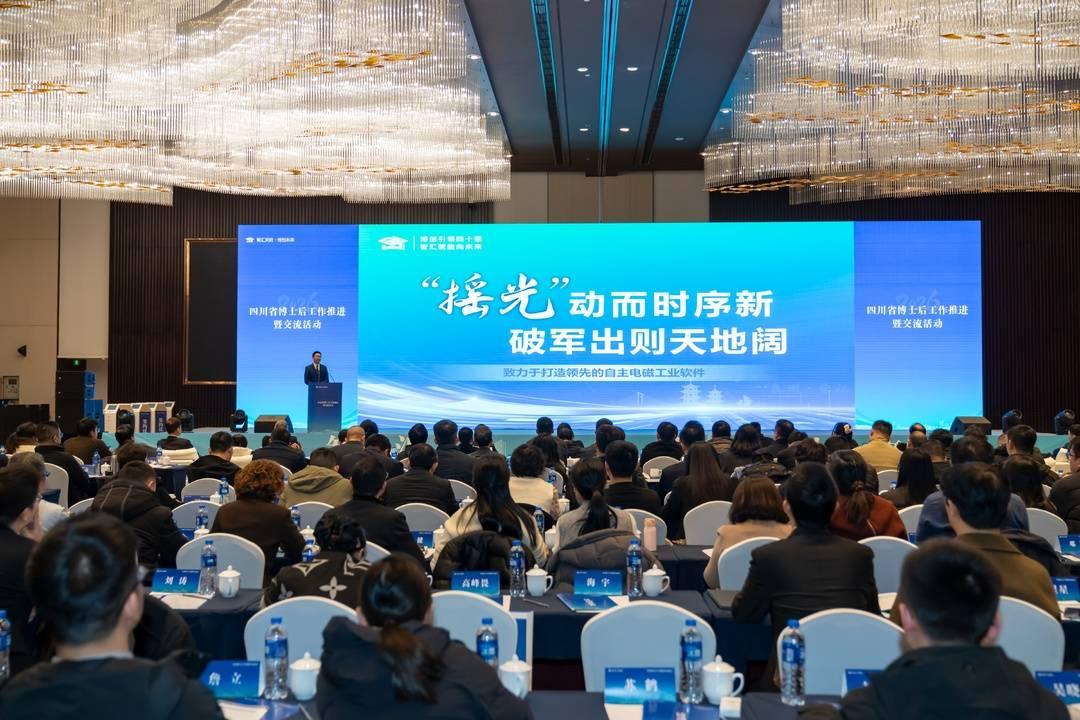
Core Viewpoint - The event held in Chengdu aimed to promote the development of postdoctoral work in Sichuan, focusing on innovation and the transformation of research outcomes through collaboration and project promotion [1][4]. Group 1: Event Overview - The event was co-hosted by multiple government departments and included a review of the achievements in the postdoctoral sector in Sichuan [1]. - It featured two main phases: work promotion and project promotion, emphasizing the themes of review, display, connection, and transformation [1]. Group 2: Project Promotion and Collaboration - Awards were given to outstanding units in the third National Postdoctoral Innovation and Entrepreneurship Competition, with notable projects like "Yao Guang Electromagnetic Comprehensive Simulation Industrial Software" and "Bo Hai Hydrogen Blue" showcased [2]. - A total of 46 innovative postdoctoral projects were presented, with 15 projects participating in live roadshows, facilitating direct interactions between project representatives and over 40 banks and investment institutions [2]. Group 3: Focus on Emerging Industries - The projects highlighted during the event were aligned with Sichuan's strategic focus on emerging and future industries, including artificial intelligence, healthcare, and low-altitude economy [4]. - Postdoctoral teams engaged in in-depth discussions with financial institutions regarding technical details, equity structures, and market expansion strategies, laying the groundwork for future collaborations and project transformations [4]. Group 4: Talent Development and Support - Sichuan has established a comprehensive training platform with 496 postdoctoral stations in key sectors such as AI, aerospace, and biomedicine, contributing to a significant increase in postdoctoral recruitment, totaling over 14,000 individuals [6]. - The province has implemented a five-tier funding system to support postdoctoral initiatives, resulting in substantial growth in financial backing and a retention rate of over 70% for postdoctoral graduates choosing to remain in Sichuan [6].
怀柔:全力建设国际一流的战略科技融合发展示范区
Xin Lang Cai Jing· 2026-01-07 09:57
Core Viewpoint - Over the past five years, Huairou District has made significant progress in high-quality development, ecological civilization, and improving the quality of life for its residents, establishing itself as an important hub for the capital's functions [2][20]. Group 1: Scientific Innovation and Development - Huairou Science City is rapidly emerging as a world-class hub for original innovation, with the high-energy synchrotron radiation source expected to be operational by 2026 [6][9]. - The Science City has entered a new operational phase, with all 29 scientific facilities from the 13th Five-Year Plan now operational, and 17 of them open for global sharing [6][9]. - A total of 439 significant scientific achievements have been produced, including 72 key core technologies, showcasing the region's innovation capabilities [6][9]. Group 2: Talent Attraction and Infrastructure - Huairou Science City has attracted 33 Nobel laureates and 39 highly cited scientists, with a total of 26,000 researchers, enhancing its international influence [7]. - Policies such as "Yanshi Qingchuang Wuyou Ten Articles" have been implemented to address talent concerns, alongside the completion of various cultural and commercial facilities [7][12]. Group 3: Industrial Development and Economic Growth - Recent agreements have led to the signing of 13 major projects in strategic fields, with expected investments exceeding 5 billion yuan and projected output surpassing 40 billion yuan [11]. - The region is witnessing a surge in high-end scientific instruments and sensors, with over 350 key enterprises established, and significant advancements in new energy and materials sectors [11][12]. Group 4: Ecological and Environmental Achievements - PM2.5 annual average concentration has dropped to 24.2 micrograms per cubic meter, with an excellent days ratio of 87.1%, marking historical bests [16]. - Huairou has successfully created a national ecological civilization demonstration zone and a national forest city, with a forest coverage rate of 77.57%, the highest in the city [16][18]. Group 5: Social Welfare and Quality of Life - The district has introduced quality educational resources, adding over 6,000 new school places, and has implemented a comprehensive management system for healthcare facilities [20][21]. - The satisfaction rate for public service requests has increased significantly, reflecting the district's commitment to improving residents' quality of life [21][22]. Group 6: Future Development Goals - Huairou aims to further enhance its status as a comprehensive national scientific center, focusing on strategic facility aggregation, innovation ecology, and international cooperation [22][23]. - The district plans to promote deep integration of scientific and industrial innovation, aiming to build a modern industrial system characterized by innovation and advanced manufacturing [22][23].

最高补助1亿元,北京市发改委14条措施提升中试服务能级
仪器信息网· 2026-01-07 09:02
Core Viewpoint - Beijing has introduced 14 policies aimed at enhancing the capacity of pilot testing services, with a goal to establish 10 national-level and 50 municipal-level pilot testing platforms by 2030, promoting the integration of technology and industry, and fostering new productive forces [1][4]. Background of Policy Issuance - Pilot testing is a transitional testing phase for new products moving towards production, crucial for the industrialization of technological achievements. Pilot testing platforms provide specialized services and systematic solutions to support the engineering breakthroughs and industrial applications of technological results [4]. Main Considerations of Measures - Beijing has made significant progress in integrating technological and industrial innovation, forming a "leading talent + new R&D institution" model. However, existing pilot testing platforms do not fully meet the demand for technological achievement transformation, leading to resource fragmentation. The new measures aim to address these issues through a combination of effective market and proactive government actions [6]. Specific Measures - The measures outline 14 policies focusing on four areas: layout of pilot testing platforms, continuous enhancement of service capabilities, optimization of the service ecosystem, and strengthening of support measures. The goal is to establish a pilot testing system that meets the requirements of the capital's modern industrial system by 2030 [7]. Key Initiatives - The measures emphasize the establishment of independent legal entities for pilot testing platforms, particularly in key industries such as artificial intelligence, healthcare, and green low-carbon technologies. New projects will receive financial support based on a percentage of total investment, with a maximum cap [8][9]. Enhancing Service Capabilities - The measures propose initiatives to improve the sustainability of pilot testing platforms, including open sharing of internal testing capabilities and enhancing full-chain service capabilities. This aims to expand the functions of pilot testing platforms to cover the entire industrial chain [10]. Optimizing the Service Ecosystem - The measures focus on strengthening the necessary support for pilot testing platforms, including space, information, finance, talent, and standards. They aim to build a collaborative pilot testing transformation base in the Beijing-Tianjin-Hebei region and enhance the matching of supply and demand through upgraded industrial mapping [11]. Implementation Organization - The measures call for coordinated efforts between city and district levels to ensure effective policy implementation. This includes leveraging the advantages of city-district collaboration and promoting the establishment of pilot testing service platforms in industrial clusters and parks [12].

站在“十五五”新起点,广元谋划经济发展新目标 锚定1+3+3 奋力攀向2000亿
Si Chuan Ri Bao· 2026-01-07 08:05
Core Viewpoint - The city of Guangyuan aims to achieve an economic total of 200 billion yuan by the end of the 14th Five-Year Plan, driven by the development of the aluminum industry and the establishment of a comprehensive industrial chain [3][4]. Group 1: Economic Growth and Industrial Development - Guangyuan's industrial added value increased by 13.7% year-on-year from January to November 2025, marking 17 consecutive months of double-digit growth [4]. - The "1+3+3" industrial advantage model has led to a 10.4% year-on-year increase in output value for key industries [4]. - The aluminum-based new materials industry is projected to exceed 50 billion yuan in output value by the end of 2025, with over 100 related enterprises established in Guangyuan [6]. Group 2: Project Attraction and Service Efficiency - Guangyuan has demonstrated a rapid project initiation process, with a notable example of a project starting within 36 days from signing [7]. - The city has implemented a comprehensive service model for enterprises, including dedicated service teams and policy support to address challenges faced by businesses [7]. - In 2025, Guangyuan welcomed 23 new enterprises and added 28 provincial-level specialized and innovative enterprises [8]. Group 3: Strategic Planning and Future Outlook - Guangyuan's strategic plan includes the establishment of a national green aluminum processing base and an innovation base for the aluminum industry in the Sichuan-Chongqing region by 2030 [9]. - The city plans to implement five major projects to enhance aluminum production capacity, upgrade the industrial chain, and accelerate green innovation [9]. - Future industrial development will focus on integrating traditional industries with emerging sectors such as low-altitude economy, new energy, and artificial intelligence [10].
城市高质量发展与国际合作大会探寻多元协同创新实践路径
Xin Lang Cai Jing· 2026-01-07 04:51
Group 1 - The conference focused on high-quality urban development and international cooperation, emphasizing the importance of innovation in urban planning and development [1] - Key themes included technological innovation, industrial upgrading, and opening up to external markets, aiming to create a platform for cross-regional and cross-sector dialogue [1] - The goal of building modern urban cities was highlighted, with innovation being placed at the forefront of urban development objectives [1] Group 2 - Guiyang and Guian New Area are recognized for their digital economy, with continuous growth leading the nation for eight consecutive years [2] - Changsha is accelerating its development as a global R&D center, boasting seven trillion-level industrial clusters and over 3,400 innovation platforms [2] - Weifang is advancing energy transition with significant projects in nuclear power and offshore wind energy, emphasizing green and low-carbon development [3] Group 3 - Ordos is enhancing its business environment through policy innovation and a focus on service quality, aiming to support healthy business growth [4] - Yibin is strengthening its industrial ecosystem by ensuring resource availability and optimizing services for enterprises [5] - Haikou is leveraging its status as a high-tech industrial zone to attract investment in biomedicine and advanced food processing, achieving nearly 20% growth in key economic indicators [6] Group 4 - The conference showcased diverse practices and innovative outcomes from various cities, illustrating multiple pathways for high-quality urban development [6] - Participants agreed that high-quality urban development encompasses not only economic growth but also social, environmental, and cultural advancements [6]