
粮食储备

Search documents
泰安开展秋季粮油安全普查及第四季度小包装成品粮储备检查
Zhong Guo Fa Zhan Wang· 2025-11-12 06:55
Core Points - The article discusses the inspection conducted by the Shandong Provincial Development and Reform Commission in Taian to ensure food security and the effectiveness of small packaged grain reserves [1][2] - The inspection focused on the management of grain storage, adherence to safety standards, and the training of personnel involved in grain management [2] Group 1: Inspection Details - The inspection took place from November 5 to 6, targeting small packaged grain storage enterprises in Ningyang, Feicheng, Dongping, and Taishan District [1] - The inspection team utilized a combination of document review, on-site verification, and direct inquiries to assess compliance with storage management requirements [1] - Four key areas were examined: implementation of storage management systems, adherence to grain safety storage norms, condition of storage facilities, and staff knowledge of management protocols [1] Group 2: Recommendations and Future Actions - The inspection team emphasized that storage enterprises must strictly adhere to grain storage management regulations and improve their professional capabilities through targeted training [2] - The city’s Development and Reform Commission plans to maintain a "normal + dynamic" supervision model to enhance oversight of grain storage management [2] - Future inspections will include regular checks and unannounced spot checks to ensure both safe grain storage and production practices are effectively managed [2]
四川打造保障国家重要初级产品供给战略基地成效显著
Zhong Guo Fa Zhan Wang· 2025-10-29 06:29
Core Points - Sichuan Province is focusing on becoming a strategic base for the supply of important primary products during the "14th Five-Year Plan" period, emphasizing food security and energy resource security [1] Group 1: Agricultural Development - Sichuan has maintained a stable grain production of over 700 billion jin for five consecutive years, reaching a historical high of 726.8 billion jin last year, an increase of 21.4 billion jin from 2020, with expectations to exceed 730 billion jin this year [5] - The province has implemented a ten-year plan for high-standard farmland construction, with over 17.7 million mu of farmland newly built or renovated [5] - The average grain yield per mu reached a record high of 378.2 kg last year, supported by initiatives like the "Tianfu Grain Warehouse" and the "Ten Thousand Agricultural Technicians into Ten Thousand Villages" campaign [5] Group 2: Food Security and Storage - Sichuan has established a three-tiered government reserve system for staple food, achieving full coverage of grain and oil reserves across 21 cities and 183 counties, with a total grain and oil reserve of 6.01 million tons [6] - The province has invested 2.745 billion yuan in building low-temperature storage facilities and high-standard granaries, achieving a comprehensive low-temperature storage coverage [6] - The implementation of the "Sichuan Provincial Food Security Guarantee Regulations" aims to separate the policy and operational functions of local government grain reserve enterprises [6] Group 3: Energy Development - Sichuan is leveraging its unique clean energy resources to build a world-class clean energy base, focusing on multi-energy complementary development including hydropower, wind, solar, and natural gas [8] - The province's hydropower installed capacity is expected to exceed 100 million kilowatts this year, with a fivefold increase in new energy installed capacity to 32 million kilowatts [8] - Natural gas production has increased from 43.2 billion cubic meters to 56.2 billion cubic meters, maintaining the top position in the country [8] Group 4: Mineral Resource Development - Sichuan is rich in strategic mineral resources, with significant investments in geological exploration leading to the discovery of new large and medium-sized mineral deposits [10] - The province accounts for 76.2% of the national titanium ore resources and 28.2% of vanadium ore resources, with new lithium and phosphate resources discovered [10] - The "Panzhihua-Xichang Strategic Resource Innovation Development Experimental Zone" has become a global hub for vanadium-titanium new materials, producing 80% of the country's titanium concentrate and 60% of vanadium products [10][11]

“粮食安全看山东”之广饶:科技赋能筑牢粮食安全屏障
Zhong Guo Fa Zhan Wang· 2025-10-28 03:34
Core Insights - The company has focused on enhancing grain storage efficiency, ensuring smooth circulation, and maintaining storage safety through reforms, technological empowerment, and institutional foundations [1][2][3] Mechanism Reform - The company has restructured its functions by separating policy and operational roles, aligning with higher-level requirements, and establishing clear boundaries for policy-based and operational grain management [1] - The company is now under the county economic development group, which oversees its investment responsibilities while receiving regulatory guidance from the county's development and reform bureau [1] Technological Innovation - Over 2 million yuan has been invested in an information management system that integrates the entire grain storage process, significantly improving efficiency [1] - The unloading process has seen efficiency improvements of over 200% compared to traditional methods due to the installation of hydraulic unloading platforms with automatic cleaning screens [1] - A video analysis system has been connected to the provincial grain dynamic monitoring platform, enhancing transparency in inventory, quality, and flow [1] Green Storage Upgrade - The company has utilized support policies to enhance storage quality by equipping warehouses with advanced ventilation and temperature control systems [2] - Smart grain storage systems have been implemented in warehouses to precisely regulate internal temperature and humidity [2] - Structural improvements have been made to some steel-roofed warehouses to enhance cooling and insulation [2] Emergency Assurance - The company has established a comprehensive emergency response mechanism, detailing grain distribution processes and responsibilities during emergencies [2] - Regular safety training and emergency drills are conducted to ensure preparedness [2] - During the pandemic, the company managed wheat supply to stabilize prices and support local flour processing enterprises [2] Institutional Construction - The company has implemented a unified management approach for storage, operations, finance, and safety production, following a structured four-step work method [2] - A safety production management manual has been developed, outlining responsibilities, emergency plans, and operational procedures [2] Future Outlook - The company plans to continue enhancing grain security policies in Shandong and aims to construct a new 10,000-ton warehouse by 2026 to strengthen local grain security [3]
“粮食安全看山东”之东营市垦利区:四个“+”助力地方储备粮有效监管
Zhong Guo Fa Zhan Wang· 2025-10-27 08:03
Core Viewpoint - The Dongying District Development and Reform Bureau in Shandong Province is committed to ensuring food security through effective management of local grain reserves and implementing a comprehensive regulatory framework [1][2][3] Group 1: Regulatory Measures - The bureau utilizes both online and offline methods for daily supervision, leveraging the provincial grain circulation management cloud platform for electronic inspections and real-time data aggregation [1] - Offline supervision includes special inspections and on-site monitoring, guided by provincial regulations to enhance the management and operational standards of grain storage enterprises [1] Group 2: Grain Rotation Management - The annual grain rotation plan is developed based on quality inspection reports and storage enterprise applications, with collaboration from the district finance bureau and agricultural development bank [2] - During the rotation process, enterprises are required to adhere to principles of transparency and fairness, utilizing market mechanisms for trading and ensuring compliance through on-site supervision [2] - After the rotation, enterprises must provide quality inspection reports for joint acceptance to ensure high-quality completion of rotation tasks [2] Group 3: Financial and Talent Support - The bureau assists storage enterprises in securing funding, with significant investments made in new storage facilities and upgrades to existing ones, totaling nearly one million yuan [3] - Financial support includes subsidies for storage costs and interest on loans, with quarterly applications to the district finance bureau to ensure robust funding for grain safety [3] - Talent development initiatives include organizing skill competitions to enhance the capabilities of personnel in grain storage enterprises, thereby strengthening the workforce [3]
科技赋能 中国粮仓迈向绿色智能新时代
Zhong Guo Xin Wen Wang· 2025-10-21 16:14
Core Insights - Ensuring food security requires a dual approach of increasing production and reducing losses, with a focus on both aspects becoming crucial for strengthening food security in China [1] Group 1: Technological Advancements in Grain Storage - The introduction of an intelligent sampling system that integrates "robot technology + modular design" has significantly improved efficiency in grain quality inspection, reducing the average inspection time for rice to under 13 minutes and for wheat, soybeans, and corn to around 8 minutes [2] - A mobile cleaning center has been developed to enhance the efficiency of impurity removal from grains, achieving a 50% increase in cleaning efficiency while reducing the operational footprint [5] - New energy-efficient and low-noise equipment, such as intelligent air conditioning and specialized fans, has been implemented to control temperature and humidity in storage facilities, promoting green storage practices [5] Group 2: Smart Technologies for Pest Management - The AI pest monitoring system has been deployed in over 20 storage facilities, improving monitoring frequency to hourly and achieving a pest identification accuracy of over 95%, thereby reducing the risk of pest outbreaks [7] - The collaboration between China Grain Reserves Group and China Mobile has led to the development of the first grain storage large model, "Jiyuan," which consolidates over 200,000 high-quality storage knowledge units, enhancing the understanding and application of grain storage practices [8] Group 3: Regulatory Innovations - The establishment of a "smart brain" for grain regulation has transitioned the monitoring approach from reactive to proactive, with an anomaly warning accuracy exceeding 87%, thus enhancing the overall safety and management of grain storage [8]
聚焦节粮减损 川渝陕甘跨区域合作
Si Chuan Ri Bao· 2025-10-17 07:02
Group 1 - The theme of this year's National Food Security Promotion Week is "Food Conservation is Everyone's Responsibility" [1] - Sichuan, Chongqing, Shaanxi, and Gansu provinces signed a strategic cooperation agreement to establish a regional grain quality safety monitoring data sharing platform [1] - The agreement aims to enhance risk prevention and control capabilities through data sharing and emergency response mechanisms for food safety incidents [1] Group 2 - The provincial grain and reserve system is addressing issues such as aging facilities and outdated technology to reduce food waste [2] - A total of 8.52 billion yuan has been invested to support the construction and renovation of 37 grain storage facilities, increasing high-standard grain storage capacity by 202,400 tons [2] - The comprehensive loss rate for grain storage in Sichuan has been reduced to 0.48%, with low-temperature storage capacity reaching 9.72 million tons [2]
新华鲜报|守护好“食”光!世界粮食日话“饭碗”
Xin Hua She· 2025-10-17 03:17
Core Points - The theme for this year's World Food Day is "Hand in Hand to Advocate for Diverse Foods, Uniting Efforts to Create a Better Future" [1] - China's food security is emphasized as a top priority by President Xi Jinping, with a focus on ensuring national food safety [3] - The average grain possession per capita in China has reached 500 kg, surpassing the international safety line of 400 kg [3] Group 1: Food Production and Security - China's grain production has consistently exceeded 1.3 trillion jin, with last year's output reaching over 1.4 trillion jin for the first time [4] - Recent adverse weather conditions, particularly in the Huang-Huai region, have impacted the autumn harvest progress [6] - Various regions are implementing measures to ensure the smooth completion of the autumn grain harvest, including upgrading harvesting machinery and providing real-time service information [6] Group 2: Storage and Preservation Technologies - Advanced storage technologies are being utilized to maintain grain quality, such as temperature control and carbon dioxide storage methods [6][8] - These technologies aim to reduce storage losses and enhance the quality of stored grains, ensuring fresher and higher-quality food for consumers [8] Group 3: Food Waste Reduction Initiatives - The theme for the food security awareness week is "Food Conservation is Everyone's Responsibility," promoting the importance of reducing food waste [8] - Restaurants are adopting practices to minimize waste, such as providing portion size guidance to customers and repurposing unsold food [10] - The "Clean Plate Campaign" is gaining traction across the country, reflecting a cultural shift towards food conservation [10] Group 4: Diversified Food Supply - The food supply system is being diversified to include not only grains but also meat, dairy, vegetables, and seafood, enhancing overall food security [10] - By the end of 2024, China's total production of meat, eggs, and dairy products is projected to reach 175 million tons, an 18.8% increase from 2020 [10] - The total output of aquatic products is expected to reach 73.58 million tons, a 12.3% increase from 2020 [10]
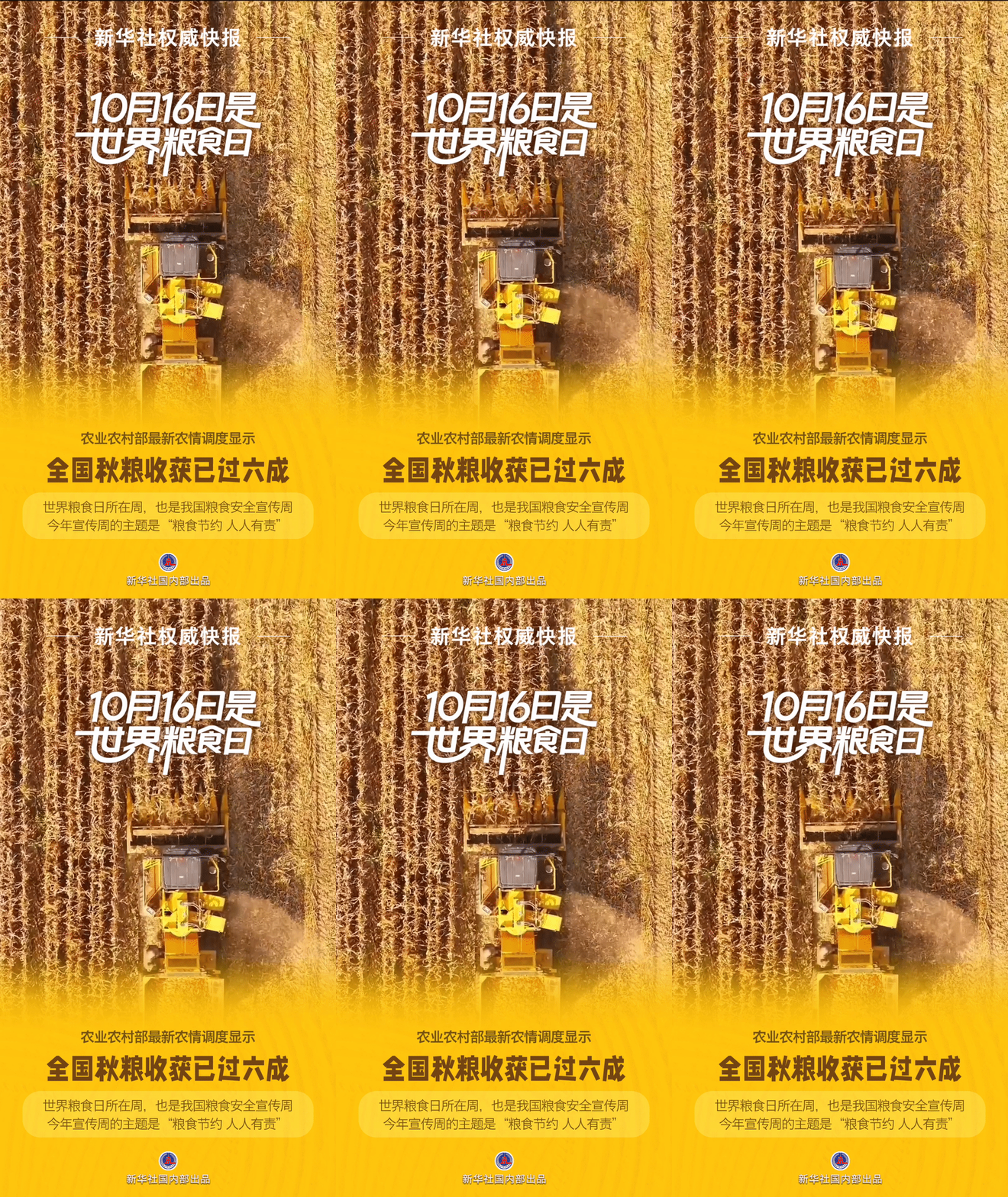
世界粮食日智慧粮仓迎“新客” 首批秋收新粮安全入仓
Zhen Jiang Ri Bao· 2025-10-16 23:40
Group 1 - The autumn grain harvest in Jiangsu province has begun, with the first batch of medium and late indica rice being successfully stored in the Zuo Lake Grain Reserve Company [1] - The city plans to purchase 11,600 tons of medium and late indica rice, with subsequent purchases focusing on japonica rice [1] - The grain storage facility operates at full capacity, utilizing a smart management platform to monitor and maintain optimal storage conditions for the grains [1] Group 2 - The local government has prepared for the autumn grain purchase by enhancing storage capacity and ensuring timely maintenance of equipment [2] - The total storage capacity prepared by local state-owned grain enterprises is 165,000 tons, with specific reserves of 30,000 tons and 16,000 tons in designated facilities [2] - The expected funding for grain purchases across the city is 450 million yuan [2]
天府粮仓里走出节粮减损“绿色标杆”
Ren Min Ri Bao· 2025-10-15 22:22
Core Insights - The Sichuan Xinjin Direct Grain Storage Warehouse, a subsidiary of the China National Grain Reserves Corporation, has successfully implemented modern grain storage technologies, emphasizing green and low-carbon practices since its establishment in 2009 [1][2] - The warehouse features the world's first elevated membrane grain storage facility, which has been recognized as one of the "Top Ten Super Projects" by state-owned enterprises in 2022 [1] - The facility's innovative design significantly enhances grain preservation capabilities, aligning with the national food security strategy of "storing grain in technology" [1][2] Technological Advancements - The membrane warehouse has shown remarkable performance in key metrics such as temperature control, moisture retention, and airtightness, with a thermal conductivity coefficient reduced by approximately 70% compared to traditional shallow circular warehouses [2] - The empty warehouse's half-life test period meets the high standards for grain storage construction, achieving six times the required benchmark [2] - Energy consumption has been reduced by over 30%, and the average energy consumption for temperature control, grain cooling, and winter ventilation operations is lowered by 10% [2] Environmental Impact - The storage facility has successfully decreased grain storage losses from 0.37% in 2022 to 0.12% by 2025, demonstrating effective grain loss reduction strategies [2] - Each membrane warehouse is estimated to reduce carbon dioxide emissions by approximately 3 tons annually [2] - The warehouse management is committed to integrating intelligent and green practices to enhance storage efficiency and sustainability [2]
国家粮食安全得到有效保障
Ren Min Ri Bao· 2025-10-15 00:17
Core Insights - The article emphasizes the effective guarantee of national food security through stable grain production and improved storage capacity during the "14th Five-Year Plan" period [2][3]. Group 1: Grain Production and Supply - Grain production in China has remained stable at over 1.3 trillion jin annually, with projections to exceed 1.4 trillion jin in 2024, marking a 25 kg increase in per capita grain availability compared to the end of the "13th Five-Year Plan," reaching 500 kg, which is above the internationally recognized safety line of 400 kg [3]. - The average annual grain purchase volume has surpassed 400 million tons, indicating a robust supply and stable market operation [3]. Group 2: Storage and Management Improvements - The national grain storage capacity has significantly increased, with the total capacity of standard grain warehouses exceeding 730 million tons, an increase of 58 million tons since the end of the "13th Five-Year Plan" [3]. - The capacity for low-temperature and quasi-low-temperature storage has reached 220 million tons, up by 70 million tons from the previous period [3]. Group 3: Emergency Response and Quality Assurance - The grain emergency response system has been enhanced, with the number of emergency processing enterprises increasing from 5,448 to 6,872, a growth of 26%, and daily processing capacity rising from 1.2 million tons to 1.78 million tons, a 48% increase [6]. - Over 100 national standards and 50 industry standards have been revised or established since 2021, focusing on quality, nutrition, and health to ensure consumer safety [8]. Group 4: Financial Support and Investment - Since 2021, the Ministry of Finance and the National Food and Strategic Reserves Administration have allocated 46.2 billion yuan in fiscal funds, attracting over 84 billion yuan in social investment for more than 8,400 projects aimed at enhancing the quality of the grain industry [8].