
粮食生产

Search documents
河南:多措并举确保“三秋”生产有序推进
Xin Hua She· 2025-10-02 13:16
Group 1 - The article highlights the measures taken by Henan province to ensure a successful autumn harvest during the critical "Three Autumns" period, which includes autumn harvest, sowing, and management [1] - As of October 1, 2023, Henan has harvested 53.2 million acres of autumn crops, accounting for 45.1% of the total planting area [1] - To address recent rainy weather, Henan has prepared 200,000 various harvesting machines, including 7,980 tracked corn harvesters, and formed 742 emergency agricultural machinery service teams for urgent harvesting operations [1] Group 2 - Special lanes have been established at highway toll stations in Henan to facilitate the quick passage of agricultural machinery, with optimized processes for vehicles holding valid cross-regional operation certificates [1] - Zhoukou, a major grain-producing city in Henan, has maintained a total grain output of over 18 billion pounds for seven consecutive years, and has implemented two tower dryers with a daily processing capacity of 700 tons to mitigate the impact of rainy weather on harvesting [1] - The State Grid Zhoukou Power Supply Company has formed a "Grain Protection" electricity service team to ensure safe electricity supply for grain drying, and has opened a green channel for electricity installation for grain drying customers [2]
从“靠天吃饭”到筑牢“齐鲁粮仓” 山东用“芯”端稳饭碗
Zhong Guo Xin Wen Wang· 2025-09-25 11:02
Core Viewpoint - Shandong province is transforming its agricultural practices from traditional reliance on natural conditions to a technology-driven approach, enhancing food security through innovative methods and comprehensive management of saline-alkali land [1][2][5]. Group 1: Saline-Alkali Land Management - Shandong has nearly 9 million acres of saline-alkali land, which is being utilized as a potential resource for food security [2]. - The province has adopted a strategy that emphasizes ecological priorities and tailored solutions for different regions, focusing on soil improvement and resource utilization [4][5]. - Innovative techniques, such as the "dual-layer drainage" method in Dongying, have significantly reduced soil salinity, enabling previously unproductive land to be cultivated [4][5]. Group 2: Seed Industry Revitalization - The seed industry is considered the "chip" of agriculture, and Shandong is making strides in seed resource protection and innovation [6][8]. - Notable breakthroughs in breeding salt-tolerant crops have been achieved, with varieties like "Lu Dan 510" showing high yield and resilience [6][8]. - The provincial government has implemented policies to support seed industry revitalization, ensuring a robust foundation for agricultural modernization [8]. Group 3: Food Waste Reduction - Shandong is focusing on reducing food waste through improved practices in harvesting, storage, and processing [9][10]. - Initiatives include training farmers on safe harvesting techniques and utilizing smart storage facilities to maintain grain quality [9][10]. - The integration of technology in grain storage, such as temperature monitoring and ventilation systems, enhances food preservation and reduces losses [10]. Group 4: Comprehensive Food Security Strategy - Shandong's approach combines land management, seed innovation, and waste reduction to create a sustainable food security system [10]. - The province's efforts not only strengthen its own food supply but also contribute valuable insights for food security on a national and global scale [10].

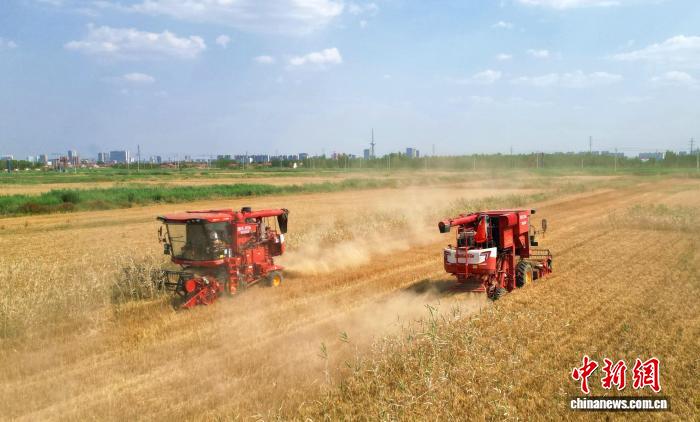
我国探索建立黄淮地区、东北地区粮食生产技术集成创新高地
Ren Min Ri Bao· 2025-09-01 22:07
Core Viewpoint - The Ministry of Agriculture and Rural Affairs is establishing innovation hubs for grain production technology in Jiangsu and Jilin provinces starting in 2024, aiming to apply and integrate scientific achievements in major grain-producing areas [1] Group 1: Innovation Hubs - Two innovation hubs will be set up in Suining, Jiangsu, and Changchun, Jilin, focusing on the Huang-Huai region and Northeast region for grain production technology [1] - The Changchun hub has gathered 27 professional teams from 15 research institutions, including the Chinese Academy of Agricultural Sciences, to implement new technologies for increased yield and efficiency [1] - The Suining hub relies on enterprise operations and explores management models for promoting agricultural innovations, showcasing 89 new varieties and 28 new technologies across various fields [1] Group 2: Focus Areas - The Ministry will concentrate on technology validation and achievement evaluation to accelerate the transformation of agricultural scientific results into new productive forces in agriculture [1]
抗冲击能力:安全基础进一步夯实
Jing Ji Ri Bao· 2025-08-19 23:16
Core Viewpoint - Food and energy security are crucial foundations of national security, with significant progress made in ensuring these areas during the "14th Five-Year Plan" period, including a record grain production and high self-sufficiency rates in staple foods and energy [1][2][5]. Food Security - Grain production has achieved "21 consecutive years of abundance," with per capita grain availability reaching 500 kg, surpassing the international safety line of 400 kg [2]. - The comprehensive production capacity of grain has been enhanced through strategies like "storing grain in the ground and technology," with over 1 billion mu of high-standard farmland established [2]. - Structural adjustments in grain planting have been made to ensure basic self-sufficiency in grains, with corn and soybean production increasing to alleviate reliance on imports [3]. Supply Chain Resilience - The resilience of the grain circulation supply chain has improved, with over 700 million tons of grain storage capacity established nationwide [4]. - The integration of quality grain projects has led to an increase in the supply rate of high-quality grain and oil products, meeting the upgraded consumption needs of the population [4]. Energy Security - Energy security has been strengthened, with primary energy production continuing to rise and maintaining an energy self-sufficiency rate above 80% [5]. - The total oil and gas production reached a historic high of over 400 million tons of oil equivalent, with significant contributions from offshore and shale oil and gas developments [6]. - The renewable energy sector has seen substantial growth, with installed capacity for renewable energy generation reaching 2.017 billion kilowatts, a 58% increase year-on-year [7]. Emergency Preparedness - The national reserve system has been enhanced, with nearly 7,000 grain emergency processing enterprises and a daily processing capacity exceeding 1.7 million tons [8]. - The establishment of a comprehensive emergency supply network has improved the efficiency of disaster response and resource allocation [9].
阿布扎比财富基金ADQ:支持阿联酋的长期粮食安全目标,包括将国内粮食产量提高到总消费量的 50%,并减少对进口的依赖。
news flash· 2025-06-25 16:44
Core Viewpoint - Abu Dhabi Wealth Fund ADQ is committed to supporting the UAE's long-term food security goals, which include increasing domestic food production to 50% of total consumption and reducing reliance on imports [1] Group 1 - The initiative aims to enhance the self-sufficiency of the UAE in food production [1] - The strategy focuses on reducing the dependency on imported food products [1] - The target of achieving 50% domestic food production reflects a significant shift in the UAE's food security policy [1]
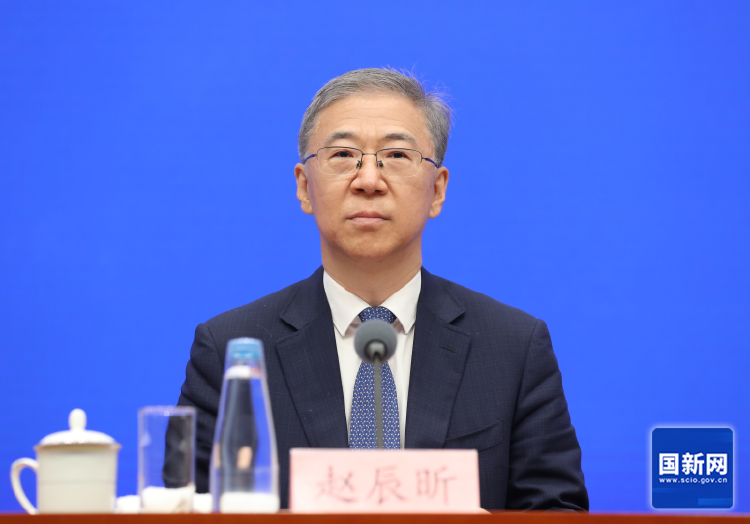
国家发改委副主任赵辰昕:“有朋友打电话,问了我一个问题”
Bei Jing Qing Nian Bao· 2025-04-28 07:50
Group 1: Food Security - China adheres to a national food security strategy focused on domestic production, ensuring capacity, moderate imports, and technological support, with a strict land protection policy [3] - In 2024, China's grain production is expected to exceed 1.4 trillion jin, with per capita grain availability at 500 kg, significantly above the international safety line of 400 kg [3] - The proportion of grain imports from the U.S. is low, primarily consisting of feed grains that have strong substitutability and ample international supply, ensuring domestic food supply remains unaffected [3][5] Group 2: Energy Security - China has established a multi-source energy supply system, maintaining an energy self-sufficiency rate above 80%, with stable annual crude oil production exceeding 200 million tons and continuous growth in natural gas production [4] - The share of U.S. energy imports in China's total energy consumption is minimal, and the country has diversified its energy import sources, ensuring that any reduction in U.S. imports does not impact domestic energy supply [5] - The government plans to continue implementing the national food security strategy and energy security strategy to ensure stable domestic supply and market stability [5] Group 3: Economic Resilience - Despite U.S. tariff increases affecting multiple economies, China's economy showed resilience with a 6.9% growth in exports in the first quarter and significant increases in domestic consumption during holidays [7] - The strong performance of Chinese products, such as smart panoramic cameras and domestic brands, indicates robust market demand both domestically and internationally [7] - The government expresses confidence in achieving its economic growth target of 5% for the year, emphasizing strategic focus and internal development [7]
回到1987年,这道“数学大题”你能得几分?
央视财经· 2025-04-23 12:59
Core Viewpoint - The article discusses the critical importance of water resource management in the Yellow River basin, particularly in the "几字弯" region, highlighting innovative strategies for water conservation and the integration of ecological, agricultural, and industrial development [2][4][9]. Water Resource Allocation - The Yellow River's water allocation plan distributes a total of 210 billion cubic meters, with a focus on sustainable usage across agriculture, industry, and ecology [2][9]. - The "八七分水方案" aims to control water extraction quantitatively, ensuring that each region's water needs are met while promoting high-quality development [2]. Agricultural Innovations - In the "几字弯" region, agricultural water usage accounts for 65% of total consumption, prompting the adoption of drought-resistant crops and advanced irrigation techniques to enhance water efficiency [5][9]. - Techniques such as planting trees during optimal weather conditions and utilizing satellite technology for precise timing have increased tree survival rates by 30% without additional water usage [5]. Industrial Development and Water Rights - The "几字弯" area is a significant energy hub, housing over 50% of China's coal, oil, and natural gas reserves, with water rights trading allowing agricultural water savings to be allocated to industrial projects [10]. - Successful water rights transactions have supported over 540 industrial projects, with the Ningdong Industrial Park achieving a total output value of 180 billion yuan in 2023, representing 30% of Ningxia's industrial output [10]. Renewable Energy and Future Prospects - The region is leveraging abundant renewable energy resources, such as solar and wind power, to support new industries without depleting water resources [11]. - The establishment of national data centers and computing power hubs in the "几字弯" area positions it as a key player in the future of technology and energy, contributing to high-quality development without relying on Yellow River water [11].

从薄弱环节入手 切实提升粮食综合生产能力
Zheng Quan Ri Bao· 2025-04-13 21:41
Core Viewpoint - The recently issued "Plan for Accelerating the Construction of an Agricultural Powerhouse (2024-2035)" by the Central Committee of the Communist Party of China and the State Council aims for significant progress in agricultural development by 2027, with a focus on enhancing food production capacity and ensuring self-sufficiency in key agricultural products [1] Group 1: Agricultural Production Capacity - By 2024, China's total grain production is projected to reach 14.13 trillion jin, marking the 21st consecutive year of bumper harvests and the first time surpassing the 1.4 trillion jin threshold, indicating strong resilience and potential in grain production [1] - The plan emphasizes the need for financial support to enhance comprehensive grain production capacity, targeting weak links such as independent breeding, agricultural machinery research and development, and technology transformation [1][2] Group 2: Financial Support and Risk Management - Financial support should also focus on upgrading and optimizing the grain industry chain through investments in storage logistics and agricultural product processing, which can increase the added value of grain and enhance production resilience [2] - Agricultural insurance is highlighted as a crucial risk management tool that can help farmers withstand natural disasters and market fluctuations, significantly reducing production risks [2] - The government is encouraged to implement policies that promote financial institutions to increase support for grain production, ensuring effective allocation of financial resources [2] Group 3: Integration of Finance and Agriculture - The deep integration of finance and grain production is expected to steadily enhance China's comprehensive grain production capacity [3]