
跨境旅游

Search documents
东盟“黄金签证”开闸:贸易、商务、文旅合作进一步加深,扩大开放再下一城
Hua Xia Shi Bao· 2025-06-19 02:27
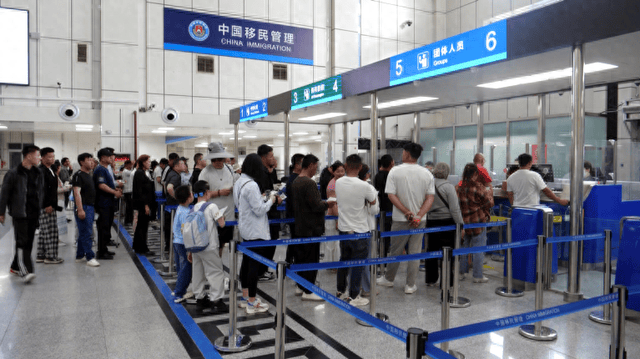
Group 1: Trade Cooperation - In the first five months of this year, the total trade value between China and ASEAN reached 3.02 trillion yuan, an increase of 9.1%, accounting for 16.8% of China's total foreign trade [1] - Exports to ASEAN amounted to 1.9 trillion yuan, growing by 13.5%, while imports from ASEAN were 1.12 trillion yuan, increasing by 2.3% [1] - The establishment of the "ASEAN Visa" aims to facilitate business travel for eligible personnel from ASEAN countries, enhancing bilateral cooperation [1] Group 2: Tourism Development - Guangxi is positioning itself as a bridge for border tourism and has initiated various cultural and tourism exchanges with Vietnam, leveraging the 75th anniversary of China-Vietnam diplomatic relations [3] - The cross-border tourism cooperation zone at Detian Waterfall has seen significant activity, with 2,338 travel groups and 35,485 individuals crossing borders as of mid-May [3] - Customized tourism routes targeting Vietnamese tourists have been developed, indicating a strategic focus on enhancing tourism offerings [4] Group 3: Agricultural Trade - The fruit trade between China and ASEAN is highlighted as a key area of growth, with increasing market share for ASEAN fruits in China and vice versa [7] - The event "Buy in China·Guangxi Station" aims to promote the use of artificial intelligence in various stages of fruit production and sales, enhancing trade efficiency [7] Group 4: Free Trade Agreement Enhancements - The upgraded version of the China-ASEAN Free Trade Area (FTA 3.0) will cover nine areas, including digital economy and green economy, aiming to improve trade efficiency by approximately 15% [8] - Predictions indicate that cross-border e-commerce transactions between China and ASEAN could exceed 1.2 trillion USD by 2026, with a growth rate of over 25% in digital payment services [8]
传统文化圈粉国际旅客,今年前5月跨境旅游企业注册量同比增长9.09%
Qi Cha Cha· 2025-06-06 06:25
Group 1 - The core viewpoint of the article highlights the significant growth in cross-border tourism enterprises in China, with a 9.09% year-on-year increase in registrations for the first five months of the year [1][3] - The total number of existing cross-border tourism-related enterprises in China is reported to be 116,200 [2] - The registration of cross-border tourism enterprises in 2023 is projected to reach 116,000, marking a remarkable year-on-year growth of 170.93%, the highest in nearly a decade [2] Group 2 - As of now, 5,624 cross-border tourism-related enterprises have been registered this year, with 5,533 of those registered in the first five months [3] - The majority of existing cross-border tourism enterprises, over 70%, belong to the leasing and business services sector, accounting for 74.36% [4] - Other sectors include transportation, warehousing, and postal services, which make up 5.86%, and scientific research and technical services, which account for 4.14% [4]
实探广西边境口岸:用身份证也能到越南旅游!出入境旅游便利化进一步增强
Hua Xia Shi Bao· 2025-06-06 03:25
Core Viewpoint - The article highlights the significant increase in cross-border tourism between China and Vietnam, particularly through the Guangxi region, driven by relaxed entry policies and enhanced travel convenience [4][8][11]. Group 1: Cross-Border Tourism Growth - The peak traffic at the Dongxing port can reach 46,000 people per day, ranking it among the top land border ports in China [4] - The number of tourists participating in cross-border day trips has surged, with 63,000 visitors expected in 2024, marking a historical high [8] - From January to May this year, over 42,000 tourists crossed the border, a 77.99% increase compared to the same period last year [8] Group 2: Tourism Infrastructure and Initiatives - The establishment of the first cross-border tourism cooperation zone between China and Vietnam aims to facilitate seamless travel, allowing tourists to complete entry procedures and enjoy attractions in both countries [11][12] - The cooperation zone will cover 2.5 square kilometers on both sides of the border, focusing on enhancing infrastructure and promoting cultural and business exchanges [12] - New travel inspection channels have been introduced at the Pu Zhai port, improving convenience for travelers holding passports and visas [11] Group 3: Local Economic Impact - Local businesses in border towns are benefiting from increased Vietnamese tourist spending on Chinese goods, including electronics and textiles [10] - The Dragon Bond Town is actively developing its tourism sector, with plans for hotels and cultural exhibitions to attract more visitors [10] - Cross-border shopping and cultural exchanges are becoming popular among Vietnamese tourists, who enjoy the affordability and variety of Chinese products [10]


免签政策红利释放 跨境游持续升温
Hai Nan Ri Bao· 2025-06-03 01:06
Group 1 - The core viewpoint of the article highlights the significant increase in cross-border tourism in Hainan, driven by visa-free policies and improved travel facilitation measures [1][2][3] - During the Dragon Boat Festival holiday, Hainan experienced a peak in inbound and outbound tourist flow, with a total of 16,400 transportation vehicles and 19,900 passengers processed, marking a 44.3% increase compared to the same period last year [2] - The implementation of visa-free entry for citizens from 59 countries and 240-hour transit visa exemptions has led to a noticeable surge in cross-border tourism, with 105,900 inbound and outbound travelers recorded this year, reflecting an 18.3% year-on-year growth [3] Group 2 - The majority of foreign visitors entering Hainan are utilizing visa-free entry, accounting for 90% of the total foreign arrivals, indicating that visa-free policies have become the primary means for foreigners to visit Hainan [3] - Hainan has restored and added a total of 64 international passenger routes, with travelers primarily coming from Russia, Kazakhstan, South Korea, and Singapore [3] - The local border inspection stations have optimized their operations to handle the increased tourist flow, ensuring smooth customs processing and reducing waiting times for travelers [2]
霍尔果斯跨境游爆火!免签购物天堂藏着多少惊喜
Sou Hu Cai Jing· 2025-05-20 10:35
Core Insights - The Horgos International Border Cooperation Center has become a popular cross-border shopping destination during the May Day holiday, with an average daily foot traffic of 30,000 people, comparable to the Spring Festival travel rush [1] - The center has transformed from a border trade point into a bustling shopping hub, often referred to as "Little Dubai" by Central Asian merchants, showcasing a significant increase in international consumer activity [3] Cross-Border Shopping Experience - The duty-free shops are thriving, with products like Kazakh chocolates and French perfumes attracting many shoppers, who find prices 30% lower than those offered by purchasing agents [3] - The center features a diverse range of products, including kitchenware, with merchants adapting to the influx of Kazakh customers by adding Russian price tags [3] Cultural Exchange and Integration - The center showcases a blend of cultures, with visitors experiencing traditional Chinese medicine treatments at lower prices compared to Kazakhstan, and local artisans demonstrating traditional crafts [5] - The unique atmosphere is highlighted by the presence of various cultural elements, such as Kazakh and Uyghur dance performances during holiday parades, reflecting a rich cultural mix [8] Operational Insights - The center has implemented measures to manage the flow of visitors, including staggered entry plans to ease congestion during peak times [1] - Practical tips for visitors include optimal entry times and packaging requirements for larger purchases, enhancing the overall shopping experience [9] Future Developments - Plans for future upgrades include the potential introduction of facial recognition for customs clearance and the establishment of a Central Asian cuisine area [9] - The center's appeal lies not only in tax-free shopping but also in the unique experience of crossing a virtual border, as expressed by international visitors [9]
中哈霍尔果斯国际边境合作中心加速构建新型商贸文旅生态体系
Zhong Guo Xin Wen Wang· 2025-05-19 09:10
Core Insights - The cross-border automotive repair service at the China-Kazakhstan Horgos International Border Cooperation Center has gained popularity due to lower repair costs and efficient customs clearance, attracting over 50 business orders in just two months [1][3] - The center's automotive repair service has achieved a monthly average of 30 vehicle repairs since launching its bonded repair services in March, generating over 200,000 yuan in revenue [3] - The center is expanding its offerings beyond automotive services to include vehicle display sales, multilingual cross-border live streaming, traditional Chinese medicine services, and international talent training programs [3][4] - In the first four months of this year, the center recorded 3.09 million person-times of entry and exit, representing a 104% year-on-year increase [4] Summary by Categories Automotive Repair Services - The cross-border automotive repair service has been well-received, with customers reporting significant cost savings compared to local services in Almaty [1][3] - The service center has completed over 50 cross-border repair orders since its inception, indicating strong demand [3] Business Expansion - The center is diversifying its services to include various new business models and activities, such as product sales and cultural experiences, to attract both domestic and international enterprises [3][4] - The management is focused on building a comprehensive trade and tourism ecosystem, enhancing service capabilities through a structured approach [4] Traffic and Engagement - The significant increase in personnel movement at the center highlights its growing role as a key hub for cross-border trade and tourism [4]

专家访谈汇总:养宠养成“伴侣”,谁能吃到情绪价值的溢价?
阿尔法工场研究院· 2025-05-13 10:25
Group 1: Cross-Border Tourism - The global cross-border tourism market is set to fully recover in 2024, with travel volume reaching 1.4 billion and market size exceeding $1.6 trillion, only 4% short of pre-pandemic peak levels [3] - China, as the largest source country, recorded 180 million outbound trips and nearly $290 billion in cross-border tourism revenue, significantly outpacing the global average in recovery speed and scale [3] - Data from the May Day holiday indicates a 173% year-on-year surge in inbound travel orders, while outbound travel is concentrated in Southeast Asia and Japan/Korea, with flight bookings increasing over 25% [3] - The trend towards short-haul cross-border travel is becoming mainstream, supported by the recovery of flight routes and reflecting the middle class's demand for "value for money" and "fragmented" leisure experiences [3] - The return of Chinese tourists is reshaping global tourism consumption structures and will substantially boost various segments of the global tourism-related industry chain, including airport operators, airlines, destination marketing agencies, and outbound travel service providers [3] Group 2: Veterinary Medicine Market - The veterinary medicine market in China has reached hundreds of billions in 2024, with an expected annual growth rate of 5%-8%, driven by the scale-up of traditional livestock farming and the rise of the pet economy and animal health awareness [4] - Key consumer demands include disease prevention, new vaccines, enhanced safety, and green low-residue products, leading to a shift in product structure from chemical drugs to biological products [4] - The industry is experiencing a "bipolarization" trend, where large enterprises dominate in brand, channel, and capacity, while small enterprises seek differentiation in niche markets such as pet medicine and localized disease prevention [4] - New operational entities, represented by large livestock farming companies, are increasingly focused on prevention efficiency, product residue, and economic benefits, demanding higher quality and stability in veterinary products [4] Group 3: Oral Healthcare Market - The oral healthcare market is expanding due to high rates of edentulism among those aged 65 and above (over 50%) and a 70% prevalence of malocclusion among adolescents, driven by both functional and aesthetic needs [6] - From 2025 to 2030, the average annual growth rate in lower-tier markets is expected to exceed that of first-tier cities by 5-8 percentage points, becoming a core expansion direction for private chains and telemedicine platforms [6] - With the implementation of centralized procurement policies covering implants and orthodontic materials, domestic companies are expected to see an increase in localization rates to 35%-40% over the next five years [6] - Public institutions remain dominant in handling severe cases and educational resources, while private institutions are more flexible, focusing on user experience and brand marketing, particularly in self-funded projects like implants, orthodontics, and aesthetic restorations [6] - Guangdong, Jiangsu, and Shandong account for over 50% of national oral healthcare resources, with Guangdong having a well-established full industry chain in equipment, consumables, and service institutions [6] - Over the next five years, policy direction and technological advancements will drive a shift in oral healthcare services from "treatment-oriented" to "prevention + personalized management + long-term repurchase" consumption cycles [6] Group 4: U.S.-China Trade Talks Impact on LPG - A significant breakthrough in U.S.-China trade relations occurred on May 12, 2025, with 91% of tariffs being lifted and the remaining "reciprocal tariffs" reduced to 10% within 90 days [8] - The reduction in tariffs has substantially improved the cost structure of U.S. products, leading to a $43 per ton increase in June FEI propane paper prices, indicating a rise in market optimism [8] - Chinese ports (e.g., Binzhou, Jiaxing, Ningbo, Tianjin) received a 31.44% increase in shipments of U.S. goods in April, reflecting anticipatory market behavior [8] - The decrease in U.S. tariffs is expected to alter the structure of LPG imports, opening a window for U.S. LPG to re-enter the Chinese market, particularly benefiting energy importers and LPG shipping companies with U.S. procurement capabilities [8] - The rapid increase in June FEI propane paper prices from $517 to $560 per ton (an 8.3% rise) reflects market expectations for U.S. products to re-enter the Asia-Pacific region [8] - In the medium term, U.S. production capacity and tariff advantages will create arbitrage opportunities, suggesting a focus on LPG traders and storage companies with long-term contracts and futures hedging capabilities [8] Group 5: Shipping Industry Response to U.S. Trade Policy - Following the May 12 U.S.-China joint statement, which lifted 91% of tariffs and provided a 90-day suspension on 24% of "reciprocal tariffs," a surge in shipping activity was observed, particularly on routes to the U.S. [9] - The export surge is driven by two key factors: the release of previously delayed shipments due to high tariffs and companies' anticipation of future policy volatility, prompting them to utilize the low-tariff window for deliveries or inventory replenishment [9] - Shipping companies had previously reduced capacity on U.S. routes due to cautious expectations regarding U.S.-China trade tensions, reallocating some capacity to more stable Southeast Asia and European routes [9] - Data from the Shanghai Shipping Exchange indicates that freight rates for U.S. West and East Coast routes have increased by 3.3% and 1.6%, respectively, with further increases expected in the coming weeks [9] - Shipping-related companies (e.g., container shipping, port operations, freight forwarding platforms) will directly benefit from the increased turnover rates and enhanced bargaining power resulting from this export surge [9] - The current "explosion" in shipping activity reflects both the release of market sentiment due to policy changes and the sensitivity of U.S.-China trade structures to external variables [9] - Small exporters, such as Shuangma Plastics and factories in the Yangtze River Delta, report a rapid restart of U.S. customer orders and accelerated payment and scheduling actions within the 90-day tariff relief window [9]

跨境旅游不断衍生新场景 反复爱上中国就这么简单
Yang Shi Xin Wen Ke Hu Duan· 2025-04-27 23:38
Group 1 - The core viewpoint of the news is the optimization of the departure tax refund policy in China, making it more convenient for foreign tourists to shop and receive refunds [1][3][11] - The tax refund rate for general goods is set at 11%, effectively providing a 10% discount for consumers [3] - The minimum purchase amount for tax refunds has been lowered from 500 RMB to 200 RMB, allowing more travelers to qualify for refunds [5] Group 2 - The cash refund limit has been significantly increased from 10,000 RMB to 20,000 RMB, encouraging diverse payment methods for tax refunds [7] - The new measures will lead to an increase in the number of tax refund stores and a wider variety of refundable products [3][5] - The "immediate refund" service introduced on April 8 has already improved the shopping experience for foreign visitors, allowing them to complete the refund process quickly [11][10] Group 3 - The implementation of a 240-hour visa-free transit policy has resulted in a 40.2% increase in foreign visitors, with 9.215 million entries recorded [13] - Various regions are enhancing their tourism offerings to convert the influx of visa-free travelers into increased consumer spending [17] - Cultural tourism experiences are being developed to cater to foreign tourists' interests in Chinese culture, with specific programs launched in Zhejiang [20][25]

五一大量外国人涌入中国,一季度跨境旅游相关企业注册涨超20%
Qi Cha Cha· 2025-04-27 06:24
Core Insights - The upcoming "May Day" holiday is driving a surge in domestic flight bookings, with a year-on-year increase of over 30% [1] - The number of inbound tourism orders has skyrocketed by 173% compared to last year, primarily from tourists in South Korea, Japan, and Singapore [1] - The registration of cross-border tourism-related companies has seen significant growth, with 4,138 new registrations this year, marking a 20.53% increase in the first quarter [3] Group 1: Current State of Cross-Border Tourism Companies - There are currently 116,100 cross-border tourism-related companies in China [2] - The registration of these companies has fluctuated over the past decade, with a peak in 2019 when 36,400 companies were registered, reflecting a 26.52% year-on-year increase [2] - In 2023, the total number of registered companies reached 116,000, representing a remarkable 170.45% year-on-year growth [2] Group 2: Company Registration Trends - In the first quarter of this year, 3,006 cross-border tourism-related companies were registered, contributing to a total of 4,138 registrations so far [3] - The forecast for 2024 indicates a total of 12,600 new registrations, which would be a 9.07% increase compared to the previous year [2] Group 3: Company Age Distribution - Over 60% of cross-border tourism-related companies have been established for more than five years [4] - Companies that have been in operation for 5-10 years make up the largest segment, accounting for 40.67% [4] - Companies established for more than 10 years represent 24.97%, while those less than one year old account for 10.84% [4]