
采掘工业

Search documents
2025年9月份工业生产者出厂价格同比降幅继续收窄
Guo Jia Tong Ji Ju· 2025-10-15 01:31
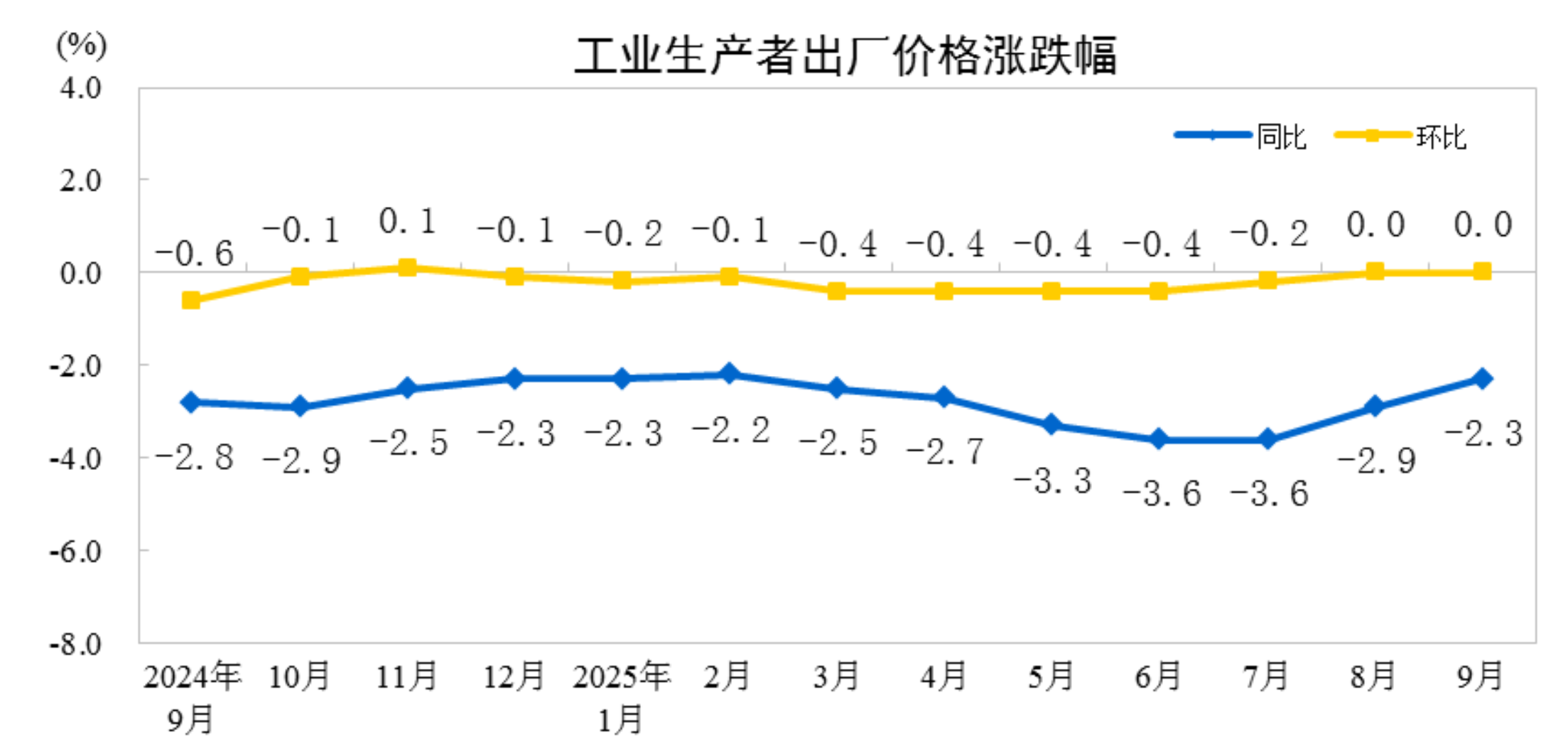
Group 1: Year-on-Year Changes in Industrial Producer Prices - In September, the producer prices for industrial producers saw a decline of 2.3% year-on-year, with production materials prices decreasing by 2.4%, contributing approximately 1.81 percentage points to the overall decline [8][11] - The mining industry experienced a significant price drop of 9.0%, while raw materials and processing industries saw decreases of 2.9% and 1.7%, respectively [8][10] - Consumer goods prices also fell by 1.7%, with food prices down by 1.7% and durable goods prices decreasing by 3.9% [8][10] Group 2: Month-on-Month Changes in Industrial Producer Prices - In September, the producer prices for industrial producers remained flat month-on-month, with production materials prices unchanged [7][10] - The mining industry prices increased by 1.2%, while processing industry prices saw a slight decline of 0.1% [7][10] - Consumer goods prices decreased by 0.2%, with durable goods prices down by 0.4% [7][10] Group 3: Industrial Producer Purchase Prices - The purchase prices for industrial producers decreased by 3.1% year-on-year, with fuel and power prices dropping by 8.1% [10][12] - Notably, prices for non-ferrous metals and wires increased by 6.6% year-on-year [10][12] - Month-on-month, purchase prices increased by 0.1%, driven by a 1.2% rise in non-ferrous metals and wires [10][12] Group 4: Key Industry Price Changes - The coal mining and washing industry saw a year-on-year price drop of 16.8%, while the oil and gas extraction industry experienced an 8.6% decline [10][12] - The non-ferrous metal mining industry reported a year-on-year price increase of 13.9% [10][12] - The food manufacturing industry experienced a slight decline of 1.3% year-on-year [10][12]

国泰海通:反内卷效果边际显现
Ge Long Hui· 2025-09-11 00:18
Group 1 - The effects of anti-involution policies are beginning to show in the PPI data, with commodity price increases leading to price recovery in downstream industries [1][3] - In August, the CPI year-on-year growth rate was -0.4%, while the PPI year-on-year growth rate was -2.9%, indicating a steady recovery in inflation [1][2] - The core CPI has shown resilience, with a significant year-on-year increase, despite food prices being a major drag due to the pig cycle [1][2] Group 2 - Food price declines are primarily driven by pork and egg prices, with the pig cycle in a bottoming phase and high inventory levels affecting egg prices [2] - The PPI data reflects a recovery in upstream mining prices, with coal mining and black metal industries showing month-on-month increases of 2.8% and 2.1% respectively [3] - The anti-involution policy focuses on addressing overcapacity caused by "herd investment" in downstream industries, aiming for more sustainable price recovery [3]

国泰海通|宏观:反内卷效果:边际显现——2025年8月物价数据点评
国泰海通证券研究· 2025-09-10 14:41
Group 1 - The core viewpoint of the article highlights the initial effects of anti-involution policies on PPI, with commodity price increases leading to price recovery in downstream industries, while the CPI is negatively impacted by the pork cycle but shows resilience in service prices [1][3]. - In August, the CPI year-on-year growth rate was -0.4%, and the PPI year-on-year growth rate was -2.9%, indicating a steady recovery in inflation [1][2]. - The food price decline, primarily driven by pork and egg prices, has negatively affected the CPI, while core service prices remain resilient, with core CPI showing a significant year-on-year increase [1][8]. Group 2 - The effects of anti-involution policies are beginning to show, focusing on eliminating excess capacity caused by "herd investment" in downstream industries, with an emphasis on guiding enterprises to standardize competition rather than relying solely on administrative interventions [3][8]. - The mining industry's price momentum has rebounded for three consecutive months, with significant increases in coal mining and black metal mining prices, indicating a recovery in upstream prices [1][8]. - The rise in commodity prices has positively impacted downstream manufacturing industries, with notable price recoveries in sectors such as computer and electronic equipment manufacturing, general equipment manufacturing, and textiles [1][8].

国家统计局:8月份工业生产者出厂价格同比降幅收窄
Zhong Guo Jing Ji Wang· 2025-09-10 06:34
Core Insights - In August 2025, the national industrial producer price index (PPI) decreased by 2.9% year-on-year, with the decline narrowing by 0.7 percentage points compared to the previous month, and month-on-month prices remained stable after a 0.2% decline [1] Group 1: Year-on-Year Changes in Industrial Producer Prices - In August, the prices of production materials fell by 3.2%, contributing approximately 2.40 percentage points to the overall decline in the PPI. The mining industry saw a significant price drop of 11.5%, while raw materials and processing industries experienced declines of 4.1% and 2.2%, respectively [2] - Prices of living materials decreased by 1.7%, impacting the overall PPI by about 0.45 percentage points. Food prices fell by 1.7%, while clothing prices remained stable, and general daily goods prices increased by 0.4%. Durable consumer goods prices dropped by 3.7% [2] - In terms of purchase prices, fuel and power prices decreased by 9.7%, chemical raw materials by 6.2%, and both black metal materials and agricultural products by 5.6%. Prices for construction materials and non-metallic products fell by 4.7%, while textile raw materials decreased by 2.0%. Conversely, prices for non-ferrous metal materials and wires increased by 4.7% [2] Group 2: Month-on-Month Changes in Industrial Producer Prices - In August, production material prices increased by 0.1%, contributing approximately 0.08 percentage points to the overall PPI increase. The mining industry saw a 1.3% rise, while raw materials increased by 0.2%, and processing prices remained unchanged [3] - Living material prices decreased by 0.1%, impacting the overall PPI by about 0.03 percentage points. Food prices rose by 0.1%, clothing prices were stable, while general daily goods and durable consumer goods prices fell by 0.2% and 0.3%, respectively [3] - For purchase prices, construction materials and non-metallic products decreased by 1.4%, while chemical raw materials and agricultural products fell by 0.4%. Fuel and power prices increased by 0.7%, and black metal materials rose by 0.6%. Prices for non-ferrous metal materials, wires, and textile raw materials all saw a slight increase of 0.1% [3]
7月辽宁工业生产者出厂价格同比下降5.8%
Xin Hua Cai Jing· 2025-08-12 06:28
Core Insights - In July 2025, the Producer Price Index (PPI) in Liaoning decreased by 5.8% year-on-year, with the decline widening by 0.2 percentage points compared to the previous month [1] - The Industrial Producer Price Index (IPI) also saw a year-on-year decrease of 6.8%, with a slight month-on-month decline of 0.2%, which is a narrowing of the previous month's decline by 0.7 percentage points [1] Price Trends - The prices of production materials decreased by 5.0% year-on-year in July, with the mining industry down by 10.7%, raw materials down by 5.8%, and processing industry down by 3.7% [1] - Consumer goods prices fell by 9.5% year-on-year, with durable goods down by 15.1%, food down by 5.5%, general daily necessities down by 2.2%, while clothing saw a slight increase of 0.1% [1] Raw Material Price Movements - In July, the prices of nine major raw materials showed a mixed trend with two categories increasing and seven decreasing [1] - Textile raw materials increased by 1.7%, and non-ferrous metals and wire materials increased by 1.4% [1] - Conversely, building materials and non-metallic materials decreased by 0.9%, wood and pulp decreased by 1.0%, other industrial raw materials and semi-finished products decreased by 1.1%, chemical raw materials decreased by 7.9%, black metal materials decreased by 8.7%, agricultural and sideline products decreased by 9.9%, and fuel and power decreased by 12.8% [1]
【数据发布】2025年7月份工业生产者出厂价格 环比降幅收窄
中汽协会数据· 2025-08-12 05:53
Core Viewpoint - In July 2025, the national industrial producer price index showed a month-on-month decline in both the producer's ex-factory prices and the purchasing prices, indicating a continued downward trend in industrial prices [1][3]. Group 1: Year-on-Year Changes in Industrial Producer Prices - In July, the ex-factory prices of industrial producers decreased by 3.6% year-on-year, while the purchasing prices fell by 4.5% [1][3]. - The average decline from January to July for ex-factory prices was 2.9%, and for purchasing prices, it was 3.2% [1][3]. - The prices of production materials dropped by 4.3%, significantly impacting the overall ex-factory price level [3][7]. Group 2: Month-on-Month Changes in Industrial Producer Prices - In July, the ex-factory prices of industrial producers decreased by 0.2% month-on-month, with production materials contributing to a decline of approximately 0.17 percentage points [6][7]. - The purchasing prices of industrial producers fell by 0.3% month-on-month, with notable declines in fuel and power prices by 0.6% and black metal materials by 0.7% [6][7]. Group 3: Breakdown of Price Changes by Category - In the ex-factory price category, the mining industry saw a significant decline of 14.0% year-on-year, while the processing industry experienced a decrease of 3.1% [3][7]. - For purchasing prices, fuel and power prices decreased by 10.8%, and black metal materials dropped by 8.0% [5][7]. - The prices of durable consumer goods fell by 3.5%, while general daily goods saw a slight increase of 0.6% [3][7].
2025年7月份工业生产者出厂价格环比降幅收窄
Yang Shi Wang· 2025-08-09 02:11
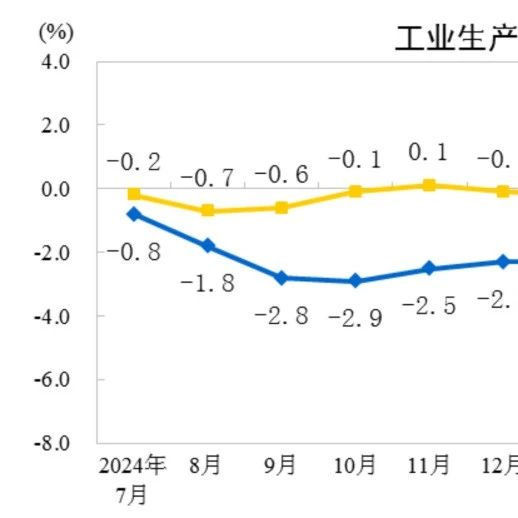
Core Insights - In July 2025, the national industrial producer price index (PPI) decreased by 0.2% month-on-month, while the industrial producer purchase price index (PPPI) fell by 0.3%, with the decline narrowing by 0.2 and 0.4 percentage points compared to the previous month respectively [1] - Year-on-year, the PPI dropped by 3.6%, and the PPPI decreased by 4.5% [1] - For the average from January to July, the PPI declined by 2.9% compared to the same period last year, and the PPPI fell by 3.2% [1] Price Changes in July - In July, the prices of production materials decreased by 4.3%, contributing approximately 3.20 percentage points to the overall decline in the PPI [3] - The mining industry saw a price drop of 14.0%, while raw materials and processing industries experienced declines of 5.4% and 3.1% respectively [3] - Prices of living materials decreased by 1.6%, impacting the overall PPI by about 0.42 percentage points, with food prices down by 1.8% and durable goods prices down by 3.5% [3] Month-on-Month Price Changes - In July, the production materials prices decreased by 0.2%, affecting the overall PPI by approximately 0.17 percentage points [8] - The mining industry prices fell by 0.2%, raw materials prices decreased by 0.1%, and processing industry prices dropped by 0.3% [8] - Living materials prices also decreased by 0.2%, with food prices remaining stable and durable goods prices declining by 0.6% [8] Purchase Price Changes - In the PPPI, fuel and power prices decreased by 10.8%, black metal materials by 8.0%, and chemical raw materials by 6.5% [7] - Agricultural products prices fell by 4.6%, while construction materials and non-metallic materials prices decreased by 3.8% [7] - However, prices for non-ferrous metal materials and wires increased by 2.8% [7]
2025年7月份PPI同比下降3.6%
Guo Jia Tong Ji Ju· 2025-08-09 02:01
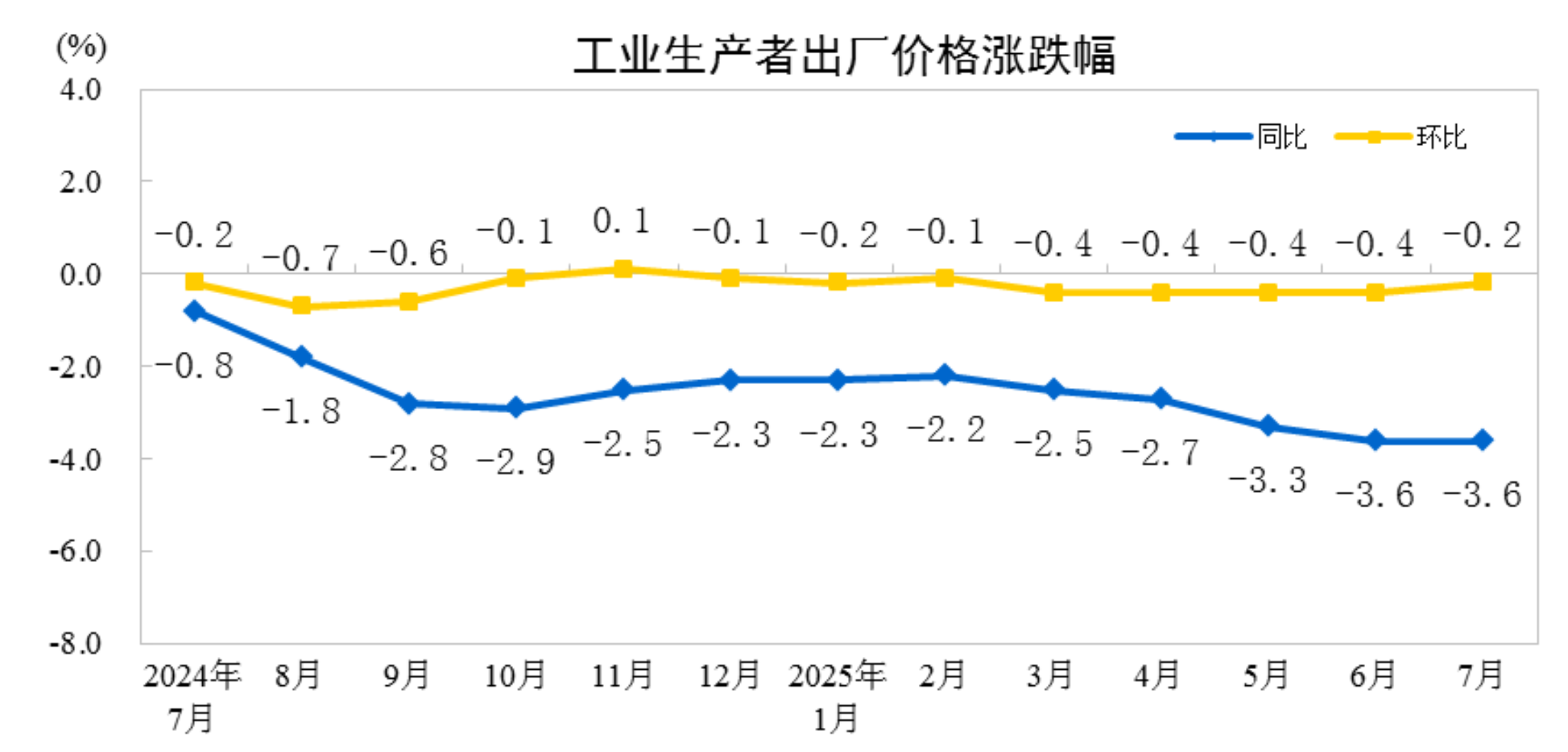
Group 1: Year-on-Year Changes in Industrial Producer Prices - In July, the prices of production materials decreased by 4.3%, contributing approximately 3.20 percentage points to the overall decline in industrial producer prices [2] - The mining industry saw a significant price drop of 14.0%, while raw materials and processing industries experienced declines of 5.4% and 3.1%, respectively [2] - Consumer goods prices fell by 1.6%, with food prices down by 1.8% and durable goods prices down by 3.5% [2] Group 2: Month-on-Month Changes in Industrial Producer Prices - In July, the month-on-month prices of production materials decreased by 0.2%, impacting the overall industrial producer price level by approximately 0.17 percentage points [7] - The mining industry prices decreased by 0.2%, while raw materials and processing industries saw declines of 0.1% and 0.3%, respectively [7] - Consumer goods prices also fell by 0.2%, with food prices remaining stable and durable goods prices decreasing by 0.6% [7] Group 3: Industrial Producer Purchase Prices - The purchase prices for fuel and power decreased by 10.8%, while black metal materials and chemical raw materials saw declines of 8.0% and 6.5%, respectively [6] - Prices for agricultural products decreased by 4.6%, and construction materials and non-metallic materials fell by 3.8% [6] - Prices for non-ferrous metal materials and wires increased by 2.8% [6] Group 4: Key Industry Price Changes - The coal mining and washing industry experienced a price drop of 23.0%, while the oil and natural gas extraction industry saw a decrease of 12.6% [10] - The black metal mining industry prices fell by 9.1%, whereas the non-ferrous metal mining industry prices increased by 11.1% [10] - The food manufacturing industry prices decreased by 1.1%, while the beverage and refined tea manufacturing industry prices remained stable [10]
7月份全国工业生产者出厂价格环比下降0.2%
Guo Jia Tong Ji Ju· 2025-08-09 01:36
Group 1: Year-on-Year Changes in Industrial Producer Prices - In July, the producer prices for industrial goods saw a decline in production material prices by 4.3%, contributing approximately 3.20 percentage points to the overall decrease in producer prices [3] - The mining industry experienced a significant price drop of 14.0%, while raw material prices fell by 5.4% and processing industry prices decreased by 3.1% [3] - Consumer goods prices decreased by 1.6%, impacting the overall producer price level by about 0.42 percentage points, with food prices down by 1.8% and durable goods prices down by 3.5% [3] Group 2: Month-on-Month Changes in Industrial Producer Prices - In July, the producer prices for industrial goods showed a month-on-month decline in production material prices by 0.2%, affecting the overall producer price level by approximately 0.17 percentage points [7] - The mining industry prices decreased by 0.2%, raw material prices fell by 0.1%, and processing industry prices dropped by 0.3% [7] - Consumer goods prices also saw a decline of 0.2%, with food prices remaining stable and durable goods prices decreasing by 0.6% [7] Group 3: Changes in Purchase Prices of Industrial Producers - In July, the purchase prices for industrial producers indicated a notable decline in fuel and power prices by 10.8%, black metal materials by 8.0%, and chemical raw materials by 6.5% [6] - Agricultural and sideline product prices decreased by 4.6%, while construction materials and non-metallic materials fell by 3.8% [6] - Conversely, prices for non-ferrous metal materials and wires increased by 2.8% [6]
2025年7月份工业生产者出厂价格 环比降幅收窄
Guo Jia Tong Ji Ju· 2025-08-09 01:31
Industrial Producer Price Changes - In July, the industrial producer's ex-factory prices saw a year-on-year decline of 3.6%, with production material prices dropping by 4.3%, contributing approximately 3.20 percentage points to the overall decline [8][9] - The mining industry experienced a significant price drop of 14.0%, while raw material prices fell by 5.4% and processing industry prices decreased by 3.1% [8][9] - Consumer goods prices decreased by 1.6%, with food prices down by 1.8% and durable goods prices down by 3.5% [8][9] Industrial Producer Purchase Price Changes - The purchase prices for industrial producers fell by 4.5% year-on-year, with fuel and power prices decreasing by 10.8% and black metal materials down by 8.0% [10] - Chemical raw materials saw a decline of 6.5%, while agricultural products dropped by 4.6% [10] - In contrast, prices for non-ferrous metal materials and wires increased by 2.8% [10] Monthly Price Changes - Month-on-month, the industrial producer's ex-factory prices decreased by 0.2%, with production materials down by 0.2% and consumer goods prices also declining by 0.2% [7][8] - The mining sector's prices fell by 0.2%, while raw materials and processing industries saw decreases of 0.1% and 0.3%, respectively [7][8] - The purchase prices for industrial producers decreased by 0.3% month-on-month, with notable declines in building materials and non-metallic prices by 1.4% [10]