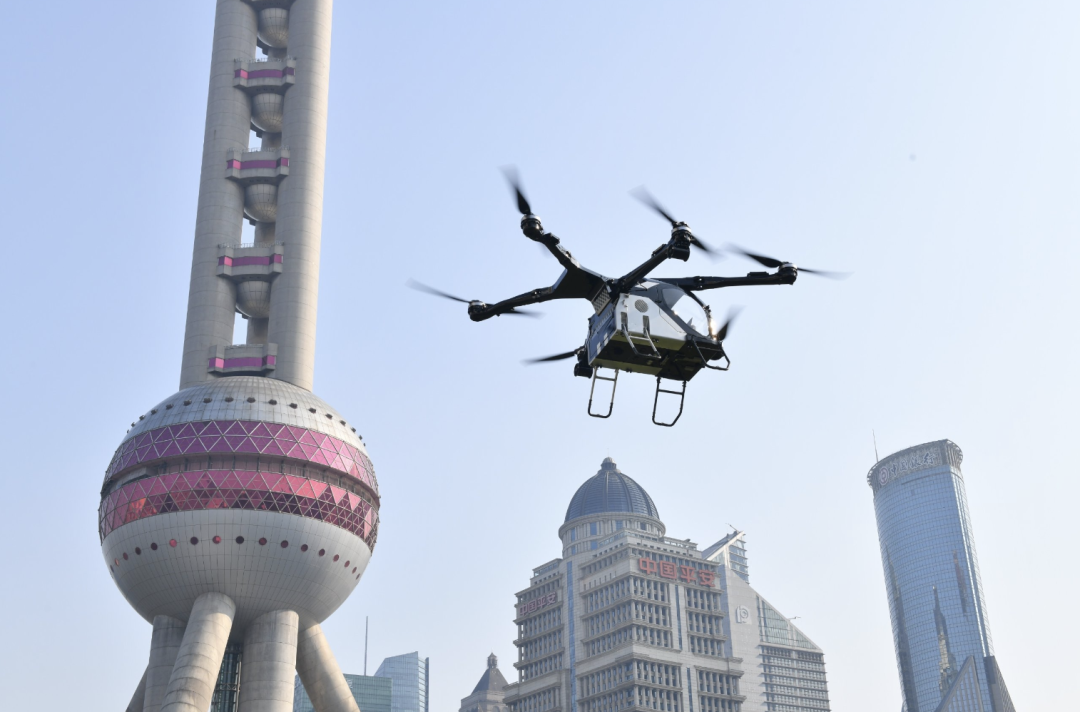
飞行汽车

Search documents
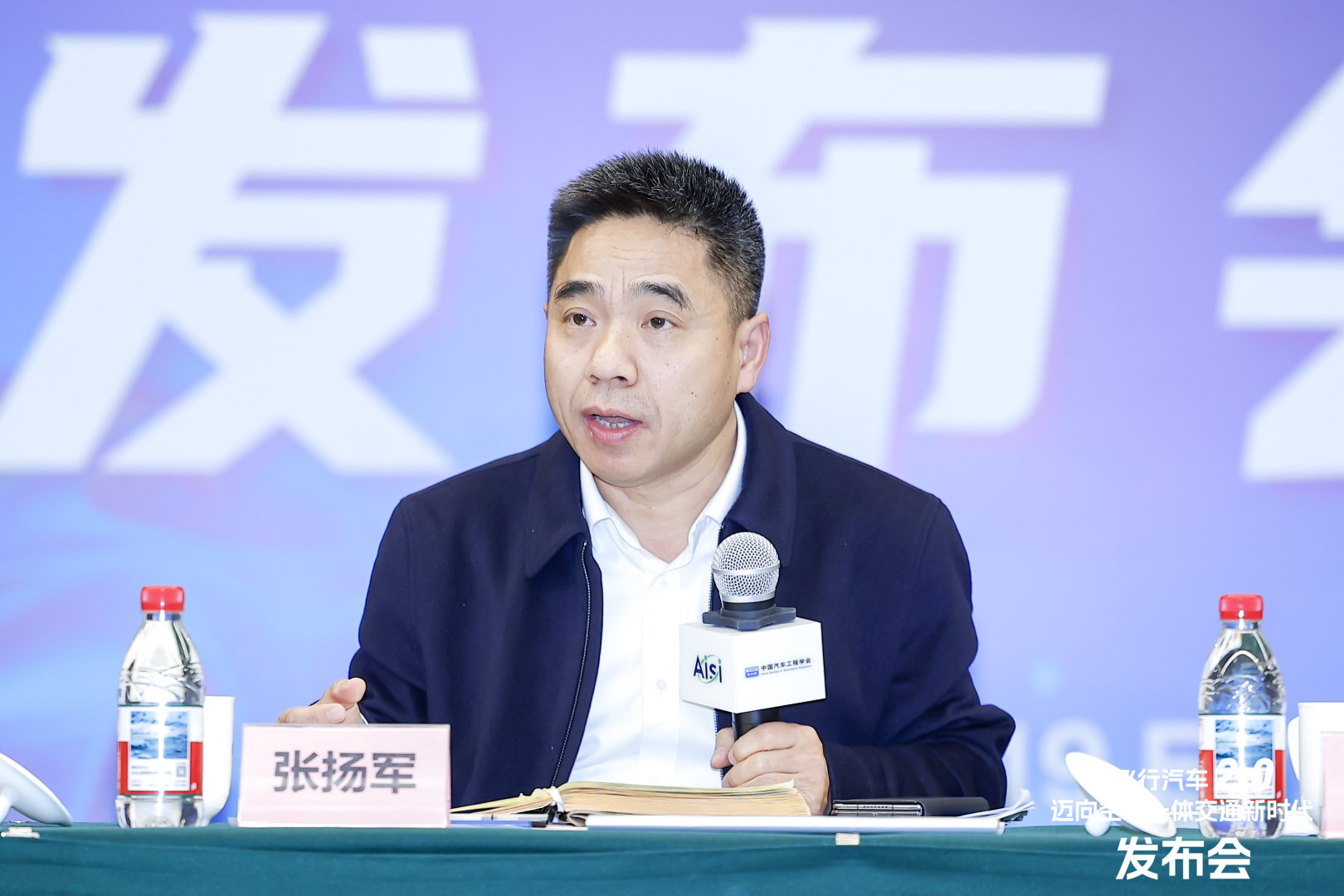
张扬军解读飞行汽车2.0:空地一体交通的生态重构
Zhong Guo Qi Che Bao Wang· 2026-01-21 06:56
Core Insights - The report "Flying Car Development Report 2.0" marks a significant milestone in the evolution of flying cars, transitioning from a concept to a new transportation paradigm [6][10] - Flying cars are positioned as a core component of the low-altitude economy, which is expected to evolve into a trillion-dollar industry, with the potential to reach ten trillion [3][4] Industry Positioning - The low-altitude economy is identified as a strategic emerging industry, with flying cars at its center, representing a shift from traditional transportation to a new ecological model [3][4] - Flying cars are defined as electric vertical take-off and landing aircraft, which are not merely flying vehicles but new transportation entities that redefine industry standards [6][7] Economic and Social Impact - The development of flying cars is expected to expand the advantages of ground transportation into low-altitude areas, creating a vast industrial cluster that includes high-end manufacturing and modern services [3][4] - Flying cars will facilitate a transformation from flat congestion to three-dimensional travel, enhancing public service equity and efficiency [3][9] Global Competition and Strategic Importance - The global competition in the low-altitude economy is intensifying, with countries like the U.S. accelerating their research and pilot projects in flying car technology [4][5] - China's inclusion of low-altitude economy in its "14th Five-Year Plan" reflects a strategic decision to align with global transportation technology trends [4][5] Development Pathways - The report outlines a phased approach to the integration of flying cars into daily life, with key milestones set for the next 5, 10, and 20 years [8] - The first five years will focus on demonstration and ecosystem building, while the next ten years will see the beginning of large-scale applications in urban areas [8] Urban Transformation - The widespread adoption of flying cars is anticipated to fundamentally change urban spatial structures and operational logic, leading to a shift from flat urban expansion to a compact, multi-centered network [9][10] - Flying cars will redefine urban land use and public service delivery, transforming transportation from a supporting system to a foundational force shaping future cities [9][10]

飞行汽车发展报告2.0发布 飞行汽车迈入产业破局新阶段
Huan Qiu Wang Zi Xun· 2026-01-20 01:08
Core Insights - The development of flying cars signifies a paradigm shift in the low-altitude economy from "tool innovation" to "ecological restructuring" [1] - The flying car market is expected to experience commercial explosion between 2025 and 2030, with specialized and mass-market applications advancing simultaneously [1] Industry Overview - Specialized applications such as emergency rescue, police equipment upgrades, and highway inspections are expected to be the first areas of implementation, while mass-market applications will evolve through a path of "cultural tourism first, shuttle services next, and commuting last" [1] - Companies like EHang are already implementing cultural tourism flight projects, with short-distance connections between airports and urban areas becoming a focus for scaling up [1] Challenges in Scaling - The flying car industry faces multiple systemic challenges, including technical bottlenecks in payload range, airworthiness safety, intelligent driving, and power systems [2] - The lack of vertical takeoff and landing infrastructure and a "low-altitude smart network" is a significant barrier, with current planning still in pilot exploration stages [2] - Regulatory frameworks for airworthiness certification and airspace management are still under development, and high R&D and certification costs pose additional challenges [2] Proposed Solutions - Recommendations include establishing airworthiness certification mechanisms and regulatory standards that align with the technological iterations and production needs of flying cars [3] - A collaborative working group for low-altitude flight technology should be formed to tackle common technical challenges [3] - The integration of automotive and aviation industries is essential, leveraging the approximately 70% technological overlap between flying cars and electric vehicles to reduce costs and enhance efficiency [3] Future Outlook - The next five years are seen as a demonstration and ecological construction period, with the following ten years marking the beginning of large-scale applications, and the next twenty years leading to a mature stage of "integrated air-ground transportation" [3]
飞行汽车未来5年或迎商业爆发时代
Ke Ji Ri Bao· 2026-01-20 00:30
Core Viewpoint - The development of flying cars signifies a paradigm shift in the low-altitude economy from "tool innovation" to "ecological restructuring," with commercial explosion expected between 2025 and 2030 [1] Group 1: Industry Outlook - Flying cars will see dual-track advancement in specialized and popularized application scenarios, with emergency rescue and police equipment upgrades being the first areas to break through [1] - The popularization path will follow "cultural tourism first, shuttle follow-up, and commuting as the final goal," with existing projects like EHang's cultural tourism flights already in operation [1] - Urban commuting is viewed as a long-term goal, while short-distance connections between airports and urban areas will be a focus for scaling [1] Group 2: Challenges in Scaling - Multiple systemic challenges exist for the large-scale development of flying cars, including technical bottlenecks in payload range, airworthiness safety, intelligent driving, and power systems [2] - The lack of vertical take-off and landing infrastructure and a "low-altitude smart network" is a significant barrier, with current planning still in pilot exploration stages [2] - Regulatory frameworks for airworthiness certification and airspace management are still under construction, necessitating improved inter-departmental collaboration and sandbox regulatory mechanisms [2] Group 3: Recommendations for Development - Policy guidance is needed to establish airworthiness certification mechanisms and regulatory standards that align with the technological iteration and large-scale production needs of flying cars [3] - A collaborative working group for low-altitude flight technology should be formed to tackle common technical challenges in flight control and power systems [3] - The integration of the automotive and aviation industries is essential, leveraging the approximately 70% technological commonality between flying cars and new energy vehicles to reduce costs and enhance efficiency [3]
小鹏汇天“陆地航母”取证在即:广东低空产业藏不住的实力
2 1 Shi Ji Jing Ji Bao Dao· 2026-01-19 00:49
Core Insights - Xiaopeng Motors' flying car division, Xiaopeng Huitian, is reportedly working with JPMorgan and Morgan Stanley for an IPO in Hong Kong, with a potential completion by the end of the year [1] - The low-altitude economy in Guangdong has reached a scale of over 100 billion RMB, with more than 15,000 related enterprises, accounting for over 30% of the national total [1] - The "Land Carrier," a flying car developed by Xiaopeng Huitian, has received over 7,000 global orders, indicating strong market interest and potential for record sales in the manned flying vehicle sector [3][4] Company Developments - Xiaopeng Huitian has increased its registered capital from 650 million RMB to 900 million RMB, a growth of approximately 38%, reflecting confidence in the flying car market [1] - The company has established the world's first mass production line for flying cars in Guangzhou, aiming for an annual production capacity of 10,000 units [3] - The "Land Carrier" is designed with a unique split design, allowing it to be stored in a car's trunk, and features strong autonomous driving capabilities [2] Industry Trends - The eVTOL (electric Vertical Take-Off and Landing) market is expected to see several products, including the "Land Carrier," receive type certification by 2026, marking a significant step towards commercialization [3] - Guangdong's low-altitude economy is projected to exceed 1 trillion RMB by 2026, driven by reforms in airspace management and infrastructure connectivity [1][6] - The province is home to over 30% of China's low-altitude industry chain, with a leading position in both consumer and industrial drone markets [6] Future Outlook - Xiaopeng Huitian plans to launch the A868 flying car, targeting intercity commuting with a range exceeding 500 kilometers and a cruising speed over 360 kilometers per hour [4][5] - The company is also developing a comprehensive low-altitude flight camp and a flying car "6S store" in Guangzhou, which will serve multiple functions including sales and training [5] - Continuous capital investment, including a recent 1.26 billion RMB loan and 250 million USD in Series B funding, will support the R&D and commercialization of flying cars [5]

未拿“准行证”先闯资本市场,小鹏汇天被传秘密递表港股
Guo Ji Jin Rong Bao· 2026-01-15 10:45
Core Viewpoint - Xiaopeng Motors is accelerating its entry into the capital market with its flying car division, Xiaopeng Huitian, by preparing for an IPO in Hong Kong, reflecting a significant need for funding to support its high R&D costs [1][2][4]. Funding and Financial Needs - Xiaopeng Huitian has reportedly accumulated over $750 million (approximately 5.375 billion yuan) in financing since its rebranding in 2020, but this is insufficient compared to competitors like Joby Aviation and EHang, which have much higher annual R&D expenditures [5][6]. - The company has received loans totaling 6 billion yuan from banks to support its flying car development and manufacturing [6][7]. - The decision to go public is seen as a critical step for Xiaopeng Huitian to secure additional funding for its ambitious projects [8][10]. Market Response and Stock Performance - Following the IPO news, Xiaopeng's stock price in Hong Kong saw significant activity, with a 4.85% increase shortly after the announcement [2]. Regulatory Challenges - Xiaopeng Huitian is currently facing the challenge of obtaining airworthiness certification, which is essential for the production and commercial operation of its flying vehicles [12][13]. - The certification process is complex and lengthy, with no official announcement regarding the completion of the necessary certifications as of January 2026 [14][16]. Competitive Landscape - The flying car market is becoming increasingly competitive, with major players like EHang and Joby Aviation already making strides in commercial operations and regulatory approvals [19][20]. - Xiaopeng Huitian's positioning as a personal flying vehicle contrasts with EHang's focus on urban air mobility, indicating a different market strategy [19]. Future Outlook - The success of Xiaopeng Huitian's IPO and its ability to secure the necessary certifications will be crucial for its future development and market acceptance [21].
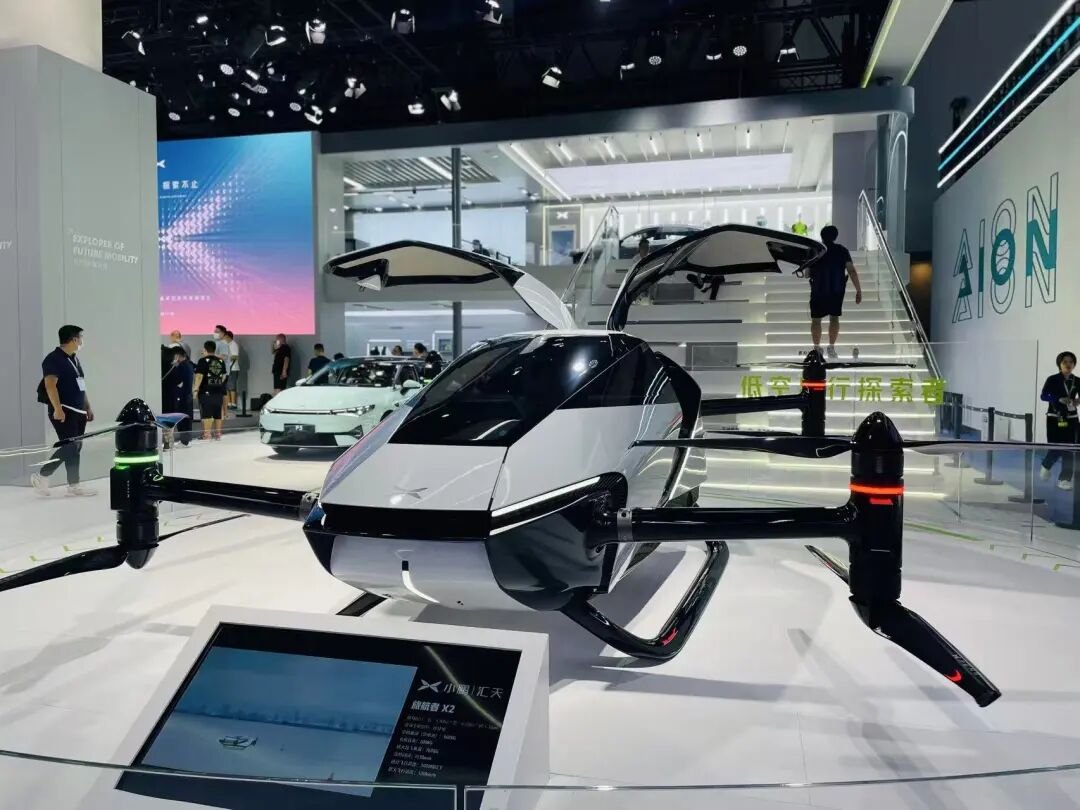
秘密递表、大小摩联席,小鹏汇天或成“国内载人飞行器公司第二股”
Jin Rong Jie· 2026-01-14 03:18
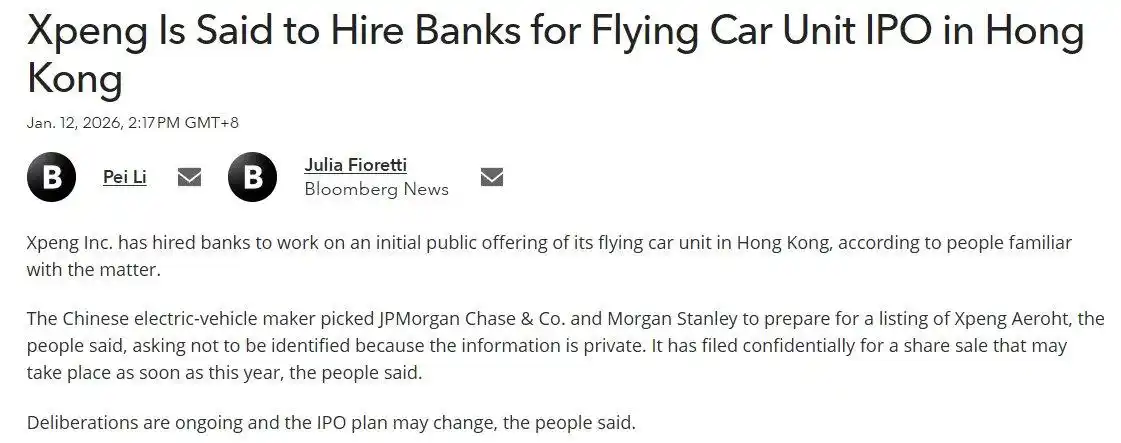
Group 1 - Xpeng's flying car division, Xpeng Huitian, has hired banks to assist in its IPO in Hong Kong, with Morgan Stanley and JPMorgan selected as underwriters, and the IPO could be completed within the year [1] - If successful, Xpeng Huitian will become the second manned flying vehicle company to go public in China since EHang in 2019 [1] - Xpeng Huitian has completed four rounds of financing totaling nearly $900 million, making it a leading player in the low-altitude travel sector in China [2] Group 2 - The company was valued at approximately 10 billion RMB after a Series A funding round in 2022, which was the largest single financing in Asia's low-altitude manned flying vehicle sector at the time [2] - Xpeng Huitian's valuation reached about 11 billion RMB in 2024, as it aims to separate its valuation framework from its parent company, Xpeng Motors, to align more with aerospace technology firms [3] - The company has received 7,000 pre-orders for its flagship product, the "Land Carrier," which is expected to be delivered globally in the second half of 2026 [4][5] Group 3 - The "Land Carrier" features a unique split design, requires only a C license for ground driving, and has a range exceeding 1,000 kilometers, with the ability to charge while stationary [5] - The production facility in Guangzhou has an initial capacity of 5,000 units per year, scalable to 10,000 units, marking it as the world's first mass production line for flying cars [5] - The low-altitude economy is recognized as a trillion-dollar industry, with China actively supporting its development through various policies and initiatives [6] Group 4 - Xpeng Huitian's approach targets individual users, contrasting with EHang's focus on enterprise-level markets, which presents higher legal and technical barriers [7] - The company must demonstrate not only the technological advancement of its flying cars but also its ability to deliver on a sustainable business model that meets regulatory requirements [8]
四大证券报精华摘要:1月14日
Xin Hua Cai Jing· 2026-01-14 00:19
Group 1: Emerging Industries and Market Trends - In 2026, several companies in emerging industries such as intelligent robotics and low-altitude economy announced production targets, indicating a shift from technical validation to mass production delivery, marking a "year of scale" for these sectors [1] - The low-altitude economy is expected to maintain rapid growth in 2026, transitioning from early-stage applications to deeper market penetration, leading to intensified competition [1] - The industrial internet sector is projected to exceed 1.6 trillion yuan by 2025, with significant growth in connected industrial devices and platform adoption [10] Group 2: Stock Market Performance - Southbound capital has seen a record net inflow of 140.48 billion HKD in 2025, continuing into 2026 with an additional net inflow of 41.296 billion HKD, contributing to a strong performance in the Hong Kong stock market [2] - The Hang Seng Index rose over 4% and the Hang Seng Tech Index over 6% in 2026, with more than 60% of stocks with a market cap over 1 trillion HKD experiencing gains [2] - A-share market saw a record daily trading volume exceeding 30 billion yuan for three consecutive days, with significant activity in AI applications and pharmaceutical stocks [7] Group 3: Company Performance and Forecasts - Several gold mining companies have reported significant earnings growth for 2025, driven by rising gold prices, with Goldman Sachs predicting gold prices to reach approximately 4,900 USD per ounce by the end of 2026 [3] - Over 140 companies in the A-share market have disclosed annual performance forecasts, with 63 companies expecting profit increases and 19 companies projecting a doubling of net profits [9] - Guizhou Moutai is accelerating its market-oriented transformation, implementing a new operational plan to adapt to market and consumer trends [13] Group 4: Regulatory and Market Developments - The Beijing Stock Exchange is experiencing an "accelerated" listing review process, particularly benefiting specialized and innovative small and medium enterprises [4] - Securities firms are increasingly engaging in capital increases and acquisitions to enhance their control over public fund companies, aiming for deeper integration of various financial services [12][13]





小鹏汇天或已秘密递交香港上市申请,传由摩根大通、摩根士丹利负责
机器人圈· 2026-01-13 09:41
Core Viewpoint - Xiaopeng Motors is preparing for an IPO of its flying car division in Hong Kong, having engaged JPMorgan and Morgan Stanley for the process, with a potential completion as early as this year [2]. Group 1: IPO Plans and Timeline - Xiaopeng Motors has secretly submitted its IPO application for its flying car division, with plans to complete the process potentially within this year [2]. - The founder of Xiaopeng Huitian, Zhao Deli, previously indicated that an IPO plan is in place, with timing to be determined [5]. - Xiaopeng Motors aims to transition from technology exploration to practical application by 2026, including the launch of its flying cars [5]. Group 2: Product Features and Capabilities - The Huitian A868 flying car is designed for a range of over 500 kilometers, making it suitable for intercity routes rather than just short urban travel [8]. - The flying car has a cruising speed exceeding 360 kilometers per hour, significantly reducing travel time compared to ground transportation [8]. - Xiaopeng Huitian has received 7,000 orders for its land carrier flying vehicle, aiming to set a world record for annual sales of manned flying vehicles [9]. Group 3: Company Background and Market Position - Xiaopeng Huitian is recognized as Asia's largest flying car company, focusing on creating low-altitude products and aiming to revolutionize personal flight and air commuting [10]. - If the IPO is successful, Xiaopeng Huitian will become the second listed manned flying vehicle company in China [11]. - The company has completed several funding rounds, including over $500 million in Series A funding, marking the largest single financing in Asia's low-altitude manned flying vehicle sector as of 2021 [11]. Group 4: Recent Developments and Production Capacity - The production facility for the flying car began trial production on November 3, 2025, marking the establishment of the world's first production line for flying cars [14]. - The factory has an area of approximately 120,000 square meters, with an initial annual production capacity of 5,000 units, scalable to 10,000 units [14]. - The flying car features a unique design that allows it to operate both as a vehicle and an aircraft, with a price point of under 2 million yuan [16].
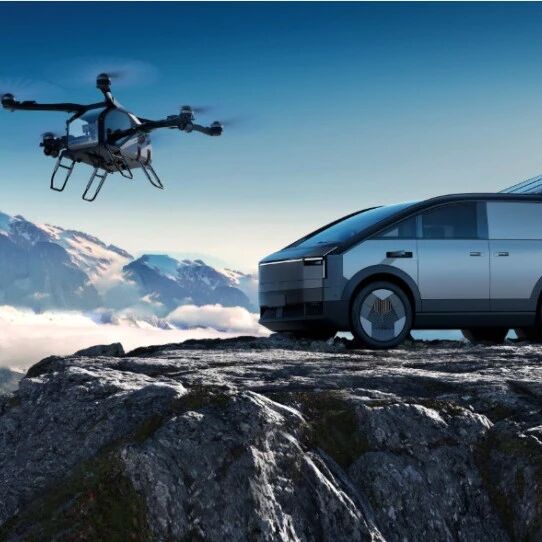
消息称小鹏聘投行筹备小鹏汇天香港IPO
Guan Cha Zhe Wang· 2026-01-13 06:52
Company Overview - Xiaopeng Motors' ecological enterprise, Xiaopeng Huitian, has submitted a confidential IPO application to the Hong Kong Stock Exchange, with JPMorgan and Morgan Stanley appointed as underwriters, aiming for a potential listing by the end of the year [1] - Xiaopeng Huitian focuses on product development and mass production delivery, with no additional IPO-related information currently available [3] - The company, originally founded in Dongguan in 2013, became officially established after Xiaopeng Motors' investment in 2020 [3] Funding and Financial Milestones - In October 2021, Xiaopeng Huitian completed a Series A funding round, raising over $500 million, marking the largest single financing in Asia's low-altitude manned aircraft sector at that time [3] - In August 2024, the company secured $150 million in Series B1 funding from three state-owned enterprises in Guangzhou [3] - On July 15, 2025, Xiaopeng Huitian completed a $250 million Series B funding round [3] Product Development and Market Strategy - Xiaopeng Huitian aims to achieve mass production of flying cars by 2026, as emphasized by the chairman of Xiaopeng Motors during a recent product launch event [3] - The company's split-type flying car, referred to as the "land aircraft carrier," is set for its first public flight in 2024 and will debut overseas in 2025, with approximately 5,000 orders already received [3] - Plans for international market expansion are set for 2027 [3] Industry Insights - Industry experts emphasize that safety must be prioritized in the development of the low-altitude economy, with many companies aiming to increase aircraft production capacity to enhance economic viability [4] - The aviation sector's logic dictates that safety and standards should be discussed before market and order considerations [4]
小鹏汇天秘密递表,闯关IPO
Hua Er Jie Jian Wen· 2026-01-13 03:23
Core Viewpoint - The news highlights the potential IPO of XPeng's flying car subsidiary, Huitian, which aims to establish itself as a leader in the low-altitude economy by leveraging its unique product strategy and manufacturing capabilities [2][3][7]. Group 1: IPO and Market Position - Huitian has reportedly submitted a confidential IPO application in Hong Kong, with JPMorgan and Morgan Stanley as joint sponsors, aiming for a listing by the end of the year [2]. - The company is positioned to become the largest flying car company in Asia, potentially benefiting from a "first stock" mentality that could lead to a higher valuation premium [3]. Group 2: Product Strategy - Huitian's product strategy includes the "Land Carrier," a modular flying car designed to address the limitations of traditional eVTOLs, such as range and ground transportation connectivity [4]. - The "Land Carrier" allows users to drive it like a regular car and deploy the flying unit for aerial experiences, thus lowering the usage barrier [4]. Group 3: Manufacturing and Cost Efficiency - Huitian aims to utilize automotive manufacturing techniques to reduce costs, with plans to produce flying vehicles at a rate of one per hour, potentially scaling to 10,000 units annually [6]. - The company intends to lower the price of flying cars to the "million-level" or even lower, disrupting the current pricing structure in the industry [6]. Group 4: Market Strategy and Target Audience - Huitian is adopting a "To C" approach, targeting high-net-worth individuals as early adopters of flying cars, rather than focusing solely on B2B or government markets [6]. - The company is also working on establishing flying camps to create a supportive infrastructure for users, similar to Tesla's supercharging network [6]. Group 5: Industry Challenges and Future Outlook - Despite the innovative approach, flying cars remain a novel concept for the general public, and building trust in their safety and affordability will be crucial for market acceptance [7]. - If Huitian successfully leverages capital market support and delivers the "Land Carrier" this year, it could redefine the flying vehicle market and establish itself as a key player in the industry [7].