
半导体材料

Search documents
神工股份:公司硅零部件应用于存储芯片刻蚀环节 本月初开始已经与日本、韩国客户接洽新订单
Mei Ri Jing Ji Xin Wen· 2025-12-17 10:37
Core Viewpoint - The company believes that the upward cycle of the semiconductor industry is expected to bring more market demand for its products, specifically large-diameter silicon materials used in the etching process of storage chip manufacturing [1] Group 1: Company Operations - The company's products, large-diameter silicon materials, are primarily used in the etching segment of storage chip manufacturing, indicating a direct link between semiconductor production and the company's performance [1] - The company has started engaging with customers in Japan and South Korea for new orders since early this month, suggesting proactive steps to capitalize on anticipated demand [1] Group 2: Market Dynamics - The company operates as an upstream materials and components supplier, which means that any increase in operational rates or capital expenditures by downstream storage chip manufacturers will take approximately 1-2 quarters to translate into demand for the company [1] - The company anticipates that higher operational rates at storage chip manufacturers will lead to increased usage of its products, highlighting the cyclical nature of the semiconductor industry [1]

八亿时空(688181.SH):已具备高端半导体KrF光刻胶树脂全系列研发生产能力
Ge Long Hui· 2025-12-17 09:32
Core Viewpoint - The company has developed a full range of high-end semiconductor KrF photoresist resin production capabilities and is collaborating with several leading photoresist manufacturers [1] Group 1: Company Capabilities - The company has established the ability to research and produce a complete series of high-end semiconductor KrF photoresist resins [1] - The company is currently in partnership with multiple top-tier photoresist manufacturers [1] Group 2: Market Position - The company does not have direct cooperation with end wafer manufacturers, which limits its access to specific information about end customers in the supply chain [1] - The company plans to continue advancing product validation and market expansion efforts [1]

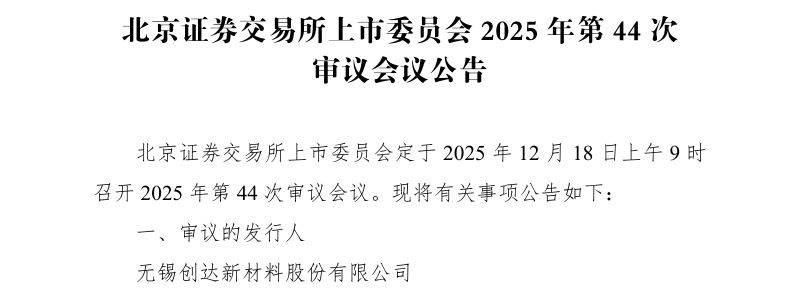
半导体封装材料企业IPO上会:创达新材或存诸多挑战
Sou Hu Cai Jing· 2025-12-17 09:01
Core Viewpoint - The IPO journey of Wuxi Chuangda New Materials Co., Ltd. is facing uncertainties due to questions surrounding its prospectus, despite being positioned in the strategically supported semiconductor industry [1][3]. Industry Context - Chuangda New Materials specializes in epoxy molding compounds, essential for semiconductor packaging, benefiting from domestic substitution trends and policy support, yet faces intense competition, particularly in the high-end market dominated by international firms [3]. - The chemical new materials industry is undergoing cyclical adjustments, with previous capacity expansions leading to increased competition and pressure on overall profit margins [3]. Supply Chain Dependencies - The company exhibits dual dependencies in its supply chain, being vulnerable to fluctuations in raw material prices, which significantly impact production costs [4]. - The increase in gross margin in 2023 was largely attributed to a decrease in raw material prices, indicating a reliance on external factors for profitability [4]. - There are concerns regarding related-party transactions with Wuxi Shaohui, which have raised questions about the commercial substance and fairness of pricing, potentially affecting the credibility of the company's business independence [4]. Financial Health and Risks - Chuangda New Materials has a high level of accounts receivable, which consistently accounts for about half of its revenue, indicating weak cash conversion and raising concerns about revenue quality [5]. - The company has significant bad debt provisions related to clients facing operational difficulties, which could impact net profit substantially if realized [5]. - The fluctuation in gross margin from 24.75% in 2022 to 33.05% in mid-2025 raises questions about the sustainability of its growth, especially given the divergence from industry trends [6]. Growth Sustainability - The company's net profit growth rate has slowed from 127.83% in 2023 to 19.15% in 2024, with projections indicating further deceleration into single digits for 2025 [7]. - Chuangda's R&D expenditure has been consistently below industry averages, which may hinder its long-term competitiveness in the rapidly evolving semiconductor materials sector [7]. Governance and Financing Concerns - The company faces governance risks due to concentrated ownership, which may lead to management issues [8]. - There are concerns regarding its financing strategy, as the company has distributed significant cash dividends while planning to raise funds for working capital, raising questions about the necessity and rationale of such actions [8].

光刻胶国产化:如何从树脂到光刻胶,构建自主产业链
材料汇· 2025-12-16 16:05
正文 在半导体产业攀登工艺巅峰的征程中,光刻胶作为集成电路图形化工艺的核心媒介,其地位堪比精密绘制蓝图的"画笔"。它不仅决定了电路图案能否被高 保真地转印至硅片,其材料本身的每一次革新—— 从早期的DNQ-酚醛树脂体系,到随KrF、ArF光刻技术而生的化学放大光刻胶,直至面向EUV时代的金 属簇光刻胶 ——都直接推动了摩尔定律的延续。 然而,这项精密且关键的产业,长期以来被少数国际巨头在 材料设计、核心树脂及复杂工艺 诀窍上所构建的壁垒所主导。 国产化之路,因而远非简单的产品替代,而是一场贯穿 基础化学、精密工程与供应链安全的系统性攻坚,涉及从分子设计、配方研发、稳定量产到客户 验证 的全链条能力重塑。 报告将系统性地梳理 半导体光刻胶的技术脉络与产业现状 。报告内容主要涵盖四大方面: 首先 ,回顾光刻胶随光刻技术代演进的 发展历程 ,揭示设备、材料与工艺协同发展的规律; 其次 ,深入剖析成熟制程中主流光刻胶(如248nm、193nm化学放大胶及I线胶)的 工作原理与配方核心 ; 再次 ,明确界定评估光刻胶性能的 关键技术指标 ,解读其背后的设计考量; 点击 最 下方 "在看"和" "并分享,"关注"材料汇 ...
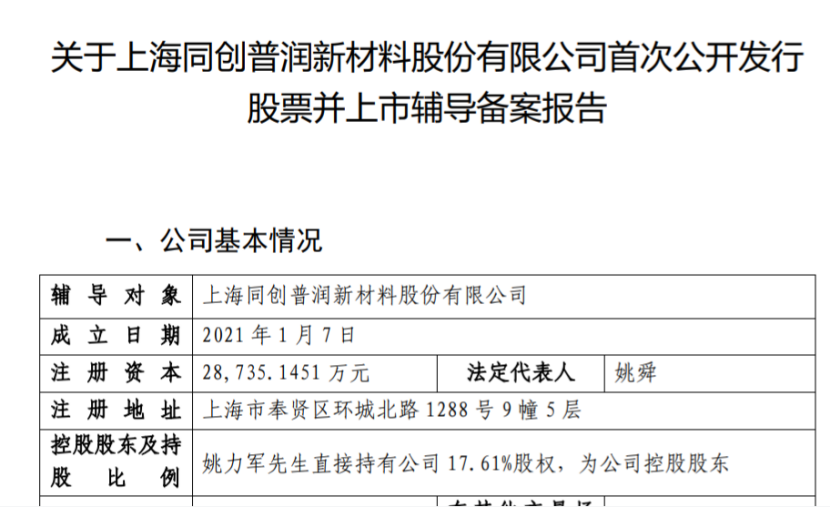
Pre-IPO轮10亿融资!上海这家半导体材料公司开启IPO辅导备案!
Xin Lang Cai Jing· 2025-12-16 14:03
Company Overview - Shanghai Tongchuang Purun New Materials Co., Ltd. was established in July 2021 with a registered capital of 287.35 million yuan [2][4] - The company specializes in the research and production of ultra-pure metal materials for chip manufacturing, achieving world-leading levels with materials such as 6N aluminum, 6N tantalum, 7N copper, and 5N manganese [2][4] - As the sole domestic supplier of high-purity materials for Jiangfeng Electronics, the company's jointly developed ultra-pure aluminum, copper, and manganese sputtering targets have entered first-class international chip factories, holding over 40% of the global market share, ranking first in the world [2][4] Financing Situation - The company completed over 2 billion yuan in financing in 2025, including 1 billion yuan in Series B financing in August and 1 billion yuan in Pre-IPO financing in October [6][7] - The Pre-IPO financing round on October 15, 2025, raised 1 billion yuan, with investors including Shanggu Capital [7] - The Series B financing round on August 21, 2025, also raised 1 billion yuan, with notable investors such as SAIC Group and China National Building Material New Materials Fund [7]
鼎龙股份(300054) - 300054鼎龙股份投资者关系管理信息20251216
2025-12-16 10:32
Group 1: Company Overview - The company is a leading platform in the field of core innovative materials, focusing on two main business segments: semiconductor materials and general printing consumables [2]. - The semiconductor segment includes CMP process materials, photoresists, and advanced packaging materials, with a leading position in domestic supply for CMP pads and OLED display materials [2]. Group 2: Financial Performance - In the first three quarters of 2025, CMP-related business revenue accounted for over 60% of the semiconductor segment [3]. - The semiconductor business revenue represented 57% of total revenue, while the printing consumables segment provided stable cash flow with revenue of 1.153 billion yuan [5]. Group 3: Research and Development - R&D investment in the first three quarters of 2025 increased by 16%, reaching 389 million yuan, primarily directed towards the semiconductor segment [4]. - The company has achieved significant technological breakthroughs, including the independent development of core materials for high-end photoresists, with a production capacity of 30 tons per year for KrF/ArF photoresists [4]. Group 4: Intellectual Property and Competitive Advantage - As of June 30, 2025, the company holds 1,052 authorized patents, with over 37% being invention patents, establishing a robust patent barrier against competition [6]. - The company emphasizes a comprehensive patent system covering core raw materials, product formulations, production processes, and application solutions [6]. Group 5: Business Strategy and Market Position - The company positions itself as a "platform company," leveraging technology reuse, customer reuse, and industrialization capabilities to enhance new business development [8]. - The core competitive advantage lies in a comprehensive capability built over 20 years, combining full-chain technical ability, industrialization experience, and deep customer relationships [9]. - Future strategies include maintaining R&D investment above industry average, accelerating capacity construction, and enhancing "one-stop" service capabilities to increase market share and profitability [9].

中晶科技(003026.SZ):公司3-8英寸研磨硅片、抛光硅片及高频高压半导体芯片及器件产品规格齐全
Ge Long Hui· 2025-12-16 07:59
Group 1 - The core viewpoint of the article highlights that Zhongjing Technology (003026.SZ) has a complete range of products including 3-8 inch grinding silicon wafers, polishing silicon wafers, and high-frequency high-voltage semiconductor chips and devices [1] - The company has a large number of customers and stable market demand, indicating a strong position in the industry [1] - Zhongjing Technology plans to continue developing new products based on customer needs to better meet market demands [1]
南大光电(300346.SZ):公司Arf光刻胶目前没有在建产能
Ge Long Hui· 2025-12-15 15:21
格隆汇12月15日丨南大光电(300346.SZ)在投资者互动平台表示,公司Arf光刻胶目前没有在建产能。 ...

南大光电:光刻胶销售情况请关注公司披露的定期报告
Zheng Quan Ri Bao Wang· 2025-12-15 14:16
证券日报网讯12月15日,南大光电(300346)在互动平台回答投资者提问时表示,光刻胶销售情况请关 注公司披露的定期报告。 ...
三祥新材:半导体领域市场系公司重点布局和拓展方向之一
Zheng Quan Ri Bao Zhi Sheng· 2025-12-15 13:11
(编辑 王雪儿) 证券日报网讯 12月15日,三祥新材在互动平台回答投资者提问时表示,半导体领域市场系公司重点布 局和拓展方向之一,目前市场进展较为顺利,公司部分产品已获下游半导体产业链客户认可及订单,并 小批量供货,公司将持续加快后续产能建设,并积极跟进下游客户需求。 ...
