农业机械

Search documents
第一拖拉机股份(00038) - 海外监管公告
2025-08-28 14:58
香港交易及結算所有限公司及香港聯合交易所有限公司對本公告的內容概不負責, 對其準確性或完整性亦不發表任何聲明,並明確表示,概不對因本公告全部或任何 部份內容而產生或因倚賴該等內容而引致的任何損失承擔任何責任。 海外監管公告 本公告乃根據香港聯合交易所有限公司證券上市規則第13.10B條而作出。 茲載列第一拖拉機股份有限公司於上海證券交易所網站(www.sse.com.cn)所刊發的 公告,僅供參考。 承董事會命 第一拖拉機股份有限公司 公司秘書 于麗娜 中國 • 洛陽 2025年8月28日 於本公告日期,董事會成員包括執行董事趙維林先生(董事長)及魏濤先生;非執行 董事方憲法先生、楊建輝先生及苗雨先生;以及獨立非執行董事薛立品先生、 王書茂先生、徐立友先生及黃綺汶女士。 * 僅供識別 第一拖拉机股份有限公司2025 年半年度报告 公司代码:601038 公司简称:一拖股份 第一拖拉机股份有限公司 2025 年半年度报告 1 / 154 第一拖拉机股份有限公司2025 年半年度报告 重要提示 一、 本公司董事会、监事会及董事、监事、高级管理人员保证半年度报告内容的真实性、准确 性、完整性,不存在虚假记载、误导性 ...
聚焦北大荒|庆丰分公司:核查农机购置补贴 确保政策精准落地
Sou Hu Cai Jing· 2025-08-28 14:12
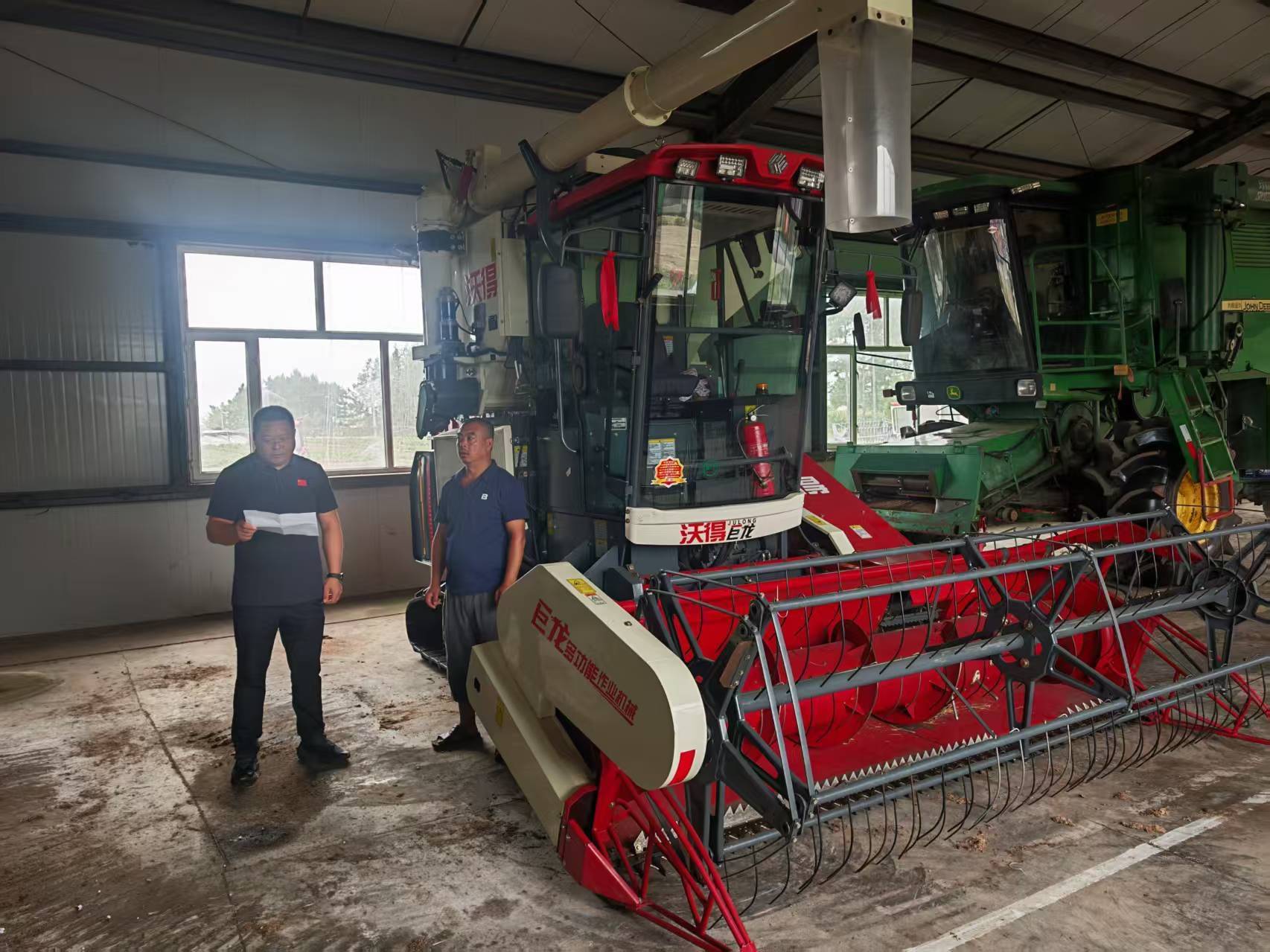
Group 1 - The company, Beidahuang Agricultural Co., is conducting a comprehensive verification of subsidy machinery to ensure the accurate implementation of agricultural machinery purchase subsidy policies through a three-dimensional approach of "strict parameter verification, precise advocacy, and dynamic management" [1] - In the fourth management area, staff adhere to the principle of "seeing people, seeing machines, and seeing invoices," using a method of "ledger comparison + on-site verification" to check the brand model, engine number, and other information of subsidized machinery [3] - The company has engaged in face-to-face communication with farmers, providing one-on-one policy interpretation and answering over 120 inquiries, thereby enhancing the awareness and satisfaction of the subsidy policy among agricultural machinery users [3]


Titan Machinery(TITN) - 2026 Q2 - Earnings Call Transcript
2025-08-28 13:32
Financial Data and Key Metrics Changes - Total revenue for the second quarter was $546.4 million, a 14% decrease from $633.7 million in the prior year period [13] - Gross profit decreased to $93.6 million from $112.4 million, with a gross profit margin of 17.1% compared to 17.7% in the prior year [13] - The net loss for the quarter was $6 million, resulting in a loss per diluted share of $0.26, compared to adjusted net income of $4 million or adjusted diluted earnings per share of $0.17 for the same period last year [14] Business Line Data and Key Metrics Changes - Domestic Agriculture segment saw a same-store sales decrease of 18.7% to $345.8 million, with a pretax loss of $12.3 million compared to adjusted pretax income of $6.7 million in the prior year [15] - Construction segment's same-store sales decreased 10.2% to $72 million, resulting in a pretax loss of $1.2 million compared to adjusted pretax income of $200,000 in the prior year [15] - Europe segment experienced a 44% increase in same-store sales to $98.1 million, with a pretax income of $5.1 million compared to a pretax loss of $2.3 million in the prior year [16] - Australia segment's same-store sales decreased 50.1% to $30.6 million, with a pretax loss of $2.1 million compared to pretax income of $1.4 million in the prior year [17] Market Data and Key Metrics Changes - Farmer sentiment in the domestic agriculture segment remains cautious due to low commodity prices, with net income heavily dependent on uncertain government support programs [8] - The construction segment is experiencing weaker demand as customers are cautious with capital expenditures amid broader economic uncertainty [9] - The European segment, particularly Romania, is performing well due to EU stimulus programs [9] Company Strategy and Development Direction - The company is focused on inventory reduction initiatives, targeting a reduction of $100 million for the fiscal year, with expectations to exceed this target [6][17] - The strategy includes optimizing the used equipment portfolio and enhancing customer experience through a customer care initiative [7] - The company aims to emerge from the current cycle stronger and better positioned for fiscal 2027 [7] Management's Comments on Operating Environment and Future Outlook - Management expressed confidence in achieving inventory reduction targets and improving equipment margins in the future [18] - The company expects equipment margins to remain subdued through the rest of fiscal 2026, with a revised full-year equipment margin expectation of approximately 6.6% [18] - Management highlighted the importance of government support and crop health for the agriculture segment's performance [8][33] Other Important Information - The company has reduced inventory by approximately $365 million over the past year [11] - Cash on hand was $33 million, with an adjusted debt to tangible net worth ratio of 1.8 as of July 31, 2025 [17] Q&A Session Summary Question: What conditions are needed for equipment margins to improve? - Management indicated that mix optimization, pricing discipline, and geographic optimization are key factors for margin recovery [24][26] Question: How much does the company expect to exceed the $100 million inventory reduction target? - Management stated that internal goals for inventory reduction are significantly higher than $100 million, but external factors will influence the final outcome [46] Question: What is the outlook for OEM pricing and incentives? - Management noted that OEMs are discussing price increases of 2% to 4%, and the company is working closely with suppliers to manage these costs [50] Question: How is the company handling trade-ins and used equipment? - Management confirmed that they are actively managing trade-ins and have seen success in moving late-model used equipment [66] Question: What is the impact of the pending farm bill on farmer support? - Management highlighted ongoing debates about the farm bill, emphasizing the need for permanent support and increased funding for research in crop utilization [91]

Titan Machinery(TITN) - 2026 Q2 - Earnings Call Transcript
2025-08-28 13:30
Financial Data and Key Metrics Changes - Total revenue for the second quarter was $546.4 million, a 14% decrease from $633.7 million in the prior year period [14] - Gross profit decreased to $93.6 million from $112.4 million, with a gross profit margin of 17.1% compared to 17.7% in the prior year [14] - The net loss for the quarter was $6 million, translating to a loss per diluted share of $0.26, compared to adjusted net income of $4 million or adjusted diluted earnings per share of $0.17 for the same period last year [15] Business Line Data and Key Metrics Changes - Domestic Agriculture segment saw a same-store sales decrease of 18.7% to $345.8 million, with a pretax loss of $12.3 million compared to adjusted pretax income of $6.7 million in the prior year [16] - Construction segment's same-store sales decreased 10.2% to $72 million, resulting in a pretax loss of $1.2 million compared to adjusted pretax income of $200,000 in the prior year [16] - Europe segment experienced a 44% increase in same-store sales to $98.1 million, with a pretax income of $5.1 million compared to a pretax loss of $2.3 million in the prior year [16] - Australia segment's same-store sales decreased 50.1% to $30.6 million, with a pretax loss of $2.1 million compared to pretax income of $1.4 million in the prior year [16] Market Data and Key Metrics Changes - Farmer sentiment in the domestic agriculture market remains cautious due to low commodity prices, with net income heavily dependent on uncertain government support programs [10] - The European segment is performing well, particularly in Romania, driven by EU stimulus programs [11] - The Australian market is tracking similarly to North American agriculture, with industry volumes below prior trough levels [12] Company Strategy and Development Direction - The company is focused on inventory reduction initiatives, targeting a reduction of $100 million for the fiscal year, with expectations to exceed this target [7][18] - The strategy includes optimizing the used equipment portfolio and enhancing customer experience through a customer care initiative [9] - The company aims to emerge from the current cycle stronger and better positioned for fiscal 2027 [9] Management's Comments on Operating Environment and Future Outlook - Management expressed confidence in achieving inventory reduction targets and improving equipment margins in the future [19] - The company expects subdued equipment margins through the rest of fiscal 2026, with a revised full-year equipment margin expectation of approximately 6.6% [22] - Management highlighted the importance of government support and crop health for the agriculture segment's performance [10][11] Other Important Information - The company reduced inventory by approximately $365 million over the past year [13] - Cash on hand was $33 million, with an adjusted debt to tangible net worth ratio of 1.8 as of July 31, 2025 [18] Q&A Session Summary Question: Conditions for achieving historic equipment margin range - Management discussed the need for mix optimization, pricing discipline, and geographic optimization to improve margins [25][27][30] Question: Impact of net farm income on equipment margins - Management emphasized the importance of net farm income, which is influenced by yield, price, and government payments [34] Question: Clarification on equipment margin expectations - Management confirmed that the consolidated total equipment margin is expected to be 6.6%, with domestic agriculture margins at 3.8% for the full year [38][39] Question: Inventory reduction goals - Management indicated confidence in exceeding the $100 million inventory reduction target, with internal goals set higher [46] Question: OEM pricing and cost pressures - Management noted that OEMs are discussing price increases of 2% to 4%, and the company is working closely with suppliers to manage these costs [52] Question: Floor planning arrangements and tariff impacts - Management stated that floor plan interest expense has not been significantly impacted by tariffs, focusing instead on minimizing stock inventory [78] Question: OEM incentives and revenue guidance - Management provided insights on expected OEM incentives and revenue consistency between Q3 and Q4, with a noted mix change affecting profitability [82][84] Question: Pending farm bill and farmer support - Management highlighted ongoing debates around the farm bill, emphasizing the need for permanent support and funding for research in crop utilization [90][92]
聚焦户外作业装备领域,鑫源智造上半年盈利增长284% | 看财报
Tai Mei Ti A P P· 2025-08-28 11:20
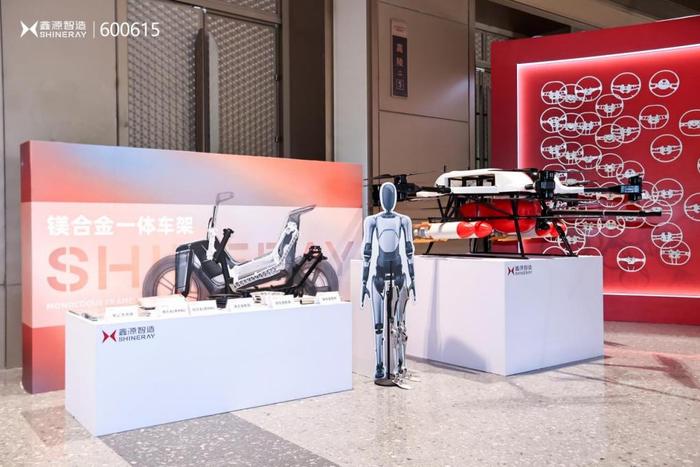
Core Viewpoint - XinYuan Intelligent Manufacturing (formerly Fenghua Co., Ltd.) has reported impressive financial results for the first half of the year, with operating income of 328.75 million yuan, a year-on-year increase of 388.33%, and a net profit attributable to shareholders of 9.79 million yuan, up 284.45% [2] Group 1: Company Transformation and Strategy - The company has transitioned from an automotive parts manufacturer to a leader in global outdoor intelligent equipment, emphasizing a vision to become a leading brand in lightweight and intelligent outdoor equipment [2][4] - The strategic shift includes a focus on outdoor work equipment, starting with agricultural machinery and expanding into areas such as drones and robotics through the application of intelligent technology [4][5] Group 2: Financial Performance and Contributions - The integration of XinYuan Agricultural Machinery, which was gifted 51% of its shares to XinYuan Intelligent Manufacturing, has significantly boosted the company's performance, contributing 256 million yuan in revenue and 5.22 million yuan in net profit in the first half of the year [3] - The agricultural machinery segment accounted for 77.81% of revenue and 53.34% of net profit, highlighting its importance to the overall business [3] Group 3: Market Potential and Trends - The global outdoor work equipment market has surpassed 100 billion USD and is expected to continue growing steadily, with the Chinese agricultural machinery market projected to exceed 900 billion yuan by 2030 [6] - The demand for magnesium alloy materials is anticipated to grow significantly, with a projected compound annual growth rate of over 21% from 2024 to 2028, driven by its applications in various industries [7] Group 4: Technological Collaboration and Development - The company has established strategic partnerships with institutions like Chongqing University to enhance its capabilities in lightweight materials and artificial intelligence applications [8] - XinYuan Intelligent Manufacturing is accelerating the commercialization of agricultural robotics and expanding its market presence both domestically and internationally [8][9] Group 5: Future Outlook - The company aims to leverage the technological strengths of its parent group to enhance its position in the outdoor work equipment sector, focusing on intelligent and lightweight solutions [9] - The strategic collaboration with XinYuan Group is expected to facilitate the development of a leading ecosystem for outdoor intelligent lightweight equipment manufacturing in China [9]

易方达基金增持第一拖拉机股份63.4万股 每股作价约7.44港元
Zhi Tong Cai Jing· 2025-08-28 11:16
Group 1 - E Fund Management increased its stake in First Tractor Company Limited (00038) by 634,000 shares at a price of HKD 7.4388 per share, totaling approximately HKD 4.7162 million [1] - After the increase, E Fund's total shareholding in First Tractor reached 19.836 million shares, representing a holding percentage of 5.06% [1]
一拖股份(601038.SH)上半年净利润7.69亿元,同比下降15.06%
Ge Long Hui· 2025-08-28 11:16
Core Insights - The company, Yitu Co., Ltd. (601038.SH), reported a revenue of 6.928 billion yuan for the first half of 2025, representing a year-on-year decrease of 11.26% [1] - The net profit attributable to shareholders of the listed company was 769 million yuan, down 15.06% year-on-year [1] - The net profit attributable to shareholders after deducting non-recurring gains and losses was 692 million yuan, reflecting a year-on-year decline of 21.22% [1] - The basic earnings per share stood at 0.6844 yuan [1]

吉峰科技:关于公司申请授信的公告
Zheng Quan Ri Bao Zhi Sheng· 2025-08-28 11:11
Group 1 - The company, Jifeng Technology, announced plans to apply for a comprehensive credit facility of up to 170 million RMB from Pudong Development Bank Chengdu Branch, with a term of one year [1] - The exposure amount will not exceed 85 million RMB, and the financial products involved include working capital loans, bank acceptance bills, domestic letters of credit, and guarantees [1] - The exposure will be guaranteed by the subsidiary Liaoning Huifeng Agricultural Machinery City Co., Ltd. and Mr. Wang Huiwu personally, indicating a commitment to secure the financing [1] Group 2 - The bank acceptance bills will be specifically used for the group to issue bills on behalf of its subsidiaries, while the working capital loans are intended to supplement the daily operating funds of the subsidiaries [1]

一拖股份:2025年上半年净利润7.69亿元,同比下降15.06%
Xin Lang Cai Jing· 2025-08-28 09:25
Group 1 - The company announced a revenue of 6.928 billion yuan for the first half of 2025, representing a year-on-year decrease of 11.26% [1] - The net profit for the same period was 769 million yuan, showing a year-on-year decline of 15.06% [1] - The company's board approved a profit distribution plan, proposing a cash dividend of 0.6844 yuan per 10 shares to all shareholders [1]
瞅准千亿户外作业装备市场,鑫源智造布局产品轻量化智能化
Xin Jing Bao· 2025-08-28 07:26
Core Viewpoint - The company, Chongqing Xinyuan Intelligent Manufacturing Co., Ltd., has established a dual-driven development strategy focusing on "lightweight and intelligent" technologies to become a leading brand in outdoor operation lightweight intelligent equipment, particularly in agricultural machinery and related fields [1][6]. Group 1: Company Strategy and Goals - The company aims to transform from a traditional equipment manufacturer and parts supplier into a comprehensive intelligent equipment provider with capabilities across materials, complete machines, systems, and services [1]. - The chairman highlighted the existing issues in traditional outdoor operation equipment, such as heavy weight, high energy consumption, and lack of intelligence, prompting the company to leverage magnesium-aluminum alloy lightweight technology and AI applications [1][4]. Group 2: Market Potential and Growth - The global outdoor power equipment market is projected to grow from approximately $48.59 billion in 2022 to $76.61 billion by 2030, with a compound annual growth rate (CAGR) of about 6% [2]. - The agricultural equipment market is expected to increase from $180 billion in 2025 to $268.71 billion by 2032, with a CAGR of approximately 5.8% [2]. - In China, the mechanization rate for crop farming has surpassed 75%, but hilly areas lag at 54%, indicating significant potential for lightweight and intelligent agricultural machinery [2]. Group 3: Material and Technological Advancements - Magnesium alloys are gaining traction in outdoor operation equipment due to their lightweight, high strength, and corrosion resistance, supporting the upgrade of outdoor operation equipment [3]. - The company has over 20 years of experience in magnesium-aluminum alloy die-casting and has participated in national standard formulation, positioning itself to produce key components for various sectors [4]. Group 4: Market Presence and Performance - The company's agricultural machinery products are exported to over 80 countries, with leading domestic sales in micro tillers and small harvesters [5]. - Since becoming a subsidiary of Dongfang Xinyuan Group, the company has accelerated resource integration, market expansion, and technological collaboration, achieving a revenue of 329 million yuan in the first half of 2025, a year-on-year increase of 388% [5]. Group 5: Future Outlook - As global agricultural modernization progresses and the demand for precision operations increases, the intelligent and lightweight upgrade of outdoor operation equipment is expected to be an industry trend [6]. - The company is well-positioned to seize opportunities in this multi-billion market, aiming to lead the transformation and upgrade of the industry [6].