创业投资

Search documents
第九届股权投资金牛奖评选启动
Zhong Guo Zheng Quan Bao· 2025-07-14 20:55
Core Viewpoint - The 9th Equity Investment Golden Bull Award aims to promote "patient capital" and long-term value investment while exploring diversified exit paths for funds, reflecting the increasing strategic significance of the private equity and venture capital industry in the context of China's economic transformation and modernization efforts [1][2]. Group 1: Event Overview - The 9th Equity Investment Golden Bull Award evaluation was launched on July 15, organized by China Securities Journal, focusing on long-term value investment and hard technology innovation [1]. - The evaluation emphasizes the importance of private equity and venture capital as tools for direct financing and innovation capital formation, supported by recent government policies encouraging the growth of these sectors [1][2]. Group 2: Award Criteria and Focus - The award will continue to uphold principles of fairness, transparency, and credibility, with a focus on patient capital and long-term value investment, while addressing challenges in the private equity and venture capital industry [1][2]. - A new "State-owned Investment Institution Golden Bull Award" has been added to recognize the significant role of state-owned enterprises in the primary market, reflecting the evolving investment trends towards technology innovation [2]. Group 3: Evaluation Methodology - The evaluation process will combine quantitative and qualitative assessments, focusing primarily on quantitative data, and will comprehensively evaluate the entire investment process, including fundraising, investment, management, and exit strategies [3]. - The assessment will consider various factors such as the investment experience of management teams, stability, company influence, social responsibility, and corporate governance to determine award recipients [3].
金溢科技: 关于对外投资进展暨有限合伙企业完成工商登记并取得营业执照的公告
Zheng Quan Zhi Xing· 2025-07-14 16:24
Group 1 - The company has established a limited partnership named Shenzhen Shendan Jinli Venture Capital Partnership (Limited Partnership) with a total investment commitment of RMB 100 million, where the company will contribute RMB 50 million, accounting for 50% of the total investment [1][2] - The partnership aims to leverage the strengths of all parties involved to achieve mutual benefits and long-term cooperation in equity investment [1] - The partnership has completed its business registration and obtained a business license from the Shenzhen Market Supervision Administration, with the establishment date set for July 11, 2025 [2] Group 2 - The general partner of the limited partnership is Shenzhen Shendan Qixin Venture Capital Co., Ltd., and Shenzhen Shendan Chuangtou Investment Co., Ltd. is appointed as the management entity of the partnership [1][2] - The partnership is located in Nanshan District, Shenzhen, specifically at the Shenzhen Software Industry Base [2] - The partnership's unified social credit code is 91440300MAEPPJ0M3N [2]
倒计时10天!打造“央地合作”新范式,就在光明科学城
Zheng Quan Shi Bao Wang· 2025-07-14 12:19
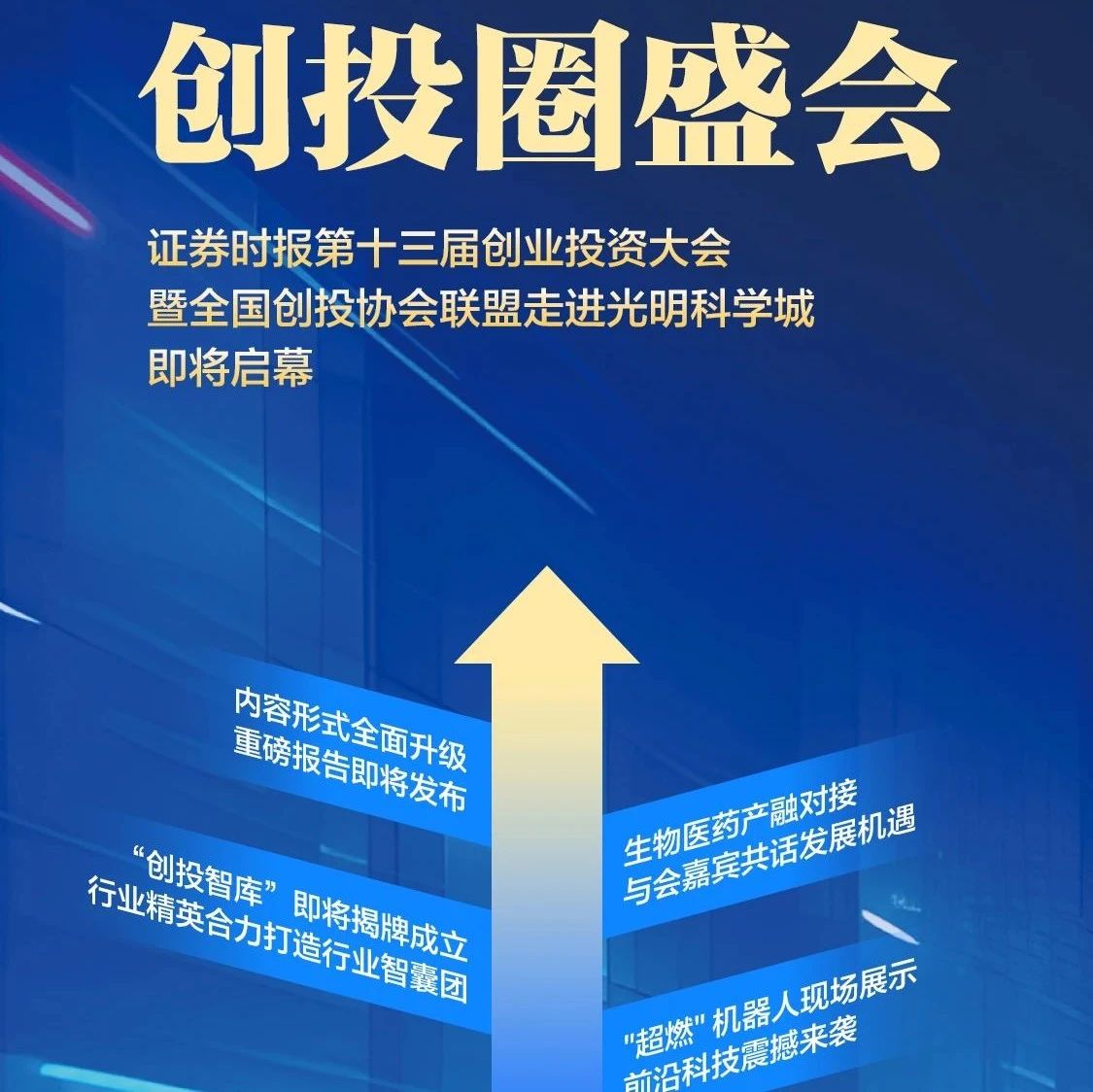
七月骄阳似火,中国创投界的年度盛宴也即将热力启幕。重磅嘉宾齐聚、隆重仪式加持、荣耀时刻待启——这一切,都将浓缩在7月24日—26日的 证券时报第十三届创业投资大会暨全国创投协会联盟走进光明科学城活动中。 作为创投界的年度盛事,本届论坛由证券时报联合深圳市光明区,以及全国创投协会联盟共同打造,更是"创投十七条"、"国办一号文" 等一系列 政策发布后,行业内首屈一指的重磅聚会。重磅在哪? 足够权威。 除主办方领导、行业、学术界、监管层重磅嘉宾外,目前,论坛已经邀请到20多个经济大省、强市的创投协会相关负责人,超300家活跃在国内投 资一线的主流创投机构,还有来自上市公司、产业资本、券商投行、创业企业等行业人士,共同见证这场创投行业的盛会。 足够聚焦。 本届活动适应创投行业的新形势、新变化,在往届活动基础上进一步丰富了形式和内容,人工智能、机器人、并购重组等行业热点都将在本届活 动上精彩呈现。 足够专业。 本届论坛带来了并购重组座谈会、生物医药投融资对接会,以及多位重磅嘉宾的主题分享和行业一线投资人的圆桌对话,各自开展激烈的"头脑风 暴"。 足够隆重。 (原标题:倒计时10天!打造"央地合作"新范式,就在光明科学城 ...

创投机构的“在地投资”实践:毅达资本如何助力昆山科创升级
2 1 Shi Ji Jing Ji Bao Dao· 2025-07-14 01:07
Core Viewpoint - Kunshan is transitioning from an "industrial strong city" to a "technology innovation strong city," focusing on high-end equipment, biomedicine, and new energy industries while promoting traditional industry transformation and strategic emerging industry cultivation [1][2] Group 1: Investment Strategy - Yida Capital has established a local presence in Kunshan, forming a 10-member team and collaborating closely with local state-owned platforms to jointly invest in projects [2][5] - Since 2005, Yida Capital has invested in 29 technology projects in Kunshan, with a total investment of 1.7 billion yuan, including 1.164 billion yuan in the last four years [7][9] - Yida Capital has set up four funds in Kunshan, with a total scale of 2.037 billion yuan [5] Group 2: Mechanism Innovation - In 2023, Yida Capital, in collaboration with local state-owned enterprises, established a localized GP company named "Kunshan Yucheng," achieving comprehensive localization from funding to mechanisms [5][10] - The partnership with Kunshan Chuangkong has shifted the investment model from "government funding + institutional management" to "mechanism co-construction + shared responsibilities" [10][14] - Yida Capital's approach emphasizes understanding the needs of different local government levels, facilitating collaboration between state-owned and market forces [10][13] Group 3: Economic Impact - The investment strategy has led to industrial synergies, such as accelerating capacity construction and optimizing processes for invested companies [9][10] - Yida Capital's investments have attracted projects like Yiwai Co., Mouteng Light, and Guanhua New Materials to Kunshan, creating a reverse investment loop [10] - The unique culture of Kunshan, characterized by a willingness to innovate and take risks, supports the flexibility of its mechanisms and is seen as a valuable asset for business operations [14][15]

对话尚海龙:10亿港元“抢人”基金 不光投钱更要“造血”
2 1 Shi Ji Jing Ji Bao Dao· 2025-07-12 13:16
Group 1 - The Hong Kong High Talent Venture Capital Fund aims to support high-skilled individuals in Hong Kong by providing entrepreneurial investment and comprehensive services, with an initial fundraising target of HKD 1 billion, of which HKD 300 million has already been secured [1][6] - The fund is initiated by the Hong Kong High Talent Service Association and seeks to attract high-end talent from around the world, with a focus on integrating them into Hong Kong's economy and supporting its industrial diversification [1][2] - The fund will balance investments between early-stage and mature projects, focusing on sectors such as fintech, artificial intelligence, biotechnology, and advanced manufacturing [3][7] Group 2 - The number of startups in Hong Kong has increased by 10% year-on-year to 4,694, with employee numbers rising by 7% to 17,651, both reaching historical highs [2] - The High Talent Pass Scheme has received approximately 116,000 applications, with nearly 92,000 approved, resulting in over 75,000 high-skilled individuals and their families relocating to Hong Kong [2] - The fund aims to leverage the management experience and capital of high-skilled individuals to enhance the local economy and facilitate the commercialization of research outcomes from universities [2][10] Group 3 - The fund's operational strategy includes a main fund that operates with relatively low risk, sub-funds that collaborate with leading sector-specific funds, and special funds focused on mature entrepreneurial projects [3][6] - The initiative addresses the mismatch between the diverse talent entering Hong Kong and the limited sectors available for employment, primarily in finance and real estate [4] - The fund emphasizes the importance of human value and aims to provide value-added services to talent, distinguishing itself from traditional financial investors [11]
万亿资本聚首光明科学城!就在7月24—26日,精彩提前“剧透”!
证券时报· 2025-07-09 04:11
盛夏7月,第十三届创业投资大会暨全国创投协会联盟走进光明科学城活动蓄势待发。在经济格局深 刻调整与科技创新浪潮奔涌的当下,这场行业盛会将聚焦创投领域全新发展机遇。 过去一年,创投行业政策利好频出:"创投十七条"等顶层设计明确以资本驱动创新的国家战略;银行 AIC、保险资金等长线资本借政策松绑加速入场,科创债试点与国家创业投资引导基金的设立,全面提振 募资信心;国办一号文通过优化政府基金出资规则、构建容亏容错机制,化解投融结构性矛盾。退出端, A股发行制度改革、并购重组规则优化与港股IPO热潮形成合力,强化项目退出预期,推动创投生态良性 循环。 7月24—26日,创投领域先锋精英与学术专家将齐聚大会,立足经济新形势共探资本与创新融合路径,为 行业高质量发展注入智慧动能。本次大会都有哪些亮点?以下为您提前"剧透"。 一众盟友 打造创投生态协同新标杆 作为证券时报深耕创投领域的标杆活动IP,创业投资大会已连续成功举办十二届,持续获得国家监管部 门、权威专家学者及头部市场机构的高度认可与鼎力支持。值得注意的是,从第十一届开始,这场盛会就 多了一个强大的组织——全国创投协会联盟。 在第十一届大会上,证券时报携手中国投资 ...
万亿资本聚首光明科学城!就在7月24—26日,精彩提前“剧透”
Zheng Quan Shi Bao Wang· 2025-07-08 02:42
Core Insights - The 13th Venture Capital Conference will focus on new development opportunities in the venture capital sector amidst profound economic adjustments and technological innovation waves [1] - Recent favorable policies in the venture capital industry, such as the "17 Articles on Venture Capital," have clarified the national strategy of driving innovation through capital [1] - The establishment of the National Venture Capital Association Alliance has strengthened the conference's influence and resource integration, enhancing industry communication [2] Policy and Market Environment - The government has introduced measures to boost fundraising confidence, including the establishment of the National Entrepreneurship Investment Guidance Fund and the optimization of government fund contribution rules [1] - Reforms in the A-share issuance system and merger and acquisition rules have improved exit expectations, promoting a virtuous cycle in the venture capital ecosystem [1] Conference Highlights - The conference will feature a series of meetings and activities, including a merger discussion forum and a biopharmaceutical investment matching event, aimed at fostering deep exchanges between venture capital institutions and biopharmaceutical companies [4][5] - Two significant reports will be released during the conference: one focusing on the current merger market and the other quantifying the venture capital strength of various cities [3] Expert Contributions - Notable speakers from academia and the venture capital industry will provide insights into macroeconomic trends and industry developments, including Shanghai University of Finance and Economics President Liu Yuanchun and Shenzhen Capital Group President Liu Suhua [6] - Roundtable discussions will address critical industry pain points, such as capturing investment opportunities amid technological changes and building a diversified exit system for venture capital [6]
创投的历史性变革,机遇何在
母基金研究中心· 2025-07-06 08:55
Core Viewpoint - The current capital winter is seen as a precursor to future prosperity, emphasizing that failures in the venture capital industry provide valuable lessons that drive progress [2][4]. Group 1: Industry Trends and Changes - Since 2018, China's venture capital industry has entered a painful period, marked by significant events such as the collapse of shared bicycles and the P2P lending crisis, leading to a cautious financing environment [2][3]. - The shift from a "short-term profit" focus to "long-term value creation" is essential for the transformation of the venture capital industry, which will help cultivate innovative companies with core competitiveness and provide quality investment targets for the capital market [4][6]. Group 2: National Policy and State Capital - The establishment of a "national-level" venture capital guiding fund is expected to mobilize nearly one trillion yuan in social capital, focusing on strategic industries such as AI, quantum technology, and hydrogen energy [6][7]. - State-owned capital is increasingly playing a leading role in the venture capital market, with significant investments in strategic emerging industries, reflecting a shift from being mere fund providers to becoming long-term capital leaders and innovation resource integrators [11][12]. Group 3: Regional Innovation Models - Different cities in China are developing unique models for venture capital and innovation, with Hefei focusing on "industry-investment linkage," Hangzhou on "collaborative ecosystems," and Shenzhen on market-driven resource allocation [13][14][26]. - Hefei's approach, termed the "Hefei phenomenon," involves using fiscal funds to attract major investments, leading to the establishment of a robust display panel industry and significant investments in semiconductor technology [16][18]. - Hangzhou's model emphasizes institutional innovation, talent policies, and the integration of industry and academia, resulting in a vibrant innovation ecosystem that supports technology transfer and commercialization [19][23]. Group 4: Evolution of Investment Strategies - The venture capital industry is moving away from traditional "betting agreements" and quick exits, reflecting a broader recognition of the need for patience in funding hard technology projects that require longer development cycles [27][30]. - New investment philosophies are emerging, focusing on deep industry engagement and value discovery, while policies are being reformed to create a comprehensive investment ecosystem that supports research, transformation, and exit strategies [30][32]. Group 5: Future Outlook - The transformation in the venture capital landscape aims to make capital a true enabler of technological innovation, aligning investment cycles with the realities of innovation [33][34]. - The industry is witnessing a shift towards nurturing long-term relationships with projects, with a focus on cultivating technologies and supporting companies over extended periods, which is expected to yield significant returns in the future [34].

完善机制引导长期资金愿投敢投
Jing Ji Ri Bao· 2025-07-05 22:15
Group 1 - The core viewpoint emphasizes the need for patient capital to support the commercialization of technological innovation, which faces challenges such as long cycles, high investment, and high risks [1] - Developed countries like the US and Europe have established relatively mature patient capital supply systems through policy guidance and market mechanism innovation, providing valuable lessons [1][3] - The US government has set up venture capital guidance funds to attract private capital into early-stage tech startups, significantly impacting job creation and economic growth [1][2] Group 2 - Various measures have been taken to expand the sources of patient capital, including reforms to pension fund systems and favorable tax regulations to encourage long-term investments in venture capital [2] - The US has seen a substantial reduction in tax rates for venture capital, with the total tax rate dropping from 49% to 20%, stimulating the growth of venture capital [2] - In the UK, the 2017 Pension Reform Act allows pension funds to invest in high-risk assets, including venture capital, enhancing the flow of long-term capital into the market [2] Group 3 - Establishing a comprehensive entrepreneurial innovation ecosystem is crucial for enhancing the success rate of startups, with Silicon Valley serving as a prime example due to its conducive environment for transforming entrepreneurial spirit into technological innovation [3] - High-level research universities play a vital role in foundational research, exemplified by Stanford University’s model of collaboration with industry, leading to the creation of numerous companies [3] Group 4 - Promoting a patient capital mindset involves educating investors about the long-term value of investments and enhancing their professional capabilities in risk assessment and investment management [4] - A robust institutional environment is necessary for the development of patient capital, including improved evaluation systems and mechanisms to support long-term investments [4] Group 5 - Creating a favorable ecosystem for patient capital development requires stable and predictable policy support, as well as a market-oriented and legal environment [5] - Many attempts to replicate Silicon Valley's success have failed due to a limited understanding of its operational model, highlighting the importance of stable policies for fostering patient capital [5]
时报观察丨政策红利收实效 创投市场添暖意
证券时报· 2025-07-05 00:02
Core Viewpoint - The venture capital market is showing signs of recovery, supported by objective data rather than subjective feelings, as key metrics from the first half of the year indicate a positive trend [1][2]. Group 1: Market Recovery Indicators - The scale of institutional LP (limited partner) investments surged by 50% year-on-year, while the decline in financing scale has significantly narrowed, and the number of IPO exit projects increased by over 20% [2]. - Multiple core indicators have rebounded collectively, marking the venture capital market's transition into a recovery cycle [2]. - A series of policy measures, including the new "National Nine Articles" and "Seventeen Articles on Venture Capital," are aimed at enhancing the support for technological innovation and facilitating the entire fundraising, investment, management, and exit chain [2]. Group 2: Investment and Funding Dynamics - Investment activity has notably increased, with AI and humanoid robotics companies like DeepSeek and Yushutech emerging as new hotspots for hard technology investments, leading to intensified competition for quality projects [2]. - Long-term capital is entering the market, exemplified by the National Big Fund's investment of nearly 200 billion yuan to establish three equity funds, alongside accelerated fundraising processes for state-owned and specialized funds [2]. - The exit landscape is structurally improving, with heightened activity in the Hong Kong IPO market and an increase in the quality and quantity of merger and acquisition cases [2]. Group 3: Challenges and Future Outlook - The core logic behind the recovery in fundraising and investment is the restoration of secondary market valuations and improved exit expectations [3]. - There is a growing consensus on the need for diversified exit mechanisms, with venture capital institutions focusing on enhancing DPI (Distributions to Paid-In) as a primary goal [3]. - However, the overall market recovery still faces challenges, such as the need to further activate market-based funding sentiment and expand the scale of long-term capital entering the market [3].