水利工程

Search documents
重大水利工程新突破!
中国能源报· 2025-09-29 10:48
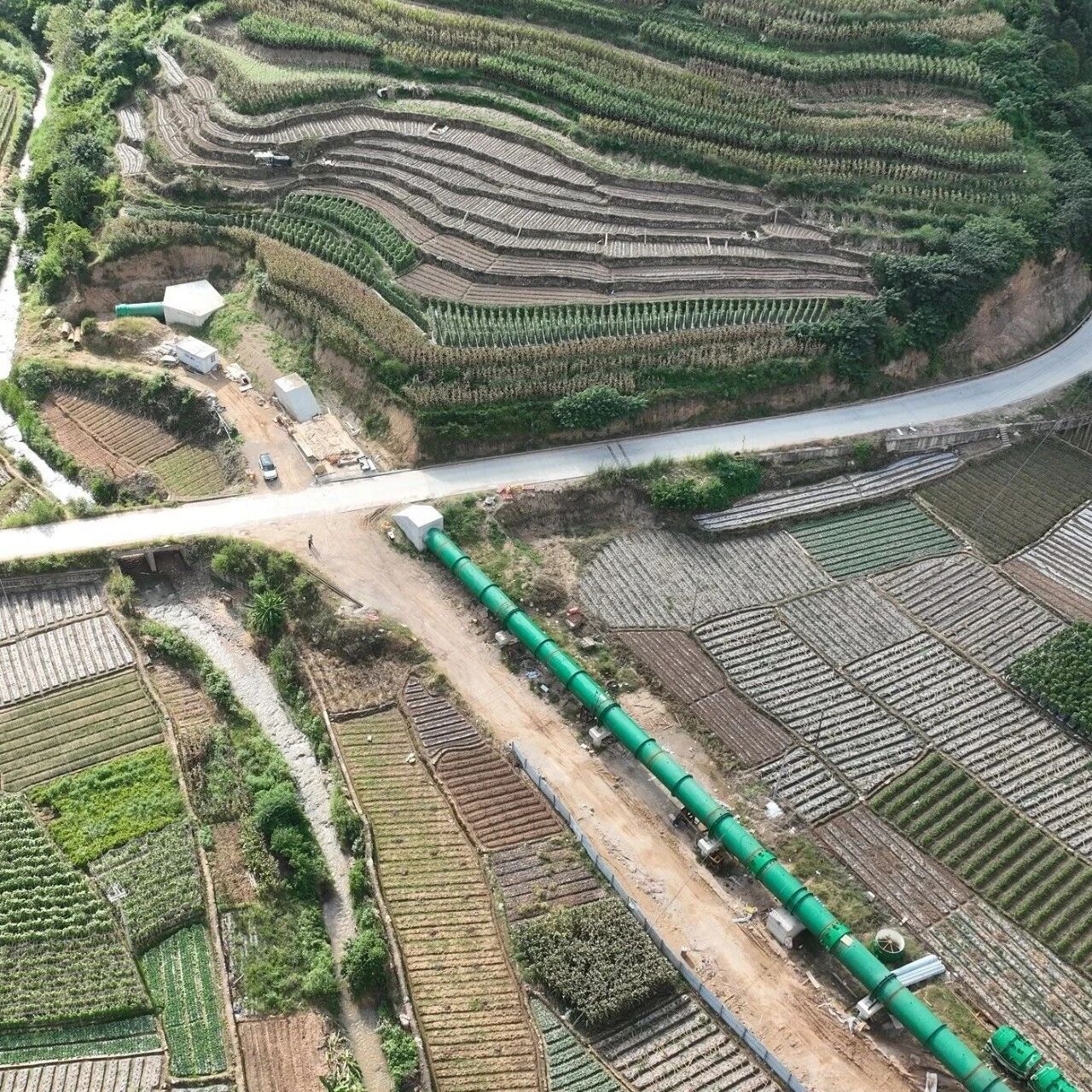
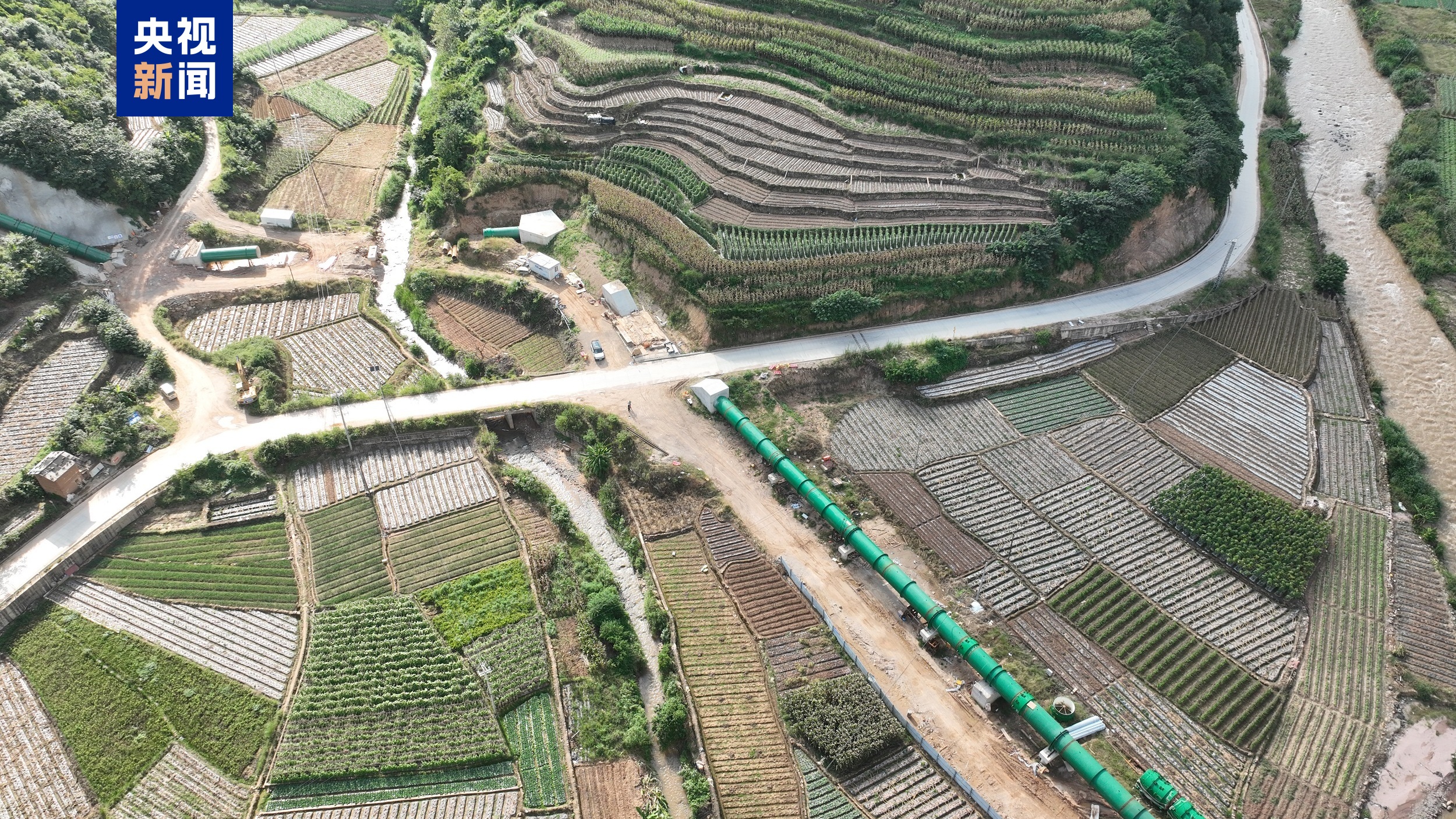
Core Viewpoint - The Dianzhong Water Diversion Project has made significant progress with the successful construction of the Qujiang inverted siphon, marking a breakthrough in this major national water conservancy project [1][2]. Group 1: Project Overview - The Qujiang inverted siphon is located in the Water Tank Village of Gaoda Township, Tonghai County, Yuxi City, and spans approximately 1829 meters, intersecting multiple transportation routes and rivers [2]. - The project is part of the largest water diversion project under construction in China, covering a total length of 664.326 kilometers, including 611 kilometers of water diversion tunnels [3][5]. Group 2: Technical Challenges and Innovations - The construction team faced challenges such as high precision requirements for road subsidence control, complex underground pipelines, and strict ecological protection standards [2]. - Innovative techniques such as refined detection, three-dimensional pipeline positioning, and ecological isolation were employed to control roadbed subsidence within 3 millimeters while ensuring the safety of the ecological environment and pipelines [2]. Group 3: Expected Impact - Upon completion, the project is expected to achieve an annual water diversion volume of 340 million cubic meters, effectively alleviating water scarcity issues in the central Yunnan region and benefiting over 11 million people along the route [5].

新华财经晚报:1-8月国有企业利润总额27937.2亿元 同比下降2.7%
Xin Hua Cai Jing· 2025-09-29 09:46
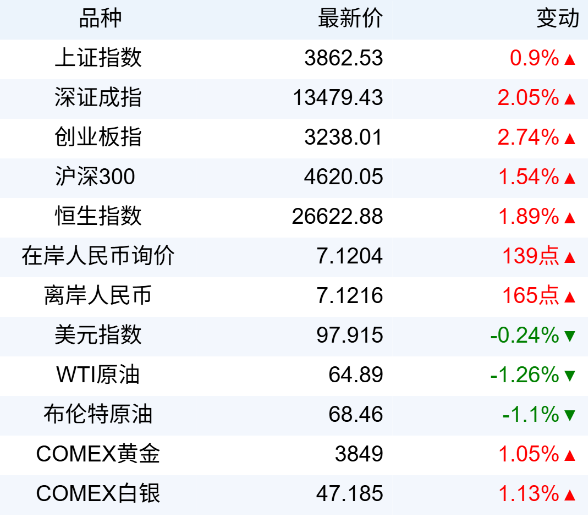
Domestic News - The National Development and Reform Commission (NDRC) announced a new policy financial tool with a total scale of 500 billion yuan, aimed at supplementing project capital. This initiative is part of efforts to enhance financial services for the real economy and promote effective investment [1] - In the first eight months of 2025, the total profit of state-owned enterprises reached 27,937.2 billion yuan, reflecting a year-on-year decline of 2.7%. Meanwhile, the total operating income of these enterprises increased by 0.2% [2] - The Ministry of Water Resources reported that since the beginning of the 14th Five-Year Plan, 172 major water conservancy projects have commenced, contributing to the establishment of the world's largest and most comprehensive water infrastructure system, benefiting the largest population [3] Industry Developments - The NDRC plans to support various enterprises, including private ones, to participate in the "Artificial Intelligence +" initiative. This includes policy support for the development of domestic computing power model corpus and financial subsidies for AI services [2] - The Ministry of Industry and Information Technology issued a work plan for the mechanical industry, aiming for an average annual revenue growth rate of approximately 3.5% from 2025 to 2026, with a target revenue exceeding 10 trillion yuan [2] - The Ministry of Industry and Information Technology granted satellite mobile communication business licenses to China Mobile, allowing it to engage in satellite communication services, enhancing emergency communication capabilities [3] Market Overview - The Shanghai Composite Index rose by 0.9% to 3,862.53, while the Shenzhen Component Index increased by 2.05% to 13,479.43. The ChiNext Index saw a significant rise of 2.74% to 3,238.01 [7] - The onshore RMB appreciated by 139 points to 7.1204, and the offshore RMB increased by 165 points to 7.1216 [7]
新华社权威速览·非凡“十四五”|新进展、新成效、新变化:“大国治水”成绩单来了!
Xin Hua She· 2025-09-29 08:19
Core Insights - The Ministry of Water Resources in China reported significant achievements in high-quality water conservancy development during the "14th Five-Year Plan" period, focusing on infrastructure, disaster prevention, and ecological improvements [1][3][5]. Infrastructure Development - Investment in water conservancy construction has exceeded 1 trillion yuan, indicating a strong commitment to enhancing water infrastructure [22]. - A series of flood control projects have been initiated, increasing flood storage capacity by 3.5 billion cubic meters and implementing governance for over 3,500 small and medium-sized rivers [5][11]. Disaster Prevention and Management - The flood forecasting period for major rivers has been extended from 3 days to 10 days, improving disaster preparedness [3][5]. - The measures taken have reduced urban flooding incidents by 7,661 times and avoided the relocation of approximately 42.78 million people [5]. Water Resource Management - Despite an average economic growth rate of 5.5%, the total water consumption in the country has achieved zero growth, with water usage per unit of GDP and industrial output decreasing by 17.7% and 23.6% respectively compared to 2020 [7]. - The area of water-saving irrigation has reached 63.8 million acres, reflecting a significant improvement in water resource management [11]. Ecological Restoration - The ecological environment of rivers and lakes has improved, with 1,300 square kilometers of water area restored in major lakes such as Dongting Lake and Poyang Lake [9]. - The construction of 122 happiness river and lake projects has been supported to enhance community well-being [9]. Agricultural Water Management - By the end of 2024, the irrigated area of farmland is expected to increase by 49,007 square kilometers, with over 80% of the grain produced being irrigated [11]. - Water-saving irrigation areas have increased by 12.5% compared to the end of the "13th Five-Year Plan" [11]. Soil and Water Conservation - The area of soil erosion on the Loess Plateau has been reduced by over half, with the construction of 3,879 sediment retention dams and 4 million dry farming terraces [16]. - Effective measures have been implemented to combat human-induced soil erosion, achieving a dual reduction in both the area and intensity of soil erosion [17].
环北部湾广东水资源配置工程首个盾构区间贯通
Nan Fang Ri Bao Wang Luo Ban· 2025-09-29 08:00
Core Viewpoint - The successful breakthrough of the "Yuehai Huanbei No. 8" shield machine marks a significant milestone in the construction of the Huanbei Guangdong Project, a major water conservancy initiative in Guangdong Province aimed at addressing long-standing water scarcity issues in the Leizhou Peninsula [1] Group 1: Project Overview - The Huanbei Guangdong Project spans approximately 490 kilometers and is recognized as a key national water network project [1] - It is the largest water diversion project in Guangdong Province, featuring the longest water transport route, the most complex construction conditions, and the highest total investment among major water conservancy projects [1] Group 2: Key Engineering Details - The Lianjiang tunnel, located in Zhanjiang, is a critical component of the project, measuring about 10.2 kilometers in length [1] - The section from Hechun shield well to Shanggao shield well, which is 3.8 kilometers long, is being excavated by the "Yuehai Huanbei No. 8" shield machine, the first large-scale excavation equipment to commence work on the project [1] Group 3: Project Impact and Future Plans - Upon completion, the project will connect 12 reservoirs along its route, benefiting over 18 million people in four cities and alleviating water scarcity issues that have plagued the Leizhou Peninsula for a millennium [1] - The next steps involve accelerating the excavation of tunnels, installation of pipelines, and construction of pump stations to achieve the goal of water delivery as soon as possible [1]
重大水利工程新突破 滇中引水曲江倒虹吸成功穿越峨大公路
Yang Shi Xin Wen· 2025-09-29 04:24
Group 1 - The core viewpoint of the news is that the Dianzhong Water Diversion Project is the largest water diversion project under construction in China, aimed at alleviating water scarcity in the central Yunnan region, benefiting over 11 million people along its route [3] - The project has a total length of 664.326 kilometers, with 611 kilometers consisting of water diversion tunnels, and is expected to achieve an annual water diversion volume of 3.4 billion cubic meters upon completion [3] - The Qujiang siphon section of the project, located in Tonghai County, faces multiple challenges including high precision requirements for road subsidence control, complex underground pipelines, and strict ecological protection demands [2] Group 2 - Innovative techniques such as refined detection, three-dimensional pipeline positioning, and ecological isolation have been employed to control roadbed subsidence within 3 millimeters while ensuring the safety of the ecological environment and pipelines along the route [2] - The project intersects with multiple transportation routes and rivers, connecting to a power station tailwater pool and the entrance of the Jimi Chong tunnel [2]
水利部答一财:在推进数字孪生水利体系建设中,重点抓监测感知、数学模型建设和业务应用三方面
Di Yi Cai Jing· 2025-09-29 02:56
Core Viewpoint - The future trend and development direction of the water conservancy sector are digitalization, networking, and intelligence, with a focus on building a digital twin water conservancy system to enhance flood prevention, water resource management, and operational efficiency [1][2] Group 1: Digital Twin Water Conservancy System - The Ministry of Water Resources is advancing the construction of a digital twin water conservancy system, which includes digital twin basins, water networks, and engineering projects, significantly enhancing the "four-pre" functions of forecasting, warning, simulation, and planning [1] - Key areas of focus in the digital twin water conservancy system include monitoring perception, mathematical model construction, and business applications [1] Group 2: Monitoring and Perception - Since the "14th Five-Year Plan," there has been a rapid development of an integrated monitoring perception system that combines aerial, terrestrial, and water engineering monitoring, improving the ability to perceive water conservancy physical objects [1] - This system provides dynamic real-time information support for monitoring and controlling safety risks in water conservancy projects and the operation of the digital twin water conservancy system [1] Group 3: Mathematical Models - The construction of a high-fidelity digital flow field simulation mathematical model system is underway, enabling forward-reverse-forward application for decision support in flood and drought disaster prevention and unified scheduling of watershed engineering [1] Group 4: Business Applications - The digital twin platform construction is being advanced based on actual needs and utility orientation, covering various business applications at all levels [2] - The flood forecasting period for major rivers has been extended from 3 days to 10 days, providing strong support for flood resistance in significant events, such as the largest flood in the Beijiang River since 1915 [2] - Monitoring and early warning for ecological flow control at 268 key river and lake sections across the country have been achieved, ensuring safety in the South-to-North Water Diversion Project [2]
水利部答一财:推进数字孪生水利体系建设
Di Yi Cai Jing· 2025-09-29 02:54
Core Insights - The flood forecasting period for major rivers in China has been extended from 3 days to 10 days, enhancing the country's flood management capabilities [1][3] - The Ministry of Water Resources is focusing on the construction of a digital twin water conservancy system, which includes digital twin basins, water networks, and engineering projects, to improve flood prevention and water resource management [1][3] Group 1: Digital Twin Water Conservancy System - The digital twin system aims to enhance monitoring, mathematical modeling, and business applications within the water conservancy sector [3] - A comprehensive "sky-ground-water-engine" integrated monitoring system has been established to improve the perception of physical water objects, providing real-time information for risk monitoring and control [3] - The development of high-fidelity digital flow field simulation models supports decision-making for flood and drought disaster prevention and unified scheduling of water projects [3] Group 2: Practical Applications and Achievements - The digital twin platform has successfully supported the management of significant floods, including the largest flood in the Beijiang River since 1915 and the major flood in the Haihe River basin [3] - Monitoring and early warning systems have been implemented for 268 key river and lake ecological flow control sections across the country [3] - The digital twin system for the South-to-North Water Diversion Project provides real-time reflections of project conditions, optimizing scheduling and ensuring safety in water supply and quality [3]

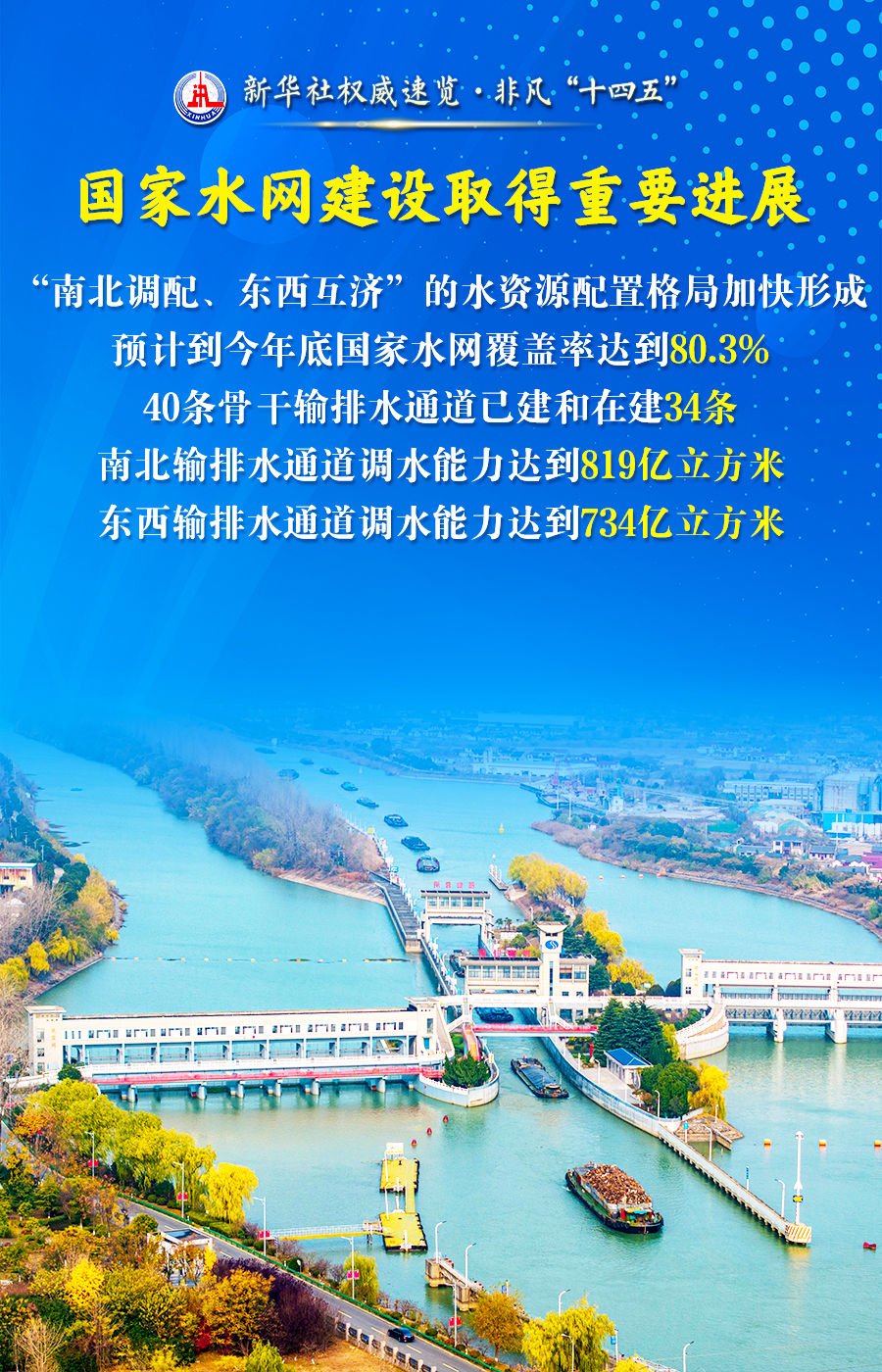
水利部:“十四五”末国家水网覆盖率预计达80.3%
Yang Shi Wang· 2025-09-29 02:19
Core Insights - The press conference highlighted the achievements in high-quality water resource development during the "14th Five-Year Plan" period, emphasizing the construction of various water source, diversion, and irrigation projects [1] Group 1: Water Resource Development - By the end of the "14th Five-Year Plan," the national water network coverage is expected to reach 80.3% [1] - The irrigated area of arable land is projected to be 10.9 million acres [1] - The rural tap water coverage rate is anticipated to reach 96% [1] Group 2: Economic and Water Usage Efficiency - Despite significant economic growth and continuous increases in grain production, the total water usage has achieved zero growth [1] - By 2024, the water consumption per 10,000 yuan of GDP and per 10,000 yuan of industrial added value is expected to decrease by 17.7% and 23.6% respectively compared to the end of the "13th Five-Year Plan" [1] - The effective utilization coefficient of irrigation water in farmland has improved from 0.565 at the end of the "13th Five-Year Plan" to 0.58 [1]
大批水利工程进行时 “十四五”末国家水网覆盖率预计达80.3%
Yang Shi Xin Wen· 2025-09-29 02:17
Core Insights - The press conference held by the State Council Information Office on September 29 highlighted the achievements in high-quality water conservancy development during the 14th Five-Year Plan period [1] - The Minister of Water Resources, Li Guoying, reported significant advancements in water source projects, water diversion projects, and irrigation area projects, with expectations that by the end of the 14th Five-Year Plan, the national water network coverage will reach 80.3% [1] Summary by Categories Water Resource Development - A large number of water source, diversion, and irrigation projects have been constructed, ensuring water resource security for major national strategies, stable grain production, and the well-being of urban and rural residents [1] - By the end of the 14th Five-Year Plan, the irrigated area of arable land is expected to reach 1.09 billion acres, and the rural tap water coverage rate is projected to be 96% [1] Economic Impact - Despite significant economic growth and continuous increases in grain production, the total water consumption has achieved zero growth [1] - The water consumption per ten thousand yuan of GDP and per ten thousand yuan of industrial added value is expected to decrease by 17.7% and 23.6%, respectively, compared to the end of the 13th Five-Year Plan [1] Efficiency Improvements - The effective utilization coefficient of irrigation water in farmland has improved from 0.565 at the end of the 13th Five-Year Plan to 0.58 [1]
青春华章|漫评:让“治水兴邦”使命担当在青春奋斗中代代相传
Huan Qiu Wang· 2025-09-28 05:34
Core Insights - The article emphasizes the importance of water in Chinese civilization and its role in shaping cultural and ecological practices [3][4] - It highlights Jiangsu's ongoing efforts in ecological restoration and water management, showcasing significant improvements in biodiversity and environmental quality [3] - The narrative encourages contemporary youth to engage in water conservation and management, drawing inspiration from historical water culture [4] Group 1: Ecological Restoration Efforts - Jiangsu has made significant strides in the protection of the Yangtze River, with bird species increasing from 103 to 224 due to ecological restoration efforts [3] - The province has implemented comprehensive measures to close and relocate chemical enterprises along the river, achieving ecological restoration of 3,600 acres, with 80.6% of the riverbank now green [3] Group 2: Youth Engagement and Cultural Significance - The article calls on contemporary youth to embody the resilience and adaptability of water, using innovative thinking to enhance traditional water management practices [4] - It stresses the importance of integrating personal aspirations with national goals, encouraging youth to contribute to sustainable development and water conservation efforts [4]