预制菜

Search documents
我国预制菜市场渗透率不到15%
Di Yi Cai Jing· 2025-09-13 09:53
Core Viewpoint - The controversy surrounding pre-prepared meals in China has been ignited by social media influencer Luo Yonghao's criticism of the restaurant chain Xibei, leading to a broader discussion on the standards, safety, and consumer rights related to pre-prepared meals in the industry [2][3]. Industry Overview - The pre-prepared meal market in China has rapidly grown to a scale of $148.9 billion, making it the largest globally, despite a market penetration rate of less than 15%, significantly lower than the 60% rates seen in the US and Japan [5][6]. - In contrast, the US pre-prepared meal market is projected to reach $47.56 billion by 2024, with a market penetration of 18.3%, while Japan's market has surpassed 10 trillion yen with a penetration rate exceeding 20% [5]. Key Issues Identified - The definition of pre-prepared meals needs further clarification, as there is a significant gap between consumer understanding, regulatory definitions, and actual practices in the industry [6][7]. - Consumer rights regarding information, choice, and fair trading are not adequately protected, leading to a disconnect between consumer expectations and actual dining experiences [7][8]. - The primary consumer demographic for pre-prepared meals includes working individuals in urban areas, with distinct preferences between younger and older consumers [6][8]. Quality Assurance Challenges - Quality control remains a critical bottleneck for the pre-prepared meal industry, with safety concerns and high prices being the main issues driving consumer skepticism [9][11]. - The Japanese pre-prepared meal market demonstrates that strict food safety standards and personalized flavors can lead to high consumer trust and profitability [9]. Recommendations for Industry Development - Establishing national standards for pre-prepared meals is essential to ensure consumer rights and unify industry practices across different regions [10][12]. - The industry requires governance and restructuring to enhance the quality and safety of pre-prepared meals, addressing issues related to substandard ingredients and excessive additives [11][12]. - Implementing a classification system for restaurants and pre-prepared meal providers can help consumers make informed choices and improve overall market acceptance [12][13]. - The industry should focus on reducing the proportion of deep processing and emphasize traditional cooking methods to retain the unique characteristics of Chinese cuisine [13].

从病死猪肉也吃到嫌弃预制菜,罗永浩的执念可以放下
第一财经· 2025-09-13 09:52
Core Viewpoint - The article discusses the evolving perception of pre-prepared meals (pre-cooked dishes) in the restaurant industry, highlighting the need for transparency and consumer awareness regarding their use in dining establishments [3][6]. Group 1: Industry Trends - The Chinese government is actively promoting the pre-prepared meal industry as a new sector, with initiatives aimed at enhancing standardization and safety regulations [4]. - The 2023 Central Document No. 1 emphasizes the development of pre-prepared meal standards, indicating strong governmental support for this industry [4]. - The trend towards using pre-prepared meals in restaurants is seen as inevitable due to demands for quick service, food safety, and cost-effectiveness [4]. Group 2: Consumer Awareness and Rights - There is a growing call for restaurants to disclose the use of pre-prepared meals to uphold consumer rights, as highlighted by recent regulatory documents [6]. - The upcoming national standards for food safety regarding pre-prepared meals will require restaurants to inform customers about their use, enhancing transparency [6][7]. - The article suggests that while the majority of meals may become pre-prepared, restaurants that offer freshly cooked meals could leverage this as a unique selling point [6]. Group 3: Quality Control and Safety - The emphasis on public disclosure of pre-prepared meals does not inherently improve their taste or safety; the focus should be on stringent quality control and adherence to food safety regulations by producers and restaurants [7]. - Ensuring high-quality pre-prepared meals is crucial for consumer satisfaction and trust in the industry [7].

我国预制菜市场渗透率不到15%
第一财经· 2025-09-13 09:52
Core Viewpoint - The recent controversy surrounding pre-prepared meals in China, ignited by social media influencer Luo Yonghao's criticism of the restaurant Xibei, highlights significant issues within the pre-prepared meal industry, including consumer perceptions, regulatory standards, and market dynamics [3][4][6]. Industry Overview - The pre-prepared meal sector represents a significant trend in modern food industry development, with the U.S. market projected to reach $47.56 billion by 2024, making it the second-largest globally. In contrast, China's pre-prepared meal market has rapidly grown to $148.9 billion, becoming the largest worldwide, although its market penetration remains below 15% compared to over 60% in the U.S. and Japan [5][6]. Key Issues Identified - **Definition Standards**: There is a need for clearer definitions of what constitutes pre-prepared meals. Current regulations differentiate between various types of food products, but consumer understanding often diverges from these definitions, leading to confusion and mistrust [6][7]. - **Consumer Rights**: The controversy underscores the importance of consumer rights, particularly regarding transparency and choice. Many consumers feel misled when they expect freshly prepared meals but receive pre-prepared options instead, leading to dissatisfaction [7][8]. - **Market Segmentation**: The primary consumers of pre-prepared meals are urban workers and younger demographics, who seek convenience. However, older consumers often prefer freshly prepared meals, indicating a disconnect in market targeting [8][9]. - **Quality Assurance**: Quality control remains a critical challenge for the pre-prepared meal industry. Issues related to food safety and ingredient quality have led to consumer skepticism, particularly following reports of substandard ingredients being used [9][10]. Recommendations for Industry Development - **Establish National Standards**: There is an urgent need to develop national standards for pre-prepared meals to ensure consistency and safety across the industry. Local governments have begun to implement guidelines, but a unified national standard is essential for consumer trust [11][12]. - **Quality Control Measures**: The industry must address quality and safety concerns by implementing stricter regulations and oversight to prevent the use of inferior ingredients and ensure product integrity [12][13]. - **Consumer Education and Transparency**: Enhancing consumer education about pre-prepared meals and ensuring transparency in ingredient sourcing and preparation methods can help rebuild trust and improve market acceptance [13][14]. - **Cultural Adaptation**: The industry should focus on retaining the unique characteristics of Chinese cuisine while integrating pre-prepared meal options, moving away from overly Westernized approaches that may not resonate with local consumers [13].
壹快评丨预制菜既不该被妖魔化,也不能走向过度西餐化
Di Yi Cai Jing· 2025-09-13 09:09
Core Viewpoint - The recent controversy surrounding pre-prepared meals (pre-cooked dishes) has highlighted the need for clearer national standards and regulations in the industry, particularly in response to consumer concerns about quality and transparency [1][4][6]. Group 1: Industry Overview - The pre-prepared meal market in China has rapidly grown to a scale of $148.9 billion, making it the largest globally, despite a market penetration rate of less than 15%, significantly lower than the 60% rates seen in the US and Japan [2][3]. - The US pre-prepared meal market is projected to reach $47.56 billion by 2024, with a market penetration of 18.3%, while Japan's market has surpassed 10 trillion yen, indicating a more mature industry compared to China's [2]. Group 2: Consumer Concerns - Consumers express dissatisfaction with pre-prepared meals due to perceived high prices and low quality, leading to a disconnect between expectations and actual dining experiences [4][5]. - The primary consumer demographic for pre-prepared meals includes urban workers, particularly those under 35 and those over 35, with differing expectations regarding meal preparation and quality [3][4]. Group 3: Regulatory Needs - There is a pressing need for the establishment of national standards for pre-prepared meals, as current regulations are not mandatory and vary significantly across regions [3][6]. - Local governments have begun to implement various standards and guidelines, but a unified national framework is necessary to ensure consistency and consumer protection [6][8]. Group 4: Quality Assurance - Quality control remains a critical issue for the pre-prepared meal industry, with consumer trust being undermined by incidents involving substandard ingredients and excessive additives [5][7]. - The Japanese pre-prepared meal market demonstrates that strict food safety standards and reasonable pricing can lead to high consumer satisfaction and market success [5]. Group 5: Industry Development Strategies - The industry should focus on categorizing restaurants and pre-prepared meal providers to enhance consumer choice and ensure fair trading practices [8]. - There is a call for reducing the reliance on deep processing and instead leveraging advanced cold chain logistics to maintain the authenticity and quality of Chinese cuisine [9].
餐厅预制菜需要明示!国标草案已过审
券商中国· 2025-09-13 08:39
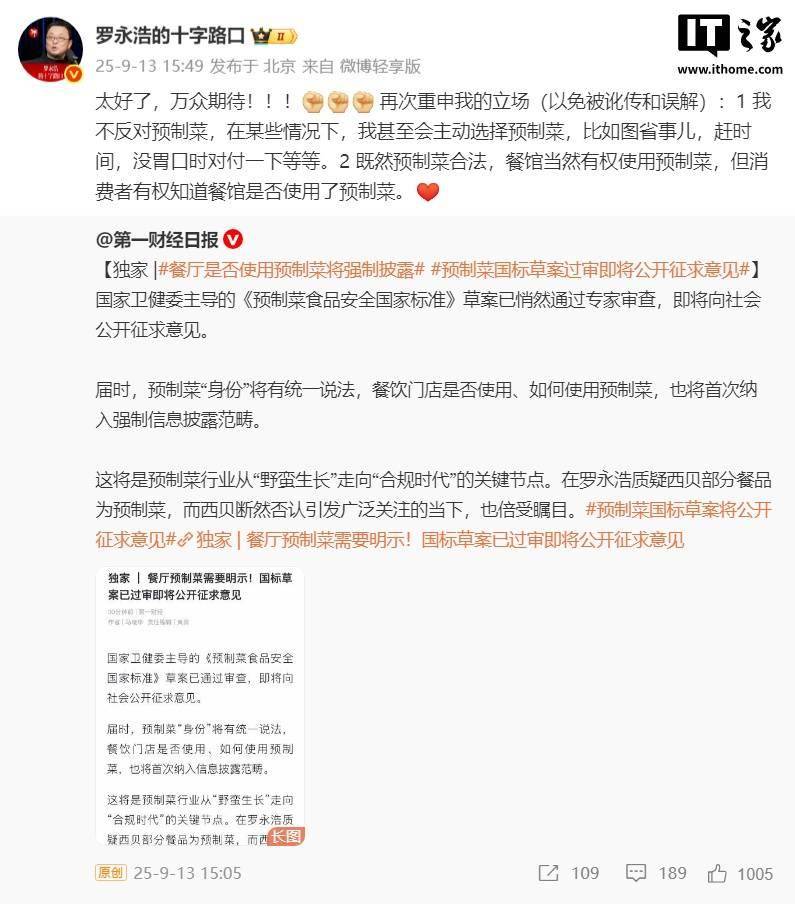
Core Viewpoint - The draft of the national standard for pre-prepared food, led by the National Health Commission, has passed expert review and will soon be open for public consultation, marking a significant shift from the "wild growth" phase to a "compliance era" for the pre-prepared food industry [1] Group 1: Regulatory Changes - The new standard will provide a unified definition and food safety indicators for pre-prepared food, including classifications, raw materials, processing methods, storage, transportation, and inspection methods [1] - The draft introduces mandatory indicators such as "no added preservatives," focusing on safety standards compared to the existing 141 group and local standards, thus providing a direct basis for regulatory enforcement [1] Group 2: Industry Reactions - The controversy surrounding the use of pre-prepared food in restaurants has gained attention, particularly after Luo Yonghao questioned the authenticity of certain dishes at Xibei, which the restaurant denied [1] - Luo Yonghao reiterated his stance that while he does not oppose pre-prepared food, consumers have the right to know whether restaurants are using it [1]

“餐厅使用预制菜须明示”,相关国家标准草案已过审!罗永浩表态:我不反对预制菜!官方已明确“预制菜”定义和范围
Mei Ri Jing Ji Xin Wen· 2025-09-13 08:37
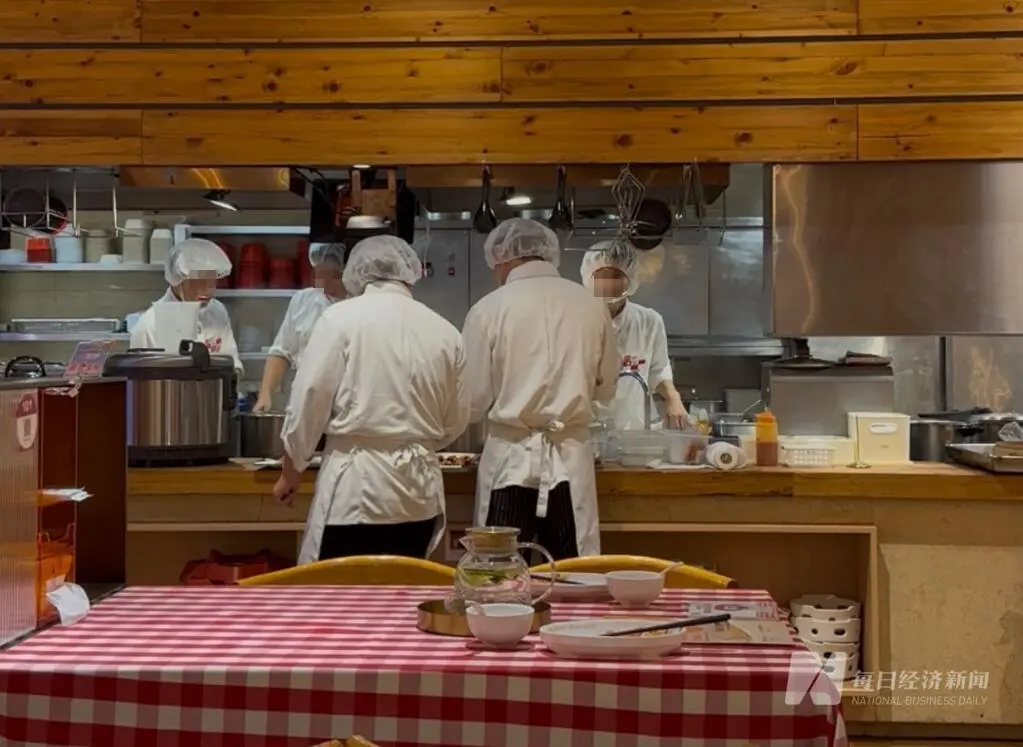
每经编辑|段炼 近日,罗永浩质疑西贝部分餐品为预制菜,而西贝则断然否认,双方多次隔空争吵,引发广泛热议。 西贝后 厨 图片来源:每经记者 王郁彪 摄 据第一财经报道,国家卫健委主导的《预制菜食品安全国家标准》草案已悄然通过专家审查,即将向社会公开征求意见。 届时,预制菜"身份"将有统一说法,餐饮门店是否使用、如何使用预制菜,也将首次纳入强制信息披露范畴。 这将是预制菜行业从"野蛮生长"走向"合规时代"的关键节点。 "该标准主要是规定定义和食品安全指标要求。"据一位参与起草的专家透露,草案对预制菜的分类、原料、加工工艺、贮存运输及检验方法作出了统一规 定,并提出"不添加防腐剂"等强制性指标。 其实,早在2024年3月,市场监管总局曾联合教育部、工业和信息化部、农业农村部、商务部、国家卫生健康委印发《关于加强预制菜食品安全监管 促进 产业高质量发展的通知》(下文简称为《通知》),内容聚焦预制菜范围、标准体系建设、食品安全监管和推进产业高质量发展4个方面,首次在国家层 面明确预制菜范围,对预制菜原辅料、预加工工艺、贮运销售要求、食用方式、产品范围等进行了界定。 《通知》规定,预制菜是以食用农产品等为原料,经工业化预 ...
预制菜万亿赛道群雄逐鹿,安井、三全等A股企业谁能脱颖而出成巨头?
Sou Hu Cai Jing· 2025-09-13 08:11
Industry Overview - The prepared food industry has been gaining momentum, becoming a dual focus for both capital and consumer markets, with a market size exceeding one trillion [1] - The competition is intensifying among frozen food companies, restaurant giants, and raw material suppliers, highlighting a battle over supply chain efficiency and brand influence [1] Company Strategies - Anjuke Foods has emerged as a pioneer in the prepared food sector, leveraging its cold chain logistics and processing technology, with its brand "Frozen Food Mr." focusing on the C-end market since 2018 [3] - In 2022, Anjuke's frozen dishes business experienced explosive growth, supported by a comprehensive product matrix covering all channels [3] - Sanquan Foods, a leader in the frozen rice and noodle market, has faced challenges with market growth slowing to an annual rate of 5.58%, prompting a shift towards prepared foods starting in 2020 [3] - New entrants like Weizhi Xiang and Qianwei Yangchu are reshaping the industry landscape by establishing competitive advantages through differentiated positioning and leveraging major client resources [3] Market Dynamics - The restaurant sector is also making notable cross-industry moves, with Guangzhou Restaurant achieving a compound annual growth rate of 13.58% in its mooncake business and positioning prepared foods as a second growth driver [4] - The gross profit margin for Guangzhou's frozen Cantonese products reaches 36.18%, significantly above the industry average [4] - The competition in the prepared food market has reached a fever pitch, driven by the stringent cost control demands of B-end restaurant clients and the quality and convenience expectations of C-end consumers [4] - Companies must build core competencies in cold chain logistics, product development, and brand building to secure a position in this blue ocean market, as the influx of participants may lead to an accelerated industry reshuffle [4]

餐厅使用预制菜要强制明示,消息称国标草案已过审
Sou Hu Cai Jing· 2025-09-13 08:11
Group 1 - The draft of the national standard for pre-prepared food safety, led by the National Health Commission, has passed review and will soon be open for public consultation, marking a significant step towards standardizing the identity of pre-prepared dishes in the industry [1][2] - The new regulations will require restaurants to disclose whether they use pre-prepared dishes and how they are used, which will be the first time such information is mandated [1][2] - This development is seen as a critical transition for the pre-prepared food industry from "wild growth" to a "compliance era," especially in light of recent controversies surrounding the use of pre-prepared dishes by certain restaurants [2] Group 2 - The controversy involving entrepreneur Luo Yonghao criticizing the restaurant chain Xibei for using pre-prepared dishes has sparked widespread attention, leading to Xibei's founder announcing plans to sue Luo and introduce a "Luo Yonghao menu" [1][2] - Luo Yonghao has clarified his stance on pre-prepared dishes, stating that while he does not oppose them and may choose them for convenience, consumers have the right to know if restaurants use such dishes [1][2]
餐厅预制菜需要明示 国标草案已过审即将公开征求意见
财联社· 2025-09-13 07:32
Core Viewpoint - The draft of the national standard for pre-prepared food safety, led by the National Health Commission, has passed expert review and will soon be open for public consultation, marking a significant shift towards regulation in the pre-prepared food industry [1][2]. Group 1 - The new standard will provide a unified definition for pre-prepared food and will require mandatory disclosure regarding the use of such food in restaurants, indicating a move from "wild growth" to a "compliance era" in the industry [2]. - The standard focuses on safety benchmarks, establishing direct legal bases for regulatory enforcement, which is a step up from the existing 141 group and local standards [3]. - The draft includes specific requirements such as the classification of pre-prepared food, raw materials, processing methods, storage, transportation, and testing methods, with a notable emphasis on the prohibition of preservatives [2].
餐厅预制菜需要明示!国标草案已过审即将公开征求意见 | 独家
Di Yi Cai Jing· 2025-09-13 07:21
2025.09.13 本文字数:1873,阅读时长大约3分钟 作者 |第一财经 马晓华 国家卫健委主导的《预制菜食品安全国家标准》草案已通过审查,即将向社会公开征求意见。 届时,预制菜"身份"将有统一说法,餐饮门店是否使用、如何使用预制菜,也将首次纳入强制信息披露范畴。 这将是预制菜行业从"野蛮生长"走向"合规时代"的关键节点。在罗永浩质疑西贝部分餐品为预制菜,而西贝断然否认引发广泛关注的当下,也倍受瞩目。 国标过审:先定"定义",再立"安全线" "该标准主要是规定定义和食品安全指标要求。"据一位参与起草的专家透露,草案对预制菜的分类、原料、加工工艺、贮存运输及检验方法作出了统一规 定,并首次提出"不添加防腐剂"等强制性指标。与现行141项团体、地方标准相比,国标条款更聚焦"安全底线",为监管执法提供直接依据。 广东经验先行:地方标准+智慧监管 地方市场监管局推动餐饮门店"主动公示" 正是因为预制菜相关标准尚未出台,消费者对其褒贬不一,任何关于预制菜的舆情对这个领域都颇具杀伤力。 2025年7月份,湖南省市场监管局在答复政协提案时明确,将把"明示预制菜使用情况"写入食品安全操作规范,并指导行业协会制定《公示指 ...