
移动通信

Search documents
阿尔及利亚正式启动5G服务
Shang Wu Bu Wang Zhan· 2025-12-05 06:31
Core Viewpoint - Algeria has officially launched its fifth-generation mobile communication (5G) services, marking a significant step in enhancing its digital infrastructure and communication sector [1] Group 1: Government and Official Involvement - The launch ceremony was attended by several high-ranking officials, including the presidential advisor, ministers of interior, local administration, transportation, finance, and postal services [1] - Algerian mobile communication operators participated in the event, showcasing how 5G technology can enhance digital services [1] Group 2: Impact on Digital Transformation - The initiation of 5G services is expected to further drive Algeria's digital transformation, opening new development prospects for businesses and users across various sectors [1]
一周要闻·阿联酋&卡塔尔|迪拜、香港联手举办第二届气候金融联合会议/Vodafone Qatar联合科大讯飞与DVTT推动AI应用
3 6 Ke· 2025-11-30 23:01
Group 1: Climate Finance and Innovation - The second Climate Finance Joint Conference was held in Dubai on November 26, focusing on financial risks and innovative opportunities related to climate change, attracting nearly 250 participants [2] - The conference discussed a joint research report on expanding the sustainable debt market in emerging markets, highlighting the role of sustainable debt instruments in climate financing [2] Group 2: Industrial Land Supply and Real Estate - Abu Dhabi and Dubai are planning to release a significant amount of industrial land to alleviate rental pressures caused by long-term supply shortages, with Dubai's industrial real estate rents increasing by approximately 30% over the past two years [3] - The "300 billion action" plan aims to increase the industrial sector's contribution to GDP from 133 billion dirhams in 2021 to 300 billion dirhams (approximately 82 billion USD) by 2031 [3] Group 3: Virtual Assets and Regulation - The Dubai Virtual Assets Regulatory Authority (VARA) anticipates that local virtual asset trading volume will reach approximately 681 billion dirhams (681 billion USD) by 2025, reflecting significant progress in establishing Dubai as a global virtual asset economic hub [3] - A new federal law in the UAE has been enacted to regulate digital assets and decentralized finance (DeFi), requiring all related businesses to obtain central bank licenses [4] Group 4: Industry Exhibitions and Sustainable Development - The BIG5 Global 2025 exhibition in Dubai focuses on supply chain resilience, technological advancements, and sustainable construction, featuring a sustainable China Pavilion made from recyclable materials [4] Group 5: AI in Investment Management - A survey by Alpheya revealed that approximately 73% of UAE investors plan to use AI instead of human advisors, with 70.8% willing to let AI manage their investment portfolios [5] - High-net-worth individuals showed a satisfaction rate of 52% with AI wealth management, significantly higher than the 37% satisfaction rate among regular investors [5] Group 6: Smart and Sustainable City Development in Qatar - Qatar is advancing smart and sustainable city initiatives, with plans to launch over 30 national-level smart solutions in the next two years [7] - The "Smart Qatar – Tasmu" initiative aims to create a national digital twin system supported by sovereign data centers and advanced connectivity infrastructure [7] Group 7: Local Value Certification Growth in Qatar - The number of companies certified for local value (ICV) in Qatar increased by 33% this year, reaching 3,484, reflecting the government's focus on enhancing local economic contributions [8] Group 8: Strategic Projects and Investment Services in Qatar - The Ministry of Commerce and Industry in Qatar has partnered with PwC to launch a multi-year strategic project aimed at upgrading investor services to a more integrated and data-driven platform [9]



我国6G加速攻坚布局
Yang Shi Wang· 2025-11-30 12:40
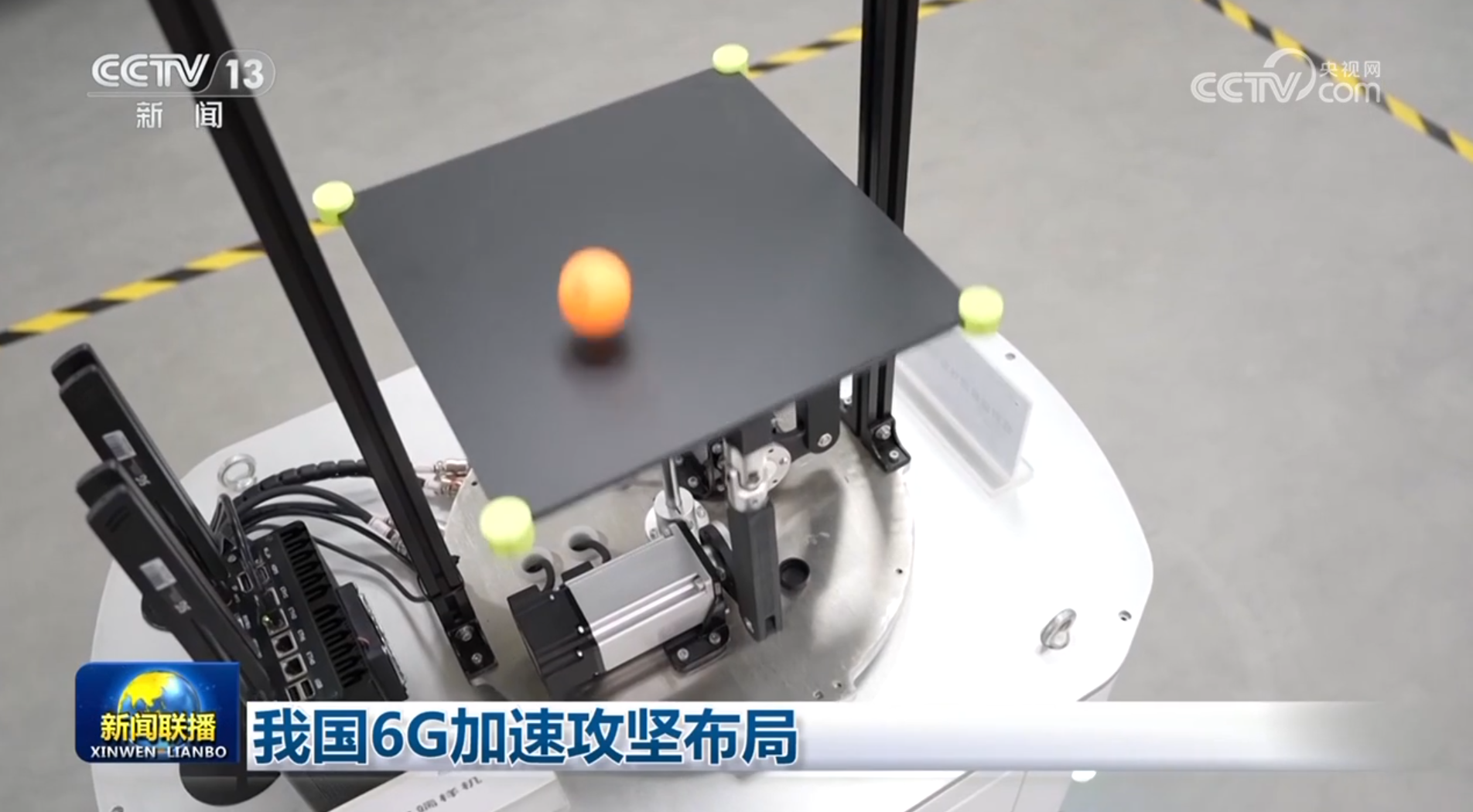
Core Insights - The "14th Five-Year Plan" emphasizes the strategic layout of six future industries, including 6G technology, indicating a national focus on advancing this sector [1] - China is transitioning 6G from laboratory experiments to real-world applications, with significant projects and core technologies being developed [1][4] Industry Developments - In Nanjing, a 6G-controlled device is conducting tests to validate the reliability of 6G signals, which is crucial for future industrial applications [3] - The 6G industry in China is making breakthroughs in core technologies and accelerating key product development, creating a complete chain from innovation to industrial application [4] - 6G technology is being integrated into practical applications, such as long-distance monitoring of water bodies, demonstrating its operational capabilities [6] Patent and Market Position - By June 2025, China is expected to hold approximately 40.3% of global 6G patent applications, leading the world in this area [7] - The first phase of 6G technology testing has been completed, with over 300 key technologies developed, setting the stage for future advancements [7] - The plan includes a focus on developing 6G standards and industry research during the "14th Five-Year Plan," with commercial applications anticipated around 2030 and large-scale deployment by 2035, aiming to cultivate a trillion-yuan 6G industry [7]
6G技术重大突破,如何赋能千行百业?机构看好三大投资方向
Zheng Quan Shi Bao· 2025-11-30 07:57
Core Insights - China has completed the first phase of 6G technology trials, establishing over 300 key technology reserves, with a focus on developing standards and industrial research during the 14th Five-Year Plan period, aiming for commercial applications around 2030 [1][2][3] Group 1: Technological Developments - The first phase of 6G trials has been completed, focusing on key technology directions [2][3] - A demonstration system for 6G has been developed, showcasing real-time wireless control with high demands for latency and stability [1] - The goal for 6G is to achieve air interface transmission latency as low as 100 microseconds and reliability of 99.99999% [1][2] Group 2: Industrial Applications - 6G is expected to replace critical control buses in industrial settings, laying the foundation for fully automated factories [2][3] - By 2030, 6G is projected to provide customized, immersive, and intelligent application services across various life scenarios [3] Group 3: Market Potential - The global 6G technology market is projected to grow from $1.66 billion in 2024 to $14.94 billion by 2030, with a compound annual growth rate of 43.98% [6] - By 2040, the number of global smart terminal connections is expected to exceed 12.16 billion, significantly increasing from current 5G levels [7] Group 4: Policy and Support - The Chinese government has initiated policies to support the integration of AI with 6G and other advanced technologies, promoting innovation and application in various sectors [4] - Local governments in Beijing and Shanghai are encouraging the development and application of 5G/6G technologies in industrial settings [4]

重大突破!这一万亿级市场,要来了
Zheng Quan Shi Bao· 2025-11-30 07:56
Core Insights - China has completed the first phase of 6G technology trials, establishing over 300 key technology reserves [1][2] - The future of 6G technology is expected to empower various industries, particularly in creating smart factories with precise wireless control [1][2] - The goal for 6G is to achieve ultra-low latency and high reliability, enabling seamless collaboration among industrial devices [2][3] Industry Development - During the 14th Five-Year Plan period, China will focus on 6G standard development and industrial research, with commercial applications expected to start around 2030 [2][3] - By 2035, 6G is projected to achieve large-scale commercial deployment, potentially creating a trillion-yuan industry [3] - The 6G technology trials are divided into three phases: key technology trials, technical solution trials, and system networking trials [3] Policy Support - The Chinese government has initiated policies to support the integration of AI with 6G and other advanced technologies [4] - Local governments, such as in Beijing and Shanghai, are promoting the application of 5G/6G technologies and encouraging innovation in related fields [4][5] Market Potential - By mid-2025, China is expected to hold approximately 40.3% of global 6G patent applications, leading the world [5] - The global 6G technology market is projected to grow from $1.66 billion in 2024 to $14.94 billion by 2030, with a compound annual growth rate of 43.98% [5] - By 2040, the number of global smart terminal connections is expected to exceed 12.16 billion, significantly increasing from current 5G levels [6] Investment Opportunities - Investment in 6G is anticipated to focus on expanding terminal connections, upgrading functionalities, and enhancing commercial value [6] - Companies involved in traditional communication equipment, as well as those in emerging applications like vehicle networking and IoT modules, are expected to benefit from 6G developments [6]
从6G产业前瞻布局透视未来产业如何成为新经济增长点
Yang Shi Wang· 2025-11-30 04:20
Core Insights - China's "14th Five-Year Plan" emphasizes the strategic development of future industries, including the promotion of 6G technology as a new economic growth driver [1] Group 1: 6G Technology Overview - 6G technology is currently in the experimental phase, with specific technologies being tested in certain scenarios [1] - The terahertz communication system is a key component of 6G, offering transmission speeds that are 100 times faster than 5G, capable of transmitting 1 terabyte in one second [3] - Unlike 5G, which focuses on ground coverage, 6G aims to integrate communication and intelligence, creating a comprehensive network that covers air, space, land, and sea [3] Group 2: Current Developments and Future Goals - China has completed the first phase of 6G technology testing, developing over 300 key technology reserves [5] - The goal for 6G is to achieve a transmission delay of less than 100 microseconds and a reliability of 99.99999%, enabling precise coordination of industrial devices in smart factories [7] - During the "14th Five-Year Plan" period, China will focus on 6G standard development and industrial research, with commercial applications expected to start around 2030 and large-scale deployment by 2035 [7]
透视多维度数据感知中国活力 “数”说经济高质量发展澎湃动能
Yang Shi Wang· 2025-11-29 03:54
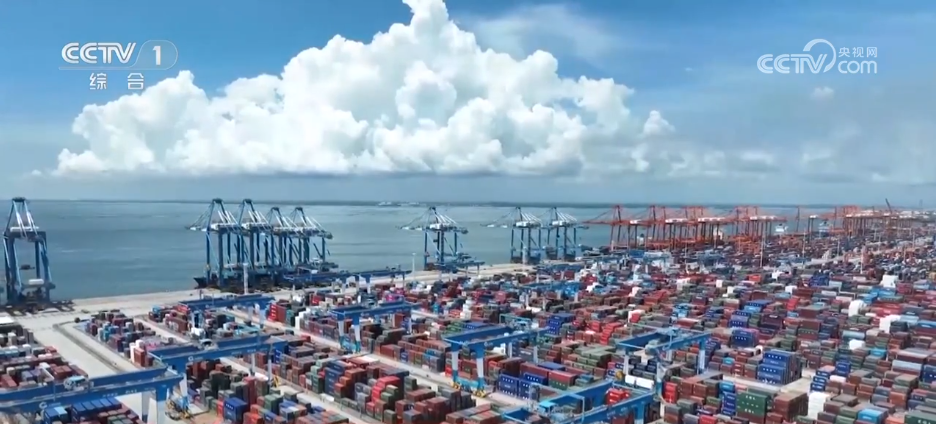
Economic Overview - The transportation sector in China has shown a stable and progressive development trend in the first ten months of the year, according to the Ministry of Transport [1][7] - Fixed asset investment in transportation reached 2.95 trillion yuan, maintaining a high level [3] Freight and Passenger Movement - The total freight volume reached 48.29 billion tons, marking a year-on-year increase of 3.5% [5] - Cross-regional passenger flow reached 56.88 billion person-times, with a year-on-year growth of 3.6% [5] Port Activity - Port cargo throughput increased to 15.13 billion tons, reflecting a year-on-year growth of 4.3% [5] - Container throughput at ports reached 29 million TEUs, with a year-on-year increase of 6.4% [5] Logistics Sector Performance - The total social logistics value for the first ten months was 29.37 trillion yuan, up 5.1% year-on-year [8] - Industrial product logistics value grew by 5.3%, driven by strong demand in equipment manufacturing and high-end manufacturing sectors [10] - Logistics revenue for the industry increased by 4.5% year-on-year, indicating ongoing structural adjustments [10] E-commerce and New Business Models - Online retail of physical goods has outpaced digital product retail growth, highlighting stable demand in e-commerce logistics [12] - New business models such as instant retail and live e-commerce are experiencing robust growth, contributing to logistics demand [10] Smart Manufacturing Initiatives - The first batch of leading smart factories was announced, indicating a shift towards intelligent manufacturing [14] - These factories are expected to drive innovation and transform production methods across various industries [14] IoT and Digital Economy Growth - China's IoT connections are projected to exceed 3.5 billion this year, with significant investments in related infrastructure [17][20] - The traditional digital economy's annual output value is expected to surpass 80 trillion yuan, with over 1.2 million enterprises meeting advanced digital economy conditions [20] Internationalization of Private Enterprises - The internationalization of private enterprises is expanding, with overseas revenue projected to reach 5.215 trillion yuan in 2024, a nearly 12% increase [24] - The export value of internationalized private enterprises is expected to exceed 3.283 trillion yuan, growing over 10% [24] Foreign Exchange Market Activity - In October, China's foreign exchange market recorded a total turnover of 21.97 trillion yuan, with cumulative turnover for the year reaching 252.07 trillion yuan [26][27]
记中国工程院院士王晓云的移动通信创新路
Zhong Guo Fa Zhan Wang· 2025-11-24 06:16
Core Viewpoint - The appointment of Wang Xiaoyun as an academician of the Chinese Academy of Engineering highlights significant contributions to the mobile communication industry, particularly in TDD network development and innovation [1][3]. Group 1: Contributions to Mobile Communication - Wang Xiaoyun has made pioneering contributions in the field of mobile communication network architecture and interaction mechanisms, playing a core role in the development of TDD networks in China [3][4]. - Under Wang's leadership, the team has achieved numerous accolades, including one National Science and Technology Progress Award (Special Prize) and two First Prizes, showcasing the team's high level of innovation and expertise [3][4]. Group 2: Historical Development of Mobile Communication in China - The mobile communication industry in China has evolved through various stages: from "1G blank, 2G following, 3G breakthrough, 4G parallel, to 5G leading," with Wang Xiaoyun representing the innovative spirit of this transformation [4][6]. - During the 2G era, Wang played a crucial role in establishing the GSM system in China, significantly increasing the number of mobile communication numbers by tenfold, which laid a solid foundation for the global dominance of China's GSM network [4][5]. Group 3: Innovations and Breakthroughs - In the 3G era, Wang led efforts to establish TDD technology as a strategic focus, overcoming significant challenges and achieving breakthroughs that positioned China as a leader in mobile communication technology [5][6]. - The transition to 4G saw Wang's team successfully implement TDD-LTE as an international mainstream standard, enhancing China's global influence in the mobile communication sector [6][7]. Group 4: Future Directions and 6G Development - Wang Xiaoyun is currently leading initiatives in 6G technology, focusing on integrating various elements such as sensing and intelligent computing, which are crucial for the future of mobile communication [8]. - The ongoing development of 6G aims to solidify China's position as a global leader in mobile communication, with a focus on innovative network architectures and AI integration [8].


国务院参事张平:通信范式变革,将从“数据搬迁”到“智力搬迁”
2 1 Shi Ji Jing Ji Bao Dao· 2025-11-21 13:20
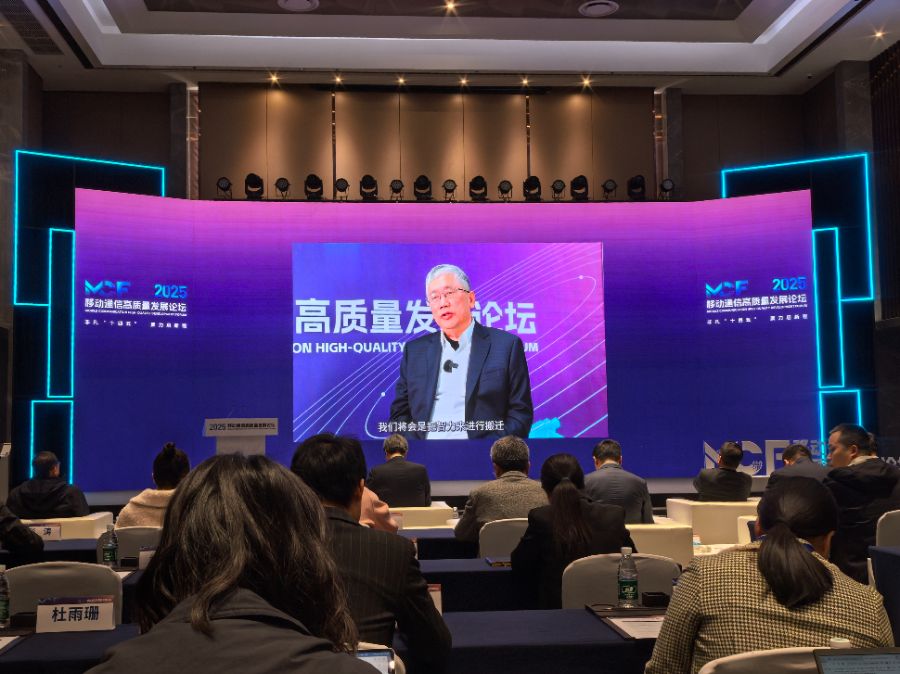
Core Viewpoint - The forum highlighted the transformative shift in communication paradigms, moving from data transmission to intelligence perception and generation, marking the beginning of a new era of interconnected intelligence [1]. Group 1: 5G and 6G Development - 5G represents a peak in human communication, while 6G aims for interconnectivity among all things, emphasizing a fundamental difference between mere connectivity and intelligent connectivity [2][3]. - As of September 2025, China has established 4.705 million 5G base stations and has 1.167 billion 5G mobile users, with over 300 cities deploying 5G-A networks [2]. - The development of 6G is closely tied to artificial intelligence, requiring a new technological framework that integrates intelligence into communication networks [5]. Group 2: Research and Innovation - The "14th Five-Year Plan" has initiated 6G research, with over 100 domestic and international entities collaborating on innovation, resulting in more than 300 key technology reserves [3]. - The integration of AI with mobile communication has led to the emergence of new scenarios and models, such as "intelligent native," "5G-A×AI," and "AI+" [3]. Group 3: Future Directions - The concept of "endogenous artificial intelligence" is proposed, where intelligence is inherently integrated into communication networks, allowing machines to possess decision-making and learning capabilities [5]. - The future focus will be on enabling machines to think and act autonomously, shifting from data relocation to the movement of intelligence [5].
十大关键词解码“十四五”中国移动通信行业发展成绩单
Zhong Guo Xin Wen Wang· 2025-11-21 12:58
Core Insights - The forum highlighted the significant achievements and forward-looking strategies of China's mobile communication industry during the 14th Five-Year Plan period, emphasizing ten key terms that reflect the industry's development [1][2] Group 1: Key Developments in 5G - China has accelerated its 5G development, achieving its construction goals ahead of schedule, with 4.705 million 5G base stations built and 1.167 billion 5G mobile phone users by September 2025 [1] - The global market share for 5G base stations and mobile phones exceeds 50%, while the market share for 5G modules surpasses 80% [1] Group 2: Application and Ecosystem Growth - The country has established the world's most extensive 5G application ecosystem, with over 138,000 5G application cases covering 86 out of 97 major categories of the national economy [1] - More than 20,000 "5G + Industrial Internet" construction projects have been initiated, and 1,260 5G factories have been cultivated, indicating a shift of industry applications from the periphery to core processes [1] Group 3: Connectivity and IoT Expansion - The initiative has achieved "gigabit access in every county, 5G access in every town, and broadband access in every village," with over 90% of administrative villages covered by 5G networks [2] - By August 2022, the number of IoT terminal users reached 1.698 billion, surpassing mobile phone users for the first time, marking a new phase of "Internet of Everything" [2] Group 4: AI Integration and 6G Development - The integration of mobile communication and AI is driving network upgrades and industry transformation, with new scenarios and models emerging, such as "smart native," "5G-A × AI," and "AI+" [2] - China has initiated 6G research and development, completing the first phase of technology trials with over 300 key technology reserves [2]