
美妆日化

Search documents
日本停滞35年,迎来“中国时刻”
凤凰网财经· 2025-07-05 14:01
Core Viewpoint - The article discusses the structural opportunities for Chinese e-commerce platforms in the Japanese market, which has been experiencing economic stagnation for 35 years, while highlighting the unique characteristics of Japanese consumers and the evolving e-commerce landscape [1][3][21]. Group 1: Economic Context - Japan's GDP has seen a significant decline, dropping from approximately 15.3% of global GDP in 1989 to 4.18% in 2022, with its global ranking falling from second to fourth [1]. - The Japanese economy is characterized by a prolonged period of stagnation, with the government expressing increased concerns about economic risks, as indicated by the frequent mention of "risk" in recent policy documents [3]. Group 2: E-commerce Market Entry - Chinese e-commerce platforms like TikTok Shop, Temu, TAO, and JD Japan are entering the Japanese market, which is the third largest e-commerce market globally, valued at $169 billion [1][2]. - The e-commerce penetration rate in Japan is still below 10%, indicating significant growth potential compared to markets like China and the U.S. [21][25]. Group 3: Consumer Behavior - Japanese consumers are known for their high standards and preference for in-person shopping experiences, which include social interactions and personalized services that online shopping cannot replicate [7][8][9]. - The trend of consumption downgrade among Japanese consumers is evident, with a growing preference for second-hand goods and discounted products, reflecting a shift towards value-oriented purchasing [25][26]. Group 4: Market Opportunities for Chinese Brands - Chinese brands are well-positioned to capitalize on the Japanese market's demand for high-quality, cost-effective products, as Japanese consumers are increasingly price-sensitive while still valuing quality [22][25]. - The recognition of Chinese brands in Japan has improved, with successful examples like Ecoflow and SwitchBot demonstrating the potential for Chinese products to fill market gaps [27][28]. Group 5: Challenges and Considerations - The Japanese market presents unique challenges, including a complex logistics system, high operational costs, and cultural barriers that require a deep understanding of local consumer preferences [37][40]. - The long-term nature of building brand trust in Japan means that companies must be prepared for a patient approach to market entry and growth, as Japanese consumers tend to be cautious and require time to develop loyalty [31][36].


停滞35年的日本,迎来“中国时刻”
创业邦· 2025-07-04 11:01
Core Viewpoint - The article discusses the structural opportunities for Chinese e-commerce platforms in the Japanese market, which is currently experiencing economic stagnation and a shift towards lower-priced, quality products. Group 1: Economic Context - Japan's GDP has shown negative growth in Q1 2025, marking 35 years of economic stagnation since the 1989 bubble burst, with its global GDP share dropping from approximately 15.3% in 1989 to 4.18% in 2022 [3][5]. - The Japanese e-commerce market is the third largest globally, valued at $169 billion, and is projected to grow at a compound annual growth rate (CAGR) of 5.2% over the next four years [5][20]. Group 2: Chinese E-commerce Platforms in Japan - Several Chinese e-commerce platforms, including TikTok Shop, Temu, TAO, and SHEIN, are entering the Japanese market, capitalizing on the current economic conditions [5][6]. - TikTok Shop is set to launch in June 2025, leveraging a user base of 40 million, while Temu and TAO are also targeting the Japanese market with distinct strategies [6][7]. Group 3: Consumer Behavior and Market Dynamics - Japanese consumers are known for their high standards and are considered difficult to please, which presents a challenge for new entrants [9][10]. - The shift towards online shopping has been accelerated by the COVID-19 pandemic, with e-commerce becoming one of the few sectors to maintain growth during this period [20][21]. Group 4: Market Opportunities - The low penetration rate of e-commerce in Japan, currently under 10%, indicates significant growth potential compared to markets like China and the U.S. [7][24]. - The trend of Japanese consumers moving towards lower-priced, quality products creates an opportunity for Chinese brands, which are perceived to offer better value [24][26]. Group 5: Challenges and Considerations - Japanese market entry requires understanding local consumer preferences and compliance with strict regulations, which can be a barrier for foreign brands [43][44]. - The logistics and payment infrastructure in Japan presents challenges, including high costs and inefficiencies in last-mile delivery [40][42]. Group 6: Long-term Outlook - The article suggests that while the Japanese market is challenging, it offers a unique opportunity for patient capital and brands willing to invest in long-term relationships with consumers [31][38]. - The evolving landscape of consumer behavior, particularly among younger demographics, indicates a potential shift in market dynamics that could favor innovative and adaptable brands [21][30].

低碳打卡趣行!上海“绿”会开场
Guo Ji Jin Rong Bao· 2025-06-07 01:39
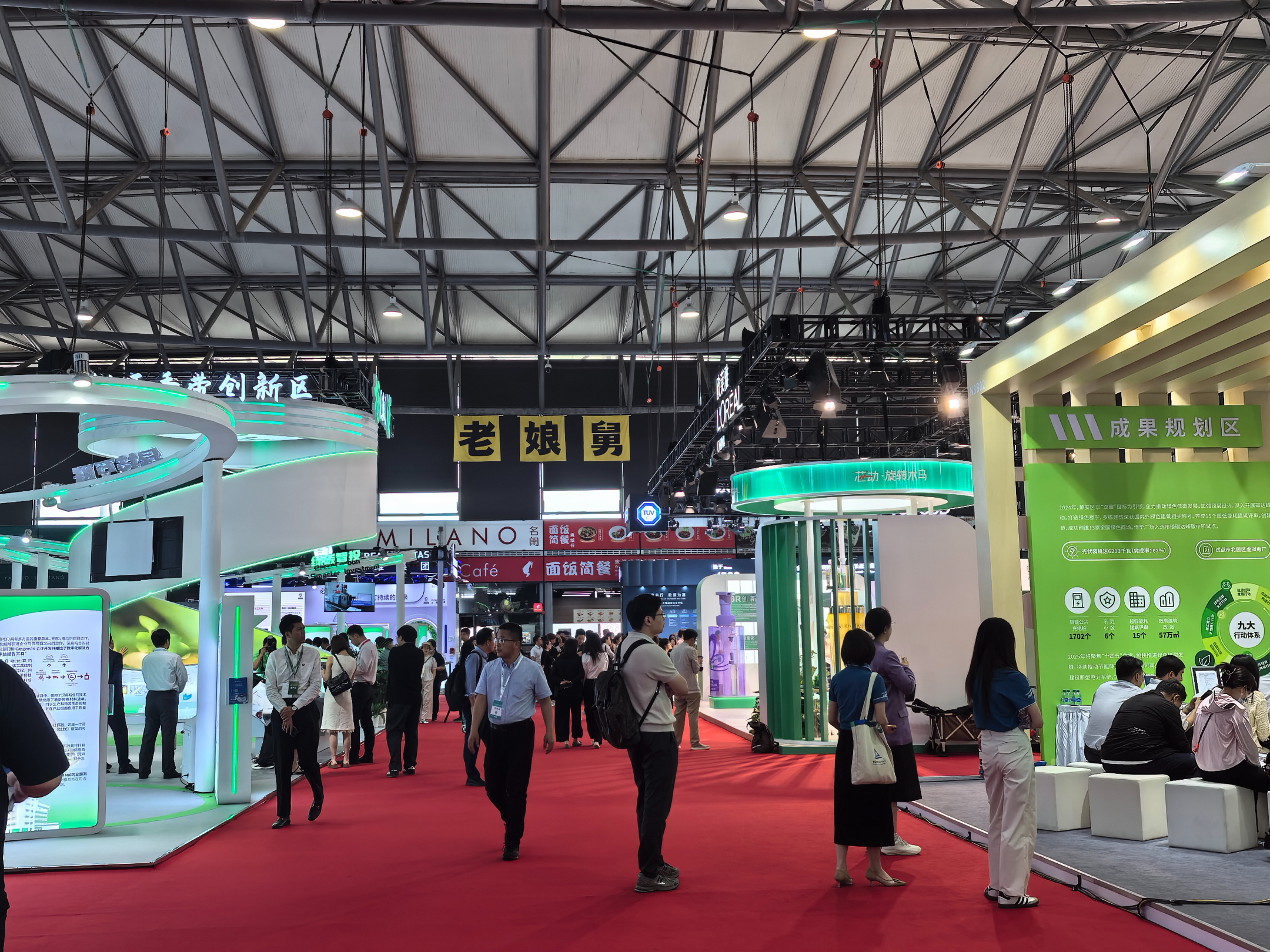
Group 1 - The 2025 Shanghai International Carbon Neutral Expo showcases various green and low-carbon technologies integrated into daily life, emphasizing innovative designs that connect consumers with sustainable living [1][3] - The expo features a DIY bamboo fan activity, promoting sustainable development through hands-on experiences, and displays a range of fabric products made from recycled fibers and natural materials [5][7] - The automotive interior segment highlights the use of recycled cotton and hemp fibers, with one ton of hemp fiber sound-absorbing material replacing one ton of glass wool, resulting in a reduction of approximately 4.2 tons of CO2 emissions [5] Group 2 - The expo includes a dedicated area for private enterprises, showcasing 20 specialized and high-tech companies focused on carbon neutrality, presenting their latest technologies and products [7] - Shanghai Jinke Plastic Technology Company presents an air conditioning energy-saving device that can reduce energy consumption by 50% to 80% while improving operational efficiency [7] - L'Oréal's booth features a sustainable product system centered around refillable packaging, which can reduce the overall weight of products by 38% compared to traditional packaging [8][12] Group 3 - L'Oréal has developed a "full plastic pump" for its packaging, allowing for direct recycling without the need to separate metal components, enhancing the sustainability of its products [12] - The company collaborates with JD.com to launch an eco-friendly product label, incentivizing sustainable consumer behaviors through a points system starting in the second half of 2025 [13] - The expo also introduces a "New and Renew" display area featuring energy-efficient appliances eligible for national subsidies, with discounts reaching up to 50% [13]

上海家化重塑增长引擎 美妆日化龙头夯实根基焕发新生
Jing Ji Guan Cha Wang· 2025-04-28 09:36
Core Viewpoint - Shanghai Jahwa has undergone significant transformation under the leadership of new Chairman and CEO Lin Xiaohai, focusing on strategic adjustments and operational efficiency to enhance long-term growth potential despite short-term financial pressures [1][2][5]. Financial Performance - In 2024, Shanghai Jahwa reported revenue of 5.679 billion yuan and a net profit attributable to shareholders of -833 million yuan, with Q1 2025 revenue at 1.704 billion yuan and a net profit of 217 million yuan [1][4]. - The decline in profit was primarily due to a goodwill impairment of 613 million yuan related to the overseas baby care brand, Tommee Tippee, and proactive adjustments in domestic channel structures [4]. Strategic Focus - The company has implemented a "Four Focus" strategy, emphasizing core brand development, brand building, online growth, and operational efficiency to regain growth momentum [2][5]. - A significant shift towards online channels has been noted, with online revenue reaching 2.539 billion yuan in 2024, accounting for 44.7% of total revenue, an increase of 2 percentage points year-on-year [6]. Brand Development - Core brands such as Yuze and Liushen have shown strong performance, driving the company's revenue rebound [7][10]. - Yuze has undergone a comprehensive upgrade in brand image and product formulation, resulting in significant sales growth shortly after the launch of new products [8][9]. Research and Development - In 2024, Shanghai Jahwa invested 179 million yuan in R&D, representing 3.16% of revenue, and secured 73 new patents, marking a 55% increase from the previous year [11]. - The company is focusing on innovative research methods and collaborations with academic institutions to enhance product development and safety [12][13].

上海家化新打法:“卸包袱”与“寻出路”
FBeauty未来迹· 2025-04-25 13:42
上海家化董事长兼首席执行官林小海将其定义为"卸包袱"与"寻出路"的一年——砍掉历史包 袱、重塑品牌矩阵、重构渠道逻辑。这场转型背后,既有壮士断腕的决绝,也有对国货未来竞 争力的深思。 根据财报数据,2 0 2 4年,上海家化实现营业收入5 6 . 7 9亿元,同比下滑1 3 . 9 3%;归母净利润 亏 损 8 . 3 3 亿 元 , 其 中 商 誉 减 值 6 . 1 亿 元 , 海 外 业 务 亏 损 1 亿 元 ;2 0 2 5 年 一 季 度 , 营 收 1 7 . 0 4 亿 元,同比下滑1 0 . 5 9%。 从表面上看,这是一份"触底"的成绩单,但," 深蹲是为了更好地起跳。 " 林小海在媒体电话 会上表示。 4月2 4日晚,上海家化发布2 0 2 5年一季报暨2 0 2 4年报。 2 0 2 4年的中国美妆市场,K型分化加剧,国际品牌与新兴国货的夹击下,百年老牌上海家化交 出了一份"矛盾"的财报:营收利润双降,但应收账款、存货周转、现金流等指标显著优化。 2 0 2 4年,上海家化完成了深刻的业务和组织架构调整,业绩主要受到海外业务减值和国内业 务战略调整的影响。 其中,以母婴品牌汤美星为主的 ...