自媒体

Search documents
人生的前几份工作就是用来搞砸的。
3 6 Ke· 2025-08-01 08:50
Core Viewpoint - The article emphasizes the importance of learning from failures in early career experiences, highlighting that mistakes can lead to personal growth and better future opportunities [4][10][11]. Group 1: Career Journey - The individual initially pursued a degree in a less conventional field, influenced by the rise of new media, despite a background in science [1]. - The first internship in a bakery brand ended prematurely due to poor performance, leading to a significant blow to self-confidence [2][4]. - Inspired by a public figure's story of overcoming adversity, the individual found motivation to continue pursuing career goals [5]. Group 2: Job Experiences - After graduation, the individual secured a monotonous job at a large company, which led to a decision to leave in search of more fulfilling work [6][8]. - Transitioning into the education and training industry involved facing numerous rejections and challenges, including a company-wide layoff [8]. - A period of self-reflection and planning followed, leading to a position in a prominent self-media studio, marking a significant growth phase [8]. Group 3: Learning from Mistakes - The article discusses how early career mistakes are common and serve as valuable learning experiences, helping to identify personal weaknesses [9][10]. - The narrative encourages a positive perspective on failures, suggesting they should be viewed as opportunities for growth rather than setbacks [10][11]. - The overall message is that the journey in the workplace is a marathon, where perseverance and the ability to learn from errors are crucial for long-term success [11].


关于创业,我能劝一个是一个
Hu Xiu· 2025-08-01 03:33
Core Viewpoint - The article discusses the challenges and strategies for employees transitioning to entrepreneurship, emphasizing the importance of experience and direction in the entrepreneurial journey [1][3][4]. Group 1: Entrepreneurial Strategies - The safest way for employees to start a business is to first gain experience through a side hustle while maintaining their full-time job, only transitioning to full-time entrepreneurship when side income exceeds primary income [6][7]. - Directly quitting a job to start a business without prior experience is risky, but can lead to faster success if the right direction is found [10][11]. - Many entrepreneurs invest in courses to find the right direction, as even one effective course can significantly impact their business success [18][19]. Group 2: Learning from Experience - Gaining experience by working in the desired industry can help avoid pitfalls and provide insights into the business operations and customer needs [29][30]. - An example is given of an individual who worked in coffee shops to understand the industry before deciding against opening a café, which is seen as a successful learning experience [25][26]. Group 3: Financial Considerations - Entrepreneurs are advised to avoid debt, as financial strain from borrowing can lead to a more stressful and uncertain situation compared to simply losing initial capital [46][49]. - The emotional burden of debt is contrasted with the relief of losing only invested capital, highlighting the importance of financial prudence in entrepreneurship [52][54].

何以成都?以“自媒V力”破题城市治理新范式
Mei Ri Jing Ji Xin Wen· 2025-07-28 12:02
Core Insights - The article emphasizes the growing importance of high-quality internet content and self-media platforms as a "soft power" for cities and countries to achieve higher quality socio-economic development [1] - The launch of the "Self-Media V Release" platform in Chengdu represents a significant step in linking self-media power with urban governance and industrial development [1][6] Industry Trends - By 2025, China's self-media industry market size is expected to exceed 480 billion yuan, marking an 84.6% increase from 2020, with a compound annual growth rate of 13.2% [2] - As of June this year, the number of internet users in China reached 1.123 billion [2] - Self-media platforms have become key players in documenting societal changes and empowering industry growth, transforming how cities are perceived and promoted [2] Case Studies - Chengdu's "Parallel Worlds of Two Chengdus" project exemplifies innovative self-media collaboration, breaking traditional promotional narratives [3] - Cities like Xuchang and Changsha are highlighted for their effective use of self-media to enhance city image and drive economic growth [4] - Nanjing's "Hongshang Circle" live-streaming base and Luoyang's immersive experiences have significantly boosted local business revenues and tourism [4] Urban Governance and Development - Self-media is evolving from a supplementary tool to a core element of urban governance, enhancing community engagement and local governance [5] - Chengdu is recognized as a leading city in adopting self-media for urban governance, with initiatives like the "Jinjiang Initiative" and the establishment of a national self-media cooperation platform [6][7] - The city has implemented policies to support self-media creators and facilitate resource sharing, contributing to a more integrated urban development strategy [6][7]
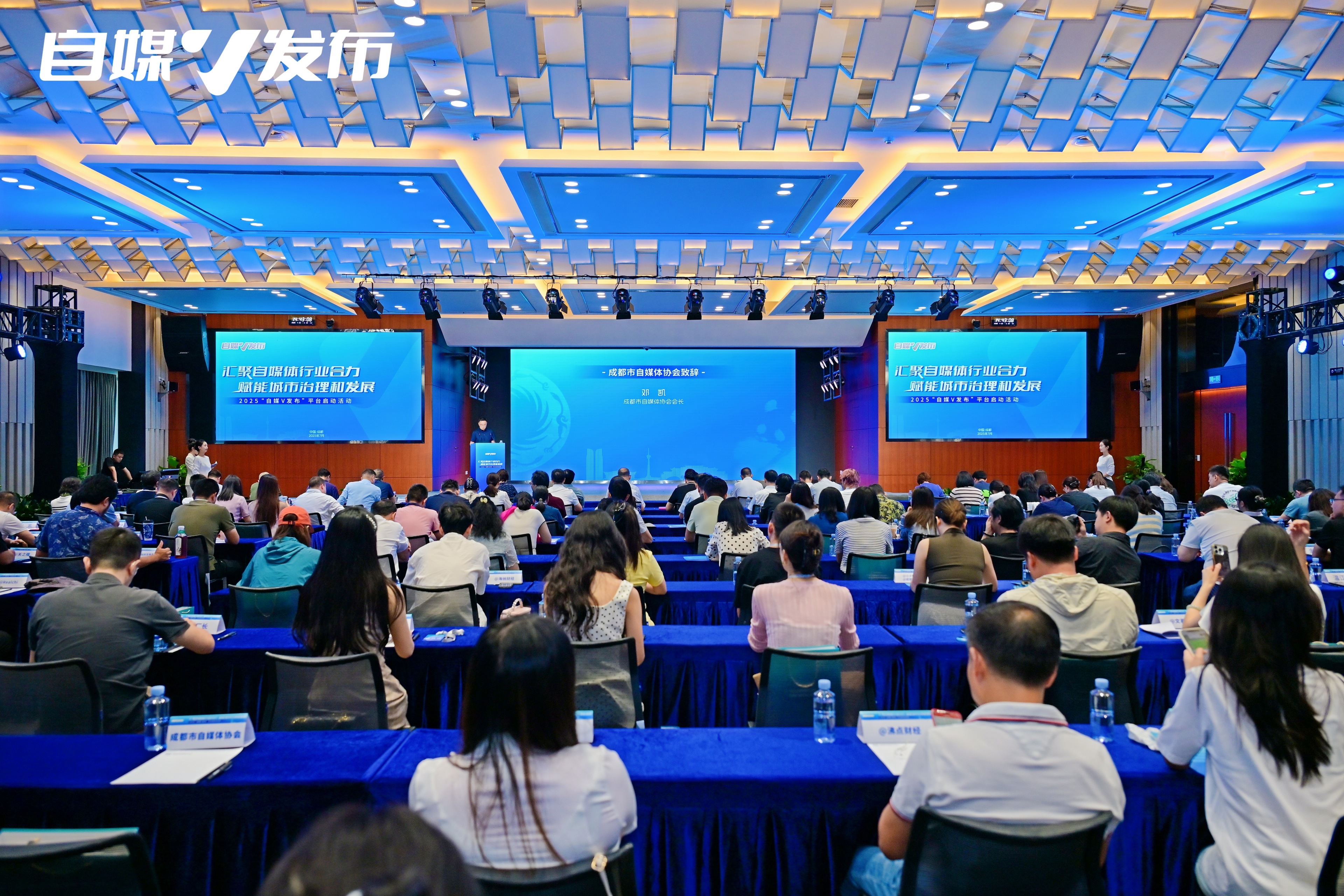
聚合行业力量 探索协同路径:全国首个自媒体协作平台“自媒V发布”在成都正式启动
Mei Ri Jing Ji Xin Wen· 2025-07-25 10:57
Core Insights - The article highlights the launch of the "Self-Media V Release" platform in Chengdu, aimed at integrating self-media power with urban governance and development needs, reflecting the growing importance of self-media in China's socio-economic landscape [1][4][5]. Group 1: Platform Launch and Objectives - The "Self-Media V Release" platform is the first national self-media collaboration platform initiated in Chengdu, focusing on building a consensus for shared development and linking self-media with urban governance [4][5]. - The platform aims to serve the modernization of the national governance system by connecting self-media forces with urban governance and industrial development needs [4][5][7]. Group 2: Industry Collaboration and Initiatives - The platform is a collaborative effort involving various self-media associations from multiple provinces, promoting resource sharing and industry self-discipline [5][7]. - The "Jinjiang Initiative" was introduced to enhance industry self-regulation and is seen as a precursor to the establishment of the "Self-Media V Release" platform [5][7]. Group 3: Opportunities and Support Measures - The platform launched the first "Self-Media Opportunity List," covering diverse areas such as city marketing, brand promotion, and policy interpretation, with specific projects like the Chengdu World University Games [8][11]. - Chengdu introduced the "Eight Measures to Support Quality Self-Media Creators," providing comprehensive support including policy incentives and talent attraction [12][14]. Group 4: Engagement and Future Directions - The event included a roundtable discussion on how self-media can empower urban cultural and economic integration, exploring new paths for cultural tourism development [14][17]. - The platform aims to transform self-media from mere traffic generators to collaborative partners in urban development, enhancing the efficiency of information dissemination and resource matching [7][8].
聚焦自媒体行业协同发展,全国首个自媒体协作平台即将在蓉启动
Mei Ri Jing Ji Xin Wen· 2025-07-24 04:31
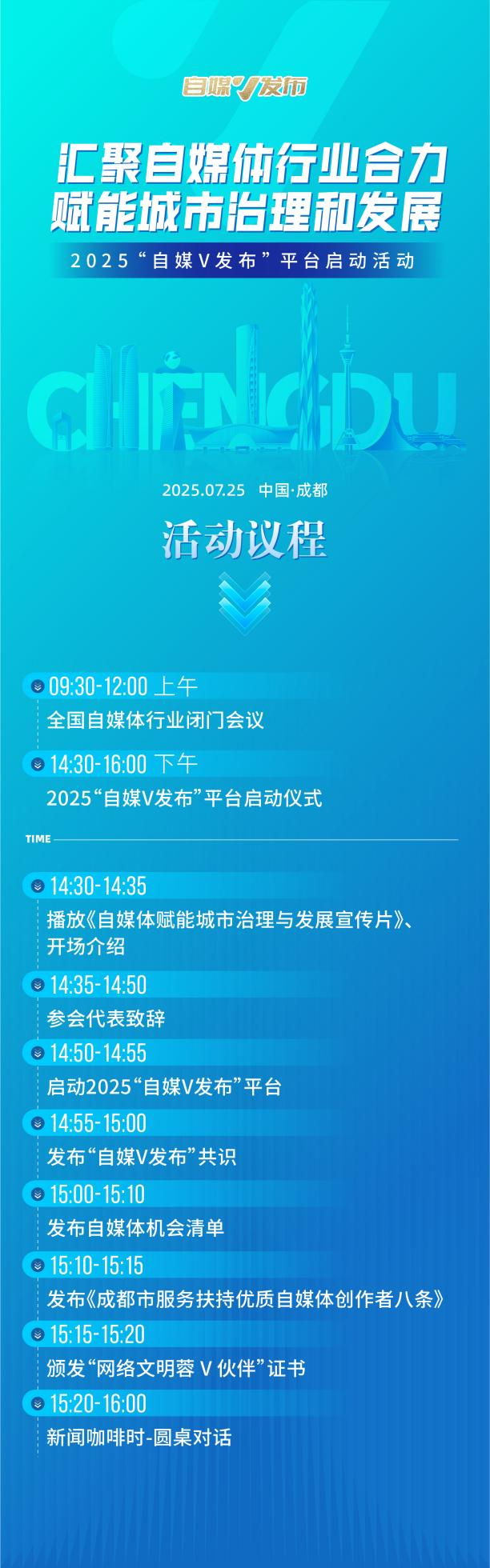
Group 1 - The core theme of the event is "Gathering the Strength of the Self-Media Industry to Empower Urban Governance and Development" with the launch of the "Self-Media V Release" platform in Chengdu on July 25, 2025 [1][4] - The event will feature over 20 provincial and municipal industry associations and more than 40 prominent online influencers discussing opportunities in the self-media industry [1][4] - The "Self-Media V Release" platform aims to establish a regular national collaboration mechanism, linking self-media power with urban governance and industrial development needs [4][6] Group 2 - The first batch of "Self-Media Opportunity Lists" will be released, connecting diverse ecosystems and creating a market bridge between intangible content production and tangible industrial development needs [6] - The lists will include marketing needs related to major events such as the Chengdu World University Games and the 2025 Guangdong-Hong Kong-Macau Greater Bay Area Games, as well as various content covering city branding and corporate collaboration [6] - Chengdu will introduce the "Eight Support Policies for Quality Self-Media Creators" to provide institutional support for self-media development, focusing on policy incentives, innovative financial products, and talent cultivation [7][10] Group 3 - The "Self-Media V Release" platform will also establish the "Nine Consensus Principles" to provide basic guidelines for cross-regional collaboration [10] - The event will include deep exchange sessions, such as a closed-door seminar with industry association leaders discussing platform operation mechanisms and industry development potential [10] - A roundtable discussion titled "How Self-Media Empowers the Deep Integration of Urban Culture, Commerce, Tourism, and Sports" will explore new paths for cultural tourism economic development [10]
企业砸钱做自媒体矩阵,为什么不如一个人运营?
Sou Hu Cai Jing· 2025-07-23 12:12
Core Insights - The article highlights the inefficiencies of large corporate teams in managing social media accounts compared to individual creators who achieve significant success with minimal resources [2][6][10] Group 1: Corporate Challenges - A case study of a failed corporate social media matrix reveals that a large team with a significant budget struggled due to slow content production, lack of local autonomy, and data silos [8][10] - Common issues in corporate matrix operations include slow decision-making, repetitive tasks leading to inefficiencies, and overly standardized content that lacks creativity [10][11] - The reliance on traditional organizational structures hampers responsiveness in a rapidly changing digital landscape [13] Group 2: Individual Creator Success - Individual creators, such as a mother and child account operator, can achieve high engagement and viewership, with daily views exceeding 500,000 [6][12] - Successful individual operators utilize smart tools for content customization, scheduling, and data analysis, allowing them to manage multiple accounts effectively [11][12] - The use of AI and automation in content creation and distribution enables individual creators to outperform larger teams in terms of content frequency and engagement [12][13] Group 3: Industry Evolution - The success of social media matrices is increasingly dependent on the establishment of efficient human-machine collaboration rather than team size or financial investment [13] - Data indicates that accounts using professional matrix management tools have a content update frequency 3.2 times higher than average accounts, with a 76% increase in viral content production [13] - The article raises questions about the sustainability of traditional corporate models in the face of technological advancements that enhance individual capabilities [13]

自动驾驶之心三周年优惠就要结束啦,最后一天...
自动驾驶之心· 2025-07-22 07:28
Core Viewpoint - The article emphasizes the importance of long-term value creation over short-term economic returns in the context of entrepreneurship and innovation in the AI education and autonomous driving sectors [2][4][8]. Group 1: Company Progress and Developments - The company has made significant advancements in its third year, establishing four key intellectual properties (IPs): Autonomous Driving Heart, Embodied Intelligence Heart, 3D Vision Heart, and Large Model Heart, with a focus on both industry and academia [1]. - The company has expanded its business model from purely online education to a comprehensive service platform that includes hardware, offline training, and job placement services [1]. - A new offline office has been established in Hangzhou, and several talented individuals have joined the team to support these initiatives [1]. Group 2: Industry Insights and Challenges - The article discusses the challenges faced by entrepreneurs who prioritize short-term gains, highlighting the need for a deeper commitment to long-term value creation [2][4]. - It reflects on the competitive landscape, noting that many companies in the AI education sector tend to imitate rather than innovate, which can hinder sustainable growth [7][8]. - The importance of understanding market needs and addressing pain points through thorough research is emphasized as a critical factor for success [4]. Group 3: Future Plans and Goals - The company plans to transition from being a purely educational entity to a technology company, with ongoing investments in research and development across multiple fields [9]. - The goal is to make AI education accessible to all students in need, ensuring that AI is easier to learn and apply [10]. - The company aims to complete the establishment of its entire system by the second half of 2025, entering a phase of stable operations [9].

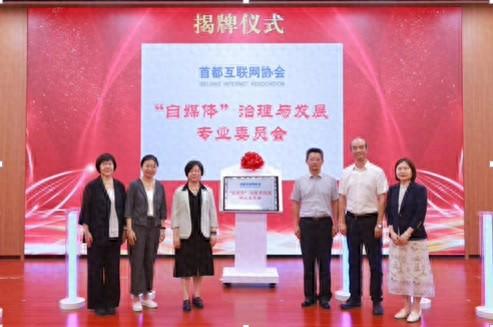
首都互联网协会“自媒体”治理与发展专业委员会成立
Bei Jing Ri Bao Ke Hu Duan· 2025-07-18 12:23
Core Viewpoint - The establishment of the Capital Internet Association's "Self-Media" Governance and Development Special Committee aims to promote self-discipline and autonomy in the rapidly growing self-media sector while addressing issues such as misinformation and low-quality content [3][5][6]. Group 1: Establishment and Purpose - The "Self-Media" Governance and Development Special Committee was formed under the guidance of the Beijing Municipal Cyberspace Administration, with representatives from various government departments and self-media platforms [1][3]. - The committee's mission is to balance regulation and development, emphasizing both social and economic benefits, and to enhance the governance capabilities in the self-media field [3][5]. Group 2: Governance Mechanisms - Major platforms like Douyin, Kuaishou, and Weibo are taking responsibility for content governance through various mechanisms, including verification processes and content guidelines [5][6]. - The committee aims to innovate governance mechanisms and foster a healthy online ecosystem by encouraging collaboration among platforms, creators, and regulatory bodies [5][8]. Group 3: Industry Standards and Initiatives - The committee released the "Ten Adherence Initiatives" to promote healthy and orderly development in the self-media industry, advocating for legal compliance, industry self-discipline, and positive content dissemination [6][7]. - The initiatives include commitments to uphold the rule of law, promote self-regulation, and encourage social co-governance [6][8]. Group 4: Future Directions - The committee plans to enhance industry order, establish evaluation systems, and provide training and support for self-media practitioners [7][8]. - It will focus on addressing challenges in the self-media sector and promoting best practices through case studies and expert guidance [8].
高考考砸了去做网红,这条路怎么样?
Hu Xiu· 2025-07-09 05:35
Core Insights - The article discusses the income levels of streamers, highlighting the misconception that all streamers are wealthy, while in reality, their average income is quite modest [1][2][3] - It emphasizes the presence of the Matthew effect and the 80/20 rule in the streaming industry, suggesting that while the average income may not be high, it is still a viable career option for many [3][4] Group 1: Industry Dynamics - The streaming industry reflects traditional economic principles, where a small percentage of individuals earn a significant portion of the income, while the majority earn less [2][3] - The article notes that the qualities required for success in self-media include resilience and the ability to handle criticism, which are crucial for monetization [4][6] Group 2: Personal Experiences and Observations - The author shares personal reflections on the challenges of being a content creator, including the pressure to maintain a public persona and the impact of audience expectations on content creation [11][12] - There is a recognition that many individuals underestimate the difficulties of earning a living through self-media, as it often involves high levels of scrutiny and emotional labor [9][10] Group 3: Platform Influence - The article points out that major platforms control the distribution of traffic, which can significantly affect a creator's visibility and income potential, leading to feelings of helplessness among creators [12] - It suggests that despite the challenges, engaging in self-media can provide valuable experiences for students, helping them adapt to the unpredictable nature of the industry [12]
丁道师:自媒体的危机到底是什么?
Sou Hu Cai Jing· 2025-06-23 16:40
Core Viewpoint - The essence of the self-media crisis is the presence of a few "bad mice" that create distrust, leading to a general tightening of regulations and a reluctance to engage with the industry, despite the majority being safe [2][5][9]. Group 1: Industry Challenges - The self-media industry is facing a tightening of regulations, which affects all participants, leading to a more cautious approach from stakeholders [9]. - Many self-media practitioners mistakenly believe that the decline in advertising budgets from large companies is the root cause of their struggles, while in reality, these budgets have increased but are directed towards larger, more regulated media outlets [7][8]. - The advertising revenue for national institutions and large enterprises has surpassed 1.5 trillion yuan, showing a growth of 17.9% year-on-year, indicating a thriving advertising market that self-media is increasingly distanced from [8]. Group 2: Adaptation Strategies - To survive, self-media practitioners are encouraged to align with organizations that have official backing, which can provide credibility and facilitate operations [6][12]. - The unique advantages of self-media, such as flexibility and a relatable style, are emphasized, allowing for effective storytelling that resonates with audiences [13][14]. - Despite current challenges, the self-media environment is still more favorable than it was two decades ago, with many practitioners now able to sustain their livelihoods solely through self-media income [13].