
Storage

Search documents
SanDisk Stock At All-Time Highs: Time To Take Profits Or Ride The Wave?
Forbes· 2026-01-23 16:31
Core Insights - SanDisk (SNDK) has experienced a 5-day winning streak, resulting in a total gain of 30%, with a market capitalization increase of approximately $17 billion, now totaling $74 billion [2] - The stock has a year-to-date (YTD) return of 112.1%, significantly outperforming the S&P 500, which has only returned 1% [3] Factors Driving the Rally - Bernstein has increased its price target for SanDisk to $580, contributing to positive market sentiment [4] - There are unparalleled shortages in NAND, which is driving prices up and benefiting SanDisk [4] - Rising demand driven by AI applications is further propelling the stock's performance [4] Market Impact - The recent surge has led to a major price boost and elevated trading volume, indicating strong investor interest [5] - A streak of multiple winning days may signal increasing investor trust, potentially leading to follow-on purchases [6] Investment Considerations - The current surge has already been factored into the market, suggesting the need for forward-looking indicators to identify future investment opportunities [7] - There are 43 S&P constituents with 3 or more consecutive days of gains, indicating a broader trend in the market [8]


闪存回收,风险很大
半导体芯闻· 2026-01-23 09:38
Core Viewpoint - The article emphasizes the increasing reliability risks associated with the reuse of enterprise-grade solid-state drives (SSDs) under the pressure of growing artificial intelligence workloads, highlighting that flash wear is a physical limit that software optimization cannot eliminate [1][3]. Group 1: Flash Wear and Reliability Risks - Flash memory degrades with repeated write cycles, leading to accelerated component damage and potential catastrophic data loss when older drives are reused in demanding environments [3]. - Analysts predict that the tight supply of solid-state drives will persist for at least another year, prompting data center operators to reconsider their storage management strategies [3]. Group 2: Market Pressures and Storage Strategies - Some storage vendors are promoting hard drive recycling strategies, where existing SSDs are removed from one system and reused in another, as a response to supply challenges [3]. - Dell's executives argue that the concept of "flash recycling" reflects market pressure rather than technological advancement, indicating significant risks associated with reusing aging components [3][4]. Group 3: Multi-Tier Storage Solutions - Companies can reduce reliance on scarce and expensive SSD capacity by allowing less critical data to migrate away from flash storage, providing flexibility during price fluctuations or extended delivery times [4]. - Dell and other vendors, like DDN, advocate for multi-tier storage systems that encompass NVMe, traditional SSDs, disk drives, and cloud resources, emphasizing the sustainability of reducing dependence on high-end flash hardware [4].

Jim Cramer says he's not bailing on the Mag 7 cohort even after slow start to 2026
Youtube· 2026-01-23 00:22
Core Viewpoint - The stock market's performance is often perceived as binary, with rising markets indicating good conditions and falling markets suggesting poor conditions. However, a more nuanced approach involving individual stock selection can yield better returns than index funds alone [2][5]. Group 1: Market Performance and Stock Selection - The Dow gained 307 points, the S&P advanced by 0.55%, and the NASDAQ climbed by 0.91%, indicating a positive day for index fund holders [2]. - The concept of combining index funds with individual stocks is emphasized, suggesting that owning high-quality companies can lead to outsized gains [3][4]. - The "Magnificent 7" tech stocks, which include major players like Apple, Amazon, and Nvidia, have historically been recommended for investment [4]. Group 2: Valuation and Market Sentiment - The price-to-earnings (P/E) ratios of major tech stocks have been declining, with Meta's P/E dropping from 30 to 22, indicating market skepticism about its growth potential [9][10]. - The decline in P/E ratios across the "Magnificent 7" raises concerns about their future performance, although it is argued that these companies still possess strong earnings power [11][12]. Group 3: Emerging Competition and Market Dynamics - OpenAI is identified as a significant competitor, raising concerns about the earnings power of established tech companies due to its aggressive spending and market share ambitions [12][13]. - A new group of tech stocks, particularly in the storage sector, is attracting investor interest, leading to a "great transference" of capital from the "Magnificent 7" to these emerging companies [18][19]. Group 4: Sector-Specific Insights - Storage companies like Micron, Seagate, and SanDisk have seen significant stock price increases, with Micron up 39% and SanDisk up 112% since January [15][16]. - The storage sector is experiencing a price surge due to increased demand driven by artificial intelligence, which has caught many companies off guard [16][17]. Group 5: Future Outlook - Despite current challenges, it is believed that the money will eventually flow back to the "Magnificent 7" as they have strong fundamentals and leadership [23][26]. - The ongoing demand for storage solutions suggests that companies in this sector will continue to perform well, but caution is advised regarding the sustainability of their growth [20][24].

The rally in storage stocks is taking money away from the Mag 7, says Jim Cramer
Youtube· 2026-01-23 00:14
Group 1 - The core viewpoint is that enterprise software companies are experiencing a significant decline in price-to-earnings multiples due to fears that generative AI platforms may render them obsolete, despite not missing earnings estimates [1] - There is a notable shift in investment from enterprise software to storage, indicating a lack of trust in software companies as the market anticipates changes ahead of time [2] - Despite current challenges, there is a belief that money will eventually flow back to major tech companies, as they possess multiple advantages and are led by capable management [3] Group 2 - The sentiment suggests that staying invested in leading tech companies will yield rewards once the market stabilizes [4]

深圳市德明利技术股份有限公司 2025年年度业绩预告
Zheng Quan Ri Bao· 2026-01-21 23:26
Core Viewpoint - The company, Shenzhen Demingli Technology Co., Ltd., anticipates significant growth in revenue and net profit for the year 2025, driven by advancements in storage solutions and increased demand from the AI sector [2][4]. Group 1: Performance Forecast - The company expects to achieve operating revenue between CNY 1,030 million and CNY 1,130 million for 2025, representing a year-on-year growth of 115.82% to 136.77% [2]. - For the fourth quarter of 2025, the projected operating revenue is between CNY 364.09 million and CNY 464.09 million, with a year-on-year increase of 209.72% to 294.79% and a quarter-on-quarter growth of 42.78% to 81.99% [2]. - The anticipated net profit attributable to shareholders for 2025 is between CNY 65 million and CNY 80 million, reflecting a year-on-year increase of 85.42% to 128.21% [2]. - In the fourth quarter of 2025, the expected net profit is between CNY 67.71 million and CNY 82.71 million, with a year-on-year growth of 1051.59% to 1262.41% and a quarter-on-quarter increase of 645.11% to 810.18% [2]. Group 2: Reasons for Performance Changes - The company has focused on enhancing its full-chain storage solution capabilities and accelerating high-end manufacturing, leading to significant growth in operational scale [4]. - Starting from the third quarter of 2025, the storage industry has seen a recovery in demand driven by AI, resulting in improved product sales gross margins and overall operational performance [4]. - The company has increased its R&D investment and talent acquisition, with R&D expenses projected to be approximately CNY 29 million for 2025, up from CNY 20.32 million in the previous year [4].
Wall Street Lunch: Trump Takes U-Turn On Greenland Tariffs After Reaching Arctic Framework
Seeking Alpha· 2026-01-21 20:40
Economic Developments - President Trump has decided not to impose new tariffs scheduled for February 1st after productive discussions in Davos regarding Greenland, positively impacting stock markets [2][3] - Stocks have surged, Treasury yields have fallen, and the U.S. dollar has strengthened following Trump's announcement [3] Technology Sector - Nvidia's CEO highlighted that AI is driving the largest infrastructure buildout in history, indicating a growing demand for energy, land, and skilled labor [4] - Meta's CTO announced the delivery of promising AI models from its Superintelligence Labs team [5] Financial Sector - JPMorgan Chase's CEO warned that a proposed cap on credit card interest rates at 10% could significantly reduce credit availability for 80% of Americans, impacting various sectors including restaurants and retailers [5] - Deutsche Bank's CEO distanced the bank from a controversial analyst note suggesting European asset sales, emphasizing that the bank does not support such views [5][6] Media and Entertainment - Netflix's stock has declined following guidance that did not meet investor expectations, although analysts remain optimistic about its long-term growth [7][8] - Morgan Stanley reported that Netflix surpassed 325 million members in 2025, adding over 25 million net new subscribers [9] Healthcare Sector - Johnson & Johnson reported better-than-expected Q4 revenue driven by its Pharma and MedTech divisions, although adjusted earnings missed expectations [10] - J&J provided a positive outlook for 2026, guiding to EPS of $11.53 on $100.5 billion in reported sales, both above forecasts [11] Energy Sector - Sandisk has seen a remarkable increase of over 1,000% in shares over six months as it transitions to a high-performance, AI-focused brand [12] - U.S. natural gas futures have surged more than 50% in two days due to increased heating demand from cold weather, with February contracts hitting a YTD high above $4.65/MMBtu [12][13] - Global energy prices have risen sharply, with Japan's power prices reaching a three-month high and European gas futures up nearly 30% this month [13]

NetApp (NTAP) Tumbles 9% on Downgraded Rating, Price Target
Yahoo Finance· 2026-01-21 07:46
Core Viewpoint - NetApp Inc. (NASDAQ:NTAP) has experienced significant stock price declines following a downgrade from Morgan Stanley, which has raised concerns about future revenue growth due to reduced enterprise budgets and rising memory costs [1][2]. Group 1: Stock Performance - NetApp's stock fell by 9.34% to close at $94.11, marking a continuation of losses for a second consecutive day [1]. - The downgrade from Morgan Stanley has led to a revised price target of $89, down from $117, reflecting a 24% decrease [2]. Group 2: Market Conditions - The downgrade is attributed to reduced enterprise budgets for storage hardware and increasing memory costs, which are expected to slow revenue growth in 2027 [2]. - Despite the potential growth in the artificial intelligence sector, NetApp's 10% revenue exposure to public cloud services is not anticipated to significantly impact results in the near term [3]. Group 3: Company Developments - NetApp has recently appointed Paul Fipps to its board of directors, who brings over 20 years of experience in technology-driven growth and customer transformation [4].

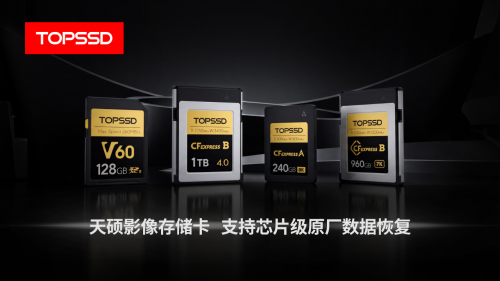
素材无价,信赖有因:顶级摄影师反复选择天硕的“底层真相”
Xin Lang Cai Jing· 2026-01-16 08:49
Core Viewpoint - The article emphasizes the importance of data recovery capabilities in storage cards, highlighting that high-end storage cards like TOPSSD are preferred by professionals due to their superior data recovery features [1][4]. Group 1: Data Recovery Technology - Most storage cards lack a comprehensive data recovery technology, relying on general recovery software that may not work if the device is not recognized or the file system is severely damaged [1]. - TOPSSD offers "chip-level original data recovery" based on self-developed controllers and firmware, allowing for recovery even when the storage card is not recognized by the operating system [3][4]. - The recovery process involves backing up physical mapping logs in a special redundancy area, enabling engineers to reconstruct data structures even after logical failures [3][4]. Group 2: Comparison with General Recovery Methods - General software recovery requires the storage card to be recognized by a computer and may result in data corruption, while TOPSSD's method can recover data even if the card is formatted or unrecognized [5]. - The success rate of TOPSSD's recovery is extremely high as long as the NAND flash is physically intact, contrasting with the lower success rates of conventional software recovery [5]. - TOPSSD's approach operates directly between the controller and flash memory, allowing for a more effective recovery process compared to traditional methods that work through the operating system and file system [4][5]. Group 3: Market Position and Trust - TOPSSD is recognized for its commitment to data security and reliability, making it a trusted choice among professionals in the film industry who have experienced data loss [4][7]. - The company, established in 2016, focuses on high-performance storage solutions and is a recognized high-tech enterprise, catering to sectors like aerospace, defense, and professional film [7].
创造一个“前所未有的存储超级周期”,外资大幅上调闪存龙头目标价
Xuan Gu Bao· 2026-01-15 23:13
Group 1 - Bernstein analysts highlight that the AI-driven data explosion is creating an unprecedented "storage supercycle," raising SanDisk's target price from $300 to $580 [1] - The introduction of NVIDIA's Vera Rubin architecture has elevated rack-level SSDs to a critical path for AI inference, transforming SSDs from cold storage to an "active context layer" that enhances GPU utilization [1] - The NAND and DRAM average selling prices (ASP) are experiencing a sharp increase due to a significant supply-demand mismatch, with almost no new NAND capacity added across the industry except for YMTC [1] Group 2 - Dongfang Securities notes that RAG technology and KV caching in AI large model inference processes are driving a demand increase of hundreds of exabytes for storage, with SSDs becoming the core choice for active data storage due to their fast read/write speeds and low power consumption [2] - The NAND industry is expected to face limited capital expenditure over the next two years, with leading manufacturers leaning towards HBM, while AI is driving rapid growth in SSD usage, indicating a prolonged period of high demand for NAND and SSD [2] Group 3 - ZheShang Securities reports that Zhaoyi Innovation is a global leader in NOR Flash, actively expanding into niche DRAM and MCU markets, and accelerating growth in automotive electronics and AI terminal markets [3] - Juchen Technology ranks third globally in EEPROM, with growth prospects driven by the continued penetration of DDR5 SPD, increased market share in automotive-grade EEPROM, and upgrades in closed-loop and optical image stabilization motor sectors [3] - Demingli focuses on self-developed main control chip technology, successfully binding enterprise-level SSDs with major domestic clients [3]
存储盛宴的代价:三星利润翻倍的背后,苹果与惠普的“利润保卫战”才刚刚开始
Hua Er Jie Jian Wen· 2026-01-15 12:24
Core Viewpoint - The global technology hardware industry is facing a severe "profit defense battle" due to skyrocketing storage component prices, leading to significant differentiation within the industry. While storage chip manufacturers are experiencing explosive profit growth, downstream equipment manufacturers are forced to make difficult choices between sacrificing profit margins and raising prices to curb demand [1]. Group 1: Price Surge and Profit Impact - Samsung reported a more than 30% increase in average selling prices for DRAM and approximately 20% for NAND chips, resulting in a profit increase of over two times, with this price trend expected to continue through 2026 [1]. - The price surge is driven by AI demand, described by IDC as an "unprecedented storage chip shortage," posing a crisis for equipment manufacturers [1]. - Apple and HP stocks have reacted negatively, with Apple down 4.4% at the start of 2026, making it one of the weakest stocks in the Nasdaq 100 index, while HP's stock hit its lowest level since November 2020 [1]. Group 2: Divergent Stock Performance - The past year has seen a stark divide in stock performance, with storage companies like SanDisk, Micron Technology, and Western Digital emerging as market winners, with SanDisk leading the S&P 500 index with over 60% gains entering 2026 [2]. - In contrast, hardware giants are struggling, with Apple only rising 8.6% in 2025 and continuing to decline, while HP's market value shrank by nearly one-third in 2025 and fell another 6.8% at the start of 2026 [2]. - Dell's stock has dropped 28% since reaching a historical high in October of the previous year, indicating the tough situation for hardware companies [2]. Group 3: Profit Erosion and Cost Pressures - Storage components account for 10% to 20% of the material costs in consumer hardware products, leading to rapidly downgraded profit expectations for companies [3]. - HP is particularly affected, with estimates indicating that rising storage costs will reduce its adjusted EPS by $0.30 in 2026, and market expectations for HP's net EPS have been downgraded by 7.1% in the past month [3]. - Even Apple, with strong pricing power, is expected to be impacted by the significant rise in storage component costs over the next two years [3]. Group 4: Structural Supply Shortage - The current supply shortage is characterized as a strategic reallocation of global silicon wafer capacity, differing from typical cyclical shortages, indicating that price pressures are unlikely to dissipate quickly [5]. - The extreme scarcity of supply is expected to persist in the short term, affecting semiconductor manufacturers that supply chips for smartphones, leading to downgrades for Qualcomm and Arm by Mizuho Securities and Bank of America [5]. - Among the hardware companies, only Dell is viewed positively due to its server business growth, which can partially offset the headwinds from rising storage costs [5].

