
企业级固态硬盘

Search documents
存储芯片,太疯狂了
半导体芯闻· 2026-02-09 10:10
Core Viewpoint - The memory and foundry industries are expected to reach record high revenues by 2026, driven by the AI wave, with memory industry revenue projected to expand significantly to $551.6 billion, more than double that of the foundry industry, which is expected to reach $218.7 billion [3][4]. Group 1: Memory Industry Insights - The memory industry is experiencing a supply shortage and price surge, leading to substantial revenue growth [3][4]. - The last memory supercycle occurred between 2017-2019, driven by demand from cloud data centers, with a significant revenue gap between memory and foundry sectors [3][4]. - The current cycle, driven by AI demand, has a more comprehensive shortage compared to the previous one, with increased demand for high-capacity, high-bandwidth DRAM [3][4]. Group 2: Foundry Industry Insights - Although the foundry industry benefits from strong orders for AI chips, its revenue growth is slower compared to the memory sector due to industry structure and pricing mechanisms [4][5]. - The foundry market is characterized by a high degree of oligopoly and significant capital expenditure, limiting capacity expansion despite high prices [4][5]. - Mature processes account for approximately 70%-80% of foundry capacity, while advanced processes only make up about 20%-30%, affecting overall revenue contributions [4][5]. Group 3: Market Dynamics - The demand shift from end customers to cloud service providers (CSPs) has led to exponential growth in procurement volumes, with CSPs being less sensitive to price changes [4][5]. - Memory manufacturers have strong pricing power due to supply-demand imbalances, with average selling prices (ASP) expected to continue rising [5].

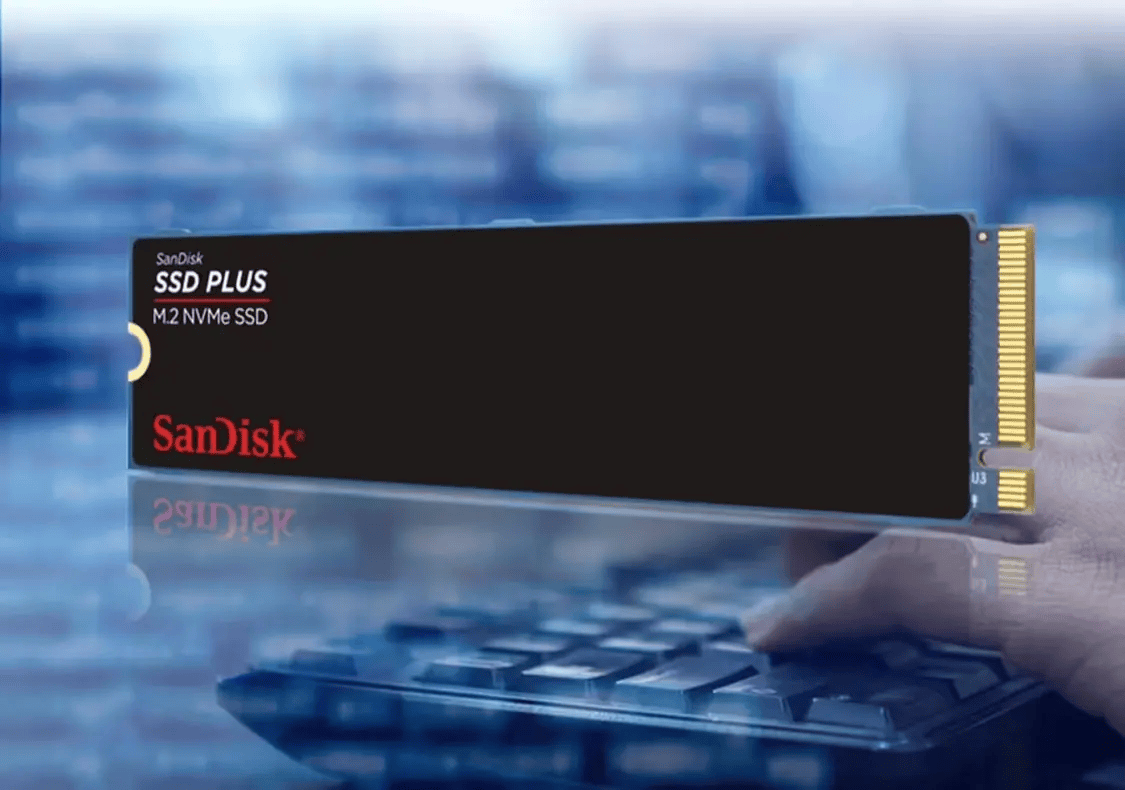
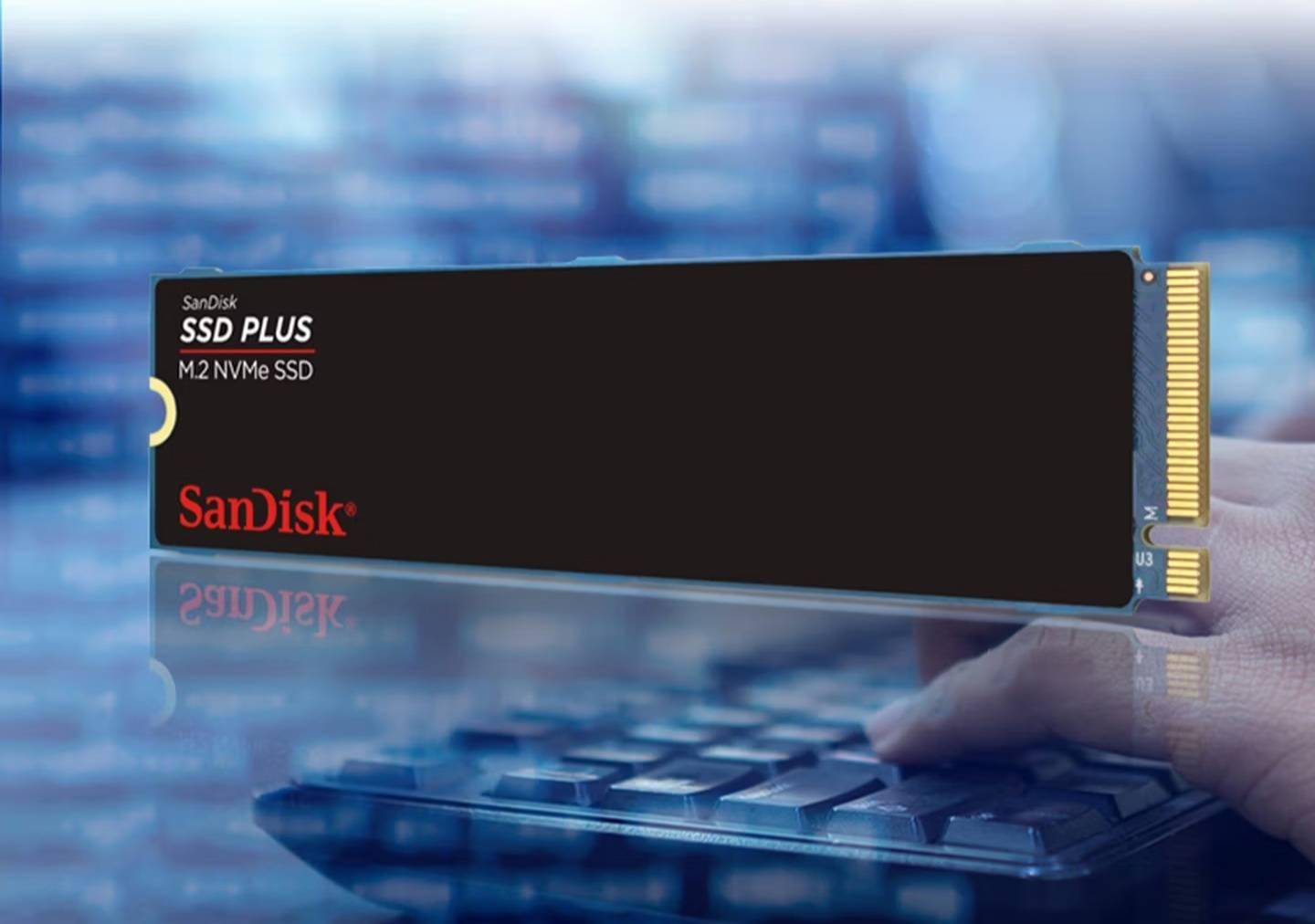
紫光股份:紫光西部数据有限公司的主要业务为在中国区销售美国西部数据硬盘产品和美国闪迪公司SSD产品
Zheng Quan Ri Bao Wang· 2026-02-03 08:14
Core Viewpoint - Unisplendour Co., Ltd. (紫光股份) is actively involved in the sales of Western Digital hard drive products and SanDisk SSD products in China through its subsidiary, Unisplendour Western Data Co., Ltd. [1] Group 1 - The main business of Unisplendour Western Data Co., Ltd. includes the sale of various hard drive products in China [1] - The product offerings consist of high-capacity enterprise-grade mechanical hard drives, consumer-grade mechanical hard drives, enterprise-grade solid-state drives (SSDs), and consumer-grade SSDs [1]

【招商电子】闪迪FY26Q2跟踪报告:FY26Q2业绩大超预期,营收和毛利率指引环比大幅增长
招商电子· 2026-01-30 11:47
Core Viewpoint - SanDisk (NASDAQ:SNDK) reported Q2 FY2026 earnings with revenue of $3.025 billion, a year-over-year increase of 61% and a quarter-over-quarter increase of 31%, significantly exceeding previous guidance. The gross margin was 51.1%, up 18.6 percentage points year-over-year and 21.2 percentage points quarter-over-quarter, driven by rising product prices across all segments and strong demand [2][11][19]. Group 1: Financial Performance - Q2 FY2026 revenue reached $3.025 billion, surpassing the guidance of $2.55 to $2.65 billion, primarily due to price increases across all segments, with a unit shipment increase of 22% year-over-year [2][18]. - Non-GAAP EPS was $6.20, significantly above the guidance of $3.00 to $3.40, driven by higher revenue and lower costs [19][11]. - Non-GAAP gross margin was 51.1%, exceeding the guidance of 40.8% to 42.8%, with a projected margin of 65% to 67% for Q3 FY2026 [19][21]. Group 2: Market Segments - Data Center revenue was $440 million, up 74% year-over-year and 64% quarter-over-quarter, with strong demand driven by AI infrastructure expansion [3][13]. - Edge Computing revenue reached $1.678 billion, a 63% year-over-year increase and 21% quarter-over-quarter, influenced by the PC and mobile device upgrade cycles [3][14]. - Consumer revenue was $907 million, reflecting a 61% year-over-year increase and 31% quarter-over-quarter, supported by a shift towards high-end products [3][15]. Group 3: Future Guidance - Q3 FY2026 revenue is expected to be between $4.4 billion and $4.8 billion, with a midpoint indicating a 171% year-over-year increase and a 52% quarter-over-quarter increase, amid worsening supply shortages [4][21]. - The company raised the 2026 data center market EB-level data growth rate forecast to over 60%, up from the previous estimate of 40% [4][21]. Group 4: Strategic Partnerships - SanDisk extended its partnership with Kioxia, ensuring stable product supply through a $1.165 billion payment for manufacturing services, with the partnership lasting until December 31, 2034 [5][20]. - The company is in discussions with NVIDIA regarding potential additional data demand from KV caching, estimating an extra 75-100 EB of data demand by 2027 [5][26]. Group 5: Operational Strategy - The company is focusing on long-term agreements with strategic customers to ensure supply stability and predictable demand, moving away from short-term transactional models [11][17]. - The company plans to maintain capital expenditure to support mid-high teens bit growth while ensuring profitability to fund R&D and capital investments [18][35].

闪迪FY26Q2跟踪报告:FY26Q2业绩大超预期,营收和毛利率指引环比大幅增长
CMS· 2026-01-30 11:39
Investment Rating - The report indicates a strong investment outlook for the industry, with significant revenue and gross margin growth expected in the upcoming quarters [1][3]. Core Insights - The company reported FY26Q2 revenue of $3.025 billion, a year-over-year increase of 61% and a quarter-over-quarter increase of 31%, significantly exceeding previous guidance [1][28]. - Gross margin for FY26Q2 was 51.1%, up 18.6 percentage points year-over-year and 21.2 percentage points quarter-over-quarter, also surpassing prior guidance [1][29]. - The company anticipates that demand will continue to significantly exceed supply in all end markets beyond 2026, driven by rising product prices and robust demand across all segments [2][25]. Summary by Sections Financial Performance - FY26Q2 revenue was $3.025 billion, exceeding guidance of $2.55 to $2.65 billion, primarily due to price increases across all segments [1][28]. - Non-GAAP EPS for FY26Q2 was $6.20, far exceeding the previous guidance of $3.00 to $3.40 [1][30]. - The company expects FY26Q3 revenue to be in the range of $4.4 to $4.8 billion, with a gross margin of 65% to 67% [3][32]. Market Segments - Data Center: Revenue reached $440 million, up 74% year-over-year and 64% quarter-over-quarter, with strong demand expected to continue [2][22]. - Edge Computing: Revenue was $1.678 billion, a 63% year-over-year increase and 21% quarter-over-quarter increase, driven by the AI adoption and device upgrades [2][23]. - Consumer Market: Revenue was $907 million, up 61% year-over-year and 31% quarter-over-quarter, with a focus on high-end products [2][24]. Strategic Developments - The company extended its partnership with Kioxia until December 31, 2034, ensuring stable product supply and a total payment of $1.165 billion for manufacturing services [4][31]. - The company is in discussions with NVIDIA regarding additional data demand, estimating an extra 75 to 100 EB of data demand by 2027, which could double the following year [4][41]. Industry Dynamics - The report highlights a structural transformation in the NAND market driven by AI, with data centers expected to become the largest end market for NAND products [21][35]. - The company is focusing on long-term agreements with customers to ensure supply stability and predictable returns, moving away from short-term transactional models [21][38].
芯片巨头,赚翻了
半导体芯闻· 2026-01-30 11:22
Core Insights - The surge in demand for AI data centers has led to a tight supply of storage semiconductors, resulting in record quarterly performances for both Samsung Electronics and SK Hynix [1][2] - Both companies are expected to supply the sixth generation of high bandwidth memory (HBM4) amid a supply-demand imbalance [1][3] Financial Performance - Samsung Electronics reported a revenue of 93.8 trillion KRW and an operating profit of 20.1 trillion KRW for Q4 2025, marking year-on-year increases of 23.7% and 209.2% respectively [1] - The semiconductor division of Samsung saw a 46% year-on-year revenue growth, reaching 44 trillion KRW, with operating profit soaring by 465.5% to 16.4 trillion KRW [1] - SK Hynix achieved a record revenue of 32.8267 trillion KRW in Q4, a 66.1% year-on-year increase, with operating profit rising by 137.2% to 19.1696 trillion KRW [1] Market Dynamics - The rapid expansion of AI data centers by major North American tech companies like Google, Microsoft, and Amazon has significantly increased the demand for storage semiconductors [2] - Despite a limited growth rate of DRAM bit shipments at around 10%, average selling prices (ASP) have surged by 25% to nearly 40% [2] - In NAND flash memory, SK Hynix's bit growth rate is approximately 10%, while Samsung's bit shipments have slightly declined, yet both companies' performance remains strong due to substantial price increases [2] HBM Market Trends - The HBM market is experiencing a supply shortage, exacerbated by AMD's announcement of its next-generation AI chip "MI455" featuring 432 GB of HBM4, which is 50% higher in capacity than similar products from Nvidia [3] - Both Samsung and SK Hynix have indicated that customer demand for HBM products far exceeds their current supply capabilities, leading to anticipated competition for market share [3] Future Product Strategies - Samsung and SK Hynix are preparing for the next generation of HBM (HBM4E) and customized HBM products, with both companies actively working to meet customer-specific requirements [4] - SK Hynix is focusing on customized HBM as a core competitive factor, while Samsung plans to initiate wafer trial production for customized HBM products in the second half of the year [4] NAND Flash Market Outlook - The demand for NAND flash memory is expected to grow significantly as AI applications shift focus towards inference stages, positioning NAND as a critical component in AI infrastructure [5] - The export value of Korean NAND flash memory is projected to reach 1.3 billion USD by January 2026, reflecting a 108% year-on-year increase [6] - Both Samsung and SK Hynix are adjusting their production strategies, focusing on high-margin products like HBM while maintaining stable pricing to enhance profitability [6][7]
闪迪2026财年Q2净利润超8亿美元同比增长672%:营收逾30亿美元同比增长61%,AI数据中心业务表现亮眼
Sou Hu Cai Jing· 2026-01-30 02:51
Core Viewpoint - SanDisk reported strong financial performance for Q2 FY2026, driven by robust demand from AI infrastructure builders and technology companies deploying AI at scale, with revenue exceeding guidance [3][6]. Financial Performance Summary - Q2 FY2026 revenue reached $3.025 billion, a 31% increase quarter-over-quarter (QoQ) and a 61% increase year-over-year (YoY) [3][8]. - GAAP net income was $803 million, up 617% QoQ and 672% YoY, with diluted earnings per share (EPS) of $5.15, reflecting a 587% increase QoQ and a 615% increase YoY [5][8]. - Non-GAAP diluted EPS was $6.20, up 408% QoQ and 404% YoY [5][8]. Gross Margin and Operating Expenses - Gross margin improved to 50.9%, up 21.1 percentage points QoQ and 18.6 percentage points YoY [5][8]. - Operating expenses decreased by 7% QoQ to $476 million, but increased by 16% YoY [5][8]. Segment Revenue Breakdown - Data center revenue was $440 million, a 64% increase QoQ and a 76% increase YoY [5][8]. - Edge revenue reached $1.678 billion, up 21% QoQ and 63% YoY [5][8]. - Consumer revenue was $907 million, reflecting a 39% increase QoQ and a 52% increase YoY [5][8]. Future Guidance - For Q3 FY2026, SanDisk expects revenue between $4.4 billion and $4.8 billion, with non-GAAP diluted EPS projected between $12.00 and $14.00 [6][8].
存储巨头业绩股价双爆发,年内最高飙涨60%
21世纪经济报道· 2026-01-30 00:49
Core Viewpoint - The storage industry is experiencing significant growth driven by the increasing demand for AI infrastructure, leading to record-high performances from major storage manufacturers like Seagate, SK Hynix, and Samsung Electronics [1][2][3]. Group 1: Financial Performance - SK Hynix reported a record high in Q4 2025 with revenue increasing by 34% to 32.83 trillion KRW and operating profit up 68% to 19.17 trillion KRW, achieving an operating margin of 58% [1]. - Samsung Electronics' storage business achieved sales revenue of 37.1 trillion KRW in Q4, a 39% quarter-on-quarter increase and a 62% year-on-year increase, significantly outperforming the group's overall sales growth of 24% [2]. - For the full year 2025, SK Hynix's revenue reached 97.15 trillion KRW, with operating profit doubling to 47.21 trillion KRW compared to 2024 [3]. Group 2: Market Trends - The storage market is expected to face a severe decline in 2024, but a sudden recovery is anticipated in 2025, as indicated by industry insiders [2]. - The demand for DRAM and NAND products is projected to grow significantly, with DRAM prices increasing by approximately 25% and NAND prices by over 30% in Q4 2025 [3][4]. - The limited supply combined with strong demand from cloud service providers for AI infrastructure is creating a supply-demand imbalance, contributing to the strong financial results of storage giants [4]. Group 3: Capital Expenditure and Expansion - Major storage companies are increasing capital expenditures in response to the robust demand for AI infrastructure, with Micron Technology announcing a $100 billion investment to build multiple semiconductor fabs in the U.S. [6][7]. - Micron also plans to acquire a manufacturing facility in Taiwan for $1.8 billion to enhance its storage supply capabilities [6]. - SK Hynix is cautiously increasing its capital expenditures while focusing on strengthening partnerships to meet customer demands, with plans to enhance production capacity at its facilities in Korea and the U.S. [7][8]. Group 4: Future Outlook - The storage industry is entering a new growth cycle defined by AI, with a focus on high-value products such as high-bandwidth memory and enterprise solid-state drives [9]. - The demand for DRAM is expected to grow by over 20% year-on-year in 2026, while NAND demand is projected to grow by around 20% [8]. - The importance of memory in server markets is increasing, with expectations of over 15% growth in this segment in 2026 [8].


闪迪Q2净利润同比暴增673%,AI数据中心业务成增长引擎
Sou Hu Cai Jing· 2026-01-30 00:49
Core Viewpoint - Sandisk reported strong financial results for the fiscal second quarter of 2026, driven by significant growth in data center revenue due to the increasing adoption of AI technologies [3][9]. Financial Performance - Q2 2026 revenue reached $3.025 billion, a 31% increase from Q1 2026 and a 61% increase year-over-year [3][10]. - GAAP net income was $803 million, translating to a diluted net income per share of $5.15, marking a 587% increase from the previous quarter and a 615% increase year-over-year [3][10]. - Non-GAAP diluted net income per share was reported at $6.20 [3][9]. Gross Margin and Operating Income - Gross margin improved to 50.9%, up 21.1 percentage points from Q1 2026 and up 18.6 percentage points from Q2 2025 [7][10]. - Operating income surged to $1.065 billion, a 505% increase from Q1 2026 and a 446% increase year-over-year [7][10]. Revenue Breakdown by Segment - Data center revenue was $440 million, up 64% sequentially and 76% year-over-year [7][10]. - Edge revenue reached $1.678 billion, a 21% increase from Q1 2026 and a 63% increase year-over-year [7][10]. - Consumer revenue was $907 million, reflecting a 39% increase from Q1 2026 and a 52% increase year-over-year [7][10]. Business Outlook - For Q3 2026, Sandisk expects revenue to be between $4.4 billion and $4.8 billion, with non-GAAP diluted net income per share projected to be between $12.00 and $14.00 [8][9].
AI引爆存储市场 巨头业绩翻倍开启扩产
2 1 Shi Ji Jing Ji Bao Dao· 2026-01-29 23:42
Core Insights - The storage industry is experiencing record-high performance driven by strong demand for AI-related storage solutions, with major companies like SK Hynix, Samsung Electronics, and Micron reporting better-than-expected earnings for Q4 2025 [1][11] - SK Hynix's operating profit doubled in 2025, highlighting the significant impact of AI on storage demand [1][11] Financial Performance - SK Hynix reported a revenue of 32.83 trillion KRW for Q4 2025, a 34% increase quarter-on-quarter, and an operating profit of 19.17 trillion KRW, up 68% with an operating margin of 58% [14] - Samsung Electronics' storage business achieved sales of 37.1 trillion KRW in Q4 2025, a 39% quarter-on-quarter increase and a 62% year-on-year increase, significantly outpacing the group's overall sales growth of 24% [14] - For the full year 2025, SK Hynix's revenue reached 97.15 trillion KRW, with an operating profit of 47.21 trillion KRW, marking a substantial increase from 2024 [3][15] - Samsung's storage business generated sales of 104.1 trillion KRW in 2025, a 23% year-on-year growth, while its overall DS business saw a 65% increase in operating profit [3][15] Market Trends - The storage market faced challenges in 2024 but saw a significant rebound in 2025, attributed to increased demand from AI infrastructure investments and a supply-demand imbalance [5][16] - The demand for high-performance memory, such as HBM, is expected to continue growing, with SK Hynix reporting over a 100% year-on-year increase in HBM revenue [17] - The overall memory product demand, including server DRAM and NAND, is anticipated to rise as AI applications evolve [17][21] Capital Expenditure and Expansion - Major storage companies are increasing capital expenditures to expand production capacity, with Micron announcing significant investments in new manufacturing facilities in the U.S. and Singapore [7][18][19] - Micron plans to invest $100 billion in a new semiconductor manufacturing complex in New York and $24 billion in a facility in Singapore to meet AI-related NAND demand [18][19] - SK Hynix is cautiously increasing capital expenditures while focusing on strengthening partnerships to meet customer needs, with plans to enhance production capacity in Korea and the U.S. [20] Future Outlook - The DRAM market is expected to grow by over 20% year-on-year in 2026, while NAND growth is projected to be around 20% [21] - The server market's memory demand is becoming increasingly critical, with expectations of over 15% growth in 2026 [21] - The storage industry is entering a new growth cycle defined by AI, shifting from a supporting role to a key component in computing power efficiency [22]
SK海力士25Q4跟踪报告:本季营收与利润均创历史新高,受供应限制仍无法满足所有客户需求
CMS· 2026-01-29 11:18
Investment Rating - The report indicates a positive outlook for the industry, suggesting a recommendation for investment based on strong fundamentals and expected performance exceeding market benchmarks [41]. Core Insights - The company achieved record revenue and profit in Q4 2025, driven by strong demand for memory products, particularly in the HBM segment, with revenue reaching 32.83 trillion KRW, a 66% year-on-year increase [1][19]. - The demand for DRAM and NAND products remains robust, with significant price increases contributing to improved profitability [19]. - The company plans to expand production capacity and enhance its product offerings, particularly in AI memory solutions, to meet growing market demands [25][26]. Summary by Sections Financial Performance - Q4 2025 revenue was 32.83 trillion KRW, up 66% year-on-year and 34% quarter-on-quarter, with a gross margin of 69% [1][19]. - Net profit for Q4 2025 reached 15.2 trillion KRW, reflecting a 90% increase year-on-year [1][19]. - For the full year 2025, revenue is projected at 97.15 trillion KRW, a 47% increase, with net profit expected to be 42.95 trillion KRW, a 117% increase [1][22]. Market Outlook - The server market is expected to see high double-digit growth in 2026, driven by structural demand for server DRAM and enterprise SSDs [3][24]. - PC and mobile device markets may experience short-term adjustments due to rising component costs and weakened consumer confidence [3][24]. - Demand growth for DRAM and NAND is anticipated to remain above 20% and 19%, respectively, in 2026 [3][24]. Product Development and Capacity Expansion - The company is accelerating the transition to 1c nm DRAM and 321-layer NAND technologies, with plans to expand production capacity at its facilities [25][26]. - HBM4 production is underway, with the company aiming to meet customer demand through advanced packaging technologies [4][26]. - Capital expenditures for 2026 are expected to increase significantly to support capacity expansion and infrastructure development [25][27]. Shareholder Returns - The company has announced a new shareholder return policy, including an additional cash dividend of 1,500 KRW per share and plans to repurchase and cancel 15 million shares [27][28]. - The total cash dividend for the fiscal year 2025 is projected to be 3,000 KRW per share, amounting to approximately 2.1 trillion KRW in total [27][28].