水利工程

Search documents
新疆水利事业实现从“人逐水走”到“水为人用”的跨越 绘就人水和谐新画卷(砥砺奋进七十载 天山南北谱华章)
Ren Min Ri Bao· 2025-09-17 21:53
Core Viewpoint - The water management and irrigation projects in Xinjiang have significantly improved agricultural productivity and ecological sustainability, marking a transition from traditional water usage to modern, efficient systems [1][2][3]. Group 1: Water Management Projects - The Altarash Water Conservancy Project, initiated in 2011, has transformed flood management and irrigation in the Yarkand River basin, increasing irrigated land from 6.51 million acres to over 10 million acres [2]. - The Dashi Gorge Water Conservancy Project, part of a national initiative, is expected to provide ecological water for over 8 million acres of farmland upon completion in 2026, with a total reservoir capacity of 1.17 billion cubic meters [3]. - The Uruvat Water Conservancy Project has supplied 23.9 billion cubic meters of water, increasing irrigated area to 6.0379 million acres and improving irrigation efficiency [4]. Group 2: Technological Integration - The integration of digital technologies in irrigation, such as the "Hui Feng Shou" app, has allowed farmers to manage water usage more efficiently, reducing costs and increasing crop yields [7]. - The use of satellite remote sensing and smart electric valves has decreased water usage per acre from 90 cubic meters to 35 cubic meters, saving significant water resources [7]. - The agricultural irrigation water utilization efficiency in the region has reached 0.7, with fertilizer utilization rates improving by 20% and labor costs decreasing by over 70% [7]. Group 3: Economic and Social Impact - The construction of water projects has created job opportunities, employing 12,000 local workers and training over 3,000 skilled laborers [2]. - The average annual income in Altarash village is projected to reach 24,000 yuan by 2024, reflecting the economic benefits of improved water management [2]. - The overall irrigation area in Xinjiang has reached 99.17 million acres, with a rural tap water coverage rate of 99%, showcasing the extensive impact of water management initiatives [8].
为黄河装上“智慧大脑” ——解码数字孪生黄河的三门峡实践
He Nan Ri Bao· 2025-09-16 23:29
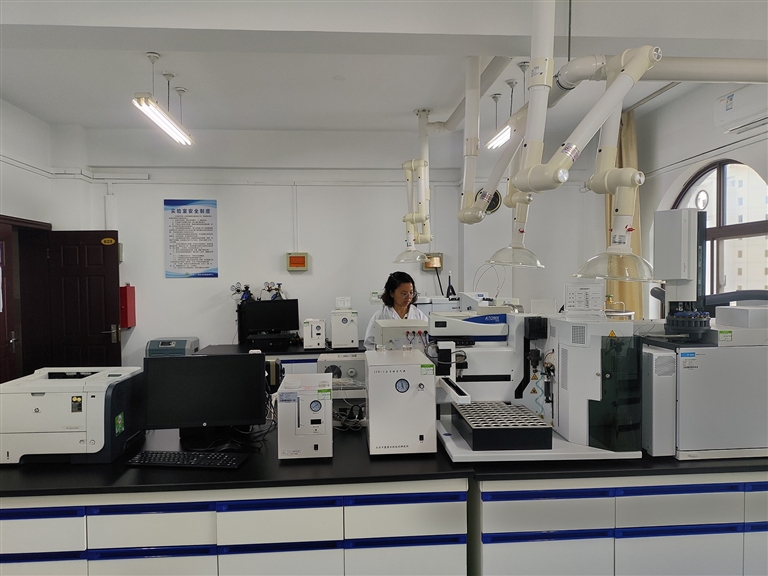
图① 三门峡市生态环境监测人员进行饮用水源地有机物污染物分析。 王阿芳 摄 走进位于郑州市金水区的模型黄河试验基地1号大厅,一条800米长的微缩河道蜿蜒铺展——这便是按1∶600水 平比尺、1∶60垂直比尺复刻的黄河下游河床模型,将小浪底至陶城铺河段476公里的黄河河道地貌浓缩于此。 自2016年起,每年汛前,这条模型黄河都会进行洪水预演试验,为守护母亲河寻得科学答案。随着防汛决策 迈向数据驱动时代,数字孪生黄河悄然诞生。数字孪生三门峡、数字孪生故县、数字孪生小浪底、数字孪生 万家寨、数字孪生大汶河等系统陆续上线,在实践中开展了迭代应用。 "数字孪生黄河将模型黄河的物理规律转化为数字算法,把实体试验升级为实时仿真,推动治黄从'试验优 化'迈向'智能预判'。"黄河水利科学研究院泥沙所副所长张防修如此解释了两条黄河的关系。 作为黄河入豫第一市,三门峡市域干支流积极融入数字孪生黄河建设浪潮,以数字技术化作无形的手,为多 个领域赋能,担当起防洪预警先锋、灌溉管家、生态守护者等角色,为黄河流域生态保护和高质量发展注入 数智动能。 图② 三门峡水利枢纽矩阵平台智慧大屏。 赵帅 摄 "数字镜像"赋能大坝管理 古有大禹治水, ...

数字屏障护江河安澜
Jing Ji Ri Bao· 2025-09-16 22:12
Core Viewpoint - The construction of a digital twin water conservancy system is essential for promoting high-quality water conservancy development and ensuring water security in China [4][9]. Group 1: Digital Twin Technology - The digital twin water conservancy system is not merely a digital replica but a virtual system capable of monitoring, analyzing, and forecasting water conditions [2][3]. - The system integrates various technologies, including satellite remote sensing, drones, and advanced monitoring devices, to provide real-time data and predictive analytics for water management [3][8]. - The digital twin system has been successfully applied in flood forecasting and water resource allocation, significantly improving decision-making processes [2][5]. Group 2: Monitoring and Data Collection - China has established a comprehensive monitoring and sensing system that includes 31 remote sensing satellites, over 100 rain radar units, and more than 48,000 ground hydrological stations [4][8]. - The integration of these technologies has enabled the creation of a digital twin platform that covers 72 categories of water conservancy objects, generating high-resolution data for effective disaster prevention [4][9]. - The system allows for rapid data collection and transmission, enhancing the timeliness of flood warnings and resource management [3][6]. Group 3: Water Resource Management - The digital twin system has improved water resource allocation, enabling real-time monitoring and dynamic simulation of water flow and reservoir management [5][6]. - In Ningbo, the implementation of a smart water network has optimized water supply and ensured a high supply guarantee rate during drought periods [6][7]. - The system has also facilitated the efficient management of water resources in major projects like the South-to-North Water Diversion, enhancing operational efficiency and decision-making [6][8]. Group 4: Technological Advancements - The transition from manual monitoring to real-time surveillance has been marked by the deployment of advanced technologies such as drones and AI-driven models for water forecasting [8][9]. - The development of predictive models has extended the forecasting period for floods and improved accuracy, providing robust support for flood management [8][9]. - The focus on technological innovation is driving the evolution of water management practices, ensuring a more responsive and effective approach to water resource challenges [8][9].
钱江水利(600283.SH):参股公司拟发行基础设施公募REITs
Ge Long Hui A P P· 2025-09-16 10:09
Group 1 - The company Qianjiang Water Conservancy (600283.SH) plans to issue public infrastructure REITs backed by operational assets such as the Shanxi Reservoir and power station to enhance asset utilization and improve capital structure [1] - The estimated valuation of the underlying assets for the REITs is approximately 3.004 billion yuan, with a proposed issuance scale of 2.474 billion yuan [1] - Four shareholders, including Wenzhou Public Utilities as the initiator, will participate in the subscription, with 80% of the total scale allocated to them and 20% available for public investors [1]

157.11米!丹江口水库水位持续回升
He Nan Ri Bao· 2025-09-15 23:37
Core Viewpoint - The Danjiangkou Reservoir is experiencing a rapid increase in water levels due to upstream water discharge and heavy rainfall, which is expected to continue rising, enhancing water supply capabilities to northern regions [1] Group 1: Water Level and Flow - As of September 15, the water level of the Danjiangkou Reservoir reached 157.11 meters and is on a continuous upward trend [1] - The inflow rate has significantly increased, with continuous daily inflow exceeding 3,000 cubic meters per second, peaking at 5,480 cubic meters per second on September 12 [1] Group 2: Flood Management and Water Supply - The reservoir is effectively managing floodwaters by storing them, which reduces downstream flood pressure while increasing the reservoir's water storage capacity [1] - This increase in storage capacity further enhances the reservoir's ability to supply water to northern regions [1] Group 3: Environmental and Ecological Measures - Following a prolonged drought in the Danjiang River basin since winter 2024, the reservoir has been operating at low water levels [1] - In March, a comprehensive environmental rectification action was initiated to address water quality issues in the reservoir area, aiming to improve ecological conditions [1] - To mitigate ecological impacts from low water levels, the local government extended the fishing ban period to September 30, 2025, to promote the recovery of fishery resources [1]
韩江榕江练江水系连通后续优化工程全线隧洞贯通 建成后将惠及850万人
Nan Fang Ri Bao Wang Luo Ban· 2025-09-15 07:44
Core Viewpoint - The completion of the shield tunnel for the Hanjiang, Rongjiang, and Lianjiang water system connectivity project marks a significant milestone in addressing water scarcity issues in the eastern Guangdong region, with a total investment of 10.119 billion yuan [1][2]. Group 1: Project Overview - The project involves a total water conveyance pipeline length of approximately 72 kilometers, with a total estimated investment of 10.119 billion yuan [1]. - The project is a major water resource allocation initiative planned by the Guangdong provincial government, aimed at solving resource and engineering-related water shortages in the eastern Guangdong region [1]. - The project will facilitate the transfer of Hanjiang water resources to various districts, including Chaoyang, Chaoshan, and Puning, benefiting a population of 8.5 million [2]. Group 2: Engineering Challenges - The construction faced challenges, particularly with the "Yuedong 2" shield machine, which encountered a "solitary stone group" during excavation, leading to innovative modifications to the machine [2]. - The project includes approximately 34 kilometers of shield tunnels, TBM tunnels, and drill-blast tunnels, all of which have now been completed [1][2]. - Following the completion of the shield tunnel, construction efforts are now focused on lining the tunnels and building associated pumping stations [2].
北京六水联通蓄滞洪区三标项目首个泵站主体结构浇筑完成
Huan Qiu Wang· 2025-09-15 06:07
Core Viewpoint - The completion of the first pump station's main structure for the Beijing Liushui Linked Flood Storage Area Project marks a significant milestone, providing valuable practical experience and guidance for standardized construction in future projects [1] Project Overview - The project is located in the Mentougou District of Beijing and includes the renovation of the Chenglong Canal (3.9 km), construction of six new water supply pump stations, 15.5 km of water supply pipelines, two new drainage pump stations, three sluices, one management center, and landscaping recovery [1] - The completed pump station is situated in the Longquan Town area and serves as a core hub for the Liushui Linked Flood Storage Area Project, facilitating water circulation from the Yongding River to the upstream water supply station [1] Construction Management - During the construction period, the project team proactively planned and coordinated efforts, optimizing construction plans based on project characteristics [1] - Strict adherence to construction specifications was maintained, with precise control over key parameters such as concrete mix ratio, slump, pouring speed, and temperature, allowing for dynamic adjustments to ensure concrete pouring quality met standards [1] Impact on Water Resource Management - The project is crucial for improving the water resource regulation capacity in the Mentougou District, addressing issues of disconnected water systems, insufficient water volume, and unstable water quality in the New Town area [1] - The initiative aims to create a "highly efficient, green, intelligent, smoothly circulating, and orderly regulated" water network, laying a solid foundation for achieving the goal of a safe and resilient Mentougou [1]

北京门头沟永定河古渠灌溉工程成功入选2025年度世界灌溉工程遗产
Shui Li Bu Wang Zhan· 2025-09-12 15:21
Core Insights - The Beijing Mentougou Yongding River Ancient Canal Irrigation Project has been successfully included in the 2025 World Irrigation Heritage List, marking it as the first irrigation system in the Beijing-Tianjin-Hebei region to receive this honor, enhancing Beijing's cultural profile on a global scale [1] Group 1: Historical Significance - The irrigation system consists of five core ancient canals and surrounding water conservancy relics, with a history dating back to 250 AD during the Three Kingdoms period, originally irrigating an area of 66,000 acres [1] - The Fuxiatai Canal, one of the core canals, is noted for its advanced construction techniques, including the use of blasting technology to shorten the project duration [1] Group 2: Agricultural Impact - The Fuxiatai Canal plays a crucial role in local agriculture, enabling the cultivation of high-quality products such as Fuji apples and Jingbai pears, which have contributed to increased farmer incomes [2] - The canal's management includes seasonal practices such as opening sluice gates for irrigation in spring and clearing silt in winter to maintain water flow [2] Group 3: Engineering and Management Innovations - The ancient canals employ unique techniques to manage sediment and water flow, such as "dam-free water diversion" and "silt control," which effectively mitigate flooding and sedimentation issues [2] - The management model of the irrigation system has historical roots, with the establishment of the earliest farmers' water association in Beijing during the Qing Dynasty, aligning with modern water management principles [3] Group 4: Future Development and Collaboration - The Beijing Water Authority plans to leverage the recognition of the ancient canal for enhanced protection and innovative management, integrating smart water management platforms for dynamic monitoring [3] - Future initiatives will focus on combining canal protection with comprehensive governance of the Yongding River and promoting international cooperation to share China's water management stories [3]
鸿蒙生态加速导入各行各业
Zheng Quan Ri Bao Zhi Sheng· 2025-09-11 16:09
Core Insights - The article highlights the progress of the open-source HarmonyOS in the smart transportation sector, particularly through the Shenzhen Metro project led by Jiadu Technology Group, marking a significant step in the application of this operating system in core rail transit operations [1][2]. Group 1: Project Overview - Jiadu Technology has won the bid for the Shenzhen Metro "Smart Station Research Project based on Open Source HarmonyOS," which is the first of its kind in the country to deeply apply the open-source HarmonyOS in rail transit [1]. - The project will last for three years and includes core technology research and multiple pilot stations, aiming for independent innovation and manufacturing through the HarmonyOS ecosystem [1]. Group 2: Industry Impact - The implementation of the project signifies a deeper penetration of open-source HarmonyOS in the transportation industry, marking a critical step towards the localization and independence of smart transportation in China [2]. - Jiadu Technology has a strong technical foundation in intelligent rail transit and has launched the first domestic operating system for the transportation industry, "Traffic Jia Hong," to address industry pain points such as fragmented interconnectivity and data silos [2]. Group 3: Ecosystem Development - Multiple A-share listed companies are collaborating as partners in the HarmonyOS ecosystem to accelerate its application across various industries [2]. - In the financial sector, Kelong Software has completed the full adaptation of its intelligent cash robot "Xiao Lan" to the HarmonyOS, facilitating the smart transformation of 220,000 bank outlets [3]. - In the water management sector, Dayu Water-saving Group has developed "Yuhong" series smart water meters based on HarmonyOS technology, marking its successful application in the industry [3].

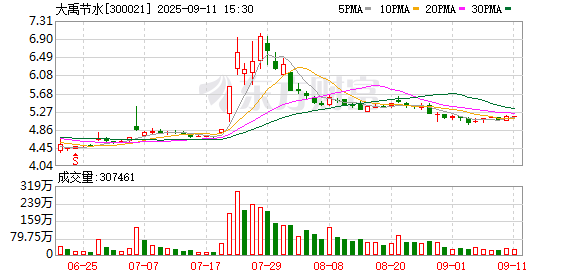
大禹节水:关于对外担保进展公告
Zheng Quan Ri Bao· 2025-09-11 13:11
Group 1 - The company Dayu Water-saving announced a guarantee contract with GF Bank Tianjin Branch for a subsidiary, with a guarantee amount of 50 million yuan and a term of one year [2] - As of the announcement date, the total approved external guarantee amount for the company and its subsidiaries is 506.573 million yuan, while the total external guarantee amount is 305.276 million yuan, accounting for 148.80% of the company's audited net assets as of December 31, 2024 [2] - The actual external guarantee balance for the company and its subsidiaries is 179.48933 million yuan, which represents 87.49% of the company's audited net assets as of December 31, 2024 [2]