
基础设施公募REITs

Search documents
投教宣传|债券通用质押式回购——个人投资者篇
野村东方国际证券· 2026-03-05 10:52
Group 1 - The core viewpoint of the article highlights the increasing participation of individual investors in the Shanghai Stock Exchange bond market, with a growing variety of investment options available [1] - The article mentions the continuous growth in the scale of investment products available for individual investors, including bonds, public REITs, general pledged repos, and bond ETFs [1] - To assist individual investors in understanding general pledged repos and enhancing their knowledge and skills in the bond market, the company has launched an educational animation titled "General Pledged Repo - Individual Investor Edition" [1]


金风科技(02208.HK)终止公募REITs申报发行工作
Ge Long Hui· 2026-01-23 12:29
Core Viewpoint - The company has decided to terminate the public REITs project, which was previously under review by regulatory authorities [1] Group 1: Company Actions - The company announced the termination of the public REITs issuance application during the 10th meeting of the 9th Board of Directors held on January 16, 2026 [1] - The fund manager, Jianxin Fund Management Co., Ltd., and the asset support plan manager, Jianxin Capital Management Co., Ltd., have submitted an application to the China Securities Regulatory Commission and the Shenzhen Stock Exchange to terminate the review process [1] - As of the date of the announcement, the application process for the REITs project with the regulatory authorities has been officially terminated [1]

证通电子:全资子公司拟开展基础设施公募REITs申报发行
Xin Lang Cai Jing· 2026-01-23 10:52
Core Viewpoint - The company is moving forward with the issuance of public REITs based on assets from its subsidiary, aiming to enhance the value of its data center assets [1] Group 1: Company Actions - The board meeting is scheduled for January 23, 2026, to review the proposal for the public REITs issuance [1] - The underlying assets for the REITs will be part of the Changsha Cloud Valley Data Center [1] - The original equity holders or their affiliates are expected to participate in a strategic allocation of no less than 20% [1] Group 2: Project Status - The issuance does not constitute a related party transaction or a major asset restructuring [1] - The proposal will require approval from the first temporary shareholders' meeting of 2026 [1] - The project is currently in the application stage, indicating some level of uncertainty [1]

首例终止 金风科技撤回公募REITs申报
Xin Lang Cai Jing· 2026-01-20 10:20
Core Viewpoint - The company, Goldwind Technology, has announced the termination of its public REITs application process, which was initiated in 2021 for three wind power projects, later adjusted to focus on one project [1] Group 1: Company Actions - The board of directors of Goldwind Technology has approved the decision to halt the public REITs application for infrastructure [1] - The initial plan included three wind power projects: Quan Nan Tian Pai Shan, Chong Yi Long Gui, and Chong Yi Tian Xing, but was later revised to focus solely on the Quan Nan Tian Pai Shan project [1] - The application materials were submitted to the China Securities Regulatory Commission and the Shenzhen Stock Exchange in September 2023 and were accepted [1] Group 2: Reasons for Termination - The termination of the REITs application is attributed to the need for resource integration and optimization of operational management [1] - The company has stated that this decision will not impact its operational and financial performance [1]
金风科技(02208.HK)终止基础设施公募REITs申报发行工作
Ge Long Hui· 2026-01-19 12:36
Core Viewpoint - The company has decided to terminate the public offering of its infrastructure REITs project, which was initially proposed for independent listing on the Shenzhen Stock Exchange [1] Group 1: REITs Project Overview - The company announced a voluntary disclosure regarding the public offering of an infrastructure securities investment fund on September 28, 2021 [1] - On September 5, 2023, the company proposed a split of the REITs project for independent listing on the Shenzhen Stock Exchange [1] - The fund manager, Jianxin Fund Management Co., Ltd., and the asset support special plan manager, Jianxin Capital Management Co., Ltd., submitted application materials to the China Securities Regulatory Commission and the Shenzhen Stock Exchange on September 4, 2023 [1] Group 2: Termination of REITs Project - The company held its ninth board meeting on January 16, 2026, where it approved the proposal to terminate the public offering of the infrastructure REITs [1] - The company plans to submit an application to the China Securities Regulatory Commission and the Shenzhen Stock Exchange to terminate the review process for the REITs project [1]
戴德梁行:以资产管理激活房地产发展新动能
Xin Hua Cai Jing· 2026-01-12 17:45
Core Insights - The event hosted by CBRE focused on the latest trends in the real estate market, with discussions on office buildings, commercial trends, bulk transactions, REITs, and asset management, aiming to provide insights into market dynamics and potential pathways for breakthroughs [1][4] Group 1: Real Estate Market Trends - The expansion of the public REITs pilot program to include office buildings and hotels marks a new phase in the financialization of real estate in China, providing standardized exit channels for existing assets and diverse investment options for institutional investors [1] - The future growth of the real estate industry will increasingly rely on the refined operation of existing assets, quality upgrades in property services, and the regulated development of the leasing market, rather than solely on new developments [1][4] Group 2: Office Market Outlook - The Beijing office market is expected to face multiple challenges in 2026, with a focus on enhancing core competitiveness and achieving breakthroughs in a competitive environment [4] - The projected scale of bulk transactions in Beijing's real estate market for 2025 is estimated at 15 billion yuan, indicating a phase of decline, with a shift in buyer structure towards self-use demand from enterprises [6] Group 3: Commercial Market Developments - In 2025, the Beijing retail market will see the opening of 13 quality projects, adding over 1.1 million square meters of premium retail space, alongside the renovation of several older commercial projects [5] - The retail market is characterized by a transformation from single consumption spaces to "urban living rooms," a shift in cultural and IP operations towards global and matrix layouts, and a transition in commercial operation philosophy from "traffic-oriented" to "long-termism" [5] Group 4: Asset Management Strategies - The core strategy of asset management at CBRE emphasizes "long-term resilience," with REITs evolving from single asset products to sustainable value operation platforms, connecting capital with the real economy [6] - The discussions highlighted the importance of capital layout and operational optimization in navigating market fluctuations and cycles [6]
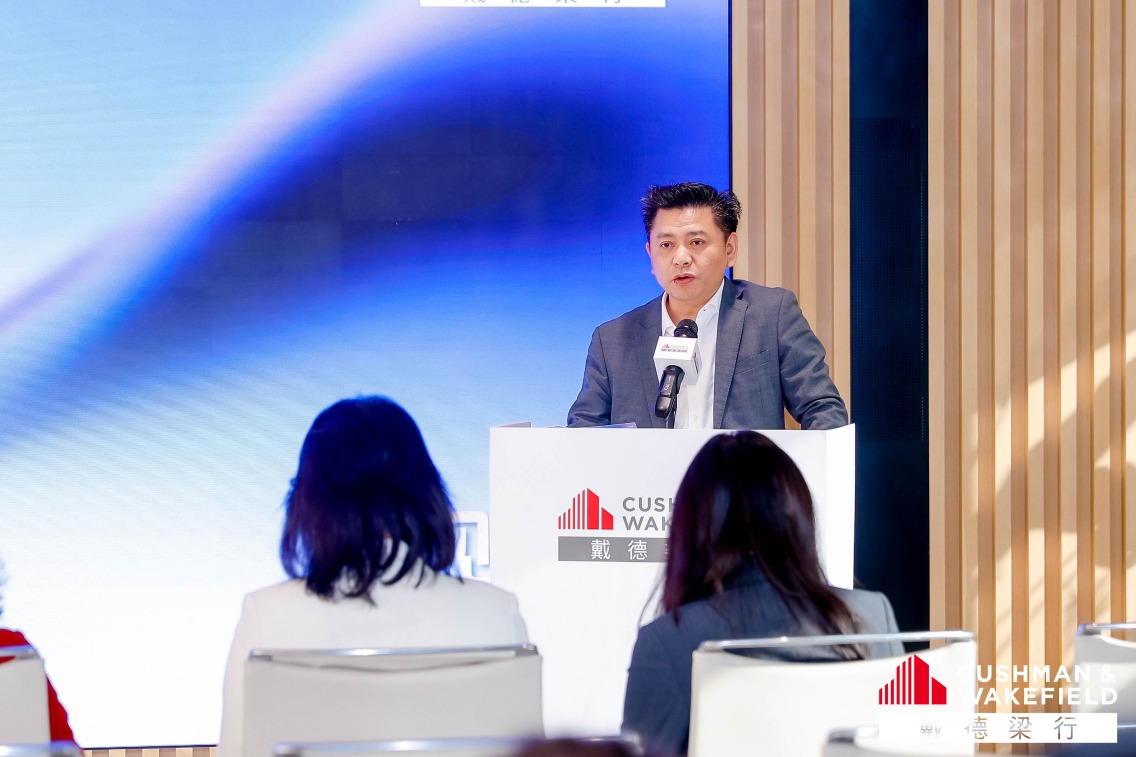
戴德梁行:房地产转型提质大有可为 以资产管理激活行业发展新动能
Zheng Quan Ri Bao Wang· 2026-01-12 13:50
Core Insights - The event hosted by CBRE focused on the latest trends in the real estate market, featuring discussions on office buildings, commercial trends, large transactions, REITs, and asset management, aiming to provide insights into market dynamics and pathways for breakthroughs [1] - The expansion of public REITs to include office and hotel assets marks a new phase in the financialization of real estate in China, providing standardized exit channels for existing assets and enhancing investment options for institutional investors [1] - The future growth of the real estate sector will increasingly rely on the optimization of existing assets, quality upgrades in property services, and the regulated development of the rental market, rather than solely on new developments [1] Market Trends - The Chief Policy Analyst at CBRE highlighted that expanding domestic demand and boosting consumption will be key drivers of economic growth in the complex international environment leading up to 2026 [2] - The performance of Beijing's office market in 2025 was reviewed, identifying core opportunities for market breakthroughs through industrial upgrades and operational strategy optimization, despite facing multiple challenges [2] - The retail market in Beijing is expected to see the opening of 13 quality projects in 2025, adding over 1.1 million square meters of retail space, alongside the renovation of older commercial projects to enhance market quality [2] REITs and Capitalization Rates - CBRE released the sixth edition of the "China REITs Index Real Estate Capitalization Rate Survey Report," indicating that capitalization rates serve as a core pricing anchor for real estate, reflecting industry confidence and investment logic [3] - The report aims to guide the development direction of the industry and assist in the value extraction of commercial real estate as public REITs expand into office and hotel sectors [3] Asset Management Strategies - The asset management strategy emphasizes "long-term resilience" as a core logic, with REITs serving as a key practical vehicle for this approach, evolving from single asset products to sustainable value operation platforms [4] - The investment logic is shifting from "profit from price differences" to "long-term holding and self-use adaptation," providing stable liquidity and operational certainty for core assets [4]
深耕区域债券业务 一创投行获银行间债市主承销资格
Xin Hua Cai Jing· 2026-01-05 12:23
Core Insights - First Capital Securities' subsidiary, Yichuang Investment Bank, has officially obtained the lead underwriter qualification for non-financial corporate debt financing instruments in the interbank bond market, indicating a significant expansion in its capabilities and market presence [1] Group 1: Bond Underwriting Business - Yichuang Investment Bank's bond underwriting business has seen rapid growth, with its total underwriting scale ranking in the top 30 of the industry in 2024, achieving an underwriting amount of 26.25 billion yuan, which is 2.1 times that of 2023 [1] - The business is projected to further improve its ranking to the top 25 in 2025, with an underwriting amount increasing to 41.08 billion yuan, reflecting a year-on-year growth of 56.51% [1] - The Beijing market serves as a strategic focus for Yichuang Investment Bank, where it has ranked among the top three in local state-owned enterprise bond underwriting for two consecutive years, holding a market share of 70.7% in the Beijing Stock Exchange bond market in 2024 [1] Group 2: Technology Innovation Bonds - In the technology innovation sector, Yichuang Investment Bank has established a strong presence, with its underwriting scale for technology innovation bonds reaching 12.10 billion yuan in 2025, elevating its industry ranking to 12th [2] - The bank assisted 12 Beijing state-owned enterprises in issuing 47 technology innovation bonds, raising a total of 54.75 billion yuan, with Yichuang Investment Bank underwriting 11.07 billion yuan of that amount [2] - The company has successfully helped enterprises achieve low-cost issuances, setting market low-interest records for similar bonds [2] Group 3: Comprehensive Financial Services - First Capital Securities is not limited to bond underwriting; it aims to build comprehensive financial service capabilities covering the entire lifecycle of enterprises, aligning with Beijing's strategic development goals [2][3] - The company has actively engaged in asset securitization (ABS) and public REITs to revitalize existing assets, exemplified by the successful issuance of a public REIT by Shounong Food Group, raising 3.685 billion yuan [3] - Yichuang Investment Bank has formed a specialized team to focus on mergers and acquisitions, actively participating in the industrial integration of state-owned enterprises in the capital [3]

【财经分析】2025年基础设施公募REITs市场观察:扩容、分化与韧性生长
Xin Hua Cai Jing· 2025-12-30 05:57
Core Insights - The domestic public REITs market in China is steadily progressing under favorable policies and capital interest, characterized by three distinct features: expansion, differentiation, and breaking through challenges [1] Group 1: Market Expansion - In 2025, the public REITs market in China entered a deep development phase, with 20 new projects launched, raising a total of 43.45 billion yuan (approximately 4.35 billion USD) [2] - As of December 29, 2025, the number of listed public REITs reached 78, with a cumulative issuance scale of about 201.75 billion yuan (approximately 20.17 billion USD), indicating significant growth potential [2] - The issuance pace in 2025 slowed compared to 2024, where 29 projects raised 65.52 billion yuan (approximately 6.55 billion USD), but the normalization of the expansion mechanism effectively supplemented market growth [2] Group 2: Structural Differentiation - The market has seen a breakthrough in asset types, with new fields such as digital infrastructure and urban renewal emerging, including the first data center REITs and urban renewal REITs [3] - Institutional investors dominate the market, accounting for 97.21% of the REITs market by mid-2025, an increase of 0.8 percentage points from the end of 2024, driven by the stable cash flow characteristics of REITs [3] - The trading activity varies significantly among different asset types, with new infrastructure REITs showing a daily average turnover rate of 0.92%, while transportation infrastructure leads in monthly transaction volume [4] Group 3: Market Dynamics - The primary market remains robust, with high subscription enthusiasm, exemplified by the 华夏中海商业REIT achieving a subscription multiple of 361.9 times from public investors [5] - In contrast, the secondary market faced adjustments in the second half of 2025, with the 中证REITs total return index declining by 1.44% over a week, reflecting a broader market correction of nearly 6% [6][7] - Factors contributing to the secondary market's volatility include the "stock-bond seesaw effect," fluctuations in long-term interest rates, and the release of strategic placement shares, which increased market supply [7] Group 4: Future Outlook - Despite challenges in the secondary market, the long-term outlook for the REITs market remains positive due to ongoing policy support, normalization of the expansion mechanism, and further diversification of asset types [8] - The market is expected to focus on three main paths in 2026: leveraging bond market trends, capitalizing on policy catalysts, and identifying opportunities from expansion and unlocks [8] - New asset types such as cultural tourism and elderly care are anticipated to inject growth momentum into the market, potentially leading to valuation premiums upon listing [8]
股市必读:三峡能源(600905)12月29日主力资金净流出1536.08万元,占总成交额5.13%
Sou Hu Cai Jing· 2025-12-29 18:13
Group 1 - The stock price of China Three Gorges Energy (600905) closed at 4.11 yuan on December 29, 2025, down 0.48% with a turnover rate of 0.25% and a trading volume of 725,700 shares, amounting to a total transaction value of 299 million yuan [1][2] - On December 29, the main funds experienced a net outflow of 15.36 million yuan, accounting for 5.13% of the total transaction value, while retail investors saw a net inflow of 3.88 million yuan, representing 1.3% of the total transaction value [1][2] Group 2 - China Three Gorges Energy has submitted an application to issue public REITs based on the Dalian Zhuanghe III offshore wind power project, which has been officially accepted by the China Securities Regulatory Commission and the Shanghai Stock Exchange [1][2] - The project was approved by the company's board on August 6, 2025, and is currently in the application stage, pending regulatory approval [1]

