
生物科技

Search documents
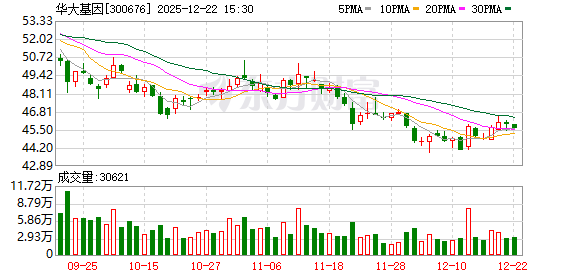
华大基因:关于控股股东部分股份质押的公告
Zheng Quan Ri Bao· 2025-12-22 13:53
证券日报网讯 12月22日晚间,华大基因发布公告称,控股股东深圳华大基因科技有限公司将其持有的 2,400,000股公司股份质押给兴业银行股份有限公司深圳分行,用于自身生产经营的资金需求。 (文章来源:证券日报) ...

今日财经要闻TOP10|2025年12月22日
Xin Lang Cai Jing· 2025-12-22 12:33
Group 1 - The People's Bank of China has announced a one-time credit repair policy, allowing individuals to have overdue information removed from the financial credit information database if they repay overdue debts of up to 10,000 RMB by March 31, 2026 [1] Group 2 - In the next two weeks, 46 routes between China and Japan will cancel all flights, with a total of 2,195 flights canceled from mainland China to Japan by December 22, 2025, resulting in a cancellation rate of 40.4% [2] Group 3 - Four new stocks in Hong Kong experienced a collective drop on their first trading day, with Mindray Hospital falling nearly 50%, marking the worst performance for new stocks this year [4] Group 4 - The U.S. Secretary of State emphasized the importance of maintaining relations with China while continuing strong partnerships with Japan, indicating a balanced approach to U.S. policy in the Asia-Pacific region [3][10] Group 5 - Zhiyuan Robotics expects to achieve sales revenue exceeding 1 billion RMB this year, with plans for significant growth in robot shipments and revenue in the coming years [4] Group 6 - The State-owned Assets Supervision and Administration Commission of China is committed to deepening cooperation with Hong Kong to enhance its status as a financial center and support the internationalization of the RMB [6] Group 7 - The Ministry of Commerce announced temporary countervailing measures on imported dairy products from the EU, effective December 23, 2025 [10]
生物制造未来产业发展研讨会在青岛西海岸新区举办
Xin Lang Cai Jing· 2025-12-22 12:09
转自:新华财经 一直以来,青岛将生物制造作为未来产业培育的重中之重,系统谋划、精准发力,特别是《青岛市合成 生物创新发展行动方案(2025-2027年)》的正式印发,为产业发展绘制了清晰"路线图"、制定了有 力"保障网",推动产业发展迈出坚实步伐。以青岛琅琊台集团等为代表的骨干企业,在海洋生物资源开 发、微生物发酵技术等领域积淀深厚,发展生物制造未来产业既有基础、更有优势、更具潜力。 据了解,青岛琅琊台集团将海洋微生物技术赋能白酒酿造,打造"中国海派白酒";依托衣康酸及其衍生 物研产销基地,坚定向合成生物制造高端领域迈进;建成海洋微藻、海洋活性肽等研发生产基地,推动 海洋生物资源的高值化开发与新质生产力转化。目前,青岛琅琊台集团已成功建设"国家认定企业技术 中心""国家级工业设计中心""中国轻工业海洋资源挖掘与产品创制工程技术中心"等八大"国字号"研发 平台,先后承担多项国家重点研发计划,并获得国家科技进步奖二等奖,在技术研发、产业转化与规模 生产等方面取得扎实成效。 青岛琅琊台集团相关负责人表示:"未来,集团将坚持创新驱动,进一步深化与科研机构的产学研合 作,构建可持续的创新源泉;加速推动研发成果产业化,促 ...
补贴政策争论加剧,对冲基金做空医疗服务提供商
Xin Lang Cai Jing· 2025-12-22 11:52
Core Insights - Goldman Sachs reported that hedge funds experienced net selling of U.S. healthcare stocks for the first time in 14 weeks due to the impending expiration of subsidy policies and lawmakers' urgency to control related costs [1][4] - Approximately 24 million Americans purchase health insurance through the Affordable Care Act, with increased subsidies during the COVID-19 pandemic set to expire on December 31, leading to potential significant premium increases unless Congress enacts an extension [1][4] - President Donald Trump announced plans to meet with health insurance companies in the coming weeks to discuss feasible ways to lower premiums [1][4] Hedge Fund Activity - The report indicated that hedge funds were net sellers of stocks in healthcare service providers, pharmaceuticals, and biotech companies, with only the life sciences and medical technology sectors recording net buying [1][4] - Goldman Sachs noted that short positions in the healthcare sector were more than eight times larger than long positions, indicating a bearish outlook among investors [1][4] Market Conditions - Current holdings in healthcare stocks remain relatively high compared to the averages of the past year and five years [2][5] - Rising healthcare costs, combined with increasing prices of other consumer goods, have led to public dissatisfaction, which may become a focal issue in the 2026 midterm elections [2][5] Legislative Developments - The U.S. House of Representatives passed a bill supported by Trump that will lower insurance premiums for certain groups starting January 2027, while simultaneously reducing subsidies for others, potentially increasing costs for some [6] - The timing of this bill's implementation is noteworthy as it is only two months before the election [6] Short Selling Trends - According to data from HazelTree, a financial data service tracking 700 asset management firms and 15,000 stocks, the telehealth company Him & Hers and scientific instrument manufacturer Bruker were the top two shorted mid-cap stocks in the U.S. in November [6]
艾德生物:公司实验室已应用实验室信息管理系统
Zheng Quan Ri Bao Zhi Sheng· 2025-12-22 10:42
Core Viewpoint - The company emphasizes its commitment to patient-centered approaches and focuses on the clinical needs in the field of tumor gene testing, particularly in drug companion diagnostics [1] Group 1 - The company has implemented a laboratory information management system in its laboratory [1] - The company is dedicated to deepening its expertise in tumor gene testing [1] - The company leverages strong bioinformatics algorithms to develop reagents, software, and supporting instruments [1] Group 2 - The company provides professional testing services and drug clinical research services [1]

香港金管局:香港三家主要银行首批参与知识产权融资沙盒
Xin Lang Cai Jing· 2025-12-22 09:38
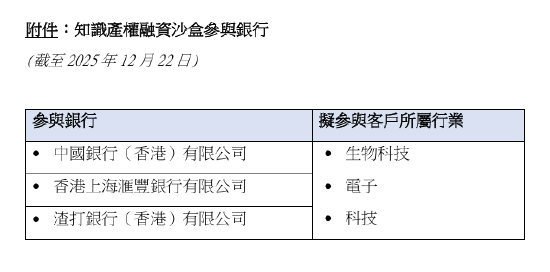
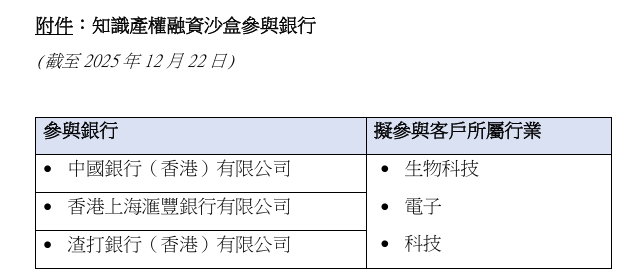
Core Insights - The Hong Kong Monetary Authority, in collaboration with the Commerce and Economic Development Bureau and the Intellectual Property Department, has launched an Intellectual Property Financing Sandbox [1][2] - The sandbox provides a collaborative and risk-controlled environment for banks, intellectual property valuation agencies, legal practitioners, and other relevant professionals to test financing arrangements based on intellectual property assets such as patents, trademarks, and copyrights [1][2] - Three major banks in Hong Kong have joined the sandbox as initial participants, confirming interest from clients in the biotechnology, electronics, and technology sectors in testing intellectual property financing transactions [1][2] Participating Banks and Client Industries - Bank of China (Hong Kong) Limited is targeting clients in the biotechnology sector [2][3] - HSBC Hong Kong is focusing on clients in the electronics sector [2][3] - Standard Chartered Bank (Hong Kong) Limited is engaging with clients in the technology sector [2][3]


香港金管局、商经局及知识产权署联同推出知识产权融资沙盒
智通财经网· 2025-12-22 09:36
Group 1 - The Hong Kong Monetary Authority (HKMA), in collaboration with the Commerce and Economic Development Bureau and the Intellectual Property Department, has launched an Intellectual Property Financing Sandbox to assist industries in utilizing intellectual property assets for financing [1] - Three major banks in Hong Kong have joined the sandbox as initial participants, indicating interest from clients in the biotechnology, electronics, and technology sectors for testing intellectual property financing transactions [1][2] - The sandbox provides a collaborative and risk-controlled environment for banks, intellectual property valuation agencies, legal practitioners, and other relevant professionals to test financing arrangements based on intellectual property assets such as patents, trademarks, and copyrights [1] Group 2 - The sandbox aims to support banks in developing and refining their intellectual property financing arrangements with guidance from the HKMA, the Commerce and Economic Development Bureau, and the Intellectual Property Department [1] - The initiative is expected to help banks accumulate practical experience in intellectual property financing, better meeting the needs of innovative enterprises, particularly small and medium-sized enterprises that possess substantial intellectual property but lack tangible assets for bank financing [1]
ETF收评 | A股全线上扬,美股ETF领涨,标普生物科技ETF涨5%
Ge Long Hui· 2025-12-22 08:17
Market Performance - The A-share market returned to 3900 points, with the Shanghai Composite Index rising by 0.69%, the Shenzhen Component Index increasing by 1.47%, and the ChiNext Index up by 2.23% [1] - The total market turnover reached 186.5 billion yuan, an increase of 11.63 billion yuan compared to the previous day [1] Sector Performance - Active sectors included Hainan, storage chips, and precious metals, while the pharmaceutical commercial and film industry sectors experienced adjustments [1] - In the ETF market, the US biotechnology sector saw gains, with the Harvest Fund S&P Biotechnology ETF and the Huatai-PineBridge Fund NASDAQ Biotechnology ETF rising by 5.01% and 4.88%, respectively [1] - The semiconductor sector experienced a broad increase, with the Guotai Fund Semiconductor Equipment ETF, GF Fund Chip Equipment ETF, and Wanji Fund Semiconductor Equipment ETF rising by 4.93%, 4.92%, and 4.82%, respectively [1] - The CPO sector rebounded strongly, with the Guotai Fund Communication ETF and Bosera Fund 5G50 ETF both increasing by 4% [1] - Gold reached a new historical high, with the Huaxia Fund Gold Stock ETF and Ping An Fund Gold Stock ETF rising by 3.7% [1] Hong Kong Market - The Hong Kong medical sector declined, with the Hong Kong Innovative Drug 50 ETF, Hang Seng Biotechnology ETF, Hong Kong Medical ETF, and Hong Kong Stock Connect Medical ETF all falling by 1% [1] - The film sector also weakened, with the film ETF dropping by 1.29% [1]
茅台、啤酒、巧克力:千亿“剩宴”变形记
Xin Lang Cai Jing· 2025-12-22 05:17
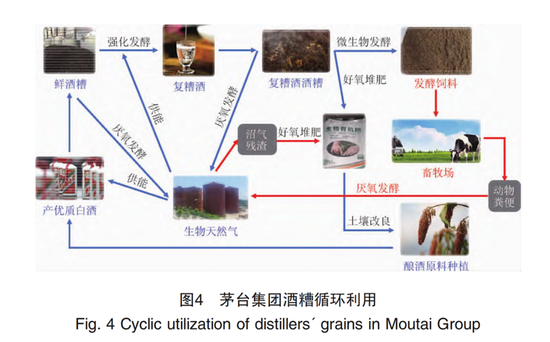
Group 1: Global Market and Technological Drivers - The upcycled food industry is emerging as a significant circular economy pathway, converting food waste into high-value products, addressing the challenge of food waste which accounts for 8%-10% of global greenhouse gas emissions [1][2] - The global upcycled food market is projected to grow at a compound annual growth rate (CAGR) of 5.6%, reaching a market size of $74.8 billion by 2029 according to BCC Research [2][3] - Advanced technologies such as artificial intelligence (AI) and biomanufacturing are driving the rapid development of this industry, with companies like Agrain utilizing AI to optimize the use of brewing waste [2][3][8] Group 2: Diverse Products and Innovative Cases - Upcycled food applications have led to the creation of new product categories, such as upcycled flour from brewing waste by Upcycled Foods and cocoa powder from cocoa fruit pulp [3][10] - Brazilian company Cellva Ingredients has developed "CoffeeCoa," a chocolate ingredient derived from coffee processing waste, providing a unique flavor experience [3][10] - The application of biomanufacturing extends beyond food, as seen in the collaboration between Yiru Biotechnology and China Resources Snow Beer, which produces 100% bio-based leather materials from brewing byproducts [3][10][11] Group 3: Exploration and Practices of Chinese Enterprises - In China, the resource utilization of food byproducts is becoming a key direction for leading companies to implement ESG (Environmental, Social, and Governance) principles [4][11] - Kweichow Moutai's circular investment company has established a complete recycling system for brewing byproducts, processing 300,000 tons annually to produce 120,000 tons of organic fertilizer and 20,000 tons of feed [4][11] - Companies like Shanghai Punotin focus on upgrading byproducts from soybean processing into sustainable food ingredients, while Green Spot Technologies has recently secured €5 million in funding for producing chocolate from fruit waste [5][12] Group 4: Conclusion - The upcycled food industry is building a more efficient and sustainable food supply chain, with potential for greater growth as technology advances and consumer awareness of environmental issues increases [6][14]
山东三项产品入选工信部首批生物制造标志性产品
Da Zhong Ri Bao· 2025-12-22 01:04
Core Viewpoint - The Ministry of Industry and Information Technology is enhancing the integrated development capabilities of biomanufacturing by organizing a collection of iconic biomanufacturing products, with the first batch of 35 products announced [1] Group 1: Product Selection - Three products from Shandong have been selected: Hyaluronic Acid from Huaxi Biotechnology Co., Ltd., Glucosamine from Shandong Runde Biotechnology Co., Ltd., and Trans-Aconitic Acid from the Qingdao Institute of Bioenergy and Process Research, Chinese Academy of Sciences [1] Group 2: Focus Areas - The Ministry is focusing on key areas such as food and additives, biopharmaceuticals, cosmetics, bio-based chemicals, bioenergy, biomaterials, enzyme preparations, natural product biosynthesis, and specialized equipment and materials for the collection of advanced technology products with significant economic benefits and promotional value [1] Group 3: Support and Promotion - The Ministry will establish a database of iconic biomanufacturing products and will increase promotional efforts for the listed products, supporting their technological innovation, research and production capabilities, and market promotion through existing policy channels [1]
