
纺织业

Search documents
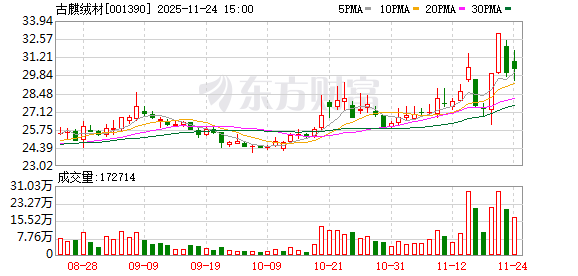
古麒绒材:截至目前公司的生产基地位于安徽省芜湖市南陵经济开发区
Mei Ri Jing Ji Xin Wen· 2025-11-24 09:21
(文章来源:每日经济新闻) 每经AI快讯,有投资者在投资者互动平台提问:冷空气来袭,原材料涨价,贵司回复当前产品销量稳 定,产能利用率较高,销量增长与新增产能相关。请问你公司有几个生产基地,分别在哪里? 古麒绒材(001390.SZ)11月24日在投资者互动平台表示,截至目前公司的生产基地位于安徽省芜湖市 南陵经济开发区。 ...

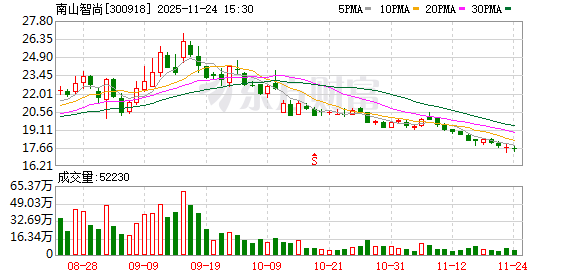
南山智尚:截至11月20日股东户数为26037户
Zheng Quan Ri Bao· 2025-11-24 09:06
Core Viewpoint - Nanshan Zhishang reported that as of November 20, 2025, the number of shareholders is 26,037 [2] Summary by Category - Company Information - Nanshan Zhishang has 26,037 shareholders as of the specified date [2]
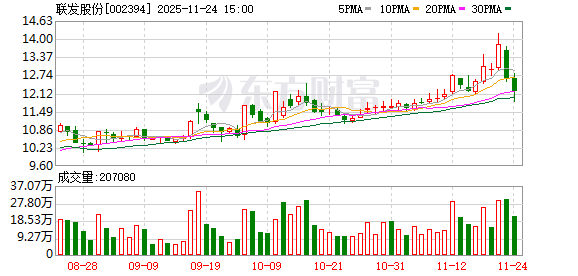
联发股份:截至11月20日股东数为25978户
Zheng Quan Ri Bao· 2025-11-24 09:06
Group 1 - The company, Lianfa Co., stated on November 24 that as of November 20, 2025, the number of shareholders is expected to be 25,978 [2]

富春染织前3季净利降77% A股募12亿IPO国元证券保荐
Zhong Guo Jing Ji Wang· 2025-11-24 07:19
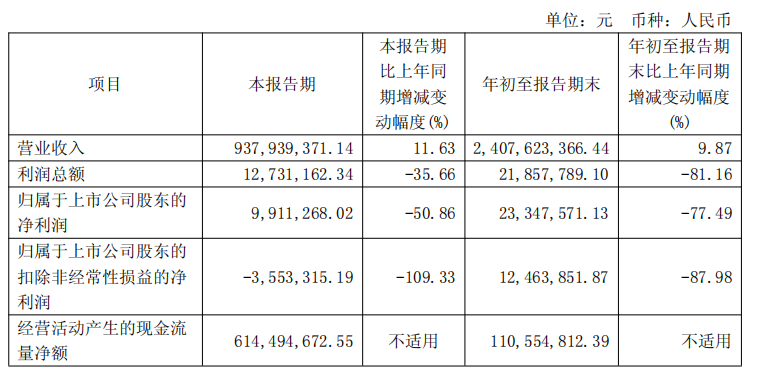
Core Viewpoint - Fuchun Dyeing and Weaving (605189.SH) reported a revenue of 2.408 billion yuan for the first three quarters of 2025, marking a year-on-year increase of 9.87%, but the net profit attributable to shareholders decreased by 77.49% to 23.35 million yuan [1] Financial Performance - The company achieved an operating income of 2.408 billion yuan, reflecting a growth of 9.87% compared to the previous year [1][3] - The net profit attributable to shareholders was 23.35 million yuan, which represents a significant decline of 77.49% year-on-year [1][3] - The net profit after deducting non-recurring gains and losses was 12.46 million yuan, down 87.98% year-on-year [1][3] - The net cash flow from operating activities was 111 million yuan [1] Capital Raising and Financial Structure - Fuchun Dyeing and Weaving raised a total of 6.22 billion yuan through its initial public offering, with a net amount of 5.46 billion yuan after deducting issuance costs [4] - The company allocated 3 billion yuan for the construction of a high-quality yarn production line, 26.05 million yuan for a research and development center, and 2.2 billion yuan for working capital [4] - The company has raised a total of 11.92 billion yuan since its listing [5] Dividend Distribution - In 2023, the company announced a cash dividend of 2.70 yuan per 10 shares (including tax) and a capital reserve conversion of 2 shares for every 10 shares held [5]

福恩股份核心产品单价跌三年 IPO前期家族获分红3.2亿
Zhong Guo Jing Ji Wang· 2025-11-24 06:48
Core Insights - The article discusses the IPO process of Fuen Co., Ltd., highlighting a significant cash dividend distribution among family members totaling 300 million yuan prior to the IPO [1][2] - Fuen Co., Ltd. aims to raise 1.25 billion yuan through its IPO, with 800 million yuan allocated for an integrated project on recycled eco-friendly fabric and 450 million yuan for a research institute focused on high-end eco-friendly materials [1] Company Overview - Fuen Co., Ltd. is a global supplier of eco-friendly fabrics, emphasizing sustainable development in its operations, which include design, research, spinning, weaving, dyeing, finishing, and sales [1] - The actual controllers of the company are Wang Neili, Wang Xuelin, and Wang Enwei, who collectively control 83.89% of the voting rights [1] Financial Performance - In 2022, Fuen Co., Ltd. distributed a cash dividend of 381 million yuan, with the family members receiving 320 million yuan based on their shareholding proportions [2] - The revenue from recycled fabrics is projected to increase from 75.61% in 2022 to 83.20% in 2024, while the share of virgin fabrics is expected to decrease from 24.39% to 16.8% during the same period [2] - The main product, recycled polyester-cotton blended fabric, is forecasted to generate revenues of 1.18 billion yuan, 1.02 billion yuan, and 1.22 billion yuan from 2022 to 2024, maintaining a revenue share of 67% to 68% [2] Pricing Trends - Despite revenue growth in both recycled polyester-cotton blended and all-polyester fabrics, the average selling prices have been declining [2] - The average selling price of recycled polyester-cotton blended fabric is projected to decrease from 21.61 yuan/meter in 2022 to 20.92 yuan/meter in 2024 [2]
日度策略参考-20251124
Guo Mao Qi Huo· 2025-11-24 06:24
Report Industry Investment Ratings No specific industry investment ratings are provided in the report. Core Views - The current macro - level is in a relatively vacuum period, and A - shares lack a clear upward mainline. The market trading volume remains low, and short - term market differences are expected to be gradually digested during the index's shock adjustment. New driving mainlines are awaited for further index upward movement [1]. - Asset shortage and weak economy are beneficial to bond futures, but the central bank has recently warned of interest - rate risks, suppressing the upward space [1]. - There are various trends and influencing factors for different commodities, such as metals, energy, and agricultural products, with most prices expected to maintain a volatile trend, and some having specific supply - demand and macro - factor - related outlooks [1]. Summary by Related Catalogs Stock Index - The current macro - level is in a vacuum, A - shares lack an upward mainline, trading volume is low, and short - term market differences will be digested in index shock adjustment. New driving mainlines are needed for further upward movement [1]. Treasury Bonds - Asset shortage and weak economy are good for bond futures, but short - term central - bank interest - rate risk warnings suppress the upward space [1]. Non - ferrous Metals - **Copper**: The expectation of a December Fed rate cut has cooled, causing copper price to回调. However, the Fed is still in a rate - cut cycle, and there are still disturbances at the mine end, so the callback range is expected to be limited [1]. - **Aluminum**: Recently, industrial - side driving forces are limited, and macro - sentiment is volatile, so the aluminum price is running in a high - level shock [1]. - **Alumina**: With domestic alumina production capacity continuously releasing, production and inventory are both increasing, the fundamental situation is weak, and the price is oscillating around the cost line [1]. - **Zinc**: There are signs of short - term domestic improvement in the fundamentals, but the surplus pattern remains unchanged. With the Fed's internal differences on the December rate cut, the zinc price is expected to maintain a shock trend [1]. - **Nickel**: The Fed has large internal differences on the December rate cut, and the macro - sentiment is volatile. Indonesia has restricted nickel - related smelting project approvals again. Recently, the planned production cut of Indonesian intermediate products may affect about 6000 metal tons in July. If the macro - sentiment improves, the nickel price has a repair expectation. In the long - term, the primary nickel market will continue to be in a surplus pattern [1]. - **Stainless Steel**: The Fed's internal differences on the December rate cut are large, and the macro - sentiment is volatile. The price of raw - material nickel - iron has weakened again, and the social inventory of stainless steel has increased. The November production cut of steel mills is limited. The stainless - steel futures are searching for the bottom in shock [1]. - **Tin**: The Fed's internal differences are increasing, and the macro - sentiment is expected to be volatile. The long - term view on tin is bullish due to the significant decline in Indonesian tin export scale, unrepaired tin - ore supply, and expected terminal - downstream demand [1]. Precious Metals and New Energy - **Precious Metals**: Fed officials have soothed the market, and the probability of a December rate cut has rebounded. Precious - metal prices may fluctuate [1]. - **Industrial Silicon**: There is an expectation of medium - long - term capacity reduction. In the fourth quarter, terminal installation has a marginal increase. Northwest production capacity is continuously resuming, and the southwest's start - up is weaker than in previous years, with the impact of the dry season weakening [1]. - **Polysilicon**: The production schedule in November has decreased [1]. - **Organic Silicon**: There has been a joint production cut [1]. - **Lithium Carbonate**: The traditional peak season for new energy vehicles is approaching, energy - storage demand is strong, and there is supply - side resumption and production increase. But there are concerns about potential weakening of industrial demand in the off - season [1]. Building Materials and Energy - **Rebar**: The industry off - season effect is not obvious, but the industrial structure is still loose. In the short - term macro - vacuum period, the basis is acceptable, and it is advisable to participate in spot - futures positive arbitrage or use option strategies to optimize costs or sales profits [1]. - **Hot - Rolled Coil**: The near - month is restricted by production cuts, but the commodity sentiment is good, and the far - month still has upward opportunities [1]. - **Iron Ore**: The direct demand is okay, and there is cost support, but the supply is high, inventory is accumulating, and the sector is under pressure. The price rebound space is limited [1]. - **Coke and Coking Coal**: From a valuation perspective, this round of decline is close to the end. The coke price at 1630 reflects the expectation of 2 - 3 rounds of price cuts, and coking - coal contracts are also close to key support levels. Further decline requires continuous increase in coking - coal supply. Downstream is expected to start a new round of replenishment around mid - December [1]. - **Glass**: It follows the glass trend, but the supply - demand situation is average, and there is significant upward resistance [1]. - **Soda Ash**: The valuation indicates that this round of decline is close to the end, and the driving force may need more time. Downstream is expected to start replenishment around mid - December [1]. Agricultural Products - **Palm Oil**: High - frequency data shows increased production and reduced exports in the origin, and the near - month pressure is still high. Domestic ship - buying is active, and the basis is expected to be weak. The risk lies in a significant production cut in the origin [1]. - **Soybean and Soybean Oil**: The rumor of "US delaying the implementation of preferential cuts for imported bio - fuel raw materials" has been refuted, which has a positive expected difference for US soybeans and US soybean oil. Under high domestic crushing, the basis may be stable or slightly weak [1]. - **Rapeseed Oil**: The industry is optimistic about the replenishment of Australian rapeseed and imported crude rapeseed oil, and the trend remains unchanged, so it is advisable to wait and see [1]. - **Cotton**: There is a strong expectation of a domestic new - crop harvest, and the purchase price of seed cotton supports the cost of lint cotton. The downstream start - up remains low, but the yarn - mill inventory is not high, with rigid replenishment demand [1]. - **Sugar**: The global sugar supply has shifted from shortage to surplus, and the domestic new - crop supply pressure has increased year - on - year. Zhengzhou sugar futures are expected to be under pressure and follow the raw - sugar price [1]. - **Corn**: Short - term factors such as farmers' reluctance to sell, tight logistics in the Northeast, and low downstream inventory have led to a temporary supply shortage. The selling pressure is postponed, and the market's acceptance of high - price corn is limited before the supply pressure is fully released [1]. - **Soybean Meal**: Short - term attention should be paid to China's purchase of US soybeans. From December to January, the market is expected to gradually shift to trading the pressure of a bumper South American new crop. MO5 is recommended to be shorted on rallies [1]. Pulp and Wood - **Paper Pulp**: The pulp - futures price has risen above the registration - warehouse - receipt cost of most coniferous - pulp delivery products, and the upward space is limited. After new warehouse - receipts are registered, 1 - 3 reverse arbitrage can be considered [1]. - **Log**: The fundamental situation of logs has weakened, but it has been priced in the market. After a sharp decline in the futures price, the profit - loss ratio of short - selling is low, so it is advisable to wait and see [1]. Livestock - **Pig**: Recently, the spot price has gradually stabilized. With demand support and the un - cleared slaughter weight, the production capacity still needs to be further released [1]. Energy and Chemicals - **Crude Oil**: OPEC + plans to continue a small - scale production increase in December, the Russia - Ukraine peace agreement is being promoted, and the US has increased a new round of sanctions against Russia [1]. - **Fuel Oil**: It follows the crude - oil trend in the short - term, the demand for the 14th Five - Year Plan construction rush is likely to be falsified, and the supply of Ma Rui crude oil is sufficient. The asphalt profit is high [1]. - **BR Rubber**: The cost - end support of butadiene is insufficient, the supply of synthetic rubber is loose, and high - start - up and high - inventory have not been the main factors suppressing the price. The short - term price shows signs of stopping the decline [1]. - **PTA**: Gasoline profit and low benzene price support PX. Overseas and some domestic device malfunctions have led to a decline in the load of reforming devices. Domestic large - scale PTA devices are undergoing rotational inspections, and domestic PTA production has decreased [1]. - **Ethylene Glycol**: The crude - oil price decline has led to a fall in the ethylene - glycol price. The increase in coal price has slightly strengthened the cost support of domestic ethylene glycol. The strong expectation of domestic device commissioning suppresses the increase in ethylene - glycol price [1]. - **Short - Fiber**: Gasoline profit and low benzene price support PX. The PTA price has rebounded, and the short - fiber basis has strengthened. The short - fiber price continues to closely follow the cost [1]. - **Styrene**: The Asian benzene price is still weak, and the start - up rates of STDP devices and reforming devices have decreased. The US pure - benzene price has increased by 30 US dollars, and some US devices have reduced their loads [1]. - **Urea**: There is support from anti - involution and the cost end, but the export sentiment has eased, and domestic demand is insufficient [1]. - **PF**: The number of overhauls has decreased, the start - up load is high, the supply pressure is large, and the downstream improvement is limited [1]. - **PP**: The propylene monomer price is high, providing strong cost support. The supply pressure is increasing due to fewer future overhauls and new - capacity release [1]. - **PVC**: The delivery of Guangxi alumina has started, some alumina plants have postponed production, and the delivery rhythm has slowed down. There is a risk of a short squeeze due to low absolute prices and limited near - month warehouse receipts [1]. - **LPG**: The international oil - gas fundamental situation is continuously loose, and the CP/FEI price has weakened. The domestic spot fundamental situation is stable, with price - valuation repair, restarting of combustion demand, and chemical rigid - demand support [1]. Shipping - **Asia - Europe Line**: The macro - positive sentiment has been gradually digested, the peak - season price - increase expectation has been priced in advance, and the shipping - capacity supply in November is relatively loose [1].
棉花周报(11.17-11.21)-20251124
Da Yue Qi Huo· 2025-11-24 03:21
Report Summary 1. Industry Investment Rating No industry investment rating is provided in the report. 2. Core Viewpoints - Cotton prices continued to fluctuate around 13,500 this week. With cost support from the spot market, the downside is limited. It presents an opportunity for mid - to long - term long positions to enter the market at low prices and target distant contracts [4][5]. - The textile industry is in the off - season, but short - term benefits from China - US negotiations have led to a 10% reduction in export tariffs to the US [5]. - There are both positive and negative factors in the market. Positive factors include a slight increase in seed cotton purchase prices, a year - on - year decrease in commercial inventory, and a 10% reduction in export tariffs to the US. Negative factors are a decline in overall foreign trade orders, an increase in inventory, the upcoming large - scale listing of new cotton, and the traditional consumption off - season [6][7]. 3. Summary by Directory 3.1 Previous Day Review - This week, cotton prices fluctuated around 13,500. The ICAC November report forecasts a 2025/26 production of 25.4 million tons and consumption of 25 million tons. The USDA November report predicts a 2025/26 production of 26.145 million tons, consumption of 25.883 million tons, and an ending inventory of 16.532 million tons. In October, textile and clothing exports were $22.262 billion, a year - on - year decrease of 12.63%. China imported 90,000 tons of cotton in October, a year - on - year decrease of 15.6%, and 140,000 tons of cotton yarn, a year - on - year increase of 16.7%. The Ministry of Agriculture's November 2025/26 forecast shows production of 6.6 million tons, imports of 1.4 million tons, consumption of 7.4 million tons, and ending inventory of 8.45 million tons [4]. 3.2 Daily Hints - The textile industry is in the off - season. Short - term benefits from China - US negotiations have led to a 10% reduction in export tariffs to the US. Domestic new cotton picking is almost finished. With cost support, the downside of futures prices is limited, and it's a good time for mid - to long - term long positions to enter the market at low prices and target distant contracts [5]. 3.3 Today's Focus Not provided in the report. 3.4 Fundamental Data - **USDA Global Cotton Supply - Demand Balance Sheet**: In 2025/26, global production is expected to be 26.145 million tons, consumption 25.883 million tons, and ending inventory 16.532 million tons. Different countries have different trends in production, consumption, imports, and exports [11][12]. - **ICAC Global Cotton Supply - Demand Balance Sheet**: In 2025/26, the area is 30.41385 million hectares, yield per hectare is 835.13 kg, production is 25.39956 million tons, consumption is 25.00778 million tons, and ending inventory is 16.22785 million tons [14]. - **China Cotton Supply - Demand Balance Sheet**: In 2025/26, production is 6.6 million tons, imports are 1.4 million tons, consumption is 7.4 million tons, and ending inventory is 8.45 million tons. The domestic average price of cotton 3128B is expected to be between 14,000 - 16,000 yuan/ton, and the Cotlook A index is expected to be between 75 - 100 cents/pound [15]. - **Other Data**: There are also data on polyester fiber prices, spinning mill profits, cotton yarn imports, cotton yarn production start - up rates, and weaving mill start - up rates [18][20][25]. 3.5 Position Data Not provided in the report.
莫迪已经做好准备,一旦特朗普对中国出手,印度将迎来泼天富贵?
Sou Hu Cai Jing· 2025-11-23 10:15
Core Insights - The article discusses the impact of Trump's trade protection policies on India, highlighting the unintended consequences for Indian exporters and the subsequent trade negotiations between India and the U.S. [1][3][5] Trade Policy Impact - After Trump's second inauguration in January 2025, he reinstated trade protection policies, imposing tariffs on various countries, including a peak tariff of 145% on Chinese goods, which later reduced to around 47% [1] - Indian exporters faced significant challenges as the U.S. imposed a 50% tariff on Indian goods, leading to a drastic decline in exports and operational difficulties for Indian manufacturers [5][9] Bilateral Trade Negotiations - In February 2025, Modi visited Washington to initiate bilateral trade talks, aiming to increase trade from $190 billion to $500 billion, with India making concessions on tariffs for U.S. products [3][11] - By October 2025, both countries were under pressure to reach an agreement, resulting in India increasing imports of U.S. agricultural products and the U.S. easing tariffs on certain Indian goods [11][13] Economic Consequences - The tariffs led to a 37.5% drop in Indian exports to the U.S. from May to September 2025, severely affecting sectors like textiles and engineering [9] - The Indian government attempted to mitigate the economic fallout through subsidies and tax reductions, but businesses reported that these measures were insufficient without access to the U.S. market [9][11] Future Outlook - By November 2025, negotiations progressed towards a preliminary trade agreement, with expectations of reducing U.S. tariffs on Indian goods to 15-16% and addressing market access issues [13] - The article concludes that while the immediate crisis was averted, the dream of a significant manufacturing shift from China to India remains unfulfilled for the foreseeable future [13]

健盛集团:为全资子公司浙江健盛集团江山针织有限公司提供5000.00万元担保
2 1 Shi Ji Jing Ji Bao Dao· 2025-11-23 07:58
Core Viewpoint - The company has signed an irrevocable guarantee agreement with China Merchants Bank for a maximum amount of 50 million yuan to support its wholly-owned subsidiary's operational funding needs [1] Group 1 - The guarantee is within the limit approved at the company's 2024 annual general meeting [1] - The purpose of the guarantee is to meet the daily operational funding requirements of the subsidiary Zhejiang Jiansheng Group Jiangshan Knitting Co., Ltd. [1] - The company and its controlled subsidiaries have provided a total of 2.11 billion yuan in external guarantees, which accounts for 84.50% of the company's most recent audited net assets [1]

佛山禅城打造湾区首个T恤主题潮流IP 探索产业消费融合新模式
2 1 Shi Ji Jing Ji Bao Dao· 2025-11-23 00:38
Core Insights - Foshan is seeking to upgrade its traditional textile industry by focusing on brand building, leveraging its strong manufacturing base in knitting and children's clothing [1][2] - The first Foshan Trendy T-shirt Festival aims to integrate industry and consumer culture, promoting the "Foshan T-shirt" brand and enhancing market appeal [1][2] Group 1: Industry Background - Foshan has a complete textile and apparel industry chain, with "Zhangcha Knitting" being one of the largest knitting fabric production areas in China, producing about one-third of the nation's knitted fabrics annually [1] - Despite its manufacturing strength, Foshan's textile industry faces challenges such as insufficient brand influence and low added value, with many companies primarily engaged in OEM production [1] Group 2: Event Overview - The T-shirt Festival, running from November 21 to December 7, features an immersive sales matrix with a main venue and multiple sub-venues, breaking traditional exhibition models [1][2] - The event aims to create a cultural benchmark for consumption, characterized by "relaxed, micro-fashion, national trend, and light technology" [1] Group 3: Market Trends - The transformation aligns with current consumer trends, where the "Guochao" economy is expected to exceed 3 trillion yuan by 2028, reflecting a growing preference for Chinese cultural elements among young consumers [2] - There is a shift towards quality and personalized consumption, with Foshan introducing AI smart customization to meet these new demands [2] Group 4: Cultural Integration - The festival promotes local cultural symbols like lion dancing and martial arts, aiming to instill cultural confidence and a sense of belonging among the youth [2][3] - The design of the festival encourages the transformation of traditional cultural symbols into contemporary fashion language, creating a dialogue between intangible cultural heritage and modern life [2][3] Group 5: Technological Empowerment - The introduction of AI smart customization machines allows for rapid design and production, enhancing consumer engagement and meeting the demand for personalized experiences [3] - The event also establishes "Foshan Brand Launch Bases" at key city landmarks, extending the exhibition space into everyday consumer environments [3] Group 6: Future Plans - Foshan aims to establish a regular, fashionable platform for brand launches and production-sales connections, promoting synergy between "Foshan Design" and "Foshan Manufacturing" [3] - The local government plans to regularly host apparel-related events and integrate resources from e-commerce platforms and industry associations to streamline the entire production and sales chain [3]