茶饮

Search documents
三季度利润下滑,霸王茶姬创始人称将拓展早餐、晚间时段场景
Di Yi Cai Jing· 2025-11-28 14:51
Core Insights - Bawang Chaji (NASDAQ: CHA) reported a decline in GMV for Q3 2025, with a total of RMB 7.93 billion, down 4.4% from RMB 8.30 billion in Q3 2024 [1] - The company experienced a significant increase in overseas GMV, which reached RMB 300 million, reflecting a year-on-year growth of 75.3% [1] - The net profit for Q3 2025 was RMB 500 million, a decrease of approximately 23% compared to RMB 650 million in Q3 2024 [1] Financial Performance - Total GMV for the Greater China region was RMB 7.63 billion, down 6% from RMB 8.13 billion in the same quarter of 2024 [1] - The total number of global stores reached 7,338 as of September 30, 2025 [2] - The financial results indicate a slight decline in revenue while profit pressures are becoming more evident [2] Strategic Initiatives - The founder and CEO, Zhang Junjie, announced plans to enhance the product matrix and introduce a 4.0 menu in the upcoming quarters [2] - The company aims to explore new consumption scenarios and strengthen its specialty stores [2] - There is a focus on improving store utilization during breakfast and evening hours to enhance operational efficiency [2]
美股异动 Q3海外GMV大涨超75% 霸王茶姬(CHA.US)盘前涨近3%
Jin Rong Jie· 2025-11-28 14:48
Core Insights - Bawang Tea Ji (CHA.US) shares rose nearly 3% to $14.55 in pre-market trading following the release of its Q3 2025 financial report [1] Financial Performance - As of September 30, 2023, Bawang Tea Ji reported a total of 7,338 global stores [1] - The total GMV for Q3 reached 7.93 billion yuan, with net revenue of 3.208 billion yuan [1] - Adjusted net profit for the quarter was 503 million yuan [1] User Growth - The number of registered users on Bawang Tea Ji's mini-program reached 222 million, marking a year-on-year increase of 36.7% [1] International Expansion - The overseas GMV exceeded 300 million yuan, showing a significant year-on-year increase of 75.3% and a quarter-on-quarter growth of 27.7% [1] - This marks the second consecutive quarter where overseas GMV has grown by over 75% year-on-year [1]
美股异动 | Q3海外GMV大涨超75% 霸王茶姬(CHA.US)盘前涨近3%
智通财经网· 2025-11-28 14:08
Core Viewpoint - Bawang Tea Ji (CHA.US) reported a strong performance in its Q3 2025 financial results, showcasing significant growth in both domestic and international markets [1] Financial Performance - As of September 30, the total GMV for Q3 reached 7.93 billion yuan, with net revenue of 3.21 billion yuan and adjusted net profit of 503 million yuan [1] - The number of global stores increased to 7,338 [1] User Growth - The registered user count for Bawang Tea Ji's mini-program reached 222 million, reflecting a year-on-year growth of 36.7% [1] International Expansion - The overseas GMV exceeded 300 million yuan, marking a year-on-year increase of 75.3% and a quarter-on-quarter growth of 27.7% [1] - This marks the second consecutive quarter where overseas GMV has grown by over 75% year-on-year [1]
霸王茶姬发布三季度财报 海外GMV同比大涨超75%
Zheng Quan Ri Bao Wang· 2025-11-28 13:43
Core Insights - Bawang Chaji Holdings reported a strong performance in Q3 2025, with a total GMV of 7.93 billion yuan and net revenue of 3.21 billion yuan, marking a healthy financial position with no interest-bearing debt [1][2] Financial Performance - As of September 30, 2025, the company achieved a total of 7,338 global stores and a net profit of 503 million yuan, continuing a streak of 11 consecutive profitable quarters [1] - The company has a robust cash position with 9.14 billion yuan in cash and equivalents, and it announced a special cash dividend totaling approximately 177 million USD, equating to 0.92 USD per share for eligible shareholders [1] International Expansion - Bawang Chaji's overseas GMV exceeded 300 million yuan, showing a year-on-year increase of 75.3% and a quarter-on-quarter growth of 27.7%, becoming a significant growth driver for the company [2] - The company entered the Philippines and Vietnam markets in Q3 2025, with a total of 262 overseas stores by the end of the quarter [2] Membership Growth and Product Innovation - The registered member count reached 222 million, reflecting a year-on-year growth of 36.7%, despite a competitive e-commerce environment [3] - The company opened its largest "Super Tea Warehouse" in Hong Kong, featuring innovative tea preparation methods, and launched several themed stores in mainland China to enhance customer experience [3] - New product offerings included region-specific items that gained popularity, such as "Red Mandarin Flavor" in Guangdong and "Panda and Flower" collaboration products in Sichuan and Tibet [3]
霸王茶姬Q3营收同比下降9.4%,海外GMV同比涨超75% | 财报见闻
Hua Er Jie Jian Wen· 2025-11-28 12:49
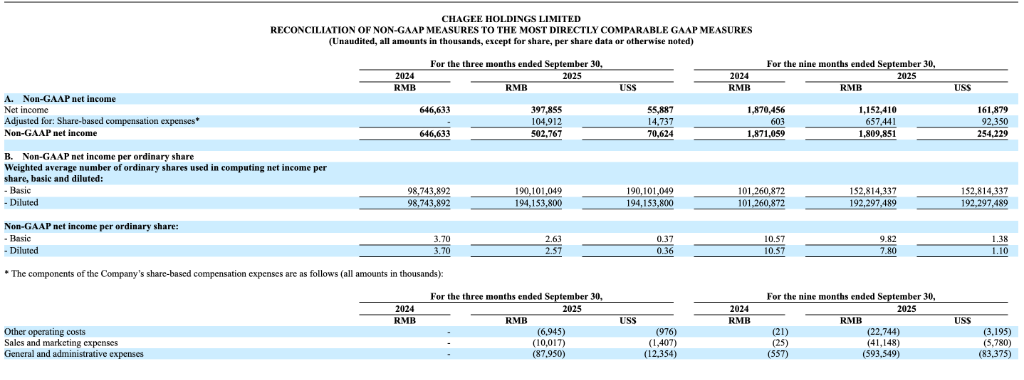
11月28日,霸王茶姬发布2025年第三季度财报。财报数据显示,尽管公司在运营层面表现亮眼,会员数量同比增长超30%,门店总数同比增长26%,但 其营收与利润均出现下滑。与此同时,大中华区单店盈利能力恶化,大中华区单店月均GMV同比降28.3%。 营收利润双降,利润率承压 公司本季度财报呈现收入与利润双降。总营收为32.08亿元人民币,同比下滑9.4%,显示其整体增长动能有所放缓。 更值得关注的是盈利能力的弱化,营业利润为4.54亿元,利润率从去年同期的22.4%大幅收窄至14.2%;GAAP净利润也降至3.98亿元,净利润率仅为 12.4%,明显低于去年同期的18.3%。公司在营收规模收缩的同时,利润端的压力更为突出。 从业务结构来看,在国内市场,加盟业务收入下降14.8%,主要归因于国内外卖平台"补贴竞争加剧"导致的销量下滑。 | CHAGEE HOLDINGS LIMITED | | | | | | | | --- | --- | --- | --- | --- | --- | --- | | RECONCILIATION OF NON-GAAP MEASURES TO THE MOST DIRECTL ...

美股前瞻 | CME期货交易暂停,“黑五”开启购物季
智通财经网· 2025-11-28 12:14
Group 1: Market Overview - CME Group suspended trading due to cooling issues at CyrusOne data center, affecting stock index futures [1] - Major ETFs showed pre-market gains: SPY +0.26%, QQQ +0.42%, DIA +0.11% [1] - European indices showed mixed performance: DAX down 0.03%, FTSE 100 up 0.11%, CAC 40 up 0.10%, Euro Stoxx 50 down 0.02% [2][3] Group 2: Retail Sector Insights - Black Friday marks the start of the holiday shopping season, with NRF predicting 186.9 million shoppers, a record high [4] - Expected sales for November and December to exceed $1 trillion, but growth forecasted to slow to 3.7%-4.2% from last year's 4.8% [4] - Average consumer spending projected at $890.49 [4] Group 3: Employment and Economic Policies - Trump announced strict immigration policies, potentially tightening labor market supply amid weak non-farm employment data [5] - Goldman Sachs warned of a softening labor market, with WARN claims at the highest level since 2016, indicating rising layoffs in various sectors [6] Group 4: Cryptocurrency Market Dynamics - Recent volatility in the cryptocurrency market has negatively impacted publicly traded companies holding Bitcoin, leading to significant stock price declines [7] - At least 15 Bitcoin treasury companies have seen their stock prices fall below net asset value of their tokens [7] - Standard Chartered predicts accelerated consolidation in the digital asset treasury sector [7] Group 5: Corporate Developments - Jefferies Group under investigation by SEC regarding disclosures related to bankrupt First Brands [9] - Bawang Tea reported Q3 results with global GMV of 7.93 billion yuan, net income of 3.208 billion yuan, and a 75.3% increase in overseas GMV [10] - Apple faces potential scrutiny under EU's Digital Markets Act for its advertising and mapping services [11] Group 6: Investment Trends - Bridgewater's recent investment in CoreWeave raises interest despite warnings of an AI bubble [12] - OpenAI is in talks for a $38 billion loan to expand infrastructure, highlighting the competitive landscape in AI [11]


Chagee(CHA) - 2025 Q3 - Earnings Call Presentation
2025-11-28 12:00
Financial Performance - Total net revenues reached RMB3,208.3 million[17] in 2025Q3, compared to RMB1,444 million[52] in 2023Q3 and RMB3,541 million[52] in 2024Q3 - Non-GAAP net income was RMB502.8 million[18] in 2025Q3, versus RMB306 million[55] in 2023Q3 and RMB503 million[55] in 2024Q3 - As of September 30, 2025, cash and cash equivalents, restricted cash, and time deposits amounted to RMB9,142 million[74] - Net cash provided by operating activities for the three months ended September 30, 2025, was RMB456 million[74] Store Expansion - The company's global teahouse footprint reached 7,338 teahouses[19] by the end of 2025Q3 - There was a net increase of 300 teahouses[19] (QoQ) - Teahouses in Greater China increased by 246[23] (QoQ), while those outside Greater China increased by 54[23] (QoQ) - Expansion included new markets, with 8 teahouses in Vietnam[23] and 3 in the Philippines[23] Customer Engagement - Cumulative registered members reached 222.0 million[37] as of September 30, 2025, representing a 36.7%[36] YoY increase and a 15.0 million[36] net increase QoQ - Third-party delivery platform GMV mix was 57.8%[36] for the three months ended September 30, 2025 Revenue Breakdown - In 2025Q3, franchised teahouses contributed RMB2,812 million[65] to total net revenues, while company-owned teahouses contributed RMB397 million[65]
霸王茶姬发布三季度财报 海外GMV大涨超75%
Ge Long Hui· 2025-11-28 11:52
Core Insights - Bawang Chaji (NASDAQ: CHA) reported its Q3 2025 financial results, showing a total GMV of 7.93 billion yuan and net revenue of 3.21 billion yuan, with adjusted net profit reaching 503 million yuan [1] - The company has achieved profitability for 11 consecutive quarters and has a healthy cash flow with total cash and equivalents amounting to 9.14 billion yuan and no interest-bearing debt [1] - The board announced a special cash dividend totaling approximately 177 million USD, with each ordinary share or ADS receiving 0.92 USD [1] International Business Growth - Bawang Chaji's overseas GMV exceeded 300 million yuan, marking a year-on-year increase of 75.3% and a quarter-on-quarter growth of 27.7%, becoming a significant growth engine for the company [2][3] - The company entered the Philippines and Vietnam markets during Q3, with overseas store count reaching 262 [3] - In Malaysia and Singapore, the company launched popular new products and activities, achieving record sales figures [3][5] Domestic Market Strategy - In response to market fluctuations, Bawang Chaji is focusing on "high-quality development" and has maintained membership growth to 222 million, a year-on-year increase of 36.7% [6] - The company opened the largest "super tea warehouse" in Hong Kong, enhancing customer experience with innovative tea preparation methods [6] - Product innovation includes the launch of regionally popular items, such as "Dian Olive" vitality tea and limited-edition products tailored to local tastes [6]
霸王茶姬(CHA.US)发布三季度财报 海外GMV大涨超75%
智通财经网· 2025-11-28 11:21
Core Insights - Bawang Chaji (CHA.US) reported its Q3 2025 financial results, showing a total GMV of 7.93 billion yuan and net revenue of 3.21 billion yuan, with adjusted net profit of 503 million yuan [1] - The company has achieved profitability for 11 consecutive quarters and has a healthy cash flow with total cash and equivalents amounting to 9.14 billion yuan and no interest-bearing debt [1] - The board declared a special cash dividend of approximately 177 million USD, equating to 0.92 USD per share for shareholders [1] Group 1: Overseas Business Growth - Bawang Chaji's overseas GMV exceeded 300 million yuan, marking a year-on-year increase of 75.3% and a quarter-on-quarter growth of 27.7%, becoming a significant growth engine for the company [2] - The company entered the Philippines and Vietnam markets during Q3, with overseas store count reaching 262 [2] - In Malaysia, Singapore, and Thailand, Bawang Chaji launched popular new products and activities, achieving record sales in these regions [2] Group 2: Membership and Domestic Expansion - The number of registered members reached 222 million, reflecting a year-on-year growth of 36.7%, despite a competitive e-commerce environment [5] - Bawang Chaji opened the largest "Super Tea Warehouse" in Hong Kong, enhancing customer experience with innovative tea-making methods [5] - The company introduced various regional limited products that gained popularity, showcasing its commitment to product innovation [5]

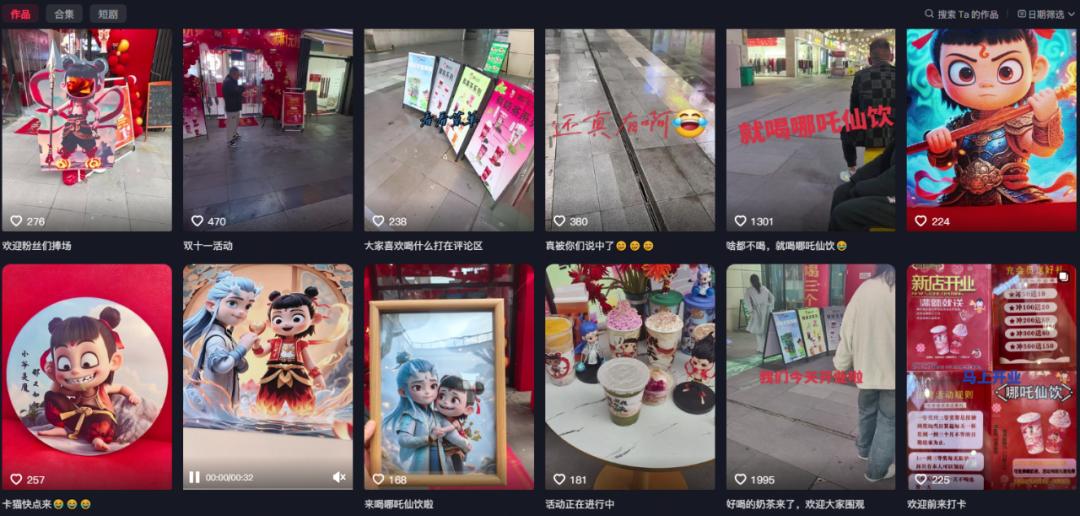
一杯哪吒仙饮,踹碎多少县城老板创业梦?
3 6 Ke· 2025-11-28 10:48
Core Viewpoint - The rise of "Nezha Xianyin" as a trending beverage brand highlights the market's inherent flaws, including spontaneity, blindness, and lag, which can lead to misguided entrepreneurial ventures [1][5]. Group 1: Market Dynamics - The concept of "Nezha Xianyin" reflects the impulsive nature of market behavior, where individual decision-making is often influenced by short-term trends and misleading signals [5]. - Entrepreneurs misjudged the commercial potential of the "Nezha" IP, leading to blind investments in the brand without adequate market analysis [5][11]. - The market's adjustment to consumer demand is often delayed, resulting in a mismatch between supply and demand, as seen with the fluctuating interest in "Nezha" merchandise [5][11]. Group 2: Entrepreneurial Challenges - The owner of "Nezha Xianyin" faced significant public scrutiny and skepticism regarding the viability of the business, which was exacerbated by the online community's reactions [4][8]. - Despite the challenges, the owner maintained a defiant stance, emphasizing product quality and resilience against criticism [4][5]. - The brand's trajectory has become a symbol of impulsive entrepreneurship, attracting both ridicule and support from the online community [4][8]. Group 3: Franchise and Investment Issues - The company "Nezha Xianyin (Shandong) Beverage Group Co., Ltd." was dissolved in December 2024, raising concerns about the legitimacy of its franchise operations [7]. - The current franchise operator, "Hangzhou Fenghuolun Catering Management Co., Ltd.," has reported zero employees in 2024, indicating potential operational issues [7]. - The franchise model has been linked to broader issues in the tea beverage industry, where misleading recruitment practices have been identified [9][11]. Group 4: Consumer Behavior - The brand has gained traction among younger consumers, who view it as a social experience, contributing to its popularity despite underlying business challenges [11][13]. - The phenomenon of "Nezha Xianyin" illustrates how social media can drive consumer interest and foot traffic, even for brands with questionable business models [11][13].