
铁路建设

Search documents
宿连航道整治配套新长铁路改建工程正式通车
Xin Hua Wang· 2025-09-23 11:37
Group 1 - The completion of the new Chang Railway reconstruction project, undertaken by China Railway 24th Bureau, marks a significant milestone for the Su-Lian waterway, facilitating its full navigation by the end of October [1] - The Su-Lian waterway project spans approximately 124 kilometers, connecting the Grand Canal in Suqian to the Lianyungang Port, and is crucial for enhancing the comprehensive transportation system in Northern Jiangsu [1][2] - The reconstruction involved complex engineering tasks, including the relocation of railway bridges and the integration of various construction specialties such as tracks, bridges, and communication systems [1] Group 2 - The Su-Lian waterway serves as a vital transportation link for the inland regions of Northern Jiangsu, connecting to Lianyungang Port and facilitating sea-river intermodal transport [2] - Once fully operational, the waterway is expected to become a key channel for material transportation, promoting economic development in the coastal and inland areas [2]
津潍高铁滨州站德大铁路站场第一阶段开通使用
Qi Lu Wan Bao· 2025-09-23 08:29
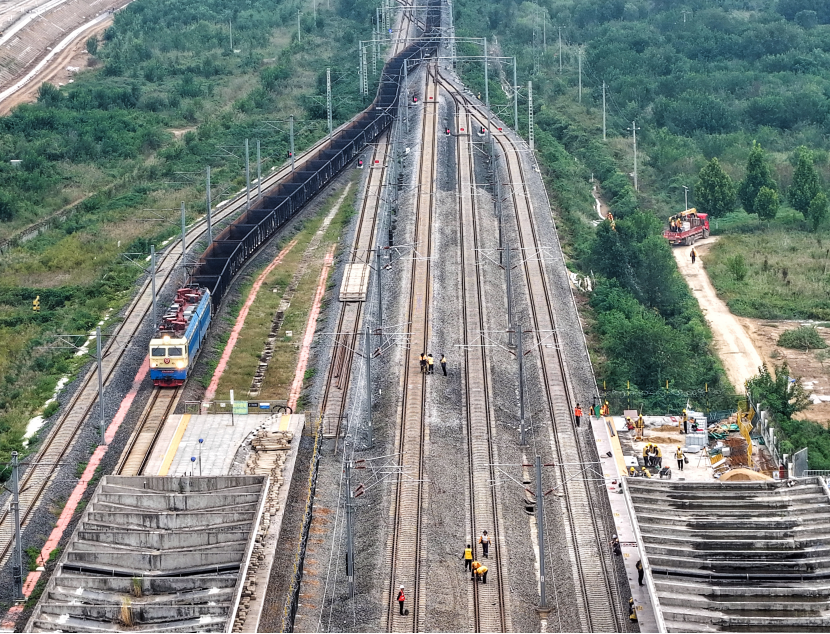
齐鲁晚报·齐鲁壹点记者 王瑞超 实习生 李文慧 通讯员 蒋昊 史瑞晋 为减少对德大铁路的影响,此前施工封闭德大铁路站场Ⅰ、Ⅱ、III、Ⅳ股线路,Ⅴ、Ⅵ股线路保持正常运行。德大铁 路站场第一阶段开通后,将启用Ⅰ、Ⅱ、Ⅲ股线路及接触网设备,同时封闭Ⅳ、Ⅴ、Ⅵ股线路,在保证安全的前提 下,最大可能保障德大铁路客运、货运的正常运营。面对营业线施工和复杂的作业环境,中铁十局项目建设者科学组 织施工生产,规范各项作业流程,与建设、监理等单位紧密配合,确保施工进度和安全质量有序可控。 滨州站改扩建完成后,将成为德大线和津潍、济滨以及远期规划的滨淄临3条高铁共4条线路的交会站,进一步优化升 级北京市、天津市与山东半岛、长三角区域交通联系,进一步支撑和引领京津冀协同发展,在推进区域资源共享、实 现区域协同发展等方面发挥重要作用。 9月23日上午7时,新建天津至潍坊高速铁路滨州站德大铁路站场第一阶段顺利开通,为确保津潍高铁滨州站整体开通 按下加速键。 德大铁路起自德州市黄河涯站,止于潍坊市大家洼站。而德大铁路滨州站位于山东省滨州市滨城区,于2015年开通 运,并于2024年启动站房改扩建工程。工程整体采用线侧+高架式站型,对既有 ...

答卷“十四五” 央企惠民生 | 筑路织网百业兴 央企锻造现代化交通体系新动脉
Zhong Guo Zheng Quan Bao - Zhong Zheng Wang· 2025-09-22 23:25
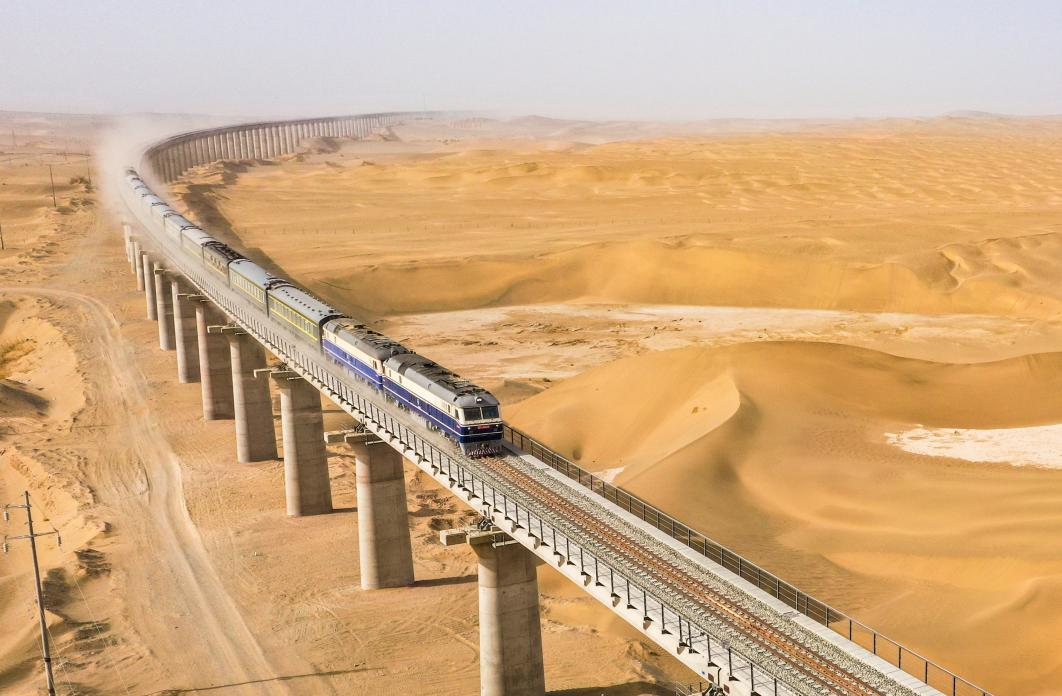
Core Viewpoint - The construction of major transportation projects, such as the He-Ruo Railway, is significantly enhancing regional economic development and improving connectivity in China, particularly in remote areas like Xinjiang [1][5]. Group 1: Transportation Infrastructure Development - The He-Ruo Railway, built by China Railway Construction Corporation, has transformed the previously inaccessible Taklamakan Desert region into a vital economic corridor, ending the history of no train access for five counties [1]. - The railway construction faced extreme challenges, with 460 kilometers traversing a desert with no water, electricity, or roads, showcasing the engineering capabilities of state-owned enterprises [1][2]. - The introduction of innovative construction techniques, such as the "bridge instead of road" approach, has significantly reduced transportation distances by over 1,000 kilometers [2]. Group 2: Investment and Economic Impact - From 2021 to 2024, state-owned enterprises (SOEs) completed fixed asset investments totaling 19 trillion yuan, with an average annual growth rate of 6.3% [5]. - The opening of the He-Ruo Railway has reduced transportation costs for local products by over 20%, boosting tourism and local economies [15]. - The completion of the Changtai Yangtze River Bridge has drastically cut travel time between Changzhou and Taizhou from 1 hour and 20 minutes to approximately 20 minutes, enhancing local connectivity [4][15]. Group 3: Technological Innovation - SOEs are leading in technological advancements, with the introduction of the world's largest diameter shield tunneling machine and innovations in high-speed rail technology, such as the development of high-speed train wheels that improve performance [9][11]. - The use of advanced construction methods and equipment has resulted in significant time savings in infrastructure projects, with some urban subway construction periods reduced by 1 to 2 years [9][11]. - SOEs have been involved in 22 major national technology projects, contributing to the development of key products in the manufacturing sector [13]. Group 4: Future Outlook - The investment focus of SOEs is expected to shift towards high-quality development, optimizing multi-modal transportation structures, and integrating smart and green technologies into infrastructure [7]. - The ongoing development of transportation infrastructure is anticipated to further enhance economic opportunities and improve the quality of life for citizens [17].




浙江两条高铁建设迎来新节点
Mei Ri Shang Bao· 2025-09-22 22:25
Group 1 - The Ningbo-Zhoushan Railway's Jintang underwater tunnel has achieved a significant milestone, with the domestic shield machine "Yongzhou" surpassing 2,470 meters in excavation, marking over half of the progress on the Ningbo side [1][2] - The Jintang underwater tunnel is a key project of the Ningbo-Zhoushan Railway, stretching 16.18 kilometers, with an underwater section of 11.21 kilometers, making it the longest underwater high-speed railway tunnel in the world [2] - The completion of the Jintang underwater tunnel will connect Zhoushan, the only city in the Yangtze River Delta without a railway, to the national railway network, significantly reducing travel time from Hangzhou to Zhoushan to just over one hour [2] Group 2 - The Hangzhou-Qiuzhou High-Speed Railway has initiated contact network hot sliding tests, paving the way for subsequent joint debugging and testing [3] - The Hangzhou-Qiuzhou High-Speed Railway spans approximately 131 kilometers with a design speed of 350 kilometers per hour, featuring six stations and a bridge-tunnel ratio of 78.7% [3] - Once operational, the Hangzhou-Qiuzhou High-Speed Railway will enhance regional transportation and economic integration, contributing to the high-quality development of Zhejiang Province and the Yangtze River Delta [3]
筑路织网百业兴 央企锻造现代化交通体系新动脉
Zhong Guo Zheng Quan Bao· 2025-09-22 20:15
Core Viewpoint - The construction of major transportation projects by central enterprises in China is significantly enhancing regional economic development and improving the quality of life for citizens, showcasing the strength and responsibility of these enterprises in building a transportation powerhouse [1][3]. Group 1: Transportation Infrastructure Development - The completion of the He-Ruo Railway has transformed the previously inaccessible Taklamakan Desert area into a vital economic corridor, connecting five counties and facilitating economic growth [1]. - Central enterprises have successfully tackled the challenges of building infrastructure in harsh environments, exemplified by the He-Ruo Railway's construction through 460 kilometers of desert [2]. - The G0711 line's Tian Shan Victory Tunnel, the longest highway tunnel in the world, is set to enhance connectivity between northern and southern Xinjiang, reducing travel time significantly [2]. Group 2: Technological Innovation in Construction - The He-Ruo Railway project utilized innovative techniques such as "bridge instead of road" and introduced a train monitoring system to ensure safety and efficiency during construction [2]. - The use of advanced construction methods, such as the "three tunnels + four shafts" technique for the Tian Shan tunnel, has led to significant reductions in construction time [2]. - The development of the "Jinghua" shield machine has enabled the completion of the longest shield tunnel in China, showcasing advancements in domestic technology [4]. Group 3: Economic Impact and Benefits - The opening of the He-Ruo Railway has reduced transportation costs for local products by over 20%, boosting tourism and local economies [6]. - The Changtai Yangtze River Bridge has drastically cut travel time for residents, enhancing their daily commuting experience and reducing fuel costs [6]. - The establishment of the green smart port in Peru has shortened shipping times and reduced logistics costs by over 20%, facilitating trade between China and Latin America [6]. Group 4: Investment and Future Outlook - From 2021 to 2024, central enterprises are projected to invest 19 trillion yuan in fixed assets, with an annual growth rate of 6.3%, indicating a strong commitment to transportation infrastructure [3]. - Future investments will focus on high-quality development, optimizing transportation modes, and integrating smart and green technologies into infrastructure [3]. - Central enterprises are expected to lead in key technological advancements, contributing to the construction of a robust transportation network and supporting national strategic goals [5].
高寒高铁供电系统的“施工标杆”,树立起来了!
中国能源报· 2025-09-22 12:34
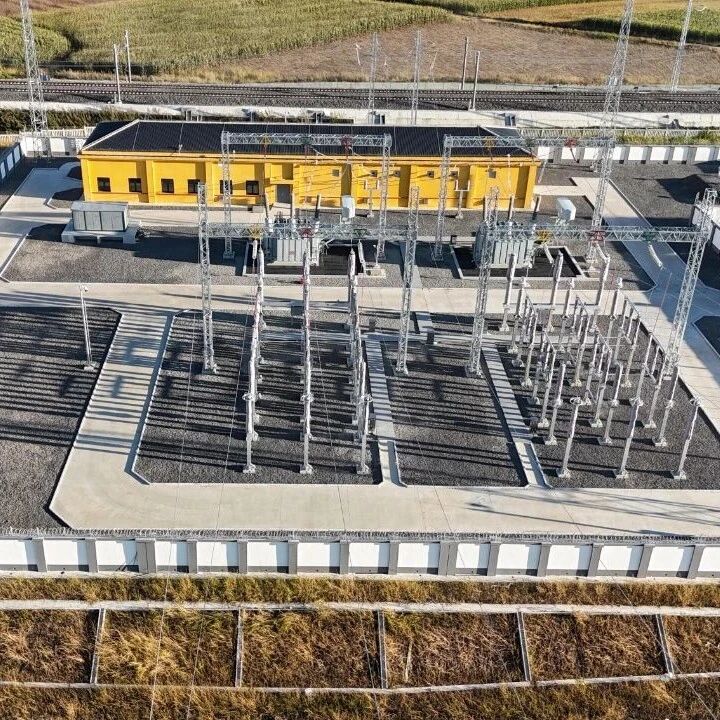
来源:科技日报 哈伊高铁铁伊段供电专业首件工程顺利通过评估,为全线树立了高寒高铁供电系统的"施工标杆"。 End 欢迎分享给你的朋友! 出品 | 中国能源报(c ne ne rgy) 编辑丨赵方婷 在两天的严谨检查和评审中,评估组依据国家铁路技术规范与行业标准,对电力、变电及接触网首件工程的施工工艺、设备材料质量、 标准化作业及创新成果进行了全面验收评估。评估组一致认为,哈伊高铁铁伊段供电专业首件工程各项指标均符合设计及规范要求,达 到了"样板引路、示范引领"的预期目标,高质量完成了施工任务,同意通过首件评估。 穿越高寒地区多年冻土区的哈伊高铁是我国目前在建的最北端高速铁路,预计2026年建成通车。届时,哈尔滨至伊春旅客列车运行时 间将由现在的7小时左右缩短至2小时左右,为东北振兴、激活区域发展动能铺就快车道。 9月20日,由中铁电气化局承建的哈伊高铁铁伊段供电专业首件工程顺利通过评估,为全线树立了高寒高铁供电系统的"施工标杆",更 为我国冻土区铁路建设积累重要技术参数。 ...
世界最长海底高铁隧道新进展:“甬舟号”盾构机掘进过半
Zhong Guo Xin Wen Wang· 2025-09-22 09:05
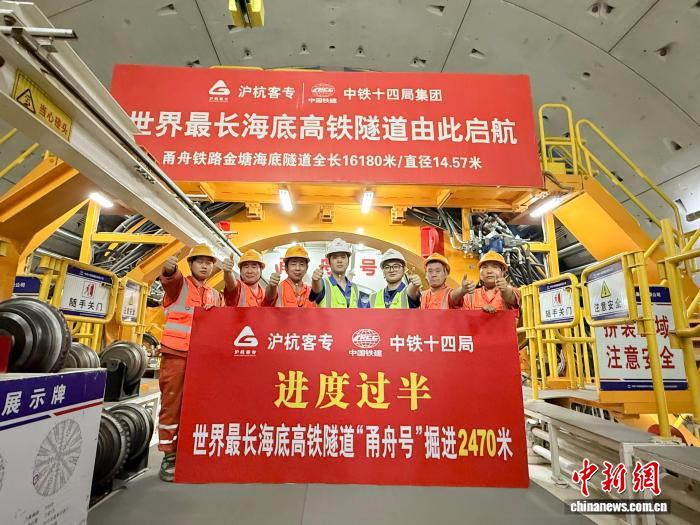
Core Insights - The "Yongzhou" shield machine has achieved over half of its tunneling progress for the world's longest underwater high-speed rail tunnel, marking a significant milestone in the construction of the Ningbo-Zhoushan railway [1][3]. Group 1: Project Overview - The Jintang underwater tunnel is a key project of the Yongzhou railway, stretching 16.18 kilometers, with the shield section measuring 11.21 kilometers [3]. - The tunnel employs two shield machines, "Yongzhou" and "Dinghai," which are advancing simultaneously from both Ningbo and Zhoushan sides [3]. Group 2: Technical Challenges - The geological conditions along the Jintang underwater tunnel are extremely complex, requiring the crossing of various risk sources such as sea dikes, docks, and shipping lanes [4]. - The maximum depth of the underwater section reaches 78 meters, with a maximum water pressure of 8.4 bar, equivalent to nearly 1 ton of weight on an adult's palm [4]. - The Ningbo side has experienced frequent geological changes, necessitating high-pressure tool changes, with the "Yongzhou" machine completing 12 geological transitions and changing tools over 2400 times [4]. Group 3: Strategic Importance - The Yongzhou railway is a major project in China's Medium- and Long-term Railway Network Plan (2016-2030), with a total length of 76.4 kilometers and a design speed of 250 kilometers per hour [4]. - Once operational, the project will connect Zhoushan, the only city in the Yangtze River Delta without a railway, to the national railway network, significantly enhancing regional integration and development [4].
长赣铁路湖南段实质性动工
Zheng Quan Shi Bao Wang· 2025-09-22 06:15
Core Viewpoint - The construction of the Changgan Railway's Hunan section has officially commenced with the successful installation of the first pile for the Huangxing Town Airport Bridge, marking a significant milestone for the project [1] Group 1: Project Overview - The Changgan Railway is part of the national "eight vertical and eight horizontal" high-speed railway network, specifically the Chongqing-Changsha-Xiamen corridor [1] - The total length of the railway is approximately 429.4 kilometers, with a designed speed of 350 kilometers per hour [1] - The railway will include 11 stations along its route [1]
杭衢高铁启动热滑试验 将进入联调联试阶段
Hang Zhou Ri Bao· 2025-09-22 02:11
Core Points - The Hangzhou-Quchi High-speed Railway has commenced its contact network hot sliding test, which is a crucial step before the joint debugging and testing phase [2] - The hot sliding test is scheduled to conclude by September 23, 2 AM, and involves testing the relationship between the contact network and the pantograph under live conditions [2] - The railway spans approximately 131 kilometers with a design speed of 350 km/h and includes six stations, contributing significantly to regional economic integration and development [3] Group 1 - The hot sliding test is a key procedure for electric railway systems, ensuring that equipment meets the conditions for subsequent joint debugging and testing [2] - The test will be conducted at speeds not exceeding 80 km/h, focusing on precise measurements of parameters such as the pantograph's sliding relationship with the contact network [2] - A leadership group has been established to oversee the hot sliding test, ensuring safety and technical support throughout the process [2] Group 2 - The Hangzhou-Quchi High-speed Railway connects key areas in the Yangtze River Delta, enhancing transportation efficiency and serving as an economic link between regions [3] - The railway's construction will optimize the regional railway network structure and support high-quality development in Zhejiang province [3] - The bridge-to-tunnel ratio of the railway is 78.7%, indicating a significant investment in infrastructure to facilitate high-speed travel [3]
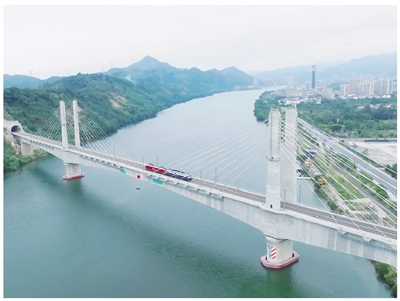
杭衢高铁启动热滑试验
Xin Hua Wang· 2025-09-22 01:44
Core Points - The Hangzhou-Quchi High-speed Railway has commenced its hot sliding test, which is a crucial step before the joint debugging and testing phase [1] - The hot sliding test is scheduled to conclude on September 23, with trains operating at speeds not exceeding 80 kilometers per hour to assess the relationship between the contact network and the pantograph [1] - The project is expected to be ready for operation by December this year after completing the joint debugging and testing phase [1] Summary by Sections Project Overview - The Hangzhou-Quchi High-speed Railway spans approximately 131 kilometers, starting from the Yangcunqiao section of the Hangzhou-Changsha High-speed Railway and ending at Jiangshan Station [2] - The railway is designed for a maximum speed of 350 kilometers per hour and includes six stations: Jiande, Jiande South, Longyou North, Qujiang (reserved), Quzhou West, and Jiangshan [2] - The bridge-to-tunnel ratio of the railway is 78.7% [2] Testing and Management - A leadership group for the hot sliding test has been established, involving multiple organizations to ensure the test's success [1] - A detailed test plan and emergency response measures have been prepared to manage train operations, data collection, safety, and emergency handling during the test [1]