
智能科技

Search documents
无人配送车迈向规模化 截至去年底已有超6000台投用
Xin Hua Wang· 2025-10-13 23:57
Core Viewpoint - The rapid adoption of unmanned delivery vehicles is transforming the logistics industry, enhancing efficiency, reducing costs, and expanding operational capabilities across various scenarios [1][4][6]. Group 1: Industry Transformation - Unmanned delivery vehicles have been deployed in over 6,000 units, delivering over 100 million orders across various scenarios by the end of last year [1]. - The integration of unmanned vehicles in logistics is leading to significant cost reductions, with operational costs potentially halved compared to manual delivery [4]. - The collaboration between unmanned vehicles and human couriers is improving delivery speed and efficiency, with average monthly order deliveries by couriers increasing by 10% compared to last year [4]. Group 2: Technological and Operational Developments - The cost of manufacturing unmanned delivery vehicles has decreased significantly, from 300,000 to 500,000 yuan to below 100,000 yuan, making them more accessible for companies [6]. - The operational framework for unmanned vehicles is evolving, with companies like Meituan and Cainiao implementing innovative delivery models that combine human and unmanned resources [3][4]. - The number of unmanned delivery vehicles in operation is rapidly increasing, with Zhongtong Express operating over 2,000 vehicles daily, delivering more than 200,000 packages [5]. Group 3: Future Prospects and Challenges - The future of unmanned delivery vehicles includes expanding their roles from last-mile delivery to broader logistics functions, integrating with new business models and technologies [7]. - There is a need for a more unified policy framework to support the growth of unmanned delivery vehicles, as current regulations vary significantly across regions [8]. - Continuous technological advancements are necessary to enhance the efficiency and safety of unmanned delivery vehicles, addressing challenges such as extreme weather and unexpected situations [8].
城乡融合、协同创新双提速
Xin Hua Ri Bao· 2025-10-13 22:40
Core Insights - The article highlights the transformation of the Yangtze River Delta region into a hotspot for urban-rural integration and collaborative innovation, driven by the removal of administrative barriers and the enhancement of institutional frameworks [1][2][4]. Group 1: Urban-Rural Integration - The establishment of the "Two Provinces and One Street" police service in the border area between Anhui and Jiangsu has become a model for cross-province integration and efficient governance [2]. - The collaboration between Shanghai and Zhejiang in the "Mingyue Shantang" scenic area has unified architectural styles and shared tourism resources, effectively eliminating provincial boundaries for visitors [2][3]. - The integration efforts have led to significant improvements in development levels in neighboring areas, as seen in the collaboration between Shanghai's Jinshan District and Zhejiang's Pinghu City [3]. Group 2: Innovation and Collaboration - The relocation of Huizhi Kang (Zhejiang) Intelligent Technology Co., Ltd. from Shanghai to Huzhou demonstrates the benefits of breaking down administrative barriers, facilitating the flow of talent and technology [4]. - The establishment of the "Yangtze River Delta Language Computing Innovation Alliance" aims to tackle challenges in voice recognition technology, showcasing successful collaboration among various institutions [4]. - The launch of the first local legislation promoting collaborative technological innovation in the Yangtze River Delta marks a significant step towards institutional innovation and comprehensive collaboration [5]. Group 3: High-Quality Development - The agricultural service company in Jiaxing has cultivated 30,000 acres of farmland in the Yangtze River Delta, leveraging technological advancements to enhance productivity [6]. - The integration of advanced technologies such as 5G in agricultural monitoring is exemplified by the smart monitoring stations in Suzhou, which optimize rice harvesting [6]. - Major innovations, including the world's first 8-inch silicon-based gallium nitride production line and the first domestically produced 200kV field emission transmission electron microscope, highlight the new momentum generated by urban-rural integration and collaborative innovation [6].
国盛智科现4笔大宗交易 合计成交28.72万股
Zheng Quan Shi Bao Wang· 2025-10-13 14:09
Group 1 - The core point of the article highlights that Guosheng Zhike experienced significant trading activity on October 13, with a total of 287,200 shares traded, amounting to 8.0012 million yuan, at a price of 27.86 yuan, which represents a discount of 9.98% compared to the closing price of the day [2][3] - Institutional specialized seats participated in all four transactions, resulting in a net purchase of 8.0012 million yuan [2] - Over the past three months, Guosheng Zhike has recorded a total of 13 block trades, with a cumulative transaction amount of 31.8508 million yuan [2] Group 2 - The closing price of Guosheng Zhike on the day was 30.95 yuan, reflecting a decline of 2.06%, with a turnover rate of 1.66% and a total transaction amount of 66.9934 million yuan [2] - The stock has seen a net outflow of 2.1525 million yuan in main funds throughout the day, and over the past five days, it has decreased by 1.43% with a total net outflow of 4.5155 million yuan [2] - The latest margin financing balance for the stock is 11 million yuan, which has decreased by 89,300 yuan over the past five days, representing a decline of 0.08% [3]


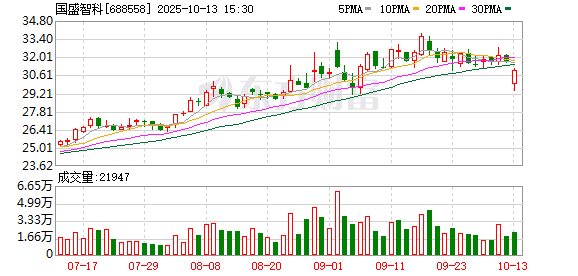
城乡融合、协同创新双提速——长三角一体化涌动发展新活力
Xin Hua She· 2025-10-13 13:51
Core Insights - The Yangtze River Delta is transforming into a hotspot for urban-rural integration and collaborative innovation, driven by the removal of administrative barriers and improved systems [1][2][4] Group 1: Urban-Rural Integration - The establishment of the "Two Provinces and One Street" police station has facilitated cross-province governance, exemplified by a resident obtaining a residence permit across provincial lines [2] - The "Mingyue Shantang" scenic area project has unified architectural styles and shared tourism resources, enhancing cross-border tourism experiences [2] - Urban-rural integration is creating development benefits and reducing disparities, as seen in the collaboration between Shanghai's Jinshan District and Zhejiang's Pinghu City [3] Group 2: Innovation and Collaboration - The relocation of Huizhi Kang (Zhejiang) Intelligent Technology Co., Ltd. to the Yangtze River Delta's talent innovation base highlights the benefits of breaking administrative barriers for talent and technology flow [4] - The establishment of the "Yangtze River Delta Language Computing Innovation Alliance" aims to tackle challenges in voice recognition technology, showcasing collaborative innovation among regional entities [4] - The Fudan-Opp Global Smart Lighting Joint Laboratory is advancing research on adaptive lighting environments, demonstrating the integration of academic and industrial resources [5] Group 3: High-Quality Development - The agricultural service company in Jiaxing is leveraging technology to provide comprehensive farming services across the Yangtze River Delta, having cultivated 30,000 acres of farmland [6] - Advanced technologies like 5G are being utilized for real-time monitoring of agricultural conditions, enhancing productivity and product quality [6] - Significant innovations, such as the world's first 8-inch silicon-based gallium nitride production line, are being implemented in the Yangtze River Delta, reflecting the region's growth in urban-rural integration and collaborative innovation [7]
决胜“十四五” 打好收官战丨城乡融合、协同创新双提速——长三角一体化涌动发展新活力
Xin Hua She· 2025-10-13 13:47
Core Viewpoint - The article highlights the rapid development of urban-rural integration and collaborative innovation in the Yangtze River Delta, emphasizing the breaking down of administrative barriers and the enhancement of regional cooperation as key drivers for high-quality development [1][6]. Group 1: Urban-Rural Integration - The Yangtze River Delta is transforming from a "non-governed" neighboring area into a hotspot for urban-rural integration, with significant improvements in governance and regional development levels [2][3]. - The establishment of cross-province governance models, such as the "Two Provinces and One Street" police service, exemplifies effective integration and service delivery across administrative boundaries [2]. - The collaboration between Shanghai and Zhejiang in tourism and commerce has led to a seamless experience for visitors, showcasing the benefits of administrative integration [2]. Group 2: Collaborative Innovation - The removal of administrative barriers has facilitated the flow of talent and technology, as seen in the case of Huizhi Kang (Zhejiang) Intelligent Technology Co., which moved its R&D operations closer to manufacturing bases [4]. - The establishment of the "Yangtze River Delta Language Computing Innovation Alliance" demonstrates successful collaborative efforts in tackling complex technological challenges, resulting in practical applications in the automotive industry [4]. - Legislative measures, such as the recent approval of regulations promoting collaborative technological innovation, signify a commitment to fostering an integrated innovation ecosystem across the region [6]. Group 3: High-Quality Development - Agricultural enterprises in the region are leveraging technology to enhance productivity, with significant areas of farmland being cultivated, showcasing the integration of technology in traditional sectors [7][8]. - The use of advanced monitoring technologies in agriculture, such as 5G, is enhancing crop management and quality, exemplified by the premium pricing of local rice products [8]. - Major innovations, including the production lines for advanced semiconductor and robotics technologies, highlight the new momentum generated by urban-rural integration and collaborative innovation [8].
决胜“十四五” 打好收官战|城乡融合、协同创新双提速——长三角一体化涌动发展新活力
Xin Hua She· 2025-10-13 13:45
Core Viewpoint - The integration of urban and rural areas, along with collaborative innovation, is accelerating in the Yangtze River Delta, driving high-quality development through the removal of administrative barriers and the enhancement of institutional frameworks [1][6]. Group 1: Urban-Rural Integration - The Yangtze River Delta is transforming previously neglected neighboring areas into hotspots for urban-rural integration, exemplified by the establishment of cross-province governance models like the "Two Provinces and One Street" police service [2][3]. - The collaboration between Anhui and Jiangsu provinces has led to significant improvements in development levels through talent exchange and regional coordination mechanisms [2][3]. - The integration has also facilitated seamless travel and commerce across provincial borders, enhancing the overall experience for residents and tourists alike [2][3]. Group 2: Collaborative Innovation - The removal of administrative barriers has enabled companies like Huizhi Kang to relocate and benefit from the flow of talent, technology, and manufacturing resources within the Yangtze River Delta [4][5]. - The establishment of innovation alliances, such as the "Yangtze River Delta Language Computing Innovation Alliance," is fostering technological advancements in voice recognition and other fields, with practical applications in the automotive industry [4][5]. - Legislative measures, such as the recent collaborative laws passed by local governments, aim to promote coordinated technological innovation across the region [6]. Group 3: High-Quality Development - Agricultural enterprises in the region are leveraging technology to provide comprehensive services, with significant land cultivated across the Yangtze River Delta, showcasing the synergy between technological innovation and urban-rural integration [7]. - Advanced monitoring systems for agriculture, utilizing 5G technology, are enhancing productivity and quality, exemplified by the premium pricing of local rice varieties [7]. - Major innovations, including the world's first 8-inch silicon-based gallium nitride production line and advanced robotics, are being realized in the Yangtze River Delta, highlighting the new momentum generated by accelerated urban-rural integration and collaborative innovation [7].
2025人工智能年度评选启动!3大维度5类奖项,正在寻找AI+时代领航者
量子位· 2025-10-13 08:47
为了让更多从业者感受智能浪潮的跃迁,也为了给予更多同行同路人掌声与鼓舞,我们将正式启动 「2025人工智能年度榜单」评选报名 。 这是量子位人工智能年度榜单的 第8年 。八年来,我们见证了技术的突破与落地,产业的融合与重塑,也见证了一批又一批推动时代前行的 企业、人物与产品。 在人工智能重新定义一切的时代里,智能技术已不再是单一工具,而是产业与社会协同进化的驱动力。我们期待通过这场年度评选,去发现并 致敬那些真正引领变革、开拓边界的探索者与实践者。 本次评选将从 企业 、 产品 、 人物 三大维度,设立五类奖项。欢迎企业踊跃报名! 组委会 发自 凹非寺 量子位|公众号 QbitAI 让我们共同见证年度之星,点亮未来的方向。 企业榜 产品榜 人物榜 2025 人工智能年度 焦点人物 详细评选标准及报名方式如下。 2025 人工智能年度领航企业 2025 人工智能年度 领航企业 2025 人工智能年度 潜力创业公司 1、 业务能力 |市场占有率与营收规模,商业模式与盈利能力,客户数量及行业覆盖面,增长潜力与持续性等; 2、 技术能力 |科研实力与技术成果,研发投入比例,技术核心竞争力,创新案例与技术落地情况等; ...

道通科技(688208):三季度净利润持续高增 AI驱动数智化变革
Xin Lang Cai Jing· 2025-10-12 12:30
Core Insights - The company, Daotong Technology, expects a net profit attributable to shareholders of 710 million to 738 million yuan for the first nine months of 2025, representing a year-on-year increase of approximately 169 million to 197 million yuan, or a growth of 31.17% to 36.34% [1] - In the third quarter, the company achieved a net profit attributable to shareholders of 230 million to 258 million yuan, reflecting a year-on-year growth of 48.36% to 66.45% [1] - The significant performance increase is attributed to advancements in AI applications in the fields of diagnostics and charging solutions, including the development of AI-driven smart energy solutions and various AI Agents [1] Business Transformation - The company is undergoing a comprehensive transformation towards an AI-centric model, focusing on "industry large models" and "intelligent terminals/intelligent hubs/embodied intelligence" as key components of its business strategy [2] - The AI+ inspection business is collaborating with ecosystem partners to create a comprehensive smart solution in the inspection field, integrating "intelligent agents + platform + vertical domain models" [2] Financial Projections - The company has revised its profit forecasts, expecting revenues of 4.962 billion, 6.158 billion, and 7.513 billion yuan for 2025 to 2027, with net profits of 955 million, 1.242 billion, and 1.517 billion yuan respectively [2] - Corresponding price-to-earnings ratios are projected to be 27, 21, and 17 times for the same period [2]

太仓星途智能科技有限公司成立 注册资本50万人民币
Sou Hu Cai Jing· 2025-10-12 01:54
Core Insights - Recently, Taicang Xingtu Intelligent Technology Co., Ltd. was established with a registered capital of 500,000 RMB [1] - The company is involved in a wide range of activities including technology services, development, consulting, and manufacturing of intelligent devices [1] Company Overview - The legal representative of the company is Zhang Dan [1] - The registered capital is 500,000 RMB [1] Business Scope - The company’s business scope includes: - General projects: technology services, development, consulting, exchange, transfer, and promotion [1] - Manufacturing of intelligent basic equipment and wearable intelligent devices [1] - Development of artificial intelligence application software and electronic specialized equipment [1] - Research and development of bio-based materials and electronic specialized materials [1] - Sales of various products including wearable intelligent devices, bio-based materials, medical devices, and electronic products [1] - Advertising design and agency services [1]
内蒙古海泰飞行新科技有限公司成立 注册资本100万人民币
Sou Hu Cai Jing· 2025-10-12 00:22
Core Viewpoint - Inner Mongolia Haitai Flying New Technology Co., Ltd. has been established with a registered capital of 1 million RMB, focusing on various technology and agricultural services, including the manufacturing and sales of intelligent unmanned aerial vehicles [1] Company Overview - The company is legally represented by Wang Zanhai and has a registered capital of 1 million RMB [1] - The business scope includes technology services, development, consulting, and promotion, as well as agricultural machinery services and intelligent unmanned aerial vehicle manufacturing and sales [1] Business Activities - General projects include: - Technical services, development, consulting, and transfer - Agricultural machinery services - Manufacturing and sales of intelligent unmanned aerial vehicles - Business training (excluding certain licensed training) - Crop pest control services - Development of artificial intelligence basic software and platforms - Internet sales (excluding licensed products) - Information system integration services - Research and application services in IoT [1] Licensing and Regulatory Compliance - The company is authorized to conduct licensed activities such as: - Flight training - General aviation services - Surveying services - Civil aviation maintenance personnel training - Maintenance of civil aircraft - Training for civil aircraft pilots - These activities require approval from relevant authorities before commencement [1]