
消费金融

Search documents
快讯 | 美国IPO迎爆发周:创近四年新高,11家企业上市,8家IPO+3家SPAC齐发力
Sou Hu Cai Jing· 2025-09-16 06:29
Core Insights - The US IPO market experienced its busiest week since 2021 in early September 2025, with 11 companies going public, including 8 traditional IPOs and 3 SPACs, indicating a significant revival in market activity [1] Market Trends - A total of 16 companies filed for IPOs, comprising 10 traditional IPOs and 6 SPACs, reflecting a sustained increase in market confidence [1] - Notable IPO performances included Klarna raising $1.4 billion with a first-week gain of 7%, Figure raising $788 million with a 30% increase, and LB Pharmaceuticals raising $285 million with a 12% rise [1] - Six new SPAC applications are focused on emerging technologies such as AI and blockchain, showcasing a trend towards innovative sectors [1] - Anticipation builds for four large IPOs expected in mid-September, potentially raising a total of $3.9 billion, which may continue the autumn IPO momentum [1] Key Characteristics of Recent IPOs - The recent US IPO activity displays four main characteristics: 1. Industry diversification with participation from consumer finance, blockchain, biopharmaceuticals, and cryptocurrency sectors [1] 2. Strong pricing, as leading companies generally priced above expectations with significant first-week gains [1] 3. A resurgence of SPACs, with 37% of the 16 companies filing being SPACs, focusing on cutting-edge fields [1] 4. A breakthrough in biotechnology, as the successful listing of LB Pharma boosted confidence across the sector [1]


从“智慧驱动”到“温度可感” AI大模型赋能消费金融
Jin Rong Shi Bao· 2025-09-16 02:10
Core Insights - The financial industry is becoming a primary battlefield for AI technology applications, driven by the need for improved service processes and risk control capabilities [1][2] - The Chinese government's recent policy emphasizes the integration of AI across various sectors, including finance, to enhance service delivery and compliance [1] - AI models are transforming credit risk management from rule-based to data-driven and eventually to cognitive-driven approaches, enhancing user profiling and risk assessment [2][3] AI Technology in Financial Services - AI technology is being utilized by consumer finance companies to address the mismatch in financial supply, particularly for underserved groups like young professionals and new blue-collar workers [1] - Ant Group's consumer finance division is exploring AI risk control applications, achieving significant advancements in user data integration and risk assessment strategies [2] - Companies like Zhaolian Consumer Finance and Zhongyuan Consumer Finance are developing proprietary AI models to improve financial scenario handling and risk management efficiency [3] Enhancing Financial Inclusion - AI models are not only about technical efficiency but also about providing warmth in financial services, particularly in rural and underserved areas [4] - The "Fuhui Yang" smart farming project by Mashang Consumer Finance exemplifies how AI can support agricultural development and enhance financial services for farmers [4][5] - The project has positively impacted employment and income for local farmers, demonstrating the potential of AI to drive economic growth in rural communities [5] User-Centric Innovations - Companies are leveraging AI to create more user-friendly financial services, such as optimizing voice interaction for elderly and rural users [5] - The development of intelligent customer service systems aims to lower barriers for service access, ensuring that financial services are more inclusive [5] - AI is being positioned as a tool to deliver personalized financial solutions, enhancing the overall user experience and accessibility of financial services [5]
从“智慧驱动”到“温度可感”
Jin Rong Shi Bao· 2025-09-16 01:48
Core Insights - The financial industry is becoming a primary battlefield for AI technology applications, driven by the Chinese government's initiative to implement "AI+" across various sectors [1] - Consumer finance companies are leveraging AI to optimize service processes and enhance risk control capabilities while ensuring compliance [1] Group 1: AI Technology in Consumer Finance - AI technology is being explored by consumer finance institutions to address the mismatch in financial supply, particularly for underserved groups like young people and new blue-collar workers [1] - The emergence of large AI models has introduced new capabilities such as knowledge understanding, fragmented information learning, and knowledge reasoning, injecting new momentum into risk control technology [2] - Ant Consumer Finance has transitioned from automation to intelligent applications of AI in risk control, aiming to reduce information asymmetry through user-submitted data and real-time scenario data [2][3] Group 2: Advancements in Risk Control - The shift in credit risk management is moving from "rule-driven" to "data-driven," ultimately progressing to "cognitive-driven" approaches [3] - Companies like Zhaolian Consumer Finance and Zhongyuan Consumer Finance are developing open-source large models and integrated risk control systems to enhance financial scenario processing capabilities [3] - The AI intelligent risk control system of Zhongyou Consumer Finance has achieved a 98% automation approval rate, demonstrating efficiency and safety [3] Group 3: Human-Centric Financial Services - AI models are being utilized to create customized financial services that are more relatable and accessible, particularly in rural revitalization and support for vulnerable groups [4] - The "Fuhui Yang" smart farming project by Mashang Consumer Finance exemplifies how technology can assist farmers through digital management and AI marketing solutions [4][5] - The project has been implemented in 22 districts in Chongqing, creating over 1,600 jobs and facilitating loans of 1.6 million yuan for farmers, resulting in an increase in income of over 15 million yuan [5] Group 4: Enhancing Accessibility - Companies are exploring AI applications to provide more accessible financial services, such as optimizing voice interaction for elderly and rural users [5] - The "Xingdou" intelligent risk control system by Hayin Consumer Finance analyzes multidimensional information to expand the coverage of inclusive financial services while controlling risk exposure [5] - AI is not merely a cold technological tool but is being used to deliver financial services in a warmer, more human-centric manner, ensuring that inclusive finance reaches those in need [5]
数字服务提升消费金融体验
Jing Ji Ri Bao· 2025-09-15 22:14
Group 1: Digital Transformation in Consumer Finance - The consumer finance industry is advancing digital transformation to enhance service methods and product innovation, aiming to extend inclusive financial services [1] - Zhaolian Consumer Finance has launched a self-service system powered by AI technology to provide comprehensive financial services for long-tail customer groups such as individual strivers and new citizens [1] - Other financial institutions like Zhongyou Consumer Finance and Bank of China Consumer Finance are also increasing their technological investments, significantly improving their digital service capabilities [1] Group 2: Balancing Inclusiveness and Profitability - According to Shao Hang, Deputy General Manager of Zhongyuan Consumer Finance, achieving a balance between "universal" and "beneficial" financial services is a complex challenge that involves risk pricing and cost control [2] - The target customers of consumer finance institutions often include new citizens and blue-collar workers, whose incomplete credit information and income volatility increase risk costs [2] - Institutions should leverage digital channels to provide differentiated financial services based on a deeper understanding of customer attributes [2] Group 3: Risk Management and Technology Integration - The consumer finance industry is utilizing digitalization to enhance customer risk identification and broaden service coverage [3] - Haier Consumer Finance has innovatively applied multi-modal industry models in its risk control system, integrating technologies like image recognition and natural language processing for comprehensive user analysis [3] - These digital technologies have enabled Haier Consumer Finance to implement key anti-fraud features, significantly improving the accuracy and efficiency of digital inclusive finance risk control [3] Group 4: Online Service Migration and Market Opportunities - Consumer finance institutions are migrating loan applications and approvals online, allowing users to complete all processes via mobile devices, enhancing customer experience and reaching underserved areas [4] - Ouyang Rihui from Central University of Finance and Economics emphasizes the need for the industry to leverage digital technology to improve customer acquisition and retention capabilities [4] - The county-level consumer finance market is identified as a blue ocean market, with potential to enhance financial services for urban residents and expand coverage to remote rural areas [4]
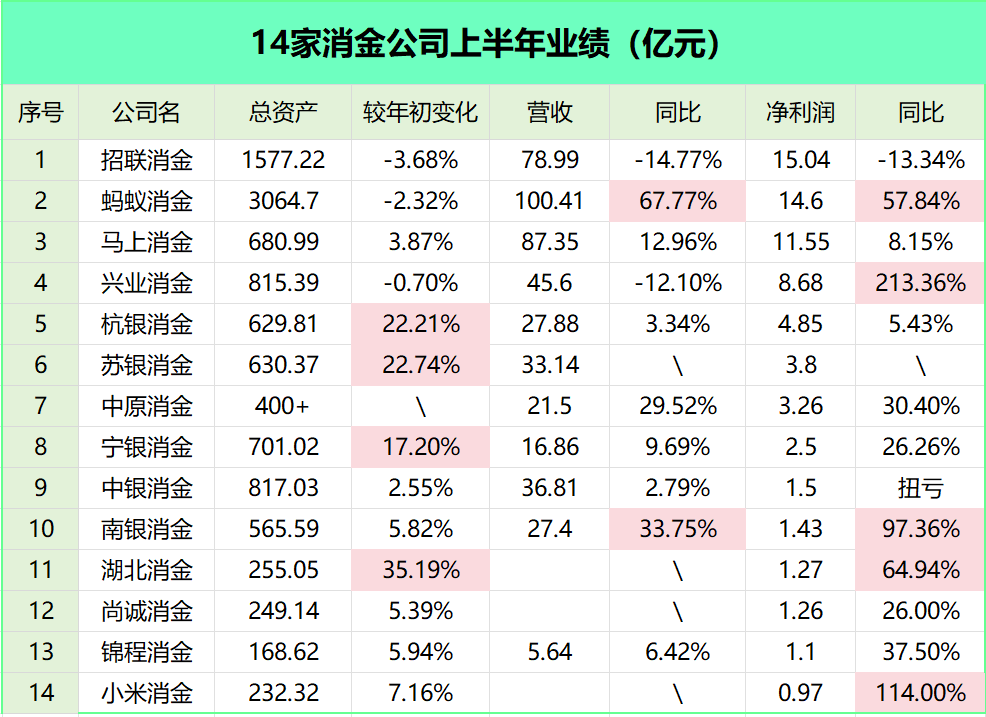
14家消金半年报:5家净利增超50%,3家总资产半年增百亿
Sou Hu Cai Jing· 2025-09-15 06:47
Core Insights - The consumer finance industry showed overall positive performance in the first half of the year, with all 14 companies reporting profits [1][2]. Group 1: Company Performance - Companies such as Ma Shang Consumer Finance, Hangyin Consumer Finance, Ningyin Consumer Finance, Zhongyin Consumer Finance, and Nan Yin Consumer Finance reported growth in total assets, revenue, and net profit [2]. - Ant Consumer Finance led the industry with significant revenue growth of 67.77%, while other companies like South Yin and Hubei Consumer Finance also saw substantial increases in net profit, with growth rates of 33.75% and 64.94% respectively [2][4]. - Among the 14 companies, Zhaolian Consumer Finance, Ant Consumer Finance, and Ma Shang Consumer Finance each generated over 1 billion in net profit, collectively exceeding the profits of the remaining 11 companies [2]. Group 2: Asset Growth - The total assets of Hubei Consumer Finance grew the most at 35.19%, while Hangyin, Su Yin, and Ningyin Consumer Finance each saw their total assets increase by over 10 billion [2]. - Zhaolian Consumer Finance and Ant Consumer Finance experienced slight changes in total assets, either marginal increases or decreases compared to the beginning of the year [2]. Group 3: Market Trends and Policies - The consumer finance sector has benefited from favorable policies, including a notification from the National Financial Regulatory Administration allowing higher limits on internet loan products and extended loan terms [4]. - The introduction of a consumption loan interest subsidy scheme by the Ministry of Finance, the People's Bank of China, and the National Financial Regulatory Administration has further supported the industry [4]. - The competitive landscape is expected to intensify in the second half of the year due to the influx of major players into the consumer finance market [4].
消费金融下半场——科技驱动下的创新与变革
Sou Hu Cai Jing· 2025-09-15 05:19
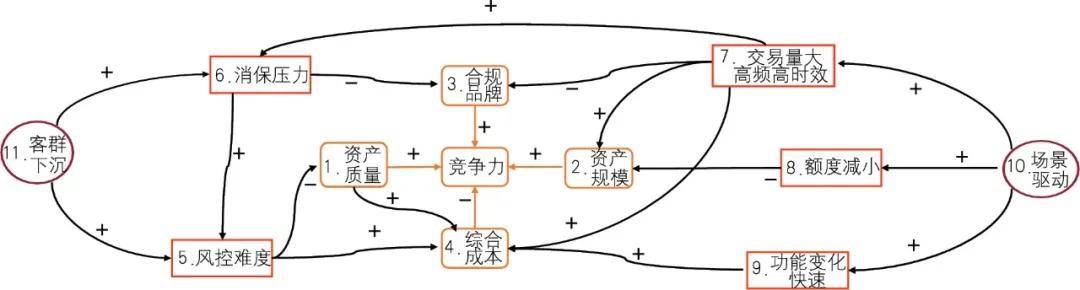
Core Insights - The Chinese government is focusing on transforming the economy towards a high-income status, emphasizing the importance of consumption upgrades as a key driver for economic growth [1] - The consumption finance sector is evolving from a traditional single credit model to a diversified service system to meet various consumer financing needs [1][2] - Financial regulatory policies are supporting the growth of the consumption finance industry, while also presenting challenges such as increased market competition and consumer protection issues [2] Industry Development Opportunities and Challenges - Recent government reports highlight the need to boost consumption and investment efficiency, providing clear direction and support for the consumption finance sector [2] - The industry faces challenges including intensified competition and the need for enhanced consumer rights protection [2] Characteristics of the Second Half of Consumption Finance - Key competitive factors for consumption finance companies include asset quality, asset scale, compliance and brand reputation, and comprehensive costs [3] - The industry is under pressure from two main factors: customer base expansion into lower-tier markets and scenario-driven business models [5][6] Customer Base Expansion Pressures - The shift towards lower-tier markets is a necessary path for consumption finance growth as first and second-tier cities become saturated [5] - Increased competition from large internet platforms and banks is forcing consumption finance companies to target lower-tier customer segments [5][6] Scenario-Driven Business Pressures - The trend towards scenario-based consumption finance is evident, with a significant portion of transactions occurring in specific, immediate-use contexts [8][9] - The average loan amount has significantly decreased, necessitating a higher transaction volume to maintain asset scale [9][11] Digital Finance as a Key Driver - Digital finance is positioned as a foundational element for building a robust financial system, with a goal to align with the digital economy by 2027 [16] - The integration of digital finance capabilities is essential for enhancing risk control, consumer protection, and supporting high-frequency real-time transactions [18][21][23] System Function Iteration and Innovation - The need for rapid system function iteration is critical, with companies facing the challenge of balancing cost, quality, and time in system development [15][24] - Emphasizing a systematic approach to problem-solving and innovation is crucial for addressing the complexities of digital finance capability construction [26][27]
消费金融公司座次微调:头部增速放缓 “后浪”借势崛起
Zhong Guo Jing Ying Bao· 2025-09-12 19:09
Core Insights - The domestic consumer finance industry has shown positive net profit results for 20 companies, with all reporting positive figures for the first half of 2025, despite some ongoing trends indicating a slight decline in asset scale for leading institutions [1][2] Group 1: Industry Trends - Leading consumer finance companies are experiencing a slowdown in asset scale growth, with major players like Chongqing Ant Consumer Finance and Zhuhai Consumer Finance reporting declines of 2.32% and 3.68% respectively [2][3] - The industry is witnessing a shift towards optimizing asset structures and focusing on high-quality customer segments to mitigate risks, as indicated by the proactive measures taken by companies like Zhuhai Consumer Finance [3][4] - The overall consumer finance sector is transitioning from rapid expansion to refined operations and differentiated competition, with a notable rise of mid-tier institutions [6][7] Group 2: Company Performance - Zhejiang Ningyin Consumer Finance has emerged as a strong competitor, achieving a total asset scale of 701.02 billion and a net profit increase of 26.26% in the first half of 2025 [5] - South Silver Fababa Consumer Finance reported a remarkable net profit growth of 97.36%, driven by increased support in various consumer sectors [6] - Companies backed by strong shareholders, such as Xinyang Consumer Finance and Zhongyin Consumer Finance, have shown significant profit increases, with Xinyang achieving a net profit growth of 213.36% [7][8]
北银、盛银消费金融部分董事任职资格获批
Bei Jing Shang Bao· 2025-09-12 13:53
Group 1 - The National Financial Regulatory Administration has approved the appointment qualifications of Cao Yanhong as a director of Beijing Silver Consumer Finance Co., Ltd [1] - On September 11, the Liaoning Financial Regulatory Bureau approved the appointment qualifications of Sun Changhong and Zhou Zhisheng as directors of Silver Consumer Finance Co., Ltd [1]
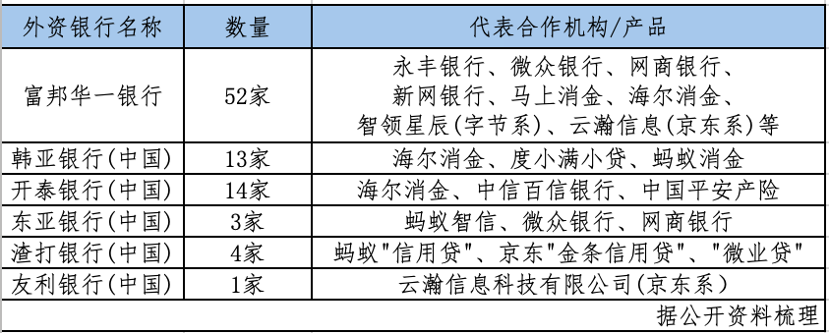
单家银行合作机构多达52家!外资行悄然布局助贷,涌入消费贷赛道
Di Yi Cai Jing· 2025-09-12 11:53
Core Viewpoint - The "foreign capital + assistive lending" niche market is emerging as foreign banks in China begin to disclose their internet loan cooperation lists, indicating a strategic shift towards consumer lending in response to performance pressures and branch closures [1][2]. Group 1: Foreign Banks' Cooperation - Six foreign banks, including Fubon Bank and Hana Bank, have disclosed their internet loan cooperation partners, with Fubon Bank leading with 52 partners [2][3]. - The cooperation partners are primarily concentrated among major platforms such as Ant Group, JD.com, and ByteDance, as well as various private banks and licensed consumer finance companies [1][3]. Group 2: Market Challenges - Foreign banks are facing dual challenges of performance pressure and branch network contraction, with over 30 branches closing since early 2025 and many banks experiencing a net decrease in loan volumes [1][8]. - For instance, Hana Bank's loan balance decreased from 30.8 billion yuan in 2023 to 28.6 billion yuan in 2024, while its loan loss provisions increased significantly [8]. Group 3: Regulatory Environment - The upcoming implementation of the "Assistive Lending New Regulations" in October 2023 mandates banks to manage cooperation partners through a "whitelist," benefiting major institutions while squeezing out smaller platforms [5][9]. - The new regulations require banks to include all fees, including guarantee service fees, in the comprehensive financing cost, tightening funding exposure for foreign banks [10]. Group 4: Strategic Shift - Foreign banks are actively expanding into consumer finance to overcome retail customer acquisition challenges, leveraging partnerships with major platforms to access large user bases [9]. - Current cooperation models include pure assistive lending, joint loan models, and guarantee enhancement models, with varying levels of involvement from foreign banks [9].
消费金融“人事风云”背后 藏着哪些新动向
Bei Jing Shang Bao· 2025-09-11 02:19
Core Insights - The frequent personnel changes in the consumer finance sector are noteworthy, with 20 institutions experiencing significant management shifts this year due to evolving regulatory policies, intensified market competition, and changing consumer demand scenarios [1][2][3] Personnel Changes - A total of 20 consumer finance companies have undergone key personnel adjustments, including positions such as chairman, general manager, and chief risk officer, reflecting a strategic response to market dynamics [2][3] - Recent changes include the approval of four new directors at JD Consumer Finance, bringing the total number of approved directors to seven [2] Reasons for Changes - The personnel adjustments are driven by the need for companies to enhance organizational strength and business expansion in a competitive landscape, with new executives often bringing diverse backgrounds from large commercial banks and the internet sector [3][4] - The introduction of new talent is expected to improve risk control, business diversification, and compliance capabilities, addressing challenges such as asset quality pressure and competition for customer acquisition [3][4] Business Expansion - Alongside personnel changes, consumer finance companies are actively pursuing business expansion, with several firms approved for capital increases and new business lines, such as fixed-income securities investment and credit asset securitization [5] - These initiatives aim to enhance capital adequacy, improve funding efficiency, and diversify investment strategies, thereby strengthening the companies' financial foundations [5] Industry Challenges - The consumer finance industry is facing high customer acquisition costs, product homogenization, and compliance risks, necessitating a shift from a focus on customer volume to risk control and cost management [8] - Upcoming regulatory changes, particularly regarding internet lending practices, are expected to impact loan issuance and revenue, prompting companies to adapt their business models and enhance self-operated business capabilities [7][8]