生物技术

Search documents
新股消息 | 靖因药业递表港交所 以siRNA疗法赋能慢性病管理范式转变
智通财经网· 2025-09-28 23:21
Core Insights - Jingyin Pharmaceutical has submitted its listing application to the Hong Kong Stock Exchange, with Goldman Sachs, Haitong International, and HSBC acting as joint sponsors [1] Company Overview - Jingyin Pharmaceutical is a global clinical-stage biotechnology company focused on maximizing the clinical and commercial value of siRNA therapies. The company aims to develop innovative and best-in-class siRNA therapies to address significant unmet medical needs in chronic disease management [4][5] - The company is advancing three major product pipelines targeting coagulation disorders, cardiovascular metabolic diseases, and obesity, which are based on their substantial market potential and the ability to provide transformative siRNA solutions [5] Market Potential - According to a Frost & Sullivan report, the global siRNA therapy market is projected to reach USD 2.4 billion in 2024 and grow to USD 50.3 billion by 2040, with a compound annual growth rate (CAGR) of 20.9% [4] Product Pipeline - The core product, SRSD107, is a potential first-in-class siRNA drug targeting coagulation factor XI, currently undergoing Phase II multi-center clinical trials in Europe, with plans for additional trials in China and Australia/New Zealand [5] - SRSD216 is a potential best-in-class siRNA targeting Lp(a), currently in Phase IIa trials in China and the United States [5] - SRSD384 is an INHBE-targeted candidate for obesity, with promising preclinical data and active IND application progress [5] Technology Platform - The company has developed a proprietary PEPR platform that enhances the stability and target binding of siRNA, enabling more effective and durable therapies. Research is ongoing to expand the delivery range of siRNA beyond the liver to other tissues such as fat, skeletal muscle, heart, kidneys, and the central nervous system [6] Financial Performance - For the six months ending June 30, 2023, the company reported other income and revenue of approximately RMB 8.81 million, with a net loss of approximately RMB 309.41 million. The projected other income and revenue for the same period in 2024 is RMB 9.79 million, with an expected loss of RMB 341.96 million [6][7]

Sirius Therapeutics( 靖因药业)递表港交所
Xin Lang Cai Jing· 2025-09-28 12:20
Core Viewpoint - Sirius Therapeutics-B has submitted a listing application to the Hong Kong Stock Exchange, aiming to leverage its proprietary siRNA technology platform to address unmet medical needs in chronic diseases [1] Company Overview - Sirius Therapeutics-B is a global clinical-stage biotechnology company focused on maximizing the clinical and commercial value of siRNA therapies [1] - The company is backed by a strategic foundation that includes three potential blockbuster product pipelines, a proprietary siRNA technology platform, and a global collaboration network [1] Strategic Goals - The company aims to innovate the current treatment standards for chronic diseases by developing first-in-class and best-in-class siRNA therapies targeting significant unmet medical needs globally [1]
新股消息丨英派药业递表港交所 核心产品塞纳帕利已商业化
智通财经网· 2025-09-28 02:28
Core Insights - The company, established in 2009, is a biotechnology firm focused on the global development of precision cancer therapies based on synthetic lethality mechanisms, possessing a comprehensive and advanced product portfolio [1] Product Highlights - The core product, Senaparib, is a PARP1/2 inhibitor approved for first-line maintenance treatment of ovarian cancer in China as of January 2025, demonstrating the largest progression-free survival benefit among approved PARP inhibitors for this indication [2] - Senaparib's marketing authorization application has been accepted by the European Medicines Agency, with an expected approval in the second half of 2026 [2] - The company has signed a commercial agreement with a subsidiary of Huadong Medicine for the commercialization of Senaparib in China, aiming to establish the largest gynecological oncology platform in the country [2] Pipeline Overview - The company has a diverse pipeline including several clinical-stage and preclinical assets targeting PARP and other key synthetic lethality pathways [3] - IMP1734, a next-generation selective PARP1 inhibitor, is currently in global Phase I/II trials, with plans to initiate Phase II in the second half of 2025 [3] - IMP9064, a potential first-in-class selective ATR inhibitor in China, is also in global Phase I/II trials and has received approval for combination studies with Senaparib [4] - IMP1707, a selective PARP1 inhibitor capable of penetrating the central nervous system, is undergoing Phase I clinical evaluation [5] - Other assets include preclinical candidates targeting WEE1, PKMYT1/WEE1, DHX9, ATM, USP1, and CHK1/2, as well as next-generation ADCs and protein degraders [6] Financial Performance - The company reported losses of approximately RMB 199.9 million, RMB 255.5 million, and RMB 129 million for the years ending December 31, 2023, December 31, 2024, and the six months ending June 30, 2025, respectively, primarily due to ongoing R&D investments [7] - Revenue sources include licensing income and pharmaceutical product sales, with total revenues of RMB 235.2 million for 2023 and RMB 33.5 million for the first half of 2024 [8] - The funds raised from the IPO are intended for the clinical development, regulatory approval, and commercialization of Senaparib, as well as the clinical development of key products IMP1734 and IMP9064, and other pipeline assets [8]
英派药业递表港交所 核心产品塞纳帕利已商业化
Zhi Tong Cai Jing· 2025-09-28 02:24
Core Viewpoint - Nanjing Inpai Pharmaceutical Co., Ltd. has submitted a listing application to the Hong Kong Stock Exchange, with Goldman Sachs and CICC as joint sponsors [1] Company Overview - Established in 2009, Inpai Pharmaceutical is a biotechnology company focused on the global development of precision cancer therapies based on synthetic lethality mechanisms [4] - It is one of only three companies globally that possess both commercial-stage PARP1/2 inhibitors and clinical-stage next-generation PARP1 selective inhibitors [4] Key Product - The core product, Senaparib, is a PARP1/2 inhibitor that has been approved and commercialized in China for first-line maintenance treatment of ovarian cancer as of January 2025 [5] - Senaparib demonstrated the greatest progression-free survival benefit among approved PARP inhibitors for this indication, with good tolerability [5] - The marketing authorization application for Senaparib has been accepted by the European Medicines Agency, with approval expected in the second half of 2026 [5] - The product has been recommended for inclusion in China's National Medical Insurance Drug List, with negotiations planned for the fourth quarter of 2025 [5] - A sales service agreement has been signed with a subsidiary of Huadong Medicine to commercialize Senaparib in China, aiming to create the largest gynecological oncology platform in the country [5] - As of August 20, 2025, Senaparib has entered over 200 DTP pharmacies and covers more than 600 medical institutions [5] Product Pipeline - The company has a rich and differentiated product pipeline, including several clinical-stage and preclinical assets targeting PARP and other key synthetic lethality pathways [6] - IMP1734 is a next-generation PARP1 selective inhibitor currently in global I/II trials, with plans to initiate Phase II in the second half of 2025 [6] - IMP9064 is a potential first-in-class ATR selective inhibitor in China, also in global I/II trials, approved for combination studies with Senaparib [6] - IMP1707 is a PARP1 selective inhibitor capable of penetrating the central nervous system, currently undergoing Phase I clinical evaluation [6] - Other assets include clinical candidates targeting WEE1, PKMYT1/WEE1, DHX9, ATM, USP1, and CHK1/2, as well as next-generation ADCs and protein degraders [6] Financial Performance and Fund Utilization - The company reported losses of approximately RMB 199.9 million, RMB 255.5 million, and RMB 129 million for the years ending December 31, 2023, December 31, 2024, and the six months ending June 30, 2025, respectively, primarily due to ongoing R&D investments [7] - Revenue sources include licensing income and pharmaceutical product sales, with total revenues of RMB 235.2 million for 2023 [9] - The funds raised from the listing are planned for clinical development, regulatory approval, and commercialization of Senaparib, as well as the clinical development of key products IMP1734 and IMP9064, and other pipeline assets [9]
Pharma tariffs 'not a huge risk' for domestic companies, says Mizuho's Jared Holz
Youtube· 2025-09-26 22:39
Group 1 - The impact of pharma tariffs appears to be minimal for large-cap pharmaceutical stocks, while smaller companies without US manufacturing may face more significant challenges [1] - The response from the buy-side community indicates concerns about the negative effects on non-domestic companies that have not relocated manufacturing to the US [2] - Most biotech companies are primarily domestic, which mitigates the overall risk, as those with facilities and investments in the US are less affected by the tariff changes [2][3] Group 2 - The net impact of the current situation is viewed positively for the pharmaceutical sector, despite some uncertainty surrounding biotech companies [2] - The commentary suggests that companies with US-based operations are somewhat insulated from the adverse effects of the tariffs [2]
生物合成 “檀香醇” 在津突破
合成生物学与绿色生物制造· 2025-09-25 06:43
Core Viewpoint - The article discusses the innovative approach taken by the Tianjin Institute of Industrial Biotechnology to address the scarcity of sandalwood resources through synthetic biology techniques, specifically the development of a yeast cell factory for efficient production of sandalwood alcohol [1][2]. Group 1: Sandalwood Alcohol Production - Sandalwood alcohol, derived from sandalwood heartwood, is highly valued in various industries, but its natural resource is scarce and expensive, priced at approximately $2500 per kilogram [1]. - The research team successfully enhanced the total yield of sandalwood alcohol and sandalwood olefin by 5.1 times, achieving a concentration of 0.9 g/L in initial experiments [2]. - The conversion rate from sandalwood olefin to sandalwood alcohol was initially 31.0%, which improved to 60.6% through innovative engineering of the P450 enzyme [2]. Group 2: Technological Innovations - The team utilized a targeted signal peptide to localize key enzymes within peroxisomes, overcoming initial challenges related to enzyme integration [2]. - By truncating the transmembrane domain of the P450 enzyme and fusing it with a membrane anchoring unit, the team achieved precise localization on the peroxisome membrane, significantly improving conversion rates [2]. - The final production in a 5-liter fermentation tank reached a record yield of 10.4 g/L, marking a significant advancement in the sustainable production of sandalwood oil [2]. Group 3: Research Support and Future Directions - The research received funding from several national projects, including the National Key R&D Program and the National Natural Science Foundation [3]. - The results have been published in the Journal of Agricultural and Food Chemistry and multiple patents have been applied for [3]. - The Tianjin Port Free Trade Zone is actively supporting the development of the bio-manufacturing industry, aiming to transform innovative research outcomes into practical applications [3].

报名:分子植物科学系列网络研讨会第一场
仪器信息网· 2025-09-25 03:58
Core Insights - The article emphasizes the importance of molecular plant science in ensuring agricultural and ecological security amid global population growth and climate change [2] Group 1: Event Overview - The "Frontier Progress in Molecular Plant Science and Technology" series of webinars will be held from September 26 to November 21, 2025, focusing on key research areas such as plant gene mining, molecular breeding, and plant-biological interactions [2] - The series consists of three sessions: - September 26: "Plant Gene Mining and Functional Analysis" - October 24: "Molecular Breeding and Seed Industry Innovation" - November 21: "Plant-Biological Interactions and Biological Control" [2] Group 2: Conference Agenda - The conference will feature presentations from experts, including: - "Regulation of Arabidopsis Organelle Genome Variation and Evolution" by Zou Yi from the Chinese Academy of Agricultural Sciences [2] - "Optimization of qPCR Experimental Conditions in Plant Gene Function Research" by Guan Erxin from Bio-Rad Laboratories [2] - "Analysis of the Genetic Basis of Important Agronomic Traits in Crops Based on Multi-Omics QTL" by Zhao Ting from Zhejiang University [2]

百奥赛图过会:今年IPO过关第53家 中金公司过3单
Zhong Guo Jing Ji Wang· 2025-09-25 03:15
Core Viewpoint - Baiaosaitu (Beijing) Pharmaceutical Technology Co., Ltd. has been approved for IPO by the Shanghai Stock Exchange, marking it as the 53rd company to pass this year, with a focus on innovative drug development services based on its proprietary gene-editing technology [1]. Company Overview - Baiaosaitu was established in 2009 and operates as a preclinical CRO and biotechnology company, providing various innovative model animals and preclinical drug development services [1]. - The company utilizes its self-developed RenMice platform for large-scale drug discovery and development, targeting over a thousand potential drug targets in the human body [1]. IPO Details - The company plans to issue up to 99,849,605 shares on the Sci-Tech Innovation Board, with a minimum public offering ratio of 10% of the total share capital post-issuance [2]. - The intended fundraising amount is 118.504 million yuan, aimed at building a drug early-stage research service platform, antibody drug research and evaluation projects, preclinical research projects, and supplementing working capital [2]. Shareholding Structure - As of the signing date of the prospectus, the actual controllers of Baiaosaitu, Shen Yulei and Ni Jian, collectively control 27.0291% of the voting rights [2]. Market and Business Model Inquiry - The listing committee inquired about the technological advancement of the fully human antibody mouse platform, market space for antibody development, and the stability and future profitability of the business model, including revenue realization from project testing to transfer/authorization/co-development [3].

中国前首富加码锦波生物:医美上游供给扩容,仍有乱象待破
2 1 Shi Ji Jing Ji Bao Dao· 2025-09-24 10:57
Core Viewpoint - The recent announcement by Jinbo Biotechnology regarding its plan to issue shares to Yangshengtang highlights the growing interest and investment in the recombinant collagen market, which is experiencing rapid growth in China's medical aesthetics sector [1][2]. Company Summary - Jinbo Biotechnology plans to issue up to 7.1756 million shares at a price of 278.72 yuan per share, raising a total of no more than 2 billion yuan for the development of a humanized collagen FAST database and product development platform [1]. - The company has received three Class III medical device registration certificates for its recombinant collagen products, positioning it as a leader in the medical aesthetics field [3]. - The recent transfer of shares from the controlling shareholder to Hangzhou Jiushi indicates a strategic move to strengthen ties with major players in the industry [1]. Industry Summary - The medical aesthetics market in China is experiencing strong and diverse demand, with the recombinant collagen product market projected to grow from 19.24 billion yuan in 2022 to over 58.57 billion yuan by 2025, and further to 219.38 billion yuan by 2030, reflecting a compound annual growth rate of 44.93% [2]. - The market is seeing an influx of new products, with multiple companies obtaining Class III medical device approvals, indicating a vibrant and competitive landscape [3][4]. - The prevalence of illegal medical aesthetics institutions has surpassed legal ones, with 22,000 illegal institutions compared to 20,000 legal ones, raising concerns about consumer safety and market integrity [6]. Market Dynamics - The high prices of medical aesthetics services in China are driving consumers towards illegal options, as many perceive the costs of legitimate services to be prohibitively high compared to those in markets like South Korea and Hong Kong [7]. - The introduction of competitively priced products, such as New Oxygen's "Miracle Youth 3.0" priced at 2,999 yuan, aims to make compliant medical aesthetics more accessible and reduce the appeal of illegal services [7]. - The industry is characterized by a "new is better" mentality, where new products can quickly saturate the market, leading to price reductions and potential volatility in consumer preferences [5].
排队两年 百奥赛图“回A”上会
Bei Jing Shang Bao· 2025-09-23 16:18
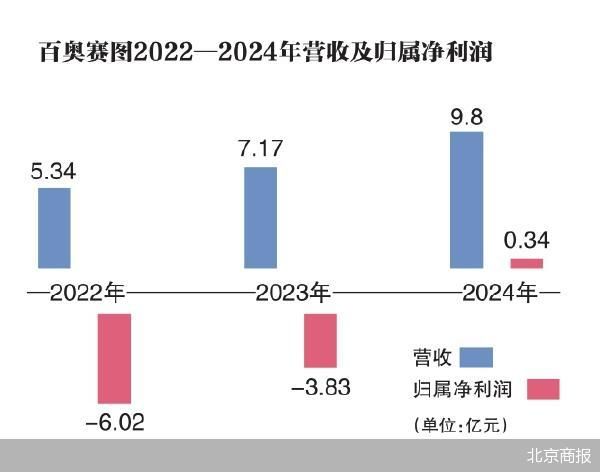
Core Viewpoint - Baiaosaitu (Beijing) Pharmaceutical Technology Co., Ltd. is set to undergo its IPO review on September 24, 2025, after a two-year wait on the Sci-Tech Innovation Board, highlighting its progress in the biopharmaceutical sector and its innovative "Thousand Mice Ten Thousand Antibodies" program [1][4]. Group 1: Company Overview - Baiaosaitu was established in 2009 and operates as a preclinical CRO and biotechnology company, providing innovative animal models and drug development services based on its proprietary gene editing technology [1]. - The company has developed the RenMice platform, which allows for large-scale drug discovery targeting nearly a thousand potential drug targets [1]. Group 2: IPO Process and Financial Performance - The company was accepted for its Sci-Tech Innovation Board IPO on June 20, 2023, and has undergone two rounds of inquiries prior to the upcoming review [4]. - Financial data shows that Baiaosaitu's revenue increased from approximately 534 million yuan in 2022 to 980 million yuan in 2024, with a turnaround to a net profit of approximately 33.54 million yuan in 2024 after previous losses [5]. - In the first half of 2023, the company achieved a revenue of 621 million yuan, a 51.27% increase year-on-year, and reported a net profit of approximately 47.99 million yuan, indicating a successful recovery from losses [6]. Group 3: Research and Development Challenges - The company has experienced a significant reduction in its R&D personnel, with the number of dedicated R&D staff dropping from 58 in 2022 to just 5 in 2024, raising concerns about its innovation capacity [7]. - Governance issues are also present, as the major shareholders, who are a married couple, control over 27% of the voting rights, which may impact decision-making processes [7]. Group 4: Fundraising and Strategic Direction - Baiaosaitu has reduced its planned fundraising amount from 1.893 billion yuan to 1.185 billion yuan for its IPO, focusing on early drug development services, antibody drug research, and clinical projects [7][8]. - The company asserts that this reduction in fundraising will not alter its strategic direction, as the core projects will still revolve around its main business and technology platforms [8].