
绿色低碳产业

Search documents
我国经济社会 绿色转型加速推进
Xin Lang Cai Jing· 2026-02-10 04:38
Core Insights - The article highlights the continuous optimization of China's industrial and energy structure, driven by tax policies that promote green and low-carbon industries, resulting in significant growth in sales revenue for key green products and services [1][2] Group 1: Green Industry Growth - During the "14th Five-Year Plan" period, the sales revenue of key green manufacturing sectors such as new energy vehicles, photovoltaic equipment, lithium-ion batteries, and solar appliances is expected to grow at an annual rate of over 30% [1] - The sales revenue of green technology services, including new energy, energy-saving, and environmental protection, is projected to grow annually by 51.1%, 28.5%, and 18.2% respectively, while ecological protection and environmental governance industries will see an annual growth of 13.2% [1] Group 2: Clean Energy Development - By 2025, the sales revenue from clean energy sources, including wind, solar, hydro, and nuclear power, is anticipated to account for 42.6% of total power generation sales revenue, an increase of 7.2 percentage points from the end of the "13th Five-Year Plan" [1] - The sales revenue from wind and solar power generation is expected to grow at an annual rate of 25.4% during the "14th Five-Year Plan" period [1] Group 3: Environmental Tax Policies - Since the implementation of the environmental protection tax in 2018, a total of 111.06 billion yuan in tax reductions has been granted, promoting centralized treatment and improving pollution control efficiency [2] - By 2025, the revenue from environmental taxes on key air pollutants such as sulfur dioxide and nitrogen oxides is projected to decrease by 33.8% and 34.03% respectively compared to 2020 [2] Group 4: Water Resource Management - The pilot program for converting water resource fees to taxes has shown positive results, with a projected reduction of 7.1% in groundwater extraction in new pilot areas by 2025 [2] - Special water usage for golf courses, ski resorts, car washes, and bathing facilities is expected to decline by 34.3% compared to 2024 [2]
理响中国·深改进行时:山水脉脉蕴万金
Yang Shi Wang· 2026-02-01 04:22
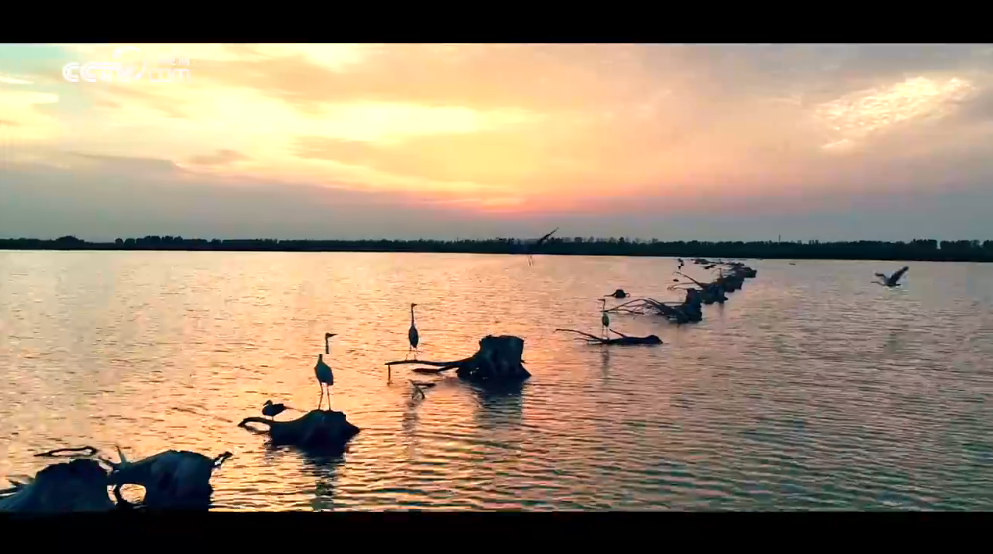
Group 1 - The core idea emphasizes the importance of the concept that "lucid waters and lush mountains are invaluable assets," promoting carbon peak and carbon neutrality as a driving force for ecological safety and green development in Tianjin [2] - Tianjin's ecological restoration efforts have led to significant improvements, such as the increase in bird species to 308 and a reduction in inferior water quality, showcasing the success of the ecological restoration in the Qilihai Wetland [2] - The establishment of the Sino-Singapore Tianjin Eco-City, the world's first intergovernmental cooperative eco-city, aims to address global climate change and promote sustainable urban development, with its ecological product value (GEP) expected to exceed 10 billion yuan in 2024, marking a 21-fold increase since its inception [2] Group 2 - Tianjin is transforming ecological benefits into development momentum through reforms, with a strong focus on green and low-carbon industries driving diversified economic growth and enhancing the quality of life for residents [3] - The Sino-Singapore Tianjin Eco-City is advancing into a national green development demonstration zone, with ongoing efforts in technology research, standard setting, and results transformation in the green low-carbon sector [3] - A clear new path for green development is emerging, characterized by high-value niche industries and an international first-class business environment [3]

立足特色优势打造新质生产力重要实践地
Jing Ji Ri Bao· 2026-01-27 23:10
Core Viewpoint - Hainan aims to achieve high-quality development by leveraging its unique resources and free trade port policies, focusing on modern industrial systems and technological innovation to enhance productivity and economic growth [1][2]. Group 1: Economic Development and Industry Focus - During the "14th Five-Year Plan" period, Hainan is prioritizing the development of four main industries: tourism, modern services, high-tech industries, and tropical agriculture, with a focus on integrating innovation resources [2]. - By 2024, Hainan's R&D expenditure is projected to reach 10.961 billion yuan, marking a 22.1% increase year-on-year, the highest growth rate in the country [2]. - The contribution of the four main industries to the regional GDP is expected to reach 67.2% by the first three quarters of 2025, an increase of 14.2 percentage points compared to 2020 [2]. Group 2: Agricultural Innovation - Hainan is positioned as a key player in seed production, with over 800 related enterprises and more than 10,000 professionals engaged in seed breeding, contributing to a market value exceeding 18 billion yuan [3]. - The province aims to implement a seed industry revitalization action plan, focusing on biotechnology and AI to enhance research capabilities and develop a modern seed industry cluster [3]. Group 3: Marine Economy - Hainan has jurisdiction over approximately 2 million square kilometers of ocean, making it an ideal location for deep-sea research and marine technology development [4]. - The marine economy's contribution to Hainan's GDP is projected to exceed 200 billion yuan, accounting for 35.5% of the total [4]. Group 4: Aerospace Industry - Hainan is developing a comprehensive commercial aerospace industry chain, leveraging its geographical advantages for cost-effective launches and safe landing zones [4]. - The Wenchang Space Launch Site is becoming a significant hub for the aerospace industry, with plans to expand satellite manufacturing and rocket assembly capabilities [4]. Group 5: Green and Digital Economy - Hainan is focusing on green low-carbon industries, with over 70% of its power generation from clean energy sources, and aims to develop a digital economy with nearly 500 core enterprises by 2025 [5][6]. - The province plans to foster digital applications in various sectors, including health and entertainment, while promoting the development of semiconductor and biopharmaceutical industries [5]. Group 6: Policy and Institutional Framework - Hainan is working to enhance its free trade port policy framework to optimize resource allocation and market expansion, aiming to create a conducive environment for international trade and investment [6]. - The province seeks to align with international trade rules and enhance cooperation in technology innovation, particularly in biotechnology and marine equipment [6].
国家发改委:长江经济带已成为中国科技资源最富集区域之一
Zhong Guo Xin Wen Wang· 2026-01-05 07:52
Core Insights - The Yangtze River Economic Belt has become one of the most resource-rich and innovative regions in China, driven by significant advancements in technology and industry [1][2] Group 1: Innovation and Technology - The National Development and Reform Commission (NDRC) has established three technology innovation centers and eight national laboratories along the Yangtze River, focusing on key technologies in artificial intelligence, quantum information, integrated circuits, and life sciences [1] - Key innovation hubs such as Hefei Quantum Avenue, Wuhan Optics Valley, and the Chengdu-Chongqing Science City are accelerating development in the tech sector [1] Group 2: Industrial Upgrading - The Yangtze River Economic Belt has cultivated 41 national-level advanced manufacturing clusters and 30 strategic emerging industry clusters, accounting for 51% and 45% of the national totals, respectively [1] - The automotive industry is projected to see significant growth, with electric vehicle production in Shanghai, Jiangsu, Zhejiang, Anhui, and Chongqing expected to exceed one million units each by 2025, forming a comprehensive supply chain across the region [1] Group 3: Green Transformation - The NDRC has initiated 24 national carbon peak pilot cities and parks, along with 14 zero-carbon parks, to promote green transformation in the Yangtze River Economic Belt [2] - The region, which accounts for about one-third of the country's energy consumption and carbon emissions, contributes nearly half of the national GDP, highlighting its role as a leader in ecological priority and green development [2] - Future efforts will focus on accelerating the green transformation of traditional industries and fostering the growth of green low-carbon industries tailored to local conditions [2]
地区生产总值跨越两个千亿级台阶
Xin Lang Cai Jing· 2026-01-02 22:39
Core Insights - Yibin City has made significant progress in its economic and social development during the "14th Five-Year Plan" period, achieving a strong start and a series of development accomplishments [1] Economic Growth - The regional GDP of Yibin has increased from 286.35 billion yuan in 2020 to 400.58 billion yuan in 2024, crossing two hundred billion thresholds and ranking third in the province [1] - The total industrial added value is projected to reach 160.79 billion yuan in 2024, which is 1.5 times that of the end of the "13th Five-Year Plan" [1] - The annual average growth rate of industrial added value in large-scale enterprises is around 10% [1] Population and Urban Development - The urban built-up area has expanded to 189.7 square kilometers, with a net increase of 184,000 permanent residents in urban areas [1] - Yibin has been recognized as one of China's "Top Ten Beautiful Livable Cities" and "Cities with the Most Happiness" [1] Research and Development - The "Jiangyuan Action" for new-type research and development institutions has led to a 49.5% increase in total R&D expenditure compared to the end of the "13th Five-Year Plan," with 337 new high-tech enterprises established, totaling 487 [1] Environmental Sustainability - The proportion of excellent water bodies in national and provincial assessment sections remains at 100%, with the Yangtze River mainstream maintaining a Class II water body ratio of 100% [1] - The green low-carbon industry accounts for 44.8% of the industrial output value of large-scale enterprises, with energy consumption per unit of industrial added value decreasing by 24.2% [1] Transportation Infrastructure - A comprehensive transportation system has been established, with a total railway operating mileage of 564 kilometers, including 275 kilometers of high-speed rail, enabling one-hour commutes to Chengdu and Chongqing [1] - Newly constructed highways have achieved county-level connectivity, with a total of 236 kilometers opened to traffic [1] - The annual growth rate of cargo throughput and container throughput at Yibin Port has achieved double-digit growth [1]
天开高教科创园绿色低碳产业联盟成立
Xin Lang Cai Jing· 2025-12-26 22:03
Core Viewpoint - The establishment of the Tianjin Commercial University-Tiankai Higher Education Science and Technology Innovation Park Green Low-Carbon Industry Alliance aims to promote regional green low-carbon industry collaboration and support the achievement of carbon neutrality goals [1] Group 1: Alliance Formation - The alliance has been initiated by Tianjin Commercial University and Tiankai Group, currently comprising 24 member units including various institutions and companies, creating a diverse and complementary ecosystem for the green low-carbon industry [1] - The alliance aims to strengthen research support, promote key technology breakthroughs, and facilitate the transformation of research outcomes through the establishment of the Tianjin Green Low-Carbon Industry Collaborative Research Center and an academic professional committee [1] Group 2: Support and Development - Tianjin Commercial University will provide comprehensive support to alliance members, including access to key laboratories, research platforms, faculty resources, and talent training systems [2] - The alliance will focus on creating a green low-carbon technology research and development center, a results transformation center, and a talent training base to tackle critical industry development technologies [2] - A mechanism for efficient industry-university-research collaboration will be established to align academic research outcomes with actual enterprise needs, accelerating the conversion of technological achievements into productive forces [2]
践行新发展理念 中国经济行稳致远︱全面绿色转型提速 铺就高质量发展底色
国家能源局· 2025-12-16 00:46
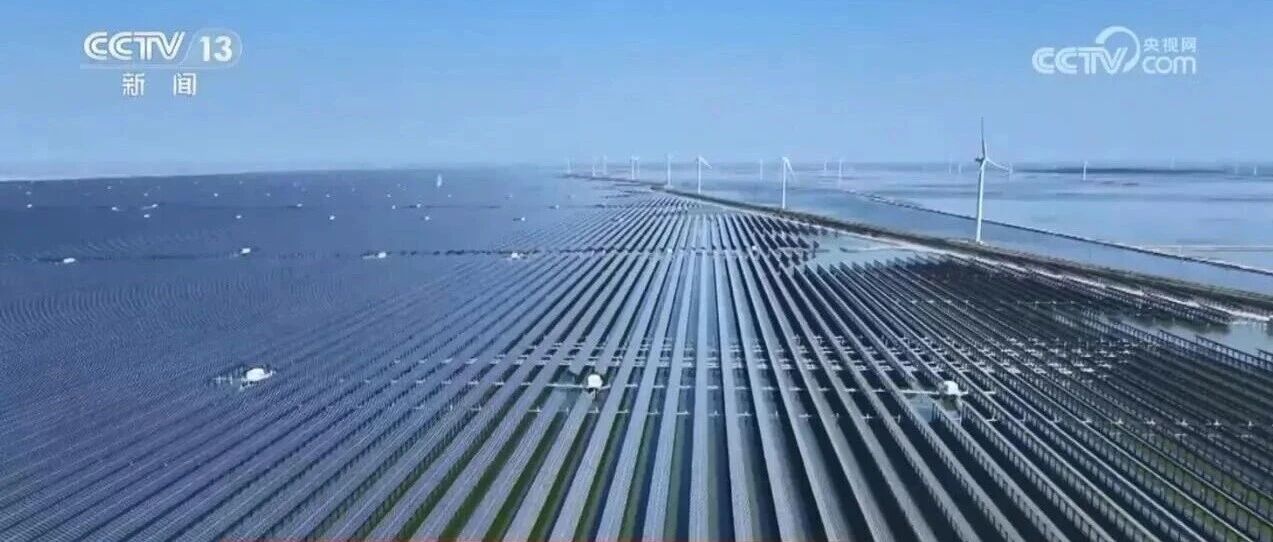
Core Viewpoint - Green development is a prominent feature of Chinese modernization, emphasizing the importance of ecological protection and a comprehensive green transformation of economic and social development [2]. Group 1: Green Energy Development - In the first ten months of this year, China's wind power equipment exports exceeded 10 billion, marking a year-on-year increase of 44.9% [3]. - By September, the Yangtze River had seen a rapid increase in green vessels, with 156 new energy ships operational, doubling the previous year's figures [3]. - The total installed capacity of renewable energy reached 2.22 billion kilowatts, accounting for nearly 60% of the national total, with over one-third of electricity consumption coming from green energy [5]. Group 2: Industrial Transformation - The green low-carbon industry is projected to reach approximately 11 trillion yuan, with 6,430 green factories and 491 green industrial parks established nationwide [5]. - The manufacturing sector is encouraged to focus on high-end, intelligent, and green directions to enhance product technology content and added value [4]. Group 3: Green Trade and Lifestyle - Exports of green products such as new energy vehicles, lithium batteries, and photovoltaic products have seen double-digit growth, making green trade a crucial pillar of China's foreign trade [5]. - China has built the world's largest electric vehicle charging network, with two charging stations for every five electric vehicles [5]. Group 4: Global Leadership in Climate Governance - China is actively leading global climate governance, having signed 55 climate change cooperation memorandums with 43 developing countries [6]. - The "14th Five-Year Plan" emphasizes accelerating the comprehensive green transformation of economic and social development [6].
山东政商要情(12.1—12.7)
Jing Ji Guan Cha Bao· 2025-12-07 04:29
Group 1: Economic Development Plans - Shandong Province has released a roadmap for its 15th Five-Year Plan, focusing on a development pattern that includes "two circles linkage, three cores leading, land-sea coordination, and comprehensive efforts" [1] - Key initiatives include the enhancement of urban development capabilities, aiming for Qingdao's economic output to exceed 2 trillion yuan and adding one more city with over 1 trillion yuan in GDP by the end of the 15th Five-Year Plan [1] - The plan also targets the increase of counties with over 100 billion yuan in economic output from 28 to over 40 by the end of the 15th Five-Year Plan [1] Group 2: Land Utilization Policies - Shandong Province has introduced 18 policy measures aimed at promoting efficient land use to support green, low-carbon, and high-quality development [3] - The goal is to reduce the total area of newly constructed land by over 10% during the 15th Five-Year Plan and decrease the land use per unit of GDP by over 15% [3] - The province aims to create a new pattern of land-saving and efficient utilization by 2030, optimizing layout and improving efficiency [3] Group 3: Economic Growth in Qingdao - Qingdao's GDP is projected to exceed 1.7 trillion yuan in 2025, with an average annual growth rate of 5.9% [4] - Per capita GDP in Qingdao is expected to rise from 127,000 yuan in 2020 to 161,000 yuan by 2024, marking a cumulative growth of 21.3% [4] - The city has seen significant growth in retail sales and import-export volumes, with retail sales expected to surpass 650 billion yuan and import-export volumes exceeding 900 billion yuan [4] Group 4: Sports Industry Development in Dezhou - Dezhou has introduced 14 measures to strengthen its sports industry, focusing on expanding sports enterprises and enhancing consumer demand [6] - Key initiatives include planning for a regional sports industry belt and supporting the development of sports-related businesses [6] - The city aims to cultivate the sports industry into a pillar industry, with projected sports consumption reaching 11.53 billion yuan and total sports industry scale reaching 45.8 billion yuan by 2024 [6] Group 5: Green Development Initiatives - The 2025 Shandong Province Green Low-Carbon High-Quality Development Conference highlighted the signing of 32 projects worth a total of 57 billion yuan [7] - The conference served as a platform for showcasing achievements in green development and facilitating industry collaboration [7] - The focus is on creating a strong momentum for green, low-carbon, and high-quality development through significant project implementations [7]
生态价值转化不只有旅游一条路
Xin Hua Ri Bao· 2025-12-02 03:09
Core Insights - Jiangsu Province's Jinhu County is exploring the transformation of "green mountains and clear waters" into "golden mountains and silver mountains," focusing on ecological industrialization and industrial ecology [1] - The county has established multi-level green factories, with over 90% of its clean energy generation and more than half of its manufacturing sector being green and low-carbon [1] - The approach has led to recognition as a model for converting ecological value into economic output, achieving high-quality development [1] Group 1 - The concept of "green mountains and clear waters" is often limited to tourism development, which can restrict the full potential of ecological resources and lead to diminishing ecological benefits due to homogenization [1] - A multi-dimensional transformation system is necessary to continuously realize the development dividends from ecological value, moving beyond a singular focus on tourism [2] - The core of ecological value lies in its systematic empowerment, which supports high-end product premiums and sustainable development [2] Group 2 - Traditional industries' green upgrades and the cultivation of emerging ecological industries are crucial for realizing ecological value, broadening the channels for its realization [2] - Strengthening mechanisms and establishing a market-oriented ecological product trading system are essential for quantifying and realizing ecological value [2] - The integration of ecological value into economic accounting systems through dual assessment mechanisms can guide local governments to focus on diverse transformation paths [3] Group 3 - The ecological industry requires significant upfront investment and long return periods, necessitating policy guidance and technological support to activate the internal motivation for ecological value transformation [3] - Establishing special funds and developing financial products like ecological asset credit loans can address financing challenges in the ecological industry [3] - The relationship between "ecological beauty" and "economic value" is interdependent, and both must be harmonized to benefit broader livelihoods and achieve organic unity in ecological and economic development [3]
让“生态颜值”变“经济产值”
Xin Hua Ri Bao· 2025-12-01 05:48
Core Insights - The article discusses the exploration of transforming "green mountains and clear waters" into "golden mountains and silver mountains" in Jinhu County, emphasizing the integration of ecological and industrial development [1] - It highlights the importance of a multi-dimensional approach to ecological value transformation beyond just tourism, advocating for a comprehensive system that includes industrial integration and resource recycling [2] - The article stresses the need for policy support and financial mechanisms to facilitate the transformation of ecological value into economic benefits, ensuring sustainable development [3] Group 1 - Jinhu County has successfully built multi-level green factories, with over 90% of its clean energy generation and more than half of its manufacturing sector being green and low-carbon [1] - The county has been recognized as a model for high-quality development, demonstrating how ecological aesthetics can be converted into economic value [1] - Relying solely on tourism for ecological resource development may limit the potential of these resources and lead to diminishing ecological benefits due to homogenization [1] Group 2 - The core of ecological value lies in its systematic empowerment, with tourism being just a superficial transformation; deeper value is found in industrial integration and innovation [2] - Traditional industries' green upgrades and the cultivation of new ecological industries are crucial for realizing ecological value, creating a resilient green economy [2] - Establishing a dual assessment mechanism for GEP (Gross Ecosystem Product) and GDP can help integrate ecological value into economic accounting, guiding local governments to focus on diverse transformation paths [3] Group 3 - The article suggests creating special funds and developing credit loans for ecological assets to address financing challenges in the ecological industry [3] - It emphasizes that ecological aesthetics and economic value are interdependent, and achieving a balance between them can benefit broader livelihoods [3] - Continuous exploration of scientific pathways to convert ecological aesthetics into economic output is essential for sustainable development and harmony between humans and nature [3]