Home Appliances

Search documents
A. O. Smith Q2 Earnings Surpass Estimates, Sales Decline Y/Y
ZACKS· 2025-07-24 15:21
Core Insights - A. O. Smith Corporation (AOS) reported adjusted earnings of $1.07 per share for Q2 2025, exceeding the Zacks Consensus Estimate of 97 cents, with a year-over-year increase of 1% [1] - Net sales reached $1.01 billion, surpassing the consensus estimate of $990.9 million, although this represented a 1% decline year-over-year due to lower water heater volumes and decreased sales in China [1] Segmental Details - North America sales decreased by 1% year-over-year to $779 million, compared to an estimated $758.9 million, primarily due to lower water heater volumes [2] - Segmental earnings remained flat year-over-year at $198.1 million [2] - Sales in the Rest of the World segment totaled $240.1 million, down 2% year-over-year, with China sales decreasing by 11% and India sales increasing by 19% in local currency [3] Margin Details - Cost of sales was $614.2 million, down 2.2% year-over-year, while selling, general & administrative expenses rose by 1.5% to $191.3 million [4] - Gross profit increased by 0.3% year-over-year to $397.1 million, resulting in a gross margin of 39.3%, up from 38.7% in the previous year [4] - Interest expenses rose to $4.6 million from $1.8 million in the year-ago quarter [4] Liquidity & Cash Flow - As of June 30, 2025, cash and cash equivalents totaled $177.9 million, down from $239.6 million at the end of December 2024 [5] - Long-term debt increased to $284.2 million from $183.2 million at the end of December 2024 [5] - Cash provided by operating activities for the first half of 2025 was $178.3 million, compared to $164 million in the same period last year [5] Share Repurchases - In the first half of 2025, A. O. Smith repurchased 3.8 million shares for $251.3 million, with 3 million shares remaining under the existing repurchase authorization as of June 2025 [6] 2025 Outlook - A. O. Smith raised its sales outlook for 2025 to a range of $3.85-$3.93 billion, up from the previous estimate of $3.8-$3.9 billion, with reported sales of $3.82 billion in 2024 [7] - Adjusted earnings per share (EPS) forecast for 2025 is now projected to be between $3.70-$3.90, compared to the earlier expectation of $3.60-$3.90 [8]


A. O. Smith(AOS) - 2025 Q2 - Earnings Call Presentation
2025-07-24 14:00
Financial Performance - Net sales decreased slightly to $1 billion[11] - Earnings Per Share (EPS) increased by 1% year-over-year to $1.07[11] - North America segment sales decreased by 1% year-over-year[11] - Rest of World segment sales decreased by 2% due to lower sales in China[11] - Free cash flow increased to $139.9 million compared to $119.1 million in the same period last year[43] Segment Analysis - North America segment margin increased to 25.4%[11] - Boiler sales in North America increased by 6%[19] - China third-party sales declined 11% in local currency due to weak consumer demand[23] Strategic Initiatives and Outlook - The company projects share repurchases of approximately $400 million for the full year[27] - Revenue is expected to increase by approximately 1% to 3% for 2025[30] - The company is initiating an assessment of its China business to ensure it is well-positioned for the future[40] - The company expects free cash flow between $500 million and $525 million[30]
今夏空调市场乘“热”而上,济南有门店销量同比涨300%
Qi Lu Wan Bao Wang· 2025-07-24 10:16
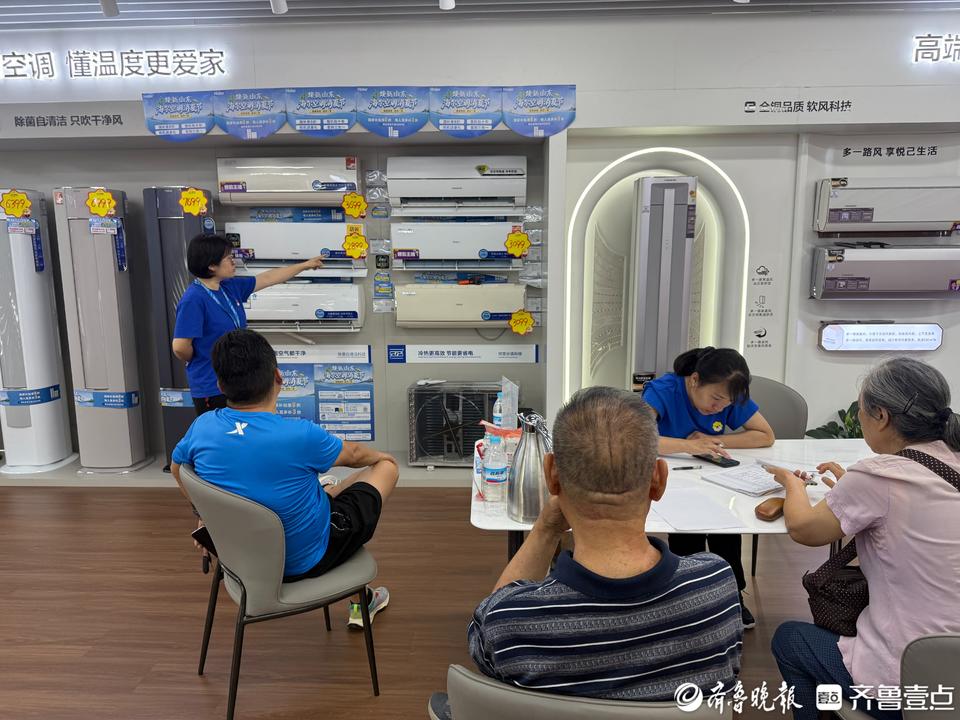
Core Insights - The air conditioning market in Jinan is experiencing a significant sales surge due to prolonged high temperatures and multiple subsidies, leading to increased consumer demand and busy installation services [1][11]. Sales Performance - Sales in air conditioning stores have seen remarkable growth, with some stores reporting a 300% year-on-year increase in sales [2][4]. - Major retailers like JD.com and Suning have also reported substantial increases in air conditioning sales, with JD.com noting over 200% growth since July and Suning reporting an 82% increase in energy-efficient air conditioners [4][11]. - Gree Electric stated that its popular air conditioning models saw a 240% increase in sales during the 618 shopping festival [4]. Installation Services - The surge in air conditioning sales has put pressure on installation services, with some engineers installing up to 14 units per day, which is three times the average of previous years [5][8]. - Companies like Midea and Gree are implementing measures to support installation teams, including cross-regional assistance and additional subsidies for installers [8][9]. Market Trends - The current market is witnessing a shift towards smart and energy-efficient air conditioning units, with features like voice control and mobile connectivity becoming standard even in mid-range products [9][11]. - The ongoing sales boom is expected to accelerate the elimination of outdated products and expand the market for high-efficiency appliances [9][11]. Consumer Behavior - Consumers are taking advantage of substantial subsidies, with some air conditioners being sold at discounts of up to 50%, making them more affordable [11]. - The combination of high temperatures and attractive subsidies is driving a significant increase in consumer purchases, indicating a favorable market environment for air conditioning products [11].

WHIRLPOOL CORPORATION TO ANNOUNCE SECOND-QUARTER RESULTS ON JULY 28TH AND HOLD CONFERENCE CALL ON JULY 29TH
Prnewswire· 2025-07-21 20:05
Core Insights - Whirlpool Corporation will release its second-quarter financial results on July 28, 2025, at 4:05 p.m. ET [1] - A conference call to discuss the performance will take place on July 29, 2025, at 8 a.m. ET [1] Company Overview - Whirlpool Corporation is a leading home appliance manufacturer, focusing on improving life at home [4] - The company reported approximately $17 billion in annual sales for 2024, with nearly 90% of sales generated in the Americas [4] - Whirlpool employs around 44,000 individuals and operates 40 manufacturing and technology research centers [4]


Exploring Analyst Estimates for A.O. Smith (AOS) Q2 Earnings, Beyond Revenue and EPS
ZACKS· 2025-07-21 14:21
Core Viewpoint - A.O. Smith (AOS) is expected to report a quarterly earnings per share (EPS) of $0.97, reflecting an 8.5% year-over-year decline, with revenues projected at $987.3 million, a decrease of 3.6% compared to the previous year [1]. Earnings Estimates - Over the past 30 days, the consensus EPS estimate has been revised downward by 0.6%, indicating a reassessment by analysts [2]. - Revisions to earnings estimates are crucial for predicting investor actions, as empirical research shows a strong correlation between earnings estimate trends and short-term stock price performance [3]. Revenue Estimates - The consensus estimate for 'Geographic Revenue- North America' is $763.85 million, suggesting a year-over-year change of -3.4% [5]. - The estimated 'Geographic Revenue- Rest of World' is $234.39 million, indicating a decline of 4.3% from the prior-year quarter [5]. Segment Operating Earnings - Analysts estimate 'Segment Operating Earnings (NON-GAAP)- North America' to be $180.26 million, down from $198.40 million reported in the same quarter last year [6]. - The estimate for 'Segment Operating Earnings (NON-GAAP)- Rest of World' is $22.62 million, compared to $25.90 million in the previous year [6]. - The average prediction for 'Segment Operating Earnings (GAAP)- North America' is $174.91 million, also down from $198.40 million reported last year [7]. - The consensus for 'Segment Operating Earnings (GAAP)- Rest of World' is $23.46 million, compared to $25.90 million in the same quarter of the previous year [7]. Stock Performance - Over the past month, A.O. Smith shares have returned +12.1%, outperforming the Zacks S&P 500 composite's +5.4% change [7]. - A.O. Smith currently holds a Zacks Rank 3 (Hold), suggesting its performance may align with the overall market in the near future [7].

冰沙进入“免冻时代”:Maxwell雪融机撬动千亿冷饮市场
Huan Qiu Wang· 2025-07-21 08:05
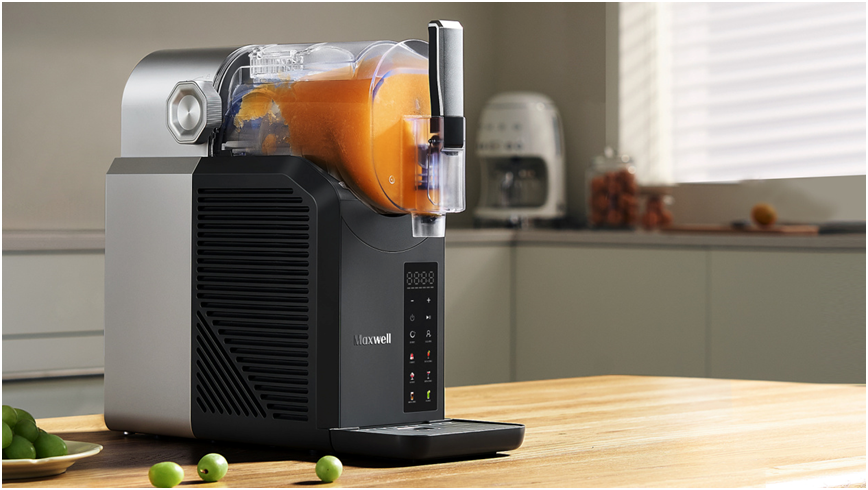
Core Insights - The article highlights the significant increase in ice drink consumption during the summer of 2025, driven by high-temperature alerts, while traditional ice drink preparation methods face challenges due to consumer "time anxiety" [1] - Maxwell has launched its first instant snow melting machine, which transforms liquid into snow in 20 minutes, marking a new era of "instant gratification" in home ice drink equipment [1] Group 1: Product Innovation - Maxwell's snow melting machine utilizes a 360° rotating mixing technology to overcome traditional cooling process limitations, achieving a transformation from liquid to -4°C snow in under 20 minutes, significantly improving efficiency compared to traditional methods [3] - The core rotating cold extraction technology replaces traditional blade crushing methods, resulting in smaller ice crystal diameters compared to conventional ice drinks [4] - The machine supports seven density adjustments, allowing users to switch between different textures, from fluffy fruit snow to creamy chocolate ice [5] Group 2: Market Trends - The global snow melting machine market is projected to reach $359 million by 2024, with China leading the Asia-Pacific region at a compound annual growth rate of 7%-8% [1] - The market is shifting from commercial dominance to household popularity, with 45% of household snow melting machine orders coming from second-tier cities in 2025, indicating young families as the main consumer group [11] Group 3: Consumer Insights - A report from the China Household Electrical Appliances Research Institute in 2024 indicates that 76% of users abandon ice drink equipment due to cleaning difficulties, highlighting a significant pain point [9] - Maxwell addresses these concerns with a 5-minute self-cleaning system and a noise level of 43dB, catering to small households' needs for quiet appliances [9] Group 4: Industry Evolution - The industry is entering a "technological equality" era, with a focus on sustainable technologies as new regulations in the EU mandate the phasing out of high-energy-consuming cooling devices by 2030 [11] - Maxwell is initiating a new product optimization project to further reduce energy consumption and diversify functionalities in its next-generation products [11]
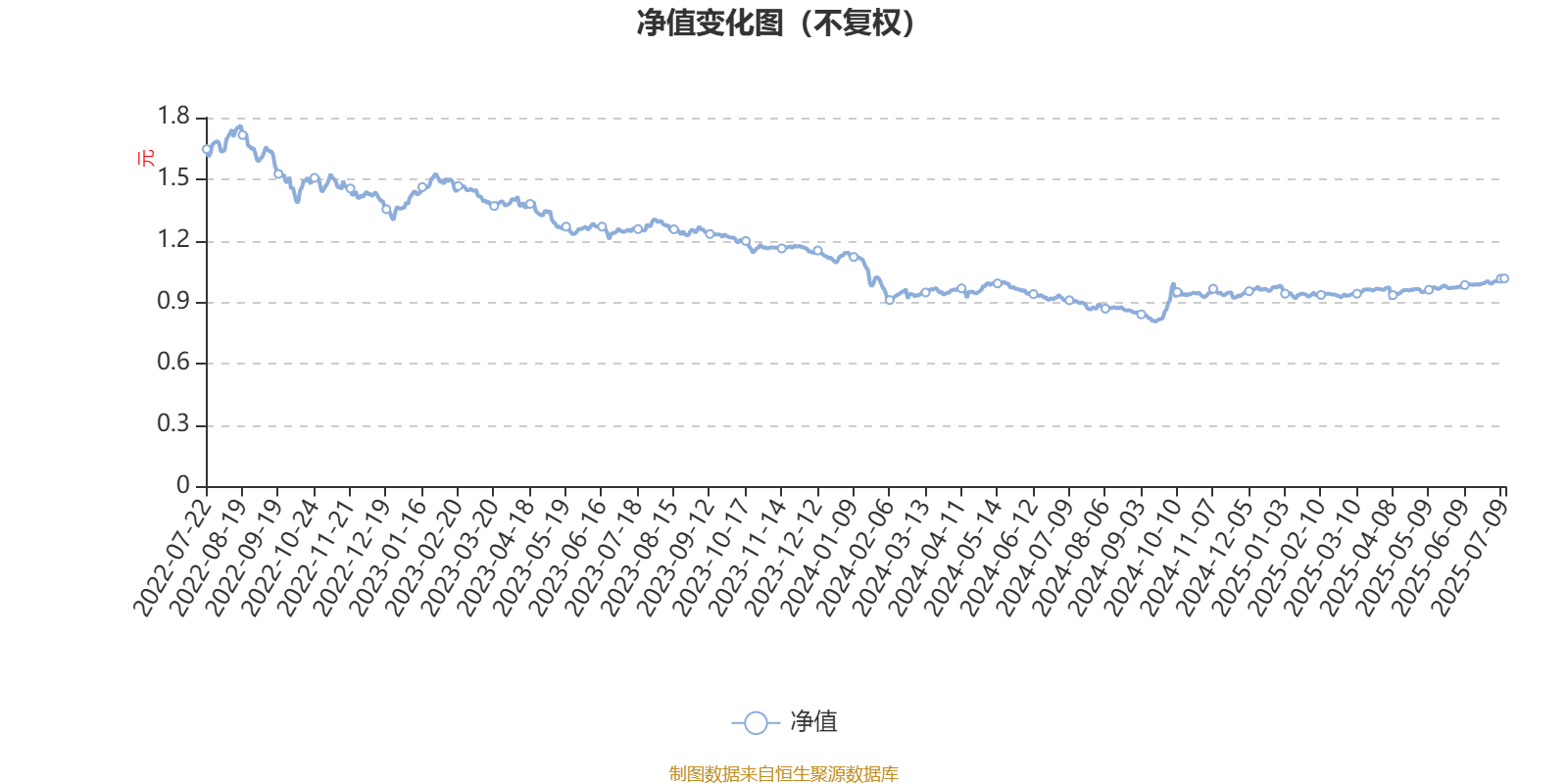
国联智选红利股票A:2025年第二季度利润25.9万元 净值增长率3.04%
Sou Hu Cai Jing· 2025-07-21 02:49
Core Viewpoint - The AI Fund Guolian Intelligent Selected Dividend Stock A (005569) reported a profit of 25,900 yuan for the second quarter of 2025, with a weighted average profit per fund share of 0.029 yuan. The fund's net value growth rate for the period was 3.04%, and the fund size reached 7.5541 million yuan by the end of the second quarter [2][13]. Fund Performance - As of July 9, the unit net value of the fund was 1.015 yuan. The fund's performance over various time frames is as follows: - 3-month net value growth rate: 8.46%, ranking 78 out of 110 comparable funds - 6-month net value growth rate: 8.90%, ranking 59 out of 110 comparable funds - 1-year net value growth rate: 11.74%, ranking 79 out of 110 comparable funds - 3-year net value growth rate: -36.68%, ranking 72 out of 78 comparable funds [2]. Risk Metrics - The fund's Sharpe ratio over the past three years was -0.5998, ranking 77 out of 78 comparable funds [7]. - The maximum drawdown over the past three years was 54.36%, with the worst quarterly drawdown occurring in Q1 2022 at 24.92% [9]. Investment Strategy - The fund employs a quantitative intelligent stock selection model, focusing on stocks with high cash dividend yields, stable dividends, and certain growth potential. It emphasizes individual stock profitability screening and crowding control, aiming for high excess returns through reasonable industry and stock diversification [2]. Portfolio Composition - As of June 30, the fund's average stock position over the past three years was 86.17%, compared to a comparable average of 88.08%. The fund reached a peak position of 92.4% at the end of 2021 and a low of 51.39% at the end of Q1 2024 [12]. - The top ten holdings of the fund include Gree Electric Appliances, Jiangsu Bank, Suzhou Bank, Qingdao Bank, Shanghai Bank, Beijing Bank, Industrial Bank, Chongqing Rural Commercial Bank, Caibai Co., and Industrial and Commercial Bank of China [16].
40℃高温引爆空调市场
Si Chuan Ri Bao· 2025-07-20 22:24
Core Insights - The extreme heat in Sichuan, with temperatures reaching 40°C, has significantly boosted air conditioning sales, leading to reports of stock shortages and increased demand for new units [1][2] - The average daily sales of air conditioners have surged from approximately 5 units in the off-season to over 45 units during the current heatwave, with a record of 56 units sold in a single day [2] - The sales of fans have also seen a dramatic increase, with daily sales rising from around 10 units to over 30 units, reflecting a growth of more than 100% [3] Sales Performance - Air conditioning sales have doubled, particularly for models priced below 3300 yuan, which are now sold out in some stores, requiring customers to wait over 10 days for restocking [2] - Online sales have also surged, with JD.com reporting a more than 200% increase in air conditioning transaction value and over 300% growth in fan sales since early July [3] Pricing and Discounts - Despite the surge in sales, air conditioning prices have not increased significantly, with popular models priced between 1599 yuan and 3699 yuan, and various subsidies available to consumers [4] - Consumers can save nearly 1000 yuan through various discounts, including government subsidies and trade-in programs, making the final purchase price significantly lower than online prices [4][5] - Offline prices are generally 5% to 8% lower than online prices, attributed to additional manufacturer and store discounts available in physical stores [5] Consumer Preferences - Energy efficiency and cooling performance are the primary considerations for consumers in the current heat, with many opting for models with the highest energy efficiency ratings [3] - The convenience of immediate purchase and installation is a key factor driving consumers to choose offline shopping, as they can take home fans immediately and have air conditioners installed the next day [5]
Electrolux Group Interim report Q2 2025
Prnewswire· 2025-07-18 05:18
Core Insights - The company reported a slight organic sales growth of 1.8% in Q2 2025, driven primarily by North America and Latin America, while Europe, Asia-Pacific, Middle East, and Africa experienced a slight decline [2][7] - Operating income improved significantly to SEK 797 million, with a notable contribution from North America, which offset increased costs due to U.S. tariffs [3][7] - The company aims to maintain its market position by offsetting tariff-related cost increases through price adjustments, while focusing on consumer-centric strategies and brand strengthening [4][5] Sales Performance - Net sales amounted to SEK 31,276 million, down from SEK 33,819 million, with organic sales growth of 1.8% compared to 6.8% in the previous period [7] - North America and Latin America were the main contributors to sales growth, while Europe, Asia-Pacific, Middle East, and Africa reported a slight decline [2][7] Operating Performance - Operating margin improved to 2.5%, up from 1.2%, primarily due to positive performance in North America [3][7] - The group recorded a positive effect of SEK 180 million from the divestment of the Kelvinator trademark portfolio in India [7] Financial Results - Income for the period was SEK 178 million, a significant improvement from a loss of SEK 80 million in the previous year [7] - Earnings per share increased to SEK 0.66 from a loss of SEK 0.30 [7] Strategic Focus - The company is committed to enhancing consumer-centric approaches and increasing operational speed and agility as part of its long-term strategy [4][5] - New marketing campaigns and product innovations, such as the launch of Frigidaire ovens with a stone-baked pizza mode, are part of the strategic initiatives [4]

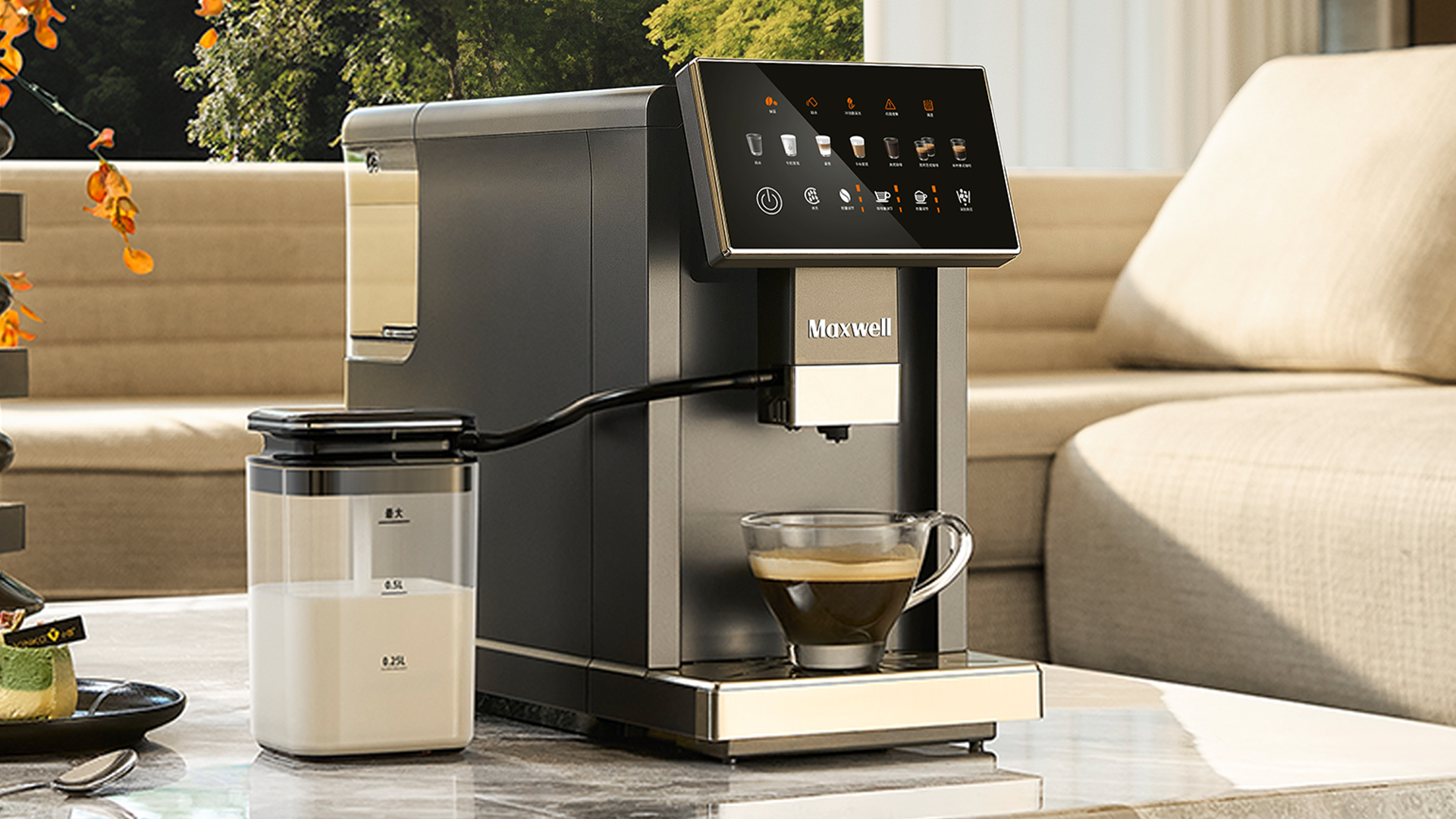
家用咖啡机迈入“专业级时代”,Maxwell以百年咖啡基因重塑家庭咖啡体验
Zhong Guo Chan Ye Jing Ji Xin Xi Wang· 2025-07-18 03:30
——意式全自动咖啡机销量逐年增长,技术革新撬动千亿市场 咖啡消费日常化催生家用设备升级 2025年,中国咖啡消费迈入"每日刚需"阶段:21.5%消费者每日饮用咖啡,一线城市年人均消费量突破300杯,接近国际成熟市场水平。与此同时,家庭场景 成为咖啡机市场增长最快领域,预计2025年中国市场规模达40亿元,年复合增长率超23%。 在此背景下,以高端生活电器为定位的Maxwell于今年6月推出了其首款全自动咖啡机,将咖啡百年烘焙工艺与智能科技融合。"当咖啡从'社交饮品'变为'生 活刚需',家庭咖啡机的专业度成为新痛点。"中国家电协会消费趋势研究员指出,"高端化、智能化机型正以每年25%增速抢占市场"。 一、商用级硬件下沉:破解家庭咖啡的"风味瓶颈" 1.双锅炉系统:萃取与奶泡的黄金平衡 传统家用机因单锅炉设计常导致咖啡萃取与奶泡制作无法同步——热咖啡等待奶泡时降温,口感直线下滑。Maxwell搭载商用级独立双锅炉,打发时间比单 锅炉机型缩短40%,"这相当于把专业咖啡馆级别的设备搬进厨房。"Maxwell研发经理在沟通中表示。 2.意大利ULKA水泵:压力萃取的灵魂 高压萃取前机器设定低压3秒预浸泡,避免咖啡萃取 ...