储能

Search documents
国泰海通|电新:美国缺电,AIDC配储星辰大海
国泰海通证券研究· 2026-02-13 11:57
Core Viewpoint - The development of AIDC (Artificial Intelligence Data Centers) is expected to exacerbate the electricity shortage in the U.S. and significantly impact the U.S. power grid, leading to increased demand for energy storage solutions [1][2]. Group 1: Impact on U.S. Power Grid - AIDC's growth is projected to increase the electricity gap in the U.S., putting more pressure on the power grid. In 2023, U.S. data centers consumed 176 TWh, accounting for 4.4% of total electricity consumption. The IEA forecasts that by 2028, electricity consumption could rise to between 325-580 TWh, representing a CAGR of 26.9% and increasing its share of total U.S. electricity demand to 6.7%-12% [2]. - The rising demand from data centers is expected to lead to higher electricity prices, particularly capacity prices. For instance, total wholesale electricity prices in PJM are projected to increase from $55.46/MWh in 2024 to $80.67/MWh in 2025, reflecting a year-over-year increase of 45% [2]. - The average queue time for data centers to connect to the grid in the U.S. is currently 1-3 years, with some areas like Northern Virginia experiencing wait times of up to 7 years. Approximately 70% of transformers in the U.S. power grid are already in "overdue service" condition [2]. Group 2: Energy Storage Solutions - The 800V DC (Direct Current) architecture is emerging as the optimal solution for next-generation power distribution, minimizing conversion losses and wiring volume in data centers. This architecture is crucial for managing power fluctuations during high-demand periods [3]. - Short-term strategies include using energy storage for peak shaving and frequency regulation, which can alleviate grid pressure and reduce connection times for data centers. In the medium to long term, renewable energy storage is expected to become the mainstream self-supply form of power [3]. - The economic viability of energy storage solutions is highlighted, with a Levelized Cost of Storage (LCOS) of $52/MWh for a 6-hour solar storage system after subsidies, which is competitive with gas turbines and more favorable than Solid Oxide Fuel Cells (SOFC) at $82/MWh [3]. Group 3: Future Demand for Data Center Energy Storage - Initially, data center energy storage is expected to serve peak shaving functions, with a configuration duration of approximately 4 hours and a 20% capacity. However, as data centers' electricity demand grows, they are projected to account for over 10% of U.S. electricity demand, leading to a significant increase in storage capacity requirements [4]. - Future projections indicate that from 2026 to 2030, the demand for data center energy storage will grow from 10.1 GWh to 165.7 GWh, with a CAGR of 101%, resulting in a cumulative demand of 353.9 GWh over four years [4].


果下科技(02655)获纳入恒生综合指数 有望成为港股通标的
智通财经网· 2026-02-13 11:04
Core Viewpoint - The Hang Seng Index Company announced the results of the quarterly review for the Hang Seng Index series, with GuoXia Technology (02655) being included in the Hang Seng Composite Index, effective from March 9, 2026 [1] Group 1: Company Developments - GuoXia Technology is set to be added to the Hang Seng Composite Index, which may lead to its inclusion in the Hong Kong Stock Connect due to meeting criteria such as market capitalization, liquidity, and listing duration [1] - A strategic cooperation agreement was signed between ShunNeng Electric and GuoXia Technology, focusing on enhancing collaboration in the energy storage sector to boost global brand influence and promote a greener energy structure [1]
钒钛股份签钒储能原料协议,推进钒电池业务与业绩改善
Jing Ji Guan Cha Wang· 2026-02-13 10:41
Group 1: Contract Developments - Vanadium Titanium Co., Ltd. signed a framework agreement with Dalian Rongke Energy Group to supply 20,000 tons of vanadium products for the year 2026 [2] - This agreement is a core business event for 2026, and its execution may impact the company's vanadium product sales and market expectations [2] Group 2: Business Progress - The company has been focusing on vanadium battery energy storage, with a partnership with Dalian Rongke that began in 2021 and has deepened over time [3] - A joint venture has established a vanadium electrolyte production line with a capacity of 2,000 cubic meters per year, and plans for larger scale production lines are underway [3] - National policies on new energy storage, such as the installation target of 180 million kilowatts, align well with the company's business and may provide external support for long-term growth [3] Group 3: Performance Strategy - Facing performance pressure in 2025, with an expected net loss of 80 million to 110 million yuan, the company plans to optimize operations through various measures [4] - Measures include increasing vanadium product capacity, promoting new titanium dioxide production lines, adjusting product structure, reducing costs, and expanding sales channels [4] - The effects of these measures are expected to gradually manifest in 2026 [4] Group 4: Industry Policies and Environment - The vanadium-titanium sector is significantly driven by policies, with new energy storage initiatives expected to create substantial investment opportunities [5] - The company holds exclusive development rights to the Panzhihua vanadium-titanium magnetite resources, establishing a full industry chain layout [5] - Long-term competitiveness is closely linked to the sustainability of policies, and investors should monitor the progress of relevant policy implementations and industry competition [5]

安克创新:阳台光储产品在欧洲市场表现优异
Zheng Quan Ri Bao Zhi Sheng· 2026-02-13 09:41
Core Viewpoint - Anker Innovations has established itself as a leader in the global balcony energy storage market, with strong performance in the European market [1] Market Expansion - The company is intensifying its efforts to expand beyond Germany, indicating significant growth potential in both regional and channel coverage [1] - Current focus areas for expansion include Northeast and Central Europe, aiming to enhance market penetration through refined operations [1] Product Strategy - Anker Innovations plans to adjust its product mix to meet the differentiated needs of regional consumers, which is part of its strategy to increase market share in Europe [1]
海辰储能拿下KNESS集团2GWh合作
起点锂电· 2026-02-13 08:51
Core Insights - Recently, Haicheng Energy signed a strategic cooperation framework agreement with KNESS Group in Warsaw, Poland, focusing on the Ukrainian market and planning to implement a total of 2GWh energy storage projects over the next two years [2] - The collaboration includes various energy storage system products, with the first batch of approximately 400MWh scheduled for delivery in Q1 2026 [2] - The partnership aims to enhance project planning, technical routes, and delivery assurance for the Ukrainian energy storage market [2] Group 1 - The energy transition in Eastern Europe is accelerating due to multiple factors, including renewable energy integration and the need for grid resilience [2] - The demand for long-duration energy storage is increasing to support peak shaving, grid regulation, and system stability, especially given the diverse climate conditions and significant winter load fluctuations in the region [2] - Haicheng Energy highlighted the performance and manufacturing capabilities of its ∞Power 6.25MWh 2-4 hour energy storage system, which offers high integration, energy density, safety, efficiency, and economic viability [3] Group 2 - The strategic cooperation is seen as a recognition of past achievements and a significant step towards future market positioning [3] - Both companies plan to strengthen collaboration in project development, system integration, and delivery implementation to promote large-scale applications of long-duration energy storage solutions in Ukraine [4] - The partnership aims to contribute to a safer, more efficient, and greener energy system in Eastern Europe [4]

潜力标的亮相:数智化工商业储能第一股
行家说储能· 2026-02-13 07:13
Core Viewpoint - The article highlights the ongoing trend of energy storage companies, particularly Weiheng Intelligent Technology Co., Ltd., seeking to go public in Hong Kong, emphasizing its strong backing from notable investors and its strategic focus on commercial energy storage as a key growth area [2][4]. Group 1: Business Focus and Growth - Weiheng Intelligent has chosen to focus deeply on commercial energy storage, a segment with strong mid-to-long-term demand certainty and proven business models overseas. In 2023, this segment contributed 88.84 million yuan in revenue, accounting for 33.3% of total revenue, which is projected to rise to 220 million yuan (82.6%) in 2024 [6][10]. - The company has seen significant growth in overseas revenue, with its share increasing from 14.5% in 2023 to 50.6% in 2024, and maintaining 44.7% in the first three quarters of 2025. The European market is a major contributor, accounting for 79.1% of overseas revenue [10][13]. Group 2: Technological Edge and Digitalization - The article emphasizes that the true value in energy storage lies in software platforms rather than hardware alone. Weiheng Intelligent is positioned as a key player in energy digitalization, integrating hardware with software to create a closed-loop system for energy trading [17][24]. - The global market for digital energy solutions is expected to reach 301.9 billion yuan by 2030, with a compound annual growth rate of 20.8% from 2024 to 2030, indicating a significant growth opportunity for Weiheng Intelligent [18]. Group 3: Financial Performance and Market Position - Weiheng Intelligent's revenue from energy storage solutions has shown substantial growth, with figures of 267 million yuan, 268 million yuan, and 476 million yuan for 2023, 2024, and the first three quarters of 2025, respectively, reflecting a year-on-year growth of 281% [30]. - The company has improved its gross margin from 8.3% to 19.1%, driven by scale effects and a higher-value product mix. The gross margin for commercial energy storage solutions was 23.5% in the first three quarters of 2025, indicating a successful business model [30]. Group 4: Strategic Positioning and Future Outlook - Weiheng Intelligent is not just a follower in the energy storage sector but a pioneer in completing the "device-platform-operation" loop in commercial storage. The company is building capabilities that are essential for the future energy internet, which is crucial for its IPO evaluation [28]. - The company has established a virtual power plant (VPP) core platform and is expanding its operational capabilities across various regions, with plans to obtain operational qualifications in key markets by early 2026 [25][28].

储能安全痛点难破?国电投中央研究院张蔚琦:AI + 大模型破解五大瓶颈
Zhong Guo Neng Yuan Wang· 2026-02-13 07:06
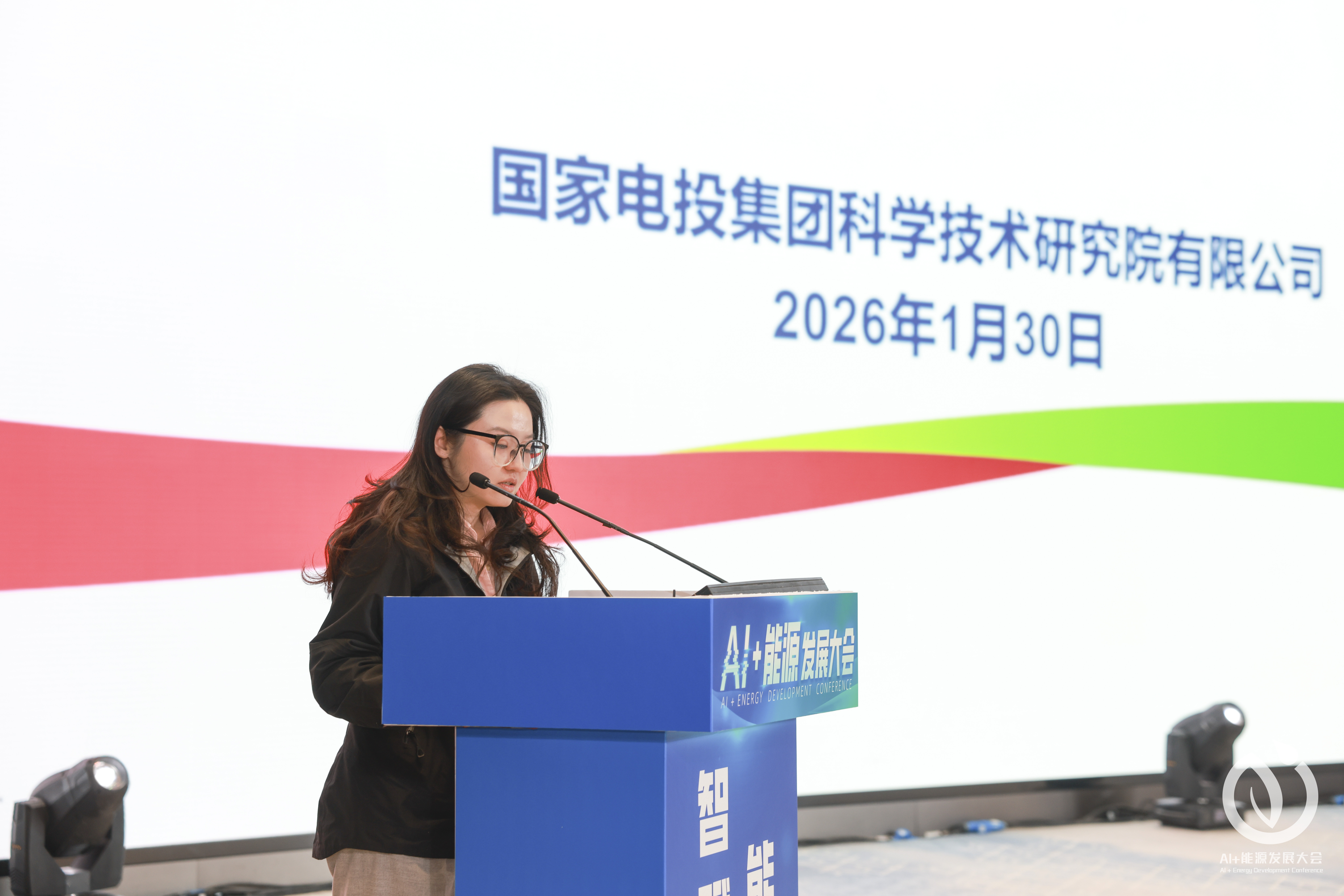
Core Insights - The AI+Energy Development Conference held in Beijing focused on the integration of AI and the energy sector, with over 300 representatives from government, academia, and industry discussing new pathways for development [1] - Zhang Weiqi from State Power Investment Corporation emphasized the need for an intelligent safety system in energy storage, driven by data and supported by mechanisms and large models [1][5] Industry Overview - AI technology has permeated all aspects of the power industry, including generation, transmission, distribution, and consumption, laying the groundwork for focusing on energy storage safety [4] - The demand for energy storage is expected to surge, with China's electrochemical storage capacity projected to reach 37.13 GW by 2024, a year-on-year increase of over 150% in 2025 [4] Key Pain Points - Five core pain points in the energy storage sector were identified: 1. Diverse technology routes leading to complex material systems 2. Lack of transparency in fault mechanisms, making prevention difficult 3. Low utilization of operational data, affecting decision-making and profitability 4. Fragmented operational processes reliant on manufacturers with inconsistent standards 5. Frequent safety incidents, complicating risk management [4][5] Proposed Solutions - To address these challenges, the company aims to break down data silos and build a comprehensive database, utilizing AI for intelligent operational predictions and lifespan optimization [5] - Starting in 2024, State Power Investment Corporation will implement policies requiring energy storage stations to establish independent safety monitoring platforms and include annual safety reports in assessments [5] Focused Applications - The company has identified two core scenarios for AI application: safety risk assessment and fault diagnosis, as well as smart operations and maintenance [5][6] - Key performance indicators for AI applications include battery state assessment accuracy of no less than 95%, fault diagnosis time under 2 minutes, and operational decision-making efficiency within 5 minutes [5] Practical Implementation - The company has developed a safety monitoring and early warning platform for energy storage, which has been deployed at a 200 MW/400 MWh shared storage station in Yunnan [6] - The platform has transformed safety management from reactive to proactive, enhancing operational efficiency and safety levels [6][7] Technological Innovations - Key innovations include digital twin technology for real-time monitoring, graded alarm systems to reduce operational burdens, and intelligent algorithms for precise battery state analysis [7] - The company has also developed two AI agents to enhance operational decision-making and offline assessment capabilities, improving efficiency and standardization [7][8] Future Directions - The company plans to standardize energy storage systems and expand AI applications in safety across various sectors, contributing to the development of a safer, more efficient, and intelligent new power system [8]

营收暴增281%却连亏三年,为恒智能拿什么闯关港股?
Zhi Tong Cai Jing· 2026-02-13 06:27
Core Viewpoint - The company is experiencing unprecedented growth in the lithium-ion battery energy storage system sector, driven by a strategic shift towards high-margin commercial energy storage solutions, despite ongoing operational losses and cash flow challenges [1][2][3]. Group 1: Business Strategy and Financial Performance - The company is transitioning from a focus on low-margin source network energy storage solutions to higher-margin commercial energy storage, with revenue from this segment increasing from 33.3% in 2023 to 69.4% by September 30, 2025, and gross margin improving from 8.3% to 19.1% [2]. - The company reported a significant revenue growth of 281.5% year-on-year for the first nine months of 2025, largely due to this strategic shift [2]. - Despite revenue growth, the company has recorded continuous operational losses, with losses of RMB 154 million, RMB 205 million, and RMB 40 million for the years 2023, 2024, and the first nine months of 2025, respectively [3]. Group 2: Technological Advancements and Market Position - The company has developed proprietary technologies, including Power Conversion Systems (PCS), Battery Management Systems (BMS), and Energy Management Systems (EMS), differentiating itself from traditional integrators [2]. - The company utilizes its self-developed WHES OS and WHES VPP virtual power plant platform to optimize energy management through AI algorithms, enhancing its service offerings and transitioning towards an Energy as a Service (EaaS) model [3]. Group 3: Global Expansion and Competitive Landscape - The company is implementing a dual-engine strategy of "domestic + overseas" to mitigate regulatory risks and capture global market opportunities, establishing 11 service centers and 6 regional offices abroad [4][5]. - The company has entered the virtual power plant operation sector, with approximately 24 MWh of aggregated energy capacity established, aiming to create a second growth curve based on energy data [5]. - Over 40% of the company's revenue is derived from overseas markets, with a focus on high-profit potential regions like North America, although compliance and regulatory challenges may pose risks [5]. Group 4: Market Challenges and Future Outlook - The company faces significant challenges from volatile raw material prices, with forecasts indicating a decline in lithium carbonate prices from RMB 0.5/Wh in 2023 to RMB 0.3/Wh by 2030, which could impact inventory management [5]. - The company must demonstrate its ability to achieve profitability and generate positive cash flow without relying on external funding, especially as the lithium battery storage industry enters a phase of consolidation and price correction [6].
新股前瞻 | 营收暴增281%却连亏三年,为恒智能拿什么闯关港股?
智通财经网· 2026-02-13 06:24
Core Viewpoint - The company is experiencing unprecedented growth in the lithium-ion battery energy storage sector, driven by a strategic shift towards high-margin commercial energy storage solutions, despite ongoing operational losses and cash flow challenges [1][3]. Group 1: Business Strategy and Revenue Structure - The company is undergoing a strategic transition, shifting its focus from grid-side energy storage solutions to high-margin commercial energy storage, with nearly 60% of its revenue in 2023 coming from grid-side solutions [1]. - By 2025, the revenue contribution from the commercial energy storage segment is expected to rise significantly from 33.3% in 2023 to 69.4%, with gross margins improving from 8.3% to 19.1% [2]. - The company has developed proprietary capabilities in power conversion systems (PCS), battery management systems (BMS), and energy management systems (EMS), allowing it to optimize energy management in commercial scenarios [2]. Group 2: Financial Performance and Challenges - The company has recorded continuous losses, with losses of RMB 154 million, RMB 205 million, and RMB 40 million for the years 2023, 2024, and the first nine months of 2025, respectively [3]. - The reduction in losses in 2025 is primarily attributed to decreased share-based payment expenses rather than operational profitability, while R&D expenditures remain high [3]. - The company faces pressure to transition from a "scale-oriented" model to a "self-sustaining" model amid tightening global liquidity [3]. Group 3: Global Expansion and Market Position - The company is implementing a dual-engine strategy of "domestic + overseas" to mitigate regulatory risks and capture global market opportunities [4]. - It has established a global service network with 11 service centers and 6 regional offices, enhancing customer retention and transitioning from a device seller to an energy service provider [5]. - Over 40% of the company's revenue comes from overseas markets, with a focus on the high-profit potential North American market, although compliance and regulatory challenges may pose risks [5]. Group 4: Market Trends and Future Outlook - The company is entering the virtual power plant operation sector with a capacity of approximately 24MWh, aiming to leverage energy data for growth [5]. - Fluctuations in raw material prices, particularly lithium carbonate, are a significant variable affecting system integrators, with prices expected to drop from RMB 0.5/Wh in 2023 to RMB 0.3/Wh by 2030 [5]. - The company must demonstrate its ability to achieve profitability and generate positive cash flow without relying on external funding as the lithium battery storage industry enters a phase of competition and price clearing [6].
33亿元!鹏辉能源在河南再落两子
中关村储能产业技术联盟· 2026-02-13 05:36
Core Viewpoint - Penghui Energy is solidifying its leading position in the global energy storage market through continuous capacity expansion, as evidenced by its recent investment plans [3][4]. Investment Plans - On February 12, Penghui Energy announced two major investment projects: a 120Ah cell production project in Zhengyang, Henan, with an investment of 2.1 billion yuan, and a 587Ah and 120Ah battery production project in Yicheng, Zhumadian, with an investment of 1.2 billion yuan [3]. - The Zhengyang project will establish four production lines for 120Ah batteries, while the Zhumadian project will set up one production line for 587Ah batteries and one for 120Ah batteries, focusing on high-performance battery product development and production [3]. Strategic Goals - The purpose of these projects is to optimize capacity layout, meet future business development and market expansion needs, and enhance the company's business influence and overall competitiveness [3]. Funding Sources - The funding for these projects will come from the company's own or self-raised funds, with plans to use a combination of equity and debt financing methods, including but not limited to bank financing, convertible bonds, preferred shares, and private placements [3][4]. Current Production Bases - Currently, Penghui Energy has established production bases in multiple locations, including Guangzhou, Zhuhai, Zhumadian, Changzhou, Liuzhou, Foshan, Quzhou, Qingdao, and even in Vietnam [4].