
证券交易所

Search documents
联交所就优化结构性产品上市制度建议征询意见
智通财经网· 2025-09-30 09:19
Core Viewpoint - Hong Kong Exchanges and Clearing Limited (HKEX) is seeking market feedback on proposed enhancements to the listing regime for structured products, aiming to improve market competitiveness, quality, investor protection, and efficiency [1] Group 1: Enhancing Market Competitiveness - The minimum issuance price for derivative warrants is proposed to be reduced from HKD 0.25 to HKD 0.15, and the minimum issuance price requirement for bull and bear certificates will be removed to broaden product terms [2] - The eligibility threshold for issuing structured product ETFs will be lowered from a public holding market value of at least HKD 4 billion over 60 days to a total asset value of at least HKD 1 billion [2] - New additional ratios will be introduced to expand the conversion ratios for derivative warrants and bull and bear certificates [2] Group 2: Improving Market Quality and Enhancing Investor Protection - The minimum net asset value requirement for issuers will be increased from HKD 2 billion to HKD 5 billion, and issuers must be regulated entities [3] - Issuers (or guarantors) must obtain investment-grade ratings from all credit rating agencies for which they seek credit ratings [3] - The publication deadline for interim financial reports for issuers and guarantors will be shortened to within three months after the end of the relevant interim period [3] Group 3: Enhancing Market Efficiency - The requirement for publishing launch announcements will be removed, and the listing documents for further issuance of structured products will be simplified to reduce administrative burdens on issuers without compromising investor information [4] - Securities dealers that are also issuers will be allowed to provide discounts, subject to the safeguards outlined in the listing rules [4] - The proposals aim to promote product innovation, enhance market efficiency, and maintain high levels of market quality and investor protection [4]

盘点2025年前三季度全球IPO:港交所66只新股融资约1823亿港元位列第一!融资额同比飙升逾两倍
Ge Long Hui A P P· 2025-09-30 08:13
Group 1 - The core viewpoint of the article highlights the strong momentum of the Hong Kong IPO market in the first three quarters of 2025, driven by policies encouraging mainland companies to list in Hong Kong and improved approval processes for new listings [1] - The report indicates that international capital is flowing back to Hong Kong, significantly improving liquidity and leading to a steady recovery in market valuations [1] - Hong Kong Stock Exchange leads the global IPO financing rankings for the first three quarters of 2025, with the New York Stock Exchange and NASDAQ in second and third place, respectively [1] Group 2 - In the first three quarters of 2025, Hong Kong's market saw the issuance of 66 new stocks, a significant increase from 45 in the same period of 2024 [1] - The total financing amount for new stocks in Hong Kong reached approximately 182.3 billion HKD, which is more than double the 55.6 billion HKD raised in the same period of 2024 [1] - The article emphasizes the strong performance of the Hong Kong IPO market compared to other major exchanges, with the Indian National Stock Exchange ranking fourth and the Shanghai and Shenzhen Stock Exchanges ranking fifth and eighth, respectively [1]

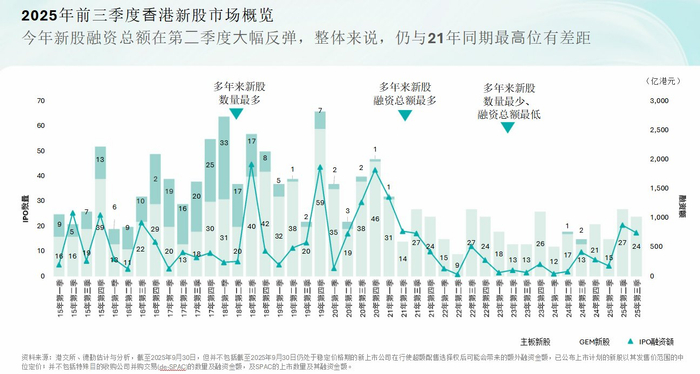
今年上半年港交所融资规模全球第一!国际机构看好中国资产
Sou Hu Cai Jing· 2025-09-29 15:04
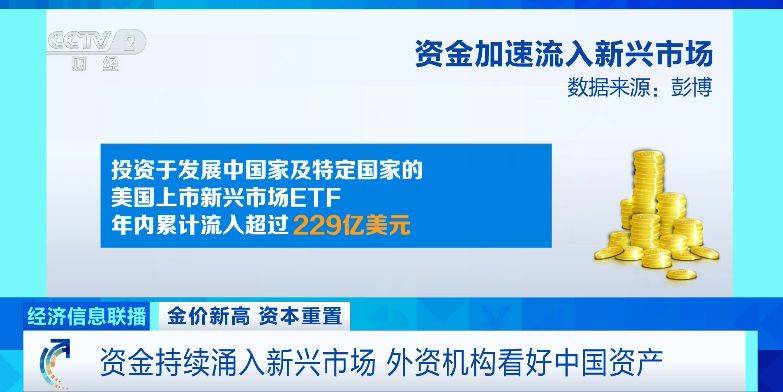
Group 1 - The global capital flow pattern is changing, with emerging markets experiencing significant impacts [1] - Emerging market assets have seen a notable increase this year, with the MSCI Emerging Markets Index rising approximately 25% and the MSCI China Index increasing over 30% [3] - There has been a substantial acceleration in capital inflows, with over $22.9 billion flowing into emerging market ETFs listed in the US this year [3] Group 2 - In August, emerging market stocks and bonds attracted nearly $45 billion in foreign investment, the highest level in nearly a year, with China accounting for $39 billion of this total [3] - The Hong Kong Stock Exchange ranked first globally in financing scale during the first half of the year, indicating a significant recovery in interest towards Chinese assets [7] - Brazil has emerged as a key destination for international capital, with foreign net purchases of assets on the São Paulo Stock Exchange reaching approximately 26.9 billion reais (about 35.9 billion yuan), the highest since 2022 [9]
【锋行链盟】港交所分拆子公司上市核心要点
Sou Hu Cai Jing· 2025-09-27 16:19
Regulatory Framework - Hong Kong Exchanges and Clearing Limited (HKEX) must comply with the Hong Kong Stock Exchange (HKSE) regulations for the spin-off of subsidiaries, primarily guided by the Listing Rules, specifically GL15 [2] - Key regulatory points include the requirement for the parent company to retain sufficient business operations and assets post-spin-off to maintain its listing status, typically requiring a market value of at least 10% of the pre-spin-off total market value [2] Strategic Intent - The core strategic intent behind the spin-off of subsidiaries includes value release and a focus on core business operations [2] - Spin-offs allow the parent company to concentrate on its primary functions, enhancing operational efficiency [2] Structural Design - The structural design of the spin-off must address three main issues: business independence, asset and liability separation, and shareholder rights protection [2] - Business independence requires clear delineation between the parent and subsidiary's operations, ensuring no direct competition and independent management [2] - Shareholder rights are protected through fair treatment, typically via the distribution of subsidiary shares or cash alternatives, ensuring minority shareholders can participate in the subsidiary's listing benefits [2] Financial and Market Impact - The spin-off directly influences the financial and market expectations for both HKEX and its subsidiaries [3] - The parent company's financials may be impacted by the removal of the subsidiary's assets and liabilities from consolidated statements, potentially reducing reported income and profits [5] - Post-spin-off, the subsidiary can be valued independently based on its industry-specific metrics, which may enhance its market perception and financing capabilities [5] - Market reactions may vary, with initial stock price increases for the parent company due to value reassessment, but potential concerns about reduced operational synergies may arise [5] Challenges and Risks - The spin-off process must manage several risks, including regulatory approval challenges, potential loss of operational synergies, and market acceptance of the subsidiary's business model [4][5] - Shareholder disputes may occur if some investors believe that the synergy between the parent and subsidiary is more valuable than independent operations [5]
【锋行链盟】港交所SPAC上市核心要点
Sou Hu Cai Jing· 2025-09-27 16:19
Core Viewpoint - The Hong Kong Stock Exchange (HKEX) has officially implemented the SPAC (Special Purpose Acquisition Company) listing regime starting January 1, 2022, aiming to balance innovation with investor protection through a stringent regulatory framework [2]. Group 1: Sponsor Qualifications and Responsibilities - At least one sponsor must hold a license from the Hong Kong Securities and Futures Commission for either Type 6 (advising on corporate finance) or Type 9 (asset management), or be a qualified "senior person" with substantial capital market experience and a good compliance record [6]. - Sponsors are required to disclose their background, professional experience, and past performance to ensure they have the capability to drive acquisitions [6]. - Sponsors must subscribe to at least 10% of the SPAC shares with their own funds, aligning their interests with those of investors [6]. Group 2: SPAC Listing Conditions - The market capitalization of the SPAC at the time of listing must be at least HKD 1 billion, which is higher than some markets like the U.S. that do not have a clear minimum [6]. - The issue price must not be lower than HKD 10 per share to prevent dilution of investor rights [6]. - Public shareholding must be at least 25%, with a minimum of 30 public shareholders to avoid excessive concentration of ownership [6]. Group 3: Fundraising and Fund Custody - Funds raised through the IPO (after deducting issuance costs) must be fully deposited into an independent trust account and can only be used for specific purposes such as acquiring target companies, paying acquisition-related fees, or repurchasing shares if shareholders exercise their redemption rights [4]. - The trust account will be managed by an independent trustee to ensure funds are used exclusively for their intended purposes, reducing the risk of misappropriation [4]. Group 4: Acquisition Transaction (De-SPAC) Requirements - The target company must meet the main board listing requirements of HKEX, ensuring it has sustainable operational capabilities [4]. - An independent financial advisor must be hired to value the target company, and the valuation methods and key assumptions must be disclosed [7]. - The acquisition transaction must be approved by a special resolution of at least 75% of SPAC shareholders, with related sponsors required to abstain from voting [7]. Group 5: Shareholder Rights Protection - Shareholders who disagree with the acquisition can request to redeem their shares at a price not lower than the issue price, ensuring they are not forced into an acquisition they do not support [8]. - There are limits on dilution, with sponsor shares and warrants subject to a maximum dilution cap post-acquisition to protect public shareholders' interests [8]. Group 6: Time Limits and Failure Handling - SPACs must complete their acquisition within 24 months of listing, with a one-time extension of up to 6 months allowed, totaling a maximum of 30 months [8]. - If the acquisition is not completed within the time frame, the SPAC must initiate liquidation and return the principal to investors, along with interest [8]. Group 7: Information Disclosure and Regulation - SPACs are required to regularly disclose the use of funds, acquisition progress, and potential risks [10]. - HKEX will conduct comprehensive oversight of SPACs throughout their lifecycle, focusing on sponsor qualifications, fund safety, and fairness of acquisitions to prevent shell companies and market manipulation [10].
纳斯达克拟推上市新规,影响有多大?
Zheng Quan Shi Bao· 2025-09-27 04:22
纳斯达克上市门槛或提高。 "我们还在评估新规影响,还不确定怎么调整。"王圣告诉记者。王圣是深圳一家跨境电商企业的创始 人,一直在为公司境外上市做准备。美国纳斯达克交易所近期向监管部门提交修订企业上市的标准,使 得不少计划赴美上市的企业受到影响。 根据纳斯达克向美国证券交易委员会(SEC)提交的文件,拟对首次上市与持续上市标准进行新一轮修 订。接受采访的业内人士认为,此次拟议的新规显著提高了公司首次公开募股(IPO)时的公开流通股 规模和最低IPO募集资金门槛,并进一步收紧了不符合持续上市标准企业的暂停交易及退市程序。而对 于中国企业,纳斯达克还额外提高了标准。如果新规通过,意味着赴美上市的中国企业和在纳斯达克上 市的中概股将受到不小影响。 纳斯达克上市门槛或提高 而作为纳斯达克上市最主要的来源国家,近两年中国企业赴美上市热情持续高涨,并且集中在中小企 业。证券时报记者统计发现,今年年初至今,共有59家企业通过公开发售形式在纳斯达克上市,共募集 资金10.2亿美元,平均募集资金1730万美元,募集资金超过2500万美元的企业仅有3家。如果新规最终 落地,对中国企业赴纳斯达克上市将会产生较大影响。 "这些规模极小 ...

纳斯达克拟出台新规提高上市门槛
Zheng Quan Shi Bao· 2025-09-27 01:37
Core Viewpoint - The proposed new regulations by NASDAQ significantly increase the listing requirements for companies, particularly affecting Chinese enterprises planning to go public in the U.S. market [1][2][3] Group 1: Listing Requirements - NASDAQ's proposed regulations raise the minimum public float market value for IPOs to $8 million for the global market and $5 million for the capital market, with a unified increase to $15 million for companies listing based on net profit [2] - Chinese companies are required to raise at least $25 million through public offerings in their IPOs, which is a substantial increase compared to previous standards [2][3] - The new rules aim to enhance market integrity and investor protection, addressing concerns over small IPOs that may not generate sufficient compliance revenue for NASDAQ [2][3] Group 2: Impact on Chinese Companies - In the current year, 59 companies have gone public on NASDAQ, raising a total of $1.02 billion, with an average fundraising of $17.3 million, indicating that only three companies exceeded the new $25 million threshold [3] - The increase in listing standards is expected to significantly impact the ability of small Chinese enterprises to list on NASDAQ, as many currently do not meet the new requirements [3][4] Group 3: Delisting Pressures - The proposed regulations introduce new conditions that could lead to immediate delisting or trading suspension for companies failing to meet ongoing listing requirements, such as maintaining a market value of at least $5 million for ten consecutive trading days [4] - Previously, companies were given a grace period to comply with listing standards, but the new rules would eliminate this buffer, increasing the risk of delisting [4] Group 4: Preparation for IPO - Companies intending to go public in the U.S. should prepare in advance, assessing their current stage and considering alternative markets such as the New York Stock Exchange or Hong Kong Stock Exchange, which have less stringent requirements [5][6] - It is recommended that companies actively engage with cornerstone investors to meet the new minimum fundraising requirement of $25 million and focus on their core business to enhance their market position [6]
【锋行链盟】港交所上市公司资本运作方式及核心要点
Sou Hu Cai Jing· 2025-09-26 18:23
Capital Operations of Hong Kong Stock Exchange - The Hong Kong Stock Exchange (HKEX) is recognized as a major global financial center with a highly market-oriented and internationalized capital operation system [2] - HKEX offers a mature regulatory framework that supports various capital operation methods including equity financing, debt financing, mergers and acquisitions, asset securitization, equity incentives, spin-off listings, privatization, and other innovative tools [2][11] Equity Financing - Equity financing in the Hong Kong market is known for its flexibility and efficiency, supporting both IPOs and diverse refinancing channels [2] - Initial Public Offerings (IPOs) are a primary method for companies to raise equity, characterized by a registration system that emphasizes information disclosure and high review efficiency, typically taking 6-12 months [3] - Various refinancing methods include: - Placing: Selling new shares to specific investors without a general offer [3] - Rights Issue: Offering new shares to existing shareholders based on their holdings [3] - Open Offer: Similar to rights issues but open to the public [3] - Consideration Issue: Issuing shares as payment for acquisitions [3] - Share Option Scheme: Issuing options to core employees or management to purchase shares at a predetermined price [3] Debt Financing - Companies listed on HKEX can issue various types of bonds, with flexible terms and multiple currencies (HKD, USD, RMB) [3] - Corporate Bonds and Convertible Bonds (CB) are common, with CBs providing both debt and equity characteristics, allowing investors to convert bonds into shares [3] - The issuance of perpetual bonds is also noted, which allows issuers to defer interest payments and may be classified as equity for accounting purposes [4][8] Mergers and Acquisitions - The M&A framework in Hong Kong is governed by the "Code on Takeovers and Mergers," focusing on shareholder fairness [4] - Key methods include: - Takeover Offer: A direct offer to acquire shares from shareholders [4] - Scheme of Arrangement: A court-approved plan for acquiring shares [4] - Share-for-Share Swap: Acquiring a company by exchanging shares [4] - Reverse Takeover: A non-listed company acquiring a listed shell company to gain a public listing [4] Asset Securitization - The acceptance of Asset-Backed Securities (ABS) in the Hong Kong market is high, with underlying assets including receivables, lease rights, and infrastructure revenue rights [5] - The operation model involves transferring underlying assets to a Special Purpose Vehicle (SPV) that issues securities backed by future cash flows [5] Equity Incentives - Companies often use equity incentive tools to align the interests of management and shareholders [6] - Common methods include Share Option Schemes and Share Award Schemes, which provide rights to purchase shares or grant shares directly to employees [6][7] Spin-off Listings - Spin-offs allow parent companies to list subsidiaries independently, enhancing the subsidiary's financing capabilities and potentially increasing the valuation of both entities [9][10] Privatization and Delisting - Privatization occurs when major shareholders or consortiums buy out public shares to delist the company, often due to undervaluation or high compliance costs [10] - Methods include voluntary buyouts and share repurchase programs, which can signal undervaluation to the market [10] Other Innovative Tools - The introduction of SPACs (Special Purpose Acquisition Companies) in 2022 provides a new pathway for companies to go public through acquisition [10]
花旗集团在香港交易所的持股比例于9月22日从5.02%降至4.99%
Mei Ri Jing Ji Xin Wen· 2025-09-26 09:16
每经AI快讯,9月26日,香港交易所信息显示,花旗集团在香港交易所的持股比例于9月22日从5.02%降 至4.99%。 ...

香港交易所(00388):没收未领取的2019年度第一次中期股息
智通财经网· 2025-09-26 08:41
智通财经APP讯,香港交易所(00388)发布公告,香港交易所于2025年8月8日宣布,根据香港交易所《组 织章程细则》,于2019年9月26日派付而于2025年9月26日仍为未领取的2019年度第一次中期股息每股 3.72港元将予没收及复归香港交易所。因此,仍未被领取的2019年度第一次中期股息合共1868.65万港元 已于今天被没收并复归香港交易所。 ...