
企业退市

Search documents
华莱士宣布退市,上市10年仅融资1000万
21世纪经济报道· 2026-03-11 05:45
Core Viewpoint - Wallace, known as the "King of Western Fast Food," has officially announced its departure from the capital market after nearly ten years on the New Third Board, with its stock set to be delisted on February 12, 2026 [1][4]. Group 1 - The decision to delist was made after considering the company's current operational situation, market environment, and long-term strategic planning, aiming to improve decision-making efficiency and reduce operational costs [4]. - In the "2023 China Western Fast Food Category Development Report," Wallace ranked third from the bottom in per capita consumption among the top ten Western fast food brands in China, with an average spending of 18.9 yuan [4]. - The delisting decision was not sudden; Wallace announced its intention to apply for delisting on January 9, 2026, and officially suspended trading on January 22, 2026 [6]. Group 2 - According to Wallace's 2025 semi-annual report, the company reported approximately 4.625 billion yuan in revenue and over 121 million yuan in net profit for the first half of 2025, marking a 35.32% increase year-on-year [6]. - Despite the revenue remaining stable compared to the previous year, it marked the first instance of negative growth in revenue for the company [6]. - From 2022 to 2024, the company's revenue growth rate declined from 24.36% to 13.31%, indicating a continuous slowdown in performance [6]. - Since its listing in April 2016, Wallace has only raised 10 million yuan through market financing, which has not significantly aided its store expansion and business development [6]. - The costs associated with compliance audits, financial disclosures, and ongoing regulatory oversight have outweighed the benefits of being listed, leading to the decision to quietly exit the New Third Board [6].


华莱士正式宣布退市
第一财经· 2026-03-11 04:58
Core Viewpoint - Wallace, known as the "King of Fast Food," has officially announced its delisting from the New Third Board after nearly ten years, facing challenges from competitors and slowing growth [6][7]. Group 1: Company Announcement - On February 11, 2026, Fujian Huashi Food Co., Ltd. announced the termination of its stock listing on the National Equities Exchange and Quotations, effective February 12, 2026, marking the end of its nearly decade-long presence in the capital market [6]. - The company cited the need to improve decision-making efficiency and reduce operational costs in light of its current business situation and market environment as reasons for the delisting [6]. Group 2: Market Context - The decision to delist was not sudden; the company had announced its intention to apply for delisting on January 9, 2026, and officially suspended trading on January 22, 2026 [7]. - Wallace is attempting to find new avenues for growth amid fierce competition from emerging players like Tastin [6].

2025年净利预亏且营收不足3亿,上海贵酒或将被强制退市
Nan Fang Du Shi Bao· 2026-01-13 01:40
Core Viewpoint - Shanghai Gui Jiu is facing mandatory delisting due to continuous financial losses, with projected revenue for 2025 expected to be below 300 million yuan and both net profit and profit before non-recurring items anticipated to be negative [2][3] Financial Performance - In the first three quarters of 2025, Shanghai Gui Jiu reported a cumulative revenue of 34.76 million yuan and a net loss attributable to shareholders of 111.89 million yuan [2] - The company experienced a significant decline in 2024, with revenue dropping to 285 million yuan, a year-on-year decrease of 82.54%, and a net loss of 217 million yuan [2] Management and Operational Challenges - The company is currently in a state of crisis, with the chairman under criminal detention and the vice chairman resigning in May 2025, leading to a vacuum in management [3] - The dealer network has nearly collapsed, with the number of dealers plummeting from 4,465 in 2023 to 772 by the end of 2024 due to unfulfilled rebates and overdue market expenses [3] Legal Issues - Shanghai Gui Jiu has lost the legal right to use the "Gui Jiu" trademark following a court ruling, which requires the company to pay 4.18847 million yuan in damages to Guizhou Gui Jiu [3] - This legal setback further exacerbates the company's operational and financial crises, making recovery increasingly difficult [3]
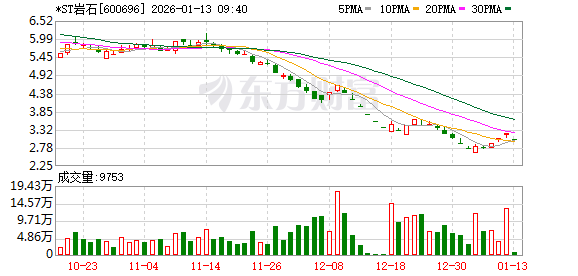
仅3年就走向退市,“水果第一股”洪九果品遭遇了什么?
Xin Jing Bao· 2025-12-31 09:09
Core Viewpoint - Chongqing Hongjiu Fruit Co., Ltd., known as the "first fruit stock," is set to delist from the Hong Kong Stock Exchange after just over three years of being listed, primarily due to negative operating cash flow, accumulating debt, and legal issues involving senior executives [1][2]. Group 1: Company Background and Listing Journey - Hongjiu Fruit was established in 2002 and became a major distributor of Southeast Asian fruits in China, achieving a peak market value of HKD 67 billion shortly after its IPO in September 2022 [2]. - The company faced a delisting crisis within a year and a half of its listing, with its shares suspended from trading in March 2024 due to failure to disclose financial reports on time [2][3]. Group 2: Financial Performance and Issues - The last publicly available financial report indicated that for the first half of 2023, the company generated revenue of CNY 8.538 billion, a year-on-year increase of 19.37%, but net profit decreased by 6.51% to CNY 803 million [3]. - The company has been experiencing negative operating cash flow since 2019, with a cash flow deficit of CNY 1.823 billion in 2022 and CNY 314 million in the first half of 2023 [6][7]. Group 3: Legal and Operational Challenges - Multiple senior executives, including the chairman, are under criminal investigation for loan fraud and other financial misconduct, leading to operational disruptions [4][5]. - The company is facing significant liquidity issues, with bank loans amounting to CNY 2.776 billion and cash reserves of only CNY 557 million, indicating insufficient debt repayment capacity [7]. Group 4: Strategic Insights and Future Directions - Experts suggest that the company's aggressive expansion strategy has led to cash flow pressures due to high prepayments to suppliers and slow receivables collection [8]. - To recover post-delist, the company needs to optimize procurement and sales strategies, improve cash flow management, and enhance internal controls and financial transparency [8].
投资5亿的甜蜜城堡已成废墟!曾被称“南京迪士尼” 已荒废10年
Mei Ri Jing Ji Xin Wen· 2025-12-27 10:03
Core Viewpoint - The demolition of the "Sweet Castle," a project by Christine, marks the end of an era for the once-prominent bakery brand, which has faced significant operational challenges and ultimately delisted from the stock market after years of decline [2][12][20]. Group 1: Project Overview - The Sweet Castle, located in Jiangning District, Nanjing, was built at a cost of 500 million yuan and covered an area of 66,000 square meters, initially envisioned as a theme park combining leisure, entertainment, and shopping [3][4]. - The project, which began construction in 2015, has remained abandoned for nearly a decade, failing to attract visitors or complete its intended purpose [3][5]. Group 2: Operational Challenges - The project faced delays due to failed partnerships and the inability to secure reputable collaborators, which hindered its opening [5]. - Over the years, the castle fell into disrepair, with reports of deteriorating conditions including peeling walls, broken windows, and water accumulation inside [5][7]. Group 3: Company Background - Christine, once a leading bakery brand in the Yangtze River Delta with over 1,000 stores and annual revenue of 1.388 billion yuan, has seen a drastic decline, with its last reported revenue of approximately 292 million yuan, a drop of 27.7% [12][20]. - Internal conflicts and management issues, including the removal of founder Luo Tian'an from the board, contributed to the company's downfall, leading to store closures and eventual delisting [21][22]. Group 4: Future Prospects - There are indications of a potential revival as Luo Tian'an's son, Roger, expresses interest in re-entering the baking industry, aiming to recreate classic products associated with the brand while establishing a new identity [22][24]. - Roger's approach includes leveraging nostalgia from the original brand while focusing on innovation and new product development [24].

投资5亿元的甜蜜城堡已成废墟!曾被称为“南京迪士尼”,已荒废10年!背后公司已退市一年,“创二代”酝酿回归?
Mei Ri Jing Ji Xin Wen· 2025-12-27 09:50
Core Viewpoint - The article discusses the demolition of the "Sweet Castle," a once-promising project by Christine, which has been abandoned for 10 years and symbolizes the decline of the brand, marking a significant moment in the company's history [2][3][4]. Group 1: Project Overview - The Sweet Castle, located in Nanjing, was built at a cost of 500 million yuan and has a construction area of 66,000 square meters [4]. - Initially envisioned as a theme park combining leisure, entertainment, and shopping, the project failed to attract visitors and was left in disrepair since its inception in 2015 [4][5]. - The demolition of the castle was officially completed on December 12, 2023, turning the once grand structure into ruins [3]. Group 2: Company Background - Christine, known as the "first baking stock," was listed on the Hong Kong Stock Exchange in 2012, boasting over 1,000 stores in the Yangtze River Delta and annual revenue of 1.388 billion yuan [10]. - The company faced significant challenges, including a decline in revenue, with the last reported annual income of approximately 292 million yuan in 2021, reflecting a decrease of about 27.7% [17]. - Internal conflicts led to the removal of founder Luo Tian'an from the board, contributing to the company's downfall and eventual delisting [18]. Group 3: Future Prospects - There are indications of a potential revival as Luo Tian'an's son, known as "Roger," expresses intentions to return to the baking industry, aiming to recreate classic products associated with the brand [19][21]. - Roger emphasizes the importance of nostalgia and plans to build a new brand while honoring the legacy of Christine, suggesting a possible re-engagement with former customers [21].

许家印前妻丁玉梅更多资产曝光:加拿大、新加坡两家银行各5亿元,瑞士银行4亿元……香港高等法院最新决定
Guo Ji Jin Rong Bao· 2025-11-26 12:01
Core Viewpoint - The Hong Kong High Court has approved an asset injunction against Ding Yumei, the ex-wife of Evergrande's founder Xu Jiayin, expanding the asset freeze to include $220 million in assets located in Canada, Gibraltar, Jersey, and Singapore [1][2]. Group 1: Legal Developments - The Hong Kong High Court has found that Ding Yumei holds significant assets in specified jurisdictions, including CAD 100 million in a Royal Bank of Canada account and USD 71 million in a Singapore bank account [1]. - Evergrande submitted a "Jurisdiction Variation Summons" on September 27, 2024, which led to the court's decision to expand the asset freeze [1]. - The court had previously issued a global injunction against Xu Jiayin's assets, prohibiting the disposal of assets valued up to $7.7 billion [2]. Group 2: Company Status and Market Impact - Evergrande's delisting from the Hong Kong Stock Exchange was finalized on August 20, 2023, with the company stating it would not seek a review of the delisting decision [2]. - The company has faced significant legal and financial challenges, including a fraud case related to bond issuance and information disclosure violations [2]. - The delisting does not equate to liquidation or bankruptcy, as the company still faces numerous unresolved issues related to its extensive debt system [3].
许家印前妻丁玉梅更多资产曝光:加拿大、新加坡两家银行各5亿元,瑞士银行4亿元……香港高等法院最新决定
证券时报· 2025-11-26 11:45
Group 1 - The Hong Kong High Court approved a change in the injunction against China Evergrande Group, expanding asset restrictions on founder Xu Jiayin's ex-wife Ding Yumei, adding $220 million in assets located in Canada, Gibraltar, Jersey, and Singapore [1] - The court found that Ding Yumei's assets are concentrated and substantial, including CAD 100 million in a Royal Bank of Canada account, $71 million in a bank account in Singapore, $57.6 million in a Gibraltar bank account, and £675,000 in a Jersey bank account, totaling over $220 million [1] - The judgment stems from Evergrande's jurisdiction variation summons submitted on September 27, 2024, which sought to expand the legal actions against Ding Yumei beyond the original jurisdictions [1] Group 2 - The Hong Kong High Court ruled that the liquidator of Evergrande could take control of assets related to Xu Jiayin's family, with a global injunction prohibiting him from disposing of assets valued up to $7.7 billion [2] - Xu Jiayin was required to disclose all assets valued over HKD 50,000, but he failed to comply, leading the liquidator to seek control of all his related assets [2] - China Evergrande's delisting was finalized on August 20, 2023, with the company stating it would not appeal the decision [2] Group 3 - The delisting of China Evergrande does not equate to liquidation or bankruptcy, as the company still faces numerous unresolved issues, particularly its massive debt structure [3] - The debt problems affect not only financial institutions but also the supply chain and daily operations, highlighting the slow pace of debt resolution as a key risk factor [3]
纳斯达克拟出台新规提高上市门槛
Zheng Quan Shi Bao· 2025-09-27 01:37
Core Viewpoint - The proposed new regulations by NASDAQ significantly increase the listing requirements for companies, particularly affecting Chinese enterprises planning to go public in the U.S. market [1][2][3] Group 1: Listing Requirements - NASDAQ's proposed regulations raise the minimum public float market value for IPOs to $8 million for the global market and $5 million for the capital market, with a unified increase to $15 million for companies listing based on net profit [2] - Chinese companies are required to raise at least $25 million through public offerings in their IPOs, which is a substantial increase compared to previous standards [2][3] - The new rules aim to enhance market integrity and investor protection, addressing concerns over small IPOs that may not generate sufficient compliance revenue for NASDAQ [2][3] Group 2: Impact on Chinese Companies - In the current year, 59 companies have gone public on NASDAQ, raising a total of $1.02 billion, with an average fundraising of $17.3 million, indicating that only three companies exceeded the new $25 million threshold [3] - The increase in listing standards is expected to significantly impact the ability of small Chinese enterprises to list on NASDAQ, as many currently do not meet the new requirements [3][4] Group 3: Delisting Pressures - The proposed regulations introduce new conditions that could lead to immediate delisting or trading suspension for companies failing to meet ongoing listing requirements, such as maintaining a market value of at least $5 million for ten consecutive trading days [4] - Previously, companies were given a grace period to comply with listing standards, but the new rules would eliminate this buffer, increasing the risk of delisting [4] Group 4: Preparation for IPO - Companies intending to go public in the U.S. should prepare in advance, assessing their current stage and considering alternative markets such as the New York Stock Exchange or Hong Kong Stock Exchange, which have less stringent requirements [5][6] - It is recommended that companies actively engage with cornerstone investors to meet the new minimum fundraising requirement of $25 million and focus on their core business to enhance their market position [6]

这家港股公司,即将主动退市
Zhong Guo Zheng Quan Bao· 2025-08-27 12:24
Core Viewpoint - Beijing Construction (Holdings) Limited has received court approval for the privatization proposal by Haoming Holdings Limited, which will lead to the delisting of Beijing Construction from the Hong Kong Stock Exchange on August 29, 2023 [1] Company Overview - Beijing Construction was established in July 2009, with major shareholders including Beikong Real Estate (Hong Kong) Limited (36.26%), Haoming Holdings (22.35%), and Jingtai Industrial (Group) Limited (6.99%), all controlled by Beikong Group [1][2] - Beikong Group, founded in January 2005, is a large state-owned enterprise group established by the Beijing Municipal Government, focusing on real estate development through its subsidiaries, including Beikong Real Estate Group and Beijing Construction [2] Financial Performance - Beijing Construction has reported continuous losses for seven years since 2018, with net losses of 900 million yuan in 2023 and 537 million yuan in 2024, alongside a 41% year-on-year decline in revenue to 865 million yuan in 2024 [3] - The company has been actively preparing for asset sales since 2018, but delays in completing these sales have led to increased financial costs and declining asset prices, contributing to ongoing losses [3] - The daily trading volume of Beijing Construction has been below one million Hong Kong dollars, resulting in rising compliance costs relative to revenue, making the decision to delist a rational choice [3]