量子计算

Search documents
上海量子实验刷新世界纪录 对量子计算机研发有何意义?
Di Yi Cai Jing· 2025-08-14 14:47
Core Insights - The recent experiment by Chinese scientists has established a key technological foundation for the realization of general quantum computers, despite the fact that such computers have not yet been developed [1][2] - The research team has set a new world record for defect-free atomic arrays in neutral atom systems, assembling an array of 2024 atoms, which marks a significant leap in computational efficiency and experimental feasibility in the field of atomic quantum physics [1][5] Group 1: Significance of the Results - The "neutral atom" approach, although a latecomer compared to superconducting and photonic technologies, is seen as a crucial breakthrough for China's quantum industry [2] - Neutral atom systems are recognized for their scalability, high fidelity quantum gates, high parallelism, and arbitrary connectivity, making them a promising platform for quantum computing and simulation [2][6] Group 2: Technological Innovations - The research team utilized optical tweezers to trap neutral atoms and employed rearrangement techniques to convert a randomly filled atomic array into a defect-free array, enabling quantum logic gate operations [2][5] - The system achieved a single qubit gate fidelity of 99.97%, a two-qubit gate fidelity of 99.5%, and a detection fidelity of 99.92%, matching the highest international standards [5][7] Group 3: Future Prospects - The experiment is expected to accelerate the development of general quantum computers, with hopes that the research will become a core component of future quantum computing systems [6][8] - The Shanghai government is actively promoting the quantum computing sector, planning to establish a quantum computing industrial cluster to attract top talent and innovative companies [8]



2025中国量子计算产业市场现状及发展前景研究报告
Sou Hu Cai Jing· 2025-08-14 14:04
Core Viewpoint - The report provides a comprehensive analysis of the current state and future prospects of the quantum computing industry in China, highlighting significant developments, key players, and market trends in both global and Chinese contexts [1]. Group 1: Overview of Quantum Computing Industry - Quantum computing is defined as a computational model utilizing the fundamental properties of quantum mechanics, which significantly differs from classical computing in terms of information storage, computational capability, entanglement characteristics, and computation methods [8][10]. - The technology framework of quantum computing consists of three main pillars: hardware, software, and algorithms, with cloud platforms serving as integration points for user services [11]. Group 2: Global Quantum Computing Development - The global quantum computing industry is entering a phase of technological breakthroughs, with significant milestones achieved by companies like Google, IBM, and D-Wave, as well as notable advancements from Chinese entities [17]. - The global quantum computing market is rapidly expanding, with the market size projected to grow from $0.7 billion in 2021 to $5 billion by 2024, accounting for 63% of the total quantum information industry [18]. Group 3: Market Size and Distribution - North America leads the global quantum computing market, followed closely by Europe and China, with projected market shares in 2024 of 29.8%, 28.8%, and 25.2% respectively [21]. - The North American quantum computing market is expected to reach $1.5 billion in 2024, with a growth rate of 6.4% compared to the previous year [27]. Group 4: Key Players in the Industry - Major companies involved in quantum computing include Tencent, Huawei, and China Electronics Technology Group, with significant advancements reported by domestic firms such as Origin Quantum and Huayi Quantum [1]. - The report highlights the progress of various quantum computing prototypes, such as Huayi Quantum's HYQ - A37 and HYQ - B100, which demonstrate outstanding performance in multiple metrics [1]. Group 5: Policy and Support - The U.S. has implemented numerous policies to support quantum computing development, including the National Quantum Initiative Act, which authorized funding increases for quantum research [24][25]. - Canada has also launched a National Quantum Strategy, focusing on investment and commercialization to enhance its competitive edge in quantum technology [26].



上海量子实验刷新世界纪录,对量子计算机研发有何意义?
Di Yi Cai Jing· 2025-08-14 09:33
Core Insights - Recent experiments by Chinese scientists have laid a crucial technological foundation for the emergence of quantum computers, despite the fact that general quantum computers have not yet been realized [2][3] Group 1: Experiment Details - The Shanghai Quantum Science Research Center, Shanghai Artificial Intelligence Laboratory, and the University of Science and Technology of China have collaborated to set a world record for defect-free atomic arrays using neutral atoms, achieving an array of 2024 atoms [2][3] - The research was published in the international journal Physical Review Letters and highlighted by the American Physical Society, marking a significant leap in computational efficiency and experimental feasibility in atomic quantum physics [2][3] Group 2: Significance of Results - The neutral atom approach, although a latecomer compared to superconducting and photonic technologies, is seen as a key breakthrough for China's quantum industry due to its scalability, high fidelity quantum gates, high parallelism, and arbitrary connectivity [3][6] - The research team utilized optical tweezers to trap neutral atoms and employed rearrangement techniques to convert a randomly filled atomic array into a defect-free array, enabling quantum logic gate operations [3][5] Group 3: Technological Innovations - The team developed artificial intelligence technology to dynamically refresh the optical tweezers' positions and phases, achieving a defect-free array of 2024 atoms in just 60 milliseconds, with the method scalable to thousands of atoms [5][8] - The system has achieved single-qubit gate fidelity of 99.97% and two-qubit gate fidelity of 99.5%, matching the highest international standards represented by institutions like Harvard University [5][8] Group 4: Future Implications - The experiment is expected to accelerate the realization of general quantum computers, with hopes that the research will become a core component of future quantum computing systems [6][9] - The Shanghai government is actively promoting quantum computing as a key area for future industrial development, forming project management teams and planning to create a quantum computing industrial cluster [9]
潘建伟团队突破量子操控极限!AI助力2024个原子60毫秒精准重排
量子位· 2025-08-14 09:11
Core Viewpoint - The article highlights a significant breakthrough in quantum computing, where a team led by Pan Jianwei successfully constructed a defect-free atomic array of 2024 atoms in just 60 milliseconds, setting a new world record in neutral atom systems [1][6][14]. Group 1: Research Achievements - The research team utilized AI technology to achieve a high degree of parallelism in rearranging atoms, overcoming previous limitations in traditional methods that restricted the scale of atomic arrays to hundreds of atoms [12][14]. - The system has achieved single-qubit gate fidelity of 99.97%, two-qubit gate fidelity of 99.5%, and detection fidelity of 99.92%, matching the highest international standards represented by Harvard University [6][14]. - The results of this research have been published in the international journal "Physical Review Letters" and highlighted by the American Physical Society [4]. Group 2: Technical Innovations - The new rearrangement technique allows for the rapid reconfiguration of thousands of atoms, demonstrated through a video featuring Schrödinger's cat, showcasing the dynamic arrangement of rubidium atoms in a 230×230μm optical trap array [2][8]. - The research indicates that expanding the atomic array from 2024 to tens of thousands is feasible from a computational perspective, although practical implementation requires advancements in laser power and overall platform capabilities [14]. Group 3: Future Prospects - The article suggests that while the current advancements are significant, achieving a fully functional universal quantum computer may take an additional 10 years for large-scale applications like cryptography [14]. - The collaboration involves top teams in the quantum computing field, including the Shanghai Quantum Science Research Center and the University of Science and Technology of China [14].
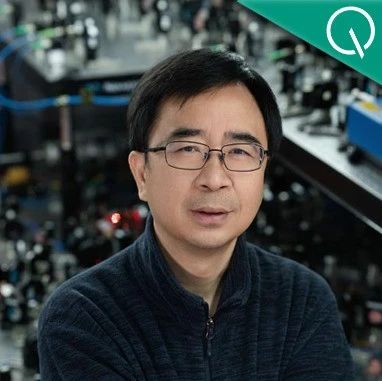
中国构建世界最大规模原子量子计算系统;长征五号乙遥八运载火箭成功发射卫星互联网低轨08组卫星丨智能制造日报
创业邦· 2025-08-14 03:41
Group 1 - Nearly 100 ZhiYuan robots have been deployed at Fulin Precision Engineering Co., marking the first large-scale implementation of this type of robot in global smart manufacturing [2] - The Long March 5B Yao 8 rocket successfully launched a group of low-orbit satellite internet satellites, contributing to China's space capabilities [2] - Archer Aviation is advancing its air taxi production plan, aiming to provide services for the 2028 Olympics and accelerating commercial operations in the UAE [2] - China has developed the world's first intelligent breeding robot capable of automatic hybrid pollination, significantly reducing breeding costs and time [2] - A team from the University of Science and Technology of China has constructed the world's largest defect-free atomic quantum computing system, setting a new record for neutral atom arrays [2]

每日市场观察-20250814
Caida Securities· 2025-08-14 02:16
Market Performance - The Shanghai Composite Index (SSE) rose by 0.48%, the Shenzhen Component Index increased by 1.76%, and the ChiNext Index surged by 3.62% on August 13, 2025[4] - The total trading volume of the two markets exceeded 2.15 trillion yuan, showing a significant increase compared to previous sessions[1] Market Trends - The SSE broke through the previous high of October 8, 2024, indicating strong bullish sentiment, but caution is advised due to potential volatility in this range[1] - The Shenzhen and ChiNext indices still have room to rise, suggesting a focus on these indices for short-term gains[1] Sector Performance - Leading sectors included fourth-generation semiconductors, electronic chemicals, small metals, bioproducts, and non-ferrous metals, while coal, jewelry, banking, and logistics sectors showed notable declines[1] Fund Flows - On August 13, net inflows into the Shanghai and Shenzhen markets were 326.05 billion yuan and 331.91 billion yuan, respectively, with significant inflows into communication equipment and automotive parts[5] Economic Policies - The Ministry of Finance indicated that a 1% interest subsidy could potentially mobilize 100 yuan in loan funds for consumer spending, aiming to stimulate market activity[7] - The People's Bank of China plans to enhance consumer finance products and services, focusing on personalized offerings and streamlined approval processes[8] Investment Opportunities - High-growth sectors such as artificial intelligence, robotics, semiconductors, and innovative biopharmaceuticals are recommended for long-term investment, especially those with strong performance expectations in mid-year reports[2][3] Fund Performance - 99% of equity funds reported positive returns over the past year, with an average return of 34.06% across 6,256 funds, highlighting the strong performance of technology and innovative sectors[12][13]
中国科学家,刷新世界纪录!
券商中国· 2025-08-13 23:40
重磅发布!刚刚,利好来袭! 记者12日从中国科学技术大学获悉,该校潘建伟院士、陆朝阳教授等与上海量子科学研究中心/上海人 工智能实验室钟翰森研究员等团队合作,利用人工智能(AI)技术,实现了高度并行性以及与阵列规模 无关的常数时间消耗,在60毫秒内成功构建了2024个原子的无缺陷二维和三维原子阵列,刷新了中性 原子体系无缺陷原子阵列规模的世界纪录。 该方法为大规模中性原子量子计算奠定了关键技术基础。相关研究成果以"编辑推荐"的形式发表在国际 学术期刊《物理评论快报》上,并被美国物理学会《物理》期刊作为研究亮点专门报道。 中性原子体系因优异的扩展性、高保真度量子门、高并行性和任意的连接性,成为极具潜力的量子计算 和量子模拟平台。 目前,该系统单比特门保真度达99.97%,双比特门保真度达99.5%,探测保真度达99.92%,已追平 以美国哈佛大学为代表的国际最高水平,为构建基于中性原子阵列的容错通用量子计算机奠定了技术基 础。 来源:科技日报 责编: 刘珺宇 校对: 王朝全 百万用户都在看 突发!超10万人爆仓,发生了什么? 刷新世界纪录!我国科学家成功构建→ 最新!中美再次暂停实施24%关税90天 沸腾!暴涨 ...
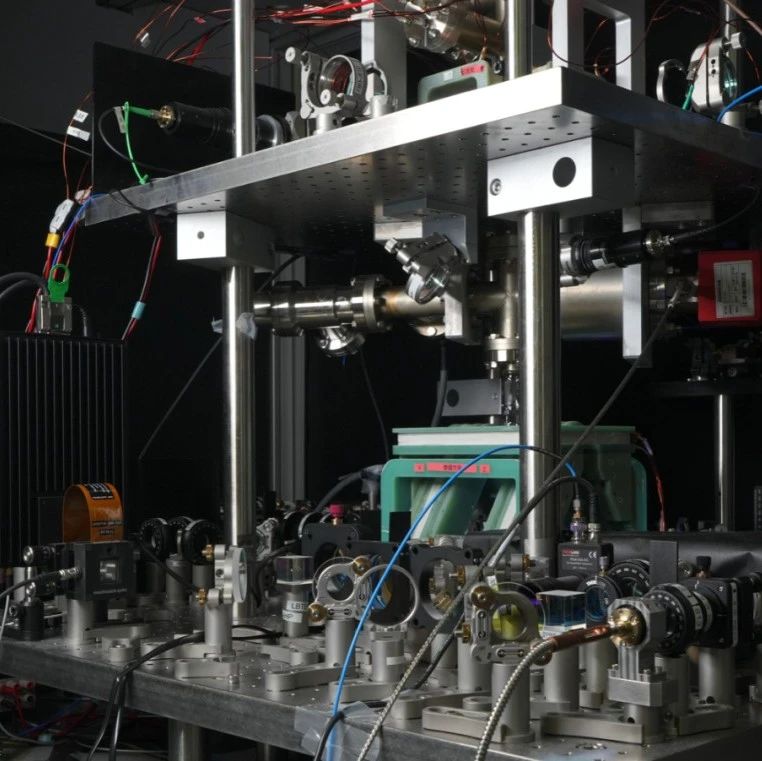
“祖冲之号”量子计算机总师朱晓波:量子计算发展需突破两大关键任务
Shang Hai Zheng Quan Bao· 2025-08-13 13:47
Core Insights - Quantum computing presents significant potential in various fields such as cryptography, quantum chemistry, artificial intelligence, and engineering due to its parallel computing capabilities derived from superposition and quantum entanglement [1] Group 1: Quantum Computing Development - The core development of quantum computing requires simultaneous advancement in two key tasks: increasing the number of quantum bits and reducing error rates [1] - The development of superconducting quantum computing is divided into three stages: achieving quantum superiority, creating application-specific quantum simulation systems, and developing programmable universal quantum computers [1] Group 2: Stages of Quantum Computing - The first stage focuses on achieving quantum superiority, where computing capabilities surpass those of classical supercomputers for specific problems [1] - The second stage aims to establish application-value specific quantum simulation systems that can be utilized in combinatorial optimization, quantum chemistry, and machine learning [1] - The third stage involves the realization of programmable universal quantum computers, which can significantly impact classical cryptography, big data search, and artificial intelligence [1]
行业干货!智研咨询重磅发布《2025年中国量子计算产业市场现状及发展前景研究报告》
Chan Ye Xin Xi Wang· 2025-08-13 07:43
Group 1 - Quantum computing utilizes the fundamental properties of quantum mechanics to solve problems, with a rapidly expanding global market projected to reach $5 billion by 2024, driven by increasing demand for computational power and advancements in quantum performance [1][16] - North America leads the global quantum computing market with a 29.8% share, followed closely by Europe at 28.8% and China at 25.2% [21][22] Group 2 - China's quantum computing industry has grown significantly, with a projected market size of 9.04 billion yuan ($1.3 billion) in 2024, reflecting an 82.1% year-on-year increase, and accounting for 68.6% of the total quantum technology market [2][45] - The Chinese government has implemented multiple supportive policies to enhance quantum computing technology development, establishing a robust national and local policy framework [38][41] Group 3 - The global quantum computing market is expected to grow from approximately $800 million in 2021 to $5 billion in 2024, indicating a strong upward trend [16][17] - In North America, the quantum computing market is projected to reach $1.5 billion in 2024, with a growth rate of 6.4% year-on-year [26] Group 4 - Investment in China's quantum computing sector has surged, with financing reaching 2.93 billion yuan ($420 million) in 2024, marking a 38.2% increase [50] - Major players in the Chinese quantum computing landscape include Tencent, Huawei, and various startups like Benyuan Quantum and Guodun Quantum, contributing to a vibrant ecosystem [2][59]
国盾量子:超导量子计算专项合作计划启动
Zheng Quan Shi Bao Wang· 2025-08-13 04:21
Group 1 - The core viewpoint of the article is the launch of the "CCF-Guangdong Quantum Computing Special Cooperation Plan" by the China Computer Federation (CCF) in collaboration with Guandun Quantum, focusing on superconducting quantum computing research [1] - The plan aims to address cutting-edge issues in quantum computing, including hardware control, software compilation, algorithm design, and quantum-classical hybridization, through nine sub-topics and open selection topics [1] - The initiative is designed to provide a platform for innovative scholars to utilize quantum computing resources and explore the practical applications of quantum computing research [1]