
中药

Search documents
今年十大最惨板块,跌麻了
3 6 Ke· 2025-12-30 12:11
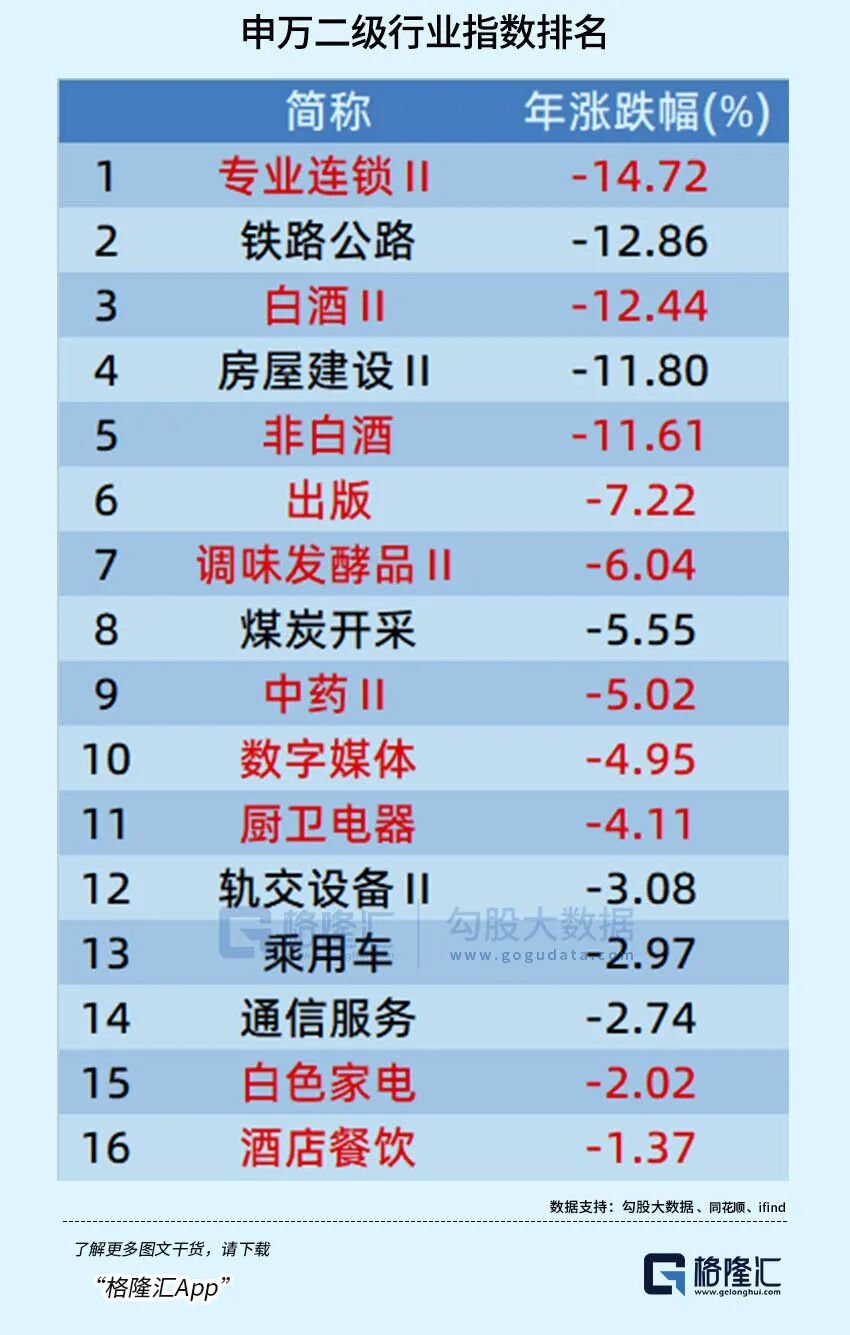
Core Viewpoint - The consumer sector has faced significant challenges in the past year, with many industries within this sector experiencing declines despite overall market growth. The focus on domestic demand and consumption has not translated into positive performance for many consumer-related industries [1]. Group 1: Consumer Sector Performance - In the first half of the year, 10 out of 16 industries that saw declines were from the consumer sector, indicating a troubling trend for consumer-related stocks [1]. - The white liquor sector, a key component of the consumer market, has seen a year-to-date decline of 12.44%, with major brands like Wuliangye experiencing significant drops in revenue and profit [5][8]. - The professional chain sector has been particularly hard hit, with a year-to-date decline of 14.72%, as traditional retail models struggle to adapt to changing consumer behaviors [13][14]. Group 2: White Liquor Industry - The white liquor industry is facing its eighth consecutive year of production decline, with both volume and price dropping, leading to increased inventory pressure and cash flow issues for many companies [9]. - Wuliangye reported a 10.26% decline in revenue and a 13.72% drop in net profit for the first three quarters, marking its first negative growth in nearly a decade [8]. - The changing consumer landscape, with a shift towards lower-alcohol and healthier options, is forcing white liquor companies to adapt or risk further declines [12]. Group 3: Professional Chain Sector - The professional chain sector is experiencing a crisis, with many traditional stores closing and business models failing to adapt to the digital age [14][19]. - The decline of major players like Renrenle, which has seen its market value plummet and faced continuous losses, exemplifies the struggles within this sector [18]. - The shift towards online shopping and personalized consumer experiences is reshaping the retail landscape, leaving traditional large-format stores at a disadvantage [20]. Group 4: Non-White Liquor Sector - The non-white liquor sector, including beer and wine, has also faced challenges, with a year-to-date decline of 11.61% [22]. - Budweiser APAC reported an 8.2% drop in domestic sales and a 24.4% decline in net profit, reflecting broader issues within the beer industry [25]. - The rise of cross-industry competition, with liquor companies diversifying into other beverage categories, indicates a shift in market dynamics [27]. Group 5: Publishing Industry - The publishing industry has seen a decline in the overall market, with a 10.4% drop in the domestic paper book market, yet some companies have managed to increase profits through cost control [35][38]. - Chinese Media, a leading player in the sector, has faced significant revenue and profit declines, highlighting the challenges of adapting to changing educational policies [36][38]. Group 6: Seasoning Industry - The seasoning industry has experienced a 6.04% decline, with companies like Qianhe Flavor struggling due to a drop in sales across key product lines [43][47]. - The industry is facing increased competition and changing consumer preferences, necessitating a shift in strategy for many companies [52]. Group 7: Traditional Chinese Medicine - The traditional Chinese medicine sector has seen a 5.02% decline, with companies like Pian Zai Huang facing significant revenue and profit drops due to rising costs and regulatory pressures [53][56]. - The industry is undergoing a transformation as companies seek to innovate and diversify their product offerings in response to market challenges [62]. Group 8: Digital Media - The digital media sector has faced a 4.95% decline, with traditional advertising models struggling to keep pace with new digital trends [67]. - Companies like Mango TV have reported significant revenue declines, indicating the need for adaptation in a rapidly changing media landscape [66]. Group 9: Kitchen and Bathroom Appliances - The kitchen and bathroom appliance sector has seen a 4.11% decline, largely due to a slowdown in new housing demand and increased competition [69][70]. - Companies like Boss Appliances are experiencing revenue declines for the first time in years, reflecting broader industry challenges [69]. Group 10: White Goods - The white goods sector has faced a 2.02% decline, with major players like Gree Electric experiencing significant revenue and profit drops due to increased competition and market saturation [76][80]. - The industry is shifting towards a focus on product quality and operational efficiency as traditional growth drivers diminish [80]. Group 11: Hotel and Catering - The hotel and catering sector has seen a 1.37% decline, with many businesses struggling to convert increased travel demand into profits due to high commission fees from online platforms [84][85]. - The industry is witnessing a shift towards more refined operational models as companies seek to adapt to changing consumer behaviors and market conditions [86].

东阿阿胶:拟向山东省教育基金会捐赠160万元
Xin Lang Cai Jing· 2025-12-30 11:47
12月30日,东阿阿胶公告,公司拟向山东省教育基金会捐赠160万元(其中,现金150万元,实物折合10 万元)。 ...

2025年A股十大最惨板块,跌麻了
Ge Long Hui· 2025-12-30 11:30
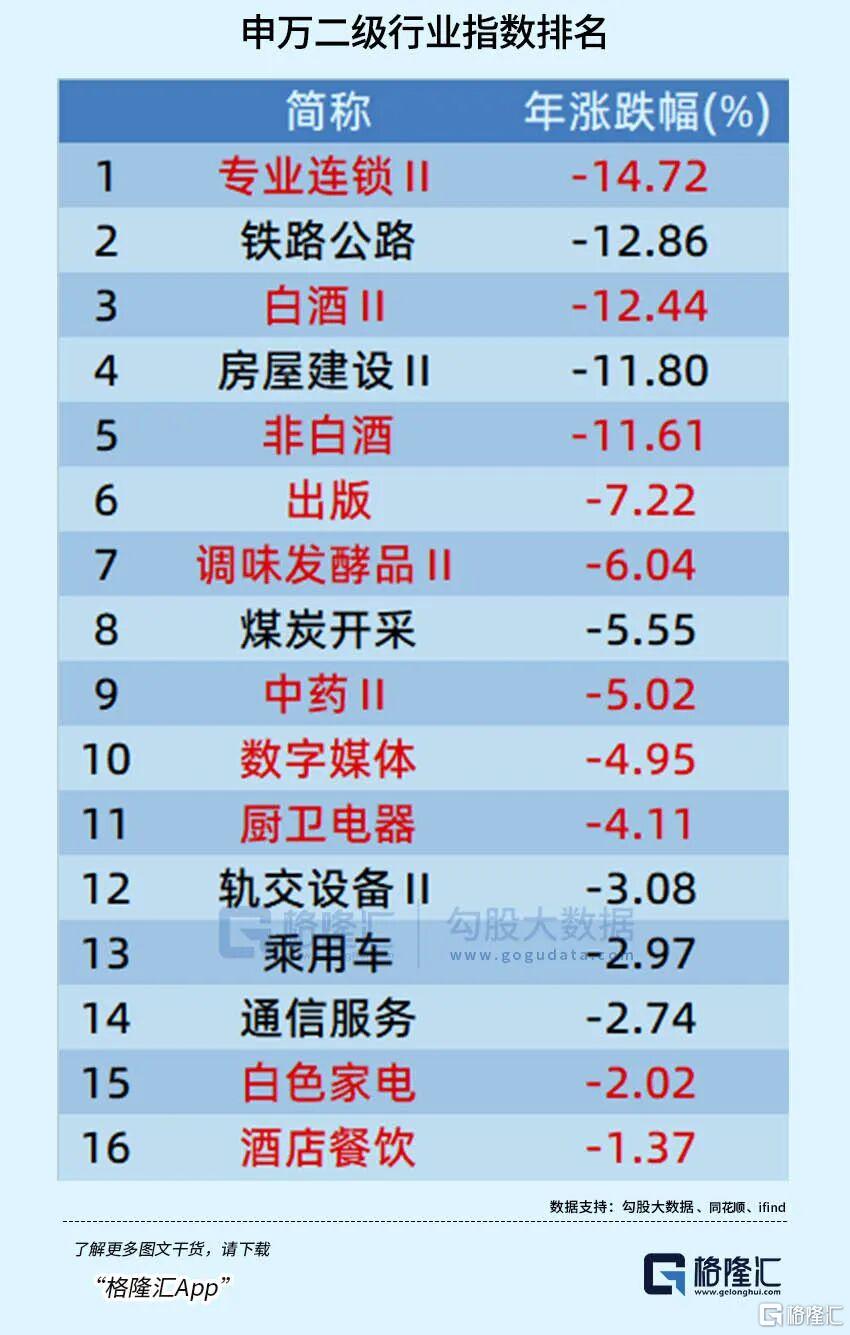
Core Viewpoint - The consumer sector has faced significant challenges in the past year, with many sub-sectors experiencing declines despite overall market growth. The focus on domestic demand and consumption has not translated into positive performance for many consumer-related industries [1][5]. Consumer Sector Performance - In the first half of the year, 10 out of 16 declining industries were from the consumer sector, indicating a broader trend of underperformance [1]. - The white liquor sector, a key component of the consumer market, has seen a year-to-date decline of 12.44%, with major brands like Wuliangye experiencing significant drops in revenue and profit [6][9]. - The professional chain sector has been particularly hard-hit, with a year-to-date decline of 14.72%, exemplified by the struggles of companies like Renrenle [16][20]. White Liquor Sector - The white liquor industry is facing its eighth consecutive year of production decline, with both volume and price dropping simultaneously [10]. - Wuliangye reported a 10.26% decline in revenue and a 13.72% drop in net profit for the first three quarters, marking its first negative growth in a decade [9]. - The industry is shifting from a growth-driven model to one focused on consumer choice, with a need for companies to adapt to changing consumer preferences [15]. Professional Chain Sector - The professional chain sector is experiencing a crisis, with many physical stores closing and traditional business models failing [16][20]. - Renrenle, once a leading private supermarket, has seen its market value plummet and is now facing delisting due to ongoing financial struggles [21][24]. - The shift towards online shopping and personalized consumer demands has further exacerbated the challenges faced by traditional retail chains [24][25]. Non-White Liquor Sector - The non-white liquor sector, including beer and wine, has also faced declines, with the beer segment seeing a notable drop in sales and profits [27][32]. - Budweiser APAC reported an 8.2% decline in domestic sales and a 24.4% drop in net profit, reflecting broader industry challenges [32][33]. - The market is witnessing a trend of cross-industry competition, with liquor companies diversifying into new beverage categories [34]. Publishing Sector - The publishing industry has shown resilience despite a 10.4% decline in the overall market for printed books, with listed companies managing to increase net profits by 14.65% [43][44]. - However, leading companies like Zhongwen Media are struggling, with significant revenue and profit declines due to changes in educational material procurement policies [45][48]. Seasoning Sector - The seasoning industry has faced a 6.04% decline, with companies like Qianhe Flavor struggling due to falling revenues and a loss of consumer trust [51][55]. - The industry is experiencing a shift in consumer preferences and increased competition, necessitating a reevaluation of business strategies [60]. Traditional Chinese Medicine Sector - The traditional Chinese medicine sector is facing challenges, with companies like Pian Zai Huang reporting significant declines in revenue and profit due to rising costs and regulatory pressures [61][66]. - The industry is undergoing a transformation as companies seek to innovate and diversify their product offerings [70]. Digital Media Sector - The digital media industry has seen a 4.95% decline, with companies like Mango TV reporting significant drops in revenue and profit due to changing consumer behaviors and market dynamics [71][74]. - The sector is grappling with the need to adapt to new content consumption trends while facing pressure from traditional advertising models [75]. Kitchen and Bathroom Appliances Sector - The kitchen and bathroom appliance sector has experienced a 4.11% decline, largely due to reduced demand from the real estate market [78][79]. - Companies like Boss Electric are facing revenue declines for the first time in years, highlighting the challenges of adapting to a changing market landscape [79][80]. White Goods Sector - The white goods sector has seen a 2.02% decline, with major players like Gree Electric facing significant revenue and profit pressures due to increased competition and market saturation [83][84]. - The industry is shifting towards a focus on product quality and brand strength as external stimuli diminish [88]. Hotel and Restaurant Sector - The hotel and restaurant sector has faced a 1.37% decline, with revenue pressures stemming from changing consumer spending habits and increased competition from online platforms [89][92]. - Companies are beginning to adopt more refined operational strategies to navigate the challenging market environment [96].




今年十大最惨板块,跌麻了
格隆汇APP· 2025-12-30 11:04
Core Viewpoint - The article discusses the significant downturn in various consumer sectors, particularly the liquor and retail industries, highlighting the challenges and potential opportunities for recovery amidst changing consumer behaviors and market dynamics [2][4][43]. Group 1: Liquor Industry - The liquor sector, especially the white liquor segment, has faced substantial declines, with the overall white liquor market down by 12.44% this year [9][15]. - Major brands like Wuliangye have reported significant drops in revenue and profit, with a 10.26% decline in revenue and a 13.72% drop in net profit for the first three quarters [17]. - The white liquor industry is experiencing a shift from a growth-driven model to one focused on consumer preferences, with a need for companies to adapt to changing consumption patterns [26][27]. Group 2: Retail Industry - The professional chain sector has seen a dramatic decline of 14.72%, with many traditional retail models struggling to survive [28][30]. - Companies like Renrenle have faced severe financial difficulties, leading to a significant reduction in store numbers and ultimately triggering delisting procedures [34][35]. - The shift towards online shopping and changing consumer preferences have forced traditional retailers to innovate or face extinction [36][39]. Group 3: Non-White Liquor Sector - The non-white liquor sector, including beer and wine, has also suffered, with a reported decline of 11.61% this year [40]. - Major players like Budweiser APAC have experienced significant sales drops, with a 9.5% revenue decrease and a 24.4% decline in net profit [46]. - The industry is witnessing a trend of cross-industry competition, with liquor companies diversifying into other beverage categories to adapt to market changes [51][56]. Group 4: Publishing Industry - The publishing sector has faced a 7.22% decline, with the overall market for printed books down by 10.40% [60]. - Despite the downturn, some publishing companies have managed to increase profits through cost control and operational efficiency, with a 14.65% rise in net profit for listed companies [61][62]. - The industry is undergoing significant transformation, moving from traditional sales models to more dynamic content management and IP development strategies [70][71]. Group 5: Seasoning Industry - The seasoning sector has seen a 6.04% decline, with companies like Qianhe Flavor struggling due to a drop in revenue and profit [74]. - The industry is facing challenges from both market saturation and changing consumer preferences, necessitating a shift in strategy for many companies [81]. Group 6: Traditional Chinese Medicine - The traditional Chinese medicine sector has experienced a 5.02% decline, with companies like Pian Zai Huang facing significant revenue and profit drops [86]. - The industry is under pressure from regulatory changes and increased competition, pushing companies to innovate and diversify their product offerings [91][92]. Group 7: Digital Media - The digital media sector has reported a 4.95% decline, with traditional advertising models struggling to adapt to new market realities [97][100]. - Companies like Mango TV have seen significant revenue drops, highlighting the challenges of maintaining profitability in a rapidly changing landscape [101][104]. Group 8: Kitchen and Bathroom Appliances - The kitchen and bathroom appliance sector has faced a 4.11% decline, with major players like Boss Electric experiencing revenue drops for the first time in years [112]. - The industry is grappling with reduced demand due to a slowdown in the real estate market, necessitating a shift towards innovation and international expansion [117][118]. Group 9: White Goods - The white goods sector has seen a 2.02% decline, with companies like Gree Electric facing significant challenges due to market saturation and increased competition [126][129]. - The industry is shifting towards a more rational consumer base that prioritizes product quality and brand reputation over traditional growth drivers [133]. Group 10: Hotel and Restaurant Industry - The hotel and restaurant sector has experienced a 1.37% decline, with many businesses struggling to convert increased tourism into profits [140][141]. - The industry is witnessing a shift towards more refined operational models, with companies focusing on member engagement and digital transformation to enhance profitability [142][143].





千金药业(600479.SH):公司有辅助生殖方面的产品布局
Ge Long Hui· 2025-12-30 10:14
格隆汇12月30日丨千金药业(600479.SH)公布,公司有辅助生殖方面的产品布局。 ...

中药板块12月30日跌0.32%,*ST长药领跌,主力资金净流出2.31亿元
Zheng Xing Xing Ye Ri Bao· 2025-12-30 09:00
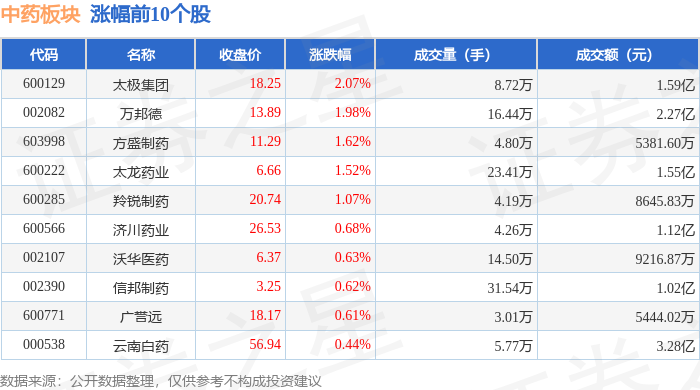
Market Overview - The Chinese medicine sector experienced a decline of 0.32% on December 30, with *ST Changyao leading the drop [1] - The Shanghai Composite Index closed at 3965.12, down 0.0%, while the Shenzhen Component Index closed at 13604.07, up 0.49% [1] Stock Performance - Notable gainers in the Chinese medicine sector included: - Taiji Group (600129) with a closing price of 18.25, up 2.07% [1] - Wanbangde (002082) at 13.89, up 1.98% [1] - Fangsheng Pharmaceutical (603998) at 11.29, up 1.62% [1] - Conversely, *ST Changyao (300391) saw a significant drop of 19.49%, closing at 0.95 [2] Trading Volume and Value - The trading volume and value for key stocks were as follows: - Taiji Group: 87,200 shares traded, with a transaction value of 159 million [1] - Wanbangde: 164,400 shares traded, with a transaction value of 227 million [1] - Fangsheng Pharmaceutical: 48,000 shares traded, with a transaction value of 53.82 million [1] Capital Flow - The Chinese medicine sector experienced a net outflow of 231 million from institutional investors, while retail investors saw a net inflow of 280 million [2] - The capital flow for specific stocks included: - Wanbangde with a net inflow of 48.79 million from institutional investors [3] - Taiji Group with a net inflow of 18.53 million from institutional investors [3] - *ST Changyao had a net outflow of 19.49% [2]


同仁堂(600085.SH):控股子公司拟与关联方续订物业租赁框架协议
Ge Long Hui A P P· 2025-12-30 08:58
格隆汇12月30日丨同仁堂(600085.SH)公布,公司之控股子公司北京同仁堂科技发展股份有限公司(简 称同仁堂科技)及其附属公司拟与中国北京同仁堂(集团)有限责任公司(简称同仁堂集团)续订《物 业租赁框架协议》,租赁期限三年,用于满足生产经营需求,协议期(2026年-2028年)内每年新增使 用权资产上限分别为人民币11,000万元、人民币2,500万元及人民币1,500万元。 ...

康恩贝:副总裁徐春玲因到龄退休辞职
Xin Lang Cai Jing· 2025-12-30 07:55
康恩贝12月30日公告,公司董事会当天收到公司副总裁徐春玲递交的书面辞职报告,因到龄退休原因, 徐春玲向公司董事会申请辞去副总裁职务。徐春玲辞去副总裁职务后,将不再担任公司任何职务。 ...

步长制药:控股股东步长(香港)新增质押760万股
Xin Lang Cai Jing· 2025-12-30 07:37
Core Viewpoint - The announcement reveals that the controlling shareholder of the company, Buchang (Hong Kong), holds 490,957,202 shares, representing 46.56% of the total shares, with a total of 108,530,000 shares pledged, which accounts for 22.11% of their holdings and 10.29% of the total share capital [1] Summary by Relevant Sections - **Shareholding Structure** - The controlling shareholder holds 490,957,202 shares, which is 46.56% of the total shares [1] - The total shares pledged by the controlling shareholder amount to 108,530,000, representing 22.11% of their holdings and 10.29% of the total share capital [1] - **Pledge Details** - An additional 7,600,000 shares have been pledged, with 3,600,000 shares pledged to CITIC Bank Jinan Branch and 4,000,000 shares pledged to CITIC Financial Leasing Co., Ltd [1] - The pledge start date for these shares is December 29, 2025, and the maturity date for the latter pledge is December 30, 2028 [1] - **Overall Shareholding and Pledge Status** - The controlling shareholder and their concerted parties collectively hold 598,200,660 shares, which is 56.72% of the total shares [1] - The total pledged shares by the controlling shareholder and concerted parties amount to 108,530,000, accounting for 18.14% of their holdings and 10.29% of the total share capital [1]

寿仙谷股价涨1.24%,融通基金旗下1只基金位居十大流通股东,持有128.23万股浮盈赚取30.78万元
Xin Lang Cai Jing· 2025-12-30 03:04
Group 1 - The core viewpoint of the news is that Zhejiang Shouxiangu Pharmaceutical Co., Ltd. has shown a stock price increase of 1.24%, reaching 19.56 CNY per share, with a total market capitalization of 3.878 billion CNY [1] - The company specializes in the breeding, cultivation, processing, and sales of precious Chinese medicinal materials, including Ganoderma lucidum and Dendrobium officinale, with its main business revenue composition being 71.92% from Ganoderma spore powder products, 15.57% from Dendrobium products, and 10.88% from other sources [1] Group 2 - Among the top ten circulating shareholders of Shouxiangu, the Rongtong Health Industry Flexible Allocation Mixed A/B fund has increased its holdings by 82,300 shares in the third quarter, now holding 1.2823 million shares, which accounts for 0.65% of the circulating shares [2] - The Rongtong Health Industry Flexible Allocation Mixed A/B fund has a current scale of 1.816 billion CNY, with a year-to-date return of 9.15% and a one-year return of 4.6% [2] Group 3 - The fund manager of Rongtong Health Industry Flexible Allocation Mixed A/B is Wan Minyuan, who has a total fund asset scale of 5.957 billion CNY, with the best fund return during his tenure being 132.72% and the worst being -25.09% [3]
