电子科技

Search documents
闻泰科技(600745.SH)发布前三季度业绩,归母净利润15.13亿元,增长265.09%
智通财经网· 2025-10-24 17:21
Core Viewpoint - The company reported a significant decline in revenue for the first three quarters of 2025, while net profit showed substantial growth, indicating a potential shift in financial dynamics [1] Financial Performance - The company's operating revenue for the first three quarters was 29.769 billion yuan, a year-on-year decrease of 44.00% [1] - Net profit attributable to shareholders was 1.513 billion yuan, reflecting a year-on-year increase of 265.09% [1] - The net profit attributable to shareholders after deducting non-recurring gains and losses was 779 million yuan, showing a remarkable year-on-year growth of 993.41% [1] - Basic earnings per share were reported at 1.22 yuan [1] Risks and Concerns - The company may face risks of a phase-wise decline in revenue, profit, and cash flow if control over Anshi is not restored by the end of 2025 [1]

汇顶科技2025年前三季度归母净利润6.77亿元
Zheng Quan Ri Bao Wang· 2025-10-24 11:48
Core Insights - The company, Shenzhen Goodix Technology Co., Ltd., reported its Q3 2025 financial results, showing a total revenue of 3.521 billion yuan, which represents a year-on-year growth of 9.25% [1] - The net profit attributable to the parent company reached 677 million yuan, marking a significant year-on-year increase of 50.99% [1] Financial Performance - Total revenue for the first three quarters of 2025 was 3.521 billion yuan [1] - Year-on-year revenue growth was recorded at 9.25% [1] - Net profit attributable to the parent company was 677 million yuan [1] - The net profit saw a substantial increase of 50.99% year-on-year [1]

TCL科技:公司高度重视股东回报与产业投资的平衡
Zheng Quan Ri Bao Zhi Sheng· 2025-10-24 11:42
Core Viewpoint - TCL Technology emphasizes the importance of balancing shareholder returns with industrial investments, aiming to support long-term development while ensuring current shareholder benefits [1] Group 1 - The company is committed to a prudent dividend policy to enhance shareholder returns [1] - TCL Technology is focused on optimizing its financing structure to improve capital efficiency [1] - The company aims to continuously improve operational quality to deliver good performance and returns to investors [1]

TCL科技:公司将严格按照相关规定及时履行信息披露义务
Zheng Quan Ri Bao Zhi Sheng· 2025-10-24 11:08
Core Viewpoint - TCL Technology is actively managing its operations and is focused on advancing its business development while ensuring compliance with information disclosure regulations [1] Group 1 - The company confirmed that its production and operations are normal [1] - Management is fully committed to promoting various business developments [1] - The company emphasizes its dedication to focusing on its core business and maintaining stable operations [1] Group 2 - TCL Technology will adhere to strict information disclosure obligations as required by regulations [1] - The company aims to maintain effective communication and transparency with investors [1] - There is a commitment to safeguarding the legitimate rights and interests of investors [1]
TCL科技:公司始终专注于主营业务的稳健发展
Zheng Quan Ri Bao Zhi Sheng· 2025-10-24 11:08
Core Viewpoint - TCL Technology emphasizes its commitment to steady development in its core business and aims to enhance its core competitiveness to create long-term value for investors [1] Group 1 - The company is focused on implementing an employee stock ownership plan that adheres strictly to regulatory rules and internal policies [1] - The purpose of the employee stock ownership plan is to establish a long-term incentive mechanism and promote mutual development between employees and the company [1] - Further details regarding the employee stock ownership plan can be found in the company's disclosed announcements [1]
小型特色会议比例翻倍,今年进博会上海会议活动全面升级
Di Yi Cai Jing· 2025-10-24 09:39
Core Theme - The theme "Breaking the Deadlock and Resilient Growth" aims to address the complexities and uncertainties in the current global economic and trade environment [1][3] Event Structure - The 2025 Shanghai Conference will upgrade the previous year's format, featuring a "1+2+X" meeting system, which includes one main investment promotion conference, two sub-forums, and over 100 side events [1][2] - The event will focus on six major topics: "Open China and Shanghai Practices," "Enterprises Going Global and Comprehensive Overseas Services," "Finding Trade Drivers," "ESG and Sustainable Development," "Building a Consumption Innovation Ecosystem," and "AI Empowering Industrial Development" [1][3] Guest Participation - The event will attract over 200 high-level guests, including representatives from international organizations, ambassadors, and leaders from Fortune 500 companies, as well as Nobel laureates and renowned scholars [2] Interaction and Experience - The conference duration will extend to four days, with an increase in high-quality meetings of fewer than 50 participants from approximately 20% to over 40% to facilitate deeper exchanges [2] - A more precise and intelligent service system will be implemented, with the release of several important reports and the establishment of functional platforms during the conference [2] Focus Areas - The topic "Open China and Shanghai Practices" will explore innovative paths for institutional openness, showcasing China's continuous integration and innovation in various international fields [4] - The "Enterprises Going Global and Comprehensive Overseas Services" topic will address structural challenges in globalization, aiming to create a sustainable "going global ecosystem" [4] - The "Finding Trade Drivers" topic will investigate ways to accelerate trade dynamics reconstruction and stimulate innovation potential [4]
全球知名对冲基金 盯上这些股
Shang Hai Zheng Quan Bao· 2025-10-24 05:06
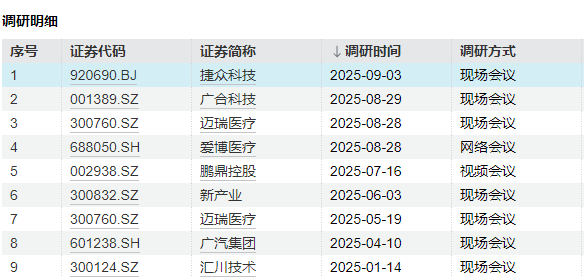
Group 1 - Tiger Pacific Capital has conducted research on 8 A-share listed companies this year, with a total of 9 research sessions, focusing on sectors such as healthcare, technology, automotive supply chain, and high-end manufacturing [1][3] - Other foreign institutions like Point72, Goldman Sachs, and Nomura have also been actively researching A-share companies, indicating a strong interest in Chinese assets [1][7] - The research conducted by Tiger Pacific Capital emphasizes in-depth fundamental analysis, focusing on companies' business models, financial conditions, management teams, and industry competition [5] Group 2 - The research targets primarily involve sectors such as healthcare, technology, automotive supply chain, and high-end manufacturing, with some stocks showing significant price increases this year, such as Jiezong Technology with over 80% increase [4] - Goldman Sachs has identified broad alpha opportunities in the Chinese stock market, particularly in growth-oriented sectors, with a strong focus on technology and artificial intelligence [8] - Morgan Stanley has noted that the overall return on equity (ROE) for A-share listed companies (excluding financial and oil sectors) has stabilized and is expected to improve further, driven by the rising profitability of listed companies [9]

上海优迪亿电子科技有限公司成立 注册资本100万人民币
Sou Hu Cai Jing· 2025-10-24 01:36
Core Viewpoint - Shanghai Youdi Yi Electronic Technology Co., Ltd. has been established with a registered capital of 1 million RMB, focusing on various technology services and sales in the electronic and automotive sectors [1] Company Summary - The company is legally represented by Zeng Bing [1] - The registered capital is 1 million RMB [1] - The business scope includes technology services, development, consulting, and sales of electronic components, automotive parts, electrical equipment, and various mechanical devices [1] Industry Summary - The company operates in the technology and electronic components sector, which includes a wide range of services and products such as power electronic components, automotive parts wholesale and retail, and electrical equipment sales [1] - The business also encompasses the sale of industrial automation systems, building decoration materials, and various mechanical equipment [1]
威县深蓝电子科技有限公司成立 注册资本100万人民币
Sou Hu Cai Jing· 2025-10-23 21:13
Core Insights - Recently, Weixian Shenlan Electronic Technology Co., Ltd. was established with a registered capital of 1 million RMB [1] Company Overview - The legal representative of the company is Qi Shuming [1] - The company's business scope includes general projects such as artificial intelligence application software development, software development, and research and development of power distribution switch control equipment [1] - The company is also involved in network and information security software development, manufacturing of power transmission and distribution equipment, and various technical services [1] Licensing and Regulatory Aspects - The company has a licensed project for the manufacturing of wires and cables, which requires approval from relevant authorities before operations can commence [1] - Specific business activities are subject to approval documents or permits [1]
2024年以来超半数A股首发上市企业未能足额募资!该情形下企业如何调整募投项目?
Sou Hu Cai Jing· 2025-10-23 12:16
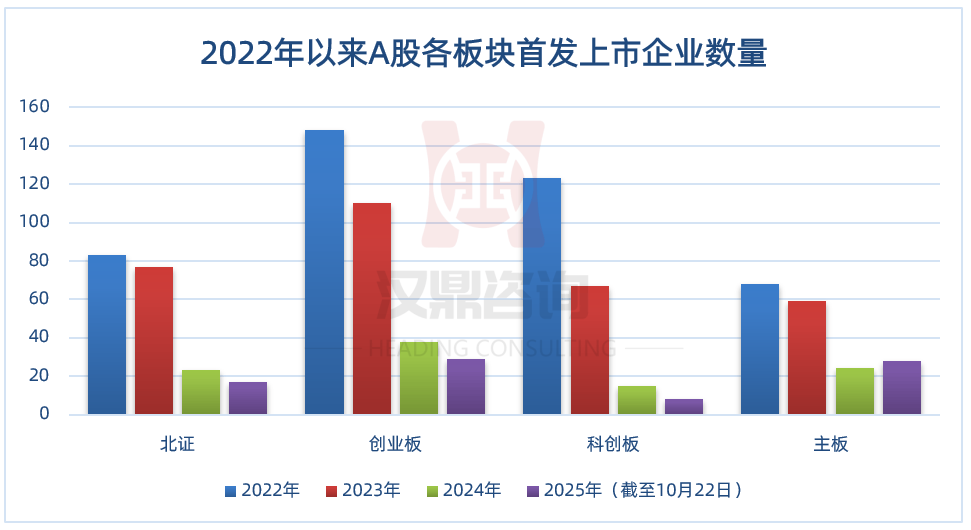
Core Insights - The A-share IPO market has seen a significant decline in both planned and actual fundraising amounts due to various regulatory changes, including the "827 New Policy" and "315 New Policy" [1][2] - A growing number of IPO companies are reducing their fundraising targets during the review process, with over half of the companies in 2025 adjusting their planned fundraising amounts [1][5] Fundraising Trends - From 2022 to 2025, 917 companies have gone public in the A-share market, with a notable decrease in the number of IPOs, particularly in 2024, where only 100 companies were listed [3] - The proportion of companies that failed to raise sufficient funds has surged to over 50% since 2024, with significant increases across various boards, excluding the Beijing Stock Exchange [5] Fundraising Shortfalls - The average shortfall in fundraising for IPO companies since 2022 fluctuates between 23% and 35%, with some companies experiencing drastic shortfalls, such as Xingchen Technology, which raised only 6.27 billion CNY against a planned 30.46 billion CNY, resulting in a shortfall of 79.39% [7] Regulatory Adjustments - Companies that do not meet their fundraising targets must adjust their investment projects according to regulatory requirements, which necessitate board approval and may require disclosure of adjustments [9][10] - The adjustments typically involve reducing the amount allocated to one or more projects, canceling supplementary projects, or eliminating specific investment projects altogether [11] Case Studies of Adjustments - Haibo Shichuang adjusted its fundraising project amounts after raising 76.65 million CNY against a planned 78.28 million CNY, reducing its working capital allocation [12] - Huazhi Jie reduced multiple project amounts while maintaining the intended use of funds, raising 44.42 million CNY against a planned 48.61 million CNY [13] - Taili Technology cut its working capital allocation by 32% after raising 36.95 million CNY against a planned 54.22 million CNY [15] - Taihe Co. canceled several detailed investment projects after raising only 38.98 million CNY against a planned 104.49 million CNY [21] - Saifen Technology also canceled supplementary and other investment projects after raising 16.58 million CNY against a planned 80 million CNY [24]