
医美产品

Search documents
10天蒸发百亿,陕西“最强夫妻店”深陷造假漩涡
盐财经· 2025-06-03 10:42
Core Viewpoint - The article discusses the rise and subsequent challenges faced by Juzi Biotechnology, highlighting its rapid growth in the beauty industry and the controversies surrounding its flagship product, the collagen stick, amid accusations of ingredient falsification [4][11][12]. Company Overview - Juzi Biotechnology, founded by Yan Jianya and Fan Daidi, has become a significant player in the beauty industry, particularly known for its "recombinant collagen" technology [10][11]. - The company achieved a market value of over 450 billion yuan in May, making its founders the richest in Shaanxi province [4]. - Juzi Biotechnology's net profit increased from 1 billion yuan in 2022 to 2.06 billion yuan in 2024, with a peak gross margin of 82% [11][21]. Recent Controversies - In May, Juzi Biotechnology faced backlash from Huaxi Biotechnology, which accused it of misleading marketing regarding the safety and efficacy of its products [6][19]. - Influencer "Big Mouth Doctor" Hao Yu claimed that the collagen stick contained only 0.0177% of the advertised recombinant collagen, significantly below the stated minimum of 0.1% [13][17]. - Juzi Biotechnology's response included a denial of the allegations and a commitment to legal action against misinformation campaigns [7][15]. Market Impact - Following the allegations, Juzi Biotechnology's stock price dropped over 8%, reducing its market capitalization from 909 billion HKD to 735 billion HKD within ten days [7][11]. - The controversy has affected not only Juzi Biotechnology but also other companies in the recombinant collagen sector, leading to a decline in their stock prices [7][11]. Competitive Landscape - The article highlights the competitive tension between Juzi Biotechnology and Huaxi Biotechnology, with both companies investing heavily in marketing and facing scrutiny over their product claims [21]. - Juzi Biotechnology's marketing expenses exceeded 2 billion yuan in 2024, while Huaxi Biotechnology's marketing costs were reported at 2.464 billion yuan [21].

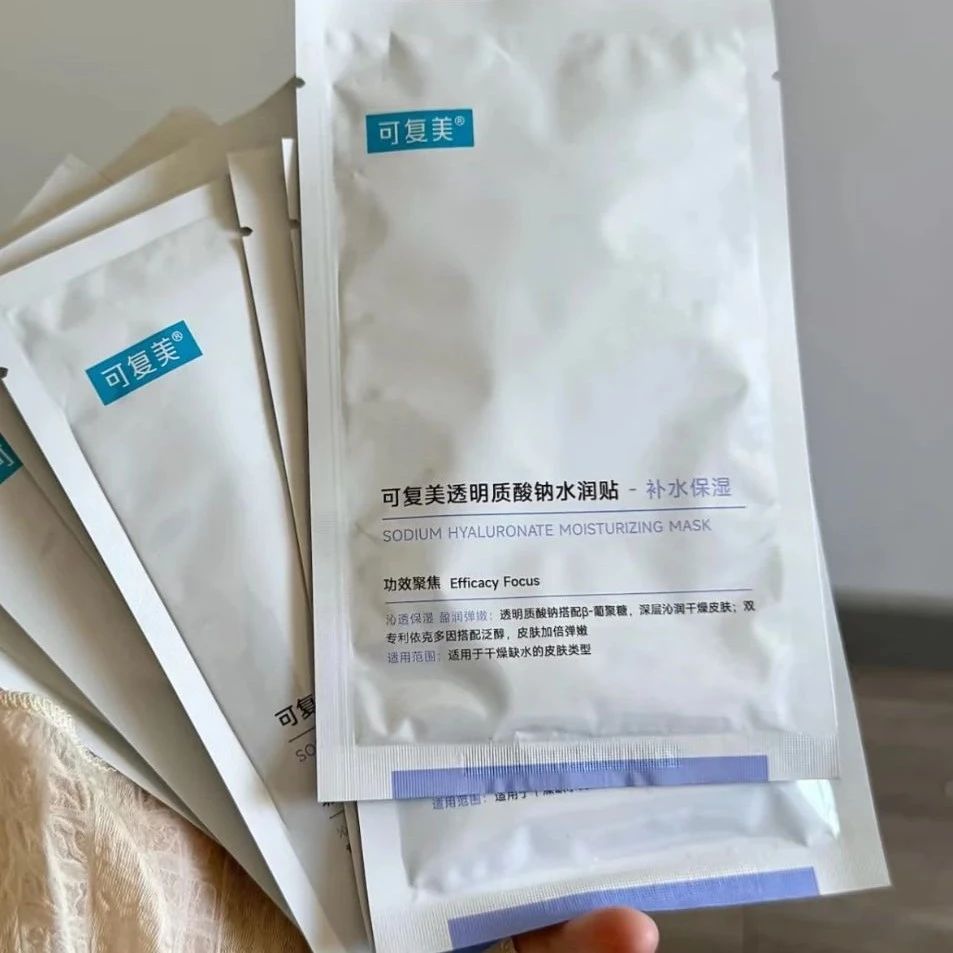
两大医美巨头隔空“喊话”!华熙生物力挺“大嘴博士”,巨子生物深夜回应
Bei Jing Shang Bao· 2025-06-02 11:02
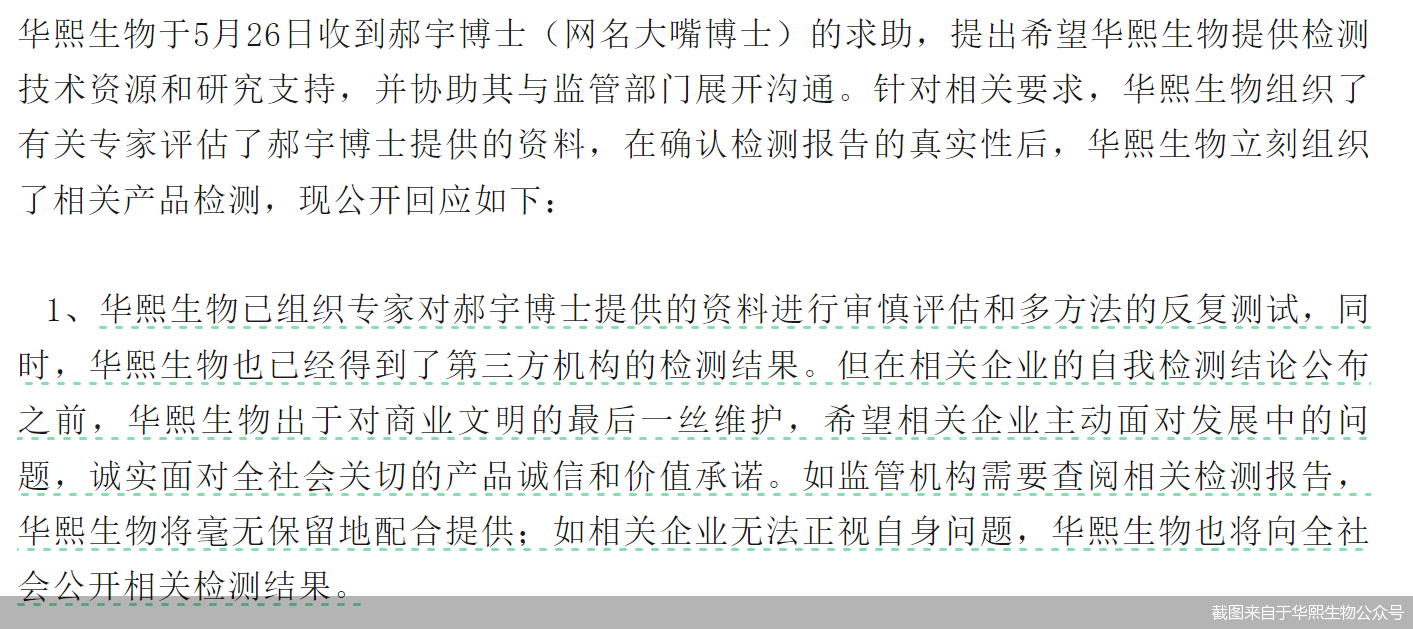
Core Viewpoint - The dispute over the ingredients in medical beauty products is escalating, particularly between Huaxi Biological and Juzhi Biological, with accusations of misleading information and legal threats being exchanged [1][5][6]. Group 1: Company Statements - Huaxi Biological issued a statement supporting Dr. Hao Yu, indicating that they had confirmed the authenticity of the testing reports and would cooperate with regulatory bodies if needed [2][3]. - Huaxi Biological accused Juzhi Biological of using online marketing tactics to undermine competition and suggested that they are prepared for a "real business war" [1][4]. - Juzhi Biological responded by stating that they would pursue legal action against those spreading false information and emphasized their commitment to consumer interests [1][5]. Group 2: Product Controversy - Dr. Hao Yu claimed that the product "Kefumei" from Juzhi Biological contained only 0.0177% of recombinant collagen, which does not meet regulatory standards for labeling as a non-trace component [3]. - Huaxi Biological highlighted that their products have the highest number of medical device certifications in the industry, asserting that there is no evidence to support the safety of recombinant collagen over hyaluronic acid [4]. Group 3: Financial Performance - Juzhi Biological reported significant revenue growth from 2022 to 2024, with revenues of 2.364 billion, 3.524 billion, and 5.539 billion yuan, and net profits of 1.002 billion, 1.452 billion, and 2.062 billion yuan respectively [6]. - In contrast, Huaxi Biological experienced a decline in both revenue and net profit for 2024, with revenues of approximately 5.371 billion yuan (down 11.61%) and net profits of about 174 million yuan (down 70.59%), marking their worst performance since going public [7]. Group 4: Market Reaction - Following the controversy, Juzhi Biological's stock price fell by 18.07% from its peak on May 20, closing at 68.25 HKD per share on June 2, reflecting market concerns over the ongoing disputes [6].

测不到胶原?医美龙头被质疑造假风波发酵,今日股价一度重挫10%
21世纪经济报道· 2025-05-26 14:31
Core Viewpoint - The article discusses the controversy surrounding Giant Bio (巨子生物) and its flagship product, Kefu Mei (可复美), which has been accused of potential fraud regarding its collagen content, leading to a crisis of trust among investors and consumers [1][4]. Group 1: Controversy and Market Impact - On May 24, a report from "Dr. Yan's Research Institute" claimed that Kefu Mei's collagen content was undetectable, raising questions about the company's credibility and regulatory compliance [1][4]. - Following the allegations, Giant Bio's stock price fell over 10% on May 26, closing at 73.6 HKD per share, with a total market capitalization of 788.19 billion HKD [4]. - Other companies in the collagen market, such as Jinbo Bio (锦波生物), Marubi (丸美生物), and Furuida (福瑞达), also experienced stock price declines amid the controversy [4]. Group 2: Product and Testing Disputes - The report highlighted three main issues with Kefu Mei: the claimed collagen content was only 0.0177%, below the regulatory threshold of 0.1%, and the absence of glycine, a key amino acid in collagen [9][11]. - Giant Bio defended its product, stating that it complies with national standards and has undergone multiple testing phases to ensure quality [11]. - The lack of standardized testing methods for collagen products in China has been identified as a significant issue, leading to discrepancies in test results from different institutions [12]. Group 3: Industry Context and Growth Potential - The collagen market in China reached 192.4 billion CNY in 2022, with a projected compound annual growth rate of 44.93%, expected to reach 585.7 billion CNY by 2025 [20]. - Companies like Jinbo Bio and Marubi are actively developing their collagen products, with Jinbo Bio reporting a revenue increase of 84.92% in 2024 [20][21]. - The article emphasizes the need for a scientific testing framework and transparent regulatory oversight to address the ongoing challenges in the collagen industry [17][22].

440亿医美新贵范代娣陷争议风暴 巨子生物依赖单品研发费率仅1.9%
Chang Jiang Shang Bao· 2025-05-26 01:08
Core Viewpoint - The article discusses the challenges faced by Juzi Biotechnology, particularly regarding allegations of product fraud and the company's heavy reliance on its flagship product, Kefu Mei, amidst increasing scrutiny and competition in the beauty and healthcare industry [1][5][7]. Company Overview - Juzi Biotechnology, founded by Fan Daidi, specializes in recombinant collagen products, with its flagship offerings being Kefu Mei and Keli Jin [1][4]. - The company went public on the Hong Kong Stock Exchange in 2022, achieving a market capitalization of approximately HKD 821 billion (RMB 753 billion) as of May 23, 2025 [4]. Financial Performance - Juzi Biotechnology reported a revenue of RMB 55.39 billion in 2024, marking a 57.17% year-on-year increase, with a net profit of RMB 20.62 billion, up 42.06% [7]. - The contribution of Kefu Mei to the company's revenue rose from 30.3% in 2019 to 82% in 2024, while the second brand, Keli Jin, decreased to 15.2% [7]. Research and Development - The company's R&D expenditure in 2024 was only RMB 1.07 billion, accounting for 1.9% of its revenue, significantly lower than competitors like Huaxi Biotechnology and Jinbo Biotechnology, which spent 7.13% and 4.92% of their revenues on R&D, respectively [8]. - Juzi Biotechnology's core patents are primarily from 2005 to 2013, indicating a slow pace of new product development [8]. Market Challenges - The company is currently facing allegations of product fraud, specifically regarding the efficacy of its recombinant collagen products, which has led to public scrutiny and potential reputational damage [5][6]. - There are concerns about the company's supply chain management and regulatory compliance, particularly following allegations of using banned ingredients in its products [7][8].
王晔院长受邀出席 Juläine发布会,分享抗衰经验,闪耀国际舞台
Cai Fu Zai Xian· 2025-05-23 01:50
Core Insights - The collaboration between Saint Boma Group and Nordberg Medical aims to expand the global regenerative aesthetic market, highlighted by the launch of the Juläine PLLA facial filler in the Nordic region [1][2][4] - Saint Boma, a leader in the medical PLLA field, is leveraging its partnership with Nordberg Medical to innovate and apply regenerative material technology, enhancing its presence in the international aesthetic market [2][4] - The launch event attracted over 80 top aesthetic doctors from Sweden, Norway, Finland, and Iceland, showcasing a blend of technology and aesthetics in regenerative solutions [2][4] Group 1: Partnership and Market Position - The partnership between Saint Boma and Nordberg Medical began in 2017, focusing on localized research and production in Europe while adhering to global standards [4] - The successful launch of the Juläine brand in the Nordic region follows previous events in Spain and Italy, marking a significant step for Chinese aesthetic technology in the international market [4] - This strategic alliance exemplifies the combination of "Chinese manufacturing" and "Nordic standards," redefining the competitive landscape of the global regenerative aesthetic market [4] Group 2: Product and Innovation - Aivilan, the first NMPA-certified Class III medical device-grade PLLA facial filler from China, has rapidly become a phenomenon in the aesthetic field since its launch in 2021 [6] - Aivilan has disrupted traditional aesthetic market concepts by introducing the idea of "regenerative materials," leading to a shift in consumer perception from "changing appearance" to "natural self" [6] - The product has established itself as a high-end brand, inspiring other domestic companies to innovate and enhancing China's position in the global aesthetic industry [6] Group 3: Clinical Expertise and Global Influence - The event featured presentations from experts across Europe, with a highlight being Dr. Wang Ye's discussion on the precise application strategies of PLLA in skin anti-aging [8][10] - Dr. Wang's presentation provided valuable clinical insights and demonstrated Aivilan's unique treatment advantages in addressing facial laxity and contour issues, contributing to the global discourse on aesthetic treatments [10][12] - The event marked a significant moment for Chinese aesthetic experts to share clinical experiences with European counterparts, showcasing the potential for cross-regional knowledge exchange [12] Group 4: Future Outlook - Aivilan's emergence is reshaping the global aesthetic landscape, leading to a resurgence of previously marginalized products and a decline in traditional filler market share [14][15] - The company is poised to capitalize on unprecedented opportunities in the aesthetic market, similar to the electric vehicle industry's rapid growth [15] - Aivilan's international expansion will continue, with plans to enter Southeast Asia, South America, the Middle East, Japan, and the U.S., aiming for a comprehensive output of clinical standards and aesthetic philosophies [15]
身家超450亿元!陕西富豪夫妇的“流量”生意经
21世纪经济报道· 2025-05-23 00:02
Core Viewpoint - The article discusses the rise of Fan Daidi and Yan Jianya, the founders of Juzhi Biotechnology, who recently became the richest couple in Shaanxi with a net worth exceeding 450 billion yuan, highlighting their journey from academia to entrepreneurship and the commercialization of their scientific research [1][2]. Group 1: Background and Early Career - Fan Daidi, born in 1966, comes from an ordinary family in Weinan, Shaanxi, and became China's first female PhD in biochemical engineering after studying at Northwest University and East China University of Science and Technology [2]. - After returning from a visit to MIT in 2000, Fan led a research team to develop human-derived collagen, which garnered significant academic recognition [2][3]. - Yan Jianya left the academic system in 2000 to co-found Xi'an Juzhi Biotechnology with Fan, starting from a small office and focusing on the commercialization of their research [2][3]. Group 2: Business Development and Challenges - Despite holding core technology, the couple faced challenges in converting their research into marketable products, relying on personal savings during the initial years [3]. - Yan Jianya pivoted to the military sector in 2003, leveraging his connections to attract state and private capital, which alleviated financial pressures on their research [3][4]. - Fan Daidi continued to focus on technological breakthroughs, leading to the establishment of a research center and the completion of a factory in 2005 [3][4]. Group 3: Commercialization and Growth - The couple's business model combined scientific expertise with commercial acumen, leading to the launch of their first commercial brand, Keli Jin, in 2009 [5][6]. - They formed strategic partnerships, notably with Wanse City, which significantly increased their market reach despite later controversies surrounding the partner's business practices [6][7]. - The establishment of Xi'an Maker Village allowed them to expand their distribution network, contributing significantly to Juzhi's revenue [6][7]. Group 4: IPO and Financial Performance - Juzhi Biotechnology went public in 2022, becoming the first Hong Kong-listed company focused on recombinant collagen, with a revenue growth of nearly five times from 2019 to 2024 [12]. - The company reported a revenue of 55.38 billion yuan in 2024, with a compound annual growth rate of 42% [12]. - Despite high revenue growth, concerns arose regarding governance, reliance on a single brand, and increasing sales expenses, which outpaced revenue growth [13]. Group 5: Market Position and Future Outlook - Juzhi holds the top position in the collagen protein skincare market and ranks second in the medical dressing market with a 9% market share [9]. - The company has attracted significant investment from prominent firms, indicating strong market confidence, with a pre-IPO valuation exceeding 19.3 billion yuan [11]. - The transition of leadership to the next generation has raised questions about the sustainability of the business model and governance structure [12][13].

爱美客(300896):25Q1高基数下收入同比下降 建议关注国内复苏进度及海外并购进展
Xin Lang Cai Jing· 2025-05-06 00:42
Core Viewpoint - The company experienced a revenue decline in Q1 2025 due to a high base from the previous year, but showed slight sequential growth compared to Q4 2024, indicating a gradual recovery in consumer spending [1] Financial Performance - In Q1 2025, the company reported revenue of 660 million yuan, a decrease of 17.9% year-on-year, but a slight increase of 1.5% quarter-on-quarter from 650 million yuan in Q4 2024 [1] - The gross margin remained relatively stable at 93.9%, with operating expense ratios increasing due to a decline in revenue and new R&D investments [1] - The net profit for Q1 2025 was 440 million yuan, down 15.9% year-on-year, but the net profit margin improved to 66.9%, an increase of 1.6 percentage points, primarily due to significant gains from fair value changes in investments and increased other income [1] Acquisition and Growth Potential - The company announced plans to acquire 85% of South Korean REGEN for 190 million USD, which is expected to significantly contribute to revenue and profit starting in 2026 [2] - REGEN reported revenue of 72.23 million yuan and net profit of 29.5 million yuan for the first nine months of 2024, with plans to expand production capacity [2] Earnings Forecast and Valuation - The company forecasts revenues of 3.3 billion yuan and 3.6 billion yuan for 2025 and 2026, respectively, with year-on-year growth rates of 9.2% and 9.1% [3] - Projected net profits for the same years are 2.02 billion yuan and 2.18 billion yuan, with growth rates of 3.1% and 7.7% [3] - The target price is set at 299.47 yuan per share, reflecting a price-to-earnings ratio of 45x for 2025 and 42x for 2026, emphasizing the company's strong brand and channel advantages [3]
爱美客(300896):25Q1高基数下收入同比下降,建议关注国内复苏进度及海外并购进展
Haitong Securities International· 2025-05-05 07:31
Investment Rating - The report maintains an "Outperform" rating for the company [2][5][16]. Core Views - The company experienced a revenue decline of 17.9% year-on-year in Q1 2025 due to a high base effect, with revenue reported at RMB 660 million. However, there was a slight quarter-on-quarter growth of 1.5% compared to Q4 2024 [3][11]. - The gross margin remained stable at 93.9%, while operating expenses increased due to higher sales, administrative, and R&D expense ratios, leading to an overall operating expense ratio increase of 3.9 percentage points [12]. - Non-recurring gains offset the revenue decline, resulting in a net profit attributable to shareholders of RMB 440 million, down 15.9% year-on-year, but with a net profit margin improvement to 66.9% [13]. - The company is planning to acquire 85% of South Korean company REGEN for USD 190 million, which is expected to significantly contribute to revenue and profits in 2026 [14][16]. - Revenue projections for 2025 and 2026 are RMB 3.30 billion and RMB 3.60 billion, respectively, with year-on-year growth rates of 9.2% and 9.1% [15][16]. Financial Summary - The company reported a revenue of RMB 3,026 million for 2024, with projections of RMB 3,304 million for 2025 and RMB 3,603 million for 2026, indicating a consistent growth trajectory [9]. - The net profit attributable to shareholders is expected to be RMB 2.02 billion in 2025 and RMB 2.18 billion in 2026, reflecting year-on-year growth of 3.1% and 7.7% [15][16]. - The company maintains a high gross profit margin of 94.6% for 2025, with a projected decline to 93.6% by 2026 [9].
锦波生物狂吃“独家”红利
Hua Er Jie Jian Wen· 2025-04-23 01:27
Core Viewpoint - The performance of Jinbo Biological, the first domestic "recombinant collagen" company, is experiencing significant growth, with revenue and net profit for 2024 projected to be 1.443 billion yuan and 732 million yuan, respectively, reflecting year-on-year increases of 84.92% and 144.27% [1][3]. Financial Performance - In Q1 2025, Jinbo Biological's revenue and net profit are expected to reach 366 million yuan and 169 million yuan, respectively, with both showing over 60% year-on-year growth [1]. - The product "Wei Yimei," which is based on recombinant type III human collagen, generated revenue of 1.128 billion yuan in 2024, marking a year-on-year growth of 99.69% [3][4]. Pricing and Market Pressure - The factory price of Wei Yimei has shown a slight decline, with a 2024 price of 910 yuan per unit, down nearly 7% year-on-year [8]. - The terminal price of Wei Yimei is also decreasing, with a price drop of over 10% observed on platforms like Meituan [10]. Competitive Landscape - Competitors such as Juzi Biological and Chuangjian Medical are making progress in the market, having submitted applications for the registration of similar products, although their approval processes have faced delays [11][12]. - Jinbo Biological's competitive edge lies in its exclusive medical device certification for its injection products, which has driven significant sales growth [3][4]. Product Development - Jinbo Biological is expanding its product range, with the recent approval of a new injectable recombinant collagen gel, which is expected to enhance its market position [14][18]. - The gel is designed for facial volume correction and does not rely on cross-linking agents, potentially increasing safety but limiting the duration of its effects [15][16]. Market Expectations - The strong growth in performance and the upcoming gel product have raised market expectations for Jinbo Biological, with its stock price increasing by nearly 40% since the end of March [19]. - The skincare line related to recombinant collagen also showed significant growth, with revenue of 142 million yuan in 2024, up over 80% year-on-year, although its overall contribution remains limited [21][22].
爱美客(300896);Q4业绩承压 收购韩国公司迈向国际化
Xin Lang Cai Jing· 2025-03-24 06:37
Core Insights - The company reported a total revenue of 3.03 billion yuan in 2024, representing a year-on-year growth of 5.4%, while the net profit attributable to shareholders was 1.96 billion yuan, also up by 5.3% [1][2] - However, Q4 performance showed a decline, with revenue decreasing by 7.0% year-on-year and 9.5% quarter-on-quarter, and net profit down by 15.5% year-on-year and 19.9% quarter-on-quarter [1][2] Financial Performance - For the full year 2024, the company achieved a gross margin of 94.6%, a slight decrease of 0.5 percentage points compared to the same period in 2023, while the net profit margin remained stable at 64.7% [2] - The company distributed a total cash dividend of 1.15 billion yuan to all shareholders, with a dividend payout ratio of 58.5% of the net profit attributable to shareholders [2] R&D and Product Development - The company increased its R&D expenditure to 10.0% of revenue in 2024, up by 1.3 percentage points from 2023 [3] - Several products are in various stages of development, including A-type botulinum toxin and minoxidil topical solution, which are currently in the registration application phase [3] Strategic Acquisition - The company announced plans to acquire 85% of REGEN Biotech for 190 million USD, marking a significant step towards international expansion [4] - REGEN Biotech is a leading South Korean aesthetic product company, with its products AestheFill and PowerFill approved in 34 and 24 countries respectively [4]