
医美服务

Search documents
无门脸儿、无资质、无底线 违规水光针竟在市场上大行其道
Yang Shi Xin Wen· 2025-08-03 15:42
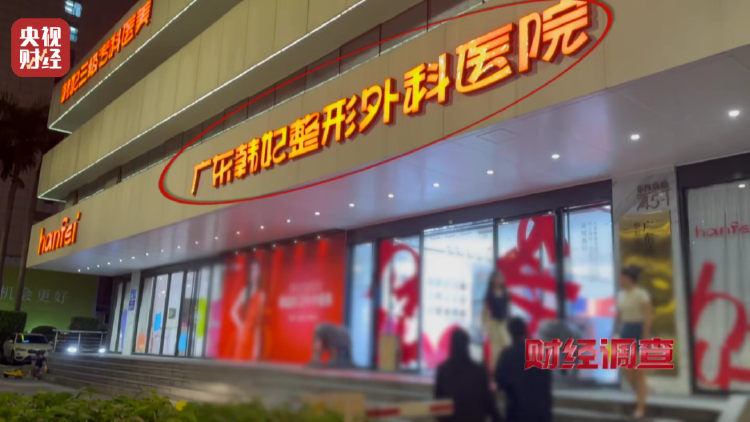
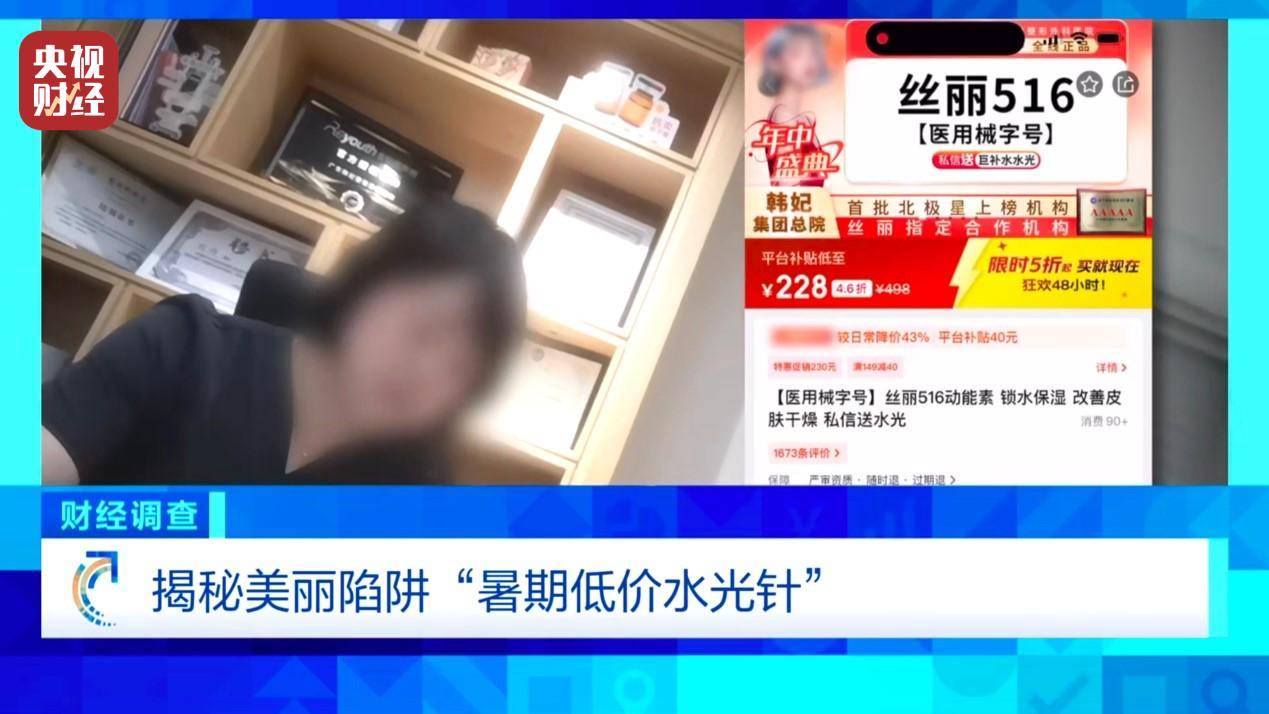
Group 1 - The article highlights the increasing popularity of water light injections among young people due to their "minimally invasive beauty" characteristics, but also points out the illegal practices in the industry [1][3] - Several legitimate medical beauty institutions are found to be violating regulations by using Class II medical devices for injections, which are not approved for such use [5][13] - The investigation reveals that some beauty clinics and unauthorized beauty shops are openly providing injection services without proper medical qualifications [32][41] Group 2 - The Guangdong Hanfei Plastic Surgery Hospital misleads consumers about the classification of their water light products, claiming they are safe for injection despite being Class II devices [7][15] - The Ji Yan Xi Medical Beauty Clinic is also implicated in illegally injecting Class II products, with the physician providing vague responses to inquiries about compliance [22][30] - A beauty shop named Yujianmei Technology is found to be operating without medical qualifications, using smuggled products for injections [34][39] Group 3 - The article discusses the presence of unregulated and illegal products in the market, including foreign water light injections without proper labeling and approval [41][47] - The investigation uncovers that platforms like Xiaohongshu are being used by drug dealers and unauthorized personnel to connect with customers for illegal injection services [51][57] - The report emphasizes the dangers of low-priced products being marketed as water light injections, which are actually intended for other medical uses [67][68]

财经调查丨警惕低价引流的陷阱!88元水光针其实是腹腔防粘连凝胶
Sou Hu Cai Jing· 2025-08-03 12:50
Core Viewpoint - The report highlights the misuse of medical products in the cosmetic industry, specifically the injection of products not approved for facial use, raising concerns about safety and regulatory compliance [1]. Group 1: Product Misuse - A medical beauty store in Lianyungang was found to be using a product intended for abdominal surgery, specifically a sodium hyaluronate gel, for facial injections, which is not its approved application [1]. - The store required customers to purchase an additional product under the pretense that the initially chosen product was insufficient for full facial treatment, despite the second product also being inappropriate for facial use [1]. Group 2: Regulatory Concerns - The report indicates that similar products, which are classified as Class III medical devices, are being marketed inappropriately within the medical beauty sector, leading to potential health risks for consumers [1]. - The use of these products, which are meant to prevent postoperative adhesions in the abdominal cavity, raises significant questions about the enforcement of regulations in the cosmetic industry [1].
水光针市场乱象:“三无”产品偷着打!总台《财经调查》曝光→
Sou Hu Cai Jing· 2025-08-03 12:15
Group 1 - The article highlights the illegal practices in the beauty industry, particularly regarding the use of Class II medical devices for injection, which are not approved for such procedures [1][4][24] - Several medical institutions, including Guangdong Hanfei Plastic Surgery Hospital and Jiyuanxi Medical Beauty Clinic, mislead consumers about the safety and classification of their products, promoting Class II devices as safe for injection [6][16][26] - The investigation reveals that unauthorized beauty salons and studios are openly providing injection services without proper medical qualifications, using smuggled and unapproved products [29][33][49] Group 2 - The report details specific instances where medical professionals and institutions provided injections of products that are not legally permitted for such use, including the "Silk 516" and "Lizhulan" products [7][18][24] - The article also discusses the role of social media platforms like Xiaohongshu in facilitating the promotion and sale of these illegal beauty products, allowing unlicensed practitioners to connect with customers [44][56] - The investigation uncovers a broader issue of counterfeit and unregulated beauty products flooding the market, posing significant risks to consumer safety [38][41][47]
AirSculpt Technologies(AIRS) - 2025 Q2 - Earnings Call Transcript
2025-08-01 13:30
Financial Data and Key Metrics Changes - Revenue for Q2 2025 was $44 million, a decline of 13.7% from the prior year quarter, with adjusted EBITDA at $5.8 million, reflecting a margin of 13.3% compared to 13.5% in Q2 2024 [7][18][20] - Same store revenue declined approximately 22% year-over-year, although it improved marginally from Q1 2025 [8][18] - Average revenue per case was approximately $12,975, consistent with the previous year [18] Business Line Data and Key Metrics Changes - Cases declined by 14.1% to 3,392, primarily due to a challenging market environment [18] - The percentage of patients using financing for procedures increased to 50%, up from 44% in Q1 2025 [19] - Customer acquisition cost decreased to $2,905 per case from $3,325 in the prior year quarter, marking the first quarter-over-quarter decline since going public [20] Market Data and Key Metrics Changes - The company experienced strong consumer interest, with record levels of lead growth and increased consultation volume [7][11] - The macroeconomic environment remains challenging, impacting consumer spending and leading to hesitancy in purchasing decisions [28][46] Company Strategy and Development Direction - The company is focused on five business priorities: enhancing marketing strategies, optimizing sales, introducing new services, improving customer experience, and investing in technology [10][11][12][14] - A pilot for a new skin tightening procedure was launched in Q2 2025, with plans to expand it further [13][31] - The company aims to stabilize sales and return to growth, with no planned new center openings for 2025 [23] Management's Comments on Operating Environment and Future Outlook - Management expressed confidence in the strategy to stabilize sales and improve profitability despite the challenging operating environment [7][15] - The company reiterated its annual outlook, expecting revenue between $160 million and $170 million and adjusted EBITDA between $16 million and $18 million for fiscal 2025 [23] Other Important Information - The CFO announced plans to retire later in the year, with a search underway for a replacement [5] - The company repaid $16 million in debt during the quarter, improving its financial position [21][22] Q&A Session Summary Question: Guidance implies revenues that are flattish in the second half, what are the drivers for the acceleration? - Management noted that while consumer uncertainty persists, record high leads and consultation growth are expected to stabilize revenue and improve EBITDA margins in the second half [28][29] Question: Update on the skin tightening offering and its impact on revenue? - Management confirmed that there are no standalone expectations for skin tightening in guidance, but strong interest has been observed [31][32] Question: Performance of the new centers opened in 2024? - The new centers are performing in line with expectations, though lower than historical averages due to consumer pressures [36][37] Question: Any seasonality considerations for Q3? - Management indicated typical softening in Q3, with expectations for improvement in Q4 as cost initiatives take effect [38][39] Question: Update on the London facility's performance? - The London facility has shown improvement but remains cash flow negative, with management focused on enhancing results [41] Question: Insights on consumer sentiment and market dynamics? - Management noted a choppiness in consumer behavior, with consumers hesitant to make purchases, but believes the company is well-positioned compared to competitors [46]

这个夏天,年轻人异地求美火了
21世纪经济报道· 2025-07-30 08:05
Core Viewpoint - The article highlights the booming trend of "medical beauty + tourism" among young students in China, particularly after the college entrance examination, indicating a significant increase in demand for cosmetic procedures during the summer months [3][10][11]. Group 1: Market Trends - The summer period post-exams sees a surge in medical beauty procedures, with reports indicating a 10% to 30% increase in student patients at certain hospitals [5][8]. - Popular procedures among students include double eyelid surgery, rhinoplasty, and facial contouring, with a reported 30% increase in related business during the summer [7][10]. - The trend of students traveling to major cities or abroad for cosmetic procedures is growing, with a notable flow from second and third-tier cities to first-tier cities and international destinations like South Korea and Japan [8][10]. Group 2: Economic Impact - The report from Deloitte indicates that 31% of middle to high-income individuals plan to seek cosmetic procedures abroad in 2024, translating to over 9 million potential outbound medical beauty seekers based on current estimates [10]. - Chengdu is positioning itself as an "international medical beauty capital," with plans to achieve a revenue target of 100 billion yuan by 2025 [16]. Group 3: Consumer Behavior - Young consumers are increasingly calculating the cost-benefit ratio of beauty procedures, often opting for international options due to lower prices and perceived higher quality [9][14]. - Social media plays a significant role in promoting this trend, with platforms like Xiaohongshu and Douyin generating substantial discussions and views on beauty transformations and travel experiences [11]. Group 4: Service and Infrastructure - South Korea offers comprehensive services for medical tourists, including medical visas and bilingual support, enhancing the appeal for Chinese students seeking cosmetic procedures [15]. - Domestic cities are also exploring innovative models that combine tourism and medical beauty, with initiatives to develop unique beauty tourism routes [16]. Group 5: Risks and Challenges - Despite the growing trend, there are significant risks associated with low-cost procedures, including the potential for infections and financial pitfalls from "beauty loans" [18][19]. - Language barriers and lack of regulatory oversight for local guides can lead to miscommunication and unsafe practices in foreign medical settings [20].
成都都市圈上半年GDP超1.5万亿元
Xin Hua Cai Jing· 2025-07-27 10:38
Group 1 - The core viewpoint of the news is that the Chengdu metropolitan area has achieved significant economic growth in the first half of the year, with a total GDP of 15,171.78 billion yuan, driven primarily by Chengdu's dominance in the region [1][2] - Chengdu's GDP accounts for 79.8% of the total GDP of the metropolitan area, highlighting its central role in the economic landscape [1] - The metropolitan area has identified nine key industrial chains, with a total output value exceeding one trillion yuan, focusing on sectors such as new displays, rail transit, aerospace equipment, new energy vehicles, green food, and medical beauty services [1] Group 2 - The production output of key industrial products has seen robust growth, with Chengdu's new energy vehicles, smartwatches, and lithium-ion batteries increasing by 352.2%, 119.2%, and 45.8% respectively [1] - The third industry in Chengdu, which includes services, has shown a significant increase, with a value of 8,654.2 billion yuan, representing 71.5% of the regional GDP [2] - Deyang continues to leverage its strengths in equipment manufacturing, with a reported revenue of 1,799.0 billion yuan from large-scale industrial enterprises, reflecting a year-on-year growth of 10.8% [2]
医美并购的“朗姿教训”
阿尔法工场研究院· 2025-07-23 13:47
Core Viewpoint - Langzi Co., Ltd. relies on capital-driven growth and rapid mergers and acquisitions to form a chain scale, neglecting the core of the medical beauty industry, which is "doctors and services" [1][30]. Financial Performance - Langzi Co., Ltd. reported a projected net profit of 220 million to 260 million yuan for the first half of 2025, representing a year-on-year growth of 31.74% to 55.69% [3][4]. - However, after excluding a 160 million yuan investment gain from the sale of Ruoyuchen, the actual operating net profit dropped to 90 million to 130 million yuan, a decline of 35.68% to 7.09% year-on-year [6][4]. - The first quarter of 2025 showed a decline in revenue, net profit, and cash flow from operating activities, indicating a downward trend [6][7]. Medical Aesthetics Business Challenges - The medical aesthetics segment, which was expected to be a new growth engine, has underperformed, with revenue and gross profit decreasing by 9.22% and 8.58% respectively in Q1 2025 [11][8]. - The gross profit margin of the medical aesthetics business is 55.05%, significantly lower than the traditional apparel and children's products segments, which have margins of 64.51% and 62.28% respectively [11][8]. - Among the seven medical aesthetics brands under Langzi, only the Jingfu Medical Beauty brand achieved positive growth in Q1 2025, while the other six brands experienced revenue and profit declines [13][11]. Industry Dynamics - The medical aesthetics industry has a complex value structure, with upstream pharmaceutical and equipment manufacturers capturing 50%-70% of the profits, while downstream service providers only retain 10%-25% [16][15]. - Operating a medical aesthetics institution is capital-intensive, requiring significant investment in equipment and facilities, with depreciation periods of 5-10 years [17][16]. - The industry faces increasing competition, with the number of specialized medical aesthetics institutions in China reaching 21,000 in January 2025, an increase of approximately 2,400 from the previous year [21][20]. Strategic Decisions and Market Trends - Despite the challenges, Langzi continues to invest in medical aesthetics, viewing it as a low-resistance entry point into the sector with high valuation potential [23][22]. - The medical aesthetics market in China has seen a compound annual growth rate of over 20% from 2011 to 2019, attracting significant capital investment [24][23]. - Langzi's strategy of rapid acquisitions in the medical aesthetics sector has not translated into sustainable growth, as the industry is moving towards a more decentralized model focused on individual practitioners and boutique institutions [30][29]. Conclusion - The fundamental conflict between capital-driven expansion and the intrinsic nature of the medical aesthetics industry may be the root cause of Langzi's current challenges [31][30].

高考生挤爆整形科
Hu Xiu· 2025-07-18 08:53
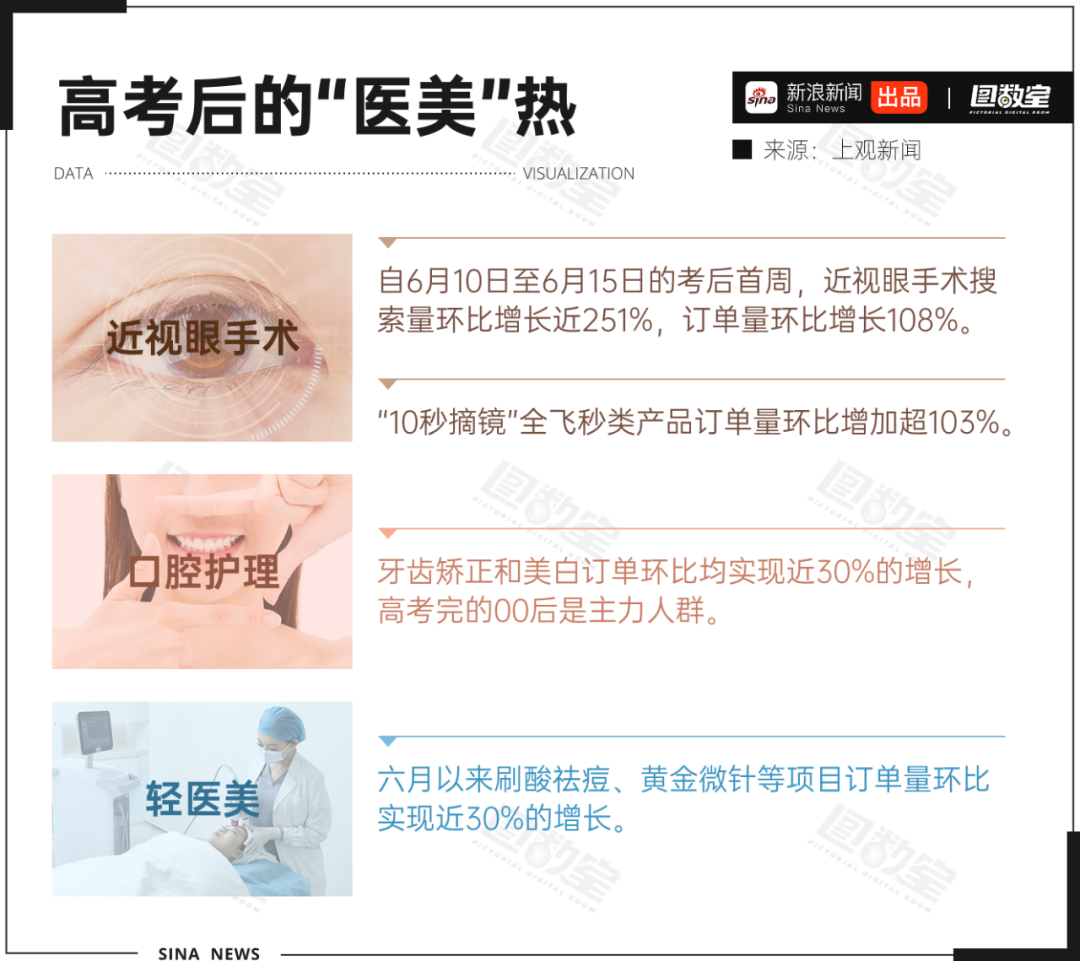
Core Insights - A transformation regarding "appearance" is emerging among the youth, particularly after the college entrance examination [1] - The trend of cosmetic procedures is replacing traditional summer activities like driving school and travel, with significant increases in orders for procedures such as double eyelid surgery and teeth whitening [2][5] - The rise in cosmetic procedures among high school graduates is driven by social media and appearance anxiety, with over half of high school students reporting concerns about their looks [3][10] Group 1: Trends in Cosmetic Procedures - There has been a 108% increase in orders for vision correction surgeries in the week following the college entrance exam, alongside a 30% rise in teeth whitening and skin management procedures [8][10] - Medical institutions are experiencing a surge in student patients, with outpatient visits increasing by 10% to 30% and surgical volumes rising significantly during the summer months [7][8] - The trend is expected to peak between late July and August, as students prepare for university [8] Group 2: Psychological Factors - The phenomenon of "spotlight effect" contributes to heightened appearance anxiety among youth, leading to a distorted self-perception and increased worry about looks [10][11] - A survey indicates that 57.03% of high school students experience some level of appearance anxiety, with a higher prevalence among girls (61.85%) compared to boys (47.78%) [11][13] - The pressure from social media and peer comparisons exacerbates this anxiety, creating a cycle of self-doubt and concern about physical appearance [14] Group 3: Market Dynamics - The cosmetic surgery market is becoming increasingly accessible to younger demographics, with marketing strategies targeting students and offering summer discounts [20][21] - Data shows that individuals aged 18 to 24 engage most frequently with cosmetic content, with nearly half of those under 25 expressing interest in cosmetic procedures [21][22] - The trend is also evident in lower-tier cities, where 38.4% of individuals have tried cosmetic procedures, indicating a shift towards a broader consumer base [24][26] Group 4: Shift Towards Light Cosmetic Procedures - The market is seeing a preference for "light cosmetic" procedures that are less invasive and have quicker recovery times, appealing to younger consumers [28][29] - A report indicates that 61.9% of consumers plan to spend less than 10,000 yuan on cosmetic procedures in 2025, reflecting a trend towards budget-friendly options [30] - The focus is shifting from major surgeries to less invasive treatments, which are marketed as effective yet affordable solutions for beauty enhancement [29][32]
新氧20250701
2025-07-02 01:24
Summary of the Conference Call for Xinyang Company Overview - Xinyang operates in the medical aesthetics industry, primarily through an online platform that charges information service fees and commissions to medical beauty institutions. The company was founded in 2013 and went public on NASDAQ in 2019. [3][2] Key Business Developments - Xinyang acquired Wuhan Qizhi Laser for 790 million RMB to expand its photonic equipment business and is also the agent for Dongbang's hyaluronic acid products from South Korea, with a quarterly shipment of 28,000 units, a 14% year-on-year increase. [2][3] - The core business, Xinyang Youth Clinics, has opened 31 locations and plans to expand to 50 by 2025, focusing on first-tier cities. [2][5] Financial Performance - Expected revenue for 2025 is between 1.5 billion to 1.6 billion RMB, with contributions from various segments: Top business (500-600 million RMB), chain business (600 million RMB), and upstream business (300 million RMB). [3][12] - The average monthly revenue for mature clinics is 4.5 to 5 million RMB, while growing clinics average around 3 million RMB. [6][7] Customer Insights - Target customers are women aged 25-45, with the highest spending power in the 30-35 age range. The repurchase rate is approximately 60-65%. [9][10] - Average customer spending is 2,000 RMB for new customers and 2,500 RMB for returning customers. [8] Marketing and Customer Acquisition - Xinyang's customer acquisition cost is significantly lower than industry averages, with costs around 700 RMB per customer compared to 2,000-3,000 RMB for competitors. [10][22] - The company utilizes a mix of referral programs, private domain conversions, and social media advertising to attract new customers. [10][11] Operational Efficiency - The cost structure includes marketing expenses (15%), consumable costs (49-50%), personnel costs (12%), and rent/utilities (10-15%). [6][20] - The company has a strong focus on light medical aesthetics, which facilitates replication and expansion. [8] Product Development and Innovation - Xinyang plans to launch proprietary products such as the "童颜针" (youthful needle) and silk protein to enhance cost-effectiveness and competitiveness. [3][13] - New products are designed to improve user experience and reduce costs, with a focus on maintaining a competitive edge in pricing and efficacy. [14][22] Store Expansion Strategy - The company plans to open 50 stores by the end of 2025, with a mix of direct and franchise operations. [17][18] - The payback period for stores is estimated at around six months for positive cash flow and one year for breakeven. [19] Competitive Landscape - Xinyang's business model is unique in the market, with few direct competitors. Similar models exist, but they differ significantly in scale and operations. [28] Conclusion - Xinyang is positioned for growth in the medical aesthetics sector, with a solid expansion plan, innovative product offerings, and a strong customer acquisition strategy. The company aims to leverage its unique business model to maintain a competitive advantage in the industry. [2][3][28]
95后中国男生,成了医美圈财神爷
Hu Xiu· 2025-06-28 23:00
Core Insights - The rise of male cosmetic procedures among Chinese post-95s is significantly impacting the domestic medical beauty market [2][9][19] - Male consumers, particularly those born in the 1990s, are becoming a focal point for medical beauty institutions due to their increasing demand and higher spending [11][13][14] Market Trends - The demand for medical beauty services among male users has increased, with male customers accounting for 7.3% of visitors in May, up from 4.9% the previous year [4] - The average spending per male customer is approximately 2.75 times higher than that of female customers [13] - The medical beauty market in China is expected to exceed 500 billion yuan by 2025, with male consumers making up over 30% of this market [11][12] Consumer Behavior - Male consumers are primarily motivated by the desire to enhance their appearance for social and romantic reasons, with a focus on natural and subtle results [5][7][9] - There is a notable age stratification in male cosmetic demands, with younger males (post-95s) focusing on skin management and older males (post-80s) leaning towards anti-aging and hair management [6][9][10] - Social media plays a crucial role in shaping the beauty standards and consumption habits of post-95 males, who are more open to cosmetic procedures compared to previous generations [10][21] Industry Response - Medical beauty institutions are adapting their marketing strategies and product offerings to cater specifically to male consumers, including hiring market development specialists focused on this demographic [3][18] - The industry is witnessing a shift towards more specialized services for men, including hair restoration and body sculpting, as well as the establishment of male-focused beauty clinics [18][19] Challenges and Opportunities - Despite the growing interest, there are still significant barriers to entry for male consumers, including societal stigma and a lack of awareness about available services [12][14] - The medical beauty sector is facing rising costs for materials and regulatory changes, which could impact profitability and market dynamics [12][14]