奢侈品零售

Search documents
普拉达拟6658.8万欧元购入米兰物业
Zhi Tong Cai Jing· 2025-11-18 22:19
Group 1 - The company Prada has entered into an agreement with Ludo Due S.r.l. to purchase a property for €66.588 million, located in Milan, Italy, covering an area of approximately 14,800 square meters [1][2] - The property is situated in an area affected by the "Scalo di Porta Romana" redevelopment project, which includes the development of the Olympic Village for the 2026 Milan-Cortina Winter Olympics, new residential and office buildings, and a large park [1][2] - The company has been leasing part of the property since 2013, which serves as its operational headquarters in Milan, including offices, laboratories, and service areas for retail and marketing functions [1] Group 2 - The second part of the property is currently undeveloped, presenting future urban and real estate development opportunities [2] - The company intends to potentially develop the acquired property into a new headquarters, consolidating several existing offices and showrooms in Milan to enhance operational efficiency and strengthen its position in the strategic area [2] - The acquisition represents a significant opportunity for the company to secure prime real estate in a region undergoing important urban development and value growth, where suitable real estate assets are expected to become increasingly scarce [2]

盒马做起中产生意,开卖4000块的Burberry
3 6 Ke· 2025-11-17 12:12
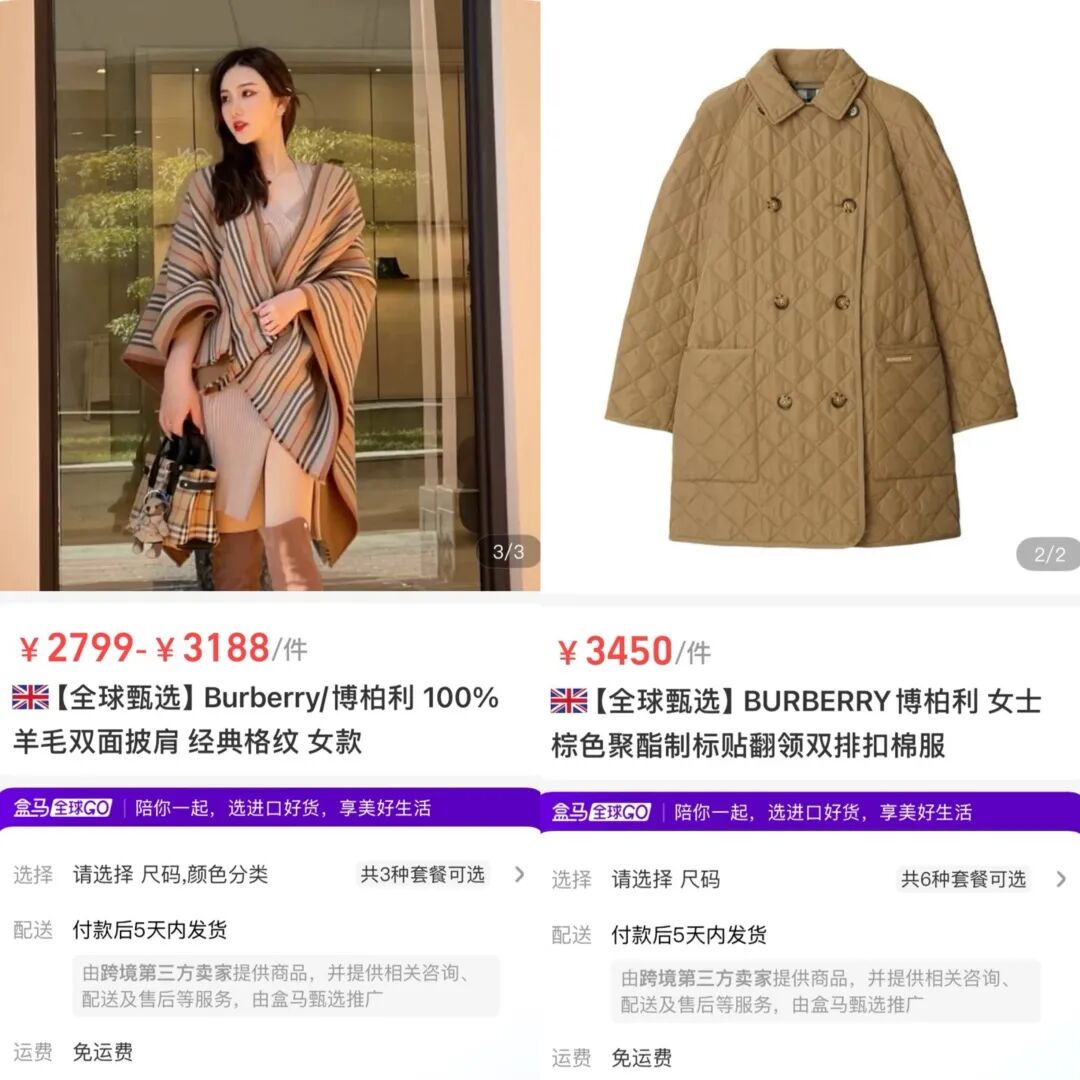
Core Viewpoint - Hema, originally focused on fresh produce, is expanding into the luxury goods market by launching a selection of Burberry products on its app, indicating a strategic shift towards high-end retail to meet ambitious growth targets [3][6][10]. Group 1: Product Offerings - Hema has introduced luxury brand Burberry on its app, featuring various categories such as clothing, bags, shoes, scarves, and shawls, with the highest-priced item being a long trench coat at 4,199 yuan [3][4]. - The "Global Selection" series includes other luxury brands like Balenciaga, FENDI, GUCCI, MCM, Marni, Longchamp, and COACH, with prices generally ranging from 1,000 to 4,500 yuan [7]. - The products are sold by overseas third-party sellers through a cross-border e-commerce platform, with Hema providing promotional support [4][7]. Group 2: Business Strategy - Hema aims to achieve a GMV (Gross Merchandise Volume) of over 100 billion yuan by the end of 2024, reflecting a significant growth ambition [6][10]. - The company is closing Hema X membership stores and pausing the Hema neighborhood self-pickup service while accelerating the expansion of Hema Fresh and Super Hema stores [6][10]. - Hema's strategy includes focusing on user value, refining its business direction, and enhancing organizational structure to support its growth objectives [10][12]. Group 3: Market Position and Competition - Hema's luxury offerings compete with similar services from retail giants like Sam's Club, which also features cross-border retail for fashion and luxury items, leveraging Walmart's global supply chain [7]. - Price comparisons show that some items are cheaper on Hema than on Tmall International, indicating competitive pricing strategies [8]. - Hema's global selection series may expand to include more categories in the future, as indicated by the diverse supplier categories listed on the app [9]. Group 4: Performance Metrics - Hema reported a GMV exceeding 75 billion yuan for the fiscal year 2025, marking a year-on-year growth of over 27%, significantly higher than the previous year's 7% [13]. - The company achieved its first annual adjusted EBITDA profit, indicating a positive trend in financial performance [13].


汉堡王中国业务易主;瑞幸回应重回美国上市;Burberry中国市场复苏丨品牌周报
36氪未来消费· 2025-11-16 11:38
Group 1: Burger King China Business Acquisition - CPE Yuanfeng announced a strategic partnership with Burger King to establish a joint venture named "Burger King China" [4] - CPE Yuanfeng will inject $350 million into the joint venture for restaurant expansion, marketing, menu innovation, and operational improvements [4] - Post-transaction, CPE Yuanfeng will hold approximately 83% equity, while RBI will retain about 17% [4] - The plan aims to expand Burger King's store count in China from around 1,250 to over 4,000 by 2035 [4] Group 2: Luckin Coffee's Plans for US Re-Listing - Luckin Coffee is actively pursuing a return to the US stock market, with no confirmed timeline yet [5] - The company reported a 44.57% year-on-year revenue increase to 21.224 billion yuan in the first half of the year, with a net profit rise of 125.41% to 1.776 billion yuan [5] - As of June 30, 2023, Luckin had 26,206 stores, with a net increase of 2,109 stores in Q2 [5] - The company forecasts a revenue of 34.475 billion yuan for 2024, representing a year-on-year growth of approximately 44.93% [5] Group 3: Burberry's Market Recovery - Burberry reported a revenue of £1.032 billion for the first half of the 2026 fiscal year, a 3% decline year-on-year at constant exchange rates [7] - The company narrowed its operating loss to £18 million, significantly improved from a £53 million loss in the previous year [7] - Sales in the Chinese market grew by 3% in the last three months, reversing a previous decline of 5% [7] - Burberry's new CEO has refocused the brand on its classic products, which has received a positive market response [7] Group 4: LABUBU Movie Development - Sony Pictures has signed an agreement to develop a movie based on the LABUBU IP from Pop Mart [9] - LABUBU has gained significant popularity globally, with the IP generating revenue of 4.81 billion yuan, a 668% increase year-on-year [9] - Pop Mart aims to become a global leader in cultural products, similar to Disney, and is considering collaboration with Hollywood for the movie [10] Group 5: INTO YOU's New Product Launch - INTO YOU launched the "Colorist Series" panda Menglan limited products, inspired by the giant panda [12] - The brand aims to enhance its influence in the Asia-Pacific region through global product releases [12] Group 6: Tea Yan Yue Se's Entry into Coffee Market - Tea Yan Yue Se plans to launch a new sub-brand, Tea Yan Coffee, with a new coffee menu featuring nine unique drinks [14] Group 7: Canada Goose's Financial Performance - Canada Goose reported a 1.8% year-on-year revenue growth for Q2 of the 2026 fiscal year, with a 20% increase in the Asia-Pacific market [17]

COACH入驻枫叶小镇奥莱 苏锡通园区商业活力持续提升
Yang Zi Wan Bao Wang· 2025-11-15 03:16
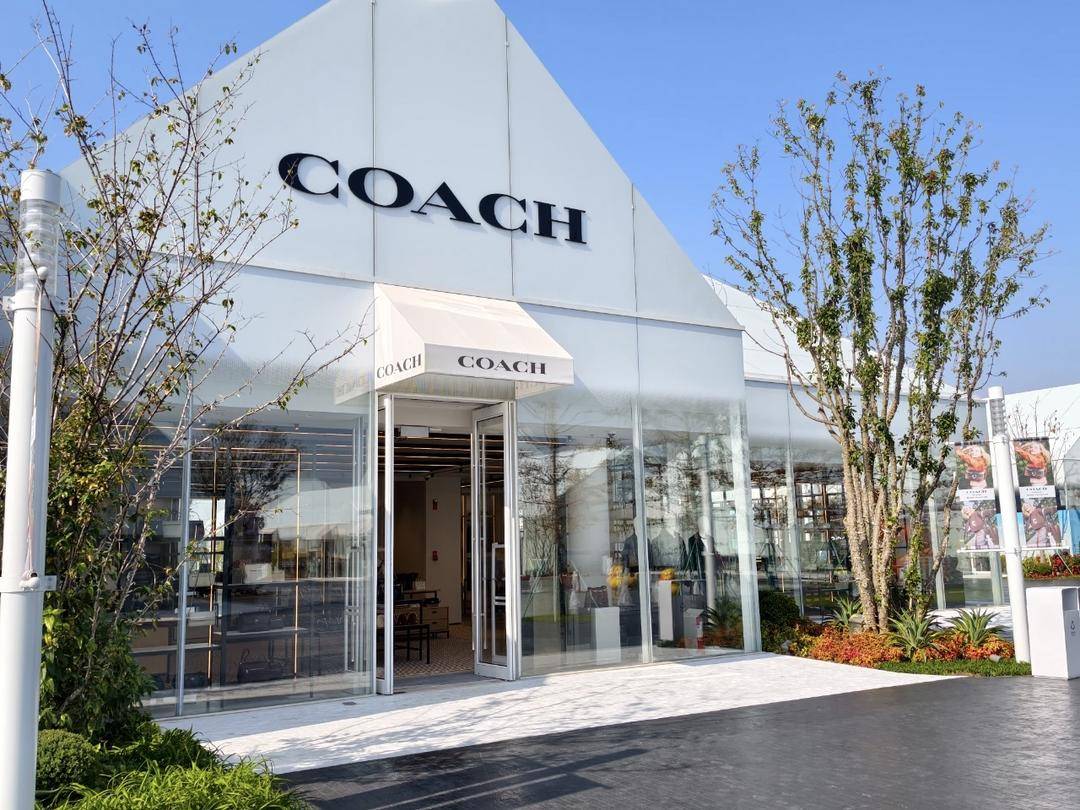
Core Insights - COACH has opened its first direct outlet store in Nantong, showcasing the 2025 autumn and winter collection, which includes handbags, ready-to-wear, and accessories, providing more fashion choices for local consumers [1][3] Company Overview - COACH was founded in 1941 in New York, embodying a spirit of inclusivity and courage, and is committed to exploring fashion diversity [3] - The store features popular collections such as Tabby, City Tote, and Mollie, along with new products like Etta and Evelyn to meet autumn and winter fashion needs [3] Market Context - The Maple Leaf Town Outlet, which opened in November last year, has a total construction area of approximately 120,000 square meters, filling a market gap in Nantong and attracting visitors from surrounding cities [3] - Within the first three days of opening, the outlet attracted 350,000 visitors and achieved sales exceeding 32.8 million yuan [3] - As of October this year, the outlet's sales have surpassed 320 million yuan, indicating strong commercial appeal [3] Economic Impact - The Nantong Central Leisure and Tourism Business Circle is one of the four key business districts promoted by the Nantong municipal government, focusing on the integration of culture, commerce, tourism, sports, health, and research [3] - The Su-Xi-Tong area, leveraging the Maple Leaf Town Outlet, has been actively developing the "Travel with Events" brand through various activities, enhancing the influence of the business circle [3] - In the first three quarters of this year, the total retail sales of social consumer goods in the Su-Xi-Tong area grew by 15.8% year-on-year, surpassing the city's average growth rate of 12.9%, ranking among the top in the city [3]
盒马开卖Burberry 生鲜电商进军时尚品类?
Zhong Guo Jing Ying Bao· 2025-11-12 05:14
Core Insights - Hema, traditionally focused on fresh produce, has expanded into the luxury fashion segment by offering Burberry products online, indicating a diversification of its business model [1] - The products are sold through Hema's global purchase platform, utilizing a pre-sale model with direct shipping from European suppliers [1] - Hema has confirmed the authenticity of the products through partnerships with quality inspection agencies, ensuring that they are genuine items [1] Group 1 - Hema has started selling Burberry clothing, shoes, and accessories, alongside other luxury brands like GUCCI [1] - The sales model involves pre-orders with a five-day shipping timeline from France, highlighting a logistical strategy to manage international inventory [1] - Hema plans to potentially expand its clothing offerings in the future, although specific brands have not yet been confirmed [1]
从SKP到星巴克,为何博裕总能拿下好标的
3 6 Ke· 2025-11-11 00:32
Core Insights - The acquisition of Starbucks China by local private equity firm Boyu Capital, which acquired a 60% stake for $2.4 billion, highlights the growing interest in high-quality consumer assets in China [1][5][11] - The deal is part of a broader trend where major players are seeking to capitalize on cyclical downturns in the market to acquire valuable assets at lower valuations [7][12] Group 1: Acquisition Details - Boyu Capital will form a joint venture with Starbucks China, valuing the company at approximately $4 billion [1] - The acquisition process was highly competitive, with over 10 institutions initially invited to submit non-binding bids, including prominent firms like Carlyle and KKR [5] - Starbucks China has a strong brand positioning and a loyal customer base, with 25.5 million members, making it a highly sought-after asset [5][11] Group 2: Market Context - The Chinese coffee market is projected to grow significantly, with the number of coffee drinkers expected to increase from 40 million in 2018 to 260 million by 2028, representing a 20% annual growth rate [5] - The luxury retail sector, exemplified by SKP, has also faced challenges, with sales declining by 17% in 2024, indicating a broader trend of market volatility affecting high-end consumer brands [11][12] Group 3: Strategic Implications - The acquisition reflects a strategic move to enhance operational efficiency and find new growth avenues through localized management and innovative product offerings [10][13] - Boyu Capital's experience in the local market is expected to accelerate Starbucks' expansion into lower-tier cities, where the brand's presence remains limited [15][17] - The focus on enhancing supply chain efficiency and product localization will be critical for maximizing the investment's value [13][14]

一周要闻·阿联酋&卡塔尔|Ta'ziz 携手中化七建签署20亿美元基建合同/首届阿联酋国际投资峰会中国峰会在上海举行
3 6 Ke· 2025-11-09 08:02
Group 1 - Ta'ziz awarded a $1.99 billion infrastructure contract to China Chemical Engineering No. 7 Construction Co. for the construction of the UAE's first integrated PVC production complex, with an annual capacity of 1.9 million tons, expected to be operational by Q4 2028 [2] - The project is anticipated to contribute up to $50 billion to the UAE's economy and create approximately 20,000 construction jobs and 6,000 operational jobs [2] - ECI and Sinosure signed a Memorandum of Understanding to enhance economic ties between the UAE and China, focusing on joint financing for export and investment projects, market information sharing, and promoting corporate entry into both markets [2] Group 2 - ADNOC made its debut at the China International Import Expo, highlighting over 40 years of energy cooperation between the UAE and China, and plans to establish an office in Beijing by April 2025 [3] - ADNOC's collaborations with Chinese companies include large-scale LNG supply agreements and strategic framework agreements in upstream and downstream sectors [3] - The first UAE International Investment Summit China Summit was held in Shanghai, aiming to enhance bilateral investment cooperation and address global capital trends and green finance [3] Group 3 - The UAE's non-oil economy showed steady growth in October, with a Purchasing Managers' Index (PMI) of 53.8, indicating significant expansion in the private sector driven by improved sales and new project launches [4] - Dubai's PMI reached a nine-month high of 54.5, reflecting increased business activity and a rise in new orders, contributing to faster output growth and continuous job creation [4] - The UAE announced a transportation infrastructure investment plan valued at 170 billion dirhams (approximately $46 billion), expected to be completed by 2030, including the launch of passenger services on the Etihad Rail by 2026 [4] Group 4 - The luxury retail sector in the UAE is accelerating its omnichannel upgrade to meet the demands of tech-savvy consumers, with a significant portion of luxury goods still being purchased offline [5] - The influx of high-net-worth residents and tourists in Dubai and Abu Dhabi is driving demand for high-end products, while younger consumers are pushing for experiential and personalized retail models [5] - Honeywell's president highlighted the UAE's role as a leader in global energy digital transformation, with innovative solutions being developed in collaboration with local companies [5]

英国史上最蠢政策诞生!对富豪收20%出逃税,结果有钱人都吓跑了
Sou Hu Cai Jing· 2025-11-08 09:34
Group 1: Tax Policy Overview - The UK Treasury is planning to introduce a 20% "exit tax" targeting wealthy individuals who move abroad but still hold assets in the UK [1][3] - The tax will apply to individuals who have lived in the UK for at least 7 years in the past 10 years and have a net worth exceeding £2 million, taxing the capital gains on their UK assets upon departure [3][5] - The tax will be retroactively applied, requiring individuals to pay 20% on the appreciation of their UK assets over the past 5 years at the time of their departure [5][6] Group 2: Impact on Wealthy Individuals - Following the announcement, there has been a significant increase in inquiries from high-net-worth individuals about overseas properties, with a 300% rise in consultations for properties in low-tax countries [8] - Wealthy individuals are accelerating asset transfers, with reports of significant stock transfers and property sales to avoid the impending tax [8][10] - The number of UK wealthy individuals applying for "golden visas" in EU countries has surged by 240%, indicating a trend of relocation [10] Group 3: Market Reactions - The luxury real estate market in London is experiencing a downturn, with a 58% increase in listings and a notable drop in sale prices, indicating a potential 15%-20% decline in high-end property values over the next year [12] - The stock market is also affected, with shares of luxury brands and high-end automotive manufacturers declining, reflecting concerns over reduced demand due to wealthy individuals relocating [14] - Major shareholders in companies with significant holdings by wealthy individuals are beginning to reduce their stakes, further pressuring stock prices [14] Group 4: Broader Economic Implications - The exit tax aims to address the long-standing issue of tax avoidance by wealthy individuals and is expected to generate an additional £2 billion to £3 billion annually for public services [16] - However, the policy has faced criticism for potentially harming the UK's attractiveness for investment and talent, with concerns about capital flight and economic growth [18] - Other countries are actively promoting tax incentives to attract UK wealthy individuals, further complicating the situation for the UK [20][22] Group 5: Lessons and Future Considerations - The situation highlights the complex relationship between tax policy and capital mobility, emphasizing the need for balanced approaches that consider both fiscal needs and investment attractiveness [24][26] - The ongoing market volatility and the response from low-tax jurisdictions underscore the importance of thoughtful policy design to maintain economic stability and attract talent [26]

中金2026年展望 | 博彩:多元化步入新增长前景(要点版)
中金点睛· 2025-11-05 23:52
Group 1: Macau Gaming Sector Outlook - The total gaming revenue in Macau is expected to return to a normalized growth rate by 2026, with a projected year-on-year increase of 5%, reaching 88% of the 2019 level, primarily driven by mass market gaming [3] - Mass market gaming revenue is anticipated to grow by 6% year-on-year, recovering to 126% of the 2019 level, supported by factors such as the recovery of overseas visitors, new property openings, and a diversified range of entertainment activities [3] - VIP gaming revenue is expected to decline by 5% year-on-year, recovering to 28% of the 2019 level, mainly due to high win rates in 2025 and the small scale of VIP business post-intermediary restructuring [3] Group 2: Industry Financial Projections - The EBITDA for the Macau gaming industry is projected to grow by 7% year-on-year in 2026, recovering to 96% of the 2019 level, amid a competitive landscape with six operators maintaining rational competition [4] - The reinvestment rate in the industry is expected to stabilize, with EBITDA margins remaining at stable levels due to the current competitive dynamics [4] Group 3: Global Luxury Goods Market Outlook - The global personal luxury goods retail market is expected to grow by 3% year-on-year in 2026, recovering from a flat performance in 2025, with the Greater China region projected to grow by 4% due to government consumption stimulus and the return of Chinese consumers [6][7] - Japan is also expected to see a 4% growth in luxury goods consumption in 2026, stabilizing after fluctuations in 2024 and 2025 [6] - North America is projected to continue stable growth at 3%, driven by increasing consumer demand for luxury goods and ongoing brand penetration in the market [6] Group 4: Pricing Strategy in Luxury Goods - The growth drivers in the luxury goods sector are shifting towards a rebalancing of product pricing structures, aimed at increasing foot traffic and sales [7] - Many brands are beginning to lower prices or introduce more entry-level products to attract customers, addressing previous issues of customer loss due to significant price increases from 2020 to 2025 [7]

中国人不爱 “退税买包” 了
Sou Hu Cai Jing· 2025-10-30 05:19
Core Insights - The composition of shoppers in European luxury goods stores is changing, with a significant decline in Chinese tourists, whose share of the European duty-free market has dropped from 32% five years ago to 13% now, while American and Middle Eastern tourists have increased their shares to 22% and 13% respectively [3][5] - Overall duty-free luxury sales in Europe have grown by 7% year-on-year, despite the decline in Chinese tourist spending [3] Group 1: Shifts in Consumer Behavior - From 2019 to 2024, Chinese tourists' duty-free spending in Europe is projected to decline at a compound annual rate of 8%, while American and Gulf tourists' spending is expected to grow by 12% and 14% respectively [5] - The luxury brands in Europe are adapting to cater to new customer demographics, with English and Arabic becoming the dominant languages in stores [5] - Chinese tourists are increasingly shopping in Japan, with 40% of their duty-free purchases now occurring there, up from 14% in 2019 [5][9] Group 2: Changes in Retail Landscape - The convenience and cultural proximity of East Asian destinations have made them more appealing compared to Europe, which has become less accessible due to limited flight availability and complicated visa processes [9] - The luxury retail experience in China has significantly improved, with high-end shopping environments in cities like Beijing, Shanghai, Nanjing, and Shenzhen now rivaling those in Europe [9][19] - Price differentials between China and Europe have narrowed from 30% to under 10%, making local purchases more attractive for Chinese consumers [19] Group 3: Evolving Consumer Mindset - The perception of luxury shopping has shifted from a social symbol to a more personal experience, with consumers now viewing travel as a means of relaxation rather than a shopping spree [20] - The era of "shopping tourism" is ending, giving way to a focus on "experiential living," which emphasizes sustainable and rational consumption [20][22] - The decline in duty-free spending by Chinese tourists reflects a transformation in consumer logic rather than a decrease in purchasing power, indicating a more thoughtful and localized approach to consumption [22][23]