轨道交通建设

Search documents
杭州地铁四期建设取得新进展
Mei Ri Shang Bao· 2026-01-07 22:24
Group 1 - The construction of Hangzhou Metro Line 15 has achieved significant milestones, including the successful arrival of the "Kaituo No. 9" shield machine at the receiving well and the completion of underground continuous wall construction at Kangqiao Station, laying a solid foundation for subsequent station excavation [2][3] - The first phase of Line 15 is expected to enhance north-south transportation in Hangzhou, improving connectivity between the northern Chongxian area, the city center, and the Xiaoshan area, thereby supporting regional development and alleviating traffic pressure [2] - The Hangzhou Metro Group has publicly announced the proposed station names for Line 15, with a total of 42 station name proposals across multiple lines being disclosed [2] Group 2 - The construction of Hangzhou Metro Line 18 has accelerated, with four shield machines operating simultaneously in key sections, marking a critical phase of construction [3] - The main structure of Yicheng Road Station on Line 18 has been completed ahead of schedule, facilitating subsequent construction and enhancing the overall project timeline [3] - Line 18 is a vital part of the Hangzhou Metro Phase IV project, aimed at connecting key areas in Xiaoshan and improving the regional rail transit network, contributing to the establishment of a "half-hour commuting circle" [3]
70亿!中企联合体获大单
Xin Lang Cai Jing· 2026-01-07 10:52
Core Insights - A major infrastructure project in Sydney is entering a critical phase, with four core contracts worth AUD 11.5 billion set to be finalized by December 2025, aimed at doubling transport capacity between the Central Business District and Parramatta [1][6]. Group 1: Key Contracts - A consortium of Chinese companies has secured a significant portion of the contracts, totaling over AUD 7 billion. This includes a AUD 3.2 billion contract for the complete rail system by John Holland, a subsidiary of China Communications Construction Company, responsible for approximately 60 kilometers of track laying and associated systems [3][8]. - A joint venture between Hong Kong's MTR Corporation and CRRC Corporation won a AUD 3.96 billion integrated contract for trains, systems, operations, and maintenance, covering a 22-year period and including 16 new fully automated driverless metro trains [3][9]. Group 2: Project Structure - The remaining two contracts are crucial for the project's framework. Malaysian construction giant Gamuda has been awarded a AUD 2.85 billion contract for the design and construction of five underground stations in the western section, tailored to serve local communities [4][10]. - A local consortium, Metropolis, has secured a AUD 1.5 billion contract for the Hunter Street station and its associated development, which includes the construction of a key interchange station and two commercial complexes, embodying a "rail + property" integration model [4][10]. Group 3: Project Timeline and Progress - The tunneling phase of the project is nearing completion, with a multinational consortium responsible for the construction of the eastern, central, and western tunnels. By 2026, the focus will shift to system installation and the construction of station superstructures [6][11]. - Approximately 1,000 workers will be involved in laying tracks and installing electromechanical equipment 37 meters underground. Contracts for the remaining three stations will be tendered in 2026 to complete the network of nine stations [6][11]. The project is on track for completion and operation by 2032 [6].

2025年,成都轨道交通累计退围超50万平方米 把70个足球场的空间还给烟火日常
Si Chuan Ri Bao· 2026-01-07 07:06
Core Viewpoint - The construction of the Chengdu Metro, particularly the completion of Line 10 Phase III, has significantly improved accessibility to key tourist areas, enhancing local business opportunities and urban development [1][4]. Group 1: Construction and Impact - The Chengdu Metro's construction strategy emphasizes minimal disruption to local businesses and residents, employing a method of "encircle a little, work a little, restore a little" to manage construction impacts [3][5]. - Since the start of construction, the Line 10 Phase III team has completed 52 intersection adjustments and 1003 changes to construction barriers, indicating a flexible approach to minimize disruption [3]. - Chengdu's metro system, despite starting construction later than other major cities, has achieved the fastest construction speed, reflecting the city's commitment to efficient urban transport solutions [4]. Group 2: Community Engagement - Local business owners, such as hotelier Liu Jun, have developed a cooperative relationship with construction managers, demonstrating a mutual understanding of the challenges posed by construction activities [5][6]. - The construction teams have implemented measures to accommodate local businesses, such as creating dedicated access paths for shops and holding regular meetings with business representatives to discuss construction progress and concerns [6][7]. Group 3: Achievements and Future Outlook - As of the end of 2025, Chengdu's metro system has surpassed 750 kilometers in operational length, ranking fourth nationally, with a green travel ratio of 77.6%, the highest among major cities in China [7]. - On December 31, 2025, the Chengdu Metro recorded a historic passenger volume of over 10 million, highlighting the system's growing importance in urban mobility [9].
波哥大地铁一号线高架桥完成10公里
Shang Wu Bu Wang Zhan· 2026-01-06 16:44
该项目由中国港湾和西安地铁联营体实施。 据哥伦比亚《共和国报》1月5日报道,截至2026年初,波哥大地铁一号线高架桥已建成10公里,占 全线23.9公里的约四成。1月3日完成S503跨梁安装后,高架结构总长度超过10025米。市政府称,工程 正按计划推进,力争确保地铁项目顺利建成投运。 (原标题:波哥大地铁一号线高架桥完成10公里) ...
武汉地铁10号线一期工程越江盾构机始发
Xin Lang Cai Jing· 2026-01-03 23:23
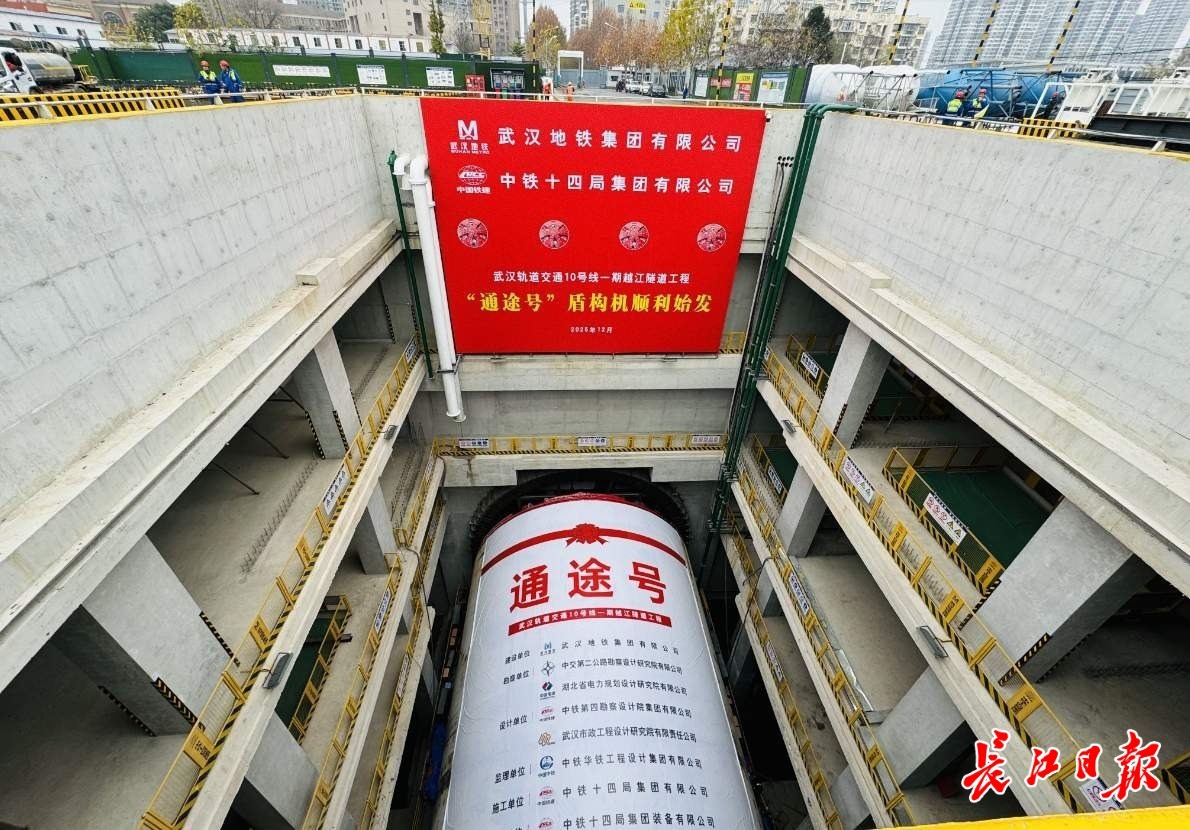
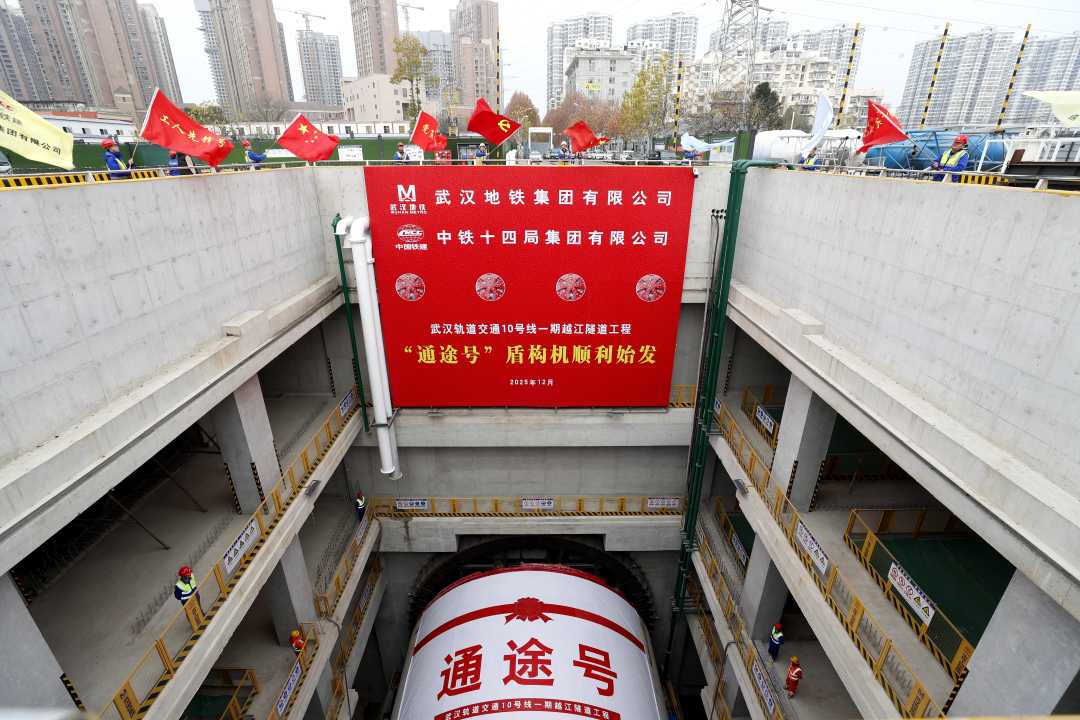
Group 1 - The Wuhan Metro Line 10 Phase I project has successfully commenced the shield tunneling with the "Tongtu" shield machine, which has a diameter of 13.28 meters [1] - The total length of the Wuhan Metro Line 10 Phase I is 19 kilometers, featuring 8 underground stations, with the key control section being the 3064-meter river-crossing segment [1] - The river-crossing section requires high settlement control, with a maximum depth of approximately 45.08 meters and a length of about 1700 meters under the Yangtze River [1] Group 2 - The "Tongtu" shield machine weighs around 3000 tons and is 140 meters long, equipped with a pressure-changing blade replacement function and a retractable main drive for safe operation in high-risk strata [2] - The shield machine incorporates advanced soil pressure shield technology, featuring a spiral conveyor and a high-pressure flushing system to enhance excavation efficiency and adaptability [2] - The machine is fitted with diamond-coated high-hardness cutter heads and multiple intelligent systems for real-time monitoring of construction status, ensuring safe and efficient tunneling in complex geological conditions [2]
武汉这条地铁开始穿越长江,盾构机“牙齿”镶上了金刚石
Chang Jiang Ri Bao· 2026-01-02 01:23
Core Viewpoint - The Wuhan Metro Line 10 Phase I project has officially commenced its construction with the launch of the "Tongtu" shield machine, marking a significant step in the development of a crucial transportation link across the Yangtze River. Group 1: Project Overview - The Wuhan Metro Line 10 Phase I project spans approximately 19 kilometers and includes 8 underground stations, connecting Hankou Railway Station to Beiyang Bridge [4] - The shield machine will travel a distance of about 3,064 meters, crossing the Yangtze River to reach the Erqi Road Station, which is a key control project of the entire line [4] Group 2: Technical Aspects - The "Tongtu" shield machine, measuring 140 meters in length and weighing 3,000 tons, is designed to operate in complex geological conditions, including hard rock layers and soft soil [2][8] - The machine is equipped with high-hardness diamond-tipped cutters and advanced monitoring systems to ensure safety and precision during construction [10] Group 3: Importance of the Project - Once completed, the metro line will provide direct connectivity between two major transportation hubs in Wuhan, significantly improving cross-regional travel efficiency for citizens [10] - The project is part of a broader initiative, with Wuhan already having 8 metro tunnels crossing the Yangtze River, enhancing the urban transportation network [10]
穿越长江!武汉地铁10号线一期工程越江盾构机始发
Xin Lang Cai Jing· 2026-01-01 11:33
Core Viewpoint - The Wuhan Metro Line 10 Phase I project has successfully commenced its construction with the "Tongtu" shield machine, which is designed to tackle complex geological conditions while enhancing urban transportation efficiency [1][2]. Group 1: Project Overview - The Wuhan Metro Line 10 Phase I spans 19 kilometers and includes 8 underground stations, with the key control section being the 3064-meter Yangtze River crossing tunnel [1]. - The tunnel features a single-bore double-track design, with a significant underwater section of approximately 1700 meters and a maximum burial depth of 45.08 meters, necessitating stringent settlement control [1]. Group 2: Technical Innovations - The "Tongtu" shield machine weighs around 3000 tons and is 140 meters long, equipped with a pressure-balanced design and advanced features for safe operation in high-risk geological conditions [2]. - It incorporates diamond-coated high-hardness cutter heads and multiple intelligent monitoring systems to ensure real-time tracking of construction status, enhancing safety and efficiency during tunneling [2]. Group 3: Impact on Urban Transportation - Upon completion, the Wuhan Metro Line 10 will connect the Hankou and Wuchang core areas, facilitating direct access between Hankou Station and Wuhan Station, thus creating a rapid cross-river transit route [2]. - The project is expected to significantly improve cross-regional travel efficiency for citizens and optimize the urban transportation network [2].
波哥大地铁一号线拟延伸至100街
Shang Wu Bu Wang Zhan· 2025-12-31 17:19
据哥伦比亚Valora Analitik网站12月29日报道,中国港湾哥伦比亚分公司近日提交预可行性研究方 案,建议将原本止于72街的波哥大地铁一号线向北延伸约3.3公里至100街,并新建3座高架车站。方案 显示,延伸段将连接多个城市交通枢纽,实现与快速公交系统、北部区域有轨列车等交通网络的换乘, 缓解72街一带长期存在的交通拥堵问题,提升北部城区通达性。 (原标题:波哥大地铁一号线拟延伸至100街) ...
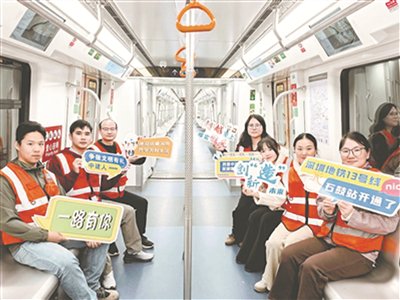
让建设者试乘自己建的地铁,是对劳动者的诚挚敬意
Xin Lang Cai Jing· 2025-12-31 16:59
Group 1 - The Shenzhen Metro Line 13 North Section is set to officially open, with a trial run conducted for construction workers to experience the fruits of their labor [3] - The trial ride allowed workers to witness the results of their hard work, enhancing their sense of pride and accomplishment in their contributions to the project [3] - The construction of the metro line involved significant challenges, from underground tunneling to station decoration, highlighting the dedication and intelligence of the builders [3] Group 2 - The act of allowing builders to ride the metro they constructed serves as a form of spiritual comfort and recognition of their hard work [4] - This initiative sends a positive message about the value of labor, promoting the idea that "labor is glorious and great," which can inspire more workers to innovate and engage actively in their roles [4]
青岛地铁15号线项目天山二路站完成全面封顶
Qi Lu Wan Bao· 2025-12-31 08:16
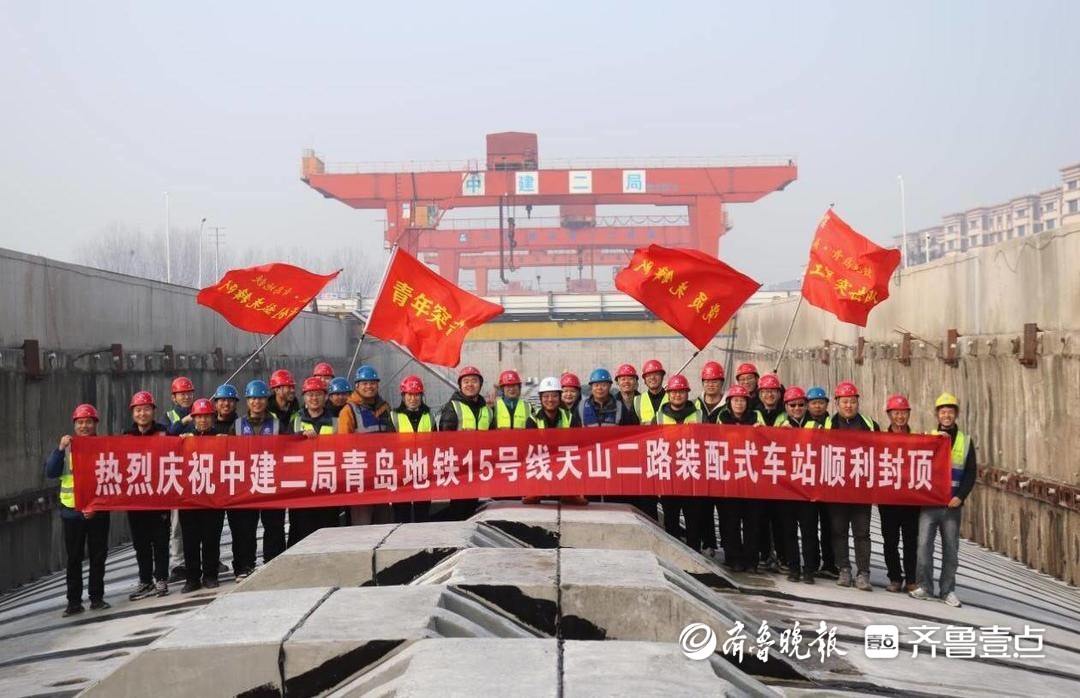
12月29日,随着最后一块预制构件顶板精准就位,由中建二局承建的青岛地铁15号线项目天山二路站实现全面封顶,标志着青岛地铁15号线建设取得又一 重大阶段性胜利。 自车站开工以来,项目团队科学统筹、高效推进。针对预制构件拼装精度的核心难题,在青岛地铁集团及第二建设分公司的指导与支持下,项目深入对标 学习先进经验,并联合青岛地铁15号线项目总部成立技术攻关小组。通过采用旋转式吊具、严格进行工序及工艺交底、运用高精度全站仪与数字化辅助工 具进行全过程测量调控,最终顺利完成全部326块预制构件的毫米级精准拼接。 下一步,项目团队将全力转入车站附属结构施工阶段,继续保持严谨务实、精益求精的作风,安全优质推进后续工程建设,为青岛地铁15号线如期通车、 助力城市高效出行持续贡献力量。 天山二路站位于天山二路与规划新城二路交叉口,车站共设置4个出入口及2组风亭。其中,公共区采用地下二层装配式结构,由58环预制构件拼装而成; 设备区则为地下二层现浇框架结构。施工过程中,项目团队面临装配式施工经验不足、拼装精度要求极高、接缝防水难度大以及吊装作业安全风险突出等 多重挑战。 齐鲁晚报.齐鲁壹点记者赵波 ...