
集成电路制造

Search documents
康欣新材(600076.SH)拟投资3.92亿元取得宇邦半导体51%股权 实现向半导体产业的战略转型与升级
智通财经网· 2026-01-20 12:37
Core Viewpoint - The company plans to acquire a 51% stake in Wuxi Yubang Semiconductor Technology Co., Ltd. for a cash consideration of 392 million yuan, marking a strategic shift towards the semiconductor industry [1] Group 1: Acquisition Details - The acquisition will be executed through equity transfer and capital increase, resulting in Yubang Semiconductor becoming a subsidiary of the company [1] - The transaction is valued at 392 million yuan, which is approximately 56.5 million USD [1] Group 2: Company Strategy - Post-acquisition, the company aims to achieve a strategic transformation and upgrade towards the semiconductor industry, moving beyond its current business limitations [1] - The integration of Yubang Semiconductor's services, which include precision repair and supply of parts and consumables, will provide a comprehensive service solution to clients [1] Group 3: Financial Implications - The acquisition is expected to cultivate new profit growth points, enhancing the overall profitability and risk resistance of the company [1] - This move aligns with the company's long-term development strategy and direction for industrial upgrading [1]

赛微电子跌2.00%,成交额20.17亿元,主力资金净流出1.56亿元
Xin Lang Zheng Quan· 2026-01-20 03:55
Core Viewpoint - The stock of Saiwei Electronics has experienced a decline in recent trading sessions, with significant fluctuations in trading volume and a notable change in shareholder structure, despite a substantial increase in net profit year-over-year [1][2]. Group 1: Stock Performance - On January 20, Saiwei Electronics' stock fell by 2.00%, trading at 53.88 yuan per share, with a total transaction volume of 2.017 billion yuan and a turnover rate of 6.14% [1]. - Year-to-date, the stock price has decreased by 3.72%, with a 9.73% drop over the last five trading days and a 15.00% decline over the past 20 days, while it has increased by 131.05% over the last 60 days [1]. Group 2: Financial Performance - For the period from January to September 2025, Saiwei Electronics reported a revenue of 682 million yuan, a year-over-year decrease of 17.37%, while the net profit attributable to shareholders reached 1.576 billion yuan, reflecting a remarkable increase of 1438.05% [2]. Group 3: Shareholder Structure - As of September 30, 2025, the number of shareholders for Saiwei Electronics increased to 76,200, up by 15.65%, while the average number of circulating shares per person decreased by 13.54% to 7,843 shares [2]. - Among the top ten circulating shareholders, Hong Kong Central Clearing Limited is the third-largest, holding 21.0304 million shares, an increase of 10.7596 million shares from the previous period [3].

芯联集成跌2.13%,成交额6.02亿元,主力资金净流出3052.33万元
Xin Lang Cai Jing· 2026-01-20 03:23
Core Viewpoint - The stock of ChipLink Integrated has experienced fluctuations, with a recent decline of 2.13% on January 20, 2025, and a total market capitalization of 57.84 billion yuan [1]. Group 1: Stock Performance - Since the beginning of the year, ChipLink Integrated's stock price has increased by 3.14%, with a 2.99% rise over the last five trading days, a 4.23% increase over the last 20 days, and a 5.02% gain over the last 60 days [2]. - As of January 20, 2025, the stock was trading at 6.90 yuan per share, with a trading volume of 6.02 billion yuan and a turnover rate of 1.94% [1]. Group 2: Financial Performance - For the period from January to September 2025, ChipLink Integrated reported a revenue of 5.422 billion yuan, representing a year-on-year growth of 19.23%. However, the net profit attributable to shareholders was -463 million yuan, showing a year-on-year increase of 32.32% in losses [2]. Group 3: Business Overview - ChipLink Integrated, established on March 9, 2018, and listed on May 10, 2023, is located in Shaoxing, Zhejiang Province. The company specializes in wafer foundry and module packaging testing in the MEMS and power device sectors, providing one-stop system foundry solutions [2]. - The revenue composition of ChipLink Integrated includes 85.96% from integrated circuit wafer manufacturing, 9.24% from module packaging, 3.58% from other services, and 1.21% from research and development services [2]. Group 4: Shareholder Information - As of September 30, 2025, the top ten circulating shareholders of ChipLink Integrated include E Fund's SSE STAR 50 ETF as the largest shareholder with 182 million shares, a decrease of 23.21 million shares from the previous period. Other notable shareholders include Huaxia's SSE STAR 50 ETF and Southern's CSI 500 ETF, both of which also saw reductions in their holdings [3].

来之不易成绩单彰显经济韧性活力
Ren Min Ri Bao· 2026-01-20 01:57
Core Insights - China's economy demonstrates strong resilience and vitality, with significant progress expected in innovation, industrial quality improvement, digital empowerment, and green transformation by 2025 [1][2] Supply Quality Improvement - China becomes the first country with over 5 million valid domestic invention patents, with R&D expenditure reaching 39,262 billion yuan, maintaining the second position globally [2] - The added value of high-tech manufacturing and equipment manufacturing accounts for 17.1% and 36.8% of the total industrial added value, respectively [2] - The production of civil drones and industrial robots increases by 37.3% and 28% year-on-year [2] Green Leadership - Clean energy generation from hydropower, nuclear, wind, and solar grows by 8.8%, with non-fossil energy consumption rising by approximately 2 percentage points compared to 2024 [3] - The industrial added value reaches 41.7 trillion yuan, growing by 5.8% year-on-year, contributing 35% to economic growth [3] Consumption Trends - The total retail sales of consumer goods exceed 50 trillion yuan, growing by 3.7% compared to 2024, with final consumption contributing 52% to economic growth [4] - Service retail sales increase by 5.5%, outpacing goods retail sales, with service consumption accounting for 46.1% of per capita consumption expenditure [4] - Online retail sales grow by 8.6%, driven by e-commerce and digital technologies [4] Policy Effectiveness - The number of household cars reaches 52.9 per hundred households, an increase of 1.7 from 2024 [6][7] - Policies promoting consumption upgrades lead to a 4.1% increase in retail sales of six categories of goods [7] Technological and Industrial Innovation - The added value of smart unmanned aerial vehicle manufacturing and smart vehicle-mounted equipment manufacturing grows by 57% and 26.2%, respectively [8] - The core CPI rises by 1.2% year-on-year, while the decline in industrial producer prices narrows [8] Positive Economic Trends - The economic foundation remains solid, with over 36 trillion yuan added to the economy during the 14th Five-Year Plan [9] - The manufacturing purchasing managers' index returns to expansion territory, indicating positive growth trends [9] - New production forces and reform benefits continue to emerge, with significant advancements in artificial intelligence and digital economy [9] Supportive Development Environment - More proactive macro policies are expected to ensure stable economic operations, with a focus on key project implementations [10]
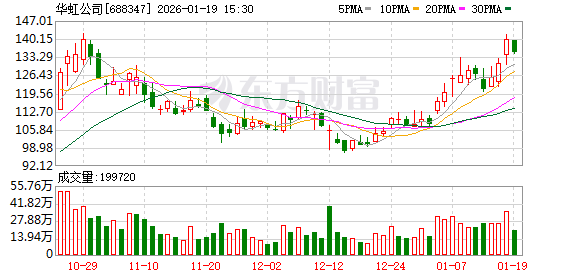
华虹公司:2025年第三季度欧洲地区销售收入占总销售收入比例为2.9%
Zheng Quan Ri Bao· 2026-01-19 14:12
Group 1 - The core viewpoint of the article highlights that Huahong Company has provided insights into its sales revenue composition based on geographical regions, specifically noting that the European region accounts for 2.9% of total sales revenue as of the third quarter of 2025 [2] Group 2 - The company has clarified that the sales revenue is categorized according to the registered location of its clients [2] - The information was shared in response to investor inquiries on the company's interactive platform [2]

我国GDP首次跃上140万亿元新台阶
Mei Ri Jing Ji Xin Wen· 2026-01-19 13:03
Core Viewpoint - In 2025, China's GDP reached 140,187.9 billion yuan, marking a 5.0% increase from the previous year, driven by proactive macroeconomic policies and consumer initiatives [1] Economic Performance - The implementation of proactive macro policies effectively stabilized the economy, with retail sales of six categories of products under the "old for new" policy increasing by 4.1%, contributing 0.6 percentage points to total retail sales growth [2] - The investment in equipment and tools rose by 11.8%, contributing 1.8 percentage points to overall investment growth [2] Structural Optimization - The focus on high-quality development led to a 5.5% increase in service retail sales, with a continuous recovery observed over four months [3] - The production value of the equipment manufacturing industry grew by 9.2%, with its share rising to 36.8% [3] New Growth Drivers - The integration of technological and industrial innovation, particularly in AI and emerging industries, has significantly contributed to economic stability, with the manufacturing value of smart drones and smart vehicle equipment increasing by 57% and 26.2%, respectively [4] - The growth in integrated circuit manufacturing and optoelectronic device manufacturing was 26.7% and 18.8%, respectively [4] Economic Circulation Improvement - The establishment of a unified national market and improved market competition conditions have positively influenced price recovery and corporate profitability [4] - In December 2025, the core CPI rose by 1.2%, while the manufacturing PMI returned to the expansion zone at 50.1% [4] Achievement of Economic Goals - The economic performance in 2025 laid a solid foundation for continued growth in 2026, with positive changes in production, prices, and expectations [5] - The contribution rates of final consumption expenditure, capital formation, and net exports to economic growth were 52.0%, 15.3%, and 32.7%, respectively [6]
电子行业周报:台积电25Q4单季度业绩创历史新高
Shanghai Aijian Securities· 2026-01-19 10:20
Investment Rating - The electronic industry is rated as "Outperform" compared to the market [1] Core Insights - The SW electronic industry index increased by 3.77%, ranking 2nd out of 31, while the CSI 300 index decreased by 0.57% [2][5] - TSMC reported a record high quarterly revenue of $33.73 billion for Q4 2025, benefiting from strong demand for AI chips, with a year-on-year growth of 25.5% [22][29] - The approval of NVIDIA's H200 chip export to China is expected to alleviate the high-end computing power supply gap in key sectors such as research and medical imaging [31][33] Market Performance - The top-performing sectors in the SW electronic industry include integrated circuit packaging and testing (+14.47%), semiconductor equipment (+9.31%), and integrated circuit manufacturing (+8.68%) [9] - The best-performing stocks in the electronic sector this week were Zhenlei Technology (+48.18%), Kema Technology (+42.68%), and Kecuan Technology (+41.14%) [12] TSMC Financial Performance - TSMC's Q4 2025 net profit was approximately NT$505.74 billion, with a gross margin of 62.3% and a net profit margin of 48.3% [22][23] - The revenue structure shows that high-performance computing (HPC) and smartphones contribute 55% and 32% of TSMC's total revenue, respectively [27] Future Outlook - TSMC's management expects Q1 2026 revenue to be between $34.6 billion and $35.8 billion, with gross margins projected to remain between 63% and 65% [29] - The introduction of the H200 chip is anticipated to support the acceleration of AI technology commercialization in China [33]


国家统计局:系列宏观政策为全年经济社会发展主要目标任务的完成提供坚实支撑
Sou Hu Cai Jing· 2026-01-19 06:30
Group 1 - The core viewpoint of the news is that China's macroeconomic policies in 2025 have effectively supported stable economic growth and high-quality development through various measures, including the promotion of consumption and infrastructure projects [1][2][3] Group 2 - In 2025, the implementation of proactive macro policies led to a 4.1% increase in retail sales of six categories of goods related to the "old for new" consumption policy, accelerating by 2 percentage points compared to the previous year, contributing 0.6 percentage points to the total retail sales of consumer goods [1] - The investment in equipment and tools increased by 11.8%, contributing 1.8 percentage points to overall investment growth [1] Group 3 - The service retail sector saw a 5.5% growth compared to the previous year, with a continuous recovery in growth rates over four months since September [2] - The "old for new" policy has led to a greater presence of high-quality durable goods in households, with the number of cars per hundred households reaching 52.9, an increase of 1.7 from the previous year [2] Group 4 - The manufacturing sector experienced a 9.2% increase in value added, accelerating by 1.5 percentage points, with its share rising to 36.8% [2] Group 5 - The integration of technology and industry has been emphasized, with significant growth in sectors such as smart unmanned aerial vehicle manufacturing (57% increase) and smart vehicle equipment manufacturing (26.2% increase) [3] - The integrated circuit manufacturing and optoelectronic device manufacturing sectors also saw substantial growth, with increases of 26.7% and 18.8%, respectively [3] Group 6 - The core Consumer Price Index (CPI) rose by 1.2% year-on-year in December, while the decline in industrial producer prices narrowed, and the manufacturing PMI rose to 50.1 [3] - Profits of large-scale manufacturing enterprises grew by 5.0% from January to November, compared to a decline of 4.6% in the same period last year [3]
净利连降的紫光国微拟关联收购瑞能半导 标的2024业绩降
Zhong Guo Jing Ji Wang· 2026-01-15 03:22
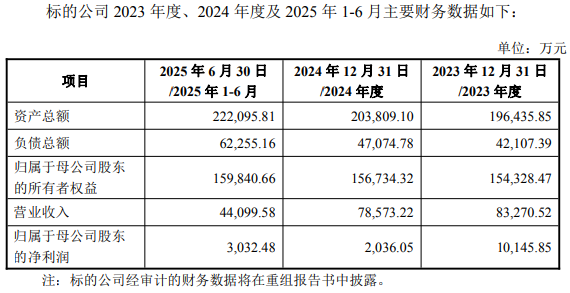
Core Viewpoint - Unisoc plans to acquire 100% equity of Ruin Semiconductor through a combination of issuing shares and cash payment, making Ruin a wholly-owned subsidiary after the transaction [1] Group 1: Transaction Details - The transaction involves 14 counterparties, including Nanchang Jianen, Beijing Guangmeng, and Tianjin Ruixin, who collectively hold 100% of Ruin Semiconductor [1] - The final transaction price will be determined based on an evaluation by a qualified asset appraisal agency, as per the Securities Law [1] - Unisoc intends to raise funds through a private placement to no more than 35 specific investors, with the total amount not exceeding 100% of the transaction price [1][2] Group 2: Fund Utilization - The raised funds will be used for cash consideration, intermediary fees, taxes, project construction, loan repayment, and working capital, with a cap of 25% of the transaction price for debt repayment and working capital [2] - If the fundraising does not meet expectations, the company will cover the shortfall through its own or self-raised funds [2] Group 3: Related Party Transactions - The transaction constitutes a related party transaction, as the counterparties hold a combined 71.11% stake in Ruin Semiconductor [2][3] - The indirect controlling shareholder of Unisoc, New Ziguang Group, has connections to Ruin Semiconductor's board, indicating potential conflicts of interest [3] Group 4: Company Background - Unisoc is a major integrated circuit company in China, focusing on special integrated circuits and smart security chips, while also expanding into quartz crystal frequency devices [4] - Ruin Semiconductor specializes in power semiconductor products, including thyristors and silicon carbide devices, which are used in various industries such as consumer electronics and renewable energy [5] Group 5: Financial Performance - Ruin Semiconductor's projected revenues for 2023, 2024, and the first half of 2025 are 832.71 million, 785.73 million, and 440.99 million respectively, with net profits of 101.46 million, 20.36 million, and 30.32 million [5] - Unisoc's revenue for 2022, 2023, 2024, and the first three quarters of 2025 are 7.12 billion, 7.58 billion, 5.51 billion, and 4.90 billion respectively, with net profits of 2.63 billion, 2.53 billion, 1.18 billion, and 1.26 billion [6]

中芯国际根据2014以股支薪奖励计划发行1.34万股
Zhi Tong Cai Jing· 2026-01-14 12:02
Core Viewpoint - Semiconductor Manufacturing International Corporation (SMIC) announced the issuance of 13,400 ordinary shares and 3,000 shares under its 2014 share-based compensation plan and stock option plan, respectively, on January 14, 2026 [1] Group 1 - SMIC issued 13,400 ordinary shares as a result of restricted share units granted under the 2014 share-based compensation plan adopted on June 13, 2013 [1] - The company also issued 3,000 shares according to the 2014 stock option plan, which was also adopted on June 13, 2013 [1]
