
职业教育

Search documents
海外消费周报:海外社服:携程、蜜雪集团、古茗业绩超预期-20250829
Shenwan Hongyuan Securities· 2025-08-29 10:45
Investment Rating - The report maintains a "Buy" rating for Ctrip and Mxue Group, while upgrading Mxue Group's rating from "Hold" to "Buy" [2][8]. Core Insights - Ctrip's Q2 2025 revenue grew by 16% year-on-year to 14.9 billion yuan, with a non-GAAP operating profit of 4.7 billion yuan and a non-GAAP operating margin of 31%, exceeding expectations due to lower marketing expenses [2][7]. - Mxue Group's H1 2025 revenue reached 14.9 billion yuan, a 39% increase year-on-year, with net profit of 2.7 billion yuan, up 44%, driven by higher-than-expected store openings [2][8]. - Gu Ming's H1 2025 revenue was 5.7 billion yuan, a 41% year-on-year increase, with adjusted core profit of 1.1 billion yuan, up 49%, attributed to higher store count and single-store revenue [3][9]. Summary by Sections Ctrip - Q2 2025 revenue increased by 16% to 14.9 billion yuan, with accommodation booking revenue up 21%, transportation revenue up 11%, and group travel revenue up 5% [2][7]. - International OTA platform bookings grew over 60% year-on-year, with inbound tourism bookings more than doubling [2][7]. - The company has fully utilized its $400 million share buyback authorization and approved a new buyback plan of up to $5 billion [2][7]. Mxue Group - H1 2025 revenue was 14.9 billion yuan, a 39% increase, with net profit of 2.7 billion yuan, up 44% [2][8]. - The company is expanding in Southeast Asia, with daily sales growth in Indonesia and Vietnam, and plans for new stores in the U.S. and Latin America [2][8]. - The Lucky Coffee brand complements Mxue's offerings, focusing on freshly ground coffee, enhancing supply chain advantages [2][8]. Gu Ming - H1 2025 revenue reached 5.7 billion yuan, a 41% increase, with adjusted core profit of 1.1 billion yuan, up 49% [3][9]. - The company added 1,265 new stores, bringing the total to 11,179, with a significant increase in stores in lower-tier cities [3][9]. - The average daily GMV per store grew by 21% to 7,600 yuan, benefiting from substantial takeout subsidies [3][9]. Domestic Pharmaceutical Companies - Xinda Biologics reported H1 2025 revenue of 5.953 billion yuan, a 50.6% increase, with net profit turning positive at 834 million yuan [4][13]. - Kangfang Biologics achieved H1 2025 revenue of 1.472 billion yuan, a 37.8% increase, but reported a net loss of 588 million yuan [4][13]. - Rongchang Biologics reported H1 2025 revenue of 1.092 billion yuan, a 47.6% increase, with a reduced net loss of 450 million yuan [4][13]. Overseas Pharmaceutical Companies - Eli Lilly's GLP-1 obesity drug trial showed significant weight loss results, with the 36mg group achieving a 10.5% average weight reduction [5][16]. - BioArctic partnered with Novartis to develop a new CNS drug, receiving an upfront payment of $30 million [5][16]. - Regeneron announced positive results for its MG drug in a Phase III trial, achieving key endpoints [5][16].

聚焦AI战略成效显著 粉笔(02469)中期业绩凸显成长韧性
智通财经网· 2025-08-29 09:38
Core Viewpoint - The company, Fenbi, reported strong financial performance for the first half of 2025, with revenue of RMB 1.492 billion and a net profit of RMB 227 million, driven by its "AI + vocational education" strategy and significant investments in AI technology [1] Financial Performance - For the first half of 2025, Fenbi achieved revenue of RMB 1.492 billion and a net profit of RMB 227 million, with an adjusted net profit of RMB 271 million [1] - The company maintained a robust cash flow, with cash and cash equivalents amounting to RMB 974 million as of the reporting period [3] AI Product Development - Fenbi launched several innovative AI teaching products, including the AI exam preparation system and AI interview evaluation tools, which have received positive market feedback [2][6] - The AI exam preparation system has sold approximately 50,000 units, generating around RMB 20 million in revenue [2] - The company plans to allocate HKD 60.8 million of its unutilized IPO funds to enhance AI vertical models and recruit high-end talent [3] User Engagement and Market Position - The average monthly active users reached 9.3 million, with over 72.74 million registered users by the end of 2024, indicating a strong user base for future growth [4] - Fenbi's AI products have shown a significant impact on user experience, with 98.43% of surveyed users willing to recommend the AI interview mock exam product [4] Competitive Advantage - The company is leveraging its first-mover advantage in the AI education sector, with a focus on commercializing AI technology to enhance its competitive edge [6][7] - Fenbi's AI product line expansion is expected to drive growth, particularly in the civil service exam preparation market, which has seen a 12.6% increase in registration for 2025 [2][6] Strategic Focus - The company is transitioning its growth strategy from online training to AI-driven applications, with plans to AI-enable various product offerings [7] - Fenbi emphasizes the importance of rapid commercialization of its technology to create a positive feedback loop for product development [6][7]
聚焦AI战略成效显著,粉笔中期业绩凸显成长韧性
Ge Long Hui· 2025-08-29 09:37
Core Viewpoint - The company, Fenbi, reported strong financial performance for the first half of 2025, with a revenue of RMB 1.492 billion and a net profit of RMB 227 million, while continuing to deepen its "AI + vocational education" strategy to enhance teaching efficiency and service quality [1][2]. Financial Performance - For the first half of 2025, Fenbi achieved a revenue of RMB 1.492 billion and a net profit of RMB 227 million, with an adjusted net profit of RMB 271 million [1]. - The company maintained a robust cash flow, with cash and cash equivalents amounting to RMB 974 million as of the reporting period [3]. AI Product Development - Fenbi launched several innovative AI teaching products, including the AI exam preparation system and AI interview evaluation tools, which have received positive market feedback [2][6]. - The AI exam preparation system has sold approximately 50,000 units, generating around RMB 20 million in revenue [2]. - The company plans to invest HKD 60.8 million from its IPO funds into AI vertical models and talent acquisition to enhance its technological capabilities [3]. User Engagement and Market Position - The average monthly active users reached 9.3 million, with over 72.74 million registered users by the end of 2024, indicating a strong user base for future growth [4]. - Fenbi's AI products have established a competitive edge in the market, with a significant portion of users willing to recommend the AI interview mock exam product [4]. Strategic Focus and Future Outlook - The company is shifting its growth strategy from online training to AI-driven applications, with plans to expand its AI product offerings across various educational formats [7]. - Fenbi's management expresses optimism about the future, citing the successful performance of AI products as a key driver for growth [2][6].
聚焦AI战略成效显著 粉笔中期业绩凸显成长韧性
Zhi Tong Cai Jing· 2025-08-29 09:33
Core Viewpoint - The company, Fenbi, reported strong financial performance for the first half of 2025, with revenue of RMB 1.492 billion and a net profit of RMB 227 million, while continuing to deepen its "AI + vocational education" strategy to enhance teaching efficiency and service quality [1] Financial Performance - For the first half of 2025, Fenbi achieved revenue of RMB 1.492 billion and a net profit of RMB 227 million, with an adjusted net profit of RMB 271 million [1] - The company maintained a robust cash flow, with cash and cash equivalents amounting to RMB 974 million as of the reporting period [3] AI Product Development - Fenbi's AI product line has expanded significantly, with the introduction of innovative teaching products based on self-developed domain-specific models, including AI exam preparation systems and AI smart speakers [2][6] - The AI exam preparation system has sold approximately 50,000 units, generating around RMB 20 million in revenue [2] - The company plans to allocate HKD 60.8 million of its unutilized IPO funds to enhance AI vertical models and recruit high-end talent [3] User Engagement and Market Position - The average monthly active users reached 9.3 million, with over 72.74 million registered users by the end of 2024, indicating a sustainable growth trajectory [4] - Fenbi's AI products have established a competitive edge in the market, with a high user engagement rate, as evidenced by the AI mock interview competition attracting nearly 1.5 million participants [4] Strategic Focus and Future Outlook - The company is transitioning its growth logic from online training to AI-driven applications, with plans to further AI-integrate its product offerings [7] - Fenbi's management expresses optimism about the future, citing the successful performance of AI products and their potential to drive revenue growth [2][6]
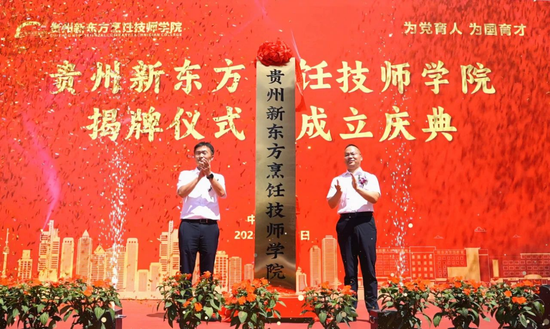
贵州新东方烹饪技师学院正式揭牌,新东方烹饪迈向更高质量的发展新阶段
Xin Lang Zheng Quan· 2025-08-29 08:43
Core Viewpoint - The Guizhou New Oriental Culinary Technician College has been officially upgraded from a vocational school to a technician college, marking a significant milestone for China Oriental Education Group and enhancing its role in vocational education in Guizhou province [2][7][9]. Group 1: Institutional Upgrade - The upgrade was approved by the Guizhou Provincial Government, signifying national recognition and support for the institution [7]. - The unveiling ceremony was attended by various officials and leaders from the education and human resources sectors, highlighting the importance of this upgrade [2][4]. Group 2: Educational Goals and Commitments - The college aims to focus on high-quality talent cultivation to meet industry demands and promote employment [4][11]. - The institution plans to enhance its educational model, strengthen faculty development, and increase investment in education to become a leading modern technician college in the province and nationwide [5][11]. Group 3: Historical Context and Future Plans - Established in 1988, the college has trained thousands of skilled talents in the culinary field, becoming a key talent training base for the Guizhou restaurant industry [11]. - The college will continue to optimize its professional structure and deepen educational reforms to support the high-quality development of the local culinary industry and rural revitalization [11].

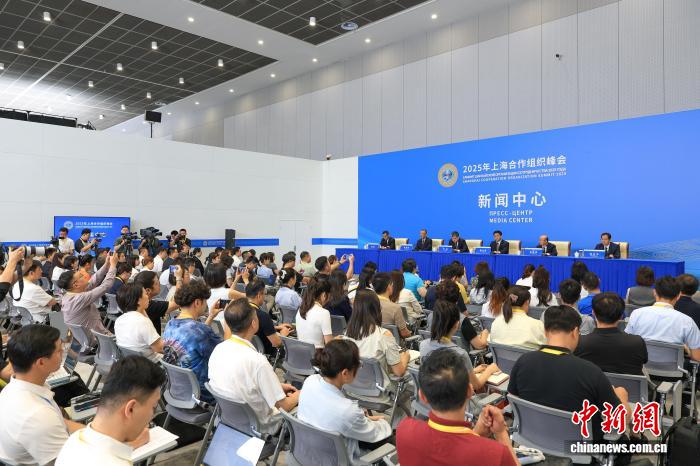
(上合天津峰会)天津持续深化与上合组织国家的职教合作
Zhong Guo Xin Wen Wang· 2025-08-29 08:29
Core Viewpoint - Tianjin is deepening vocational education cooperation with Shanghai Cooperation Organization (SCO) countries, aiming to establish itself as an international communication center for vocational education [1] Group 1: International Conference and Collaboration - Since 2022, Tianjin has hosted two World Vocational Technical Education Development Conferences, attended by 15 ministerial leaders from SCO countries, resulting in the release of the "Tianjin Consensus" on vocational education [2] - A World Vocational Education Development Alliance has been formed, including 10 member units from SCO countries, establishing a regular communication and cooperation mechanism [2] - The city has organized a World Vocational Colleges Skills Competition, where participants from SCO countries competed and won multiple medals [2] Group 2: Development of Luban Workshops - Tianjin has pioneered the Luban Workshop brand for international vocational education cooperation, promoting school-to-school partnerships and industry-education integration [3] - Currently, 10 Luban Workshops have been established in 8 SCO countries, including Russia and Kazakhstan, covering 21 cooperative majors across 6 categories [3] - A total of 15,000 students have received degree education, and over 3,000 individuals have undergone skills training, contributing to the development of professionals in manufacturing, new energy, artificial intelligence, and digital economy sectors [3] Group 3: Cultural Exchange and Cooperation - Tianjin is enhancing international cooperation in vocational education, having hosted the "Intelligent Gathering of SCO: 2025 International Academic Seminar on Vocational Education Governance" in July, with representatives from several SCO countries participating [3] - The city has built a high-standard Luban Workshop Experience Hall, receiving tens of thousands of visitors from both domestic and international backgrounds, showcasing China's commitment to open vocational education [3] - Over 200 students from SCO countries have been enrolled through the Luban Workshop initiative, fostering a new generation of friendly ambassadors between nations [3]
中公教育:连续两个季度实现营业收入环比正增长
Zhong Zheng Wang· 2025-08-29 07:39
Group 1 - The core viewpoint of the article highlights that Zhonggong Education has shown signs of recovery in its operational performance, with a total revenue of 1.155 billion yuan in the first half of 2025, marking a positive trend in business stability and team morale [1][2] - In the first half of 2025, the company achieved a revenue of 1.155 billion yuan, with the second quarter revenue reaching 580 million yuan, indicating a quarter-on-quarter growth from 575 million yuan in the first quarter [1] - The company has established a foundation for operational recovery, with the potential to re-enter a sustained revenue growth phase if the current positive trend continues [1] Group 2 - Zhonggong Education reported a significant increase in the number of full-price training participants, reaching 450,000 in the first half of 2025, which is an 18.42% increase compared to 380,000 participants in the same period last year [2] - The company aims to continue its strategic transformation and enhance its employment service product innovation and digital transformation efforts in the second half of the year [2] - The overall market share is recovering, driven by the improved competitiveness of the company's training products [2]

中公教育上半年实现营收11.55亿元 AI就业业务整体销售规模已超5000万元
Zheng Quan Ri Bao Wang· 2025-08-29 05:45
Core Insights - In the first half of 2025, the company achieved operating revenue of 1.155 billion yuan and a net profit of 61.7843 million yuan, with significant contributions from the AI employment services segment, which exceeded 50 million yuan in sales [1] - The company successfully transitioned its "Zhonggong AI Employment" strategic sub-brand from concept to product delivery, launching the industry's first AI employment learning machine and high-end employment service products [1] - The AI-enabled university student employment service market is expanding, and the company aims to capture emerging market share with its AI employment products, especially with the upcoming recruitment season [1] Financial Performance - The company's R&D investment in Q2 increased by 8.36% compared to Q1, focusing on integrating AI technology into course development, personalized teaching, and employment services [2] - The gross profit margin reached 59.61%, an increase of nearly 3 percentage points year-on-year, indicating significant improvement [2] - Operating costs decreased by 18.51% year-on-year, with management expenses down by 33.56%, reflecting effective cost control measures [2] Strategic Outlook - The company plans to continue its strategic transformation, focusing on innovation in employment service products and digital transformation, while enhancing market penetration and network recovery [2] - There will be an emphasis on AI technology R&D to optimize AI employment-related products and improve market penetration of "AI + Employment" offerings [2]
中公教育上半年实现营收11.55亿,AI就业业务整体销售规模已超5000万
Xin Lang Cai Jing· 2025-08-29 03:34
Core Insights - In the first half of 2025, the company achieved operating revenue of 1.155 billion yuan and a net profit of 61.7843 million yuan, with significant performance in the AI employment services sector, which exceeded 50 million yuan in overall sales [1][2] Group 1: Financial Performance - The company reported operating revenue of 1.155 billion yuan and a net profit of 61.7843 million yuan for the first half of 2025 [1] - The AI employment services segment showed remarkable growth, with sales surpassing 50 million yuan [1] Group 2: Strategic Developments - The company successfully transitioned from "concept initiation" to "product delivery" under the "Zhonggong AI Employment" strategic sub-brand, launching the industry's first AI employment learning machine and high-end employment service products [1] - A nationwide distributor service system was established to support the new business, demonstrating significant progress [1] Group 3: Market Potential - The AI-enabled university student employment service market is expanding, with the company aiming to capture emerging market share through AI employment products [1] - The upcoming autumn recruitment season and public service examination windows are expected to further energize this business line, providing precise employment support to a broader audience [1] Group 4: Research and Development - In the second quarter, R&D investment increased by 8.36% compared to the first quarter, focusing on strategic investments in AI technology research and application [1] - The integration of AI technology into course development, personalized teaching, intelligent Q&A, and the entire employment service chain is being prioritized to drive innovation in vocational education [1][2] Group 5: Future Plans - The company plans to intensify its focus on AI technology research and optimize AI employment-related products in the second half of the year [2] - The goal is to enhance the market penetration of "AI + Employment" products and ensure steady implementation of the company's strategic transformation [2]
中公教育:上半年净利润6178.43万元,同比下降46.69%
Di Yi Cai Jing· 2025-08-28 15:46
Core Viewpoint - The company reported a significant decline in revenue and net profit for the first half of 2025, indicating financial challenges ahead [1] Financial Performance - The company achieved an operating revenue of 1.155 billion yuan in the first half of 2025, representing a year-on-year decrease of 20.21% [1] - The net profit attributable to shareholders was 61.7843 million yuan, down 46.69% compared to the previous year [1] Dividend Policy - The company announced that it will not distribute cash dividends, issue bonus shares, or increase capital through reserves [1]