
智能机器人

Search documents
半年完成三轮超亿元融资,来牟科技割草机器人营收破亿、预计全年将交付数万台订单|硬氪独家
3 6 Ke· 2025-09-02 01:36
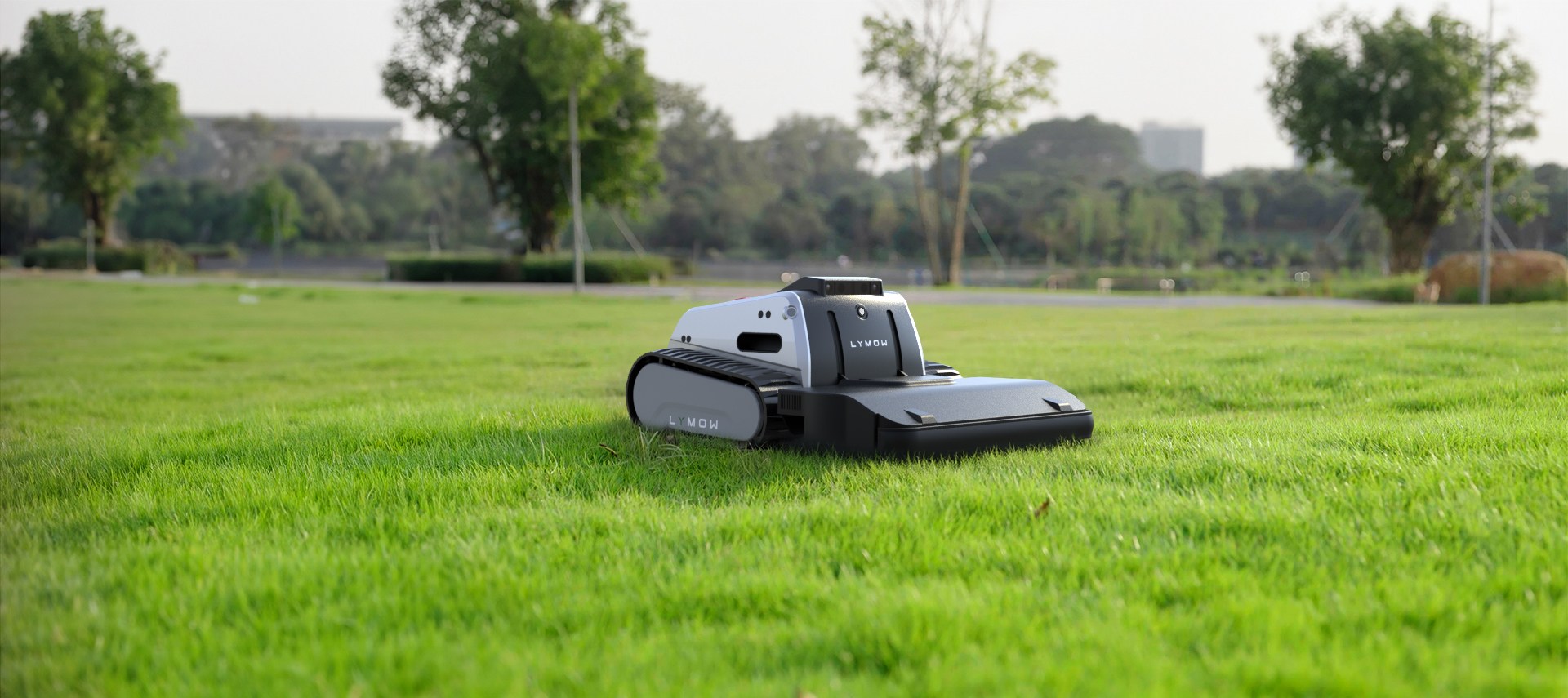
Company Overview - LaiMu Technology, a manufacturer of smart lawn mowers, recently completed a Series A financing round of several million yuan, with investors including Changchun Ivy Capital, Gobi Partners, and others [1] - Since 2025, the company has completed three rounds of financing, raising over 100 million yuan in total [1] - The company's first product, Lymow One, has raised over $7.5 million on Kickstarter and has achieved sales exceeding 100 million yuan since its independent site launch [1][3] Market Potential - North America is the core market for lawn care, yet the penetration rate of robotic lawn mowers is less than 3%, compared to nearly 20% in Europe [3] - Approximately 42% of middle-class families in the U.S. still use traditional DIY lawn mowing methods, indicating a significant market opportunity for robotic solutions [3] - The average annual expenditure for hiring gardeners in the U.S. can reach $1,250 to $3,750, highlighting the cost-saving potential of robotic mowers [3] Product Features - LaiMu Technology's Lymow One features a unique track design and an industry-first straight blade cutting system, achieving a climbing ability of up to 100% (45 degrees) [5] - The mower is equipped with a 300W power drive system, which is 3-5 times more powerful than most competitors, ensuring efficient operation [5][7] - The product can cover an area of 1.75 acres (7,000 square meters) per day, addressing the high-frequency mowing needs of North American users [7] Technological Advancements - The company employs RTK and dual-vision algorithms for precise navigation and obstacle avoidance, ensuring reliable positioning and boundary control [8][10] - LaiMu Technology has developed a dense depth map technology that allows the mower to accurately perceive its environment, enhancing its operational efficiency [8][10] Future Plans - As the peak season in North America approaches its end, LaiMu Technology plans to focus on inventory preparation for the next year and expand its offline channel network [10] - This strategy aims to meet future market demand and enhance product penetration in North America, aligning with existing online sales and production delivery schedules [10]


调研速递|东港股份接受国盛证券等5家机构调研 聚焦业务转型与发展要点
Xin Lang Cai Jing· 2025-09-01 09:30
Core Viewpoint - Donggang Co., Ltd. is experiencing a recovery in overall business performance, with significant growth in composite products and a positive outlook for AI robotics despite challenges in traditional printing due to digitalization [2][3]. Group 1: Business Performance - In the first half of 2025, the printing business faced a decline due to electronic impacts, but there are signs of recovery [2]. - Composite products saw over 130% year-on-year growth, driven by increased orders from both new and existing bank clients [2]. - The technical services segment, which includes document storage, electronic tickets, and AI robotics, is showing stable revenue and profit growth [2]. Group 2: Business Strategy and Development - The company is leveraging existing customer resources to expand into AI robotics, maintaining confidence in annual performance [2]. - The smart card business has a broad client base, including major state-owned banks, and has the capability to produce digital RMB wallets [3]. - The company has developed a blockchain electronic ticketing system based on proprietary technology, which is adaptable to various compliant payment tools [3]. Group 3: Corporate Governance and Structure - Since 2017, the company has operated without a controlling shareholder, ensuring a structured governance model where major decisions are made by the board and shareholders [3]. - The relationship with Ant Group involves previous investment in a subsidiary, with ongoing business connections [3]. Group 4: Future Plans and Market Position - The company aims to stabilize traditional business while aggressively developing new sectors such as smart cards, document storage, electronic tickets, and AI robotics over the next 3-5 years [3]. - Current robot applications are being developed for government and education sectors, indicating a significant demand [3]. - The company has sufficient self-funding and low debt levels, with no immediate refinancing plans, evaluating major investments as needed [3].

第十五届中国—东北亚博览会闭幕 为各方深度合作搭台
Zhong Guo Xin Wen Wang· 2025-08-31 14:29
Group 1 - The 15th China-Northeast Asia Expo concluded in Changchun, showcasing the deepening and broadening of cooperation among participating countries [1][2] - The expo is the only international comprehensive exhibition involving six Northeast Asian countries, promoting trade and investment cooperation in the region for 20 years [1] - A total of 20,733 guests from 45 countries and regions attended, including executives from 44 Fortune Global 500 companies, indicating a rising level of international participation [1] Group 2 - The expo emphasized the concept of "exhibition promotes trade, conference promotes investment," focusing on industry and project matching, and facilitating economic and cultural exchanges [2] - A total of 34 main and thematic activities were held, creating a multi-level and wide-ranging communication mechanism [2] - Successful events included the Russia Business Day and China-Japan Economic and Trade Exchange, enhancing cooperation in sectors like hydrogen energy [2]
国产智能割草机器人海外突围 成A股公司业绩增长新引擎
Zheng Quan Ri Bao Zhi Sheng· 2025-08-31 10:37
Core Insights - The overseas smart lawn mower market is experiencing steady growth in demand, with leading companies like Ninebot, Ecovacs, and Greenoak capitalizing on this opportunity to enhance their performance [1][4]. Company Performance - Ninebot achieved a revenue of 11.74 billion yuan, a year-on-year increase of 76.14%, and a net profit of 1.242 billion yuan, up 108.5%, with smart lawn mowers being a key growth driver [1]. - Ecovacs reported a revenue of 8.676 billion yuan and a net profit of 979 million yuan, reflecting year-on-year growth of 24.37% and 60.84%, respectively, with lawn mower sales contributing significantly [2]. - Greenoak's revenue for the first half of 2025 reached 2.977 billion yuan, with a net profit of 133 million yuan, marking a 9.50% increase year-on-year, and a 68.92% growth in lawn mower sales revenue [2]. Market Dynamics - The global market for private gardens is estimated at 250 million, with 60% suitable for lawn mowing equipment, primarily concentrated in Europe and North America, creating a market potential of approximately 120 million gardens [3]. - The traditional lawn mower replacement cycle is 8 to 10 years, with an annual demand for 15 to 20 million units, indicating a significant opportunity for smart lawn mowers to capture market share [3]. - The market share of boundary and boundary-less lawn mowers is projected to shift from 7:3 in 2024 to 4:6 in 2025, highlighting the growing acceptance of advanced technology in this sector [3]. Industry Opportunities and Challenges - The global smart lawn mower market is expected to grow from approximately 1.5 billion USD in 2024 to 3.9 billion USD by 2029, indicating substantial growth potential [4]. - Leading companies are increasing R&D and global expansion efforts, with innovations in high-precision motor control and AI integration being highlighted [4]. - Despite the growth opportunities, challenges such as technological iteration pressure and intensifying market competition are present, with potential price wars looming [5][6].
中国公司全球化周报|滴滴二季度国际业务日均订单增至1196万单/京东旗下跨境电商品牌Joybuy登陆法国市场
3 6 Ke· 2025-08-31 04:59
Company Dynamics - Didi's Q2 orders increased by 15.2% year-on-year, with a total transaction value (GTV) of 109.6 billion yuan, reflecting a 15.9% growth at fixed exchange rates [2] - JD's cross-border e-commerce brand Joybuy officially launched in France, with plans to enter the German market soon [2] - Temu topped Brazil's e-commerce traffic with 410 million visits in July, a 70% increase month-on-month, surpassing competitors like Mercado Livre and Shopee [2] - TikTok Shop upgraded its logistics in Southeast Asia, implementing next-day delivery services across six countries, with over 170,000 merchants participating [3] - Leapmotor's European manufacturing base will be established in Zaragoza, Spain, with production expected to start in Q3 2026 [3] - BYD announced plans to build an assembly plant in Malaysia, expected to commence production in 2026 [3] Investment and Financing - Mech-Mind Robotics completed a nearly 500 million yuan financing round, with overseas business revenue accounting for 50% [6] - AI toy company Haivivi raised 200 million yuan in Series A financing, becoming the global leader in AI toy shipments [6] - Hefei Tianyao, a semiconductor materials developer, completed a multi-million yuan Series A financing to expand overseas markets [6] - Tianxing Exploration, focused on satellite internet, secured angel round financing for core technology development [6] - Weijian Intelligent, a chip packaging equipment developer, raised over 100 million yuan in Series B financing, with over 20% of orders coming from exports [6] Policy & Market - Amazon's Prime Day will globally launch on October 7-8, covering 16 countries, providing cross-border sellers with significant traffic opportunities [8] - The Ministry of Commerce announced measures to optimize the service export zero tax rate declaration process, enhancing export tax refund efficiency [8] - New US tariff regulations create uncertainty, with 25 countries suspending parcel shipments to the US due to changes in tax exemptions [8]







加速开拓智能机器人新赛道 格力博上半年扣非净利润同比增长31.91%
Zheng Quan Ri Bao Wang· 2025-08-30 04:42
Core Viewpoint - Greebo (301260) reported stable revenue with significant profit growth in the first half of 2025, indicating strong operational performance and strategic expansion into robotics and AI sectors [1][2]. Financial Performance - Greebo achieved revenue of 2.977 billion yuan, remaining flat year-on-year; net profit attributable to shareholders was 133 million yuan, up 9.50% year-on-year; and net profit after deductibles was 158 million yuan, a substantial increase of 31.91% [1]. - The gross profit margin reached 30.38%, an increase of 3.39 percentage points year-on-year, reflecting enhanced profitability; basic earnings per share were 0.27 yuan, up 8% [1]. Product Performance - In the first half of 2025, Greebo's core products showed strong sales: lawn mowers generated 787 million yuan, up 5.95%; zero-turn lawn mowers saw sales of 175 million yuan, a significant increase of 63.02%; and power tools achieved sales of 120 million yuan, up 72.95% [1]. - The third-generation lawn mowing robot launched in the European market utilized advanced sensor fusion technology and experienced a sales revenue increase of 68.92% year-on-year, becoming a new growth driver for the company [1]. Capacity Layout - Greebo has established a collaborative manufacturing base structure with three major production sites: China focuses on core technology and advanced manufacturing, Vietnam handles large-scale production, and the U.S. factory is dedicated to localized high-value products [2]. - The company is advancing the construction of its Vietnam Taiping production base to adapt to international trade changes, with the first phase already operational and the second phase having commenced construction in July [2]. Strategic Investments - Greebo has entered the smart robotics sector, signing a cooperation agreement with Zhejiang Zhiding Robotics Co., aiming to enhance its capabilities in the "robotics + AI" field [2]. - The company, in partnership with Hengtai Huasheng (Beijing) Asset Management Co., established Greebo Industrial Investment (Changzhou) Partnership to invest in promising AI enterprises, focusing on key technologies and applications in outdoor mobile robots and garden automation [2][3]. Competitive Advantage - Greebo is increasing strategic investments in the "robotics + AI" sector, gradually forming a differentiated competitive advantage, with the smart robotics business expected to become a second growth curve for the company [3].
格力博上半年实现营收29.77亿元 开辟智能机器人新赛道
Zheng Quan Shi Bao Wang· 2025-08-29 05:19
Core Insights - Greebo reported a revenue of 2.977 billion yuan and a net profit of 133 million yuan for the first half of 2025, marking a year-on-year growth of 9.50% in net profit and 31.91% in net profit after deducting non-recurring items [1] - The company is entering the smart robotics sector through strategic partnerships with leading companies in the field, which is seen as a new growth opportunity [1][4] Financial Performance - Greebo's core products showed strong revenue performance, with the lawn mower segment achieving sales of 787 million yuan, a year-on-year increase of 5.95% [2] - The lithium battery-powered lawn mowers generated sales of 175 million yuan, reflecting a significant growth of 63.02% [2] - The third-generation lawn mowing robot launched in Europe saw a sales revenue increase of 68.92% compared to the same period last year [2] - Electric tools under the greenworks brand achieved sales of 120 million yuan, with a remarkable growth of 72.95% [2] Sales Channels - Greebo has established a comprehensive sales model covering "supermarkets + e-commerce + distributors," with over 12,000 stores globally selling its products [3] - E-commerce sales reached 1.2 billion yuan, accounting for 40.6% of the company's main business revenue, showing a year-on-year growth of 14% [3] Production Capacity - Since 2018, Greebo has established manufacturing bases in Vietnam and the United States, achieving strategic synergy across its three major production sites [3] Strategic Partnerships - Greebo is collaborating with Zhiyuan Innovation to explore the global robotics market, leveraging each other's strengths in product development and channel construction [4] - The company has signed a cooperation agreement with Zhejiang Zhiding to support the industrialization of commercial cleaning robots, enhancing global market penetration [4] - In August, Greebo co-founded an investment partnership to accelerate its expansion into the smart robotics and artificial intelligence sectors [4][5] Future Outlook - Through investments and partnerships, Greebo aims to strengthen its business layout in the smart robotics field, leveraging its manufacturing technology and supply chain advantages [5]
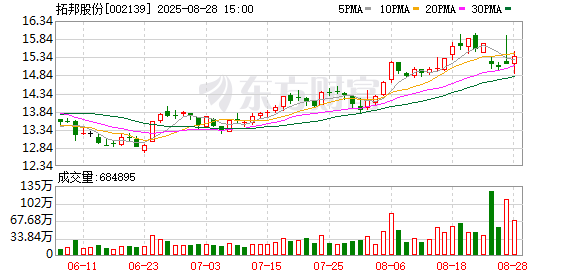
拓邦股份:割草机器人目前已完成产品研发及试验
Zheng Quan Ri Bao· 2025-08-28 08:16
Group 1 - The company Tuobang Co., Ltd. has completed the research and testing of its lawn mowing robot, which is now in the market promotion phase [2] - The product integrates core technologies such as AI visual perception, RTK high-precision positioning, and intelligent path planning, enabling autonomous obstacle avoidance, adaptive environment recognition, and boundary-free intelligent operation capabilities [2] - The product solution has received high recognition from customers and leads the industry in shipment volume in the domestic professional third-party market [2]

黑芝麻智能(02533)与云深处科技达成战略合作 共推具身智能平台全球市场应用
智通财经网· 2025-08-28 08:15
Core Viewpoint - Black Sesame Intelligence and Cloud Deep Technology have formed a strategic partnership to enhance the development of embodied intelligence control platforms and industry-specific intelligent solutions, aiming for international market expansion and innovative applications in high-performance robotics across various sectors [1][3][5]. Group 1: Strategic Collaboration - The collaboration focuses on three main areas: development of embodied intelligence control platforms, co-creation of industry intelligent solutions, and international market expansion [1][3]. - Black Sesame will leverage its self-developed high-performance automotive-grade computing chips in conjunction with Cloud Deep's robotics platform to explore solutions in scenarios such as ship inspection, smart construction, and educational research [3][5]. Group 2: Leadership Insights - The CEO of Black Sesame expressed enthusiasm about the partnership, highlighting the integration of chip technology and robotics capabilities to enhance robot perception, decision-making, and control performance [5]. - The CEO of Cloud Deep emphasized the commitment to innovation in intelligent robotics, stating that the collaboration will accelerate the intelligent upgrade of their robotics platform, particularly in complex applications like ship inspection and smart construction [5]. Group 3: Market and Technological Impact - The strategic cooperation is based on technological co-research and market synergy, aiming to iteratively optimize the embodied intelligence control platform based on real-world scenarios [5]. - This partnership is expected to support domestic innovation in robotics and chip solutions while exploring international opportunities [5].


里昂:升地平线机器人-W(09660)目标价至11港元 增长前景向好 重申“跑赢大市”评级
智通财经网· 2025-08-28 06:57
Core Viewpoint - Horizon Robotics-W (09660) demonstrated strong performance in the first half of the year, with total revenue increasing by 68% year-on-year, driven by hardware shipments of 2 million units and an average product selling price increase of over 60% [1] Group 1 - The company has seen a significant increase in hardware shipment volumes, reaching 2 million units [1] - The average selling price of products has increased by over 60% year-on-year, contributing to revenue growth [1] - The visibility of J6B shipments in overseas markets has improved, along with successful progress in J6P and the upgraded HSD [1] Group 2 - The firm has raised its revenue forecasts for Horizon Robotics for 2025 to 2027 by 3% to 5% [1] - The target price for the stock has been increased from HKD 10.5 to HKD 11 [1] - Future business developments are expected to act as catalysts for the stock price, leading to potential further upgrades in ratings [1]