
水利工程

Search documents
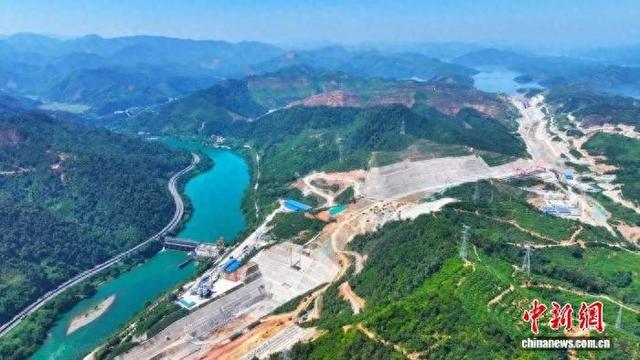
“钢铁巨臂”架右江 百色升船机破西南“通江达海”难题
Zhong Guo Xin Wen Wang· 2025-07-24 11:20
Group 1 - The project is a significant engineering endeavor located in Baise, Guangxi, aimed at solving the shipping bottleneck in Southwest China by constructing the world's largest all-balance cableway ship lift [1][2] - The total investment for the project is approximately 5.017 billion yuan, supported by multiple national and regional authorities, and it will enhance the navigational capacity of the right river from 300 tons to 1,000 tons, ending a 20-year navigation halt due to the construction of Baise Reservoir [2][3] - The project will create a "dry and branch linkage" shipping network, facilitating material flow between Southwest China and the Guangdong-Hong Kong-Macao Greater Bay Area, and providing a new waterway connection to ASEAN [2][3] Group 2 - The completion of the ship lift is expected to reduce transportation costs by over 30% and cut transportation time by 50%, significantly benefiting local industries and potentially upgrading over 500 enterprises along the route [3] - The project promotes an "industrial + ecological" tourism model, linking the ship lift with local attractions to create a new tourism circuit that combines industrial marvels with ecological sightseeing [3][5] - The project is designed with a focus on green development, as water transport can reduce energy consumption by over 60% compared to road and rail transport, contributing to carbon emission reductions [5][6] Group 3 - The construction of the ship lift in the unique karst landscape presents significant engineering challenges, requiring advanced technology to ensure the stability and safety of the lift system [6] - The project has achieved multiple world-class technological breakthroughs, including the development of a gravity balance drum that surpasses foreign technology, enhancing precision and safety [6] - The application of intelligent technology, such as a monitoring system and a cloud-based platform for component traceability, highlights the innovative practices in the construction process [6]

中国电建北方区域总部与大禹节水举行座谈 共探国家级水利项目合作新路径
Zheng Quan Ri Bao Zhi Sheng· 2025-07-24 11:11
Core Viewpoint - China Power Construction Group Co., Ltd. (China Power) is seeking to establish comprehensive cooperation with Dayu Water Saving Group Co., Ltd. (Dayu Water Saving) to enhance the quality of water conservancy development in China through mutual advantages and innovative collaboration [1][2]. Group 1 - China Power's Northern Regional Headquarters, led by Guo Wanhong, conducted an on-site visit to Dayu Water Saving's Beijing R&D center to discuss cooperation on key national water conservancy projects [1]. - The visit included an exploration of Dayu Water Saving's development history, global market layout, and advantages in the full industry chain, with a focus on large irrigation area planning and design in Yunnan and Jiangxi [1]. - Guo Wanhong acknowledged Dayu Water Saving's achievements in modern irrigation construction and agricultural water conservation during the meeting [2]. Group 2 - Both companies aim to build a long-term cooperation mechanism, enhancing trust established through previous collaborations [2]. - Dayu Water Saving's chairman, Wang Haoyu, expressed gratitude for China Power's support and emphasized the importance of a "total-to-total" cooperation model for future projects [2]. - The collaboration is expected to inject strong momentum into the high-quality development of water conservancy in China [2].


聊聊雅鲁藏布江水电站
Hu Xiu· 2025-07-24 09:47
Group 1 - The Yarlung Tsangpo River Hydropower Station and the Hongqi River project are significant engineering projects discussed in military history forums, highlighting their strategic importance [1][2] - The construction of the Yarlung Tsangpo River Hydropower Station is technically challenging due to the complex geography of Tibet, but it is feasible for Chinese engineers who have experience with similar projects [2][3] - The total investment for the Yarlung Tsangpo project is 1.2 trillion yuan, with a construction period of at least 10 years, which translates to an annual investment of approximately 120 billion yuan [3][4] Group 2 - The Yarlung Tsangpo project is not expected to significantly impact the national steel and cement industries, as its consumption of 20 million tons of steel is relatively small compared to the national annual production of over 1 billion tons [4][5] - The recent stock market performance is influenced by various factors, including the announcement of the hydropower project, but the overall market trend is driven by broader economic conditions rather than specific projects [5][21] - The Yarlung Tsangpo project is seen as a demonstration of China's capabilities, similar to previous military advancements, signaling strength on the international stage [6][20] Group 3 - The hydropower station is expected to generate electricity equivalent to three Three Gorges Dams, which could potentially be sold to India, addressing its energy shortages [17] - The Hongqi River project aims to provide irrigation for Xinjiang, contributing to agricultural development in the region [17][18] - The development of these projects is framed as a means to benefit humanity rather than a direct response to India, emphasizing China's focus on its own development [19][20]
20CM四连扳深水规院:西藏分公司暂未参与雅下水电工程规划设计
news flash· 2025-07-24 09:02
20CM四连扳深水规院:西藏分公司暂未参与雅下水电工程规划设计 智通财经7月24日电,深水规院在互动平台表示,公司西藏分公司暂未参与雅下水电工程的规划设计。 ...
【公告全知道】水利+华为+人工智能+无人机!这家公司在西藏有一定的水电站参与建设经验
财联社· 2025-07-23 15:00
Group 1 - The article highlights the importance of weekly announcements from Sunday to Thursday, focusing on significant stock market events such as suspensions, investments, acquisitions, earnings, and share unlocks [1] - It emphasizes the need for investors to identify potential investment hotspots and mitigate risks associated with unexpected events, providing ample time for analysis and decision-making [1] Group 2 - The first company mentioned has qualifications in water conservancy and hydropower, with experience in constructing hydropower stations in Tibet [1] - The second company operates in water conservancy, underground pipelines, low-altitude economy, and digital economy, having established a branch in Tibet with a focus on water conservancy projects [1] - The third company is involved with Huawei, PCB, robotics, and financial digitalization, having received certification for its large model from Huawei's Ascend technology [1]

连续上攻后,市场预期有哪些新变化
2025-07-23 14:35
Summary of Key Points from Conference Call Records Industry or Company Involved - The discussion primarily revolves around the **A-share market** and **infrastructure investment**, particularly focusing on the **Yaxi Water Conservancy Project** and its implications for various sectors including **construction**, **resources**, and **new energy**. Core Points and Arguments 1. **Market Catalysts and Fund Flows**: The A-share market has seen a surge due to significant catalysts such as the announcement of a **1.2 trillion yuan** investment in the Yaxi Water Conservancy Project and the Ministry of Industry and Information Technology's new growth stabilization plan for key industries. This has led to increased investor interest in undervalued sectors like infrastructure and cyclical goods [2][4][5]. 2. **Impact of Yaxi Water Conservancy Project**: Although the Yaxi project is estimated to contribute only **0.15%** to GDP, it has generated strong market sentiment as it is perceived as part of a broader anti-involution policy. This has led to a notable rally in related sectors despite the limited actual economic impact [5][6]. 3. **Investment Strategy Conflicts**: There is a noted conflict between short-term and long-term investment strategies. Short-term strategies may focus on following the price movements of upstream resource futures, while long-term strategies should align with anti-involution policies and sectors like photovoltaics, lithium batteries, and automotive [9][10]. 4. **Market Risk Appetite**: The easing of US-China relations and a decrease in the VIX index to its lowest level since February have contributed to a heightened risk appetite among investors. This has resulted in a significant inflow of new capital into the market, with margin financing exceeding **10%** [10][11]. 5. **Performance Disparity in Earnings**: There is a significant disparity in earnings forecasts, with **42%** of companies expected to report negative net profits. Traditional sectors are under pressure, while high-end manufacturing and new sectors like renewable energy and AI show potential for growth [3][14][15]. 6. **Sector Performance**: High-end manufacturing sectors, including small metals and marine equipment, are performing well, while traditional sectors like coal and real estate are struggling. The proportion of companies with profit growth exceeding **50%** has increased from **8%** to **18%** year-over-year [15][16]. 7. **New Investment Opportunities**: Emerging sectors such as renewable energy, humanoid robotics, artificial intelligence, and innovative pharmaceuticals are expected to attract continued investment. This trend mirrors past market behaviors where low-valuation sectors were replaced by stronger growth sectors [17][19]. 8. **Dividend Strategy Focus**: The dividend strategy should emphasize individual stock rotation rather than a single sector focus. Stocks with stable dividend yields, such as those in food and beverage, are currently more favorable [18]. 9. **Future Market Trends**: The market is expected to maintain a strong upward trend, with a potential shift from growth to value stocks. Short-term fluctuations may present buying opportunities, particularly in sectors like innovative pharmaceuticals and semiconductors [13][19]. Other Important but Possibly Overlooked Content - The market's current sentiment is influenced by a combination of fundamental factors and liquidity conditions, with a notable lack of overheating or rapid corrections in the market [10][12]. - The potential for retail investor participation is anticipated to increase as previous losses are recouped, leading to a more favorable environment for market entry [12].
大禹节水20250723
2025-07-23 14:35
Summary of Dayu Water Saving Conference Call Company Overview - Dayu Water Saving is one of the first 28 companies listed on the Growth Enterprise Market, initially starting with the production and sales of drip irrigation belts and gradually entering the engineering sector. The company has four main business segments: 1. Agricultural Water Group - responsible for water conservancy and hydropower projects with first-class general contracting qualifications. 2. Design Group - includes multiple design institutes and plans to acquire a first-class design institute. 3. Information Technology - through the acquisition of Huitu Technology, focusing on digital twin systems and flood warning systems. 4. Equipment Development - primarily producing drip irrigation belts and related equipment while actively expanding into international markets [3][4][14]. Industry Insights - The water conservancy industry is expected to maintain high investment levels during the "14th Five-Year Plan" period, with modernization of irrigation areas and water diversion projects becoming new focal points. The government encourages private enterprises and social capital to participate, providing significant growth opportunities for Dayu Water Saving [2][19]. Key Developments - Dayu Water Saving benefits from the high-standard farmland construction policy, maintaining an order growth rate of around 5 billion yuan. The company aims for an internal order target of 10 billion yuan in 2025, nearly doubling from 2024, with expectations for rapid order release in the second half of the year [2][4][25][26]. - The company plans to establish a branch in Linzhi to expand its business in the Yarlung Tsangpo project, leveraging its first-class general contracting qualifications and leading information technology capabilities [2][6][8]. Competitive Advantages - Dayu Water Saving's advantages in the Yarlung Tsangpo project include management flexibility, high-level design capabilities, and information technology business. The company aims to secure a 5% bidding ratio for supporting projects, which constitute 10% to 20% of the overall investment [8][9][12]. - The company has a strong history of collaboration with state-owned enterprises, evidenced by projects such as the 1.3 billion yuan hydropower station in Tibet and several large irrigation projects [15][19]. Financial Performance and Projections - The company anticipates a significant increase in revenue over the next 3 to 5 years, with a focus on maintaining a healthy cash flow and improving profit margins as orders and revenues grow [26][28]. - Dayu Water Saving's cash flow situation has improved significantly, with operating cash flow nearing 700 million yuan in 2024, and a healthy structure of accounts receivable [28]. Future Opportunities - The company sees potential in various stages of project opportunities, including design, construction, and information technology services. The water conservancy sector is viewed as a critical area for national investment, with many opportunities expected to arise [19][29]. - Huitu Technology, a subsidiary, is projected to maintain a natural growth rate of 20% to 30%, with plans to participate in large engineering projects [23][24]. Conclusion - Dayu Water Saving is well-positioned to capitalize on the growing opportunities in the water conservancy sector, supported by favorable government policies and a strong track record of collaboration with state-owned enterprises. The company's strategic focus on expanding its capabilities and market presence will be crucial for its future growth [2][14][29].
大禹节水(300021) - 300021大禹节水投资者关系管理信息20250723
2025-07-23 11:48
Group 1: Company Overview and Business Operations - Dayu Water-saving Group has been involved in water and hydropower projects in Tibet since 2015, collaborating with state-owned enterprises like China Energy Construction and China Electric Power Construction [4] - The company has established a strong presence in high-altitude regions, demonstrating its construction capabilities in complex geographical conditions [4] - Dayu Water-saving has plans to set up a branch in Linzhi and participate in surrounding projects related to the Yarlung Tsangpo River hydropower station [4] Group 2: Project Capabilities and Competitive Advantages - The company possesses a first-class qualification for water conservancy and hydropower engineering contracting, with extensive experience in large and medium-sized water conservancy facilities [5] - Dayu Water-saving's design group is a leading private water conservancy design enterprise in China, aiming to enhance its design qualifications through mergers and acquisitions [5] - The company has successfully implemented modernized renovation projects for reservoirs, showcasing its integrated solution capabilities [5] Group 3: Market Trends and Investment Opportunities - Water conservancy investment has exceeded 1 trillion yuan for three consecutive years, with a positive outlook for future orders in the sector [7] - The government has set ambitious goals for high-standard farmland construction, targeting 1.35 billion mu by 2030, which translates to a market space exceeding 1.5 trillion yuan [9] - The "soft construction" initiative proposed by the National Development and Reform Commission is expected to benefit private enterprises significantly, enhancing their competitive advantages [10] Group 4: Future Projections and Strategic Directions - The agricultural investment landscape is improving, with new policies aimed at enhancing agricultural infrastructure and water management [8] - The company anticipates that the government's increased investment in agriculture will secure orders and performance for the next three to five years [9] - Dayu Water-saving is committed to leveraging its strengths and foresight to create greater value for investors in the future [10]
雅下水电工程开工,深水规院三连板领涨!公司发布交易异动
Nan Fang Du Shi Bao· 2025-07-23 11:46
Group 1 - The core point of the news is the significant impact of the Yarlung Tsangpo River downstream hydropower project on the stock price of Shenzhen State-owned enterprise Shen Shui Gui Yuan, which saw a 60% increase following the announcement of the project's commencement [2][5] - The Yarlung Tsangpo River downstream hydropower project has a total investment of approximately 1.2 trillion yuan, aiming to construct five cascade power stations with an installed capacity expected to reach 60 to 81 million kilowatts, generating an annual electricity output of 300 billion kilowatt-hours, equivalent to "recreating three Three Gorges" [2][5] - Shen Shui Gui Yuan's stock price hit a 20% limit up on July 21, and continued to rise for three consecutive days, becoming a market focus [5][6] Group 2 - Shen Shui Gui Yuan reported a total operating revenue of 855 million yuan for the year 2024, representing a year-on-year increase of 11.14%, while the net profit attributable to shareholders surged by 278.10% to 52.83 million yuan [5] - In the first quarter of this year, the company experienced a decline in performance, with operating revenue of 96.52 million yuan, a year-on-year decrease of 11.40%, and a net loss of 29.46 million yuan, down 125.25% [5] - The company has extensive experience in water resource surveying and design, and has established a subsidiary in Tibet to focus on water construction projects [5][6] Group 3 - Institutional and retail investors have been actively trading Shen Shui Gui Yuan's stock, with a net buying amount of 16.6 million yuan recorded on July 23 [6] - The company confirmed that there are no undisclosed matters that could significantly impact its stock price, ensuring transparency in its operations [7]

大禹节水:公司相关业务承接暂不涉及雅下项目
news flash· 2025-07-23 09:41
Core Viewpoint - The recent market focus on the Yarlung Tsangpo River downstream hydropower project (referred to as "Yaxia Project") has led to unusual stock trading fluctuations for Dayu Water-saving (300021) [1] Company Overview - Dayu Water-saving holds first-class qualifications for water conservancy and hydropower general contracting, as well as top-level qualifications in water conservancy design and engineering consulting [1] - The company primarily engages in water conservancy engineering construction, modern irrigation area construction, high-standard farmland construction, water environment governance, rural sewage treatment, non-point source pollution control, and various agricultural water conservancy infrastructure operations [1] - It provides integrated solutions for project planning and design, investment financing, research and manufacturing, construction delivery, digital intelligence, and operation maintenance [1] Business Development - Since 2015, the company has expanded its water conservancy business in Tibet, gaining experience in the construction of hydropower stations in the region [1] - Dayu Water-saving has been involved in water-saving irrigation and related projects in Lhasa, Shigatse, and Nagqu [1] Project Status - The company places significant importance on the Yaxia Project, which is currently in the early stages of construction [1] - The project is characterized by a large investment scale, long construction period, and high technical requirements [1] - As of the announcement date, the company's related business undertakings do not currently involve the Yaxia Project, and there is uncertainty regarding the potential orders and specific amounts that may be obtained in the future [1]