
Robotics

Search documents
中信建投:外骨骼机器人产业链上下游共振,国内市场蓬勃发展
Zhi Tong Cai Jing· 2026-02-02 06:00
Core Insights - The external skeleton robot industry is entering a phase of accelerated commercialization driven by policy support, technological advancements, and expanding application scenarios [2][3] Policy Support - Recent years have seen increasing policy support for the external skeleton robot market, with various government departments releasing initiatives to promote the industry [2] - Key policies include the "Robot+" application action plan released in January 2023, which encourages the application of external skeleton robots in elderly care [2] - The National Medical Products Administration's announcement in July 2025 aims to expedite the establishment of standards for medical external skeleton robots, further supporting innovation in high-end medical devices [2] Commercialization Acceleration - The commercialization of external skeleton robots is being driven by advancements in technology, payment models, and application areas [3] - Technological improvements have addressed early product limitations, enhancing efficiency and reliability through better battery density, lightweight materials, and smart algorithms [3] - Innovative payment models, including insurance collaborations and leasing options, are reducing financial barriers for users [3] - The application landscape has expanded from medical rehabilitation to industrial and consumer sectors, significantly increasing market demand [3] Market Scale - The global external skeleton market is projected to reach approximately 3.9 billion RMB by 2025, with rapid growth expected over the next 6-8 years [4] - China's external skeleton robot market has grown from 0.045 billion RMB in 2018 to 1.06 billion RMB in 2023, reflecting a compound annual growth rate of 88% [4] - The potential long-term demand for external skeleton robots could reach tens of millions of units, with a market size potentially exceeding 100 billion RMB [4] Core Components - The growth in demand for external skeleton robots is expected to expand the markets for key components such as motors, reducers, and posture sensors [5] - Estimates suggest that the market for key components could see significant growth, with potential increases of 3.2 billion RMB for motors, 8 billion RMB for reducers, and 4 billion RMB for posture sensors [5] - Companies like Xinjie Electric and Lide Harmonic are highlighted as key players in the motor and reducer markets, respectively [5] Domestic Company Developments - Current products are primarily focused on medical rehabilitation, with plans to expand into consumer and industrial products [6] - Companies like Xiangyu Medical and Cheng Tian Technology are leading in the development and deployment of medical external skeleton robots [6][7] - Fourier and Maibu Robotics are also noted for their innovative approaches in rehabilitation and flexible drive technology, respectively [7]

领益智造与魔法原子达成战略合作,后者将参加2026春晚机器人表演
Guo Ji Jin Rong Bao· 2026-02-02 05:18
Core Insights - Recently, Lingyi Intelligent Manufacturing's subsidiary, Lingyi Robotics, signed a strategic cooperation agreement with Magic Atom, focusing on the embodied intelligence sector [1] - The collaboration aims to enhance robot manufacturing services, industrial implementation, factory production line expansion, overseas business development, and product agency through deep synergy [1] - The partnership is based on the principle of "complementary advantages and long-term win-win," where Magic Atom will prioritize using Lingyi Intelligent Manufacturing's robot components and services under equal conditions [1] Company Collaboration - The core components provided by Lingyi Intelligent Manufacturing include body structure parts, servo motors, drivers, reducers, and solutions for high-power charging and heat dissipation [1] - The cooperation will gradually expand to include joint construction of industrial bases, capacity expansion, and overseas collaboration [1] - Lingyi Intelligent Manufacturing will leverage its global network of 80 production bases and delivery centers to support Magic Atom's "embodied intelligence + X" strategy on a global scale [1]

第三代特斯拉人形机器人将亮相,预计年产百万台
Feng Huang Wang· 2026-02-02 04:50
凤凰网科技讯2月2日,据特斯拉官微消息,第三代特斯拉人形机器人即将亮相,并没有沿用现有的任何 供应链体系,而是从第一性原理出发,进行重新设计,通过观察人类行为即可学习新技能,预计年产百 万台。 马斯克称,特斯拉人形机器人可以通过演示、口头描述、甚至展示一段视频,就能够执行任务,并表 示"它的表现将令所有人大吃一惊。" ...


百度等入股北京人形机器人创新中心,后者增资至约6亿
Xin Lang Cai Jing· 2026-02-02 04:35
北京人形机器人创新中心有限公司成立于2023年11月,法定代表人为熊友军,经营范围包括工业机器人 制造、智能机器人的研发、智能机器人销售、工业机器人销售等。股东信息显示,该公司现由北京小米 机器人技术有限公司、北京行者天工机器人有限公司及上述新增股东等共同持股。 天眼查App显示,近日,北京人形机器人创新中心有限公司发生工商变更,新增北京百度网讯科技有限 公司、北京市人工智能产业投资基金(有限合伙)等为股东,同时,注册资本由4.6亿人民币增至约6 亿。 ...

人形机器人公司逐际动力完成2亿美元新融资,海外头部基金参与,上汽、蔚来加注
3 6 Ke· 2026-02-02 04:28
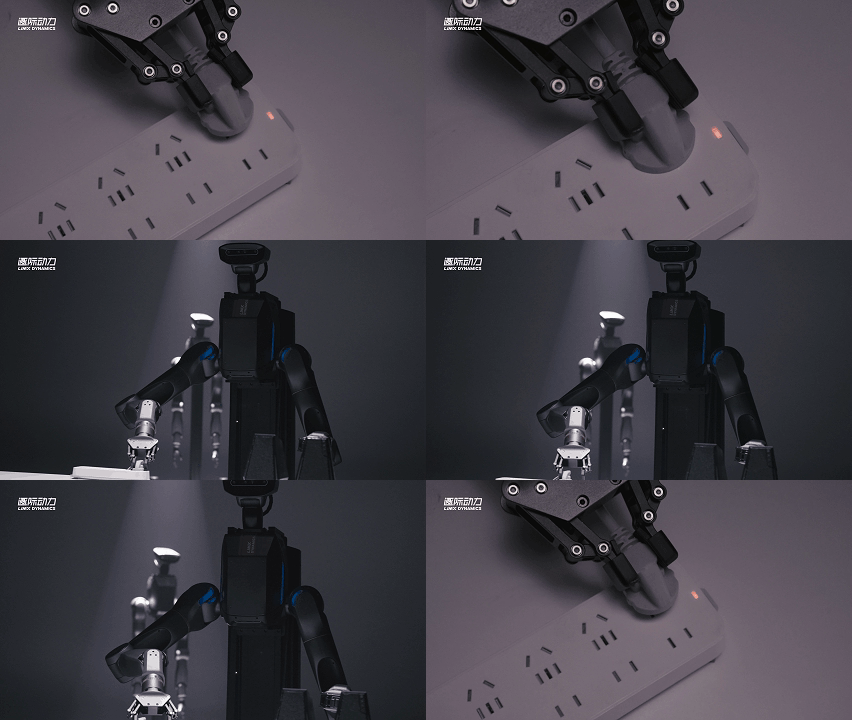
Core Insights - LimX Dynamics, a humanoid robotics company, has successfully completed a $200 million Series B funding round, with investors including Stone Venture, Dongfang Fuhai, and JD.com among others [1] - The robotics industry is at a critical juncture, transitioning from impressive demonstrations to practical, reliable applications in real-world environments [1][12] - LimX Dynamics has introduced two key technologies: the TRON 2 multi-modal humanoid robot and the LimX COSA operating system, aimed at addressing the "knowledge-action gap" in robotics [1][5] Funding and Investment - The Series B funding round attracted a diverse group of institutional investors and strategic industry partners, indicating strong confidence in the company's technology and market potential [1] - Existing shareholders, including SAIC Group and NIO Capital, have also increased their investments, reflecting ongoing support for the company's vision [1] Technological Advancements - TRON 2 features a modular architecture that allows for flexible reconfiguration, enabling it to adapt to various tasks without the need for entirely new designs [2][4] - The robot can switch between different forms, such as dual-arm and dual-leg configurations, to meet specific operational requirements, enhancing its versatility [2][4] - LimX COSA serves as the "brain" of the robot, enabling it to autonomously prioritize and execute complex tasks without relying on pre-programmed instructions [5][7] Market Positioning - LimX Dynamics aims to redefine the role of robotics in industries that require high adaptability and interaction, focusing on both B2B and B2C applications [12] - The company is leveraging China's supply chain advantages to accelerate the development of a localized ecosystem that includes developers, customers, and distribution channels [12] - The emphasis on creating reliable and natural interactions in everyday scenarios is crucial for the successful integration of robots into daily life [12]
机器人(300024.SZ):目前暂未涉及太空制造领域
Ge Long Hui· 2026-02-02 04:16
格隆汇2月2日丨机器人(300024.SZ)在投资者互动平台表示,公司主要为新能源汽车、半导体、锂电、 电子、光伏、航天航空及医疗等行业提供整体解决方案,目前暂未涉及太空制造领域。公司会持续关注 前沿技术领域应用,根据未来市场需求情况,积极探索、深挖机遇。 ...
机器人:目前暂未涉及太空制造领域
Ge Long Hui· 2026-02-02 04:13
格隆汇2月2日丨机器人(300024.SZ)在投资者互动平台表示,公司主要为新能源汽车、半导体、锂电、 电子、光伏、航天航空及医疗等行业提供整体解决方案,目前暂未涉及太空制造领域。公司会持续关注 前沿技术领域应用,根据未来市场需求情况,积极探索、深挖机遇。 ...
机器人扩圈加速,这一环节却未跟上
3 6 Ke· 2026-02-02 04:05
Core Insights - The article discusses the evolving landscape of humanoid robots, highlighting their transition from experimental stages to practical applications in various fields such as entertainment, research, and home use [1][3]. Group 1: Market Trends - According to IDC, the global humanoid robot market is expected to accelerate by 2025, with demand concentrated in areas like entertainment, research, data collection, and industrial manufacturing [3]. - The introduction of personal robots like the Q1 by Shanghai Weiqi Yuan aims to meet the "secondary development" needs of researchers, creators, and home users [1][3]. Group 2: Data Challenges - The article emphasizes that data is a critical factor for the advancement of embodied intelligence, which relies heavily on real-world interaction data rather than just visual or verbal data [4][5]. - The scarcity of real interaction data poses a significant challenge, as collecting such data is costly and time-consuming, requiring extensive human involvement and complex labeling [5]. Group 3: Data Collection Innovations - The launch of the "Baihu-VTouch" dataset, the world's first large-scale multimodal dataset, aims to address the data scarcity issue by providing comprehensive sensory data for various robotic configurations [6][8]. - This dataset includes over 60,000 minutes of data and covers multiple task types across different scenarios, marking a significant advancement in the field [6][8]. Group 4: Quality Over Quantity in Data - The CEO of Fourier, Gu Jie, stresses that the quality, structure, and source of data are more important than sheer volume, indicating that not all data collection is equally valuable [9][10]. - A balanced data structure should include publicly available videos, first-person human interaction data, and high-value robot-collected data to enhance the learning process for robots [11]. Group 5: Collaborative Efforts - There is a growing trend of collaboration among companies and research institutions to establish data standards and improve data collection methods, as seen in partnerships like that of Kupar and Itstone [13]. - Initiatives such as the "Brain-Machine Embodied Data Engine Joint Innovation Plan" aim to integrate brain-machine interfaces with embodied intelligence for applications in rehabilitation [13].
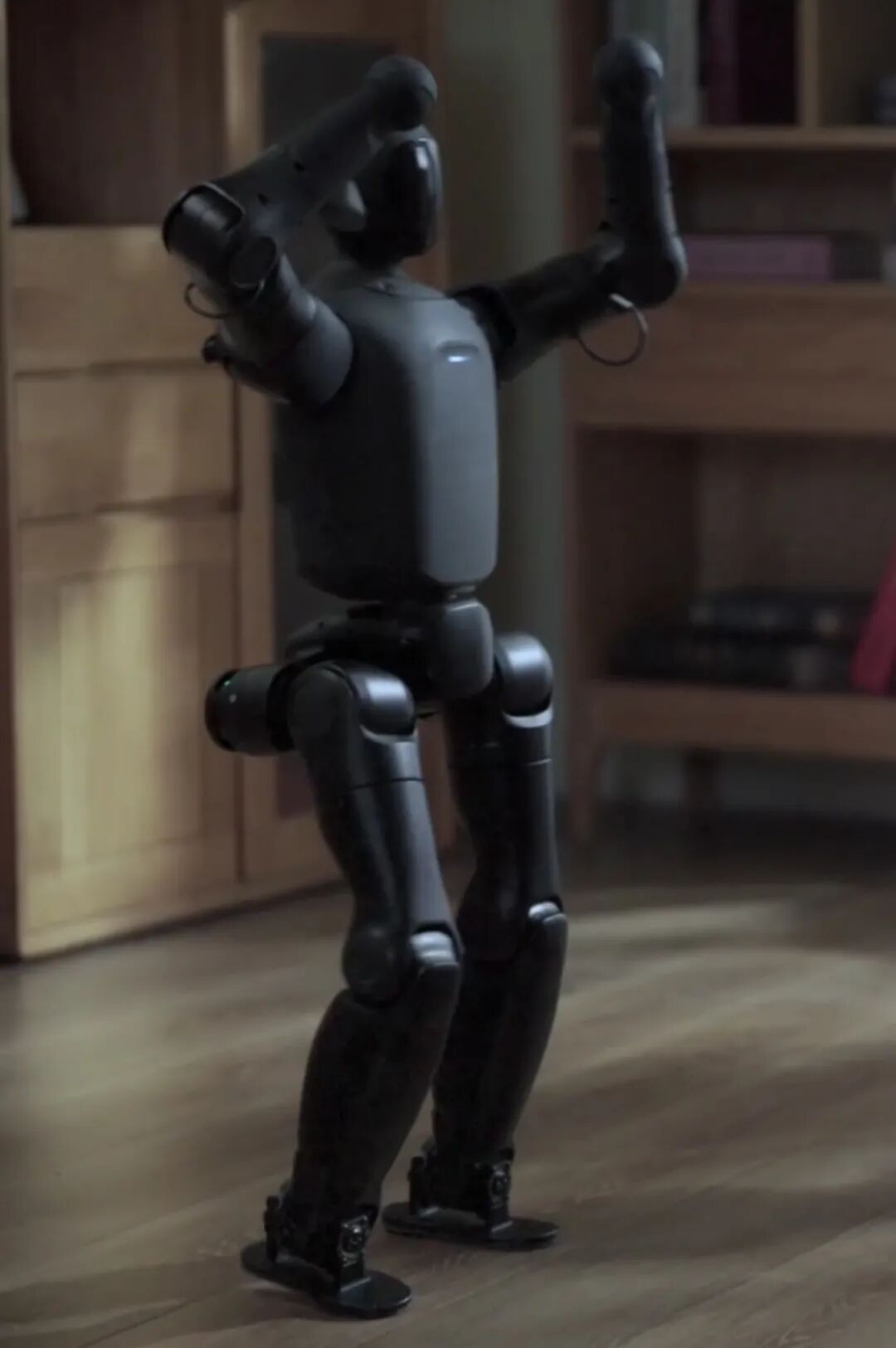
百度等入股北京人形机器人创新中心 后者增资至约6亿
Xin Lang Cai Jing· 2026-02-02 03:41
天眼查App显示,近日,北京人形机器人创新中心有限公司发生工商变更,新增北京百度网讯科技有限 公司、北京市人工智能产业投资基金(有限合伙)等为股东,同时,注册资本由4.6亿人民币增至约6 亿。北京人形机器人创新中心有限公司成立于2023年11月,法定代表人为熊友军,经营范围包括工业机 器人制造、智能机器人的研发、智能机器人销售、工业机器人销售等。股东信息显示,该公司现由北京 小米机器人技术有限公司、北京行者天工机器人有限公司及上述新增股东等共同持股。 ...
智元机器人进军欧洲市场加速全球化!机器人ETF(562500)震荡下行
Mei Ri Jing Ji Xin Wen· 2026-02-02 03:20
截至11:00,机器人ETF(562500)低开冲高后震荡下行。最新价报 1.056元,较开盘价下跌0.752%。持 仓股方面,该ETF跟踪的成分股共66只,其中43只成分股呈现下跌,云天励飞下跌超10%,博杰股份, 三丰智能两只跌幅超5%。中控技术、科大智能涨超4%,形成局部支撑。流动性层面,机器人ETF (562500)成交额达4.60亿元,换手率1.87%,成交活跃度处于高位。 国金证券指出,2026年是人形机器人0—1兑现的重要节点。特斯拉链预计2026Q1第一代量产产品发 布,2026H1供应链大批量产线建设完成,2026M8开启大规模量产。国产链头部本体出货量规模有望从 数千台跨越到数万台,应用场景主要来自于二开、导览、巡检等。在这个阶段,龙头公司供应链、技术 都会趋于收敛。 机器人ETF(562500)是全市场唯一规模超两百亿的机器人主题ETF,成分股覆盖人形机器人、工业机 器人、服务机器人等多个细分领域,帮助投资者一键布局机器人上中下游产业链。 随着成分股调整落地,机器人ETF(562500)跟踪的中证机器人指数人形机器人含量提升至近70%;此 次调仓精准剔除近期走势疲软的个股,纳入表现尚可的 ...