中药

Search documents
功效成分定量的加味逍遥丸质量评价方法,助力中药质控新标杆
Zhong Guo Zhi Liang Xin Wen Wang· 2025-12-22 05:22
及其对照指纹图谱( R ) 图15 批加味逍遥丸指纹图谱 维度升级:本项目研究将质量监控从单一指标升级为覆盖全方君臣佐使的"功效成分群"定量模式,来源 于君药(柴胡)、臣药(牡丹皮、栀子)及佐使药(白芍、甘草)的八种测定成分经证实与加味逍遥丸 疏肝清热等核心功效直接相关,标志着质量控制从"成分检测"迈向"功效关联"的科学新阶段。 近日,由同仁堂与北京中医药大学联合开展的加味逍遥丸质量评价研究取得重要成果。相关论文已在中 文核心期刊《西北药学杂志》正式收录,该项研究创新构建了"双维度指纹图谱-功效成分定量"质控新 模式,有效破解了中药复方多类型成分、尤其是弱紫外吸收核心成分同步检测的技术难题。 此项研究是同仁堂"守正创新"的典范,通过科技创新为百年古方注入现代科学内涵。新方法将为产品的 安全、有效与优质稳定提供更强技术保障,也为中药行业复方制剂的精准质控提供了创新性的"同仁堂 方案"。同仁堂将继续以科技赋能传统,以品质守护健康,助力中药产业高质量发展。 方法首创:成功利用HPLC-PDA-ELSD双检测器联用技术,首次实现对加味逍遥丸中紫外强吸收成分 (如栀子苷)与弱紫外吸收核心功效成分(如柴胡皂苷A、D)的同 ...


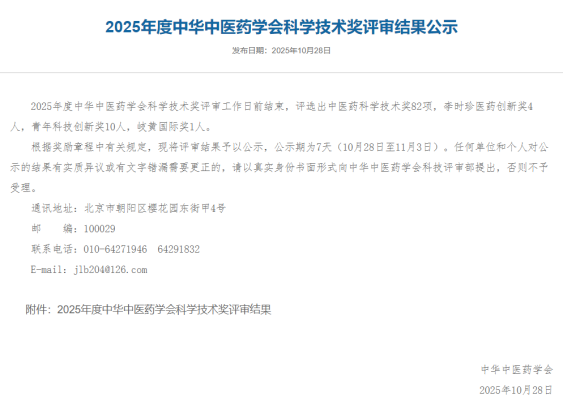
同仁堂参与申报项目获2025年度中华中医药学会科技进步三等奖
Zhong Guo Zhi Liang Xin Wen Wang· 2025-12-22 05:18
同仁堂聚焦"满足行业需求的中药质控体系缺乏"的行业痛点,与北京中医药大学合作,在功效物质明 晰、质量控制指标筛选等方面建立了一系列专有技术和方法,系统阐明了大黄、人参等中药饮片所含的 化学成分以及体内代谢转化成分,进而精准表征了大黄蛰虫丸、人参养荣丸、人参健脾丸等中药复方的 物质基础,阐明了中药质量形成机理。通过内控标准提升和技术升级改造,促进了产品质量的进一步提 升。 近日,中华中医药学会公示了2025年度中华中医药学会科学技术奖评审结果。由北京中医药大学高晓燕 教授牵头,联合同仁堂等6家单位共同申报的《中药功效物质高效发现技术体系创新与产业化应用》项 目获科技进步三等奖。 阐明中药功效物质是构建中药整体质控标准体系、保障临床用药和产业发展的关键。几十年来,随着中 药现代化进程的发展,在中药功效成分研究领域取得了可喜进展,但依然无法克服其片面性、假阳性、 低效性等问题,制约了中药标准化和国际化。该项目是以中医药传承与创新发展的国家重大发展战略为 牵引,针对制约中药功效物质发现全面性和准确性的若干技术问题,朝向中药化学成分高效解析、功效 指标精准量化和功效物质准确辨识三个关键环节开展研究:利用高分辨质谱技术, ...
同仁堂深耕抗抑郁药安全研究,巴戟天寡糖守护青少年与产后群体健康
Zhong Guo Zhi Liang Xin Wen Wang· 2025-12-22 05:18
Core Insights - Beijing Tongrentang has made significant progress in the safety research of traditional Chinese medicine for depression, with results published in key journals [1][2] - The research provides scientific evidence for the clinical safety of medication for postpartum and adolescent depression patients, highlighting the importance of rational drug use [1][2] Group 1: Research Achievements - The studies on the safety of Baijitian oligosaccharide capsules were conducted in collaboration with the National Drug Safety Evaluation and Monitoring Center, focusing on non-clinical safety evaluations for nursing and juvenile animals [2] - The research involved administering doses up to 50 times the maximum daily human dosage, with no abnormal findings in various health indicators of the test animals, confirming the high safety of the capsules [2] Group 2: Product Development and Recognition - Baijitian oligosaccharide capsules, developed jointly with the Academy of Military Medical Sciences, are classified as a new type of traditional Chinese medicine and have received multiple invention patents and the First Prize for Scientific and Technological Progress in Beijing [1] - The product has been included in nine expert consensus and treatment guidelines, establishing it as a core therapeutic drug for mild to moderate depression [1] Group 3: Commitment to Safety and Innovation - The company emphasizes patient needs and adheres to strict standards in product quality, utilizing scientific methods to deepen safety research and ensure medication safety [2] - Beijing Tongrentang's long-standing philosophy of meeting health needs continues to drive innovation in traditional Chinese medicine, contributing to the high-quality development of mental health services in China [2]
贵州百灵:四年财务造假公司及相关负责人被罚2560万 董事长姜伟十年市场禁入
2 1 Shi Ji Jing Ji Bao Dao· 2025-12-22 04:14
Group 1 - The company Guizhou Bailing (002424.SZ) and 10 related individuals received an administrative penalty notice from the Guizhou Securities Regulatory Bureau for financial misconduct, including failing to adhere to the accrual basis of accounting [1][3] - From 2019 to 2021, the company understated sales expenses by 350 million, 241 million, and 64 million yuan respectively, leading to an overstatement of profits by up to 115.35% of the total reported profit for those periods; in 2023, sales expenses were overstated by 459 million yuan, with a profit understatement of 93.17% [1][3] - The company will be fined 10 million yuan and ordered to correct its financial statements; the former chairman Jiang Wei will face a 5 million yuan fine and a 10-year ban from the securities market [1][3] Group 2 - The company's stock will be suspended for one day on December 22, 2025, and will resume trading on December 23, 2025, with additional risk warnings; the stock name will change from "Guizhou Bailing" to "ST Bailing," while the stock code remains 002424, and the daily price fluctuation limit will be adjusted to 5% [2][3]

新浪财经资讯AI速递:昨夜今晨财经热点一览 丨2025年12月22日
Xin Lang Cai Jing· 2025-12-22 00:26
Group 1 - China's economic landscape is set to see significant changes as Jiangsu's GDP is projected to exceed 14 trillion yuan, while Shandong will become the first trillion-yuan province in northern China [1][9] - Six cities, including Nanjing, are striving to reach the 2 trillion yuan threshold, with Wenzhou, Xuzhou, and Dalian expected to join the "trillion-yuan club" [1][9] Group 2 - A new regulation will take effect on February 1, 2026, prohibiting businesses and public service institutions from refusing cash payments, ensuring consumer payment choices are protected [1][10] - The regulation mandates that high-frequency transaction venues, such as supermarkets and restaurants, must accept cash payments [1][10] Group 3 - The State Administration for Market Regulation is seeking public opinion on new guidelines aimed at addressing misleading advertising practices, particularly the "big font, small font" issue [1][11] - The guidelines will require clear visibility of key information in advertisements, aiming to reduce misleading marketing tactics [1][11] Group 4 - Tongrentang has issued an apology regarding false advertising related to its Antarctic krill oil products and announced a special action for stricter brand management [2][12][13] - The incident highlights management issues and quality control failures within the company, emphasizing the need for effective oversight across its extensive supply chain [2][12][13] Group 5 - MiniMax is pursuing an IPO with a projected revenue increase of 782% to 220 million yuan for 2024, despite a net loss of 3.27 billion yuan [3][14] - The company's revenue is primarily derived from consumer applications and video generation models, facing intense market competition [3][14] Group 6 - China Energy Electric plans to invest over 800 million yuan to acquire three high-voltage electric companies in Shandong, which is seen as a significant expansion move [3][14] - The acquisition involves a 100 million yuan deposit, potentially leading to a request for unlimited bidding authority from shareholders [3][14] Group 7 - Nike's revenue in Greater China fell by 17% year-on-year, with a nearly 50% drop in EBIT, indicating challenges in its direct-to-consumer strategy [4][15] - The company is shifting back to wholesale channels to regain market share amid fierce competition from local brands [4][15] Group 8 - Experts suggest enhancing incentives for personal pension contributions to address the issue of accounts being opened but not funded [5][16] - The focus is on building a multi-tiered pension system during the 14th Five-Year Plan period, improving the attractiveness of personal pension accounts [5][16] Group 9 - Zhongmin Investment has faced regulatory penalties for failing to disclose bond defaults and periodic reports, continuing a trend of violations since 2016 [6][18] - The company's financial difficulties stem from aggressive expansion and high leverage during its early years [6][18] Group 10 - The World Trade Organization predicts that artificial intelligence could boost global trade by 34% to 37% by 2040, contributing to a GDP increase of 12% to 13% [7][19] - The report emphasizes the need for policies to bridge the digital divide and enhance skills training to ensure inclusive growth [7][19]
同仁堂就南极磷虾油事件致歉 守住信用才能守住百年老字号
Mei Ri Jing Ji Xin Wen· 2025-12-21 12:13
Core Viewpoint - The incident involving Antarctic krill oil has highlighted significant management failures within Beijing Tongrentang (Group), leading to a brand trust crisis despite the company's long-standing reputation and extensive business operations [2][3][4]. Group 1: Incident Overview - On December 20, Tongrentang issued a formal apology and announced a zero-tolerance brand management initiative following the Antarctic krill oil incident, which revealed that the product claimed to contain "99% high-purity Antarctic krill oil" but had a phospholipid content of zero [2][3]. - The company has a vast commercial structure, including seven subsidiaries, over 2,400 retail terminals, and 36 production bases, producing more than 2,600 types of pharmaceuticals and health products [2][3]. Group 2: Management Issues - The krill oil incident is not isolated; a previous "honey incident" in 2018 also raised concerns about product quality and management oversight, indicating systemic issues within the company's management framework [3][4]. - The complexity of Tongrentang's operations, with numerous products and widespread distribution, has made it challenging to maintain effective quality control and brand management processes [3][4]. Group 3: Brand Trust and Consumer Perception - Consumer trust in Tongrentang has significantly declined, with feedback indicating a shift from "very trusting" to "completely distrustful," reflecting disappointment in the company's management capabilities [4]. - The company's commitment to "zero tolerance" must be integrated into every management aspect and business process to prevent further erosion of brand trust and protect its century-old reputation [5].
中新网评:同仁堂,别再野蛮生长
Zhong Guo Xin Wen Wang· 2025-12-21 03:29
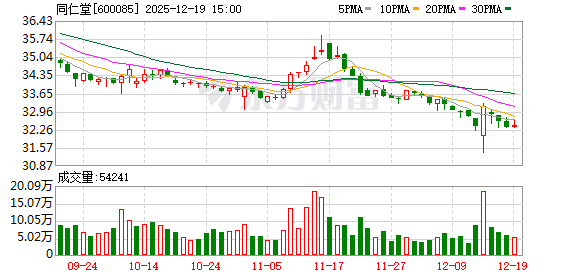
Core Viewpoint - Tongrentang is facing a trust crisis due to quality issues related to its Antarctic krill oil products, prompting the company to initiate a strict brand management action and conduct thorough investigations [1][4]. Group 1: Company Response - On December 20, Tongrentang announced a zero-tolerance brand management initiative and dispatched a special task force to Sichuan for a comprehensive investigation of the implicated products [1]. - The company has issued an apology and committed to a thorough investigation, with regulatory authorities forming a joint investigation team to look into the matter [4]. - Tongrentang emphasized its right to authorize the use of its trademark to other subsidiaries, but did not address how it would ensure product quality [3]. Group 2: Market and Brand Challenges - There is a significant presence of products on e-commerce platforms that improperly highlight the "Beijing Tongrentang" name without using the officially recognized trademark, indicating a chaotic market environment [1]. - The company faces a broader challenge beyond addressing specific product issues; it must critically reassess its current business model and brand management practices [5]. - The ongoing presence of "borderline" usage of the Tongrentang name and trademark raises concerns about the potential for further quality issues in the future [5]. Group 3: Consumer Trust and Brand Integrity - Ensuring product quality should not solely rely on consumer vigilance; the brand must take responsibility for quality control from the source [6]. - Consumer trust is a valuable asset for established brands, but repeated quality failures can deplete this trust, making it essential for Tongrentang to maintain high standards [6]. - The recent statement should mark the beginning of a transformative process for Tongrentang, reinforcing the brand as a quality assurance rather than a mere marketing label [7].
“南极磷虾油”事件发酵,同仁堂道歉!拿什么拯救356年老字号的信任危机?
Mei Ri Jing Ji Xin Wen· 2025-12-20 14:13
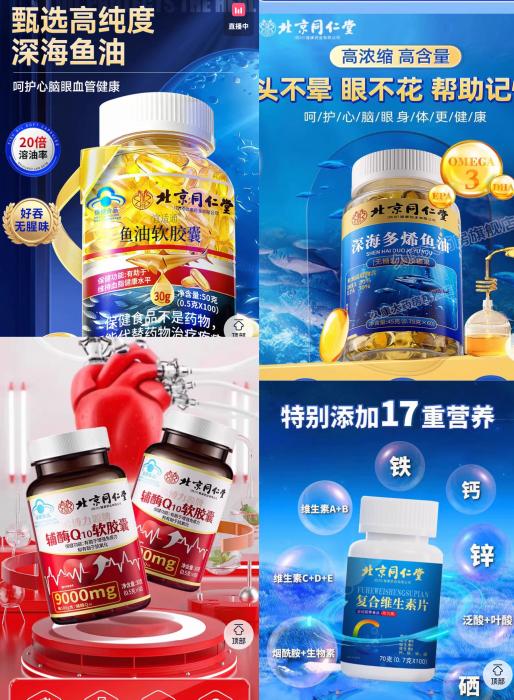
Core Viewpoint - The incident involving Antarctic krill oil has highlighted management issues within Beijing Tongrentang (Group), leading to a brand trust crisis despite the company's long history of 356 years [2][3]. Group 1: Incident Overview - On December 20, Beijing Tongrentang officially apologized to consumers and announced a zero-tolerance brand management initiative, along with a comprehensive review of brand usage across its subsidiaries [1]. - The Antarctic krill oil product claimed to contain "99% high-purity Antarctic krill oil" with "43% phospholipid content" and was said to be made from imported Chilean raw materials, but testing revealed zero phospholipid content [2]. Group 2: Management and Trust Issues - The company operates a vast network with seven subsidiaries, over 2,400 retail terminals, and 36 production bases, producing more than 2,600 types of pharmaceuticals and health products, which complicates management and quality control [2][3]. - Previous incidents, such as the "honey scandal" in 2018, indicate recurring quality control issues and management failures, suggesting a systemic problem within the company's operational framework [3]. Group 3: Recommendations for Improvement - To restore brand trust, the company must implement detailed quality control standards for its extensive product range and establish unified brand authorization protocols across its production bases [4]. - A commitment to zero tolerance for management failures must be integrated into every management process, rather than merely stated in public declarations, to prevent further erosion of consumer trust [5].

纾困背后的秘密:华创证券与贵州前首富诉争始末
经济观察报· 2025-12-20 08:35
Core Viewpoint - The ongoing legal dispute involving Guizhou BaiLing, a leading traditional Chinese medicine company, may determine its ownership and control, stemming from a complex financial rescue plan and stock pledge initiated in late 2018 and early 2019, which has lasted for seven years [1][5]. Group 1: Financial Penalties and Fraud Allegations - Guizhou BaiLing and its chairman Jiang Wei, along with ten other responsible parties, were fined for financial fraud, with the company fined 10 million yuan and Jiang Wei fined 5 million yuan, along with a 10-year market ban [2]. - The Guizhou Securities Regulatory Bureau revealed that the annual reports from 2019 to 2021 and 2023 contained false records, with a total of 655 million yuan in profits inflated due to underreported sales expenses from 2019 to 2021, and a 459 million yuan profit reduction in 2023 due to overstated sales expenses [3]. Group 2: Control Dispute and Legal Proceedings - The major shareholder Jiang Wei and his associates are embroiled in a lawsuit initiated by Huachuang Securities, demanding the return of 1.761 billion yuan in loans, which includes 1.4 billion yuan in rescue funds and 361 million yuan in stock pledge financing [4]. - The court case, originally scheduled for December 3, 2025, has been postponed due to Jiang Wei's counterclaim, with no new court date announced [4]. Group 3: Stock Pledge and Financial Struggles - Huachuang Securities provided 1.4 billion yuan in funding through two asset management plans and an additional 361 million yuan in stock pledge loans, acquiring 161 million shares of Guizhou BaiLing, representing 11.54% of its total shares [7]. - The lawsuit claims that Jiang Wei's failure to fulfill his obligations could lead to a forced transfer of his pledged shares, potentially resulting in a change of control for Guizhou BaiLing [9]. Group 4: Background of the Rescue Plan - The rescue plan, initiated in December 2018, aimed to help Jiang Wei reduce stock pledge rates and ensure the stable operation of Guizhou BaiLing, with Huachuang Securities committing to provide no less than 1.8 billion yuan in rescue funds [12]. - The first phase of the rescue plan was completed in March 2019, with Huachuang Securities acquiring 74.54 million shares for 650 million yuan, and the second phase was completed in September 2019 for 750 million yuan [13]. Group 5: Impact of Stock Price Decline - Guizhou BaiLing's stock price has significantly declined from an initial 9 yuan per share to 5.63 yuan, resulting in a market capitalization drop from over 50 billion yuan to 7.9 billion yuan [33].


纾困背后的秘密:华创证券与贵州前首富诉争始末
Sou Hu Cai Jing· 2025-12-20 08:12
Core Viewpoint - Guizhou BaiLing, a leading company in the herbal medicine sector, faces significant penalties for financial fraud, including a fine of 10 million yuan for the company and 5 million yuan for its chairman, Jiang Wei, who is also banned from the market for 10 years [2][3][4]. Group 1: Financial Misconduct - The company reported false financial records in its annual reports from 2019 to 2021 and 2023, leading to a cumulative profit inflation of 655 million yuan due to underreporting sales expenses [3][4]. - In 2023, the company overstated sales expenses, resulting in a profit reduction of 459 million yuan [4]. Group 2: Control Dispute - Guizhou BaiLing is embroiled in a control dispute, with major shareholder Jiang Wei and his associates facing a lawsuit from Huachuang Securities for the return of 1.761 billion yuan in loans and interest [5][7]. - The lawsuit stems from a complex seven-year struggle related to a financial rescue plan and stock pledges initiated in late 2018 [5]. Group 3: Financial Rescue Plan - Huachuang Securities provided 1.4 billion yuan in rescue funds and 361 million yuan in stock pledge financing to Jiang Wei, acquiring a total of 11.43% of Guizhou BaiLing's shares [7][12]. - The rescue plan included multiple agreements, with fixed and floating returns based on the performance of the shares held by Huachuang Securities [13][14]. Group 4: Share Price Decline - Guizhou BaiLing's stock price has significantly declined from 9 yuan per share to 5.63 yuan, resulting in a market capitalization drop from over 50 billion yuan to 7.9 billion yuan [33]. Group 5: Corporate Governance Issues - The ongoing legal disputes and financial issues have raised concerns about the company's governance structure, with suggestions for restructuring the board to ensure balanced control [29][30].