投资

Search documents
重阳投资王庆:中国资产是对冲美国波动的天然工具,全球再平衡迎机遇
Xin Lang Zheng Quan· 2025-12-01 08:41
Group 1 - The core viewpoint is that there is a significant imbalance in global capital allocation, with excessive investment in the US market and insufficient investment in the Chinese market, which does not reflect the actual economic strength of both countries [1][2] - Wang Qing, Chairman and Chief Economist of Chongyang Investment, emphasizes that both China and the US are leaders in economic strength and technological innovation, yet the financial market asset allocation does not mirror this reality [1] - The current allocation discrepancy creates a structural opportunity for global capital flow, as a potential shift in the US economy or capital market could lead to a reallocation of funds towards the undervalued Chinese market [1][2] Group 2 - The anticipated shift in global capital from the over-allocated US market to the under-allocated Chinese market represents a historic development opportunity for China's capital market [2] - This rebalancing of global funds is expected to lead to a more reasonable pricing of Chinese assets and further enhance the functionality of the capital market [2] - The reallocation of funds will not only drive the value reassessment of Chinese assets but also provide crucial financial support for the high-quality development of the Chinese economy [2]
对话淡马锡基金会黄文雄:构建全球绿色合作伙伴关系,推动技术创新与区域协同
Xin Lang Cai Jing· 2025-12-01 08:29
新浪财经ESG评级中心提供包括资讯、报告、培训、咨询等在内的14项ESG服务,助力上市 公司传播ESG理念,提升ESG可持续发展表现。点击查看【 ESG评级中心服务手册】 2025年11月24日,首届"绿智未来"可持续发展全球挑战赛决赛暨颁奖典礼在深圳举办。本次挑战赛由祥 峰投资中国基金和淡马锡基金会共同主办,从全球约70个国家及地区的超1000个项目中筛选出十强进入 决赛。赛事旨在发掘具备技术创新性、商业可行性的优质项目,助力全球可持续发展目标实现。决赛期 间,新浪财经围绕慈善资本角色、区域市场互补、赛事成功模式及深化全球合作等议题,对话了淡马锡 基金会执行董事兼首席执行长黄文雄。 慈善资本推动绿色技术落地 谈及慈善资本在绿色科技转化中的独特作用,黄文雄指出,相较于传统风险投资,慈善资本的核心价值 在于其高风险承受能力与示范引领价值。"淡马锡在在投资回报超过资本成本时,会将部分收益捐赠于 公益用途,以永续基金的形式进行投资。淡马锡基金会作为其旗下的慈善部门,会将部分收益以赠款资 金的形式配置于新的影响力项目,形成资金的循环投入机制。" 可持续发展全球挑战赛成功模式 经过多年实践,GFIC 挑战赛已形成"项目 ...
重阳投资王庆:注入国资充实社保,破解房地产负财富效应
Xin Lang Zheng Quan· 2025-12-01 07:56
Core Viewpoint - The current adjustment in the real estate market is leading to a negative wealth effect, which significantly impacts consumer confidence and spending behavior [1][2]. Group 1: Real Estate Market Impact - The decline in real estate prices is affecting household net assets and consumer confidence, leading to more cautious spending and increased precautionary savings [1]. - To address this issue, it is essential to stabilize real estate prices and prevent the negative wealth effect from spreading further, avoiding a vicious cycle of falling property prices and reduced consumption [1]. Group 2: Consumer Spending Concerns - A major reason for weak consumer spending is households' concerns about future expenditures, particularly for retirement, healthcare, and education [2]. - Increasing public sector investment in these areas could alleviate household burdens and help unlock consumer potential [2]. Group 3: Policy Recommendations - A proposed policy is to inject part of the state-owned assets into the social security fund to enhance the sustainability and level of social security, providing families with greater peace of mind [2]. - This approach aims to reduce the need for excessive savings due to uncertainties about the future, thereby allowing current consumption capacity to be fully realized [2]. - The integration of state assets with social security could become a key direction for policy efforts in the next phase [2].
重阳投资王庆:中国资产重估进入下半场,海外资金回流成关键驱动力
Xin Lang Zheng Quan· 2025-12-01 07:12
Group 1 - The core viewpoint of the article is that the revaluation of Chinese assets has entered its "second half," driven by a shift in overseas investors' perceptions, particularly from Europe and the United States [1][2] - The revaluation process of Chinese assets is divided into two phases: the first phase focused on undervalued value stocks with high dividend yields, while the second phase has shifted towards growth stocks in the technology innovation sector [1] - The potential for further foreign capital inflow into the Chinese market remains significant, as a considerable amount of long-term foreign capital has yet to participate, indicating a large potential for asset allocation in China [2] Group 2 - The gradual improvement of the Chinese economy and the positive performance of the capital market have led to increased interest from overseas investors, with some funds already increasing their participation in the Chinese market [2] - The ongoing return of foreign capital is expected to become a new narrative in market discussions and will play a crucial role in supporting Chinese assets moving forward [2]

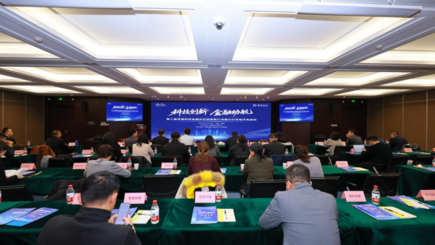
科技创新 金融助航——第三届济南科技金融论坛招商银行济南分行专场沙龙成功举办
Cai Fu Zai Xian· 2025-12-01 04:51
Group 1 - The third Jinan Science and Technology Finance Forum was successfully held, focusing on the theme "Technological Innovation and Financial Support" with participation from over 60 representatives of technology companies [1][4] - The event featured the launch of the China Merchants Bank's technology finance brand and a series of product presentations aimed at providing comprehensive financial support for technological innovation [3] - The bank's comprehensive service plan is designed to support the entire lifecycle of technology innovation, enhancing service scenarios and expanding the service ecosystem [3] Group 2 - The forum included discussions on how companies can navigate macroeconomic uncertainties and identify growth opportunities within existing resources [3] - The "Five-Dimensional Big Data Evaluation Model" was introduced to convert technology reports into financial statements recognized by financial institutions, covering the entire financial service system for technology companies [3] - The event emphasized the importance of a full-chain service system to empower companies in leveraging capital market forces for high-quality development [3][4]


上海中广云智投:模块化架构加速投资功能迭代速度
Sou Hu Cai Jing· 2025-12-01 02:40
Core Insights - The investment sector is undergoing a profound transformation driven by technological architecture innovations, moving away from traditional "monolithic" systems that face iterative challenges [1] - The rise of modular architecture introduces agility into investment systems, allowing for rapid response and dynamic optimization through the decoupling of functions and component reuse [1] Group 1: Modular Architecture Benefits - Modular architecture breaks down complex systems into independent functional units, enabling focused development on macroeconomic analysis, risk assessment models, and quantitative trading algorithms [1] - Investors can quickly adapt to changing market conditions by adjusting module combinations or upgrading specific functions without overhauling the entire system [1] - The ability to integrate international macroeconomic monitoring and currency risk hedging modules enhances cross-border investment capabilities efficiently [1] Group 2: Technological Support for Modular Architecture - Standardization and openness in technology are crucial for accelerating the iteration of modular architecture, ensuring seamless data access and interaction among modules [2] - Distributed computing and real-time processing technologies significantly enhance data exchange efficiency, supporting high-frequency trading scenarios [2] - The proliferation of open-source ecosystems lowers development barriers, allowing developers to quickly build and optimize new modules through community collaboration [2] Group 3: Industry Ecosystem Transformation - Modular architecture is reshaping the division of labor in the investment sector, allowing specialized institutions to focus on deep development of specific modules [3] - Investors can select module combinations to create personalized strategy factories, reducing technical barriers for smaller institutions and enhancing module quality through market competition [3] - The integration of artificial intelligence and blockchain technologies will further advance modular architecture towards intelligence and automation, providing a more reliable technical foundation for investment decisions [3]

芒格临终前给巴菲特打电话说了什么?
阿尔法工场研究院· 2025-12-01 00:06
Core Insights - Charlie Munger, the vice chairman of Berkshire Hathaway, continued to pursue bold investment opportunities and face new challenges even in his later years, demonstrating a commitment to lifelong learning and engagement in the investment world [2][3]. Investment Strategies - Munger made significant investments in the coal industry, an area he had avoided for 60 years, resulting in over $50 million in gains from stocks like Consol Energy and Alpha Metallurgical Resources, which saw their prices double before his passing [3][8]. - He also increased his real estate investments, partnering with a young neighbor, Avi Meyer, to acquire nearly 10,000 garden-style apartments in Southern California, with the assets valued at approximately $3 billion [9][13]. Personal Engagement - Munger maintained an active role in his investments, personally overseeing details such as community selection and building quality, even participating in negotiations for acquisitions shortly before his death [10][13]. - His relationship with Meyer exemplified his mentorship style, as he encouraged Meyer to pursue higher education and supported his ventures in real estate [9][13]. Health and Lifestyle - Despite facing health challenges, including significant vision issues, Munger remained socially active, participating in a weekly breakfast club with friends and business associates, which provided him with mental stimulation and camaraderie [14][15]. - Munger's dietary preferences were noted, as he enjoyed simple foods and resisted strict dietary guidelines, often indulging in takeout meals [18][20]. Legacy and Philosophy - Munger's approach to investing emphasized the importance of a few key decisions leading to success, reflecting a philosophy of quality over quantity in investment choices [15]. - He expressed satisfaction with his achievements and optimism for Berkshire Hathaway's future, indicating a belief in the enduring value of the investment framework he helped establish [21].

湖州市股权投资有限公司成立
Zheng Quan Ri Bao Wang· 2025-11-30 10:45
本报讯(记者袁传玺)天眼查App显示,近日,湖州市股权投资有限公司成立,注册资本30亿元,经营范 围为股权投资、以自有资金从事投资活动、知识产权服务,由湖州市交通投资集团有限公司、湖州市城 市投资发展集团有限公司、湖州市产业投资发展集团有限公司共同持股。 ...
冯卫东:我们投的鲍师傅,找到了不依赖上市的盈利方式
创业家· 2025-11-30 10:01
Core Insights - The article emphasizes the long-term value of consumer investment despite recent challenges in the sector, suggesting that patience will lead to opportunities as other institutions exit the market [1] - The company has diversified its investment strategy by expanding into biomedicine and low-altitude economy sectors, categorizing consumer investments into technology and non-technology segments [1] - A new strategy has been established to find investment methods that do not rely on IPOs, recognizing the lengthy and uncertain nature of the IPO process [3] Investment Strategies - The first strategy involves establishing a merger and acquisition (M&A) fund, sourcing projects from diversified groups and entrepreneurs looking to sell their businesses [4][5] - The second strategy is the creation of an industrial integration fund, collaborating with industry leaders and local governments to invest in early and growth-stage companies [8] - The third strategy focuses on a pure dividend strategy, allowing for cash flow returns even when exit opportunities are limited [9] Market Conditions - The current market for leveraged financing tools is limited, resulting in low frequency of M&A transactions [6] - The company has been operating an M&A team since 2017, with only two ongoing controlling M&A projects, one being the acquisition of Yuno yogurt, which has shown significant recovery in performance [7] New Investment Products - The company has launched a SPAC product in Macau, utilizing a revenue-based financing model for investment distribution [11] - There is active subscription interest in this product, although the bottleneck lies in the availability of quality assets rather than funding [14] Strategic Adjustments - The company has adjusted its investment strategy to broaden the range of potential investments, allowing for the inclusion of previously excluded quality assets [15] - The introduction of dividend structures has enabled the company to realize returns on investments that were previously only reflected on paper [16] - The changing transaction structures and investment strategies are expected to become a consensus in the industry, with new strategies already being validated [19]

调研报告揭示国有投资机构激励与容错痛点:考核周期的错配问题依然严峻
Jing Ji Guan Cha Wang· 2025-11-30 07:48
Core Insights - The report highlights the internal conflict faced by state-owned investment institutions between the rigid requirement of "preserving and increasing value" and the encouragement of innovation through a fault-tolerant mechanism [2][3] Group 1: Performance Assessment Changes - The performance assessment system for state-owned investment institutions is undergoing significant structural adjustments, with policy functions now surpassing financial returns for the first time [3] - In 2025, the weight of financial return indicators in performance assessments is expected to drop to 48.57%, falling below policy-related indicators such as investment progress and fundraising tasks [3] - This shift indicates a transition in the role of state-owned investment institutions from balancing policy effects and economic benefits to serving national strategies and local industrial development [3] Group 2: Fault-Tolerant Mechanism Development - The establishment of fault-tolerant mechanisms has evolved from mere coverage to a focus on effectiveness and operability, with institutions recognizing the need for detailed institutional designs [4] - A significant 67.62% of surveyed institutions believe that the uncertainty in the definition and scope of fault-tolerant mechanisms by disciplinary inspection departments is the biggest barrier to implementation [4] - The lack of clear, unified, and operable execution guidelines is also a major concern, with 65.71% of institutions highlighting this issue [4] Group 3: Risk Tolerance and Quantification - There has been a notable shift in the industry's attitude towards setting risk thresholds, with a majority now seeking clear, quantifiable loss tolerance ratios as a basis for compliance exemptions [5][6] - For early-stage investments, 28.57% of institutions are willing to accept loss ratios between 50% and 70%, while for later-stage investments, 46.67% believe loss ratios should be limited to between 20% and 50% [5] Group 4: Incentive Mechanism Challenges - Although 86.66% of institutions have established performance assessment systems, only 42.86% have corresponding incentive mechanisms, with financial incentives being limited [7] - The core issues identified in the incentive mechanisms include insufficient motivation and a lack of flexibility, making it difficult to attract and retain key talent [7] Group 5: Investment Environment Outlook - The investment environment for 2025 appears cautious, with only 45.71% of institutions planning to initiate or participate in new fund establishments [8] - A significant 91.43% of institutions identify "difficult exit channels" as the primary challenge, which severely impacts key performance indicators and the ability to raise new funds [8] Group 6: Recommendations for Improvement - The report suggests establishing a coordinating role for state asset regulatory departments to promote a unified review mechanism and reduce uncertainties from multiple regulations [9] - It also calls for the creation of a clear "positive list" for due diligence actions and the establishment of a long-term assessment system based on the entire lifecycle of funds [9]