
装备制造业

Search documents
宏观政策落地见效!前三季度工业经济稳中有进 企业利润加速恢复
Yang Shi Wang· 2025-10-27 07:36
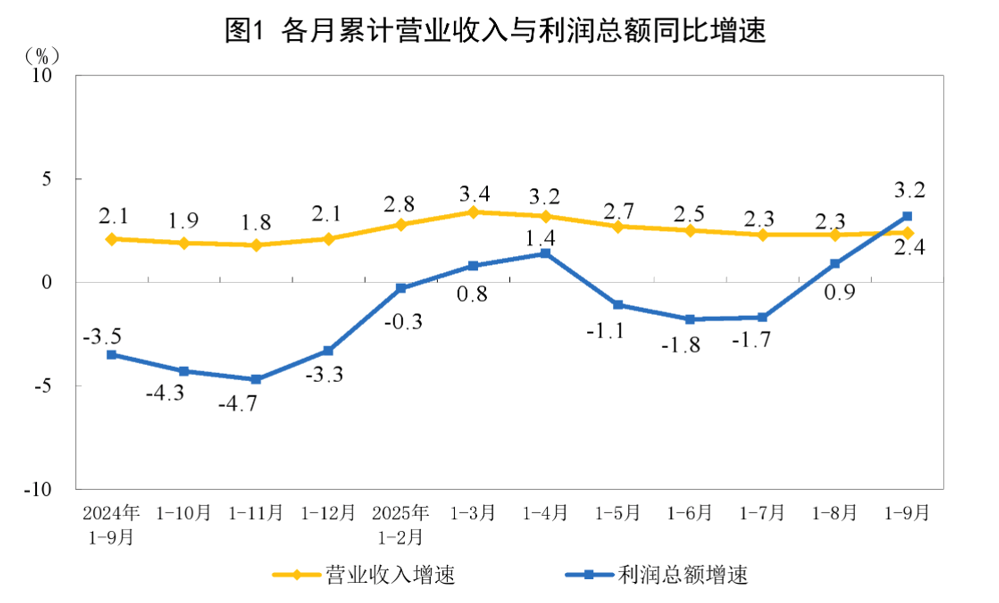
央视网消息:国家统计局10月27日发布数据,今年1—9月份,随着更加积极有为的宏观政策落地落实,新经济增长点培育壮大,规模以上 工业企业利润加快恢复。 全国规模以上工业企业实现利润总额53732.0亿元,同比增长3.2%。 规模以上装备制造业利润同比增9.4% 此外,国家统计局介绍,今年前三季度,高技术制造业、装备制造业利润实现较快增长。1至9月,规模以上装备制造业利润同比增长 9.4%,高于全部规模以上工业平均水平6.2个百分点。 1至9月,规模以上高技术制造业利润同比增长8.7%,较1至8月加快2.7个百分点。其中,9月份高技术制造业利润两位数增长,增速达 26.8%,拉动当月全部规模以上工业企业利润增长6.1个百分点。 分行业看,在41个工业大类行业中,有23个行业利润同比增长,增长面超过五成。其中,9月份有30个行业利润增长,增长面达73.2%。 国家发展改革委宏观经济研究院副研究员 陈曦:前三季度,我国工业经济呈现稳中有进的发展态势,特别是工业生产保持了良好的増 势。叠加全国统一大市场建设纵深推进,市场竞争秩序持续优化,也为相关行业价格改善,以及企业效益提升带来了积极的变化。 1—9月份,全国规模以 ...


信息量大!国家统计局,最新发布!
券商中国· 2025-10-27 05:51
装备制造业、高技术制造业对利润恢复贡献突出 10月27日,国家统计局公布数据显示,1—9月份,规模以上工业企业利润同比增长3.2%,为去年8月份以来各 月累计最高增速;较1—8月份加快2.3个百分点,呈现加快恢复态势。这一表现是量、价和利润率同时改善的 结果,特别是高技术制造业和装备制造业两大行业作用明显,不同规模类型企业利润均有改善。 单月规上工业企业利润连续两月同比增长超20% 从单月表现看,9月份,规模以上工业企业利润同比增长21.6%,较8月份加快1.2个百分点。 工业企业利润加快恢复是量、价和利润率共同作用的结果。国家统计局工业统计司首席统计师于卫宁介绍,1 —9月份,规模以上工业企业营业收入同比增长2.4%,较1—8月份加快0.1个百分点。其中,9月份营业收入增 长2.7%,较8月份加快0.8个百分点,营业收入当月增速连续两个月加快,为企业盈利持续恢复创造有利条件。 国家金融与发展实验室特聘高级研究员庞溟对券商中国记者表示,除了营收同比增长提速,产成品存货周转天 数继续减少,反映出在政策端继续发力、需求端持续改善的背景下,工业品销售有所改善。 从营收利润率来看,9月份规模以上工业企业营业收入利润率 ...

3.2%
Shang Hai Zheng Quan Bao· 2025-10-27 04:59
Core Insights - Industrial enterprises' profits increased by 3.2% year-on-year from January to September, marking the highest cumulative growth rate since August of the previous year [1] - The growth rate accelerated by 2.3 percentage points compared to the first eight months of the year, driven by rapid monthly profit growth and a low base from the previous year [1][3] - High-tech manufacturing and equipment manufacturing sectors showed significant profit growth, contributing to the overall improvement [1][5] Revenue and Profit Trends - From January to September, the revenue of industrial enterprises grew by 2.4% year-on-year, a slight acceleration of 0.1 percentage points compared to the first eight months [3] - In September alone, revenue growth reached 2.7%, an increase of 0.8 percentage points from August [3] - The profit margin for industrial enterprises rose to 5.49% in September, up by 0.85 percentage points year-on-year, marking two consecutive months of increase [3][4] Sector Performance - Over half of the industries saw profit growth, with 23 out of 41 major industrial categories reporting year-on-year profit increases [6] - High-tech manufacturing profits grew by 8.7% year-on-year from January to September, contributing 1.6 percentage points to the overall profit growth of industrial enterprises [6] - In September, high-tech manufacturing profits surged by 26.8%, becoming a key driver for the recovery in industrial profits [6] Company Size and Type Analysis - Profits improved across different company sizes, with large, medium, and small enterprises reporting year-on-year profit growth of 2.5%, 5.3%, and 2.7% respectively [4] - Private and foreign-invested enterprises experienced notable profit acceleration, with profits growing by 5.1% and 4.9% respectively from January to September [4]
9月工业利润大增21.6%
Di Yi Cai Jing Zi Xun· 2025-10-27 04:29
Core Insights - The profit growth of industrial enterprises in China has continued to rebound, with a year-on-year increase of 3.2% from January to September, marking the highest cumulative growth rate since August of the previous year [2][4] - In September alone, profits surged by 21.6% year-on-year, indicating significant improvement in the manufacturing sector driven by policy support and recovering market demand [2][4] Industrial Performance - From January to September, the operating revenue of industrial enterprises increased by 2.4% year-on-year, with September showing a growth of 2.7%, reflecting a continuous acceleration over the past two months [4] - Among 41 major industrial categories, 23 saw profit growth, with 30 industries reporting profit increases in September, representing a growth rate of 73.2% [4][5] - High-tech manufacturing has played a significant role, with profits rising by 8.7% year-on-year from January to September, contributing 1.6 percentage points to the overall profit growth of industrial enterprises [4][5] Equipment Manufacturing Sector - The profit of the equipment manufacturing sector increased by 9.4% year-on-year, exceeding the average growth rate of all industrial enterprises by 6.2 percentage points [5] - In September, profits in this sector grew by 25.6%, contributing 10.5 percentage points to the overall profit growth of industrial enterprises [5] Profitability Metrics - The profit margin for industrial enterprises was 5.26% from January to September, a slight increase of 0.04 percentage points year-on-year, with September's margin reaching 5.49%, up 0.85 percentage points [5] - The cost and expenses per hundred yuan of operating revenue have decreased, indicating effective cost control and product structure optimization [5] Enterprise Size and Type Analysis - Profits for large, medium, and small enterprises grew by 2.5%, 5.3%, and 2.7% respectively from January to September, showing a recovery across all sizes [6] - Private enterprises and foreign-invested enterprises reported profit growth of 5.1% and 4.9%, respectively, indicating a positive trend in profitability [6] Future Outlook - The industrial sector is expected to maintain a stable and positive trend due to ongoing domestic demand release, accelerated technological innovation, and effective policy support [7] - Key areas to monitor include the continuity of domestic demand expansion policies, the implementation of "anti-involution" measures in manufacturing, and the impact of external demand and geopolitical risks on the economy [7]
继续回升!国家统计局公布重要数据
Zhong Guo Zheng Quan Bao - Zhong Zheng Wang· 2025-10-27 04:24
国家统计局工业司首席统计师于卫宁表示,1—9月份,各地区各部门认真落实更加积极有为宏观政策,培育壮大新经济增长点,高技术制造 业、装备制造业等新质生产力较快增长,叠加低基数效应影响,规模以上工业企业利润增速继续回升。 工业企业利润加快恢复 国家统计局10月27日发布数据显示,1—9月份,全国规模以上工业企业实现利润总额53732.0亿元,同比增长3.2%,为去年8月份以来各月累计 最高增速。9月份,规模以上工业企业利润同比增长21.6%。 过半行业利润增长,六成行业增速回升。于卫宁表示,1—9月份,在41个工业大类行业中,有23个行业利润同比增长,增长面超过五成;其 中,9月份有30个行业利润增长,增长面达73.2%。从回升面看,1—9月份,有26个行业利润增速较1—8月份加快或降幅收窄、由降转增,回 升面超过六成。 不同规模类型企业利润均有改善,私营和外资企业利润明显加快。于卫宁表示,1—9月份,分规模看,规模以上工业大型、中型、小型企业 利润同比分别增长2.5%、5.3%、2.7%,较1—8月份回升2.6个、2.6个、1.2个百分点。 工业企业利润加快恢复。于卫宁分析,1—9月份,规模以上工业企业利润同比 ...
9月工业利润大增21.6%
第一财经· 2025-10-27 04:13
Core Viewpoint - The article highlights the recovery of profits among industrial enterprises in China, driven by supportive macro policies and a low base effect, with a notable increase in profit growth rates in September 2023 [3][4]. Profit Growth - From January to September 2023, profits of industrial enterprises above designated size increased by 3.2% year-on-year, marking the highest cumulative growth rate since August of the previous year, and accelerating by 2.3 percentage points compared to the previous two months [3][4]. - In September alone, profits surged by 21.6% year-on-year, reflecting a 1.2 percentage point increase from August [4]. Revenue Growth - The revenue of industrial enterprises above designated size grew by 2.4% year-on-year from January to September, with September's revenue growth reaching 2.7%, an acceleration of 0.8 percentage points from August [6]. - In the first three quarters, 23 out of 41 industrial sectors reported profit growth, with 30 sectors showing profit increases in September, representing a growth rate of 73.2% [6]. High-Tech Manufacturing - High-tech manufacturing significantly contributed to profit growth, with a year-on-year increase of 8.7% from January to September, accelerating by 2.7 percentage points compared to the previous two months [6]. - In September, high-tech manufacturing profits grew by 26.8%, contributing 6.1 percentage points to the overall profit growth of industrial enterprises [6]. Equipment Manufacturing - Profits in the equipment manufacturing sector rose by 9.4% year-on-year from January to September, exceeding the average growth rate of all industrial enterprises by 6.2 percentage points [7]. - In September, equipment manufacturing profits increased by 25.6%, contributing 10.5 percentage points to the overall profit growth [7]. Profitability Metrics - The profit margin for industrial enterprises above designated size was 5.26% from January to September, a year-on-year increase of 0.04 percentage points, with September's margin reaching 5.49%, up by 0.85 percentage points [8]. - The cost and expenses per hundred yuan of revenue continued to decrease, indicating improvements in cost control and product structure optimization [8]. Enterprise Size and Type - From January to September, profits for large, medium, and small enterprises grew by 2.5%, 5.3%, and 2.7% year-on-year, respectively, with notable recoveries compared to the previous two months [8]. - Private enterprises and foreign-invested enterprises saw profit growth of 5.1% and 4.9%, respectively, with significant acceleration compared to earlier months [8]. Future Outlook - The article suggests that the industrial sector's resilience and adaptability will continue to improve, supported by ongoing domestic demand, technological innovation, and precise policy support [9]. - Key areas to monitor include the sustainability of domestic demand expansion policies, the implementation of "anti-involution" measures in manufacturing, and the impact of external demand and geopolitical risks on the industrial economy [9].

前9个月规模以上装备制造业利润同比增长9.4%
Bei Jing Shang Bao· 2025-10-27 03:43
数据显示,今年前9个月,规模以上装备制造业利润同比增长9.4%,高于全部规模以上工业平均水平6.2 个百分点,拉动全部规模以上工业企业利润增长3.4个百分点。其中,9月装备制造业利润增长25.6%, 拉动当月全部规模以上工业企业利润增长10.5个百分点。 从行业看,今年前9个月,装备制造业的8个行业利润全部实现增长,其中铁路船舶航空航天、电子、电 气机械等行业利润分别增长37.3%、12%、11.3%。 北京商报讯(记者 和岳)10月27日,国家统计局工业司首席统计师于卫宁表示,各地区各部门认真落 实更加积极有为宏观政策,培育壮大新经济增长点,高技术制造业、装备制造业等新质生产力较快增 长,叠加低基数效应影响,规模以上工业企业利润增速继续回升。 ...
9月工业利润大增21.6%,营收利润率连续2个月提高
Di Yi Cai Jing Zi Xun· 2025-10-27 03:37
Core Insights - The profit growth of industrial enterprises above designated size in China has continued to rebound, with a year-on-year increase of 3.2% from January to September, marking the highest cumulative growth rate since August of the previous year [1] - In September alone, profits surged by 21.6% year-on-year, indicating significant improvement in the manufacturing sector driven by policy support and recovering market demand [2] Profit and Revenue Growth - From January to September, the operating revenue of industrial enterprises increased by 2.4% year-on-year, with September showing a growth of 2.7%, reflecting a continuous acceleration in revenue growth [4] - In the first three quarters, 23 out of 41 industrial categories reported profit growth, with 30 categories showing profit increases in September, representing a growth coverage of 73.2% [4] High-Tech and Equipment Manufacturing - High-tech manufacturing significantly contributed to profit growth, with a year-on-year increase of 8.7% from January to September, accelerating by 2.7 percentage points compared to the previous period [4] - Equipment manufacturing profits rose by 9.4% year-on-year, exceeding the overall industrial average by 6.2 percentage points, with a notable 25.6% increase in September [5] Profitability Metrics - The profit margin for industrial enterprises was 5.26% from January to September, improving by 0.04 percentage points year-on-year, while September's margin reached 5.49%, up by 0.85 percentage points [5] - Cost control and product structure optimization have shown positive progress, as costs and expenses per hundred yuan of revenue have decreased [6] Enterprise Size and Type Analysis - Profit growth varied by enterprise size, with large, medium, and small enterprises seeing increases of 2.5%, 5.3%, and 2.7% respectively from January to September [6] - Private enterprises and foreign-invested enterprises reported profit growth of 5.1% and 4.9%, respectively, indicating a broad-based recovery across different enterprise types [6] Future Outlook - The industrial sector is expected to maintain a stable and positive trend, supported by continuous domestic demand release, accelerated technological innovation, and effective policy support [6] - The need for ongoing policy measures to sustain profit growth is emphasized, particularly in relation to domestic demand expansion and managing competitive pressures in the manufacturing sector [7]
高技术制造业带动作用明显,工业利润累计增速创去年8月以来新高
Xin Lang Cai Jing· 2025-10-27 02:32
Core Insights - In September, profits of industrial enterprises above designated size increased by 21.6% year-on-year, with a 1.2 percentage point rise compared to August. For the first nine months, profits rose by 3.2%, marking the highest cumulative growth rate since August of the previous year [1] - High-tech manufacturing and equipment manufacturing sectors showed rapid growth, contributing to the overall profit increase of industrial enterprises [1][2] Group 1: Profit Growth - For the first nine months, the manufacturing sector grew by 9.9%, accelerating by 2.5 percentage points compared to the previous period [1] - The electricity, heat, gas, and water production and supply sector grew by 10.3%, up by 0.9 percentage points [1] - In contrast, the mining sector saw a decline of 29.3%, although the rate of decline narrowed by 1.3 percentage points [1] Group 2: High-tech Manufacturing Impact - High-tech manufacturing profits increased by 8.7% year-on-year for the first nine months, contributing 1.6 percentage points to the overall profit growth of industrial enterprises [2] - In September, high-tech manufacturing profits surged by 26.8%, contributing 6.1 percentage points to the monthly profit growth [2] - Specific sectors within high-tech manufacturing, such as aerospace and smart devices, reported significant profit increases, with aerospace profits up by 11.3% and smart consumer devices up by 81.6% [2] Group 3: Equipment Manufacturing - Equipment manufacturing profits rose by 9.4% year-on-year, exceeding the average growth rate of all industrial enterprises by 6.2 percentage points [2] - In September, equipment manufacturing profits grew by 25.6%, contributing 10.5 percentage points to the overall profit growth for that month [2] Group 4: Future Outlook - The chief economist at China Minsheng Bank anticipates a continued moderate recovery in industrial enterprise profits, with steady cumulative growth expected [2] - Policy emphasis on sustained efforts and timely adjustments is expected to support profit quality and market competition [3] - Ongoing "anti-involution" measures may improve supply-demand dynamics in certain industries, although some manufacturing sectors may face structural downward pressure [3]
1—9月份规模以上工业企业利润加快恢复
Guo Jia Tong Ji Ju· 2025-10-27 02:19
Group 1 - The core viewpoint is that the profits of industrial enterprises have shown a recovery trend, with a year-on-year increase of 3.2% from January to September, marking the highest cumulative growth rate since August of the previous year [1] - In the manufacturing sector, profits increased by 9.9%, while the electricity, heat, gas, and water production and supply industry saw a growth of 10.3%. The mining industry, however, experienced a decline of 29.3%, although the decline has narrowed [1][2] - In September, the profits of industrial enterprises increased by 21.6% year-on-year, accelerating by 1.2 percentage points compared to August [1] Group 2 - Over half of the industries saw profit growth, with 23 out of 41 major industrial categories reporting year-on-year profit increases from January to September, and 30 industries showing profit growth in September [2] - High-tech manufacturing played a significant role, with profits increasing by 8.7% year-on-year, contributing 1.6 percentage points to the overall profit growth of industrial enterprises [2] - In September, high-tech manufacturing profits grew by 26.8%, contributing 6.1 percentage points to the overall profit growth of industrial enterprises [2] Group 3 - The equipment manufacturing sector showed strong support, with profits increasing by 9.4% year-on-year, surpassing the average growth rate of all industrial enterprises by 6.2 percentage points [3] - In September, profits in the equipment manufacturing sector grew by 25.6%, contributing 10.5 percentage points to the overall profit growth of industrial enterprises [3] - All eight industries within the equipment manufacturing sector reported profit growth from January to September, with notable increases in railways, shipbuilding, and aerospace [3] Group 4 - The profit margin for industrial enterprises improved, with a profit margin of 5.26% from January to September, an increase of 0.04 percentage points year-on-year [4] - In September, the profit margin rose to 5.49%, reflecting an increase of 0.85 percentage points year-on-year, marking two consecutive months of improvement [4] - The focus moving forward will be on expanding domestic demand and strengthening the domestic economic cycle to promote stable and healthy industrial economic development [4]