
高等教育

Search documents
申万宏源证券晨会报告-20251126
Shenwan Hongyuan Securities· 2025-11-26 00:41
Group 1: Higher Education Industry - The core idea is that the higher education sector is expected to see a turnaround due to improved quality standards and supportive policies, particularly with the reintroduction of for-profit classification management in Hunan Province, which may serve as a pilot for national implementation [3][4][14] - The report anticipates that after five years of continuous investment, key indicators of educational quality such as student-to-teacher ratios and per-student funding have met the required standards, suggesting that the investment cycle has peaked and operational efficiency in higher education companies is likely to recover [4][14] - Companies to watch in this sector include Yuhua Education, Zhongjiao Holdings, New Higher Education, and others, as they are positioned to benefit from the expected recovery and valuation increase [4][14] Group 2: Vocational Education Industry - There is a significant surge in demand for vocational training driven by the increasing number of university graduates and high school leavers entering the labor market, leading to a projected market size of 80 billion yuan in 2025 with a low penetration rate of 5% [4][14] - The report highlights that the youth unemployment rate is higher than the urban average, indicating a growing need for skill training among the 16 to 24 age group, which is expected to further boost the vocational training market [4][14] - Recommended companies in this space include China Oriental Education and Fenbi, which are well-positioned to capitalize on the growing demand for vocational training [4][14] Group 3: Education Training Industry - The education training sector is undergoing a transformation with a shift towards "franchise operations" after a significant reduction in capacity due to regulatory changes, leading to a supply shortage that has not yet improved [4][14] - The report notes that institutions with strong research capabilities and operational experience are likely to dominate the market, as they are the ones receiving operational licenses [4][14] - Companies such as Good Future, New Oriental, and Excellence Education are expected to expand their capacity and achieve high revenue and profit growth as the industry moves towards a more structured operational model [4][14]
13国兽医官员齐聚南农!这个国际培训班引领全球畜牧“减抗”未来
Yang Zi Wan Bao Wang· 2025-11-25 10:46
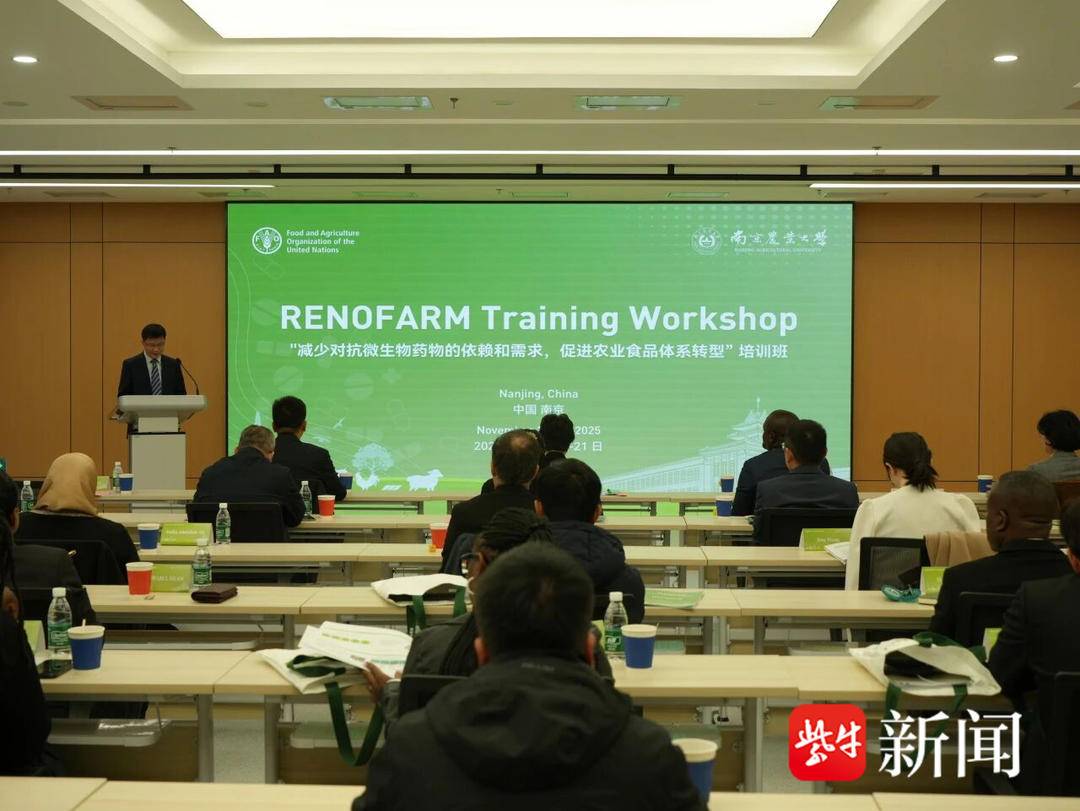
培训讲师团队由联合国粮食及农业组织兽医官、国内动物健康领域知名科学家及南京农业大学专业教师共同组成,来自埃及、阿塞拜疆、巴巴多斯、巴 林、柬埔寨、津巴布韦、老挝、孟加拉国、尼泊尔、斯里兰卡、伊朗、越南、赞比亚等13个发展中国家的高级兽医官员参加培训。 开班式上,南京农业大学副校长朱艳表示,南农愿与联合国粮食及农业组织及各参与方携手,将RENOFARM培训打造为传播知识、凝聚共识、推动实践 的高层次平台,共同为全球农业食品体系转型、构建远离AMR威胁的健康未来贡献智慧与力量。 日前,由联合国粮食及农业组织(FAO)与南京农业大学联合举办的全球第二届RENOFARM培训班在南京农业大学举行。RENOFARM意为"减少对抗微生物 药物的依赖和需求,促进农业食品体系转型",旨在从源头和系统层面推动畜牧业绿色可持续发展。 记者了解到,作为国内唯一承办RENOFARM培训的高校,南京农业大学已连续两年举办该培训班。本次培训班为期五天,重点倡导在动物健康领域谨 慎、负责任地使用抗微生物药物,增强农食系统应对抗微生物药物耐药性(AMR)的可持续管理能力。 "本次培训所积累的经验将为后续RENOFARM培训提供重要参考,有助于 ...

8414万元!武汉大学2全国重点实验室发布仪器采购意向(11-12月)
仪器信息网· 2025-11-25 09:07
Core Insights - Wuhan University has announced multiple government procurement intentions for advanced instruments and equipment, with a total budget exceeding 172 million yuan [2][3]. Procurement Overview - The procurement includes high-precision ground-penetrating radar, laser radar, hyperspectral sensors, underwater sonar, and various advanced multi-modal sensors, as well as platforms for biochemical analysis, microscopic imaging, animal analysis, and biosynthesis [2][4]. - The expected procurement timeline is set for November to December 2025 [2]. Detailed Procurement Items - The procurement plan includes: - **Surveying and Remote Sensing Equipment**: A budget of 36.14 million yuan for enhancing original innovation capabilities in the national key laboratory [4]. - **Biochemical Analysis Platform**: Aimed at high-throughput screening and biochemical research, equipped with 12 devices [6]. - **Microscopic Imaging Platform**: Comprising 11 devices for advanced imaging research across various scales [6]. - **Animal Analysis Platform**: A comprehensive system for small animal surgeries and metabolic phenotype analysis, including 13 devices [6]. - **Biosynthesis Platform**: Focused on gene synthesis and metabolic pathway optimization, equipped with 6 devices [6]. Budget Summary - The total budget for the procurement intentions is approximately 172 million yuan, with specific allocations for various platforms and equipment [2][3].

15.2亿元采购1192台套仪器,广东省高校、医院年底“集中”设备更新
仪器信息网· 2025-11-25 09:07
| 单 | | 项目概算 | | | --- | --- | --- | --- | | 位 | 项目主要建设内容及规模 | 总投资 | 公告 | | 名 | | | 时间 | | 称 | | (万元) | | | 广 | | | | | 东 | | | | | 交 | 新不适应教学科研需求、性能无法达到 | | | | 通 | 教学科研相关配置标准或影响使用安全 | | | | 职 | 的设备,购置沥青摊铺机、压路机、全 | 724.00 | 2025- | | 业 | 自动运行地铁列车模拟驾驶器、20马力 | | 11-06 | | 技 | 以上大型船舶柴油机、数控机床等仪器 | | | | 术 | 设备,共5台(套) | | | | 学 | | | | | 院 | | | | | 广 | | | | | 东 | | | | | 科 | 更新设备共计54台(套),包括新一代 | | | | | 信息技术产业类设备21台(套)、电力 | | | | 学 | 装备类设备4台(套)、高档数控机床和 | | | | 技 | | | 2025- | | | 机器人设备8台(套)、节能与新能源汽 | 4701.00 ...
1.40亿元!同济大学发布大批仪器采购意向(含具身智能研究平台)
仪器信息网· 2025-11-25 03:56
维 研 究 平 台 多 模 态 大 模 型 关 键 技 术 研 究 平 台 主要包括多模态大模型数据融合服务器2套,含不少于10 台节点服务器,支持多模态大模型处理需求,实现包括文 本、图像、音频、视频等多类型数据的高效并行处理与分 析;支持主流深度学习与机器学习框架,可高效执行大规 模神经网络的训练与推理任务,显著缩短模型开发周期。 应用方面,拟购置设备应服务于人工智能领域中面向城 市、社会、医疗等复杂场景的跨模态融合建模、算法验证 与工程实践,满足日益增长的多模态人工智能模型研究需 求;同时提供稳定运行环境与高可靠性保障,适用于长时 间、高强度的模型训练与在线服务部署。 1260 202 5 年 12 月 物 联 网 与 智 慧 城 市 研 究 平 台 主要包括城市规划大模型预训练服务器1套,含不少于5台 节点服务器,支撑训练和部署大规模的城市规划人工智能 模型,进而有效地提升团队的数据处理和分析能力,推动 韧性城市智能规划技术的发展和应用。 1327 202 5 年 12 月 智 驾 AI 训 练 服 务 器 主要包括8台节点服务器,应具备强大的并行计算能力与高 效数据读写性能;支持复杂的深度学习与机器 ...

【省教育厅】陕西省高等学校教职工AI创新应用大赛决赛举办
Shan Xi Ri Bao· 2025-11-24 23:06
大赛设置学校团队赛和教师个人赛两类赛制,分为初赛与决赛两个阶段。其中,教师个人赛分为 AI+教学、AI+科研、AI+管理、AI+服务4个赛道。全省共有53支学校团队、721支教师个人队伍报名参 赛,最终26支学校团队和76支教师个人队伍进入决赛。经过激烈角逐与严格评审,14支学校团队和30支 教师个人队伍分获一、二、三等奖,充分展现了高校教职工的技术素养与创新应用能力,激发了广大教 师"学AI、用AI"的热情。 闭幕式上,西北大学党委副书记赵作纽表示,西北大学将与全省高校携手并肩,持续深化AI领域 的教学研讨、科研合作与成果共享,共同搭建人工智能与高等教育深度融合的创新平台,培养更多兼具 技术素养、人文情怀与创新能力的复合型人才,服务区域经济社会发展。 11月19日,陕西省高等学校教职工AI创新应用大赛决赛在西北大学长安校区举办。来自全省的43 所高校102个赛队进入决赛,300余名教师代表参加决赛答辩。 本次大赛由省教育厅主办、西北大学(陕西省教育信息化发展研究中心)承办。大赛以"'AI+教 育'数字智能转型"为主题,旨在推动"AI+教育"创新应用实践,提升高校教师人工智能素养,促进人工 智能与教育融合发展 ...
为中国式现代化江苏新实践注入文化动能与人才活力
Xin Hua Ri Bao· 2025-11-24 21:53
Core Viewpoint - Higher education in Jiangsu plays a crucial role in cultural inheritance and talent cultivation, integrating traditional cultural values with modern educational concepts to support China's modernization efforts [1][6]. Group 1: Cultural Inheritance - Cultural inheritance is essential for establishing a solid foundation for education, transforming regional cultural values into core educational resources to enhance students' ideals and humanistic qualities [2]. - The integration of Jiangsu's cultural heritage into higher education is not merely a revival but a creative transformation that aligns with contemporary needs, fostering professional spirit and innovative qualities among students [2][3]. Group 2: Curriculum Integration - The construction of a talent cultivation system in higher education requires the integration of cultural elements into the curriculum, creating a collaborative educational framework that combines culture with professional and ideological education [3]. - This curriculum integration should involve a deep penetration of cultural elements based on disciplinary characteristics, enhancing students' cultural interpretation abilities and national sentiment [3]. Group 3: Spiritual Cultivation - The cultivation of "Jiangsu talents" should focus on instilling cultural confidence and a sense of national responsibility, guiding students to align personal ideals with national development [4]. - Spiritual cultivation draws from historical cultural narratives to develop resilience and collaborative spirit among students, preparing them to contribute meaningfully to modernization efforts [4]. Group 4: Cultural Empowerment - Cultural empowerment serves as a bridge between talent cultivation and national service, enabling graduates to leverage cultural resources for regional development and national strategies [5]. - Higher education institutions should actively engage with modernization practices, using cultural research and innovation to provide theoretical support and practical pathways for regional growth [5]. Group 5: Overall Mission - Jiangsu's higher education is committed to infusing cultural vitality and talent dynamics into the modernization process, aiming to cultivate capable individuals who can contribute to national development [6].
1.39亿元采购46类仪器,沈阳药科大学国家级平台设备更新项目
仪器信息网· 2025-11-24 09:06
Core Viewpoint - Shenyang Pharmaceutical University has announced procurement intentions for laboratory instruments with a total budget of 148 million yuan, focusing on enhancing its drug innovation platform [4][10]. Procurement Overview - The procurement includes 46 types of equipment, such as high-performance liquid chromatography, Fourier-transform infrared spectrometers, and various advanced analytical instruments, with a total of 57 units planned for purchase [4][9]. - The expected procurement date is November 2025 [4]. Instrument Descriptions - **Epitope Identification Interaction Analysis System**: A specialized platform for studying the interaction between antigens and antibodies using surface plasmon resonance technology [5]. - **Pyrolysis Double-Jet GC-MS**: An advanced analytical instrument that combines pyrolysis and gas chromatography-mass spectrometry for qualitative and quantitative analysis of complex organic mixtures [6]. - **Triple Quadrupole Linear Ion Trap Mass Spectrometer (LC-MS/MS)**: A high-end instrument that integrates quantitative and qualitative mass spectrometry capabilities for precise analysis of trace compounds in complex samples [7]. Center Overview - The National Drug Innovation Comprehensive Platform Testing and Inspection Center at Shenyang Pharmaceutical University is a core component of the university's drug innovation system, focusing on drug research, testing, and equipment upgrades [9][10]. - The center is equipped with high-end instruments and aims to support drug quality control, new drug development, and third-party testing services, recognized with national certification [10].

19个重点实验室:我国第三所研究型大学来了
仪器信息网· 2025-11-24 09:06
Core Viewpoint - The establishment of the China Academy of Chinese Medical Sciences University, with a total investment of 3.26 billion yuan, aims to enhance research and education in traditional Chinese medicine by leveraging key national research platforms and expert resources [1][3]. Group 1: University Establishment - The university is proposed to be established by the National Administration of Traditional Chinese Medicine and is currently in the public announcement phase, with plans to submit to the Ministry of Education [2][3]. - The university will be located in Suzhou, Jiangsu Province, and is intended to be a public undergraduate institution [3]. Group 2: Research and Faculty Resources - The university will share resources from the China Academy of Chinese Medical Sciences, including a Nobel Prize winner, eight academicians, and ten masters of traditional Chinese medicine, who will actively participate in teaching and research [3][4]. - It will incorporate multiple national key research platforms, such as the National Key Laboratory of Authentic Medicinal Materials and the National Engineering Laboratory for Traditional Chinese Medicine Process Control Technology, along with 19 key research rooms and 35 high-level disciplines [3][4]. Group 3: Clinical and Employment Opportunities - The strong faculty background and access to clinical teaching and research resources position the university to offer superior educational and employment opportunities compared to existing traditional Chinese medicine universities [4].

“十四五”首都高校答卷|北京农学院:培养知农爱农新型人才
Xin Jing Bao· 2025-11-24 06:09
作为一所都市农林特色鲜明、优势明显的高等农业院校,"十四五"期间,北京农学院始终牢记和践行为 党育人、为国育才初心使命,落实立德树人根本任务,践行强农兴农时代使命,坚持分类卓越发展,大 力培养知农爱农新型人才,打造服务乡村振兴"北农样板",加快建设国内一流国际知名都市农林特色高 水平应用型大学,努力在建设教育强国首善之区中彰显"北农担当"、作出"北农贡献"。 聚焦"都市型现代农林高等教育"办学特色,制订《北京农学院分类卓越发展行动工作方案》等文件。 以"作风建设年""质量提升年""工作落实年""实干创先年"为抓手,营造风清气正、担当作为的浓厚氛 围,推动学校改革发展进入"快车道"。2023年度、2024年度,学校领导班子考核结果均为"优秀"。2023 年度,全市高校分类发展绩效考核结果为"优秀"。 学校深化"三全育人""五育并举",深入推进学科专业改革,构建都市农林特色鲜明的新型人才培养体 系,实现德智体美劳融合培养。新增生物育种技术、食品营养与健康等4个新专业,增设古树保护、融 媒体运营管理等7个专业方向。获批全国首个培养古树保护本科专业人才单位,获批4个国家级一流本科 专业建设点、13个北京市级一流本科专 ...