
网约车

Search documents
盛威时代二次递表港交所 2024年实现收入近16亿元
Zhi Tong Cai Jing· 2025-09-11 10:47
Core Insights - 盛威时代 is a Chinese urban ride-hailing service provider and intercity road passenger transport information service provider, ranking 14th in China's ride-hailing market by GTV in 2024 [3] - The company has undertaken digital road passenger transport projects in 17 provinces, autonomous regions, and municipalities as of June 30, 2025 [3] - The total passenger transport volume in China is projected to reach 10.2 billion trips in 2024, with road passenger transport accounting for 48% [3] Industry Overview - The rural road mileage in China increased from 42 million kilometers in 2019 to 46 million kilometers in 2024, with a compound annual growth rate of 1.8% [3] - There is a significant market opportunity in the road passenger transport industry, particularly in lower-tier cities and rural areas [3] Company Operations - 盛威时代 provides urban ride-hailing and intercity road passenger transport services, collaborating with various passenger transport companies to offer customized services [4] - The company has established operations in over 30 provinces, autonomous regions, and municipalities by June 30, 2025 [3][4] - 盛威时代 has partnered with 12306 and 航旅纵横 to provide bus ticketing services [3] Financial Performance - The company's revenue for the fiscal years ending December 31 for 2022, 2023, 2024, and the six months ending June 30, 2025, were approximately RMB 816 million, RMB 1.206 billion, RMB 1.594 billion, and RMB 903 million respectively [4][6] - Gross profit figures for the same periods were RMB 54.07 million, RMB 85.89 million, RMB 56.02 million, and RMB 37.09 million [4][6] - Operating losses for the fiscal years were RMB 55.30 million, RMB 20.17 million, RMB 60.54 million, and RMB 11.53 million for the six months ending June 30, 2025 [6]

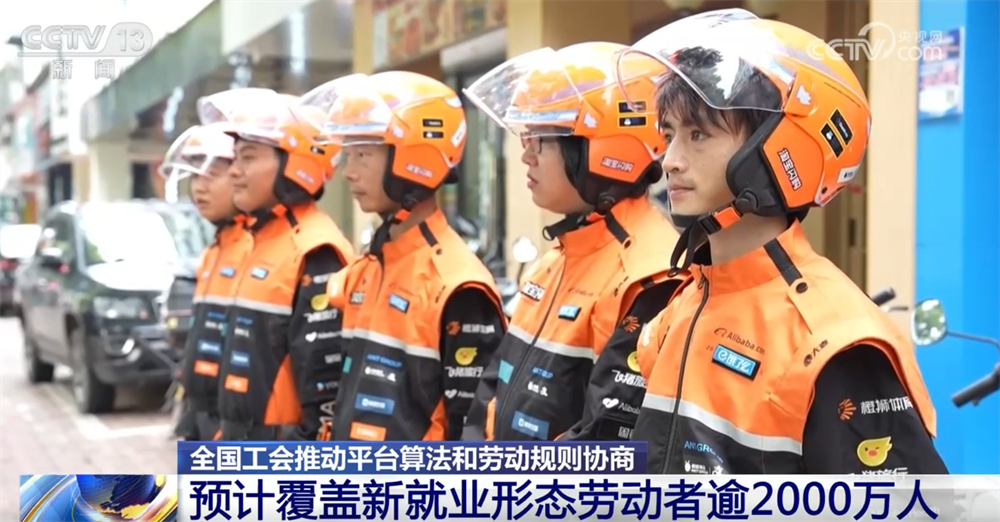
我国推动平台算法和劳动规则协商 预计逾2000万新就业形态劳动者迎“利好”
Yang Shi Wang· 2025-09-11 10:02
Group 1 - The core viewpoint is that by the end of September 2023, all 15 major platform companies in China are expected to sign algorithm agreements, focusing on labor rights and algorithm transparency [1][3] - The national trade union system has prioritized algorithm negotiations with platform companies this year, with 7 out of the 15 companies already signing agreements, which will cover over 20 million new employment form workers [3] - The algorithm negotiations focus on key labor rights such as remuneration, rest rights, labor safety, and participation in algorithm decision-making, with agreements ensuring that labor remuneration is not lower than the local minimum wage [5][9] Group 2 - In the ride-hailing industry, companies are adopting transparent pricing rules and reducing commission rates, while also enhancing fatigue prevention measures and introducing features like abnormal order interception and mandatory rest reminders [7] - Several platforms are establishing regular negotiation systems with trade unions and workers, committing to hold algorithm negotiation meetings regularly, publicly announce algorithm changes in advance, and create quick response channels for worker demands [9]
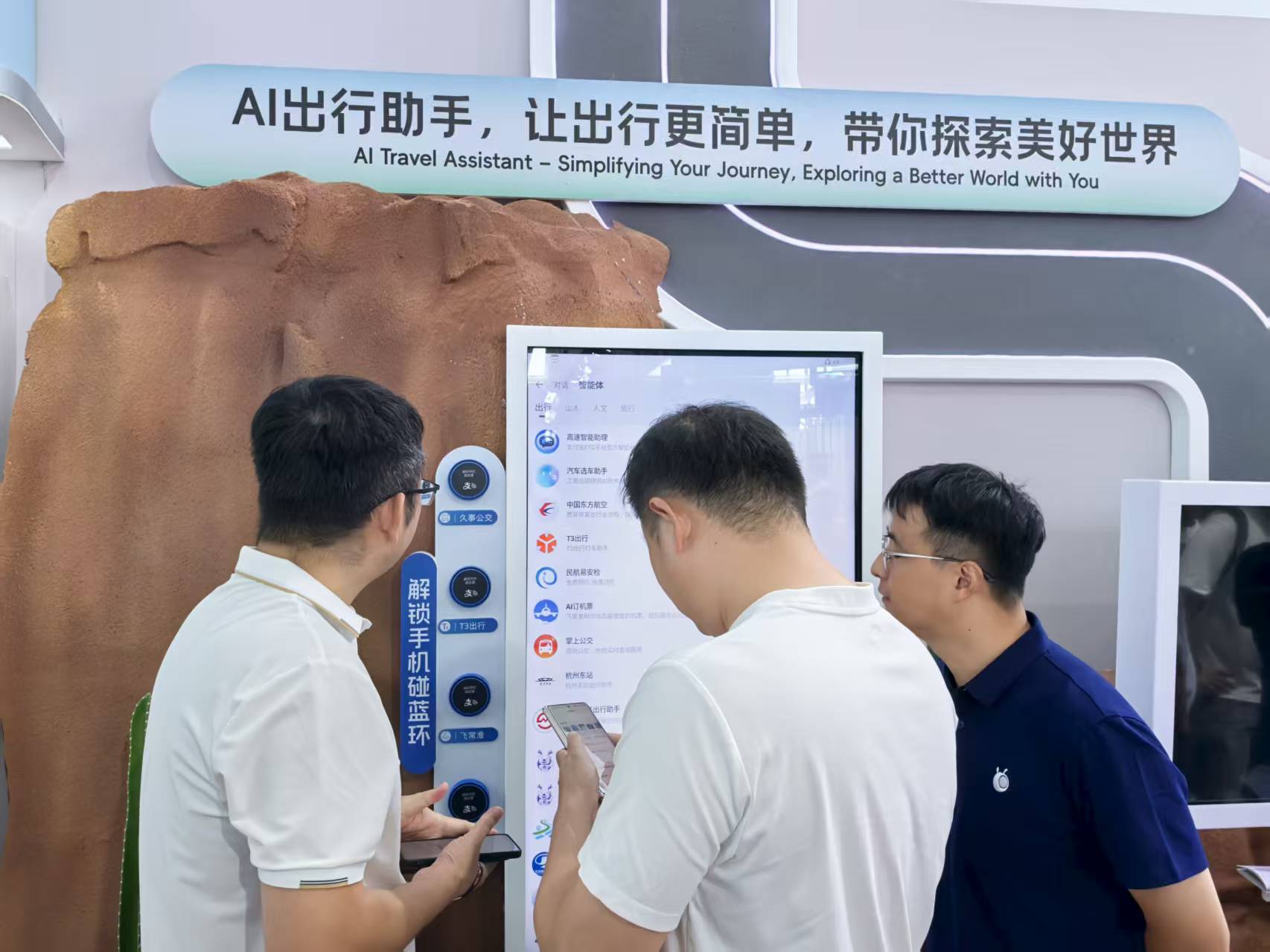
不用扫码不用打字,说走就走成了现实!
Guo Ji Jin Rong Bao· 2025-09-11 09:06
Core Insights - The collaboration between T3 Mobility and Alipay has introduced an AI-based ride-hailing feature that allows users to book rides using voice commands, enhancing user experience and efficiency [3][4]. Group 1: AI Ride-Hailing Technology - T3 Mobility's AI ride-hailing technology has been integrated into Alipay, marking it as the first intelligent assistant for ride-hailing within the platform [3]. - Users can access the AI ride-hailing feature through the "Travel" channel on the Alipay app, where they can simply state their destination, and the system will recognize the voice command and suggest relevant locations [3]. - This AI interaction significantly improves ride-hailing efficiency by eliminating the need for manual input, thus streamlining the booking process [3]. Group 2: Implementation and Features - The AI ride-hailing function was first introduced in T3 Mobility's app in December 2024 and has since undergone multiple iterations to enhance its maturity and functionality [3]. - The AI capabilities are supported by the "Lingxing Qianmo Model," developed in collaboration with China Telecom, which is the first ecological model in the domestic ride-hailing industry to be registered for both models and algorithms [4]. - The AI technology is not only used for ride-hailing but also extends to driver-passenger services, intelligent scheduling, and safety operations, helping to predict demand and reduce empty driving rates [4]. Group 3: User Experience Enhancement - The integration of AI in ride-hailing aims to shorten the distance between users and services, enhancing the overall efficiency of smart travel [4]. - T3 Mobility's public relations director emphasized the importance of combining the intelligent ride-hailing system with offline scenarios and third-party partners to elevate the user experience [4].
全国工会推进平台算法和劳动规则协商 预计将覆盖新就业形态劳动者逾2000万人
Zhong Guo Xin Wen Wang· 2025-09-11 07:17
Core Insights - The National Trade Union has initiated discussions on platform algorithms and labor rules, involving 15 major platform companies, with agreements already signed by 7 of them, impacting over 20 million new employment form workers [1] Group 1: Agreements and Coverage - Seven companies, including T3 Mobility, Jitu, UU Runner, Manbang, Didi, YTO Express, and Ele.me, have successfully signed special agreements on algorithms and labor rules [1] - All remaining companies are expected to complete negotiations and sign agreements by the end of September [1] Group 2: Focus Areas of Negotiation - The negotiations focus on core worker rights such as labor remuneration, rest rights, labor safety, and algorithm transparency [1] - Key algorithm rules discussed include order pricing, commission rates, dispatch methods, time estimation, and route planning [1] Group 3: Improvements and Commitments - Agreements stipulate that labor remuneration will not be lower than the local minimum wage, with provisions for adverse weather subsidies and the gradual elimination of "overtime deductions" [1] - In the ride-hailing industry, there are commitments to public pricing rules and reduced commission rates, alongside enhanced fatigue prevention measures [1] Group 4: Ongoing Collaboration - Several platforms have established regular negotiation systems with unions and workers, committing to periodic algorithm negotiation meetings and quick response channels for worker demands [1]
预计覆盖2000多万人 算法协商让劳动者核心权益“算得明白”
Yang Shi Xin Wen· 2025-09-11 05:10
Group 1 - The National Trade Union Council held a meeting in Shanghai to summarize the progress of algorithm negotiation and outline the next steps, focusing on platform enterprises [1] - As of now, 15 leading platform companies have been included in the negotiation process, with 7 companies successfully signing special agreements on algorithms and labor rules, expected to cover over 20 million new employment form workers [1][2] - Provinces such as Beijing, Hebei, Jilin, and Shanghai have actively guided local branches of platform companies to conduct regional negotiations, holding 33 regional negotiation or opinion consultation meetings [1] Group 2 - The algorithm negotiations focus on core labor rights such as remuneration, rest rights, labor safety, and algorithm transparency, leading to clearer understanding of labor rights for workers [2] - Several platform agreements stipulate that labor remuneration will not be lower than the local minimum wage, establish bad weather subsidies, and gradually eliminate "overtime deductions" [2] - Many platforms have established regular negotiation systems with trade unions and workers, committing to hold algorithm negotiation meetings regularly and provide advance notice of algorithm changes [2]
宣布启动自动驾驶试点项目 Lyft Inc(LYFT.US)涨超3%
Zhi Tong Cai Jing· 2025-09-10 14:40
Group 1 - Lyft's stock price increased by over 3%, reaching $18.96, following the announcement of an autonomous driving pilot project in Atlanta [1] - The pilot project involves the deployment of Toyota Sienna minivans equipped with May Mobility's autonomous driving technology, operating in a 7-square-mile area of Midtown Atlanta [1] - Lyft aims to enhance its competitiveness in the autonomous driving sector against rivals like Waymo and Uber, which have already established partnerships for autonomous services in multiple cities [1] Group 2 - Lyft plans to expand its autonomous driving services across the U.S. market by 2026 and intends to collaborate with more technology partners, including Mobileye Global Inc. and Benteler Group [2] - The company also aims to introduce autonomous ride-hailing services in Europe through a partnership with Baidu [2]

美股异动 | 宣布启动自动驾驶试点项目 Lyft Inc(LYFT.US)涨超3%
智通财经网· 2025-09-10 14:39
Core Viewpoint - Lyft Inc has officially launched an autonomous driving pilot program in Atlanta, marking a significant step in its strategy to enhance competitiveness in the autonomous driving sector against rivals like Waymo and Uber [1] Group 1: Autonomous Driving Initiative - Lyft's pilot program will operate in a 7-square-mile area of Midtown Atlanta, utilizing Toyota Sienna vans equipped with May Mobility's autonomous driving technology [1] - The pricing for rides in the autonomous vehicles will be aligned with standard Lyft fares [1] - This initiative is the first tangible project resulting from Lyft's announced partnerships for autonomous driving last November [1] Group 2: Competitive Landscape - Lyft's Executive Vice President Jeremy Bird acknowledged the company's late start in the autonomous driving space but emphasized efforts to catch up with Uber's global initiatives [1] - Uber has already established partnerships with Waymo for autonomous services in cities like Atlanta, Austin, and Phoenix, and has collaborated with WeRide in Abu Dhabi [1] Group 3: Future Expansion Plans - Lyft plans to expand its autonomous driving services across the U.S. market by 2026 and intends to collaborate with more technology partners, including Mobileye Global Inc. supported by Intel and Austria's Benteler Group [2] - Additionally, Lyft aims to introduce autonomous ride-hailing services in Europe through a partnership with Baidu [2]

乘客被扔高速还遭恶意下单去殡仪馆 平台回应已将司机拉黑封号
Xin Jing Bao· 2025-09-10 11:10
Core Points - A passenger in Ningbo, Zhejiang, reported being thrown out of a rideshare vehicle during a dispute with the driver and subsequently received a malicious order for a ride to a funeral home [1] - The incident involved three passengers, with one using a different rideshare service, leading to confusion regarding the orders [1] - Both involved rideshare platforms, Tongcheng Travel and Dida Chuxing, have responded by blacklisting the driver and suspending their account [1]
获纳入港股通在即 华泰证券首予曹操出行(02643)“买入”评级 目标价100.4港元
智通财经网· 2025-09-08 00:53
Core Viewpoint - Huatai Securities recently released its first in-depth research report covering Cao Cao Mobility (02643), giving it a "Buy" rating with a target price of HKD 100.4 [1] Group 1: Company Overview - Cao Cao Mobility is leveraging its deep experience in the ride-hailing sector and the breakthrough potential of its Robotaxi business to reshape the industry landscape from the supply side, with expectations to turn profitable by 2026 [1] - The company's core competitive advantage lies in its standardized custom vehicle fleet, which significantly differentiates it from existing market participants [1] Group 2: Robotaxi Development - Despite some opinions suggesting that Cao Cao is lagging behind other domestic companies in the Robotaxi field, Huatai Securities emphasizes that the competition is fundamentally a test of technology and operational capabilities [1] - Cao Cao Mobility is collaborating with Geely Holding Group to participate in vehicle design and develop a comprehensive automotive service solution, which significantly reduces Total Cost of Ownership (TCO) while enhancing operational efficiency [1] Group 3: Market Position and Future Prospects - As of June 30, 2025, Cao Cao Mobility has deployed 37,000 custom vehicles nationwide, making it the largest fleet of its kind in the country [1] - On February 28, 2025, the company launched its autonomous driving platform "Cao Cao Zhixing" and initiated Robotaxi pilot services in Suzhou and Hangzhou, showcasing its advantages in developing and deploying next-generation Robotaxi vehicles [2] - The company is working with Geely Group on a custom vehicle designed for L4 autonomous driving, which is expected to be launched by the end of 2026 [2] Group 4: Valuation and Market Impact - Huatai Securities has assigned a valuation of 1.8 times the sales ratio for 2026, corresponding to a market value of HKD 54.7 billion and a target price of HKD 100.4 [2] - Cao Cao Mobility was listed on the Hong Kong Stock Exchange on June 25, 2025, becoming the largest technology mobility platform in the Hong Kong market [2] - The company is expected to be included in the Hong Kong Stock Connect on September 8, which is anticipated to attract more mainland capital [2]

获纳入港股通在即 华泰证券首予曹操出行“买入”评级 目标价100.4港元
Zhi Tong Cai Jing· 2025-09-08 00:52
Group 1 - Huatai Securities recently released its first in-depth research report covering Cao Cao Mobility (02643), giving it a "Buy" rating with a target price of HKD 100.4 [1] - The report highlights that Cao Cao Mobility is reshaping the industry landscape from the "supply side" due to its deep accumulation in the ride-hailing sector and the breakthrough potential of its Robotaxi business, with expectations to turn profitable by 2026 [1] - The core competitiveness of Cao Cao Mobility stems from its standardized custom vehicle fleet, which significantly differentiates it from existing market participants [1] Group 2 - Despite some views that Cao Cao is lagging behind other domestic companies in the Robotaxi field, Huatai Securities emphasizes that the competition in Robotaxi is fundamentally a contest of technology and operational capabilities [1] - Cao Cao Mobility is optimizing total cost of ownership (TCO) and demonstrating long-term competitiveness in the Robotaxi sector through solid operational accumulation [1] - The company collaborates with Geely Holding Group to participate deeply in vehicle design and develop a comprehensive automotive service solution, significantly reducing TCO and enhancing operational efficiency [1] Group 3 - As of June 30, 2025, Cao Cao Mobility has deployed 37,000 custom vehicles nationwide, becoming the largest fleet of its kind in the country [1] - On February 28, 2025, Cao Cao Mobility launched its autonomous driving platform "Cao Cao Zhixing" and initiated Robotaxi pilot services in Suzhou and Hangzhou [2] - The company is developing a custom vehicle specifically designed for L4-level autonomous driving, which is expected to be launched by the end of 2026 [2] Group 4 - Huatai Securities assigns a valuation of 1.8 times the sales ratio for 2026, corresponding to a market value of HKD 54.7 billion, based on the average valuation levels of global mobility platforms [2] - Cao Cao Mobility was listed on the Hong Kong Stock Exchange on June 25, 2025, becoming the largest technology mobility platform in the Hong Kong market [2] - The company was included in the Hang Seng Composite Index on August 22, and it is expected to be included in the Hong Kong Stock Connect on September 8, which may attract more mainland capital [2]