
二手房交易

Search documents
上海二手房月成交跌破2万套 刚需成交占比持续走高
Xin Hua Cai Jing· 2025-08-01 05:23
Core Insights - The Shanghai second-hand housing market has seen a significant decline in transactions, with July 2025 recording 19,337 signed contracts, a decrease of 1,437 from the previous month, marking the first time since the "929 New Policy" that monthly transactions fell below 20,000 units, excluding the holiday-affected months of January and February [1] Transaction Volume - The transaction volume in Shanghai's second-hand housing market has dropped to below 20,000 units for the first time since the implementation of the "929 New Policy" [1] - The market is currently experiencing a seasonal downturn without any new policy incentives to stimulate demand [1] Buyer Demographics - The proportion of transactions for homes priced below 3 million yuan has been increasing over the past three months, with shares of 52.48%, 53.23%, and 54.86% respectively, indicating a reliance on first-time homebuyers [1] - Conversely, the transaction volume for mid-tier improvement buyers has contracted compared to the previous month, suggesting ongoing challenges in the housing replacement chain [1] Price Trends - The average listing price for second-hand homes in Shanghai in July was approximately 48,169 yuan per square meter, reflecting a month-on-month decrease of 0.57%, with some areas experiencing declines exceeding 2% [1] - Since February of this year, the average listing price for second-hand homes in Shanghai has been on a downward trend for five consecutive months [1]
广州7月二手住宅网签近九千套
Zhong Guo Xin Wen Wang· 2025-07-31 09:18
Core Insights - In July, Guangzhou's second-hand residential market experienced a traditional off-season with nearly 9,000 units signed, showing a decline both month-on-month and year-on-year [1] - Despite the overall decline, certain popular districts and properties saw significant month-on-month increases in transaction volumes, driven by factors such as accelerated old property renovations [1] Group 1: Market Performance - In July, Guangzhou's second-hand residential net signing reached 8,962 units and 88.84 million square meters, representing month-on-month declines of 9.39% and 10.84%, and year-on-year declines of 10.68% and 12.25% respectively [1] - The Panyu and Haizhu districts led in net signing volumes, each exceeding 1,000 units, while Baiyun, Zengcheng, and Liwan districts approached 1,000 units [1] - From a month-on-month perspective, Conghua and Liwan districts saw increases of 12.46% and 7.23% respectively, while year-on-year growth was maintained in Liwan, Baiyun, Nansha, and Conghua districts [1] Group 2: Area Composition - The proportion of units below 60 square meters and those between 90 to 120 square meters increased by 1.97 percentage points and 0.54 percentage points respectively, while the proportions for units between 60 to 90 square meters, 144 square meters and above, and 120 to 144 square meters decreased [1] - Several districts, including Fangcun Avenue, saw notable month-on-month growth in net signing volumes, with Fangcun Avenue leading at a 22.88% increase, followed by Jiangnan West-Baogang, Guihuagang-Sanyuanli, and Xiguan with increases of 13.68%, 11.88%, and 9.91% respectively [1] Group 3: Year-to-Date Performance - From January to July 2025, Guangzhou's second-hand residential market recorded a total of 65,575 units signed and 657.91 million square meters, reflecting significant year-on-year growth of 9.03% and 9.02% respectively [2]
京沪二手房成交环涨,小户型成交占比提升
3 6 Ke· 2025-07-29 02:12
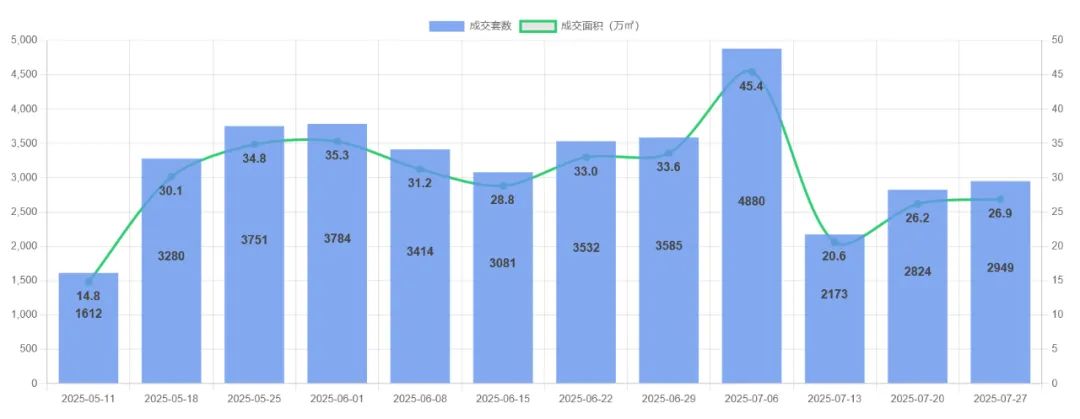
Market Analysis - The Beijing second-hand housing market has shown a rebound trend recently, with 2,949 transactions in the latest week (July 21-27), a week-on-week increase of 4.4%, but still 39.6% lower than the peak in June (4,880 transactions) [4][5] - The average unit area has decreased to 91 square meters, the lowest in the past six weeks, indicating an increase in the proportion of small-sized units sold [4] - The transaction volume has shown a "high rebound - bottoming out" trend over the past six weeks, with a cumulative increase of 35.7% in the last two weeks of July, suggesting a gradual recovery in market activity [4] Shanghai Market - The Shanghai second-hand housing market has recently stabilized, with 4,478 transactions in the week of July 21-27, reflecting a week-on-week increase of 1.3%, although the transaction area slightly decreased by 0.5% [8][9] - The average unit area remains stable at 83 square meters, with transaction volumes fluctuating between 4,100 and 5,100 units over the past six weeks [8] - The market is in the late adjustment phase, with moderate recovery in transaction volume but not yet forming a trend of significant increase [8] Shenzhen Market - The Shenzhen second-hand housing market is experiencing a continuous cooling trend, with 1,039 transactions in the week of July 21-27, a week-on-week decrease of 6.0%, marking three consecutive weeks of decline [12][14] - The transaction area was 103,134.36 square meters, down 7.5% week-on-week, with a notable drop in transaction volume from a high of 1,222 units [12] - The average unit area has decreased from 102 square meters to 99 square meters, indicating an increase in the proportion of medium and small-sized units sold [12] Hangzhou Market - The Hangzhou second-hand housing market is showing a mild adjustment trend, with 1,231 transactions in the week of July 21-27, reflecting a slight week-on-week decrease of 0.2% [16][18] - The average unit area has compressed to 104 square meters, down 3.7% from mid-June, indicating an increase in demand for affordable housing [16] - The market is currently in a seasonal adjustment period, with transaction volumes stabilizing around 1,230 units [16] Chengdu Market - The Chengdu second-hand housing market has shown a stable trend, with 3,806 transactions in the week of July 21-27, a slight week-on-week increase of 0.8% [21][23] - The transaction area decreased by 0.7%, with the average unit area remaining at 94 square meters, reflecting an increase in the proportion of small-sized units sold [21] - The market has shown significant fluctuations, with transaction volumes stabilizing around 3,700 units since July, down approximately 18% from the June peak [21]

买二手房如何砍价?
Sou Hu Cai Jing· 2025-07-25 02:16
Group 1 - The importance of thorough preparation before purchasing a second-hand house, including understanding market trends and recent transaction prices in the same area [2][3] - Gathering information about the seller's urgency and reasons for selling can provide leverage in negotiations [4][5][6][7] Group 2 - Identifying defects in the property during viewings can serve as a basis for price negotiations [8] - The sequence of negotiation is crucial, suggesting that the agent should initiate the first round of price discussions [8] Group 3 - The timing of the offer can impact negotiation outcomes, with specific periods such as year-end or during market adjustments providing better opportunities [10] - Tax and fee negotiations can also be a form of price reduction, as can requests for included furniture and appliances [12] Group 4 - Caution against "fishing prices" that are significantly below market value, as they may indicate underlying issues [14] - Avoid excessive bargaining that could lead to losing the opportunity to purchase the property [14]
二手房“以价换量”,25年买房契机已经出现
Sou Hu Cai Jing· 2025-07-20 11:55
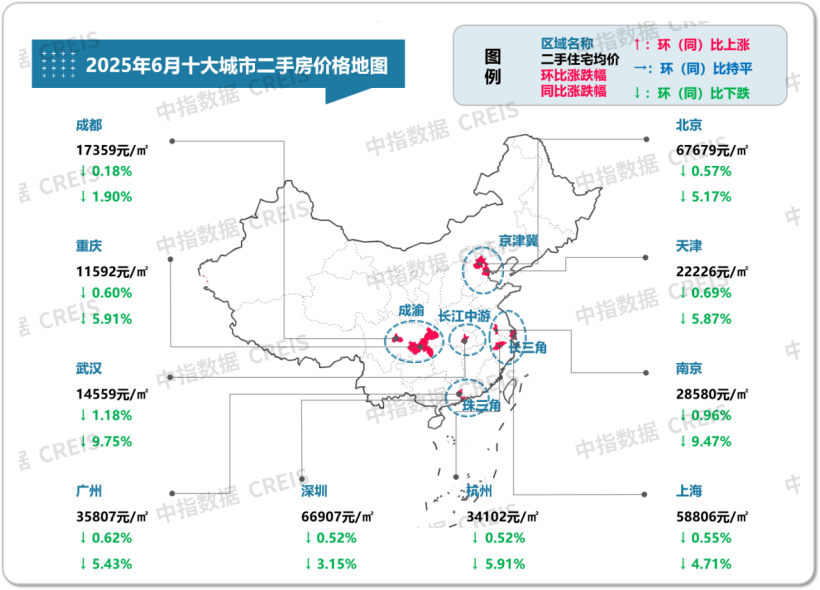
Core Viewpoint - The real estate market is experiencing a significant decline in second-hand housing prices, but the overall trend is shifting towards stabilization, with opportunities for potential buyers emerging in the latter half of 2025 [1][3][4]. Group 1: Market Trends - The second-hand housing prices in major cities have been declining both year-on-year and month-on-month, with "price for volume" being the prevailing market strategy [3]. - Chengdu leads in second-hand housing transactions with 19,214 units sold in June, followed by Shanghai with 18,028 units and Beijing with 15,139 units [3]. - Since July 2020, second-hand housing prices have reached a low point, and while further declines are expected, the pace of decline is anticipated to stabilize under current policy guidance [3][4]. Group 2: Buyer Insights - For potential homebuyers who have been waiting for years, the latter half of this year presents a favorable opportunity to purchase homes [4]. - The market is showing a significant divide, with 41.9% of the market consisting of homes priced below 3 million, while buyers of upgraded housing face considerable pressure due to lack of negotiation [7]. Group 3: Legal Auction Market - The volume of auctioned properties has increased, with 32,000 properties available in June, indicating sustained market confidence [9]. - Buyers are finding better deals in auctioned properties compared to regular second-hand homes, as these often sell below appraisal values, providing financial advantages [9]. - Caution is advised when participating in property auctions, and it is recommended to engage professional services for due diligence to avoid potential pitfalls [11].
行业透视|京深杭二手挂牌量环比止跌微增,沪深中改需求持续收缩
克而瑞地产研究· 2025-07-20 01:38
Core Viewpoint - The high-end real estate market in Beijing, Shanghai, and Shenzhen is expected to stabilize but may decline slightly, driven by increased supply and changing buyer preferences [21][22]. Group 1: Market Overview - As of June 2025, the second-hand housing market in 30 key cities remains stable, with transaction volumes unchanged month-on-month but showing a slight year-on-year decline of 3% [3]. - The new listing volume in Beijing, Shanghai, Shenzhen, and Hangzhou shows a mixed trend, with Beijing, Shenzhen, and Hangzhou experiencing slight increases, while Shanghai saw a significant drop of 18% month-on-month [3][4]. Group 2: Listing Structure Analysis - In Beijing, the proportion of listings priced over 600 million yuan is increasing, particularly in the 600-800 million yuan segment, which rose from 10.40% to 11.27% [4]. - In Shanghai and Shenzhen, there is a notable decline in the mid-price segment (300-1000 million yuan), with the most significant drop in the 300-500 million yuan range, which decreased by 0.73 percentage points [9][10]. Group 3: Price and Area Segmentation - In Hangzhou, low-priced and small-sized properties remain the primary listings, with the 100-300 million yuan segment increasing by 0.75 percentage points [15][16]. - The listing volume for properties under 90 square meters is increasing, while larger properties (over 180 square meters) are seeing a significant decline [18][19]. Group 4: Market Sentiment and Future Outlook - The overall sentiment in the second-hand housing market is characterized by a "stable overall, differentiated internal" pattern, with Beijing showing positive signals and increased listings in the high-end segment [21]. - The future market dynamics will depend on the willingness of sellers to reduce prices, as the large base of listings may lead to extended transaction cycles if no significant price advantages are offered [22].

“拎包入住”或是“风险上门”!警惕惠州这类房源的那些“坑”
Sou Hu Cai Jing· 2025-07-20 00:55
Core Viewpoint - The rise of "串串房" (quickly renovated houses) in Huizhou's real estate market presents both opportunities and significant risks for buyers, particularly concerning renovation quality, transaction processes, and property rights [1][8]. Group 1: Definition and Market Dynamics - "串串房" refers to second-hand houses that are quickly renovated and resold at a high price, often found in older neighborhoods with good transportation and amenities [2]. - Investors or agencies typically purchase these properties at 70%-85% of market value, renovate them, and then sell them for substantial profits, sometimes earning tens of thousands of yuan in the process [2]. Group 2: Renovation Quality and Safety Concerns - Many "串串房" are superficially appealing but are renovated with low-cost materials, leading to potential safety hazards [4]. - Common issues include the use of unbranded materials, poor-quality paints, and skipping essential processes like electrical upgrades and waterproofing [4][5]. - The rapid turnaround time for these properties often results in lingering harmful substances, such as formaldehyde, posing health risks to residents, especially vulnerable groups like children and the elderly [5]. Group 3: Legal and Transactional Risks - The transaction process for "串串房" is often complicated, with discrepancies between the property owner and the signing party, leading to potential legal disputes [7]. - Issues such as multiple sales of the same property or undisclosed property liens can result in contracts being deemed invalid by courts, leaving buyers unable to complete transactions [7]. Group 4: Market Impact and Consumer Caution - The surge in "串串房" sales may temporarily boost transaction numbers, but it also leads to increased complaints regarding renovations, property rights disputes, and quality issues, ultimately undermining market confidence [8]. - Real estate agencies may face reputational damage as issues arise, with sellers often disappearing when problems occur, making accountability difficult [8]. Group 5: Buyer Precautions - Buyers are advised to scrutinize renovation details, check for unpleasant odors indicating poor materials, look for signs of previous occupancy, verify the quality of appliances and furniture, and ensure clear property rights to mitigate risks [9][10].

二手房的最佳“房龄”是多少年,你买对了吗?
Sou Hu Cai Jing· 2025-07-14 01:03
Core Viewpoint - The age of a property is a significant factor in the second-hand housing market, influencing aspects such as quality, valuation, and loan eligibility [1][2]. Group 1: New Properties (0-5 years) - The main advantage of properties aged 0-5 years is their newness, which ensures better quality and often falls within warranty periods [3]. - However, these properties tend to be more expensive, and if located in newly developed areas, surrounding amenities may not yet be fully established [3] [4]. Group 2: Medium-Aged Properties (5-15 years) - Medium-aged properties offer a better cost-performance ratio, with prices lower than new properties while still meeting most family needs [4][5]. - Surrounding amenities such as transportation, commercial facilities, and educational resources are generally well-developed, although minor quality issues may arise over time [6]. Group 3: Old Properties (15+ years) - Properties older than 15 years are typically more affordable, making them suitable for budget-conscious buyers, especially those located in city centers with established amenities [7]. - However, these properties may have structural safety concerns, aging plumbing issues, and potential limitations on loan terms, leading to higher down payment requirements [8][9][10]. Group 4: Best Age for Properties - The ideal property age varies based on individual needs; families prioritizing quality and comfort are advised to consider properties under 10 years old [12]. - For those with budget constraints but high demands for location and amenities, properties over 15 years may be viable options [12][13]. - Investment buyers should evaluate rental yield and appreciation potential, with medium-aged properties generally offering balanced returns, while new properties have higher costs and older properties face depreciation risks [13]. Group 5: Factors Beyond Age - While property age is an important consideration, it should not be the sole determinant; factors such as location, layout, renovations, and surrounding amenities also play crucial roles in property valuation [14]. - Properties in prime locations can retain high value even if they are older, emphasizing the need for a comprehensive evaluation based on personal needs and budget [14].

二手结构 | 上半年京沪深杭大面积、中高总价成交占比持增
克而瑞地产研究· 2025-07-11 08:57
Core Viewpoint - The second-hand housing transaction scale has slowed down since the second quarter of 2025, but the cumulative year-on-year growth is significantly better than that of new homes, remaining in a high-level fluctuation market [3][13]. Group 1: Transaction Volume and Structure - In the first half of 2025, the cumulative year-on-year growth of second-hand housing transactions in 30 key cities was 12%, contrasting sharply with the new housing market [3]. - The demand for luxury homes priced above 30 million in Beijing, Shanghai, and Shenzhen remains stable, while the transaction proportion for homes priced between 3-6 million has significantly declined, indicating increased buyer hesitation [4][5]. - The ultra-low price segment (under 2 million) shows a serious downgrade in consumption among extreme first-time buyers, with transaction concentration in low-priced properties in Shanghai, Shenzhen, and Hangzhou continuing to rise [5]. Group 2: Area and Size of Transactions - The transaction concentration for small-sized properties (under 90 square meters) has decreased, while the proportion of transactions for larger properties (over 140 square meters) has increased, driven by the demand for more functional living spaces [6][7]. - In major cities, the transaction concentration is shifting towards medium-value areas, with notable declines in transaction concentration in primary areas of Shanghai and Shenzhen [10][11]. Group 3: Market Outlook - The second-hand housing market in Beijing, Shanghai, Shenzhen, and Hangzhou is expected to continue a stable but declining trend in the short term, influenced by new listings and the quality of new housing products entering the market [13]. - The current market is transitioning to a buyer's market, where buyers are increasingly considering location, amenities, and price, leading to longer transaction cycles for older properties in less desirable areas [13].

深房中协:上半年二手房买卖合同共计录得35106套,同比增长30.7%
news flash· 2025-07-04 11:16
Core Insights - The second-hand housing market in Shenzhen recorded 5,546 transactions in June 2025, representing a month-on-month decrease of 3.2% but a year-on-year increase of 4.5% [1] - The market exhibited a "convex" trend in the first half of the year, with a rapid recovery post-Spring Festival, leading to a strong performance in March and April, followed by seasonal fluctuations [1] - Despite a recent slight decline, the overall market remains robust, with an average of over 5,000 transactions per month in the first half of the year, indicating a recovery in consumer confidence, albeit still insufficient [1] - A total of 35,106 second-hand housing contracts were recorded in the first half of 2025, marking a significant increase of 30.7% compared to the same period in 2024 [1]