
发电

Search documents
南网储能:12月22日召开董事会会议
Mei Ri Jing Ji Xin Wen· 2025-12-22 11:48
Group 1 - The core viewpoint of the article highlights the significant growth in the new energy heavy truck market, with November sales increasing by 178% year-on-year, indicating a strong demand that has led to supply shortages [1] - The company, Nanfang Energy Storage (SH 600995), reported that its revenue composition for the year 2024 is heavily reliant on the power generation sector, which accounts for 98.13% of its total revenue, while other businesses contribute only 1.45% and other industries 0.42% [1] - As of the report, Nanfang Energy Storage has a market capitalization of 40.4 billion yuan [1] Group 2 - The company held its ninth board meeting on December 22, 2025, in Guangzhou, where it reviewed proposals including the election of the company's chairman [1] - The new energy heavy truck sector is experiencing unprecedented demand, with customers directly urging manufacturers for orders, a situation described as rare in the past decade [1]

全球首台!二氧化碳能用来发电了
Xin Hua She· 2025-12-22 08:02
Core Viewpoint - The successful operation of the world's first commercial supercritical carbon dioxide power generation unit, "Super Carbon No. 1," in Liupanshui, Guizhou, marks a significant advancement in power generation technology, utilizing supercritical carbon dioxide for efficient energy conversion [1][2]. Group 1: Technology and Efficiency - "Super Carbon No. 1" is a 15-megawatt supercritical carbon dioxide waste heat power generation project developed by China National Nuclear Corporation and partners, representing a shift from traditional steam-based power generation methods [1]. - The new technology operates with supercritical carbon dioxide at temperatures above 31 degrees Celsius and pressures exceeding 73 atmospheres, enhancing the efficiency of power generation by over 85% compared to previous methods [2]. - The project is expected to generate an additional 70 million kilowatt-hours of electricity annually, increasing revenue by nearly 30 million yuan without changing existing sintering processes [2]. Group 2: Industry Impact and Applications - The steel and cement industries are major energy consumers and carbon emitters, making them key areas for implementing carbon reduction strategies. Efficient utilization of industrial waste heat is crucial for energy conservation and carbon reduction [2]. - The "Super Carbon No. 1" technology offers advantages such as compact systems, fewer auxiliary systems, and faster response times, potentially reducing space requirements by 50% [2]. - The technology is anticipated to revolutionize waste heat utilization not only in the steel industry but also in other sectors like cement and glass, contributing to broader energy efficiency improvements [2]. - Future applications of supercritical carbon dioxide technology are expected to integrate with various heat sources, enhancing its potential in solar thermal power, waste heat power, and energy storage systems, thereby supporting carbon neutrality goals [3].
碳定价“平衡术”
Jin Rong Shi Bao· 2025-12-22 03:02
Core Insights - Carbon pricing is becoming an essential tool for economic transformation, generating significant fiscal revenue while pushing for emissions reduction [1][2] - The global carbon pricing revenue reached a record $104 billion in 2023, highlighting its role in funding energy transition and technological innovation [2] - The balance between short-term fiscal gains and long-term sustainability remains a challenge for governments implementing carbon pricing [2][4] Group 1: Developed Countries' Approach - Developed countries have successfully implemented diverse carbon pricing strategies, achieving a balance between environmental benefits, fiscal revenue, and economic growth [4][5] - The EU's carbon trading system is the most mature globally, with prices fluctuating around €80 per ton, effectively addressing externality issues and promoting continuous emissions reduction [4][5] - Germany's model of integrating carbon pricing revenue into a climate fund supports strategic areas like energy efficiency and renewable energy development [5] Group 2: Challenges for Developing Countries - Developing countries face greater challenges in balancing economic growth and emissions reduction, with carbon pricing potentially increasing production and living costs [6][7] - Carbon pricing can provide new fiscal growth points, helping to diversify energy structures and reduce reliance on imported fossil fuels [7] - However, the lack of technology and funding for emissions reduction in developing countries may lead to business closures and economic instability [7] Group 3: China's Carbon Market Development - China's carbon market, launched in 2021, is the largest globally, covering approximately 8 billion tons of CO2 emissions across key industries [8] - Current challenges include insufficient price signals and a high proportion of free allowances, which hinder market development [8] - Local governments face fiscal imbalances, with a significant portion of environmental spending reliant on local funding, complicating climate project implementation [8] Group 4: Recommendations for Balancing Carbon Pricing - Experts suggest establishing a national green transition fund to absorb 60-70% of carbon pricing revenue, focusing on long-term investments in green technology and just transitions for high-carbon regions [9][10] - A social compensation mechanism should be created to mitigate the impact of carbon pricing on low-income households, utilizing existing social security systems [10] - A buffer fund of 10-15% of revenue should be reserved for macroeconomic adjustments, providing tax relief for small and medium enterprises during economic downturns [10]
首台商用超临界二氧化碳发电机组成功商运
Xin Lang Cai Jing· 2025-12-21 19:38
Core Viewpoint - The successful commercial operation of the world's first supercritical carbon dioxide power generation unit in Guizhou marks a significant advancement in the application of supercritical carbon dioxide waste heat power generation technology, demonstrating its potential for commercial viability and efficiency improvements in various industries [1][2]. Group 1: Technology and Efficiency - The "Super Carbon No. 1" project enhances power generation efficiency by over 85% compared to existing sintering waste heat steam power generation technologies, with a net power generation increase of more than 50% [1]. - The system is simplified, requiring 50% less space and fewer devices, which facilitates easier operation and maintenance [1]. Group 2: Environmental Impact - If applied nationwide to sintering waste heat transformation, the technology could save over 4.83 million tons of standard coal annually and reduce carbon dioxide emissions by more than 12.85 million tons [1]. - The use of supercritical carbon dioxide is expected to significantly reduce greenhouse gas emissions and promote energy structure optimization and sustainable development [2]. Group 3: Application Potential - Supercritical carbon dioxide is considered one of the most promising working fluids for medium to high-temperature scenarios, with good application prospects in fields such as solar thermal power generation, waste heat power generation, and energy storage [2]. - After over a decade of exploration, the country has established a comprehensive research and development system for supercritical carbon dioxide power generation technology, mastering the design, manufacturing, and system integration capabilities [2].
全球首台!二氧化碳发电成功商运
DT新材料· 2025-12-21 16:05
Core Viewpoint - The successful operation of the world's first commercial supercritical carbon dioxide power generation unit, "Super Carbon No. 1," marks a significant milestone in the commercialization of supercritical carbon dioxide power generation technology, transitioning from laboratory to practical application [2]. Group 1: Technology Overview - "Super Carbon No. 1" utilizes supercritical carbon dioxide as the working fluid, achieving efficient and stable power generation through a closed Brayton cycle [3]. - The technology boasts core advantages such as high efficiency, compact system design, fewer auxiliary systems, and strong mobility, addressing technical bottlenecks in the efficient utilization of medium and high-temperature heat sources for small to medium power scales [3]. - The demonstration project is a collaboration between China Nuclear Power Research and Design Institute, Jinan Steel Group International Engineering Technology Co., Ltd., and Shougang Water City Steel Group, featuring a global first set of 2×15 megawatt supercritical carbon dioxide sintering waste heat power generation [3]. Group 2: Performance Metrics - Compared to existing steam power generation technologies for sintering waste heat, "Super Carbon No. 1" improves power generation efficiency by over 85% and net power output by more than 50% [3]. - The system is simplified, requiring 50% less equipment and space, which enhances operational convenience [3]. Group 3: Research and Development - The China Nuclear Power Research and Design Institute has been researching supercritical carbon dioxide power generation technology since 2009, overcoming key technical challenges related to design, manufacturing, and integration [4]. - The institute has established a research and development system for this technology and completed technical validation, forming a collaborative community with leading domestic enterprises and universities [4]. Group 4: Future Projects - In addition to the demonstration project, China Nuclear Group plans to launch a "molten salt energy storage + supercritical carbon dioxide power generation" demonstration project in 2024, which has been selected as a major technological equipment initiative in the energy sector, with expected completion by 2028 [6].


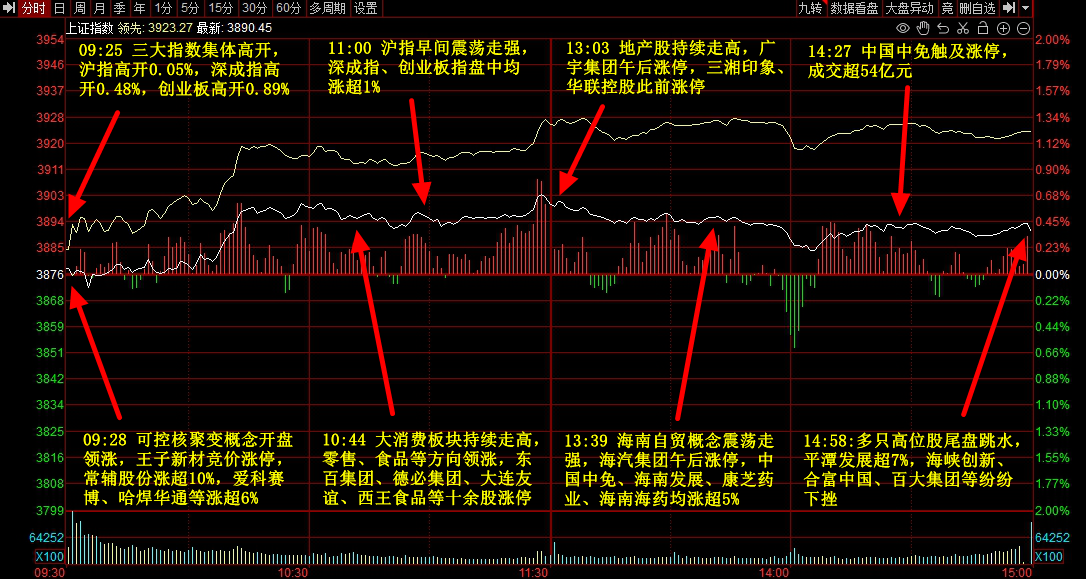
晚报 | 12月22日主题前瞻
Xuan Gu Bao· 2025-12-21 14:24
Group 1: Supercritical CO2 Power Generation - The world's first commercial supercritical CO2 power generation unit has successfully commenced operation in Guizhou, marking a significant milestone in the application of this technology [1] - The "Super Carbon No. 1" project enhances power generation efficiency by over 85% and net power output by more than 50% compared to existing steam power generation technologies [1] - This technology is expected to create a market worth trillions by efficiently utilizing industrial waste heat and contributing to carbon neutrality goals [1] Group 2: Optical Computing Chips - Researchers at Shanghai Jiao Tong University have achieved a breakthrough in optical computing chips, developing the LightGen chip that supports large-scale semantic media generation models [2] - LightGen demonstrates a performance improvement of two orders of magnitude in computing power and energy efficiency compared to top digital chips, even with less advanced input devices [2] - The development of optical computing chips represents a transformative opportunity for China in the high-end AI computing chip sector, shifting competition from traditional metrics to energy efficiency and parallel processing [2] Group 3: AI Smartphones - ByteDance is collaborating with hardware manufacturers like Vivo, Lenovo, and Transsion to pre-install AIGC plugins on their devices, aiming to enhance user engagement and shift AI from a passive to an active role [3] - The partnership with these manufacturers, which collectively have a potential user base exceeding 1 billion, is expected to accelerate the commercialization of AI smartphones, with a projected penetration rate of over 50% by 2026 [3] Group 4: Robotics in Entertainment - The introduction of humanoid robots by Yushu Technology at a concert in Chengdu marks the first instance of robots performing on stage in a commercial concert setting [4] - This event signifies a shift in the application of humanoid robots from mere technological showcases to integral components of entertainment, with potential market growth as technology advances and costs decrease [4] - IDC forecasts that the shipment of commercial humanoid robots in China will reach approximately 50,000 units by 2030, with a compound annual growth rate exceeding 95% [4]
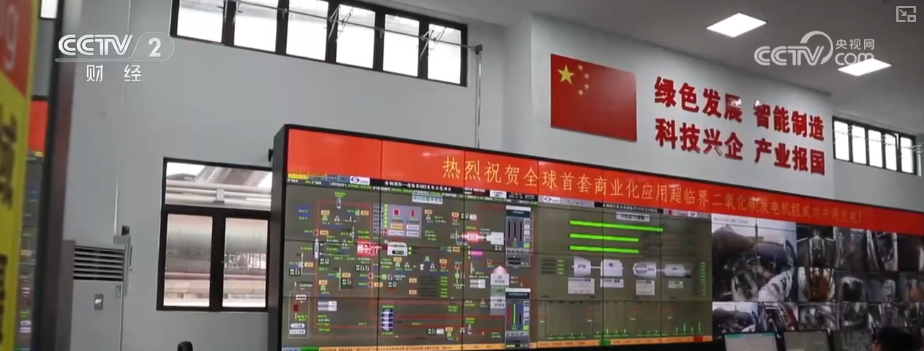
超临界二氧化碳发电技术催生千亿级市场 发电领域“超级跑车”护航能源安全
Yang Shi Wang· 2025-12-21 07:17
Core Viewpoint - The successful operation of the world's first commercial supercritical carbon dioxide power generation unit, "Super Carbon No. 1," marks a significant milestone in the application of this new technology, which has broad commercial prospects [1][3]. Group 1: Technology Overview - "Super Carbon No. 1" utilizes supercritical carbon dioxide as a new working fluid for efficient power generation, replacing traditional steam generation methods [3][5]. - The technology has achieved over 85% in waste heat utilization and a more than 50% increase in net power generation compared to existing steam power generation methods [7]. - The supercritical carbon dioxide power generation process involves four steps: compression, heating, expansion, and cooling, which allows for a more efficient energy conversion [9]. Group 2: Economic Impact - The project is expected to generate an additional cash flow of approximately 50 million yuan annually, with a payback period of three years [7]. - The market potential for retrofitting existing sintering machines in the steel metallurgy industry is estimated to be around 100 billion yuan if all applicable units are converted [15]. Group 3: Future Applications - Future applications of supercritical carbon dioxide technology are anticipated in various sectors, including energy storage from wind and solar power, as well as in offshore oil and gas drilling platforms [11][14]. - A new energy storage and power generation demonstration project combining molten salt storage and supercritical carbon dioxide power generation is expected to commence construction in Xinjiang in the first half of 2026 [14].
全球首台超临界二氧化碳发电示范机组成功商运
Yang Guang Wang· 2025-12-21 03:46
Core Viewpoint - The world's first supercritical carbon dioxide power generation unit has officially commenced commercial operation in Liupanshui, Guizhou, marking a significant milestone in the application of supercritical carbon dioxide waste heat power generation technology, known as "Super Carbon No. 1" [1][2] Group 1: Technology and Efficiency - "Super Carbon No. 1" utilizes supercritical carbon dioxide as the working fluid, achieving over 85% improvement in power generation efficiency and over 50% increase in net power output compared to existing waste heat steam power generation technologies [1] - The technology simplifies the system, reduces equipment, and enhances operational convenience [1] Group 2: Industry Applications - The demonstration project in Guizhou integrates this technology with local steel mills, utilizing industrial waste heat for power generation [2] - In Xinjiang, the technology is being applied to address "abandoned electricity" issues in the photovoltaic and wind power sectors [2] Group 3: Future Implications - This power generation technology is expected to drive energy technology innovation, creating new opportunities for industrial development and supporting the construction of a new power system in China [2] - It can deeply integrate with the main battlefield of the national economy, converting fluctuating renewable energy sources like solar and wind into stable power, while also opening new pathways for energy-saving transformations in traditional high-energy-consuming industries like steel [2]

二氧化碳能用来发电了!“超碳一号”示范工程在贵州六盘水首钢水城钢铁厂成功投运
中关村储能产业技术联盟· 2025-12-21 03:36
Core Viewpoint - The successful operation of the world's first commercial supercritical carbon dioxide power generation unit, "Super Carbon No. 1," marks a significant advancement in the commercialization of supercritical carbon dioxide power generation technology, transitioning from laboratory to practical application [2]. Group 1: Technology Overview - "Super Carbon No. 1" generates electricity by heating and pressurizing liquid carbon dioxide to a supercritical state, which allows it to store more energy and reduces flow resistance, leading to a simpler and faster response process compared to traditional steam generation methods [4][6]. - The supercritical carbon dioxide power generation process consists of four steps: compression, heating, expansion, and cooling, which collectively create a high-temperature, high-pressure environment to enhance internal energy [6]. Group 2: Efficiency and Output - Compared to existing sintering waste heat steam power generation technology, "Super Carbon No. 1" can improve power generation efficiency by over 85%, resulting in an additional annual output of more than 70 million kilowatt-hours [7]. Group 3: Future Applications - A new energy storage and power generation demonstration project combining molten salt storage and supercritical carbon dioxide power generation is expected to commence construction in Xinjiang in the first half of 2026, utilizing surplus wind and solar power [8]. - The supercritical carbon dioxide power generation technology has promising applications in offshore oil and gas drilling platforms and large vessels, offering advantages such as high efficiency, compact systems, fewer auxiliary systems, and a 50% reduction in space requirements [8]. - The technology is positioned to play a crucial role in energy conservation and carbon reduction efforts in traditional industries like steel and cement, which are significant energy consumers and carbon emitters [8].
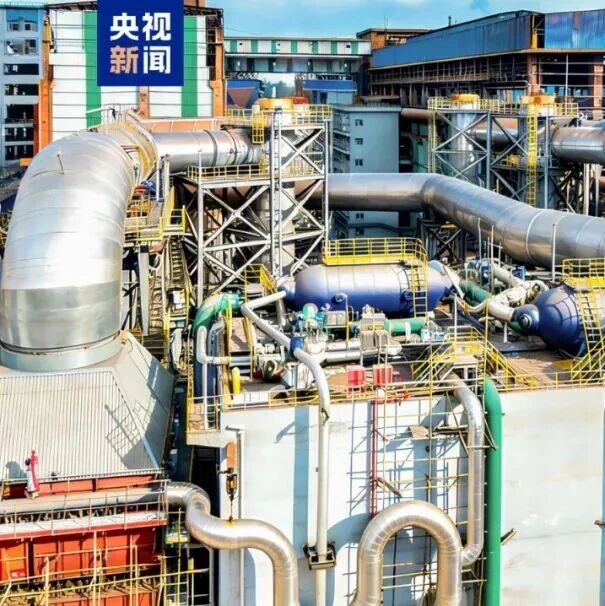
二氧化碳能用来发电了,全球首台商用超临界二氧化碳发电机组成功商运
Da Zhong Ri Bao· 2025-12-21 01:13
12月20日,全球首台商用超临界二氧化碳发电机组在贵州六盘水成功商运,这也是中国核动力研究 设计院研发的超临界二氧化碳余热发电技术"超碳一号"的全球示范工程。济钢集团负责了项目的投资、 设计、建设和运营,推动了超临界二氧化碳发电技术从实验室走进工厂。 二氧化碳能用来发电了,全球首台商用超临界二氧化碳发电机组成功商运 "全球第一",鲁企来建 在首钢水城钢铁集团,"超碳一号"正稳定运转,利用钢厂余热源源不断输出电力。此前,余热发电 是"烧开水",将水变为水蒸气,推动汽轮机转动发电。"超碳一号"用超临界二氧化碳为循环工质,二氧 化碳在31℃、压力达到7.38兆帕的条件下,变成介于气体、液体之间的特殊流体状态,替代水蒸气,在 封闭空间内循环发电,净发电量提升50%以上,水耗降低50%以上,同时还有设备小、不挑热、反应快 等优点。 济钢集团党委书记、董事长刘仕君表示,"超碳一号"是济钢战略转型的试点项目之一,也是山东以 科技创新为引领、积极培育新质生产力的生动实践,项目团队在工程化过程中解决技术问题200余项, 攻克关键技术难题88项,优化提升85项,助力突破世界范围内中小功率规模、中高温热源高效利用的技 术瓶颈。(记 ...